Custom Walk in Edinburgh, Scotland by kbattan_29acb created on 2026-02-03
Guide Location: Scotland » Edinburgh
Guide Type: Custom Walk
# of Sights: 10
Tour Duration: 1 Hour(s)
Travel Distance: 1.6 Km or 1 Miles
Share Key: FTNH7
Guide Type: Custom Walk
# of Sights: 10
Tour Duration: 1 Hour(s)
Travel Distance: 1.6 Km or 1 Miles
Share Key: FTNH7
How It Works
Please retrieve this walk in the GPSmyCity app. Once done, the app will guide you from one tour stop to the next as if you had a personal tour guide. If you created the walk on this website or come to the page via a link, please follow the instructions below to retrieve the walk in the app.
Retrieve This Walk in App
Step 1. Download the app "GPSmyCity: Walks in 1K+ Cities" on Apple App Store or Google Play Store.



Step 2. In the GPSmyCity app, download(or launch) the guide "Edinburgh Map and Walking Tours".
Step 3. Tap the menu button located at upper right corner of the "Walks" screen and select "Retrieve custom walk". Enter the share key: FTNH7
1) Edinburgh Castle (must see)
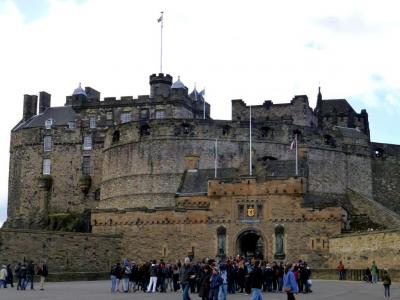
Edinburgh Castle, looming large over the Scottish capital, is the second most visited attraction in the UK (after the Tower of London, which is still number one). The history of Scotland is deeply etched into its ancient stones, making it a timeline in fortress form.
Perched atop Castle Rock (a hardened basaltic plug from an extinct volcano eroded by glaciers), this area has been drawing humans since the 9th millennium BC. The first castle on the site was built in the 12th century by King David I. It remained a royal residence until 1603, when the monarchy packed up and moved to London-presumably for better weather and indoor plumbing...
Indeed, as a fortress, it was virtually impregnable, except for one major-geological-drawback: the basalt rock on which it stands doesn’t hold water (literally). The 28-meter-deep well inside the fortress was about as useful as a chocolate teapot during a siege. So, when the well ran dry, surrender-or dehydration-was the only choice for those inside.
The original castle was mostly destroyed during the Lang Siege of 1573. The only remainder from its early days is St. Margaret’s Chapel. By the 17th century, it had shifted from royal digs to military barracks, housing troops up to the 1920s.
Presently, the castle hosts the Scottish National War Memorial, the National War Museum, and enough regimental museums to keep military buffs busy till closing time. Don't miss the One O’Clock Gun, which is fired daily (except Sundays) at 1 PM with Swiss-watch precision-yes, Edinburgh literally sets its clocks by it...
Also, in the Crown Room, you will see Scotland’s royal bling-crown, scepter, and sword-resting under heavy guard. Period-costumed actors occasionally swoop in to re-enact history with full flair. And if you’re visiting in August, the Military Tattoo takes over the esplanade with kilts, cannons, and bagpipes galore.
Oh, and in the north-east corner of the esplanade, don't miss that rather unassuming little iron fountain. Called Witches' Well, it marks the spot where, back in the day, many women accused of witchcraft were burned at the stake. Spooky, grim, and sadly true...
The panoramic views are postcard-worthy, the historical nooks are endlessly fascinating, and honestly, it just feels epic to stand where centuries of royals, rebels, and rock-solid drama unfolded.
Pro Tips:
The entry is cheaper, and more importantly, faster, if you book online.
Take a free guided tour – running every hour. Otherwise, consider grabbing the £3 audio guide if you like facts with flair.
Being at the mountain's top, it may get breezy, so definitely bring a windproof jacket if visiting in cold weather.
Perched atop Castle Rock (a hardened basaltic plug from an extinct volcano eroded by glaciers), this area has been drawing humans since the 9th millennium BC. The first castle on the site was built in the 12th century by King David I. It remained a royal residence until 1603, when the monarchy packed up and moved to London-presumably for better weather and indoor plumbing...
Indeed, as a fortress, it was virtually impregnable, except for one major-geological-drawback: the basalt rock on which it stands doesn’t hold water (literally). The 28-meter-deep well inside the fortress was about as useful as a chocolate teapot during a siege. So, when the well ran dry, surrender-or dehydration-was the only choice for those inside.
The original castle was mostly destroyed during the Lang Siege of 1573. The only remainder from its early days is St. Margaret’s Chapel. By the 17th century, it had shifted from royal digs to military barracks, housing troops up to the 1920s.
Presently, the castle hosts the Scottish National War Memorial, the National War Museum, and enough regimental museums to keep military buffs busy till closing time. Don't miss the One O’Clock Gun, which is fired daily (except Sundays) at 1 PM with Swiss-watch precision-yes, Edinburgh literally sets its clocks by it...
Also, in the Crown Room, you will see Scotland’s royal bling-crown, scepter, and sword-resting under heavy guard. Period-costumed actors occasionally swoop in to re-enact history with full flair. And if you’re visiting in August, the Military Tattoo takes over the esplanade with kilts, cannons, and bagpipes galore.
Oh, and in the north-east corner of the esplanade, don't miss that rather unassuming little iron fountain. Called Witches' Well, it marks the spot where, back in the day, many women accused of witchcraft were burned at the stake. Spooky, grim, and sadly true...
The panoramic views are postcard-worthy, the historical nooks are endlessly fascinating, and honestly, it just feels epic to stand where centuries of royals, rebels, and rock-solid drama unfolded.
Pro Tips:
The entry is cheaper, and more importantly, faster, if you book online.
Take a free guided tour – running every hour. Otherwise, consider grabbing the £3 audio guide if you like facts with flair.
Being at the mountain's top, it may get breezy, so definitely bring a windproof jacket if visiting in cold weather.
2) Scotch Whisky Experience (must see)
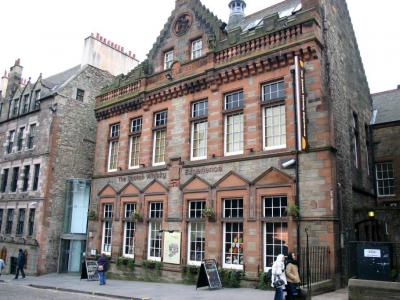
So, what is the difference between “whisky” and “whiskey”? If that little “e” is driving you to drink, head straight to The Scotch Whisky Experience, where answers-and drams-await. This is Scotland’s answer to Disneyland, but with fewer cartoon mice and significantly more peat smoke.
Indeed, this interactive museum doesn’t just cater to connoisseurs and curious adults. Even the wee (the Scottish word for “little” ones) get a slice of the fun, thanks to “Peat the Cat”-their feline guide through a world of whisky facts and playful games. Meanwhile, the grown-ups hop aboard a moving barrel (yes, you heard that right) for a slow cruise through a mechanical distillery, narrated by none other than the ethereal “Whisky Ghost.” He knows his mash from his malt, and he’s not afraid to share-within reason, of course...
Next stop: the MacIntyre Whisky Gallery, where you'll learn how different flavours are crafted. Well, some of the flavours (trade secrets are revealed only partially...). Then it’s on to the Sense of Scotland room, where your nose gets a full workout sniffing everything from smoky campfires to sweet toffee notes-basically a perfume department for whisky fans.
Your grand finale is the tasting room. Here, you’ll find your whisky-yes, even you who swore you didn’t like the stuff. But do yourself a favour: don’t ask for ice or soda. You’ll get looks colder than the Highlands in January.
Before you stumble out, swing by the gift shop. With over 300 malts and miniatures on offer, it’s practically a whisky library. Tour guests even get a discount-because education should come with perks...
So, in case you're still wondering why go?-Here's the answer: Because where else can you ogle 3,400 unopened bottles of whisky worth a fortune, sip your way through centuries of liquid history, and pair it all with cheese and chocolate that’d make a Highlander weep?
Top Tip:
Spring for the “Gold Tour” if you’re in it for the full whisky safari. And if you're not all that keen on whisky but prefer to look, sniff, and learn without the burn-The “Silver Tour” has your name on it. Slàinte!
Indeed, this interactive museum doesn’t just cater to connoisseurs and curious adults. Even the wee (the Scottish word for “little” ones) get a slice of the fun, thanks to “Peat the Cat”-their feline guide through a world of whisky facts and playful games. Meanwhile, the grown-ups hop aboard a moving barrel (yes, you heard that right) for a slow cruise through a mechanical distillery, narrated by none other than the ethereal “Whisky Ghost.” He knows his mash from his malt, and he’s not afraid to share-within reason, of course...
Next stop: the MacIntyre Whisky Gallery, where you'll learn how different flavours are crafted. Well, some of the flavours (trade secrets are revealed only partially...). Then it’s on to the Sense of Scotland room, where your nose gets a full workout sniffing everything from smoky campfires to sweet toffee notes-basically a perfume department for whisky fans.
Your grand finale is the tasting room. Here, you’ll find your whisky-yes, even you who swore you didn’t like the stuff. But do yourself a favour: don’t ask for ice or soda. You’ll get looks colder than the Highlands in January.
Before you stumble out, swing by the gift shop. With over 300 malts and miniatures on offer, it’s practically a whisky library. Tour guests even get a discount-because education should come with perks...
So, in case you're still wondering why go?-Here's the answer: Because where else can you ogle 3,400 unopened bottles of whisky worth a fortune, sip your way through centuries of liquid history, and pair it all with cheese and chocolate that’d make a Highlander weep?
Top Tip:
Spring for the “Gold Tour” if you’re in it for the full whisky safari. And if you're not all that keen on whisky but prefer to look, sniff, and learn without the burn-The “Silver Tour” has your name on it. Slàinte!
3) St. Giles' Cathedral (must see)
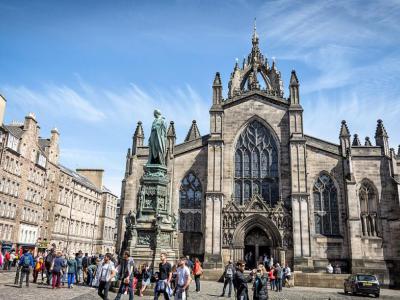
Smack in the middle of the Royal Mile, St Giles’ Cathedral-otherwise known as the High Kirk (or High Church) of Edinburgh-isn't one to be missed. The original building went up in the 12th century but didn’t survive a nasty fire-only the central pillars lived to tell the tale. The replacement was built in 1385. Over the years, it had numerous chapels added-known as aisles-resulting in a kind of charming architectural chaos. At one point, the church had over 50 side altars, like a medieval supermarket of holiness...
In 1466, St Giles’ became a collegiate church, which, in 1490, saw the now-iconic, crown-shaped lantern tower completed. During the Reformation, in 1560, things got a bit dramatic. Most of the church’s treasures vanished-stolen, sold, or just spirited away-including its star relic: Saint Giles’ withered arm and hand, complete with a diamond ring on one skeletal finger (macabre bling at its finest...). In addition to that, the church was partitioned by walls into multiple preaching zones-a kind of Protestant “feng shui,” if you will...
Despite being called a cathedral, it only technically wore that title twice, briefly, during the 17th-century Bishop Wars. The statute of “High Kirk” remains its real claim to fame. A 19th-century restoration gave the church a glow-up-partitions were removed and several chapels pulled down. Among the surviving chapels, perhaps the most beautiful is the Thistle Chapel from 1911: a jaw-dropping High Gothic gem dripping in wood and stone carvings, fluttering heraldic banners, and a breathtaking, delicately carved vaulted ceiling.
Once here, look out for a bronze plaque to Robert Louis Stevenson, author of Treasure Island, in the Moray Aisle, a marble tribute to the dashing but doomed 1st Marquis of Montrose, in the Chapman Aisle, and another to his bitter rival, Archibald Campbell, the 1st Marquis of Argyll, in the Saint Eloi Aisle. Fun fact: these two, once the main signatories of the National Covenant in 1638 (the document signed to oppose attempts to impose Anglican religious practices on the Church of Scotland), became sworn enemies towards the end of their lives. Edinburgh drama, anyone?
Aside from all that, the place is absolutely gorgeous, packed to the rim with stained glass beauty. You’ll walk out with neck cramp from all the ceiling admiration-and it’ll be worth it.
Pro tips:
Entry is free or by donation, but if you’re planning a photo shoot, prepare to fork over £2 for a "permit".
Best to get onto a tour, as there's much you could miss just wandering on your own. Also, if you're feeling adventurous, take the rooftop tour (worth £6).
And yes-don't miss a cozy café downstairs that serves tasty bites. Praise be!
In 1466, St Giles’ became a collegiate church, which, in 1490, saw the now-iconic, crown-shaped lantern tower completed. During the Reformation, in 1560, things got a bit dramatic. Most of the church’s treasures vanished-stolen, sold, or just spirited away-including its star relic: Saint Giles’ withered arm and hand, complete with a diamond ring on one skeletal finger (macabre bling at its finest...). In addition to that, the church was partitioned by walls into multiple preaching zones-a kind of Protestant “feng shui,” if you will...
Despite being called a cathedral, it only technically wore that title twice, briefly, during the 17th-century Bishop Wars. The statute of “High Kirk” remains its real claim to fame. A 19th-century restoration gave the church a glow-up-partitions were removed and several chapels pulled down. Among the surviving chapels, perhaps the most beautiful is the Thistle Chapel from 1911: a jaw-dropping High Gothic gem dripping in wood and stone carvings, fluttering heraldic banners, and a breathtaking, delicately carved vaulted ceiling.
Once here, look out for a bronze plaque to Robert Louis Stevenson, author of Treasure Island, in the Moray Aisle, a marble tribute to the dashing but doomed 1st Marquis of Montrose, in the Chapman Aisle, and another to his bitter rival, Archibald Campbell, the 1st Marquis of Argyll, in the Saint Eloi Aisle. Fun fact: these two, once the main signatories of the National Covenant in 1638 (the document signed to oppose attempts to impose Anglican religious practices on the Church of Scotland), became sworn enemies towards the end of their lives. Edinburgh drama, anyone?
Aside from all that, the place is absolutely gorgeous, packed to the rim with stained glass beauty. You’ll walk out with neck cramp from all the ceiling admiration-and it’ll be worth it.
Pro tips:
Entry is free or by donation, but if you’re planning a photo shoot, prepare to fork over £2 for a "permit".
Best to get onto a tour, as there's much you could miss just wandering on your own. Also, if you're feeling adventurous, take the rooftop tour (worth £6).
And yes-don't miss a cozy café downstairs that serves tasty bites. Praise be!
4) Mary King's Close (must see)
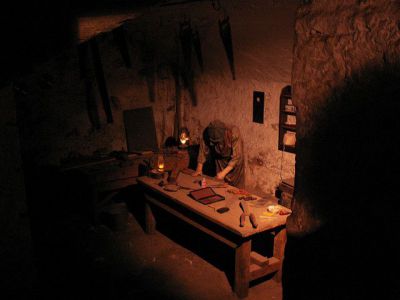
If ghost stories give you chills in a good way, then Real Mary King’s Close might just be your perfect haunt in Edinburgh. Tucked beneath the Royal Exchange, this underground maze of shadowy alleyways and crumbling tenement rooms has a reputation for being one of the most haunted corners of the city-and in Edinburgh, that’s saying something...
Originally a bustling neighborhood, the close was sealed off after the Great Plague of 1645 rolled into town, carried by flea-infested rats from merchant ships. With zero plumbing and not a bar of soap in sight, these cramped quarters became ground zero for infection. In a desperate attempt to contain the spread, entire blocks-predominantly the poorer areas, including Mary King’s Close-were bricked in as urgent quarantine measures. Legend has it, some unlucky souls were trapped inside at the mercy of plague or starvation... and they never left. At least, not in spirit.
One ghost in particular likes to make her presence known: Annie, a small girl, who is said to have lost her doll-and possibly much more-when the plague swept through. Visitors claim to feel her presence, and many bring her gifts: toys, trinkets, or coins, all of which are passed on to children’s hospitals and local charities. So, even the ghostly get a little goodwill...
The area was uncovered during renovations to the Royal Exchange and was opened to the public in 2003 as a tourist attraction. Since then, costumed guides have been leading brave guests through these 17th-century underground time capsules, sharing tales of the little Annie and Mary King-a respected businesswoman and seamstress after whom it is named-as well as the dark chapters etched into every cobbled corner.
So, if you’re in the mood for a little historical horror with a charitable twist, Mary King’s Close is calling. Just... don’t forget Annie’s doll.
Originally a bustling neighborhood, the close was sealed off after the Great Plague of 1645 rolled into town, carried by flea-infested rats from merchant ships. With zero plumbing and not a bar of soap in sight, these cramped quarters became ground zero for infection. In a desperate attempt to contain the spread, entire blocks-predominantly the poorer areas, including Mary King’s Close-were bricked in as urgent quarantine measures. Legend has it, some unlucky souls were trapped inside at the mercy of plague or starvation... and they never left. At least, not in spirit.
One ghost in particular likes to make her presence known: Annie, a small girl, who is said to have lost her doll-and possibly much more-when the plague swept through. Visitors claim to feel her presence, and many bring her gifts: toys, trinkets, or coins, all of which are passed on to children’s hospitals and local charities. So, even the ghostly get a little goodwill...
The area was uncovered during renovations to the Royal Exchange and was opened to the public in 2003 as a tourist attraction. Since then, costumed guides have been leading brave guests through these 17th-century underground time capsules, sharing tales of the little Annie and Mary King-a respected businesswoman and seamstress after whom it is named-as well as the dark chapters etched into every cobbled corner.
So, if you’re in the mood for a little historical horror with a charitable twist, Mary King’s Close is calling. Just... don’t forget Annie’s doll.

5) Tron Kirk Church
Ambling down Edinburgh’s Royal Mile-castle behind you, Holyrood ahead, then, on your left-you’re bound to spot The Tron Kirk. It doesn’t exactly shout for attention these days, but in its prime, back in the 17th century, this once beautiful church was a royal commission from King Charles I himself. Architect John Mylne threw in a mix of Palladian and Gothic styles with a Dutch twist, thanks to his admiration for Hendrick de Keyser’s “Architectura moderna.” The result was a bold T-shaped design that fit the trendy religious fashions of the time.
Of course, nothing in Edinburgh stays untouched for long. By 1787, the South Bridge arrived, and the Tron got a makeover. Then in 1820, its wooden spire went up in flames-literally-only to be replaced in 1828 by the stone tower you see today. From there, its fate grew stranger: deconsecrated in 1952, the building has been used for various purposes-from a tourist information centre to the headquarters of the Black Heart Entertainment company, which organizes ghost tours.
Dig a little deeper-again, literally-and you’ll find more surprises. In the 1970s, archaeologists poking around the crypt uncovered the remains of Marlin’s Wynd with splendid vaulted cellars of an old building and part of a medieval street still intact. It’s a rare chance to step back into the hidden layers of Edinburgh whenever the building is open to the public.
And yet, the Tron Kirk’s story isn’t fully settled. For decades, it has been the subject of raging arguments: whether to restore it or wreck it? While the city debates, the building quietly slips further into decay. A pity, really-because losing this landmark would erase not just bricks and mortar, but centuries of Edinburgh’s restless, reinventing spirit.
Of course, nothing in Edinburgh stays untouched for long. By 1787, the South Bridge arrived, and the Tron got a makeover. Then in 1820, its wooden spire went up in flames-literally-only to be replaced in 1828 by the stone tower you see today. From there, its fate grew stranger: deconsecrated in 1952, the building has been used for various purposes-from a tourist information centre to the headquarters of the Black Heart Entertainment company, which organizes ghost tours.
Dig a little deeper-again, literally-and you’ll find more surprises. In the 1970s, archaeologists poking around the crypt uncovered the remains of Marlin’s Wynd with splendid vaulted cellars of an old building and part of a medieval street still intact. It’s a rare chance to step back into the hidden layers of Edinburgh whenever the building is open to the public.
And yet, the Tron Kirk’s story isn’t fully settled. For decades, it has been the subject of raging arguments: whether to restore it or wreck it? While the city debates, the building quietly slips further into decay. A pity, really-because losing this landmark would erase not just bricks and mortar, but centuries of Edinburgh’s restless, reinventing spirit.
6) Museum of Childhood
Tired of dragging the kids through yet another castle or gallery where the only thing they can touch is the “Exit” sign? Then it’s time to swap stone walls for teddy bears at the Museum of Childhood on the Royal Mile.
This place owes its existence to Patrick Murray, a forward-thinking Edinburgh councillor in the 1950s who noticed children weren’t exactly thrilled to be hauled into draughty museums on rainy days. His solution was to build a museum entirely about childhood-school, play, health, and above all, toys. By 1955, his dream opened its doors, offering something that could entertain both fidgety kids and their weary parents.
Inside, five floors of nostalgia and discovery are waiting. There’s an Education section where kids can peer into classrooms from the 1950s onwards, complete with old uniforms and the infamous birch rod-yes, the one used for “discipline.” But don’t worry, this museum has swapped punishment for play. Around the corner, there’s a dressing-up room, a puppet theatre, and, naturally, toys galore.
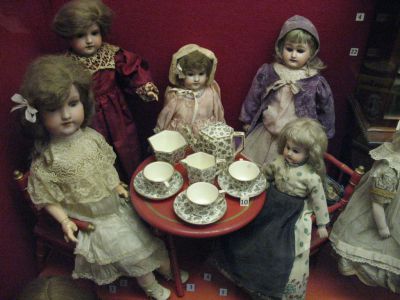
From dolls and teddy bears to tin soldiers with matchstick cannons, train sets, and board games, the displays stretch across centuries and continents. Children can see what kept their parents and grandparents happy before the age of screens, while adults are quietly hit with a wave of nostalgia they themselves find hard to admit to.
And when you think the fun is over, the toy shop on the ground floor will remind you otherwise. Kids can pick out a new favourite, and grown-ups might even find a stand-in for that long-lost teddy they still think about.
Why visit, if you're all by yourself? Because this isn’t just a family stop-it’s a time machine filled with joy. Entry is free, though donation boxes and quirky souvenirs await near the exit. Consider it pocket money well spent...
This place owes its existence to Patrick Murray, a forward-thinking Edinburgh councillor in the 1950s who noticed children weren’t exactly thrilled to be hauled into draughty museums on rainy days. His solution was to build a museum entirely about childhood-school, play, health, and above all, toys. By 1955, his dream opened its doors, offering something that could entertain both fidgety kids and their weary parents.
Inside, five floors of nostalgia and discovery are waiting. There’s an Education section where kids can peer into classrooms from the 1950s onwards, complete with old uniforms and the infamous birch rod-yes, the one used for “discipline.” But don’t worry, this museum has swapped punishment for play. Around the corner, there’s a dressing-up room, a puppet theatre, and, naturally, toys galore.
From dolls and teddy bears to tin soldiers with matchstick cannons, train sets, and board games, the displays stretch across centuries and continents. Children can see what kept their parents and grandparents happy before the age of screens, while adults are quietly hit with a wave of nostalgia they themselves find hard to admit to.
And when you think the fun is over, the toy shop on the ground floor will remind you otherwise. Kids can pick out a new favourite, and grown-ups might even find a stand-in for that long-lost teddy they still think about.
Why visit, if you're all by yourself? Because this isn’t just a family stop-it’s a time machine filled with joy. Entry is free, though donation boxes and quirky souvenirs await near the exit. Consider it pocket money well spent...
7) John Knox House
If you’ve ever wanted to nose around someone else’s house without feeling guilty, house museums are your perfect excuse. Not only do you get a peek at old furniture trends and fancy ceilings, but you also get a dose of juicy historical gossip. And when it comes to John Knox House on the Royal Mile, the stories are just as layered as the timber beams.
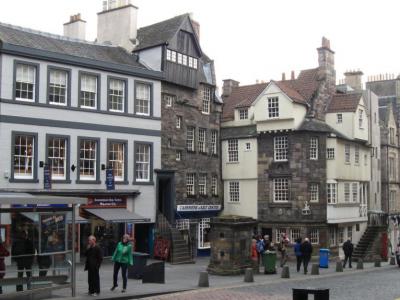
Dating back to around 1490, this charming survivor is the oldest house on the Royal Mile-and it’s not shy about showing off. We’re talking hand-painted ceilings, oak beams that have seen things, and a wooden gallery or two that creak with character. Now owned by the Church of Scotland, it was once home to James Mossman, a royal goldsmith. Given that he fashioned not just one but two crowns-one for Mary, Queen of Scots, and another for her son, King James VI-it’s safe to say that this house has seen some sparkle.
Now, here’s the twist: whether John Knox, the renowned 16th-century Protestant Reformer, himself actually lived here is contested-a kind of Medieval real estate marketing... In the 1700s, the place was severely dilapidated and was saved from demolition by the Society of Antiquaries of Scotland, who casually floated the rumour that this had been Knox’s humble abode. Voilà-instant historical landmark!
Inside, the museum is a magnet for anyone even mildly interested in religious history and the Reformation in particular. There are numerous manuscripts, relics, and even papers Knox himself tucked away in a time capsule. Plus, as part of the Scottish Storytelling Centre, the place brings history alive with costumed guides and interactive exhibits. There’s even a special room for children where they can don a John Knox costume and solve puzzles-because, among many other things, family fun includes dressing up as a 16th-century firebrand...
So, go ahead, walk through the creaky floors, raise an eyebrow at the painted ceilings, and decide for yourself-was this Knox’s house, or just a really good story? Either way, it’s worth stepping inside.
Dating back to around 1490, this charming survivor is the oldest house on the Royal Mile-and it’s not shy about showing off. We’re talking hand-painted ceilings, oak beams that have seen things, and a wooden gallery or two that creak with character. Now owned by the Church of Scotland, it was once home to James Mossman, a royal goldsmith. Given that he fashioned not just one but two crowns-one for Mary, Queen of Scots, and another for her son, King James VI-it’s safe to say that this house has seen some sparkle.
Now, here’s the twist: whether John Knox, the renowned 16th-century Protestant Reformer, himself actually lived here is contested-a kind of Medieval real estate marketing... In the 1700s, the place was severely dilapidated and was saved from demolition by the Society of Antiquaries of Scotland, who casually floated the rumour that this had been Knox’s humble abode. Voilà-instant historical landmark!
Inside, the museum is a magnet for anyone even mildly interested in religious history and the Reformation in particular. There are numerous manuscripts, relics, and even papers Knox himself tucked away in a time capsule. Plus, as part of the Scottish Storytelling Centre, the place brings history alive with costumed guides and interactive exhibits. There’s even a special room for children where they can don a John Knox costume and solve puzzles-because, among many other things, family fun includes dressing up as a 16th-century firebrand...
So, go ahead, walk through the creaky floors, raise an eyebrow at the painted ceilings, and decide for yourself-was this Knox’s house, or just a really good story? Either way, it’s worth stepping inside.
8) World's End Pub
A thirsty history buff in Edinburgh, looking for a pub steeped in history, should look nor further than The World’s End on the Royal Mile.
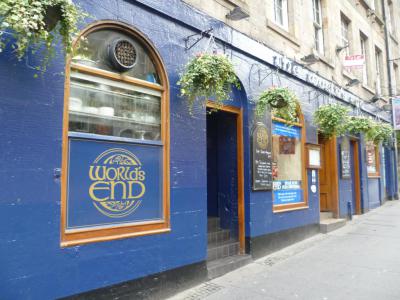
This old watering hole takes its name from the 16th century when the City Walls surrounded Edinburgh. Following the Battle of Flodden which saw Scotland’s defeat by the English, Edinburgh had to wall itself for protection. The gates in that wall were situated right outside the pub, reminding of which today are the brass cobbles in the road, marking their exact location. In the opinion of the Edinburgh folk, the world outside the gates was no longer theirs, so they called it The World’s End.
The “old style” character of the pub proves to be its main lure for tourists walking the cobbled streets and anxious to quench their thirst. Venturing inside the tavern, above the bar, you can see scores of foreign banknotes vividly illustrating the broad, international clientele who have drunk here over the years. True to its “old-fashioned feel”, the place keeps television to the minimal, so as to allow the patrons – up to 140 men at a time – to drink in peace. The hospitality of this kind makes the whole world of difference!
This old watering hole takes its name from the 16th century when the City Walls surrounded Edinburgh. Following the Battle of Flodden which saw Scotland’s defeat by the English, Edinburgh had to wall itself for protection. The gates in that wall were situated right outside the pub, reminding of which today are the brass cobbles in the road, marking their exact location. In the opinion of the Edinburgh folk, the world outside the gates was no longer theirs, so they called it The World’s End.
The “old style” character of the pub proves to be its main lure for tourists walking the cobbled streets and anxious to quench their thirst. Venturing inside the tavern, above the bar, you can see scores of foreign banknotes vividly illustrating the broad, international clientele who have drunk here over the years. True to its “old-fashioned feel”, the place keeps television to the minimal, so as to allow the patrons – up to 140 men at a time – to drink in peace. The hospitality of this kind makes the whole world of difference!

9) Scottish Parliament Building
Now, here’s a building that’s sparked more heated debates than a family Christmas dinner: the Scottish Parliament Building. Sitting right at the foot of Arthur’s Seat on Holyrood Road, in the middle of a UNESCO World Heritage Site, this bold piece of architecture has been poked, praised, and publicly puzzled over since the day it was announced. Construction began in June 1999, with an initial plan to open in 2001. In reality, however, the doors finally opened only in October 2004, with Queen Elizabeth II doing the honours, and everyone politely pretending not to notice the three-year delay.
The mastermind behind this architectural enigma, spanning 1.6 hectares, was the late Spanish architect Enric Miralles, who set out to fuse Scotland’s landscape, spirit, and capital city into one expressive structure. Think leaf-shaped skylights in the Garden Lobby, sweeping wooden curves, massive abstract windows, and more local stone and oak than a luxury Highland lodge. Inside, you’ll also spot sycamore finishes and views of Holyrood Park that probably cost more than your annual rent.
Public reaction to the Parliament Building was, let’s say, divided: some thought it a poetic blend of nature and democracy; others-a modernist jigsaw someone forgot to finish. But you don’t have to take their word for it-take a guided tour. That way, you’ll get to see the bits the average passerby can’t peek into. And if you’d rather stay outside, the public gardens are open for wandering: wildflowers, shrubs, trees, a water pool, leafy paths, lawns, pathways, and more tranquility than you’d expect from a place where laws are made.
And here’s the twist-after all the initial public grumbling and eye-rolling criticisms from the tabloids, the building went on to scoop up some serious praise. Among the several accolades, it even bagged the prestigious 2005 Stirling Prize. Architectural critic Charles Jencks called it one of the finest pieces of craftsmanship and design Britain has seen in a century. Not too shabby for a structure that once got compared to a broken biscuit tin...
The mastermind behind this architectural enigma, spanning 1.6 hectares, was the late Spanish architect Enric Miralles, who set out to fuse Scotland’s landscape, spirit, and capital city into one expressive structure. Think leaf-shaped skylights in the Garden Lobby, sweeping wooden curves, massive abstract windows, and more local stone and oak than a luxury Highland lodge. Inside, you’ll also spot sycamore finishes and views of Holyrood Park that probably cost more than your annual rent.
Public reaction to the Parliament Building was, let’s say, divided: some thought it a poetic blend of nature and democracy; others-a modernist jigsaw someone forgot to finish. But you don’t have to take their word for it-take a guided tour. That way, you’ll get to see the bits the average passerby can’t peek into. And if you’d rather stay outside, the public gardens are open for wandering: wildflowers, shrubs, trees, a water pool, leafy paths, lawns, pathways, and more tranquility than you’d expect from a place where laws are made.
And here’s the twist-after all the initial public grumbling and eye-rolling criticisms from the tabloids, the building went on to scoop up some serious praise. Among the several accolades, it even bagged the prestigious 2005 Stirling Prize. Architectural critic Charles Jencks called it one of the finest pieces of craftsmanship and design Britain has seen in a century. Not too shabby for a structure that once got compared to a broken biscuit tin...
10) Holyroodhouse (must see)
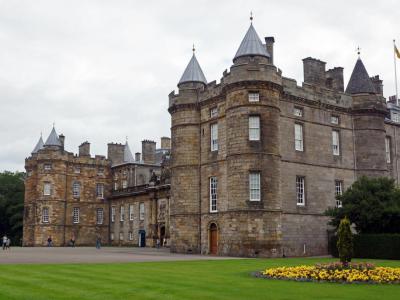
If you're ticking off Edinburgh landmarks, Holyroodhouse is one you can't skip-not unless you're on the run from the crown... Sitting at the royal end of the Royal Mile, this stately pad is the official Scottish residence of the British monarch and once housed none other than Mary, Queen of Scots. That’s right, drama lives here rent-free...
The whole saga begins with King David I, who founded the nearby Holyrood Abbey in 1128 (after a divine deer encounter, according to legend). A few centuries later, precisely by 1501, a palace was built beside the abbey. Now, calling it a “palace”, back then, was maybe a touch ambitious-a grand country house, more like it, rather than Versailles-but it did get bigger in 1532 and 1536. The property was thoroughly renovated in 1633, only to be trashed when Cromwell’s soldiers used it as barracks and then a fire added insult to injury...
Then came the 1670s, when Sir William Bruce, the architectural fixer of the day, rebuilt the place. The abbey chapel became the Chapel Royal, hosting pious activity until 1768, when the roof rather unceremoniously fell in. More restorations followed after that-first in 1822 for a royal visit, and then again in the 20th century when King George V and Queen Mary decided the palace could really use indoor plumbing. Royal flush, anyone?
When the royals are away, the house is open to the public. Inside, you can marvel at ceiling stucco so delicate it practically whispers, and gawk at an entire lineup of Scottish monarchs-some real, some as fictional as their hairlines-painted by the Dutch Golden Age artist Jacob de Wet. Then, dive into the Royal Collection, a five-century mix of armor, jewels, manuscripts, and silverware. Basically, it’s the attic of your dreams-if your attic had Rembrandts and 17th-century clocks.
Oh, and don’t wander off alone unless you're cool with ghosts. Legend has it that Agnes Sampson, accused of witchcraft and executed in 1592, still makes the occasional appearance here. So, if you feel a chill or hear something whispering about herbal remedies... maybe don’t investigate.
Palace, ghosts, ceilings, swords, and sovereign bling-are all here. Holyroodhouse doesn’t just bring the royal drama-it curates it.
The whole saga begins with King David I, who founded the nearby Holyrood Abbey in 1128 (after a divine deer encounter, according to legend). A few centuries later, precisely by 1501, a palace was built beside the abbey. Now, calling it a “palace”, back then, was maybe a touch ambitious-a grand country house, more like it, rather than Versailles-but it did get bigger in 1532 and 1536. The property was thoroughly renovated in 1633, only to be trashed when Cromwell’s soldiers used it as barracks and then a fire added insult to injury...
Then came the 1670s, when Sir William Bruce, the architectural fixer of the day, rebuilt the place. The abbey chapel became the Chapel Royal, hosting pious activity until 1768, when the roof rather unceremoniously fell in. More restorations followed after that-first in 1822 for a royal visit, and then again in the 20th century when King George V and Queen Mary decided the palace could really use indoor plumbing. Royal flush, anyone?
When the royals are away, the house is open to the public. Inside, you can marvel at ceiling stucco so delicate it practically whispers, and gawk at an entire lineup of Scottish monarchs-some real, some as fictional as their hairlines-painted by the Dutch Golden Age artist Jacob de Wet. Then, dive into the Royal Collection, a five-century mix of armor, jewels, manuscripts, and silverware. Basically, it’s the attic of your dreams-if your attic had Rembrandts and 17th-century clocks.
Oh, and don’t wander off alone unless you're cool with ghosts. Legend has it that Agnes Sampson, accused of witchcraft and executed in 1592, still makes the occasional appearance here. So, if you feel a chill or hear something whispering about herbal remedies... maybe don’t investigate.
Palace, ghosts, ceilings, swords, and sovereign bling-are all here. Holyroodhouse doesn’t just bring the royal drama-it curates it.
