Custom Walk in Auckland, New Zealand by owensamo_ccd62 created on 2026-03-09
Guide Location: New Zealand » Auckland
Guide Type: Custom Walk
# of Sights: 13
Tour Duration: 4 Hour(s)
Travel Distance: 8.7 Km or 5.4 Miles
Share Key: 2H76X
Guide Type: Custom Walk
# of Sights: 13
Tour Duration: 4 Hour(s)
Travel Distance: 8.7 Km or 5.4 Miles
Share Key: 2H76X
How It Works
Please retrieve this walk in the GPSmyCity app. Once done, the app will guide you from one tour stop to the next as if you had a personal tour guide. If you created the walk on this website or come to the page via a link, please follow the instructions below to retrieve the walk in the app.
Retrieve This Walk in App
Step 1. Download the app "GPSmyCity: Walks in 1K+ Cities" on Apple App Store or Google Play Store.



Step 2. In the GPSmyCity app, download(or launch) the guide "Auckland Map and Walking Tours".
Step 3. Tap the menu button located at upper right corner of the "Walks" screen and select "Retrieve custom walk". Enter the share key: 2H76X
1) Ferry Building
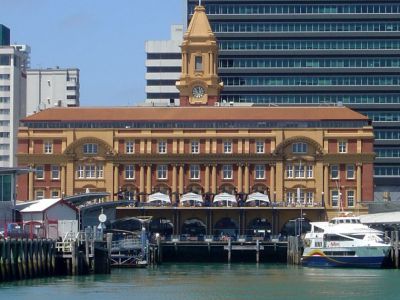
Striking and elegant, the Auckland Ferry Terminal – often simply called the Ferry Building – is a waterfront landmark that connects the city to islands, harbors, and the pulse of Waitematā Harbour. Completed in 1912, this Edwardian Baroque gem was designed by Alex Wiseman with sandstone, brick, and a base of Coromandel granite. Back then, it served not just ferries, but also trade unions, consulate offices, and maritime businesses.
Today, the historic „Old Building“ facing Queen Street houses cafés and shops that invite you to pause and watch ferries glide in and out. Meanwhile, daily ferry operations happen next door in the newer terminal, with modern piers designed to echo sails and waterfront life. A major recent upgrade: in 2021, Auckland Transport invested NZ$42 million to improve the ferry basin and add new berths (including infrastructure for electric ferries), making the waterfront more sustainable and future-friendly.
Did you know? The original Ferry Building was meant to be five storeys tall – but public outcry over blocked views led to a design reduction. What we see today is a four-storey building with a clock tower, carefully balanced between grandeur and preserving harbour vistas.
Enjoy a coffee inside the Old Building, stroll the waterfront walkway, and soak in the view across the harbour. Ferry rides, shops, and waterfront cafés combine to make this more than just a transit hub – it’s a spot where the sea meets the city in style.
Today, the historic „Old Building“ facing Queen Street houses cafés and shops that invite you to pause and watch ferries glide in and out. Meanwhile, daily ferry operations happen next door in the newer terminal, with modern piers designed to echo sails and waterfront life. A major recent upgrade: in 2021, Auckland Transport invested NZ$42 million to improve the ferry basin and add new berths (including infrastructure for electric ferries), making the waterfront more sustainable and future-friendly.
Did you know? The original Ferry Building was meant to be five storeys tall – but public outcry over blocked views led to a design reduction. What we see today is a four-storey building with a clock tower, carefully balanced between grandeur and preserving harbour vistas.
Enjoy a coffee inside the Old Building, stroll the waterfront walkway, and soak in the view across the harbour. Ferry rides, shops, and waterfront cafés combine to make this more than just a transit hub – it’s a spot where the sea meets the city in style.
2) Queen Street (must see)
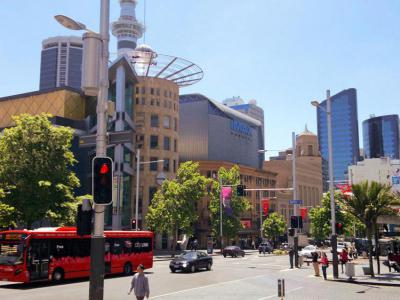
Queen Street is Auckland’s main artery where business, cafés, neon signs, and history all collide in the best way possible. Running from the waterfront near the Ferry Terminal up past midtown toward Karangahape Road, it’s roughly 3 km of hustle, history, and heart. Named after Queen Victoria when it was surveyed in 1841, Queen Street rose quickly from muddy beginnings – yes, early planners had to gravel over swamps just so building foundations wouldn’t sink.
Fires in 1858 destroyed many buildings on nearby Shortland and High Streets, pushing merchants and architects to focus their energies on Queen instead. Brick and plaster buildings sprang up in the 1860s; in 1902 Queen Street achieved two „firsts“ for New Zealand: it was the first road to be asphalted, and the first to run electric trams. (Horse-drawn buses had been rumbling along since the 1880s.) These days, the trams are gone, but their legacy lingers in the streetlamps, façades, and grand old buildings that still stand.
Fast forward to now: Queen Street is in the middle of a transformation. The Wai Horotiu Queen Street Project, completed in November 2023, has stripped away general traffic from large stretches and replaced it with widened footpaths, native plant planters, green seating areas, and safer spaces for walking, biking, or scootering.
New retail and hospitality developments are popping up too, including a major restoration of the heritage building at 131 Queen Street (formerly Milne & Choyce store) and a flagship Radisson Red hotel + rooftop bar building at 280 Queen Street, planned as one of the latest additions to the city’s skyline.
Did you know? When electric trams first rolled down Queen Street in 1902, Sir John Logan Campbell drove the leading car, and thousands lined up to watch the spectacle. Horses were still shaking their heads.
Stroll up Queen Street amid shops and heritage façades, stop in leafy pocket parks, sip coffee overlooking busy laneways, and soak up the energy that comes from a street both historic and ever-changing.
Fires in 1858 destroyed many buildings on nearby Shortland and High Streets, pushing merchants and architects to focus their energies on Queen instead. Brick and plaster buildings sprang up in the 1860s; in 1902 Queen Street achieved two „firsts“ for New Zealand: it was the first road to be asphalted, and the first to run electric trams. (Horse-drawn buses had been rumbling along since the 1880s.) These days, the trams are gone, but their legacy lingers in the streetlamps, façades, and grand old buildings that still stand.
Fast forward to now: Queen Street is in the middle of a transformation. The Wai Horotiu Queen Street Project, completed in November 2023, has stripped away general traffic from large stretches and replaced it with widened footpaths, native plant planters, green seating areas, and safer spaces for walking, biking, or scootering.
New retail and hospitality developments are popping up too, including a major restoration of the heritage building at 131 Queen Street (formerly Milne & Choyce store) and a flagship Radisson Red hotel + rooftop bar building at 280 Queen Street, planned as one of the latest additions to the city’s skyline.
Did you know? When electric trams first rolled down Queen Street in 1902, Sir John Logan Campbell drove the leading car, and thousands lined up to watch the spectacle. Horses were still shaking their heads.
Stroll up Queen Street amid shops and heritage façades, stop in leafy pocket parks, sip coffee overlooking busy laneways, and soak up the energy that comes from a street both historic and ever-changing.
3) Albert Park
Tucked into the heart of downtown Auckland, Albert Park is a verdant refuge where history, beauty, and a whisper of mystery meet under leafy trees. Established in the late 19th century on the former site of the Albert Barracks, this park sits where Māori settlements and fortified villages once stood – making it one of the city’s most layered places.
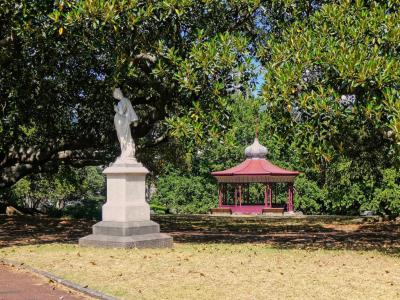
Walk through and you’ll see the formal garden layout with its north-south axis; the elegant bandstand, built in 1901, where people once gathered for brass bands under open skies; and the central cast-iron fountain from 1881 adorned with dolphins and cherubs that invites you to pause and listen to the trickle of water and wind in the fountain spray. The bronze statue of Queen Victoria, erected in 1899 for her Diamond Jubilee, watches over the lawns from its pedestal – still dignified, still quietly regal.
Beneath all this charm lies something unseen: a network of tunnels built in 1941 as air-raid shelters during WWII. Though they were filled in and sealed by 1946, entrances remain – blocked doorways, vents, and shafts that spark curiosity about what lies underfoot. Did you know there are roughly 3.5 kilometres of these tunnels, once maintained by council workers mostly unfit for military service, now part of Albert Park’s subterranean legend?
Today, students from the nearby University, shoppers, tourists and locals share this space – strolling paths edged by historic trees (look for the ombu and English oaks), sitting on benches near statues, or reading a book next to the fountain.
Walk through and you’ll see the formal garden layout with its north-south axis; the elegant bandstand, built in 1901, where people once gathered for brass bands under open skies; and the central cast-iron fountain from 1881 adorned with dolphins and cherubs that invites you to pause and listen to the trickle of water and wind in the fountain spray. The bronze statue of Queen Victoria, erected in 1899 for her Diamond Jubilee, watches over the lawns from its pedestal – still dignified, still quietly regal.
Beneath all this charm lies something unseen: a network of tunnels built in 1941 as air-raid shelters during WWII. Though they were filled in and sealed by 1946, entrances remain – blocked doorways, vents, and shafts that spark curiosity about what lies underfoot. Did you know there are roughly 3.5 kilometres of these tunnels, once maintained by council workers mostly unfit for military service, now part of Albert Park’s subterranean legend?
Today, students from the nearby University, shoppers, tourists and locals share this space – strolling paths edged by historic trees (look for the ombu and English oaks), sitting on benches near statues, or reading a book next to the fountain.
4) Auckland War Memorial Museum (must see)
Auckland War Memorial Museum is one of New Zealand's most important museums and war memorials. Its collections concentrate on New Zealand history (and especially the history of the Auckland Region), natural history, and military history.
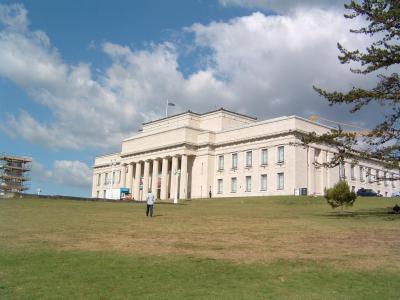
The museum building is also one of the most iconic Auckland buildings, constructed in the neo-classicist style, and sitting on a grassed plinth (the remains of a dormant volcano) in the Auckland Domain. The copper and glass dome, as well as the viewing platform–event center underneath it, quickly won the admiration of critics and public, being noted for its undulating lines, which echo the volcanic landscape and hills around Auckland.
The natural history section of the museum is an innovative and vibrant place to visit with a fascinating calendar of events throughout the year. The museum stores a photographic collection of 1.2 million images, and stores and exhibits 1.5 million natural history specimens from the fields of botany, entomology, geology, land vertebrates and marine biology.
There is also an extensive permanent exhibition covering wars, including wars within New Zealand and New Zealand's participation in overseas conflicts. This exhibition is linked to the War Memorial, and shows, for example, models of Maori pā (fortified settlements) and original Spitfire and Mitsubishi Zero airplanes. The Museum holds the largest collection of applied and decorative arts in New Zealand and selections are currently displayed in the Landmarks and Encounters Galleries.
Why You Should Visit:
Great place to sample the history of NZ through the ages. The vista of the port and city skyline from the front door is also one to savor especially during sunset.
Tip:
Try to time your visit to get tickets for the 30-40min Maori Cultural Performance (daily, 11am, 12pm, and 1:30pm (2:30pm avail Nov-Mar)). Pick up the 'What's On' brochure and select the galleries and themed special exhibitions of most interest. Be sure to also pick up a map at the entrance as the layout is a bit confusing.
The museum building is also one of the most iconic Auckland buildings, constructed in the neo-classicist style, and sitting on a grassed plinth (the remains of a dormant volcano) in the Auckland Domain. The copper and glass dome, as well as the viewing platform–event center underneath it, quickly won the admiration of critics and public, being noted for its undulating lines, which echo the volcanic landscape and hills around Auckland.
The natural history section of the museum is an innovative and vibrant place to visit with a fascinating calendar of events throughout the year. The museum stores a photographic collection of 1.2 million images, and stores and exhibits 1.5 million natural history specimens from the fields of botany, entomology, geology, land vertebrates and marine biology.
There is also an extensive permanent exhibition covering wars, including wars within New Zealand and New Zealand's participation in overseas conflicts. This exhibition is linked to the War Memorial, and shows, for example, models of Maori pā (fortified settlements) and original Spitfire and Mitsubishi Zero airplanes. The Museum holds the largest collection of applied and decorative arts in New Zealand and selections are currently displayed in the Landmarks and Encounters Galleries.
Why You Should Visit:
Great place to sample the history of NZ through the ages. The vista of the port and city skyline from the front door is also one to savor especially during sunset.
Tip:
Try to time your visit to get tickets for the 30-40min Maori Cultural Performance (daily, 11am, 12pm, and 1:30pm (2:30pm avail Nov-Mar)). Pick up the 'What's On' brochure and select the galleries and themed special exhibitions of most interest. Be sure to also pick up a map at the entrance as the layout is a bit confusing.
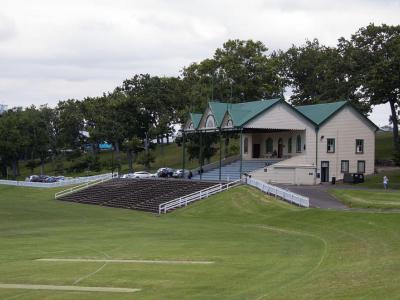
5) Auckland Domain (must see)
The Auckland Domain is the oldest park in Auckland, covering 75 hectares, making it one of the largest in the city. It's situated in the central suburb of Grafton and includes the entire explosion crater as well as most of the surrounding tuff ring of the Pukekawa volcano.
This park is famous for housing one of Auckland's primary tourist attractions, the Auckland War Memorial Museum, which is prominently located on the rim of the crater (tuff ring). The crater's floor is occupied by several sports fields, encircling the southern part of the cone. On the opposite side of the Museum, you'll find the cricket pavilion and Auckland City Hospital. Moving to the north side of the central scoria cone, you'll discover the Domain Wintergardens, featuring two beautiful glass houses. The fernery has been built within an old quarry within the cone. Additionally, there are duck ponds in the northern area of the explosion crater, which has a small overflow stream to the north.
Among the notable annual events held here are "Christmas in the Park," which has attracted over 200,000 spectators in the past, as well as other popular recurring events like "Symphony under the Stars," the "Lantern Festival," and the "Teddybears Picnic."
Why You Should Visit:
Great place to picnic, walk around, watch cricket, sit in the shade, listen to music in the park or visit the Auckland Museum and the Wintergardens.
Tip:
If you like walking, make a whole day of it by starting in Mount Eden, then going to Newmarket and the Auckland Domain.
During the summer there are loads of events that take place here, so always worth checking if there's anything happening.
This park is famous for housing one of Auckland's primary tourist attractions, the Auckland War Memorial Museum, which is prominently located on the rim of the crater (tuff ring). The crater's floor is occupied by several sports fields, encircling the southern part of the cone. On the opposite side of the Museum, you'll find the cricket pavilion and Auckland City Hospital. Moving to the north side of the central scoria cone, you'll discover the Domain Wintergardens, featuring two beautiful glass houses. The fernery has been built within an old quarry within the cone. Additionally, there are duck ponds in the northern area of the explosion crater, which has a small overflow stream to the north.
Among the notable annual events held here are "Christmas in the Park," which has attracted over 200,000 spectators in the past, as well as other popular recurring events like "Symphony under the Stars," the "Lantern Festival," and the "Teddybears Picnic."
Why You Should Visit:
Great place to picnic, walk around, watch cricket, sit in the shade, listen to music in the park or visit the Auckland Museum and the Wintergardens.
Tip:
If you like walking, make a whole day of it by starting in Mount Eden, then going to Newmarket and the Auckland Domain.
During the summer there are loads of events that take place here, so always worth checking if there's anything happening.
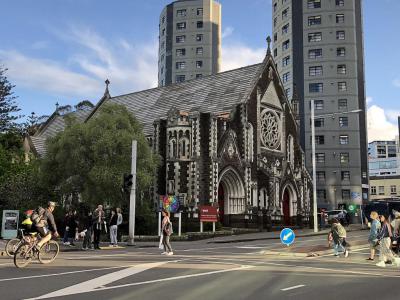
6) Saint Paul's Church
Saint Paul’s Church in Auckland is one of the city’s Historic Place Trust buildings, which demonstrates the importance of the church in the development of the city. The church is a stunning example of the blending of the best elements of 19th century Gothic Revival designs with the natural resources of the New Zealand colony – intelligent use of native timber has been used throughout the cathedral. The building that you see today is the third built for the congregation of Saint Paul’s – the grand design was done by William Skinner and the foundation stone was laid in 1894. Due to the economic dire straits of the late 19th century, the grand plans for a bell tower and spire were deserted and have never been revisited at a later date.
Inside the church there are some unique features that make it an interesting place to visit. There is a chalice that was presented to the church by Queen Victoria and carved stones that come from Westminster Abbey, Canterbury Cathedral, Saint Paul’s Cathedral in England and Yorkminster. Sections of the church, especially around the bishop’s throne are highly decorated. Saint Paul’s Church is often referred to as the “Mother Church” since it was the first to be built in the city.
Inside the church there are some unique features that make it an interesting place to visit. There is a chalice that was presented to the church by Queen Victoria and carved stones that come from Westminster Abbey, Canterbury Cathedral, Saint Paul’s Cathedral in England and Yorkminster. Sections of the church, especially around the bishop’s throne are highly decorated. Saint Paul’s Church is often referred to as the “Mother Church” since it was the first to be built in the city.
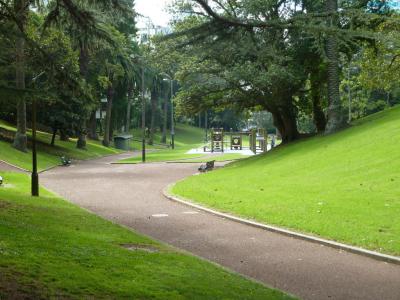
7) Myers Park
Myers Park is a large green space right in the centre of Auckland that was established in 1915 to serve as a thoroughfare connecting the Karangahape Road area and the CBD. There are steep grass-covered hills and slopes where you will also find a fascinating array of exotic flora growing alongside native New Zealand trees. Prior to being transformed into the stunning green, natural space that you see today, it was a large gully and for a time led down an open sewer. In fact, the area around today’s park was a dump and shanty town until a cash gift of £9000 was given by former Auckland mayor Arthur Myers for the purchase of the land.
Money was also pledged by Myers during the opening of the park in February 1915 to open a kindergarten in the park for the predominantly working class that lived around it. Eight months later the kindergarten opened and was later followed by a YWCA providing accommodation for young women working in the CBD. The kindergarten and a children’s playground are still operating today. Within the Myers Park there is also the historically significant caretakers building, over a century old and built from rare kauri.
Money was also pledged by Myers during the opening of the park in February 1915 to open a kindergarten in the park for the predominantly working class that lived around it. Eight months later the kindergarten opened and was later followed by a YWCA providing accommodation for young women working in the CBD. The kindergarten and a children’s playground are still operating today. Within the Myers Park there is also the historically significant caretakers building, over a century old and built from rare kauri.
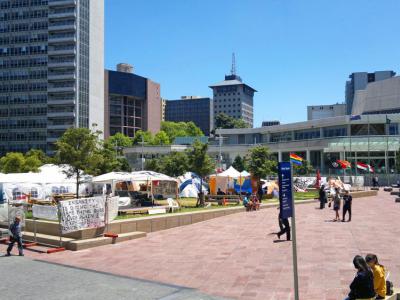
8) Aotea Square
Aotea Square is Auckland’s central outdoor stage where art, architecture, and community converge in full view. Opened in 1979 by Sir Dove-Myer Robinson, it’s become the meeting ground for everything from spontaneous street performances to large-scale concerts. But lately, the Square has been undergoing a serious glow-up. A major $80 million upgrade is underway, including carpark roof repairs, facade improvements to Aotea Centre, and streetscaping that will level out and widen paved areas so people can roam more comfortably.
One of the most notable artworks here is Waharoa by Selwyn Muru, an expressive gateway in wood and copper, welcoming visitors to the Square. It celebrated its 30+ years under the open sky in 1990, then was relocated slightly in 2010 to better fit its surroundings. Some carvings from the top arch have been temporarily removed for restoration and are scheduled to be reinstated once the work is complete.
During warmer months, Aotea Square pulses with life. In Feb 2024, „Summer in the Square“ brought music, dancing, food trucks, DJs, and huge puppet installations.
In winter, it transforms into „Elemental Hub“ with an ice-rink, ice slide, and pop-up dining and entertainment.
Did you know? The Square can host up to 20,000 people during major events, and it continues to serve as Auckland’s central gathering place for concerts, festivals, and community celebrations.
It’s one of those places where Auckland’s energy radiates and you feel very much part of the crowd.
One of the most notable artworks here is Waharoa by Selwyn Muru, an expressive gateway in wood and copper, welcoming visitors to the Square. It celebrated its 30+ years under the open sky in 1990, then was relocated slightly in 2010 to better fit its surroundings. Some carvings from the top arch have been temporarily removed for restoration and are scheduled to be reinstated once the work is complete.
During warmer months, Aotea Square pulses with life. In Feb 2024, „Summer in the Square“ brought music, dancing, food trucks, DJs, and huge puppet installations.
In winter, it transforms into „Elemental Hub“ with an ice-rink, ice slide, and pop-up dining and entertainment.
Did you know? The Square can host up to 20,000 people during major events, and it continues to serve as Auckland’s central gathering place for concerts, festivals, and community celebrations.
It’s one of those places where Auckland’s energy radiates and you feel very much part of the crowd.
9) Sky Tower (must see)
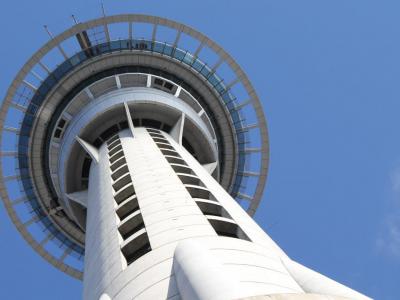
If there’s one structure in Auckland you can’t miss, it’s the Sky Tower – a steel and concrete spire rising 328 meters above the city, dominating the skyline and daring you to look out over land, harbour, volcanoes and sea. Ever since it opened in 1997, it’s been more than just an observation tower – it’s an icon, a view-point, and (if you’re brave) an adrenaline playground.
Ride the glass-panelled lifts up to one of three public decks: the Main Observation Deck, the Lookout, and the SkyDeck perched closer to the top among the antennae. Each offers sweeping 360° panoramas – on a clear day you can see up to 80 kilometres into the distance.
For an extra pulse-race, try the SkyWalk, a 1.2-meter-wide ledge walk at 192 m above ground, open-air, harnessed, wind-in-your-hair kind of stuff. Or if you want more thrill, there’s the SkyJump – which is basically a wire-guided base jump from the same height, reaching up to roughly 85 km/h in free-fall style adrenaline.
Inside, there’s more than just vertigo. Elegant dining happens at the Orbit 360° Restaurant, which rotates while you dine. There’s also the SkyBar, The Lookout café, and a gift shop filled with Auckland keepsakes.
Did you know? On special nights, the Sky Tower lights up in millions of LED colours, supporting causes or celebrating festivals – it's one of Auckland’s favourite ways to shine.
Take a walk by Sky Tower early morning or at sunset, when the light washes the city in gold, whisking you between towering views and street-level charm. Add Sky Tower as your high point – literally – of the route, and savour how Auckland transforms from dawn to dusk.
Ride the glass-panelled lifts up to one of three public decks: the Main Observation Deck, the Lookout, and the SkyDeck perched closer to the top among the antennae. Each offers sweeping 360° panoramas – on a clear day you can see up to 80 kilometres into the distance.
For an extra pulse-race, try the SkyWalk, a 1.2-meter-wide ledge walk at 192 m above ground, open-air, harnessed, wind-in-your-hair kind of stuff. Or if you want more thrill, there’s the SkyJump – which is basically a wire-guided base jump from the same height, reaching up to roughly 85 km/h in free-fall style adrenaline.
Inside, there’s more than just vertigo. Elegant dining happens at the Orbit 360° Restaurant, which rotates while you dine. There’s also the SkyBar, The Lookout café, and a gift shop filled with Auckland keepsakes.
Did you know? On special nights, the Sky Tower lights up in millions of LED colours, supporting causes or celebrating festivals – it's one of Auckland’s favourite ways to shine.
Take a walk by Sky Tower early morning or at sunset, when the light washes the city in gold, whisking you between towering views and street-level charm. Add Sky Tower as your high point – literally – of the route, and savour how Auckland transforms from dawn to dusk.
10) Saint Patrick's Cathedral
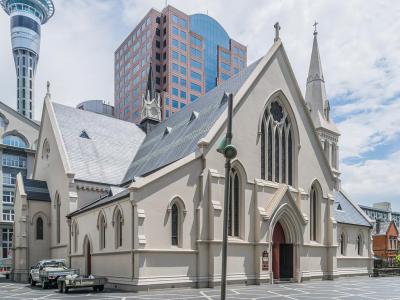
In the heart of downtown Auckland stands Saint Patrick’s Cathedral, the spiritual home of the city’s Catholic community since the 1840s. The land was granted to Bishop Jean-Baptiste Pompallier in 1841, and soon after the first modest wooden chapel appeared. From those humble beginnings grew today’s impressive Gothic Revival cathedral, its spire and stained glass now blending seamlessly into the modern city skyline. Did you know that this was one of the earliest Catholic sites in New Zealand?
What makes this place especially charming is its Irish heart. Auckland’s Catholic community in the 19th century was largely made up of Irish immigrants – tough, hardworking settlers who didn’t just bring Saint Patrick’s Day celebrations with them, but went as far as to raise a whole cathedral in honor of their patron saint. In a way, the church became their way of saying: “We might be on the far side of the world, but we’re not about to forget who we are.”
Step inside today and you’ll find a serene sanctuary filled with light, art, and the sound of bells echoing across downtown. Whether you want a quiet moment of reflection or just to appreciate a piece of Auckland’s multicultural heritage, Saint Patrick’s remains one of the city’s most graceful and welcoming landmarks.
What makes this place especially charming is its Irish heart. Auckland’s Catholic community in the 19th century was largely made up of Irish immigrants – tough, hardworking settlers who didn’t just bring Saint Patrick’s Day celebrations with them, but went as far as to raise a whole cathedral in honor of their patron saint. In a way, the church became their way of saying: “We might be on the far side of the world, but we’re not about to forget who we are.”
Step inside today and you’ll find a serene sanctuary filled with light, art, and the sound of bells echoing across downtown. Whether you want a quiet moment of reflection or just to appreciate a piece of Auckland’s multicultural heritage, Saint Patrick’s remains one of the city’s most graceful and welcoming landmarks.
11) Victoria Park
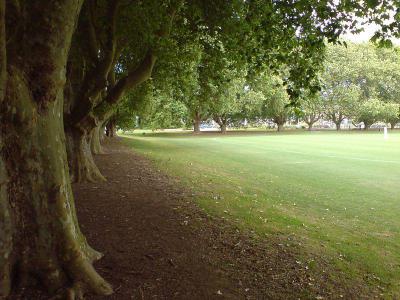
Victoria Park is one of Auckland’s largest open spaces and sporting grounds. The parklands were set aside on reclaimed bay land around the turn of the 20th century in Freeman’s Bay, which lies to the west of the city’s CBD. Sir John Logan Campbell, known as the “father of Auckland” was one of the main benefactors providing funds for the park’s development. One of the distinctive features of the park is the profusion of the London Plane Trees, which line the area and which were planted for the park’s opening in 1905. Victoria Park has long had a sporting tradition with a grandstand added to the park’s landscape a year after it opened and bowls, croquet and a playground added in the subsequent years.
Victoria Park was also the site of the very first New Zealand rugby league international, which was played against England. During World War II the park was used as a makeshift quarter for stationed US troops. Close by the park is the Victoria Park Market, which is a quaint handicraft and souvenir market housed in a historic building. On weekends there is also a lot of live entertainment on offer and visiting the market is ideally combined with a picnic in Victoria Park.
Tip:
If you want to have a picnic, check out New World Victoria Park's gourmet specialty items across the road.
Victoria Park was also the site of the very first New Zealand rugby league international, which was played against England. During World War II the park was used as a makeshift quarter for stationed US troops. Close by the park is the Victoria Park Market, which is a quaint handicraft and souvenir market housed in a historic building. On weekends there is also a lot of live entertainment on offer and visiting the market is ideally combined with a picnic in Victoria Park.
Tip:
If you want to have a picnic, check out New World Victoria Park's gourmet specialty items across the road.
12) Viaduct Harbour (must see)
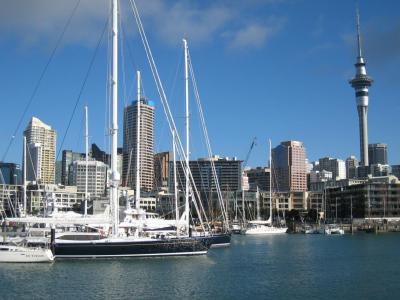
Stretching along Auckland’s waterfront, Viaduct Harbour is where sails, style, and sea-breeze combine to make walking feel like a mini celebration. Once a rugged industrial stretch of warehouses and fisherman’s docks, the area was completely reimagined in the 1990s and early 2000s. What used to be gritty wharves became prime waterfront apartments, top-notch restaurants, and a marina full of gleaming boats.
A key turning point was hosting America’s Cup events – that helped push Auckland to invest in Viaduct’s redevelopment and polished it into the destination it is today. The precinct now combines luxury living with seriously good food: waterfront dining spots from Soul Bar & Bistro to Hello Beasty and Bivacco, where the views of the marina are almost as tasty as the dishes.
The Viaduct Harbour Marina (now branded „Auckland Central Marina“ in parts) has around 70-80 berths, handling everything from sleek superyachts to day-trip charter boats. It’s also a gateway for cruising the Waitematā Harbour and heading out toward the Hauraki Gulf.
Did you know? The Viaduct Events Centre reopened in April 2023 after renovations, now shining with a sustainability badge: floor-to-ceiling glass, event halls overlooking the harbour, and design touches that speak to both marine tradition and modern flair.
Start by meandering the boardwalk, peek into luxury shops and hidden laneways, enjoy al fresco meals by the water, then soak up the marina energy. It’s one of those parts of Auckland where you feel like you’re both in the city and by the sea – perfect for mixing history, leisure, and panoramic views.
A key turning point was hosting America’s Cup events – that helped push Auckland to invest in Viaduct’s redevelopment and polished it into the destination it is today. The precinct now combines luxury living with seriously good food: waterfront dining spots from Soul Bar & Bistro to Hello Beasty and Bivacco, where the views of the marina are almost as tasty as the dishes.
The Viaduct Harbour Marina (now branded „Auckland Central Marina“ in parts) has around 70-80 berths, handling everything from sleek superyachts to day-trip charter boats. It’s also a gateway for cruising the Waitematā Harbour and heading out toward the Hauraki Gulf.
Did you know? The Viaduct Events Centre reopened in April 2023 after renovations, now shining with a sustainability badge: floor-to-ceiling glass, event halls overlooking the harbour, and design touches that speak to both marine tradition and modern flair.
Start by meandering the boardwalk, peek into luxury shops and hidden laneways, enjoy al fresco meals by the water, then soak up the marina energy. It’s one of those parts of Auckland where you feel like you’re both in the city and by the sea – perfect for mixing history, leisure, and panoramic views.
13) New Zealand Maritime Museum (must see)
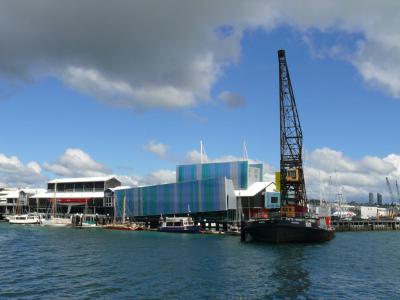
Set right on Hobson Wharf next to Viaduct Harbour, the New Zealand Maritime Museum Hui Te Ananui A Tangaroa is water, wood, stories, and sails all rolled into one. Opened in 1993, it traces Aotearoa’s oceanic connections from Māori navigation and early Polynesian voyaging, through European arrivals, up to modern sailing legends like America’s Cup.
Inside, you’ll find permanent galleries that showcase Māori vessels and navigation, coastal trading, whaling histories, immigration, and the tools and tales of harbour trades. There are rotating exhibits too. Many explore art, ship figureheads, and vibrant storytelling through scrimshaw and maritime painting. For families, there are hands-on booths where kids can design toy yachts, weather digital storms, or step into a „bach“ replica to experience classic Kiwi holiday vibes.
Outside, the museum has a fleet of heritage vessels. You can sail aboard Ted Ashby, a replica scow that offers one-hour sails around Waitematā Harbour nearly every day, or take shorter steamy trips on SS Puke when scheduled. Be warned: things get salty and windy, but the view of the city from the water is unbeatable.
Did you know? The steam crane Rapaki, once towering in Lyttelton after being built in Scotland in 1926, was moved to the museum and served as both exhibit and breakwater – until parts of it were removed in 2018 during harbour upgrades. (Parts remain, but the full crane is no longer intact.)
Mid-morning or early afternoon is perfect when galleries are fresh and sail-times are scheduled. Snap some shots, step aboard a heritage boat, and let the sea-borne stories of New Zealand anchor themselves in your memory.
Inside, you’ll find permanent galleries that showcase Māori vessels and navigation, coastal trading, whaling histories, immigration, and the tools and tales of harbour trades. There are rotating exhibits too. Many explore art, ship figureheads, and vibrant storytelling through scrimshaw and maritime painting. For families, there are hands-on booths where kids can design toy yachts, weather digital storms, or step into a „bach“ replica to experience classic Kiwi holiday vibes.
Outside, the museum has a fleet of heritage vessels. You can sail aboard Ted Ashby, a replica scow that offers one-hour sails around Waitematā Harbour nearly every day, or take shorter steamy trips on SS Puke when scheduled. Be warned: things get salty and windy, but the view of the city from the water is unbeatable.
Did you know? The steam crane Rapaki, once towering in Lyttelton after being built in Scotland in 1926, was moved to the museum and served as both exhibit and breakwater – until parts of it were removed in 2018 during harbour upgrades. (Parts remain, but the full crane is no longer intact.)
Mid-morning or early afternoon is perfect when galleries are fresh and sail-times are scheduled. Snap some shots, step aboard a heritage boat, and let the sea-borne stories of New Zealand anchor themselves in your memory.
