Custom Walk in Lucerne, Switzerland by rtddavis93_a44f4c created on 2026-03-10
Guide Location: Switzerland » Lucerne
Guide Type: Custom Walk
# of Sights: 14
Tour Duration: 3 Hour(s)
Travel Distance: 5.8 Km or 3.6 Miles
Share Key: HFDEJ
Guide Type: Custom Walk
# of Sights: 14
Tour Duration: 3 Hour(s)
Travel Distance: 5.8 Km or 3.6 Miles
Share Key: HFDEJ
How It Works
Please retrieve this walk in the GPSmyCity app. Once done, the app will guide you from one tour stop to the next as if you had a personal tour guide. If you created the walk on this website or come to the page via a link, please follow the instructions below to retrieve the walk in the app.
Retrieve This Walk in App
Step 1. Download the app "GPSmyCity: Walks in 1K+ Cities" on Apple App Store or Google Play Store.



Step 2. In the GPSmyCity app, download(or launch) the guide "Lucerne Map and Walking Tours".
Step 3. Tap the menu button located at upper right corner of the "Walks" screen and select "Retrieve custom walk". Enter the share key: HFDEJ
1) Chapel Bridge (must see)
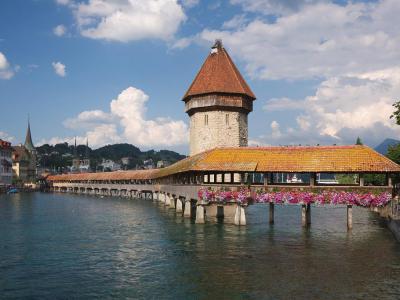
Chapel Bridge crosses the river on a diagonal line, its long wooden structure resting on stone and timber supports. Built in the fourteenth century as part of the city’s fortifications, the bridge originally linked defensive zones on both banks. Its angled route reflects these strategic needs rather than any concern for symmetry. The covered walkway shields travelers from wind and rain, and the sound of the boards underfoot hints at the many cycles of repair that have kept the bridge in use for centuries. The fire of 1993 destroyed a large central portion, but the reconstruction followed surviving plans and incorporated intact elements wherever possible.
As you enter the walkway, look upward at the roof beams. Hanging from them is a sequence of triangular painted panels created in the seventeenth century. These images depict episodes from local history, civic legends, and religious narratives. The panels were meant to be read quickly, offering brief lessons to those crossing the river. Some originals survived the fire and display a darker, weathered tone; others are later replacements painted to match the original style. Their arrangement forms a loose timeline, though many sections were reordered during restoration.
At the midpoint of the bridge stands the Water Tower, a stout octagonal structure older than the bridge itself. Its thick stone walls reveal its former defensive role. Over the centuries it served as an archive, a prison, and a treasury. Although the interior is not part of the regular visitor route, the tower remains central to the bridge’s identity. Its mass anchors the wooden walkway and creates a sharp contrast with the lighter timbers surrounding it.
As you continue across, look to the open side of the walkway for views of rooftops, river reflections, and the movement of boats and swans below. The rhythm of repeating roof supports creates a steady visual pattern, framing each view like a series of windows. The bridge’s mixture of medieval defense, later civic storytelling, and modern conservation shows how the city has adapted a working structure into a landmark.
As you enter the walkway, look upward at the roof beams. Hanging from them is a sequence of triangular painted panels created in the seventeenth century. These images depict episodes from local history, civic legends, and religious narratives. The panels were meant to be read quickly, offering brief lessons to those crossing the river. Some originals survived the fire and display a darker, weathered tone; others are later replacements painted to match the original style. Their arrangement forms a loose timeline, though many sections were reordered during restoration.
At the midpoint of the bridge stands the Water Tower, a stout octagonal structure older than the bridge itself. Its thick stone walls reveal its former defensive role. Over the centuries it served as an archive, a prison, and a treasury. Although the interior is not part of the regular visitor route, the tower remains central to the bridge’s identity. Its mass anchors the wooden walkway and creates a sharp contrast with the lighter timbers surrounding it.
As you continue across, look to the open side of the walkway for views of rooftops, river reflections, and the movement of boats and swans below. The rhythm of repeating roof supports creates a steady visual pattern, framing each view like a series of windows. The bridge’s mixture of medieval defense, later civic storytelling, and modern conservation shows how the city has adapted a working structure into a landmark.
2) Rathaus (Town Hall)
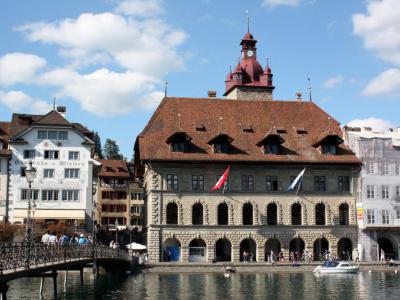
Lucerne’s Town Hall is a solid Renaissance building completed in the early seventeenth century, shaped by Italian design ideas adapted to local materials. Its broad stone base, arcaded ground floor, and steep roof show how practical needs and civic display were combined. The structure was used for council meetings, grain storage, and public gatherings, making it both an administrative and economic center.
If you stand in front of the building, look closely at the arcades along the lower level. Their wide arches once sheltered market activity and still create a clear passageway. Above them, the smooth stone façade rises toward the timber-framed upper section. The transition between stone and wood reflects changing building methods of the period. The projecting roof, with its deep overhang, protects the walls from weather and gives the upper part a heavier presence.
Walk to the side facing the river and look at how the building meets the water’s edge. The position was chosen for easy access to transport routes and to place the hall within sight of trading activity. The tall tower with its clock and small openings served both practical and symbolic purposes, marking time for the town and signaling the presence of local authority. Its shape contrasts with the long roofline, adding vertical emphasis to an otherwise horizontal structure.
Inside, the ceremonial rooms show wooden ceilings, painted coats of arms, and sturdy furnishings. These features reflect the role of the hall as a place for public decisions and guild activities.
If you stand in front of the building, look closely at the arcades along the lower level. Their wide arches once sheltered market activity and still create a clear passageway. Above them, the smooth stone façade rises toward the timber-framed upper section. The transition between stone and wood reflects changing building methods of the period. The projecting roof, with its deep overhang, protects the walls from weather and gives the upper part a heavier presence.
Walk to the side facing the river and look at how the building meets the water’s edge. The position was chosen for easy access to transport routes and to place the hall within sight of trading activity. The tall tower with its clock and small openings served both practical and symbolic purposes, marking time for the town and signaling the presence of local authority. Its shape contrasts with the long roofline, adding vertical emphasis to an otherwise horizontal structure.
Inside, the ceremonial rooms show wooden ceilings, painted coats of arms, and sturdy furnishings. These features reflect the role of the hall as a place for public decisions and guild activities.
3) Jesuit Church (Jesuitenkirche) (must see)
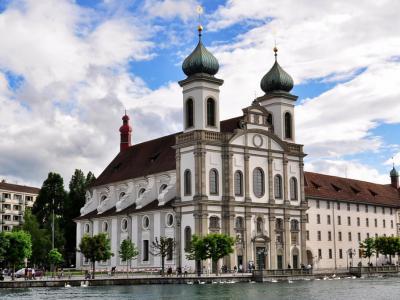
The Jesuit Church stands beside the river as one of the earliest Baroque churches in the region. Its twin onion-shaped towers, curved façade, and pale stucco surfaces mark a shift from earlier, simpler building styles. Inside, the space is shaped by soft light, restrained ornament, and careful use of color. Stucco reliefs frame the nave, and the ceiling frescoes guide the eye along the central axis toward the altar. The church was built by the Jesuit order in the seventeenth century, during a period of renewed emphasis on teaching and religious outreach.
As you enter the nave, look straight ahead toward the high altar. Its gilded details and polished columns form a bright focal point against the otherwise light interior. Now look up at the ceiling: the frescoes show scenes framed by decorative plasterwork, creating the illusion of depth. Take a moment to look right and left at the repeating arched bays. Each one contains a side altar set into its niche, arranged in mirrored positions to maintain the symmetry of the Baroque interior.
Continue walking toward the altar and pause at the midpoint of the nave. Look back toward the entrance to see how the organ gallery sits above the doors. The organ’s case reflects the same stone-like finish as the main altar, allowing it to stand out clearly against the church's white walls. Now face the altar again and look closely at the sculpted figures that flank it. Their poses direct attention upward, linking the altarpiece to the architectural lines of the apse. If you step a little to the right side of the nave, you can also see how the light enters through tall, narrow windows and highlights details of the plasterwork.
Before leaving, spend a moment outside to look up at the towers. Their curved shapes soften the vertical lines of the façade and set the building apart from neighboring structures. The dome-like tops reflect southern architectural influences brought north by Jesuit builders. This mixture of local and imported features gives the church its distinctive profile along the river.
As you enter the nave, look straight ahead toward the high altar. Its gilded details and polished columns form a bright focal point against the otherwise light interior. Now look up at the ceiling: the frescoes show scenes framed by decorative plasterwork, creating the illusion of depth. Take a moment to look right and left at the repeating arched bays. Each one contains a side altar set into its niche, arranged in mirrored positions to maintain the symmetry of the Baroque interior.
Continue walking toward the altar and pause at the midpoint of the nave. Look back toward the entrance to see how the organ gallery sits above the doors. The organ’s case reflects the same stone-like finish as the main altar, allowing it to stand out clearly against the church's white walls. Now face the altar again and look closely at the sculpted figures that flank it. Their poses direct attention upward, linking the altarpiece to the architectural lines of the apse. If you step a little to the right side of the nave, you can also see how the light enters through tall, narrow windows and highlights details of the plasterwork.
Before leaving, spend a moment outside to look up at the towers. Their curved shapes soften the vertical lines of the façade and set the building apart from neighboring structures. The dome-like tops reflect southern architectural influences brought north by Jesuit builders. This mixture of local and imported features gives the church its distinctive profile along the river.
4) Spreuer Bridge (must see)
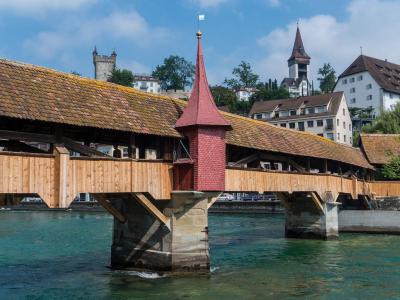
Spreuer Bridge is a covered wooden crossing that bends gently as it spans the river. Built in the early fifteenth century, it once served practical purposes connected to the nearby mills, allowing workers to dispose of chaff into the water, which gave the bridge its name. Its structure shows typical medieval carpentry: heavy beams, angled supports, and a low roof that protects the walkway from weather. The bridge’s slight curve follows the natural flow of the river rather than a straight architectural plan.
Inside the walkway, a sequence of triangular painted panels hangs beneath the roof ridge. Created in the seventeenth century, these paintings form a cycle centered on the Dance of Death, a theme that was common in European art during times of plague and conflict. Each panel pairs death with figures from different levels of society, using simple compositions and direct symbolism. The panels served as moral reminders for the community, presenting a message about shared fate and the fragility of status. Surviving works show their age through darker tones and worn surfaces, while replaced sections reflect careful restoration efforts.
At the midpoint stands a small chapel-like structure embedded into the bridge. This addition, built shortly after the bridge itself, was used for brief prayers and blessings connected to river work and nearby guild activities. Its wooden walls and narrow windows blend with the surrounding structure, but the carved details and small roof set it apart from the rest of the walkway. From here, the roof timbers are easy to study: broad rafters, cross-braces, and wooden pegs that show the joinery techniques of the period.
Continuing across, you can look out through the open sides of the bridge to see the river turning below and the arrangement of rooftops and walls along the banks. The repeating pattern of posts and beams frames the water in alternating light and shadow. The bridge’s combination of medieval carpentry, civic artistic tradition, and later restoration work provides a clear record of how a functional crossing became a visual narrative space.
Inside the walkway, a sequence of triangular painted panels hangs beneath the roof ridge. Created in the seventeenth century, these paintings form a cycle centered on the Dance of Death, a theme that was common in European art during times of plague and conflict. Each panel pairs death with figures from different levels of society, using simple compositions and direct symbolism. The panels served as moral reminders for the community, presenting a message about shared fate and the fragility of status. Surviving works show their age through darker tones and worn surfaces, while replaced sections reflect careful restoration efforts.
At the midpoint stands a small chapel-like structure embedded into the bridge. This addition, built shortly after the bridge itself, was used for brief prayers and blessings connected to river work and nearby guild activities. Its wooden walls and narrow windows blend with the surrounding structure, but the carved details and small roof set it apart from the rest of the walkway. From here, the roof timbers are easy to study: broad rafters, cross-braces, and wooden pegs that show the joinery techniques of the period.
Continuing across, you can look out through the open sides of the bridge to see the river turning below and the arrangement of rooftops and walls along the banks. The repeating pattern of posts and beams frames the water in alternating light and shadow. The bridge’s combination of medieval carpentry, civic artistic tradition, and later restoration work provides a clear record of how a functional crossing became a visual narrative space.
5) Nölliturm (Nölli Tower)
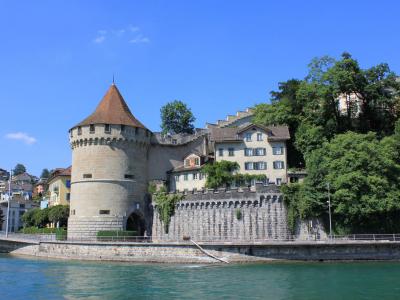
The first in line of the nine towers of the Musegg Wall of Lucerne, the Nölliturm (Nölli Tower) marks the outset of the ancient ring of fortifications which extended over the Musegghügel (Musegg Hill) to the now demolished Weggistor gate in today's Museumplatz (Museum Square).
This cylindrical stone tower was built between 1513 and 1519 upon the rock on the bank of the river Reuss to replace another gate tower that was no longer used. Originally, it was known as the "Red Tower" because of the striking conical roof, clad in red tiles. The name Nölliturm probably refers to its former guard and was documented, for the first time, in the early 18th century.
Although somewhat squat in appearance, the Nölli Tower represents a fine ashlar structure standing a proud 28 meters tall to the top, with an outer diameter of 13.45 and inner diameter of 8.85 meters.
Until 1852 it was used as a gunpowder storage, then as a storage of weapons and oil, and then as an archive. In 1901, the tower was modified to let vehicular traffic pass through its gate, following the construction of Saint Karli-Quai that same year. The Saffron Guild of Lucerne has had their headquarters in and maintained the Nölliturm – the municipality property – since 1922.
This cylindrical stone tower was built between 1513 and 1519 upon the rock on the bank of the river Reuss to replace another gate tower that was no longer used. Originally, it was known as the "Red Tower" because of the striking conical roof, clad in red tiles. The name Nölliturm probably refers to its former guard and was documented, for the first time, in the early 18th century.
Although somewhat squat in appearance, the Nölli Tower represents a fine ashlar structure standing a proud 28 meters tall to the top, with an outer diameter of 13.45 and inner diameter of 8.85 meters.
Until 1852 it was used as a gunpowder storage, then as a storage of weapons and oil, and then as an archive. In 1901, the tower was modified to let vehicular traffic pass through its gate, following the construction of Saint Karli-Quai that same year. The Saffron Guild of Lucerne has had their headquarters in and maintained the Nölliturm – the municipality property – since 1922.
6) Museggmauer (Musegg Wall) (must see)
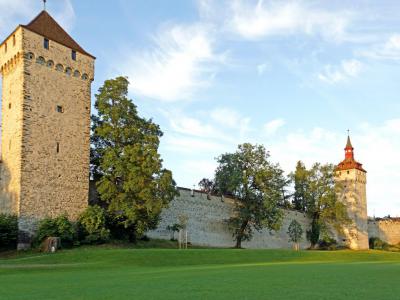
Musegg Wall is a substantial section of the city’s late medieval fortifications, built between the fourteenth and fifteenth centuries to control access and protect the growing settlement. Its long line follows the natural rise of the hillside rather than a strict geometric plan, creating a varied silhouette marked by nine distinct towers. The mixture of stone and brick, along with traces of later repairs, shows how the wall remained in use well into the early modern period.
Each tower has its own character and history. Some are square and massive, intended for direct defense, while others are round or polygonal, designed for lookout duties or storage. Their irregular spacing reflects the city’s need to secure specific vantage points overlooking the valley, the lake, and the approach routes from surrounding regions. Several towers retain their original internal stairways and narrow openings that once allowed defenders to observe movement without revealing their positions.
Walking along the accessible sections reveals how the wall shaped urban development. On one side lie the dense rooftops of the old town; on the other, the steep rise toward former grazing land that extended beyond the city boundary. The contrast helps explain why the wall maintained its importance for so long, acting as both a physical and administrative divider.
From elevated points, the panorama shows the close relationship between the city and its landscape. The mountains form a protective ring, and the lake spreads outward from the town’s edge. Within this setting, Musegg Wall stands as one of the most complete surviving examples of medieval fortification in the region, preserving structural details that illustrate centuries of adaptation and maintenance.
Each tower has its own character and history. Some are square and massive, intended for direct defense, while others are round or polygonal, designed for lookout duties or storage. Their irregular spacing reflects the city’s need to secure specific vantage points overlooking the valley, the lake, and the approach routes from surrounding regions. Several towers retain their original internal stairways and narrow openings that once allowed defenders to observe movement without revealing their positions.
Walking along the accessible sections reveals how the wall shaped urban development. On one side lie the dense rooftops of the old town; on the other, the steep rise toward former grazing land that extended beyond the city boundary. The contrast helps explain why the wall maintained its importance for so long, acting as both a physical and administrative divider.
From elevated points, the panorama shows the close relationship between the city and its landscape. The mountains form a protective ring, and the lake spreads outward from the town’s edge. Within this setting, Musegg Wall stands as one of the most complete surviving examples of medieval fortification in the region, preserving structural details that illustrate centuries of adaptation and maintenance.
7) Zytturm / Zeitturm (Time Tower)
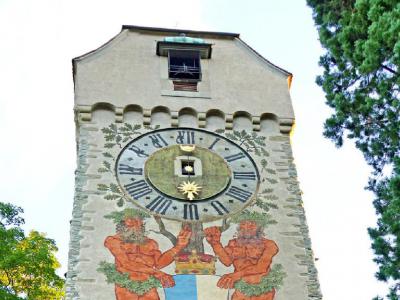
The most unique of the Musegg Wall towers – the Zytturm or Zeitturm (Time Tower) – was named so for being purposely designed to accommodate the city clock.
The tower was built in 1403 (some sources place the construction year at 1442), with certain wall sections reportedly dating to 1386. Originally, the building had a crenelated wreath and an inner pent roof that was replaced, later in the 15th century, with a half-hip roof that is seen today.
The tower stands 31 meters high and has a footprint of 9.1 x 7.25 meters. The clock dial measures 3 to 4 meters “carried” by two giant figures painted on the south façade. Placed in such a way that one could read the time from afar, the digits were made large enough to be seen by fishermen on the lake. Both the dial and the painting were first documented in Diebold Schilling's 16th century Lucerne Chronicle; their most recent renovation took place in 1939.
The Zytturm clockwork is the oldest in Lucerne and all of central Switzerland; the first mechanism – complete with stone weights and pendulum – was made in 1385 and then replaced by the current one in 1535.
Since the late Middle Ages the Time Tower has had the privilege of the first strike – its clock chimes the hour one minute before any other public clock in Lucerne. Its bell, the Leonhardsglocke – adorned with reliefs of the Crucifixion and Lucerne's coat of arms – was originally cast in 1370 and first hung in Saint Peter's Chapel on Kapellplatz.
Since the late Middle Ages, there has been a person tasked with winding the clock on a daily basis. The operating manual, dated 1386, is kept at the Lucerne State Archives.
As of 1951 the Zytturm has been open to the public: from April 1 to November 1. Admission is free.
Why You Should Visit:
One of Europe's most unique clock towers!
A climb to the top offers a great up-close view of the Old Town, the lake and the mountains.
Tip:
Be there on the hour to watch the inner clock workings, as the bells chime.
There are nine more historic clocks exhibited inside.
The tower was built in 1403 (some sources place the construction year at 1442), with certain wall sections reportedly dating to 1386. Originally, the building had a crenelated wreath and an inner pent roof that was replaced, later in the 15th century, with a half-hip roof that is seen today.
The tower stands 31 meters high and has a footprint of 9.1 x 7.25 meters. The clock dial measures 3 to 4 meters “carried” by two giant figures painted on the south façade. Placed in such a way that one could read the time from afar, the digits were made large enough to be seen by fishermen on the lake. Both the dial and the painting were first documented in Diebold Schilling's 16th century Lucerne Chronicle; their most recent renovation took place in 1939.
The Zytturm clockwork is the oldest in Lucerne and all of central Switzerland; the first mechanism – complete with stone weights and pendulum – was made in 1385 and then replaced by the current one in 1535.
Since the late Middle Ages the Time Tower has had the privilege of the first strike – its clock chimes the hour one minute before any other public clock in Lucerne. Its bell, the Leonhardsglocke – adorned with reliefs of the Crucifixion and Lucerne's coat of arms – was originally cast in 1370 and first hung in Saint Peter's Chapel on Kapellplatz.
Since the late Middle Ages, there has been a person tasked with winding the clock on a daily basis. The operating manual, dated 1386, is kept at the Lucerne State Archives.
As of 1951 the Zytturm has been open to the public: from April 1 to November 1. Admission is free.
Why You Should Visit:
One of Europe's most unique clock towers!
A climb to the top offers a great up-close view of the Old Town, the lake and the mountains.
Tip:
Be there on the hour to watch the inner clock workings, as the bells chime.
There are nine more historic clocks exhibited inside.
8) Bourbaki Panorama (must see)
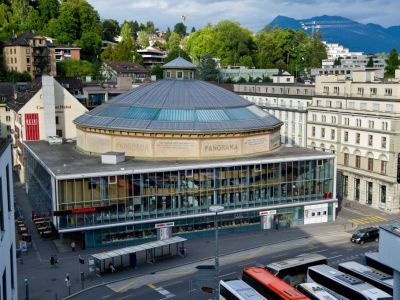
The Bourbaki Panorama is a 360-degree circular painting created in the late nineteenth century, housed in a round building designed specifically for this format. The artwork depicts the winter of 1871, when the French Army of the East retreated into Switzerland during the final phase of the Franco-Prussian War. More than eighty thousand soldiers crossed the border in harsh conditions and were disarmed and sheltered by the Swiss. The painting captures this moment at a scale that surrounds the viewer, blending painted canvas with three-dimensional foreground elements such as snow-covered props and wooden structures.
The artist, Édouard Castres, had served as a Red Cross volunteer during the events he later painted. His direct experience shapes the work’s tone: the figures are shown in exhaustion and uncertainty, and the landscape conveys a sense of cold, heavy air. Castres used detailed observation to portray clothing, medical equipment, sleds, and makeshift shelters. The painting was meant not only as an artistic achievement but also as a record of humanitarian action, emphasizing the support offered by Swiss civilians and officials as they received the retreating army.
The panorama building itself was part of a broader European trend to create immersive visual experiences before the rise of cinema. Its circular form and upper lighting allow the canvas to be seen without visible edges. Visitors stand on a central platform, with the image rising above and below their line of sight. This presentation was intended to blur the boundary between viewer and scene, giving a sense of stepping into the historical moment rather than simply observing it.
In the twentieth century the panorama underwent periods of decline and restoration. Today it is integrated into a cultural complex that includes exhibition areas explaining the historical context and the development of panoramic art. The presentation highlights themes of refuge, neutrality, and humanitarian response, linking the nineteenth-century episode to broader Swiss history. Despite changes in display techniques over time, the core experience remains centered on the immersive quality of Castres’ work and the moment it commemorates.
The artist, Édouard Castres, had served as a Red Cross volunteer during the events he later painted. His direct experience shapes the work’s tone: the figures are shown in exhaustion and uncertainty, and the landscape conveys a sense of cold, heavy air. Castres used detailed observation to portray clothing, medical equipment, sleds, and makeshift shelters. The painting was meant not only as an artistic achievement but also as a record of humanitarian action, emphasizing the support offered by Swiss civilians and officials as they received the retreating army.
The panorama building itself was part of a broader European trend to create immersive visual experiences before the rise of cinema. Its circular form and upper lighting allow the canvas to be seen without visible edges. Visitors stand on a central platform, with the image rising above and below their line of sight. This presentation was intended to blur the boundary between viewer and scene, giving a sense of stepping into the historical moment rather than simply observing it.
In the twentieth century the panorama underwent periods of decline and restoration. Today it is integrated into a cultural complex that includes exhibition areas explaining the historical context and the development of panoramic art. The presentation highlights themes of refuge, neutrality, and humanitarian response, linking the nineteenth-century episode to broader Swiss history. Despite changes in display techniques over time, the core experience remains centered on the immersive quality of Castres’ work and the moment it commemorates.
9) Lion Monument (must see)
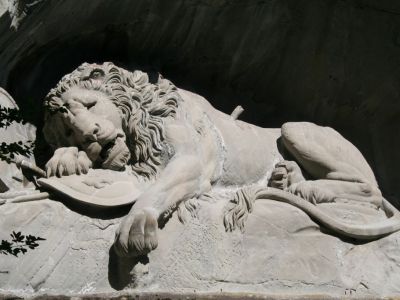
The Lion Monument is a large sandstone relief carved into a former quarry, completed in 1821 to commemorate members of the Swiss Guard who were killed during the events of 1792 at the Tuileries Palace in Paris. The design comes from a model by Danish sculptor Bertel Thorvaldsen and was executed on-site by stonemason Lukas Ahorn. The wounded lion lies within a shallow recess in the rock face, creating a natural frame that emphasizes the contrast between the carved figure and the untouched stone around it. A small pond in front of the monument reflects the sculpture and the surrounding vegetation, giving the site a quiet, enclosed atmosphere.
The lion’s expression and posture shape the meaning of the memorial. The figure is shown collapsing onto a shield marked with the fleur-de-lis, while a second shield bearing the Swiss coat of arms rests nearby. This arrangement refers to the guard’s loyalty to the French monarchy and the heavy losses suffered during the attack on the palace. The sculpted surface is detailed enough to show the texture of the mane and the curvature of the ribs, but the overall composition remains simple, directing attention to the symbolic elements rather than dramatic action.
Above the lion, an inscription records the regiment and the number of officers and soldiers who died, were wounded, or survived. The figures are arranged in a straightforward manner, reflecting the commemorative purpose of the site. Additional carved elements, such as the spear and broken weapons, appear along the edges of the niche, reinforcing the historical context without overwhelming the central image.
Visitors often notice how the setting contributes to the monument’s effect. The surrounding rock, the narrow pool, and the trees create a sense of enclosure that separates the relief from the nearby streets. Because the monument is carved directly into the quarry wall rather than constructed as a freestanding sculpture, it merges with the landscape, giving the impression of a historical marker rooted in the site itself.
The legendary American writer Mark Twain famously referred to the sculpture as "the most mournful and moving piece of stone in the world."
The lion’s expression and posture shape the meaning of the memorial. The figure is shown collapsing onto a shield marked with the fleur-de-lis, while a second shield bearing the Swiss coat of arms rests nearby. This arrangement refers to the guard’s loyalty to the French monarchy and the heavy losses suffered during the attack on the palace. The sculpted surface is detailed enough to show the texture of the mane and the curvature of the ribs, but the overall composition remains simple, directing attention to the symbolic elements rather than dramatic action.
Above the lion, an inscription records the regiment and the number of officers and soldiers who died, were wounded, or survived. The figures are arranged in a straightforward manner, reflecting the commemorative purpose of the site. Additional carved elements, such as the spear and broken weapons, appear along the edges of the niche, reinforcing the historical context without overwhelming the central image.
Visitors often notice how the setting contributes to the monument’s effect. The surrounding rock, the narrow pool, and the trees create a sense of enclosure that separates the relief from the nearby streets. Because the monument is carved directly into the quarry wall rather than constructed as a freestanding sculpture, it merges with the landscape, giving the impression of a historical marker rooted in the site itself.
The legendary American writer Mark Twain famously referred to the sculpture as "the most mournful and moving piece of stone in the world."
10) Glacier Garden (must see)
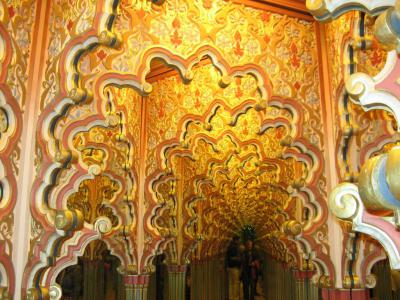
Glacier Garden combines outdoor geology with indoor exhibits, and a guided-style description can help visitors follow its layout. The site began with the discovery of glacial potholes-deep, smooth rock cylinders carved by melting ice and stones during the last Ice Age. These formations sit in the open-air section, surrounded by paths and railings that make it easy to study their shapes from different angles. Nearby displays explain how the area once lay beneath glaciers and, much earlier, beneath a warm sea filled with shell-bearing creatures.
As you enter the outdoor area, look straight ahead toward the largest potholes. Their rounded walls show how water and gravel moved in tight spirals. Step a little to the right and look down into a group of smaller depressions; these vary in depth and show layers of rock smoothed by long abrasion. Now turn to your left, where panels describe the fossilized shell beds discovered on the site. The contrast between the warm marine past and the later glacial landscape becomes clear when you compare the smooth potholes with the patterned surfaces of the shells.
Move toward the villa and step inside. Look to your right for the relief maps that depict the country’s terrain in raised form. These maps were created in the nineteenth century and reflect early attempts to visualize landscape on a smaller scale. Continue straight ahead and you will find rooms filled with geological samples, dioramas, and archival material assembled by the museum’s founders. The layout shows how natural history, private collecting, and early scientific curiosity shaped the museum’s character.
Before leaving, follow the signs to the mirror maze. Once inside, look in any direction and notice how the repeated reflections create long corridors that do not actually exist. The maze was added in the 1890s and remains largely unchanged, giving a sense of how the site blended education and entertainment for early visitors. When you exit, step back into the outdoor section and look once more at the rock formations. The combination of geological evidence, historic collecting, and period amusements reveals how the site developed from a scientific discovery into a museum complex.
As you enter the outdoor area, look straight ahead toward the largest potholes. Their rounded walls show how water and gravel moved in tight spirals. Step a little to the right and look down into a group of smaller depressions; these vary in depth and show layers of rock smoothed by long abrasion. Now turn to your left, where panels describe the fossilized shell beds discovered on the site. The contrast between the warm marine past and the later glacial landscape becomes clear when you compare the smooth potholes with the patterned surfaces of the shells.
Move toward the villa and step inside. Look to your right for the relief maps that depict the country’s terrain in raised form. These maps were created in the nineteenth century and reflect early attempts to visualize landscape on a smaller scale. Continue straight ahead and you will find rooms filled with geological samples, dioramas, and archival material assembled by the museum’s founders. The layout shows how natural history, private collecting, and early scientific curiosity shaped the museum’s character.
Before leaving, follow the signs to the mirror maze. Once inside, look in any direction and notice how the repeated reflections create long corridors that do not actually exist. The maze was added in the 1890s and remains largely unchanged, giving a sense of how the site blended education and entertainment for early visitors. When you exit, step back into the outdoor section and look once more at the rock formations. The combination of geological evidence, historic collecting, and period amusements reveals how the site developed from a scientific discovery into a museum complex.
11) Church of St. Leodegar (must see)
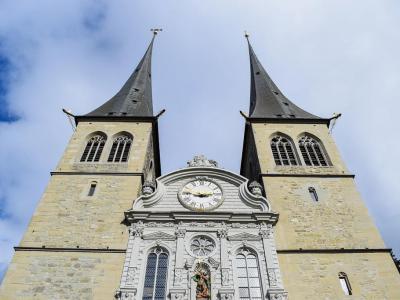
The Church of Saint Leodegar is one of Lucerne’s key landmarks, set on a slight rise above the lakeshore. The current building dates from the 17th century and was constructed after a major fire, but its two slender towers preserve the outline of the earlier medieval church. From the outside, the twin spires, simple front façade, and elevated position make it easy to recognize from across the city and the lake.
Inside, the church is striking for its simplicity. The walls and ceiling are completely white, creating a bright interior that leaves the architectural lines clearly visible. As you look toward the far end of the interior, the high altar made of black marble anchors the space with its darker tone and sculptural detailing. On the left and right sides of the nave, two additional altars sit in recessed areas, each framed by statues, gilded elements, and decorative surrounds that add visual interest without overwhelming the calm interior.
Turn around and look back toward the entrance to see the dark organ above the main doors. Its rich tone and carved case contrast with the white walls, marking the west end of the church and framing the view as you look back down the nave. As you glance along the side walls again, notice how the altars, windows, and simple architectural lines work together without heavy ornament, giving the interior a calm, orderly character.
Outside, the churchyard and surrounding terraces emphasize the building’s slightly elevated position above the lakeside road. The two towers, visible from many points in Lucerne, help orient you as you move around the city and underline the church’s long-standing role as both a spiritual and visual landmark.
Inside, the church is striking for its simplicity. The walls and ceiling are completely white, creating a bright interior that leaves the architectural lines clearly visible. As you look toward the far end of the interior, the high altar made of black marble anchors the space with its darker tone and sculptural detailing. On the left and right sides of the nave, two additional altars sit in recessed areas, each framed by statues, gilded elements, and decorative surrounds that add visual interest without overwhelming the calm interior.
Turn around and look back toward the entrance to see the dark organ above the main doors. Its rich tone and carved case contrast with the white walls, marking the west end of the church and framing the view as you look back down the nave. As you glance along the side walls again, notice how the altars, windows, and simple architectural lines work together without heavy ornament, giving the interior a calm, orderly character.
Outside, the churchyard and surrounding terraces emphasize the building’s slightly elevated position above the lakeside road. The two towers, visible from many points in Lucerne, help orient you as you move around the city and underline the church’s long-standing role as both a spiritual and visual landmark.
12) Lucerne Railway Station (must see)
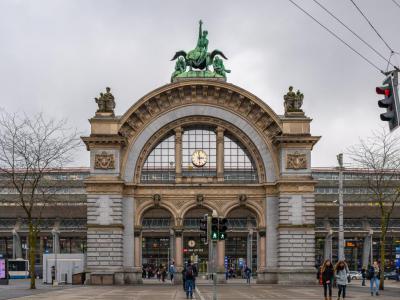
Lucerne Railway Station is not only the city’s main transport hub but also an architectural landmark that blends contemporary design with elements of Lucerne’s past. Rebuilt after the 1971 fire, it features a bright, airy hall shaped by glass, steel, and open space. Just outside on the Train Station Square, you’ll find the monumental stone arch from the original 19th-century station-one of the city’s most photographed historic structures.
As you enter the main concourse, look up to take in the sweeping glass roof designed by the renowned Spanish-Swiss architect Santiago Calatrava. The curved structure creates a sense of openness, almost like stepping into a modern pavilion rather than a traditional station. Sunlight filters through the skylights, casting soft reflections across the hall. Before you move farther, glance toward the right-hand side, where small bakeries and cafés display Swiss pastries and snacks. The ticket hall sits to your left, though most visitors find their attention pulled to the large digital board in the center. As destinations switch across the screen, it offers a glimpse of the day trips, scenic rail rides, and mountain excursions that depart from here.
Before leaving, step outside to the old stone arch on Train Station Square. Look closely at the sculpted figure holding the city’s coat of arms-one of the few surviving details from the historic station.
As you enter the main concourse, look up to take in the sweeping glass roof designed by the renowned Spanish-Swiss architect Santiago Calatrava. The curved structure creates a sense of openness, almost like stepping into a modern pavilion rather than a traditional station. Sunlight filters through the skylights, casting soft reflections across the hall. Before you move farther, glance toward the right-hand side, where small bakeries and cafés display Swiss pastries and snacks. The ticket hall sits to your left, though most visitors find their attention pulled to the large digital board in the center. As destinations switch across the screen, it offers a glimpse of the day trips, scenic rail rides, and mountain excursions that depart from here.
Before leaving, step outside to the old stone arch on Train Station Square. Look closely at the sculpted figure holding the city’s coat of arms-one of the few surviving details from the historic station.
13) Rosengart Collection (must see)
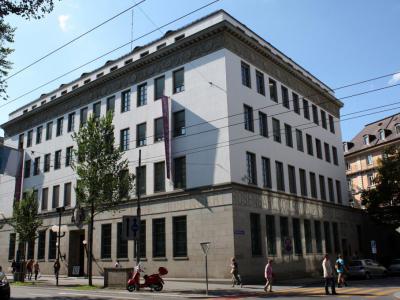
The Rosengart Collection occupies a former bank building whose clear layout and quiet atmosphere suit its focus on modern art. The museum reflects the long involvement of Siegfried Rosengart and his daughter Angela with key European artists from the late nineteenth and twentieth centuries. Rooms are arranged so visitors can follow the development of major movements without distraction, moving from early modern experiments to more defined personal styles.
The ground floor is devoted to Pablo Picasso. The galleries show his work in a direct, chronological flow, beginning with early paintings shaped by firm outlines and moving toward later pieces where forms shift, break, and recombine. Drawings appear beside finished canvases, making it easy to see how he tested ideas rapidly with pencil or charcoal. The even lighting brings out surface texture and the contrast between his controlled early strokes and the quicker, fragmented gestures of his later years.
The lower level houses Swiss-German artist Paul Klee’s works. Many appear on small panels or paper sheets, built from thin washes of color and fine, deliberate lines. Symbols, grids, and rhythmic marks reveal his interest in structure and music. Seen together, these works trace his movement between bright, playful compositions and quieter studies where color has a muted, almost translucent presence. The basement’s close, simple space suits their scale and invites slow viewing.
The upper floor widens the scope. Works by Monet, Cézanne, Chagall, and Léger provide context for the central collection, showing how different approaches to light, shape, and movement developed across Europe. Additional Picasso drawings and portraits of Angela Rosengart appear here as well, emphasizing the family’s long personal connections with the artists. Short, precise wall texts explain these relationships and the careful way the collection was assembled, allowing visitors to understand not only the art but also the network of encounters that shaped it.
The ground floor is devoted to Pablo Picasso. The galleries show his work in a direct, chronological flow, beginning with early paintings shaped by firm outlines and moving toward later pieces where forms shift, break, and recombine. Drawings appear beside finished canvases, making it easy to see how he tested ideas rapidly with pencil or charcoal. The even lighting brings out surface texture and the contrast between his controlled early strokes and the quicker, fragmented gestures of his later years.
The lower level houses Swiss-German artist Paul Klee’s works. Many appear on small panels or paper sheets, built from thin washes of color and fine, deliberate lines. Symbols, grids, and rhythmic marks reveal his interest in structure and music. Seen together, these works trace his movement between bright, playful compositions and quieter studies where color has a muted, almost translucent presence. The basement’s close, simple space suits their scale and invites slow viewing.
The upper floor widens the scope. Works by Monet, Cézanne, Chagall, and Léger provide context for the central collection, showing how different approaches to light, shape, and movement developed across Europe. Additional Picasso drawings and portraits of Angela Rosengart appear here as well, emphasizing the family’s long personal connections with the artists. Short, precise wall texts explain these relationships and the careful way the collection was assembled, allowing visitors to understand not only the art but also the network of encounters that shaped it.
14) St. Paul's Church
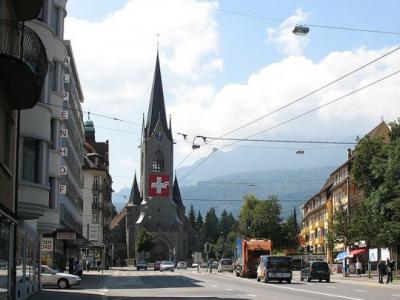
Lucerne's Saint Paul's church, designed by Swiss architect Karl Coelestin Moser, was constructed in 1912. This edifice marked a departure from traditional church design in Lucerne, following the Jesuit Church built in 1677. Saint Paul's Church took the place of an earlier chapel and showcases a unique architectural fusion of Neo-Gothic and Art Nouveau styles.
The mission of Saint Paul's parish is to serve as a vibrant hub for people of all ages and backgrounds, fostering connections and a sense of belonging. Situated on the southern outskirts of Lucerne in the Obergrund district, it ranks among the city's largest parishes. In 2022, the church celebrated its 110th anniversary.
The towering presence of the Saint Paul's Church is an iconic sight for Lucerne residents, commanding attention along the bustling Obergrundstrasse. The surrounding Obergrund and Moosmatt neighborhoods are home to a diverse array of residents, encompassing various social classes and cultures.
For a century, Saint Paul's parish has thrived thanks to the community's proactive involvement. The early 20th century witnessed rapid growth in the Obergrund area, necessitating the establishment of a church and its corresponding parish. The local populace took the initiative to construct the church, and today, the parish continues to flourish through the dedication of its members, who engage in youth organizations, choirs, and other communal activities.
The mission of Saint Paul's parish is to serve as a vibrant hub for people of all ages and backgrounds, fostering connections and a sense of belonging. Situated on the southern outskirts of Lucerne in the Obergrund district, it ranks among the city's largest parishes. In 2022, the church celebrated its 110th anniversary.
The towering presence of the Saint Paul's Church is an iconic sight for Lucerne residents, commanding attention along the bustling Obergrundstrasse. The surrounding Obergrund and Moosmatt neighborhoods are home to a diverse array of residents, encompassing various social classes and cultures.
For a century, Saint Paul's parish has thrived thanks to the community's proactive involvement. The early 20th century witnessed rapid growth in the Obergrund area, necessitating the establishment of a church and its corresponding parish. The local populace took the initiative to construct the church, and today, the parish continues to flourish through the dedication of its members, who engage in youth organizations, choirs, and other communal activities.
