Custom Walk in Split, Croatia by nicci_battilana_9db9d8 created on 2026-04-13
Guide Location: Croatia » Split
Guide Type: Custom Walk
# of Sights: 15
Tour Duration: 3 Hour(s)
Travel Distance: 5.7 Km or 3.5 Miles
Share Key: RLHCV
Guide Type: Custom Walk
# of Sights: 15
Tour Duration: 3 Hour(s)
Travel Distance: 5.7 Km or 3.5 Miles
Share Key: RLHCV
How It Works
Please retrieve this walk in the GPSmyCity app. Once done, the app will guide you from one tour stop to the next as if you had a personal tour guide. If you created the walk on this website or come to the page via a link, please follow the instructions below to retrieve the walk in the app.
Retrieve This Walk in App
Step 1. Download the app "GPSmyCity: Walks in 1K+ Cities" on Apple App Store or Google Play Store.



Step 2. In the GPSmyCity app, download(or launch) the guide "Split Map and Walking Tours".
Step 3. Tap the menu button located at upper right corner of the "Walks" screen and select "Retrieve custom walk". Enter the share key: RLHCV
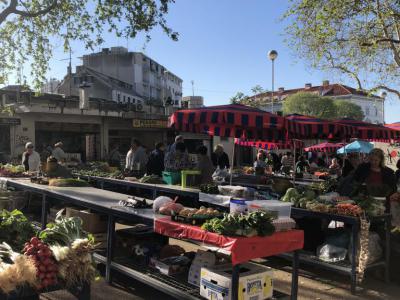
1) Green Market (Pazar)
Nestled beside the east wall of the UNESCO-listed World Heritage site of Diocletian's Palace, Split's vibrant green market, affectionately known as Pazar, immerses you in the essence of everyday life in the city. Here, you can seamlessly blend in with the locals and truly embrace the authentic atmosphere of Croatia. Tourists seeking a genuine Croatian experience are increasingly drawn to this lively outdoor market.
Previously situated at Fruit Square, the market's relocation became a necessity due to the city's rapid growth and development. Now, in its new central location, it has become the beating heart and soul of Split. It serves as a gathering place for both residents and visitors, all eager to indulge in the array of colors, flavors, aromas, and sounds that encapsulate the vibrant essence of life in Split.
Previously situated at Fruit Square, the market's relocation became a necessity due to the city's rapid growth and development. Now, in its new central location, it has become the beating heart and soul of Split. It serves as a gathering place for both residents and visitors, all eager to indulge in the array of colors, flavors, aromas, and sounds that encapsulate the vibrant essence of life in Split.
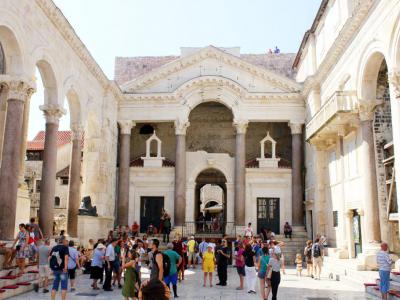
2) Diocletian's Palace (must see)
Call it a palace if you like, but Diocletian’s masterpiece is really part imperial retirement villa, part military fortress, and part living city. Built at the end of the third century AD for the Roman emperor who gave up power in favor of peace (and yes, cabbages), it’s a place where stone walls once sheltered soldiers, emperors, monks—and today, generations of Split’s residents.
Perched on a peninsula near Salona—then Dalmatia’s Roman capital and Diocletian’s birthplace—the palace originally served as a seaside sanctuary for the emperor’s final years. When he died in 312, the complex remained under Roman control and occasionally offered refuge to members of the imperial family who needed to lay low.
In the 7th century, when Slavic and Avar invaders destroyed Salona, survivors escaped behind these formidable walls, founding a new settlement right inside the palace. And here’s the surprise—they never left. Today, Split’s Old Town literally lives within those ancient foundations: temples transformed into churches, courtyards became vibrant squares, and homes sprang up between columns.
Later transformations added layers of history. The emperor’s mausoleum was converted into what is now recognized as the world’s oldest Catholic cathedral still in use in its original structure—the Cathedral of Domnius. In the 18th century, Scottish architect Robert Adam studied the palace ruins and helped inspire the elegance of Neoclassical architecture across Europe.
The palace’s layout originally formed an irregular rectangle, once fortified by 16 defensive towers. Its southern façade opened directly to the sea, with ships docking at what is still known as the Sea Gate. Three other gates connected the city walls to external routes: the Golden Gate to the north, leading toward Salona; the Silver Gate to the east, facing Stobreč; and the Iron Gate on the west, reserved for military access.
Indeed, there are few places like this, where centuries layer so vividly in stone—Roman ambition, medieval resilience, and Venetian finesse all mingle beneath your footsteps...
Perched on a peninsula near Salona—then Dalmatia’s Roman capital and Diocletian’s birthplace—the palace originally served as a seaside sanctuary for the emperor’s final years. When he died in 312, the complex remained under Roman control and occasionally offered refuge to members of the imperial family who needed to lay low.
In the 7th century, when Slavic and Avar invaders destroyed Salona, survivors escaped behind these formidable walls, founding a new settlement right inside the palace. And here’s the surprise—they never left. Today, Split’s Old Town literally lives within those ancient foundations: temples transformed into churches, courtyards became vibrant squares, and homes sprang up between columns.
Later transformations added layers of history. The emperor’s mausoleum was converted into what is now recognized as the world’s oldest Catholic cathedral still in use in its original structure—the Cathedral of Domnius. In the 18th century, Scottish architect Robert Adam studied the palace ruins and helped inspire the elegance of Neoclassical architecture across Europe.
The palace’s layout originally formed an irregular rectangle, once fortified by 16 defensive towers. Its southern façade opened directly to the sea, with ships docking at what is still known as the Sea Gate. Three other gates connected the city walls to external routes: the Golden Gate to the north, leading toward Salona; the Silver Gate to the east, facing Stobreč; and the Iron Gate on the west, reserved for military access.
Indeed, there are few places like this, where centuries layer so vividly in stone—Roman ambition, medieval resilience, and Venetian finesse all mingle beneath your footsteps...
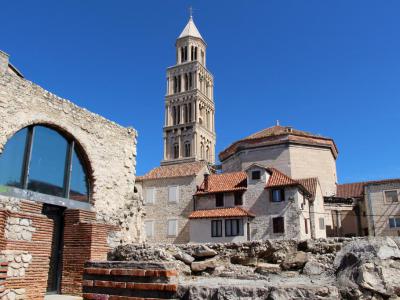
3) Treasury of St. Domnius Cathedral
The Treasury of Saint Domnius Cathedral, located in Split, Croatia, is a veritable treasure trove of historical and religious artifacts dating back centuries. Housed on the first floor of the sacristy, this sacred space is a testament to the rich cultural and religious heritage of the region.
One of the most revered relics in the Treasury is that of Saint Duje, after whom the cathedral is named. These precious relics were brought to the cathedral after the saint's death, and they hold immense spiritual significance for the faithful who visit the cathedral seeking blessings and solace.
The Treasury houses remarkable sacral artworks, including a Romanesque Madonna and Child panel from the 13th century-a stunning portrayal of the Virgin Mary and baby Jesus, showcasing the era's artistic brilliance and religious devotion.
Skilled goldsmiths from the 13th to 19th centuries created brilliant chalices, reliquaries, and ornate mass vestments for religious ceremonies. Adorned with intricate designs and precious gemstones, these items showcased the importance of worship and religious rites in the lives of the faithful. The Treasury holds these masterfully crafted vessels and garments, highlighting their historical significance.
The Treasury of Saint Domnius Cathedral also features remarkable artifacts and famous surviving books. Notable items include the 6th-century Book of Gospels, valued for its early Christian writing, and the 11th-century Supetar Cartulary, offering insights into the region's legal and administrative history. Additionally, the Treasury contains the 13th-century Historia Salonitana, a historical account of the people and events of Salona, providing a deeper understanding of the region's past.
Tip:
Worth bringing a guidebook with you as there isn't much information on the cabinets.
Note that photos are not allowed!
One of the most revered relics in the Treasury is that of Saint Duje, after whom the cathedral is named. These precious relics were brought to the cathedral after the saint's death, and they hold immense spiritual significance for the faithful who visit the cathedral seeking blessings and solace.
The Treasury houses remarkable sacral artworks, including a Romanesque Madonna and Child panel from the 13th century-a stunning portrayal of the Virgin Mary and baby Jesus, showcasing the era's artistic brilliance and religious devotion.
Skilled goldsmiths from the 13th to 19th centuries created brilliant chalices, reliquaries, and ornate mass vestments for religious ceremonies. Adorned with intricate designs and precious gemstones, these items showcased the importance of worship and religious rites in the lives of the faithful. The Treasury holds these masterfully crafted vessels and garments, highlighting their historical significance.
The Treasury of Saint Domnius Cathedral also features remarkable artifacts and famous surviving books. Notable items include the 6th-century Book of Gospels, valued for its early Christian writing, and the 11th-century Supetar Cartulary, offering insights into the region's legal and administrative history. Additionally, the Treasury contains the 13th-century Historia Salonitana, a historical account of the people and events of Salona, providing a deeper understanding of the region's past.
Tip:
Worth bringing a guidebook with you as there isn't much information on the cabinets.
Note that photos are not allowed!
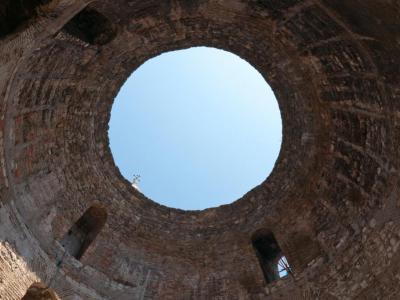
4) Vestibule
Now and then, something magical happens in the Vestibule of Diocletian's Palace. A klapa group quietly gathers, forms a small circle, clears a throat or two—and suddenly, traditional Dalmatian a cappella fills the air. No instruments, no microphones. Just voices rising, blending, and bouncing off ancient stone. If emperors have ghosts, you can almost picture Diocletian pausing mid-haunt to listen.
Glance upward. The Vestibule is a rotunda with its dome missing, replaced by a perfect round window of blue sky. It feels a bit like an ancient temple open to the heavens. Long ago, smoke from pagan rituals would have drifted upward. Today, it is harmonies that spiral into the open air—no fire and sacrifice, just tenor and baritone...
Architecturally, this space served as a grand reception hall. It linked the Peristyle to the emperor’s private apartments and was designed to impress ambassadors before they even laid eyes on the ruler himself. Imagine the scene: polished marble, guarded entrances, visiting dignitaries rehearsing their speeches. The room was built to command attention.
So, why do klapa singers choose this very spot? Quite simple—for its acoustics. The curved stone walls act like a giant resonating chamber. Every note expands, deepens, and returns richer than before. The space doesn’t just carry sound—it embraces it. And for a few minutes, under that open circle of sky, Roman architecture becomes the world’s most dramatic concert hall...
Glance upward. The Vestibule is a rotunda with its dome missing, replaced by a perfect round window of blue sky. It feels a bit like an ancient temple open to the heavens. Long ago, smoke from pagan rituals would have drifted upward. Today, it is harmonies that spiral into the open air—no fire and sacrifice, just tenor and baritone...
Architecturally, this space served as a grand reception hall. It linked the Peristyle to the emperor’s private apartments and was designed to impress ambassadors before they even laid eyes on the ruler himself. Imagine the scene: polished marble, guarded entrances, visiting dignitaries rehearsing their speeches. The room was built to command attention.
So, why do klapa singers choose this very spot? Quite simple—for its acoustics. The curved stone walls act like a giant resonating chamber. Every note expands, deepens, and returns richer than before. The space doesn’t just carry sound—it embraces it. And for a few minutes, under that open circle of sky, Roman architecture becomes the world’s most dramatic concert hall...
5) Podrum (Cellars of Diocletian's Palace)
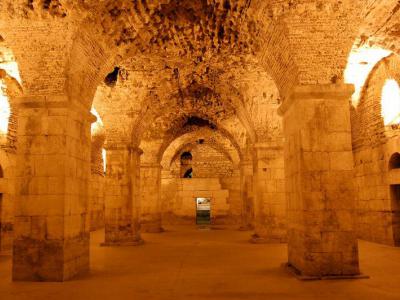
Hidden just beneath Diocletian’s lavish imperial apartments lies a labyrinth few emperors could boast about: the mighty Podrum, or cellars. Built in the 4th century to mirror and support the grand halls above, these vaulted chambers span about one-eighth of the entire palace, and to this day, you can still see the remnants of a large wine and olive press used in Roman times. And yes, there was even a small nymphaeum: a shrine to the nymphs said to guard the precious fresh water flowing through the palace.
As centuries rolled on and Split grew, the palace transformed from an emperor’s retirement retreat into a refuge. When Salona fell in the 7th century, refugees found shelter within its sturdy walls. Over time, residents above broke through vaults to build basements or storerooms—early medieval real-estate hacks, you might call them.
In modern times, Podrum’s fame soared thanks to its role in “Game of Thrones.” Fans will instantly recognize the cellars as the location where Daenerys Targaryen kept her dragons chained in Meereen. These scenes were filmed in the central halls, turning ancient stone into television legend.
Today, you enter this underground world either through the Bronze Gate on the Riva or a staircase from the Peristyle. The western part has been carefully preserved and opened to the public in 1959, used for exhibitions, artisan fairs, and occasional concerts under soaring arches. The eastern section (which collapsed in medieval times) is now mostly restored and accessible since the 1990s.
Walking through these cool, echoing halls, you’re literally walking in the footsteps—and stone foundations—of emperors, traders, refugees, and storytellers. Here, the past thrives beneath your feet, merging Roman ambition with modern fascination, one vaulted chamber after another.
As centuries rolled on and Split grew, the palace transformed from an emperor’s retirement retreat into a refuge. When Salona fell in the 7th century, refugees found shelter within its sturdy walls. Over time, residents above broke through vaults to build basements or storerooms—early medieval real-estate hacks, you might call them.
In modern times, Podrum’s fame soared thanks to its role in “Game of Thrones.” Fans will instantly recognize the cellars as the location where Daenerys Targaryen kept her dragons chained in Meereen. These scenes were filmed in the central halls, turning ancient stone into television legend.
Today, you enter this underground world either through the Bronze Gate on the Riva or a staircase from the Peristyle. The western part has been carefully preserved and opened to the public in 1959, used for exhibitions, artisan fairs, and occasional concerts under soaring arches. The eastern section (which collapsed in medieval times) is now mostly restored and accessible since the 1990s.
Walking through these cool, echoing halls, you’re literally walking in the footsteps—and stone foundations—of emperors, traders, refugees, and storytellers. Here, the past thrives beneath your feet, merging Roman ambition with modern fascination, one vaulted chamber after another.
6) Temple of Jupiter
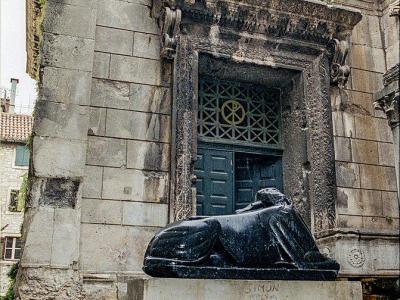
Just a few steps from the Peristyle, in the western stretch of Diocletian's Palace, stands a compact but powerful survivor: the Temple of Jupiter. Built around the year 300 AD, it began as a shrine to Jupiter—Roman Zeus and, conveniently, Emperor Diocletian’s so-called “divine father.” Because when you rule the empire, it helps to keep the king of the gods in the family...
Out front, you’ll meet one of the twelve sphinxes Diocletian imported from Egypt. Yes, imported. Apparently, retirement plans included a touch of Nile-side décor. Above the entrance, reliefs line up like a mythological guest list: Victoria, Triton, Helios, Hercules, Apollo... Heroes, sea gods, sun gods—everyone showed up. Or almost everyone. Parts of the palace were still unfinished when the emperor returned rather suddenly after his abdication. Even divine sons, it seems, don’t always stick to the construction schedule...
Then history pivoted. In the sixth century, the pagan temple became a baptistery dedicated to Saint John the Baptist. The pagan gods stepped aside; the Christian saints stepped in. Inside, you’ll find the sarcophagi of early archbishops Ivan of Ravenna and Lovre, linking the space to Split’s Christian story. And Saint John himself appears in striking form—a large bronze statue, adding a bold 20th-century presence to a 4th-century shell.
Raise your gaze, and you’ll notice yet another layer: an 11th-century Romanesque bell tower rising above the vault. Pagan temple, Christian baptistery, medieval addition—this small structure carries centuries with surprising confidence.
And one final twist: in 1907, the surrounding houses that had grown tightly against its walls were cleared away, finally giving the temple room to breathe again. So, standing here, be aware—you’re not merely looking at ancient stone, you’re watching a building that has reinvented itself for more than 1,700 years, without ever losing its sense of drama...
Out front, you’ll meet one of the twelve sphinxes Diocletian imported from Egypt. Yes, imported. Apparently, retirement plans included a touch of Nile-side décor. Above the entrance, reliefs line up like a mythological guest list: Victoria, Triton, Helios, Hercules, Apollo... Heroes, sea gods, sun gods—everyone showed up. Or almost everyone. Parts of the palace were still unfinished when the emperor returned rather suddenly after his abdication. Even divine sons, it seems, don’t always stick to the construction schedule...
Then history pivoted. In the sixth century, the pagan temple became a baptistery dedicated to Saint John the Baptist. The pagan gods stepped aside; the Christian saints stepped in. Inside, you’ll find the sarcophagi of early archbishops Ivan of Ravenna and Lovre, linking the space to Split’s Christian story. And Saint John himself appears in striking form—a large bronze statue, adding a bold 20th-century presence to a 4th-century shell.
Raise your gaze, and you’ll notice yet another layer: an 11th-century Romanesque bell tower rising above the vault. Pagan temple, Christian baptistery, medieval addition—this small structure carries centuries with surprising confidence.
And one final twist: in 1907, the surrounding houses that had grown tightly against its walls were cleared away, finally giving the temple room to breathe again. So, standing here, be aware—you’re not merely looking at ancient stone, you’re watching a building that has reinvented itself for more than 1,700 years, without ever losing its sense of drama...
7) Fruit's Square
Officially, it’s called Radić Brothers Square, named after Stjepan and Ante Radić, founders of the Croatian Peasant Party back in 1904, known for bravely standing up to political dominance from Belgrade. They paid dearly for their cause, but their legacy still echoes here.
And yet, ask anyone in Split, and they’ll just say “Fruit’s Square.” Why? Because for centuries, this charming corner of the Old Town was the place to haggle over baskets of figs, peaches, and sun-warmed grapes. Even today, the name sticks—proof that old habits, like old nicknames, die hard.
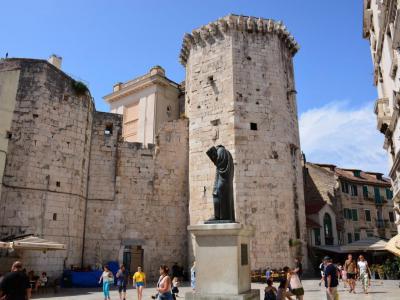
The square itself is small but rich in character. Most striking is the 15th-century Venetian Tower, an octagonal relic from Split’s medieval fortifications that once watched over traders and townsfolk alike. Directly opposite stands the grand Baroque palace of the noble Milesi family, its bold 17th-century façade often hailed as Croatia’s finest piece of Baroque architecture.
Guarding the square is the dignified statue of Marko Marulić, the 15th-century writer and philosopher, celebrated as the father of Croatian literature. And as you wander across worn stone paving, remember: each slab here has seen centuries of whispered gossip, heated debates, and maybe the occasional squashed fig...
Fruit’s Square may be small, but it offers a perfect slice of Split’s layered past, where stone towers, Baroque elegance, and a stubborn old nickname all come together in one sunny corner of the city.
And yet, ask anyone in Split, and they’ll just say “Fruit’s Square.” Why? Because for centuries, this charming corner of the Old Town was the place to haggle over baskets of figs, peaches, and sun-warmed grapes. Even today, the name sticks—proof that old habits, like old nicknames, die hard.
The square itself is small but rich in character. Most striking is the 15th-century Venetian Tower, an octagonal relic from Split’s medieval fortifications that once watched over traders and townsfolk alike. Directly opposite stands the grand Baroque palace of the noble Milesi family, its bold 17th-century façade often hailed as Croatia’s finest piece of Baroque architecture.
Guarding the square is the dignified statue of Marko Marulić, the 15th-century writer and philosopher, celebrated as the father of Croatian literature. And as you wander across worn stone paving, remember: each slab here has seen centuries of whispered gossip, heated debates, and maybe the occasional squashed fig...
Fruit’s Square may be small, but it offers a perfect slice of Split’s layered past, where stone towers, Baroque elegance, and a stubborn old nickname all come together in one sunny corner of the city.
8) Tomica Stine
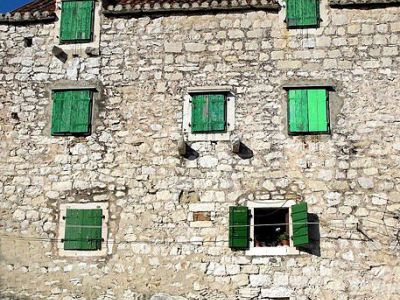
Nestled amidst the enchanting cityscape of Split lies Tomica Stine, a group of historic buildings that captivates both locals and tourists alike. Often depicted on postcards showcasing the city's picturesque charm, Tomica Stine, also affectionately known as Tom's Rocks, stands as a proud testament to the rich heritage of Dalmatian architecture from the Medieval era.
Stepping into Tomica Stine feels like stepping back in time, with the buildings exuding an air of timelessness and historical significance. The architecture showcases the distinctive style that was prevalent during medieval times, making it a remarkable example of Dalmatian heritage and craftsmanship.
These ancient buildings have been thoughtfully repurposed and given new life to cater to the needs of modern-day travelers. Now housing hotels for tourists, Tomica Stine manages to seamlessly blend old-world charm with contemporary comforts, offering visitors an immersive experience that transports them to a bygone era while ensuring a comfortable stay.
As you wander through the cobblestone streets and narrow alleys surrounding Tomica Stine, you can't help but be captivated by the well-preserved facades, traditional stonework, and intricate architectural details that have stood the test of time. The local authorities have taken great care to preserve the original character of these structures, allowing visitors to appreciate the essence of Dalmatian heritage.
The hotels within Tomica Stine not only provide a cozy haven for tourists but also offer a chance to immerse themselves in the cultural tapestry of Split. Guests can savor local delicacies at nearby restaurants, interact with friendly locals, and explore the city's historical landmarks, all within walking distance.
Stepping into Tomica Stine feels like stepping back in time, with the buildings exuding an air of timelessness and historical significance. The architecture showcases the distinctive style that was prevalent during medieval times, making it a remarkable example of Dalmatian heritage and craftsmanship.
These ancient buildings have been thoughtfully repurposed and given new life to cater to the needs of modern-day travelers. Now housing hotels for tourists, Tomica Stine manages to seamlessly blend old-world charm with contemporary comforts, offering visitors an immersive experience that transports them to a bygone era while ensuring a comfortable stay.
As you wander through the cobblestone streets and narrow alleys surrounding Tomica Stine, you can't help but be captivated by the well-preserved facades, traditional stonework, and intricate architectural details that have stood the test of time. The local authorities have taken great care to preserve the original character of these structures, allowing visitors to appreciate the essence of Dalmatian heritage.
The hotels within Tomica Stine not only provide a cozy haven for tourists but also offer a chance to immerse themselves in the cultural tapestry of Split. Guests can savor local delicacies at nearby restaurants, interact with friendly locals, and explore the city's historical landmarks, all within walking distance.
9) Marjan Hill Viewpoint
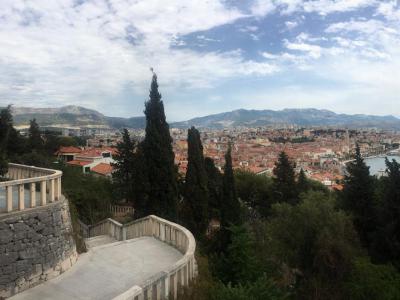
Marjan Hill fits the definition, "And now, for something completely different..." it holds a special place in the life of the City. For years city dwellers would see the old Yugoslav flag flying from the top of the hill. Now, Croatia, proudly independent, flies its own flag on top of Marjan Hill. In 1964 Marjan became a park and part of the city.
The park extends from Marmont Street west for nearly two miles. During summer months, amid the chaotic pace of the town it is a popular escape. The hills and woods of the park are the very lungs of the city. It is the preferred place for walking, jogging, climbing, or bike riding.
The highest peak in the park is Telegrin, so named for the telegraph which stood there in Napoleonic times. The park is also the location of the Ivan Mestrovic Gallery, an art gallery open to the public. Meje Split neighborhood, the city's elite seaside beach district is here, surrounded by the sea on three sides.
There are many possible entrances to Marjan Park. The favored one begins at Terrace Vidilica, a bar and restaurant with a great view. This is but a five minute walk from the promenade. If walking be prepared for an early climb.
The park extends from Marmont Street west for nearly two miles. During summer months, amid the chaotic pace of the town it is a popular escape. The hills and woods of the park are the very lungs of the city. It is the preferred place for walking, jogging, climbing, or bike riding.
The highest peak in the park is Telegrin, so named for the telegraph which stood there in Napoleonic times. The park is also the location of the Ivan Mestrovic Gallery, an art gallery open to the public. Meje Split neighborhood, the city's elite seaside beach district is here, surrounded by the sea on three sides.
There are many possible entrances to Marjan Park. The favored one begins at Terrace Vidilica, a bar and restaurant with a great view. This is but a five minute walk from the promenade. If walking be prepared for an early climb.
10) St. Nicholas Church
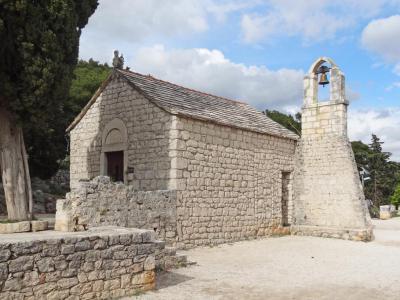
One characteristic of the Marjan Hills is a harborage of churches. They are mini-churches, almost like the tiny churches in the guard towers of Diocletian's Palace. They nestle in the forest, beside the trails or carved into the rock of the hillsides. They date from medieval times, offering spiritual retreat to the citizens of Split.
Saint Nicholas qualifies as one of these havens from the world. It is small. It is an early rustic chapel from the 13th century. The church is devoted to Saint Nicholas, patron saint of fishermen. There are a respectable number of fishermen in Split.
The church was built by one Rako and his wife in 1219. It was donated to the Abbey of Saint Stephen on Sustipan. Later it was cared for by Benedictine monks and even later by hermits. Today it is in the care of the Marjan society.
Saint Nicholas on the Hill is perched on the southeast slopes of Marjan, watching over the sea and the ships and the sailors who go to sea.
Saint Nicholas qualifies as one of these havens from the world. It is small. It is an early rustic chapel from the 13th century. The church is devoted to Saint Nicholas, patron saint of fishermen. There are a respectable number of fishermen in Split.
The church was built by one Rako and his wife in 1219. It was donated to the Abbey of Saint Stephen on Sustipan. Later it was cared for by Benedictine monks and even later by hermits. Today it is in the care of the Marjan society.
Saint Nicholas on the Hill is perched on the southeast slopes of Marjan, watching over the sea and the ships and the sailors who go to sea.
11) The Collection of the Franciscan Monastery
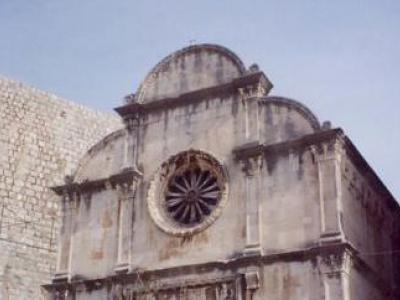
The Collection of the Franciscan Monastery in Split, is a treasure trove of historical and artistic riches that proudly showcases the cultural heritage of the region. Founded in 1963, this extraordinary collection has become a beacon of history, attracting visitors from all over the world, eager to delve into the past and witness the artistic brilliance of the Croatian people.
Housed within the tranquil walls of the Franciscan Monastery, the collection is a testament to the enduring legacy of the Franciscan order in Croatia and its dedication to preserving both spiritual and artistic traditions. Spanning various periods of history, the collection offers a glimpse into the rich tapestry of Croatian heritage, making it a significant cultural institution in the heart of Split.
At the heart of the collection are precious manuscripts, which stand as silent witnesses to the intellectual and spiritual endeavors of the past. These ancient texts provide a unique insight into the religious and scholarly pursuits of the Franciscan community and offer a glimpse into the historical context in which they were produced.
Church art occupies a prominent place within the collection, exemplifying the exceptional skills of Croatian artists through the ages. The exquisite paintings, often adorned with intricate details and vivid colors, narrate religious stories and reflect the spiritual devotion of their creators.
Among the most awe-inspiring exhibits are the gold and wood works, demonstrating the remarkable craftsmanship of local artisans. The intricate carvings and delicate metalwork showcase the talent and dedication of these skilled craftsmen, capturing the essence of religious symbolism and cultural motifs.
Housed within the tranquil walls of the Franciscan Monastery, the collection is a testament to the enduring legacy of the Franciscan order in Croatia and its dedication to preserving both spiritual and artistic traditions. Spanning various periods of history, the collection offers a glimpse into the rich tapestry of Croatian heritage, making it a significant cultural institution in the heart of Split.
At the heart of the collection are precious manuscripts, which stand as silent witnesses to the intellectual and spiritual endeavors of the past. These ancient texts provide a unique insight into the religious and scholarly pursuits of the Franciscan community and offer a glimpse into the historical context in which they were produced.
Church art occupies a prominent place within the collection, exemplifying the exceptional skills of Croatian artists through the ages. The exquisite paintings, often adorned with intricate details and vivid colors, narrate religious stories and reflect the spiritual devotion of their creators.
Among the most awe-inspiring exhibits are the gold and wood works, demonstrating the remarkable craftsmanship of local artisans. The intricate carvings and delicate metalwork showcase the talent and dedication of these skilled craftsmen, capturing the essence of religious symbolism and cultural motifs.

12) People's Square (Pjaca) (must see)
Though everyone calls it People’s Square, its original name was Saint Lawrence’s Square, dating all the way back to the 13th century. What makes this place special is that it was the very first part of Split where folks dared to live outside the safety of Diocletian’s Palace walls, marking the city’s slow but steady expansion beyond the emperor’s ancient fortress.
Life here never stops. The city clock overlooking the square has 24 numerals instead of the usual 12, reminding everyone that in People’s Square, time flows on its own unique rhythm. This is where locals and visitors alike gather to rest, eat, drink, meet friends, and simply soak up the city’s lively atmosphere. Connected directly to the Peristyle of the old palace, the square blends the ancient with the everyday.
Surrounding the square, architecture tells its own story—Renaissance grace, Venetian elegance, and Gothic charm all line the streets. Dominating the north side is the Old Town Hall, a 15th-century building that today hosts art and history exhibitions. Legend has it that every building in Split holds a secret or a tale, and here those stories feel alive.
Among the gems you’ll discover in the square are the ornate palaces of former nobility, the Church of Our Lady of the Bell Tower, the Old Town Clock, the charming Old Town Café, and the historic Morpurgo Bookstore, welcoming readers since 1860.
At the base of the square’s flagpole, a quote from local poet Tonći Petrasov reads:
"One doesn’t need to travel anywhere,
nor does one have to search elsewhere,
what you are looking for is precisely here."
In People’s Square, those words ring true. This is where Split’s past and present meet, where stories are shared, and where the city’s spirit pulses strongest.
Life here never stops. The city clock overlooking the square has 24 numerals instead of the usual 12, reminding everyone that in People’s Square, time flows on its own unique rhythm. This is where locals and visitors alike gather to rest, eat, drink, meet friends, and simply soak up the city’s lively atmosphere. Connected directly to the Peristyle of the old palace, the square blends the ancient with the everyday.
Surrounding the square, architecture tells its own story—Renaissance grace, Venetian elegance, and Gothic charm all line the streets. Dominating the north side is the Old Town Hall, a 15th-century building that today hosts art and history exhibitions. Legend has it that every building in Split holds a secret or a tale, and here those stories feel alive.
Among the gems you’ll discover in the square are the ornate palaces of former nobility, the Church of Our Lady of the Bell Tower, the Old Town Clock, the charming Old Town Café, and the historic Morpurgo Bookstore, welcoming readers since 1860.
At the base of the square’s flagpole, a quote from local poet Tonći Petrasov reads:
"One doesn’t need to travel anywhere,
nor does one have to search elsewhere,
what you are looking for is precisely here."
In People’s Square, those words ring true. This is where Split’s past and present meet, where stories are shared, and where the city’s spirit pulses strongest.
13) Iron Gate and Church of Our Lady of the Bell Tower
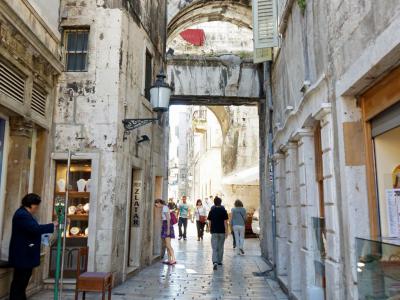
On the western side of Diocletian’s Palace stands the West Gate—better known as the Iron Gate—one of the four original entrances into the emperor’s fortified retirement dream. Today, it opens straight into the lively fabric of Split, where the palace walls blend seamlessly with People’s Square. Around you rise the old City Hall, the clock tower, and a lineup of aristocratic residences—the Nakić, Karepić, Cambi, and Cipriani palaces—proof that prime real estate has always been in demand...
But don’t let the cafés and chatter distract you. The Iron Gate still carries traces of its defensive past. Look closely, and you’ll notice the ancient rampart and what was once a double-door security chamber—an early version of “authorized personnel only.” Above the passage sits the Church of Our Lady of the Bell Tower, a narrow, almost hidden sacred space tucked into the thickness of the walls. Like the chapels above the other gates, it makes impressive use of very limited square footage. In the 11th century, a bell tower was added, giving the structure a new vertical accent and a fresh medieval identity layered onto its Roman bones.
And here’s a detail many pass by without noticing: on the northern wall of the rampart, behind what was once a sealed medieval niche, a sculpture was discovered—hands holding a crown. Carefully restored and returned to its original position, it now quietly watches over the gate once more.
So, as you step through the Iron Gate, remember—while entering this square, you’re crossing a threshold guarded by emperors, nobles, and a pair of stone hands still holding on to their crown...
But don’t let the cafés and chatter distract you. The Iron Gate still carries traces of its defensive past. Look closely, and you’ll notice the ancient rampart and what was once a double-door security chamber—an early version of “authorized personnel only.” Above the passage sits the Church of Our Lady of the Bell Tower, a narrow, almost hidden sacred space tucked into the thickness of the walls. Like the chapels above the other gates, it makes impressive use of very limited square footage. In the 11th century, a bell tower was added, giving the structure a new vertical accent and a fresh medieval identity layered onto its Roman bones.
And here’s a detail many pass by without noticing: on the northern wall of the rampart, behind what was once a sealed medieval niche, a sculpture was discovered—hands holding a crown. Carefully restored and returned to its original position, it now quietly watches over the gate once more.
So, as you step through the Iron Gate, remember—while entering this square, you’re crossing a threshold guarded by emperors, nobles, and a pair of stone hands still holding on to their crown...
14) City Museum of Split
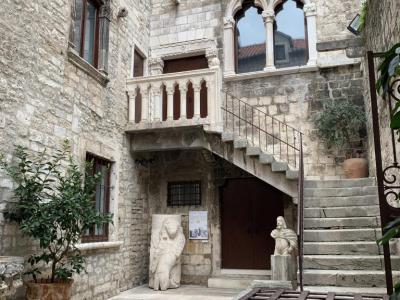
The City Museum of Split has been telling Split’s story since 1946, although the building itself had already been around for a few centuries before that. Tucked into the northeastern corner of Diocletian's Palace, inside the former Papalić Palace, it was once home to one of Split’s noble families. Just pause here for a closer look at the portal, and you’ll spot their coat of arms.
The palace was designed in the 15th century by Juraj of Dalmatia. The courtyard alone is worth a pause: a richly decorated portal, an elegant loggia, and a Renaissance hall crowned with a beautifully preserved wooden ceiling. In essence, this wasn't any average medieval townhouse. This was the kind of place where architecture quietly shows off.
Head upstairs, and the story of Split unfolds in layers. The permanent collection walks you from Roman times—back to Diocletian—through the centuries when Split functioned as an autonomous medieval commune, and onward into later periods. Expect medieval weaponry, paintings, fragments of sculptures once attached to city buildings, and stone monuments that have seen more history than most textbooks.
One room even recreates the Papalić family dining hall, fully furnished to reflect the noble life of the time. It’s like stepping into a dinner party where everyone has been waiting 500 years for dessert.
You’ll also find the city’s statute, seal, and coins, Romanesque sculptures from the cathedral’s belfry dating to Venetian rule, and a wealth of documents, maps, and photographs tracing Split’s more recent past. And just when you think you’ve reached the end, there’s a gallery dedicated to Emanuel Vidović, one of the leading figures of Croatian modern painting—proof that Split didn’t stop creating after the Renaissance...
So, take your time and pay attention—because in this palace within a palace, history isn’t some background noise; it’s the main storyteller...
The palace was designed in the 15th century by Juraj of Dalmatia. The courtyard alone is worth a pause: a richly decorated portal, an elegant loggia, and a Renaissance hall crowned with a beautifully preserved wooden ceiling. In essence, this wasn't any average medieval townhouse. This was the kind of place where architecture quietly shows off.
Head upstairs, and the story of Split unfolds in layers. The permanent collection walks you from Roman times—back to Diocletian—through the centuries when Split functioned as an autonomous medieval commune, and onward into later periods. Expect medieval weaponry, paintings, fragments of sculptures once attached to city buildings, and stone monuments that have seen more history than most textbooks.
One room even recreates the Papalić family dining hall, fully furnished to reflect the noble life of the time. It’s like stepping into a dinner party where everyone has been waiting 500 years for dessert.
You’ll also find the city’s statute, seal, and coins, Romanesque sculptures from the cathedral’s belfry dating to Venetian rule, and a wealth of documents, maps, and photographs tracing Split’s more recent past. And just when you think you’ve reached the end, there’s a gallery dedicated to Emanuel Vidović, one of the leading figures of Croatian modern painting—proof that Split didn’t stop creating after the Renaissance...
So, take your time and pay attention—because in this palace within a palace, history isn’t some background noise; it’s the main storyteller...
15) Silver Gate
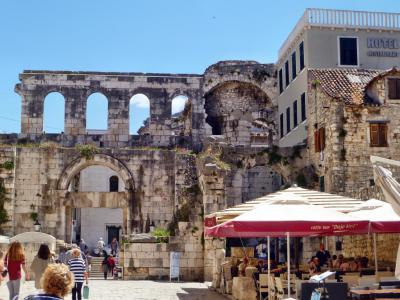
Four gates guard the Old Town of Split, and the Romans, never ones to miss a directional detail, named them appropriately. The Silver Gate faces east, toward the ancient Roman town of Epetia, so they called it Porta Orientalis—literally, the “eastern gate.” Straightforward, efficient, and very Roman. The other entrances' names are all about metals and practicality: Golden Gate, Iron Gate, and Bronze Gate. Diocletian may have retired from power, but he certainly didn’t retire from branding...
After Salona, the nearby Roman capital, was destroyed by Avars and Slavs around the 7th century AD, refugees took shelter within the sturdy walls of Diocletian’s Palace. The space inside was tight, so what they did was build upward. Above the Silver Gate, in a narrow corridor, they tucked in a mini-church dedicated to Saint Apolinar. Yes, a chapel above a gateway. And since good ideas travel fast, similar little churches eventually appeared above other gates, too. Medieval multitasking at its finest...
By the 18th century, the Venetians decided the Silver Gate needed a sidekick. So, they added a “small gate” next to it—because, apparently, even ancient Roman entrances benefit from a practical shortcut.
Stepping outside the Silver Gate, you can’t help noticing a lively market scene. Just opposite stands the 17th-century monastery and church of Saint Catherine of Alexandria, built by the Dominicans. From imperial fortifications to monastic calm, all within a few steps.
And history doesn’t stop there. In the year 2000, Pope John Paul II passed through the Silver Gate in his Popemobile en route to visit the Cathedral of Saint Domnius. Indeed, not every Roman gate can say it has welcomed both an emperor and a pope.
So, as you walk through, don’t just pass under the arch—listen closely. These gates have seen empires rise, refugees arrive, Venetians renovate, and popes roll through. Not bad for an old doorway...
After Salona, the nearby Roman capital, was destroyed by Avars and Slavs around the 7th century AD, refugees took shelter within the sturdy walls of Diocletian’s Palace. The space inside was tight, so what they did was build upward. Above the Silver Gate, in a narrow corridor, they tucked in a mini-church dedicated to Saint Apolinar. Yes, a chapel above a gateway. And since good ideas travel fast, similar little churches eventually appeared above other gates, too. Medieval multitasking at its finest...
By the 18th century, the Venetians decided the Silver Gate needed a sidekick. So, they added a “small gate” next to it—because, apparently, even ancient Roman entrances benefit from a practical shortcut.
Stepping outside the Silver Gate, you can’t help noticing a lively market scene. Just opposite stands the 17th-century monastery and church of Saint Catherine of Alexandria, built by the Dominicans. From imperial fortifications to monastic calm, all within a few steps.
And history doesn’t stop there. In the year 2000, Pope John Paul II passed through the Silver Gate in his Popemobile en route to visit the Cathedral of Saint Domnius. Indeed, not every Roman gate can say it has welcomed both an emperor and a pope.
So, as you walk through, don’t just pass under the arch—listen closely. These gates have seen empires rise, refugees arrive, Venetians renovate, and popes roll through. Not bad for an old doorway...
