Custom Walk in Sarajevo, Bosnia-Herzegovina by markjdownie2_9676ef created on 2026-04-16
Guide Location: Bosnia-Herzegovina » Sarajevo
Guide Type: Custom Walk
# of Sights: 16
Tour Duration: 7 Hour(s)
Travel Distance: 16.7 Km or 10.4 Miles
Share Key: QAYQJ
Guide Type: Custom Walk
# of Sights: 16
Tour Duration: 7 Hour(s)
Travel Distance: 16.7 Km or 10.4 Miles
Share Key: QAYQJ
How It Works
Please retrieve this walk in the GPSmyCity app. Once done, the app will guide you from one tour stop to the next as if you had a personal tour guide. If you created the walk on this website or come to the page via a link, please follow the instructions below to retrieve the walk in the app.
Retrieve This Walk in App
Step 1. Download the app "GPSmyCity: Walks in 1K+ Cities" on Apple App Store or Google Play Store.



Step 2. In the GPSmyCity app, download(or launch) the guide "Sarajevo Map and Walking Tours".
Step 3. Tap the menu button located at upper right corner of the "Walks" screen and select "Retrieve custom walk". Enter the share key: QAYQJ
1) Sarajevo Tunnel (must see)
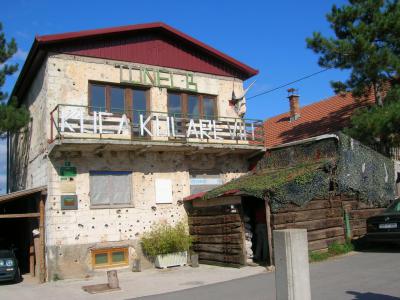
Just outside Sarajevo’s airport lies the Sarajevo Tunnel-known locally as the Tunnel of Hope (Tunel spasa)-a small passage with an outsized place in the city’s recent history. Dug by hand in 1993 during the Siege of Sarajevo, the tunnel secretly linked the besieged city district of Dobrinja with the suburb of Butmir, beyond the front lines. For nearly two years, it was a lifeline, carrying food, medicine, fuel, and people under the runway while artillery thundered overhead.
The museum stands at the original Kolar family house in Butmir, where one entrance was concealed. Inside, exhibits explain how soldiers and civilians worked shoulder to shoulder to excavate roughly 800 meters of mud and clay, often waist-deep in water. Narrow-about a meter wide and 1.6 meters high-the tunnel also sheltered pipes and cables that restored electricity and communications to parts of the city, helping residents endure the longest siege in modern European history.
Visitors can walk through a preserved section of the tunnel to feel its cramped scale and see tools, uniforms, and photographs that document daily life under siege. Short films and guides provide context without sensationalism, focusing on resilience, improvisation, and the human networks that kept Sarajevo alive. It’s a sobering but illuminating stop that pairs well with other contemporary-history sites in the city.
The museum is about 8 kilometers southwest of Sarajevo’s center, near the airport; taxis are the easiest way to reach it. The tunnel section is low and can be damp-watch your head and footwear-and the experience may be challenging for claustrophobic visitors. Allow 60–90 minutes.
The museum stands at the original Kolar family house in Butmir, where one entrance was concealed. Inside, exhibits explain how soldiers and civilians worked shoulder to shoulder to excavate roughly 800 meters of mud and clay, often waist-deep in water. Narrow-about a meter wide and 1.6 meters high-the tunnel also sheltered pipes and cables that restored electricity and communications to parts of the city, helping residents endure the longest siege in modern European history.
Visitors can walk through a preserved section of the tunnel to feel its cramped scale and see tools, uniforms, and photographs that document daily life under siege. Short films and guides provide context without sensationalism, focusing on resilience, improvisation, and the human networks that kept Sarajevo alive. It’s a sobering but illuminating stop that pairs well with other contemporary-history sites in the city.
The museum is about 8 kilometers southwest of Sarajevo’s center, near the airport; taxis are the easiest way to reach it. The tunnel section is low and can be damp-watch your head and footwear-and the experience may be challenging for claustrophobic visitors. Allow 60–90 minutes.
2) Sniper Alley
Sniper Alley is an informal name for a portion of the main boulevard in Sarajevo. The streets of Zmaja od Bosne (Dragon of Bosnia) and Mesa Selimovic Boulevard were once highly dangerous for civilians. A large number of high-rise buildings provided excellent perches for the snipers that populated the city.
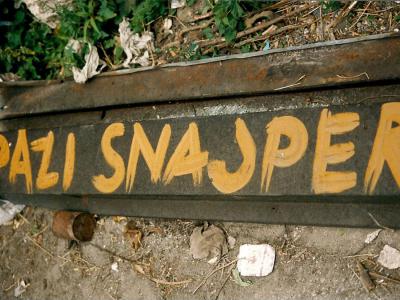
Sniper Alley connected the industrial parts of the city to the Old Town's historical and cultural sites, where many citizens lived. Locals needed to travel these streets despite the danger posed by the numerous snipers. The area had a large number of hand-painted signs warning of the presence of snipers to encourage citizens to find new walking routes.
It is estimated that about 225 people were killed by snipers. More than 1,000 others were wounded by sniper bullets.
Today, the region that was called Sniper Alley just a few decades ago is now home to the Sarajevo University campus, several government offices, the Botanic Gardens, and major museums.
Sniper Alley connected the industrial parts of the city to the Old Town's historical and cultural sites, where many citizens lived. Locals needed to travel these streets despite the danger posed by the numerous snipers. The area had a large number of hand-painted signs warning of the presence of snipers to encourage citizens to find new walking routes.
It is estimated that about 225 people were killed by snipers. More than 1,000 others were wounded by sniper bullets.
Today, the region that was called Sniper Alley just a few decades ago is now home to the Sarajevo University campus, several government offices, the Botanic Gardens, and major museums.
3) Eternal Flame
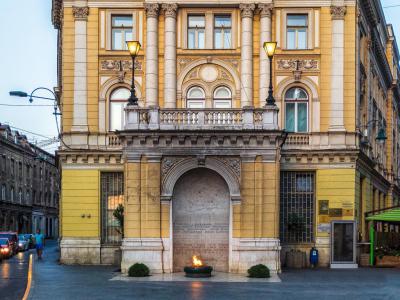
The Eternal Flame is a memorial to military and civilian casualties of World War II. It is located in the historic center of Sarajevo at the intersection of Ferhadija Street and Marshal Tito Street.
The memorial was designed by architect Juraj Neidhardt. It was dedicated in 1946 to the anniversary of the liberation of Sarajevo from Nazi Germany.
The memorial appears as a gate with an arched doorway. In front of the memorial is an eternal flame. Inside, a cemented plaque is inscribed in Bosnian with the following:
"With courage and the jointly spilled blood of the fighters of the Bosnian-Herzegovinian, Croatian, Montenegrin, and Serbian brigades of the glorious Yugoslav Army; with the joint efforts and sacrifices of Sarajevan patriots Serbs, Muslims and Croats on 6 April 1945 Sarajevo, the capital city of the People's Republic of Bosnia and Herzegovina was liberated. Eternal glory and gratitude to the fallen heroes for the liberation of Sarajevo and our homeland on the first anniversary of its liberation - a grateful Sarajevo."
The memorial was designed by architect Juraj Neidhardt. It was dedicated in 1946 to the anniversary of the liberation of Sarajevo from Nazi Germany.
The memorial appears as a gate with an arched doorway. In front of the memorial is an eternal flame. Inside, a cemented plaque is inscribed in Bosnian with the following:
"With courage and the jointly spilled blood of the fighters of the Bosnian-Herzegovinian, Croatian, Montenegrin, and Serbian brigades of the glorious Yugoslav Army; with the joint efforts and sacrifices of Sarajevan patriots Serbs, Muslims and Croats on 6 April 1945 Sarajevo, the capital city of the People's Republic of Bosnia and Herzegovina was liberated. Eternal glory and gratitude to the fallen heroes for the liberation of Sarajevo and our homeland on the first anniversary of its liberation - a grateful Sarajevo."
4) Cathedral of Jesus' Heart
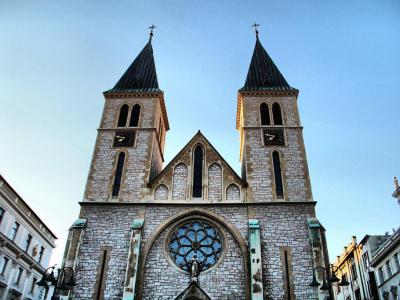
The Cathedral of Jesus' Heart is a Roman Catholic Cathedral in the historic center of Sarajevo. The 19th-century building goes by many names. Some refer to it as the Sacred Heart Cathedral, Sarajevo Cathedral, or the Cathedral of Jesus' Sacred Heart. It is the archdiocese of Vrhbosna, a small region in today's central Bosnia and Herzegovina.
The Cathedral was constructed between 1884 and 1887 and was consecrated in 1889. Architects Josip Vancas and Baron Karl Schwarz designed the Cathedral of Jesus' Heart in the Neo-Gothic architectural style with Romanesque Revival influences. It was modeled after Notre Dame in Dijon, France.
The religious edifice, which is the largest in Bosnia and Herzegovina, has two bell spires with six bells. On the main building, between the spires, is a rosette and a statue of the Sacred Heart. Inside, the Cathedral has a marble altar designed by Josip Vancas and side altars dedicated to the Immaculate Conception and the apostles of the Slavs.
The Siege of Sarajevo caused some damage to the structure. Unlike many of the other buildings in the city, the Cathedral was not destroyed. It was repaired and continued to host services.
The Cathedral was constructed between 1884 and 1887 and was consecrated in 1889. Architects Josip Vancas and Baron Karl Schwarz designed the Cathedral of Jesus' Heart in the Neo-Gothic architectural style with Romanesque Revival influences. It was modeled after Notre Dame in Dijon, France.
The religious edifice, which is the largest in Bosnia and Herzegovina, has two bell spires with six bells. On the main building, between the spires, is a rosette and a statue of the Sacred Heart. Inside, the Cathedral has a marble altar designed by Josip Vancas and side altars dedicated to the Immaculate Conception and the apostles of the Slavs.
The Siege of Sarajevo caused some damage to the structure. Unlike many of the other buildings in the city, the Cathedral was not destroyed. It was repaired and continued to host services.
5) Sarajevo Rose
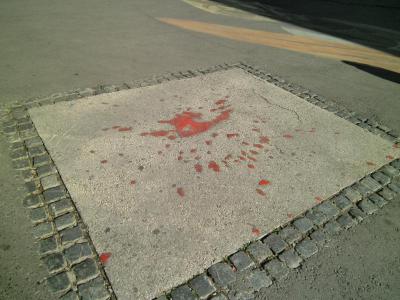
Sarajevo Rose is a memorial dedicated to the Siege of Sarajevo. Though there are about 200 of these roses located throughout the city, the primary rose is located in the walkway at Marsala Tita (Marshal Tito) next to Veliki Park (Great Park). It signifies the location of the first Markale massacre.
The memorials found throughout the city use impressions left behind in the concrete and asphalt by mortar shell explosions. The rounds created unique patterns that resemble floral arrangements. They were filled with red resin. Each marks a location where at least three people were killed.
Some of the memorials are official roses that were marked by the Ministry of Veterans Affairs of Canton Sarajevo. Others were marked by citizens of the city without official permission.
Many of the memorials have been damaged over the years due to regular pedestrian and vehicular wear and tear. Various types of protection have been attempted over the years, but they have proven to be impractical due to the locations of each rose.
The memorials found throughout the city use impressions left behind in the concrete and asphalt by mortar shell explosions. The rounds created unique patterns that resemble floral arrangements. They were filled with red resin. Each marks a location where at least three people were killed.
Some of the memorials are official roses that were marked by the Ministry of Veterans Affairs of Canton Sarajevo. Others were marked by citizens of the city without official permission.
Many of the memorials have been damaged over the years due to regular pedestrian and vehicular wear and tear. Various types of protection have been attempted over the years, but they have proven to be impractical due to the locations of each rose.
6) Museum of Crimes Against Humanity and Genocide
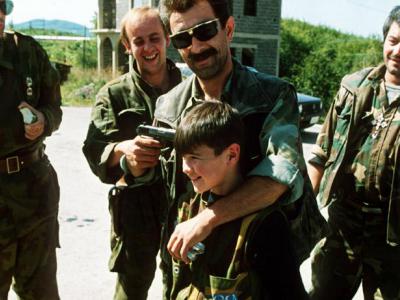
The Museum of Crimes Against Humanity and Genocide is a museum that showcases war crimes committed during the war in Bosnia that lasted from 1992 to 1995. The museum opened in 2016 as an initiative to sustain the memory of all the victims of the war. The founders of the museum themselves are victims who survived the war.
The museum began as a collection of photos, but many artifacts have been added to the museum since it was founded. Some of these artifacts include personal items of the victims, instruments of torture, a mock-up minefield, a reconstructed torture cell, and a replica of a mass grave.
The museum is divided into themes. Some of these include concentration camps in Bosnia and Herzegovina, the mass killings at Srebrenica, torture, and children as victims of war.
Visitors to the museum can see works of art, including the sculpture of a man, made from bread. The sculpture symbolizes those individuals killed while waiting in line for food. Three films provide educational material to museum patrons. They cover sexual violence, the Siege of Sarajevo, and first-hand accounts of war crimes.
The museum began as a collection of photos, but many artifacts have been added to the museum since it was founded. Some of these artifacts include personal items of the victims, instruments of torture, a mock-up minefield, a reconstructed torture cell, and a replica of a mass grave.
The museum is divided into themes. Some of these include concentration camps in Bosnia and Herzegovina, the mass killings at Srebrenica, torture, and children as victims of war.
Visitors to the museum can see works of art, including the sculpture of a man, made from bread. The sculpture symbolizes those individuals killed while waiting in line for food. Three films provide educational material to museum patrons. They cover sexual violence, the Siege of Sarajevo, and first-hand accounts of war crimes.
7) Gazi Husrev-Begov Bezistan (Covered Market)
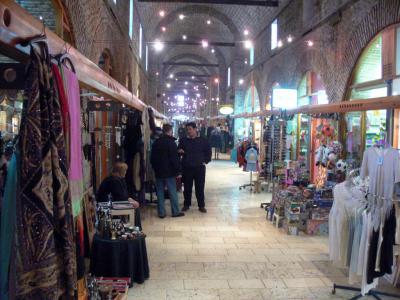
Gazi Husrev‑Beg’s Bezistan, often called the Old or Great Bezistan, is a striking covered market in the heart of Sarajevo’s historic Bascarsija district. Commissioned by Gazi Husrev‑Beg-an influential 16th-century Ottoman governor-and built in 1555, the market forms a key part of his monumental endowment alongside the mosque, madrasa, library, and clock tower. The architecture-crafted in collaboration with Dalmatian and Ragusan masons-features a robust stone façade, a long vaulted corridor, and vaulted entrances, closely reminiscent of Istanbul’s famous Kapalı Bazaar.
Covering about 109 metres along Zlatarska (Gazi Husrev‑Begova) Street, the Bezistan’s east-facing shops historically accommodated metalworkers, gold and silversmiths, while the interior housed grocers and textile traders in cooler, underground spaces. The name “Zlatarska” derives from its longstanding association with jewelry artisans and guilds. Today, nearly 70 small shops continue to operate, offering handcrafted souvenirs, silver filigree, local crafts, and tourist goods.
Declared a national monument of Bosnia and Herzegovina in 2006, the Bezistan stands as a testament to Sarajevo’s rich Ottoman heritage, preserved remarkably well despite past fires and urban change. Though the adjacent Taslihan-a 16th-century caravansarai-was destroyed by fire in 1879, remnants remain visible near the market’s south side, now integrated into the summer garden of Hotel Europe.
For tourists, visiting the Bezistan is more than shopping: it's an immersive journey through centuries of trade, architecture, and cultural continuity in Sarajevo. Whether seeking local crafts, silver jewelry, or simply curious about Ottoman urbanism, the market’s shaded, vaulted alleys offer an evocative backdrop to explore the living legacy of Gazi Husrev-Beg’s civic vision.
Covering about 109 metres along Zlatarska (Gazi Husrev‑Begova) Street, the Bezistan’s east-facing shops historically accommodated metalworkers, gold and silversmiths, while the interior housed grocers and textile traders in cooler, underground spaces. The name “Zlatarska” derives from its longstanding association with jewelry artisans and guilds. Today, nearly 70 small shops continue to operate, offering handcrafted souvenirs, silver filigree, local crafts, and tourist goods.
Declared a national monument of Bosnia and Herzegovina in 2006, the Bezistan stands as a testament to Sarajevo’s rich Ottoman heritage, preserved remarkably well despite past fires and urban change. Though the adjacent Taslihan-a 16th-century caravansarai-was destroyed by fire in 1879, remnants remain visible near the market’s south side, now integrated into the summer garden of Hotel Europe.
For tourists, visiting the Bezistan is more than shopping: it's an immersive journey through centuries of trade, architecture, and cultural continuity in Sarajevo. Whether seeking local crafts, silver jewelry, or simply curious about Ottoman urbanism, the market’s shaded, vaulted alleys offer an evocative backdrop to explore the living legacy of Gazi Husrev-Beg’s civic vision.
8) Sahat Kula (Clock Tower)
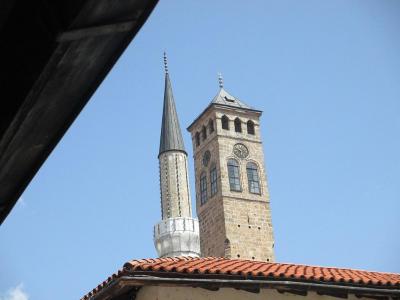
The Sarajevo Clock Tower is one of the city’s most recognizable landmarks and a rare example of Ottoman-era timekeeping still standing in the Balkans. Built in the 17th century, it rises above Bascarsija, the old bazaar, with a square stone structure that commands attention amid the surrounding mosques and narrow streets. Though its exact construction date is uncertain, records suggest it was built during the rule of Gazi Husrev-beg’s vakuf (endowment), tying it closely to the development of Sarajevo’s historic core.
What makes this clock tower particularly unique is its role as the only public clock in the world that measures lunar time, or a la turca. Unlike conventional timepieces, its hands are set so that midnight always coincides with sunset, allowing residents to know the exact time for evening prayers. This tradition continues today, with caretakers adjusting the mechanism daily to match the rhythm of the sun. The clock itself was imported from London in the 19th century, an addition that links Sarajevo’s Ottoman heritage with European craftsmanship.
Standing over 30 meters tall, the tower not only served a practical purpose but also symbolized the blend of cultures that shaped Sarajevo’s history. From its upper windows, the muezzin once called worshippers to prayer, while the passing hours kept the city’s bustling commercial life in order. Visitors will find the tower adjacent to the Gazi Husrev-beg Mosque, making it an easy stop while exploring the heart of Bascarsija.
Today, the Clock Tower remains both a functional timekeeper and a cultural treasure. It embodies the city’s unique character, where East meets West, tradition meets adaptation, and history continues to mark the passing of time. For travelers, pausing at its base offers more than just a view of an old clock-it offers a glimpse into Sarajevo’s layered identity and enduring spirit.
What makes this clock tower particularly unique is its role as the only public clock in the world that measures lunar time, or a la turca. Unlike conventional timepieces, its hands are set so that midnight always coincides with sunset, allowing residents to know the exact time for evening prayers. This tradition continues today, with caretakers adjusting the mechanism daily to match the rhythm of the sun. The clock itself was imported from London in the 19th century, an addition that links Sarajevo’s Ottoman heritage with European craftsmanship.
Standing over 30 meters tall, the tower not only served a practical purpose but also symbolized the blend of cultures that shaped Sarajevo’s history. From its upper windows, the muezzin once called worshippers to prayer, while the passing hours kept the city’s bustling commercial life in order. Visitors will find the tower adjacent to the Gazi Husrev-beg Mosque, making it an easy stop while exploring the heart of Bascarsija.
Today, the Clock Tower remains both a functional timekeeper and a cultural treasure. It embodies the city’s unique character, where East meets West, tradition meets adaptation, and history continues to mark the passing of time. For travelers, pausing at its base offers more than just a view of an old clock-it offers a glimpse into Sarajevo’s layered identity and enduring spirit.
9) Gazi Husrev-beg Mosque (must see)
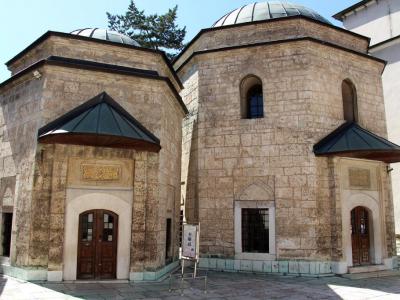
Gazi Husrev-beg Mosque is a Sunni Islam mosque in the historic center of Sarajevo. This 16th-century mosque was designed by architect Acem Esir Ali using Early Period, Classical Ottoman architecture. Construction was completed in 1530. Along with the mosque, the plans included Islamic primary and secondary schools, a public bath, and a marketplace.
The mosque was retrofitted with electricity and indoor lighting in 1898 under the Austro-Hungarian Empire. It was the first mosque in the world to have these modern conveniences.
The mosque was targeted by Serbians during the Siege of Sarajevo. It suffered major destruction, but reconstruction efforts began almost immediately at the end of the siege. The new interior was designed by contemporary Bosnian calligrapher Hazim Numanagic.
Gazi Husrev-beg Mosque is considered the largest historical mosque in the country. It is also one of the city's most popular tourist attractions. Visitors are welcome to tour the mosque and its museum daily from 9 AM to 7 PM.
The mosque was retrofitted with electricity and indoor lighting in 1898 under the Austro-Hungarian Empire. It was the first mosque in the world to have these modern conveniences.
The mosque was targeted by Serbians during the Siege of Sarajevo. It suffered major destruction, but reconstruction efforts began almost immediately at the end of the siege. The new interior was designed by contemporary Bosnian calligrapher Hazim Numanagic.
Gazi Husrev-beg Mosque is considered the largest historical mosque in the country. It is also one of the city's most popular tourist attractions. Visitors are welcome to tour the mosque and its museum daily from 9 AM to 7 PM.
10) Martyrs' Memorial Cemetery Kovaci
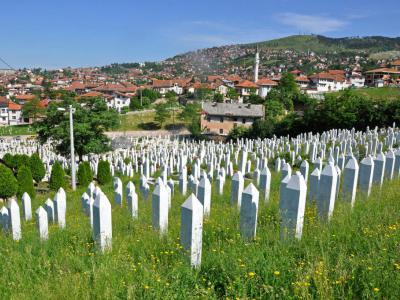
Martyrs' Memorial Cemetery Kovaci is the main cemetery for those who were killed in the Yugoslav Wars from 1991 to 2001. The cemetery was primarily used as the final resting place for the soldiers of the Army of Bosnia and Herzegovina who were killed during the conflict.
During the war, the city was plagued by snipers and grenade fire that averaged more than 300 grenades per day. Nearly 12,000 residents were killed during the Yugoslav wars, including 1,500 children. Many of the victims of this violence are buried in the Martyrs' Memorial Cemetery Kovaci.
In addition to civilian victims, the former Yugoslav president Alija Izetbegovic is buried in the Kovaci cemetery. The cemetery is sometimes referred to as the Shahid Cemetery due to its historic Islamic roots. Some of the oldest tombs date to the 15th century.
The cemetery is open 24 hours. The lack of proper lighting makes the cemetery best viewed during daylight.
During the war, the city was plagued by snipers and grenade fire that averaged more than 300 grenades per day. Nearly 12,000 residents were killed during the Yugoslav wars, including 1,500 children. Many of the victims of this violence are buried in the Martyrs' Memorial Cemetery Kovaci.
In addition to civilian victims, the former Yugoslav president Alija Izetbegovic is buried in the Kovaci cemetery. The cemetery is sometimes referred to as the Shahid Cemetery due to its historic Islamic roots. Some of the oldest tombs date to the 15th century.
The cemetery is open 24 hours. The lack of proper lighting makes the cemetery best viewed during daylight.
11) Alija Izetbegovic Museum
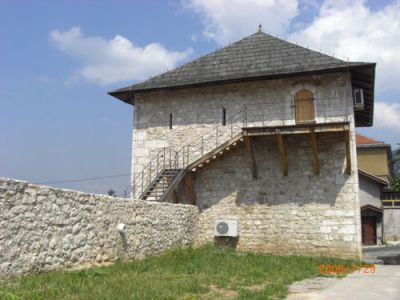
The Alija Izetbegovic Museum in Sarajevo offers a deeply moving introduction to the life and legacy of Bosnia and Herzegovina’s first elected president. Situated within the historic 18th‑century Vratnik fortress gates, it was inaugurated on October 19, 2007, four years after Izetbegovic’s death. As you walk through the stone walls of these fortified gates, you’ll feel the weight of history and the resilience embedded in Sarajevo’s urban fabric.
Upon entry through Ploca Gate, visitors are welcomed into a thoughtfully curated space that includes a library of Izetbegovic’s writings and personal effects. The first exhibition room features nine informative panels-with photographs and texts-detailing his early life, political evolution, and influential ideas like the “Islamic Declaration.” At its center, displays of awards and national honors recall the international recognition he received.
Connecting Ploca to Sirokac is an enclosed passage that not only reinforces the architectural character of Vratnik but also ties together two phases of exhibit storytelling. In Sirokac Gate, a dedicated section highlights Izetbegovic’s military leadership during the Bosnian War-his role as commander‑in‑chief of the Army of the Republic of Bosnia and Herzegovina, and the nation’s struggle for independence in the 1990s.
For tourists exploring Sarajevo, this museum complements visits to nearby landmarks: the Martyrs’ Memorial Cemetery at Kovaci, where Izetbegovic is buried among defenders of Sarajevo, and the surrounding historic Vratnik neighborhood. It's particularly well suited to visitors interested in modern political history, national identity, and personal stories that shaped the country's destiny.
Whether you’re navigating Bosnia’s complex recent past or moving from the Ottoman-era core of Bascarsija toward the east, the Alija Izetbegovic Museum offers a compact yet powerful narrative. Expect clear bilingual exhibit text (often in Bosnian and English), helpful staff, and an environment that encourages reflection on leadership, resistance, and reconciliation. A visit here enriches any historical walking tour of Sarajevo.
Upon entry through Ploca Gate, visitors are welcomed into a thoughtfully curated space that includes a library of Izetbegovic’s writings and personal effects. The first exhibition room features nine informative panels-with photographs and texts-detailing his early life, political evolution, and influential ideas like the “Islamic Declaration.” At its center, displays of awards and national honors recall the international recognition he received.
Connecting Ploca to Sirokac is an enclosed passage that not only reinforces the architectural character of Vratnik but also ties together two phases of exhibit storytelling. In Sirokac Gate, a dedicated section highlights Izetbegovic’s military leadership during the Bosnian War-his role as commander‑in‑chief of the Army of the Republic of Bosnia and Herzegovina, and the nation’s struggle for independence in the 1990s.
For tourists exploring Sarajevo, this museum complements visits to nearby landmarks: the Martyrs’ Memorial Cemetery at Kovaci, where Izetbegovic is buried among defenders of Sarajevo, and the surrounding historic Vratnik neighborhood. It's particularly well suited to visitors interested in modern political history, national identity, and personal stories that shaped the country's destiny.
Whether you’re navigating Bosnia’s complex recent past or moving from the Ottoman-era core of Bascarsija toward the east, the Alija Izetbegovic Museum offers a compact yet powerful narrative. Expect clear bilingual exhibit text (often in Bosnian and English), helpful staff, and an environment that encourages reflection on leadership, resistance, and reconciliation. A visit here enriches any historical walking tour of Sarajevo.
12) Yellow Fortress
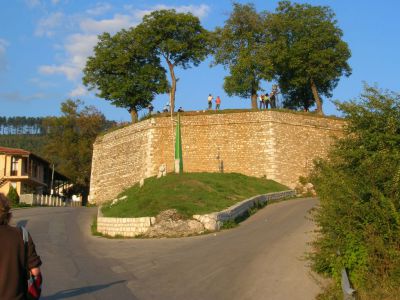
Perched on Jekovac Cliff above Sarajevo’s old quarter, the Yellow Fortress is both a storied stronghold and the city’s favorite balcony. Built in the early 18th century as part of the fortified Vratnik walls, it once guarded approaches to the Ottoman-era town and today offers a broad stone terrace where visitors linger over sweeping views of minarets, Austro-Hungarian façades, and green hills. You’ll also see the nearby Jajce Barracks and the remains of other Vratnik defenses that once ringed this ridge.
Come late afternoon, the fortress becomes Sarajevo’s classic sunset spot. As the light softens, locals and travelers perch along the bastion’s edge to watch the valley glow and city lights flicker on. The climb from the Old Town is short but steep-comfortable shoes help-and the payoff is a panoramic photo op that’s hard to beat, whether you arrive for golden hour or a quiet morning vista.
History still hums here. During the Austro-Hungarian occupation in 1878, the Yellow Fortress served as a defensive point; today, during the month of Ramadan, a ceremonial cannon is fired at sunset to mark the breaking of the fast-a tradition that draws a friendly crowd and underscores Sarajevo’s layered cultural life. Pair your visit with a wander through Vratnik’s lanes or continue to the White Fortress for another angle on the city before descending to Baščaršija for dinner.
Come late afternoon, the fortress becomes Sarajevo’s classic sunset spot. As the light softens, locals and travelers perch along the bastion’s edge to watch the valley glow and city lights flicker on. The climb from the Old Town is short but steep-comfortable shoes help-and the payoff is a panoramic photo op that’s hard to beat, whether you arrive for golden hour or a quiet morning vista.
History still hums here. During the Austro-Hungarian occupation in 1878, the Yellow Fortress served as a defensive point; today, during the month of Ramadan, a ceremonial cannon is fired at sunset to mark the breaking of the fast-a tradition that draws a friendly crowd and underscores Sarajevo’s layered cultural life. Pair your visit with a wander through Vratnik’s lanes or continue to the White Fortress for another angle on the city before descending to Baščaršija for dinner.
13) Sarajevo City Hall (must see)
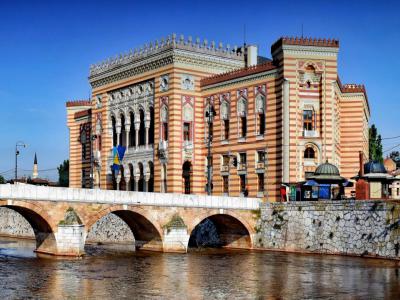
Sarajevo City Hall, known as Vijecnica, is a symbol of Sarajevo and one of the most beautiful monuments from the Austro-Hungarian period. It is the seat and headquarters of the Mayor of Sarajevo and the Sarajevo City Council. The building has been used for various municipal purposes since its construction, including as a City Court and Parliament House until 1949, when it became the National and University Library of Bosnia and Herzegovina, through the late 20th century.
Construction of the City Hall began in 1891 and was completed in 1896. It was first designed by Czech architect Karel Parik. After he was removed from the job by Baron Beni Kallay, the Austrian-Hungarian architect Alexander Wittek took over. Wittek died before the construction could be completed, so Ciril Ivekovic, a Croatian architect, finished the project. The building was inspired by Spanish and Northern Africa Islamic art.
The City Hall was destroyed in 1992 during the Siege of Sarajevo. About 700 manuscripts, including unique publications, were lost. Reconstruction of the building began in 1996 and was completed in 2014. Since its reopening, the space has been used as an exhibition hall, a concert venue, and the National Library. It is now considered a National Monument of Bosnia and Herzegovina.
Construction of the City Hall began in 1891 and was completed in 1896. It was first designed by Czech architect Karel Parik. After he was removed from the job by Baron Beni Kallay, the Austrian-Hungarian architect Alexander Wittek took over. Wittek died before the construction could be completed, so Ciril Ivekovic, a Croatian architect, finished the project. The building was inspired by Spanish and Northern Africa Islamic art.
The City Hall was destroyed in 1992 during the Siege of Sarajevo. About 700 manuscripts, including unique publications, were lost. Reconstruction of the building began in 1996 and was completed in 2014. Since its reopening, the space has been used as an exhibition hall, a concert venue, and the National Library. It is now considered a National Monument of Bosnia and Herzegovina.
14) Sarajevo Assassination Memorial Plaque
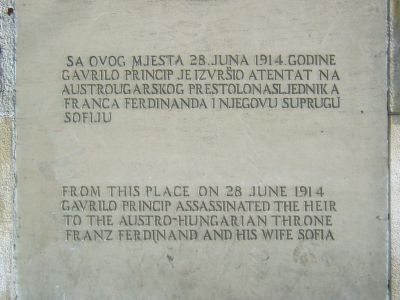
The Assassination Memorial Plaque in Sarajevo marks one of the most significant turning points in modern history. On June 28, 1914, Archduke Franz Ferdinand of Austria and his wife, Sophie, Duchess of Hohenberg, were shot and killed here by Gavrilo Princip, a young Bosnian Serb nationalist. Princip was linked to revolutionary groups seeking independence from Austro-Hungarian rule, and his act was intended as a strike against imperial authority.
The assassination reverberated far beyond the Balkans. Within weeks, Austria-Hungary declared war on Serbia, igniting a chain reaction of alliances and hostilities that escalated into World War I. What began as a local act of political violence in Sarajevo soon engulfed Europe and much of the world in unprecedented conflict, making this site a key reference point in the narrative of the 20th century.
The plaque itself has a layered history. First installed in 1915 by the Austro-Hungarian authorities, it was later removed after World War I when Sarajevo became part of the Kingdom of Yugoslavia. During the communist period, it was reinstated and has remained in place since then. Today, visitors can find it mounted on the wall at the exact spot where Princip fired the fatal shots.
Simple in design, the rectangular stone tablet bears an inscription in both Serbian and English: “FROM THIS PLACE ON JUNE 28 1914 GAVRILO PRINCIP ASSASSINATED THE HEIR TO THE AUSTRO-HUNGARIAN THRONE FRANZ FERDINAND AND HIS WIFE SOPHIA.” More than a local landmark, it stands as a sober reminder of how a single moment in Sarajevo altered the course of world history.
The assassination reverberated far beyond the Balkans. Within weeks, Austria-Hungary declared war on Serbia, igniting a chain reaction of alliances and hostilities that escalated into World War I. What began as a local act of political violence in Sarajevo soon engulfed Europe and much of the world in unprecedented conflict, making this site a key reference point in the narrative of the 20th century.
The plaque itself has a layered history. First installed in 1915 by the Austro-Hungarian authorities, it was later removed after World War I when Sarajevo became part of the Kingdom of Yugoslavia. During the communist period, it was reinstated and has remained in place since then. Today, visitors can find it mounted on the wall at the exact spot where Princip fired the fatal shots.
Simple in design, the rectangular stone tablet bears an inscription in both Serbian and English: “FROM THIS PLACE ON JUNE 28 1914 GAVRILO PRINCIP ASSASSINATED THE HEIR TO THE AUSTRO-HUNGARIAN THRONE FRANZ FERDINAND AND HIS WIFE SOPHIA.” More than a local landmark, it stands as a sober reminder of how a single moment in Sarajevo altered the course of world history.
15) Latin Bridge (must see)
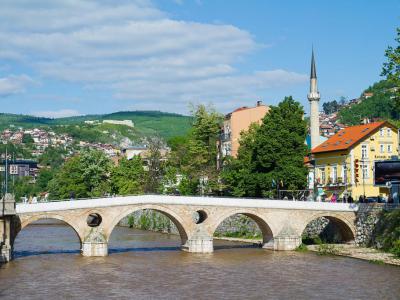
Latin Bridge is a stone bridge that spans the river Miljacka in Sarajevo. The bridge, made from gypsum, is closed to road traffic. Only pedestrians and cyclists may use Latin Bridge.
Latin Bridge connects Obala Kulina Bana Street to the north and Obala Isa-bega Ishakovica Street to the south. North of the Bridge, just beyond the Archduke's memorial plaque, lies the Sarajevo Museum. Southwest of the Bridge is Park Mejdan, which houses Archaeological Museum and Music Pavilion.
There are no historical records that show the exact date of construction of the Latin Bridge though it is known to be one of the oldest bridges in the city. The earliest known reference to it was in 1541, detailing a bridge built by the leather worker Hussein, son of Sirmerd. It is thought that the original bridge was made of wood, but was later replaced with a stone structure. In 1791, the bridge was damaged by a flood and was rebuilt in 1799.
The bridge is referred to as the Latin bridge because it connected the rest of the city to the Catholic quarter, which was called Latin (Latinluk). From 1918 to 1993, the bridge was renamed Princip's Bridge after Gavrilo Princip, the assassin that killed Archduke Franz Ferdinand and his wife, Sofie.
The Latin Bridge is notable for that infamous moment in history. Archduke Franz Ferdinand and his wife were assassinated at the northern end of the bridge in 1914. This event is widely known as the catalyst of a conflict that would lead to World War I. There is now a plaque that shows the location of the assassination.
Latin Bridge connects Obala Kulina Bana Street to the north and Obala Isa-bega Ishakovica Street to the south. North of the Bridge, just beyond the Archduke's memorial plaque, lies the Sarajevo Museum. Southwest of the Bridge is Park Mejdan, which houses Archaeological Museum and Music Pavilion.
There are no historical records that show the exact date of construction of the Latin Bridge though it is known to be one of the oldest bridges in the city. The earliest known reference to it was in 1541, detailing a bridge built by the leather worker Hussein, son of Sirmerd. It is thought that the original bridge was made of wood, but was later replaced with a stone structure. In 1791, the bridge was damaged by a flood and was rebuilt in 1799.
The bridge is referred to as the Latin bridge because it connected the rest of the city to the Catholic quarter, which was called Latin (Latinluk). From 1918 to 1993, the bridge was renamed Princip's Bridge after Gavrilo Princip, the assassin that killed Archduke Franz Ferdinand and his wife, Sofie.
The Latin Bridge is notable for that infamous moment in history. Archduke Franz Ferdinand and his wife were assassinated at the northern end of the bridge in 1914. This event is widely known as the catalyst of a conflict that would lead to World War I. There is now a plaque that shows the location of the assassination.
16) Sarajevo Olympic Bobsleigh and Luge Track
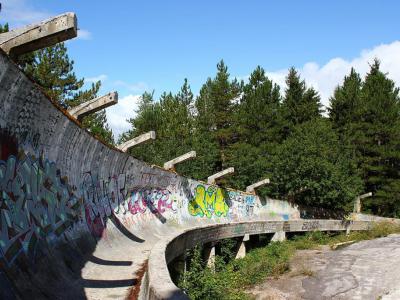
Sarajevo Olympic Bobsleigh and Luge Track is a bobsleigh and luge track situated on Trebević mountain overlooking the City of Sarajevo, built for the 1984 Winter Olympics.
When Sarajevo was awarded the 1984 Winter Olympics in 1977, a bobsleigh and luge track was proposed. The track design was approved in 1981, with construction starting on 1 June of that year. Assembly of the track was completed on 30 September 1982 at a cost of YUD 563,209,000. The first international competition of merit held at the track was the 1983 European Bobsleigh Championships in January of that year. At the 1984 Games, there were 20,000 luge spectators and 30,000 bobsleigh spectators. After the Winter Olympics, the track was used for World Cup competitions until the Yugoslav wars started in 1991, which included the Bosnian War the following year. The track was damaged as a result of the Siege of Sarajevo; during the siege, the track was used as an artillery position by Bosnian Serb forces.
The track still remains mostly intact (as of July 2022), with the war wounds of defensive fighting holes drilled into one of the last turns of the course. The track has been used for graffiti and bicycling in the period between the end of the war and the commencement of renovations in 2014. In June 2014, restoration began on the track, including the removal of overgrowth and graffiti, and the application of a protective coating from Start 1 down to the bottom of the course.
When Sarajevo was awarded the 1984 Winter Olympics in 1977, a bobsleigh and luge track was proposed. The track design was approved in 1981, with construction starting on 1 June of that year. Assembly of the track was completed on 30 September 1982 at a cost of YUD 563,209,000. The first international competition of merit held at the track was the 1983 European Bobsleigh Championships in January of that year. At the 1984 Games, there were 20,000 luge spectators and 30,000 bobsleigh spectators. After the Winter Olympics, the track was used for World Cup competitions until the Yugoslav wars started in 1991, which included the Bosnian War the following year. The track was damaged as a result of the Siege of Sarajevo; during the siege, the track was used as an artillery position by Bosnian Serb forces.
The track still remains mostly intact (as of July 2022), with the war wounds of defensive fighting holes drilled into one of the last turns of the course. The track has been used for graffiti and bicycling in the period between the end of the war and the commencement of renovations in 2014. In June 2014, restoration began on the track, including the removal of overgrowth and graffiti, and the application of a protective coating from Start 1 down to the bottom of the course.
