Custom Walk in Vienna, Austria by kelly_morton_8ca59e created on 2026-05-13
Guide Location: Austria » Vienna
Guide Type: Custom Walk
# of Sights: 13
Tour Duration: 4 Hour(s)
Travel Distance: 7.3 Km or 4.5 Miles
Share Key: QMN35
Guide Type: Custom Walk
# of Sights: 13
Tour Duration: 4 Hour(s)
Travel Distance: 7.3 Km or 4.5 Miles
Share Key: QMN35
How It Works
Please retrieve this walk in the GPSmyCity app. Once done, the app will guide you from one tour stop to the next as if you had a personal tour guide. If you created the walk on this website or come to the page via a link, please follow the instructions below to retrieve the walk in the app.
Retrieve This Walk in App
Step 1. Download the app "GPSmyCity: Walks in 1K+ Cities" on Apple App Store or Google Play Store.



Step 2. In the GPSmyCity app, download(or launch) the guide "Vienna Map and Walking Tours".
Step 3. Tap the menu button located at upper right corner of the "Walks" screen and select "Retrieve custom walk". Enter the share key: QMN35

1) Austrian Resistance Museum
This is a very interesting and eclectic place to visit. It was formed in 1963 by a group of individuals that were actually part of the resistance movement in Austria during the time of the Third Reich. The colleagues of these folks were part of the two thousand seven hundred individuals that were executed by the German Gestapo during the war. In a secondary way, the location also covers the efforts of the resistance movement during the Fascist rule of Austria.
There is also a part of the building which houses a research and archive wing for the place. This research facility still keeps an eye on zealous right wing political organizations in Germany. At the entrance to the museum is also a famous fountain built by Georg Donner. It is a classic example of Baroque art. Donner designed several others pieces in the area as well.
The museum can be quite graphic at times, and was designed that way by intention. The establishment recommends that children under the age of 11 not view the exhibits located within. You can call ahead for a time to get a guided tour. It takes about an hour to tour it, and the price is free.
There is also a part of the building which houses a research and archive wing for the place. This research facility still keeps an eye on zealous right wing political organizations in Germany. At the entrance to the museum is also a famous fountain built by Georg Donner. It is a classic example of Baroque art. Donner designed several others pieces in the area as well.
The museum can be quite graphic at times, and was designed that way by intention. The establishment recommends that children under the age of 11 not view the exhibits located within. You can call ahead for a time to get a guided tour. It takes about an hour to tour it, and the price is free.
2) Tostmann Trachten
What to buy here:
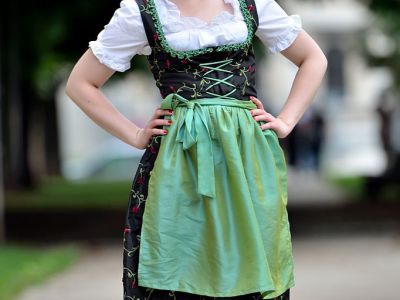
Over at Tostmann Trachten you will find a variety of other traditional Austrian accessories which make perfect giftware. Including scarves, bags, purses, shoes, hats, jewelry there are many things to treat yourself and others. Hats from Bittner, silk scarves from the Viennese silk weaver Flemmich, hand-crafted prints on silk and cotton from Sepp Wach in Aussee, hand-made bags from Florence Mucret and shoes from Southern Tyrol (Südtiroler Trachtenschuhe) and Austria (Dirndl & Bua and Giesswein) are included. For cold winter nights or cool summer evenings we offer warm blankets and more from Loden Steiner and for touch of nostalgia in the bathroom you can find items from the Kurapotheke Bad Ischl. Last but certainly not least, our patchwork blankets and pillows, which are made from the fabrics left over in the cutting of our Dirndls. Tostmann Trachten lies in the Schottengasse 3a. A lovely gift from Austria.
Over at Tostmann Trachten you will find a variety of other traditional Austrian accessories which make perfect giftware. Including scarves, bags, purses, shoes, hats, jewelry there are many things to treat yourself and others. Hats from Bittner, silk scarves from the Viennese silk weaver Flemmich, hand-crafted prints on silk and cotton from Sepp Wach in Aussee, hand-made bags from Florence Mucret and shoes from Southern Tyrol (Südtiroler Trachtenschuhe) and Austria (Dirndl & Bua and Giesswein) are included. For cold winter nights or cool summer evenings we offer warm blankets and more from Loden Steiner and for touch of nostalgia in the bathroom you can find items from the Kurapotheke Bad Ischl. Last but certainly not least, our patchwork blankets and pillows, which are made from the fabrics left over in the cutting of our Dirndls. Tostmann Trachten lies in the Schottengasse 3a. A lovely gift from Austria.
3) Rathaus (City Hall) (must see)
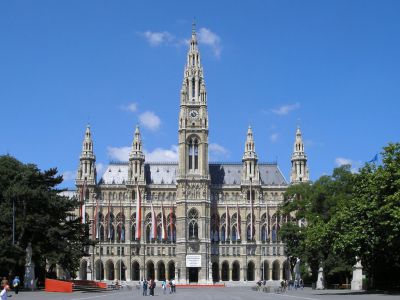
Vienna City Hall-a place where both the municipal government and the legislative assembly get down to business. By no means a dull office block, this neo-Gothic showstopper was built between 1872 and 1883 by architect Friedrich von Schmidt, who, rather humbly, now stands in a statue form just behind the building, keeping an eye on things from his very own square.
Drawing inspiration from the medieval architecture of Flanders and Brabant, the City Hall flaunts five towers like a crown. The tallest of them pierces the skyline at 98 meters, topped with the "City Hall Man"-not a superhero, but close... Clad in armor inspired by Emperor Maximilian I, this statue has been watching over Vienna since 1882 and has become something of a local mascot.
Inside, the building doesn’t just rest on its aesthetic laurels. There's the "City Hall Cellar"-a grand baroque dining hall where you can dig into proper Viennese culinary classics without a hint of modern guilt. “Schnitzel under chandeliers? Yes, please...”
The façade is a sculptural buffet in its own right, brimming with emperors, virtues like Power and Justice, and even good ol’ Vindobona, the Roman forebear of Vienna, lounging surrounded by heraldic flair. Think of it as Vienna’s resume carved in stone.
And on the flanks is a lineup of statues dedicated to trades and professions-because in this city, bakers, builders, and bookbinders all get a standing ovation in stone!
Now, if you're feeling adventurous (and are in good shape), brave the 331 steps up to the central tower that’s worth every groan from your knees. Your reward will be the sweeping views of Vienna in all its baroque-meets-modern glory-plus bragging rights for conquering the city one stair at a time. Trust us-Vienna looks even better from above.
Tip:
For the inside scoop, join the free German-language guided tour on Mondays, Wednesdays, and Fridays at 1 pm. Not fluent in German? No problem-audio guides are available in multiple languages. Just be ready to temporarily part ways with your passport. The view-and the tales-are absolutely worth it.
Drawing inspiration from the medieval architecture of Flanders and Brabant, the City Hall flaunts five towers like a crown. The tallest of them pierces the skyline at 98 meters, topped with the "City Hall Man"-not a superhero, but close... Clad in armor inspired by Emperor Maximilian I, this statue has been watching over Vienna since 1882 and has become something of a local mascot.
Inside, the building doesn’t just rest on its aesthetic laurels. There's the "City Hall Cellar"-a grand baroque dining hall where you can dig into proper Viennese culinary classics without a hint of modern guilt. “Schnitzel under chandeliers? Yes, please...”
The façade is a sculptural buffet in its own right, brimming with emperors, virtues like Power and Justice, and even good ol’ Vindobona, the Roman forebear of Vienna, lounging surrounded by heraldic flair. Think of it as Vienna’s resume carved in stone.
And on the flanks is a lineup of statues dedicated to trades and professions-because in this city, bakers, builders, and bookbinders all get a standing ovation in stone!
Now, if you're feeling adventurous (and are in good shape), brave the 331 steps up to the central tower that’s worth every groan from your knees. Your reward will be the sweeping views of Vienna in all its baroque-meets-modern glory-plus bragging rights for conquering the city one stair at a time. Trust us-Vienna looks even better from above.
Tip:
For the inside scoop, join the free German-language guided tour on Mondays, Wednesdays, and Fridays at 1 pm. Not fluent in German? No problem-audio guides are available in multiple languages. Just be ready to temporarily part ways with your passport. The view-and the tales-are absolutely worth it.
4) Cafe Central (must see)
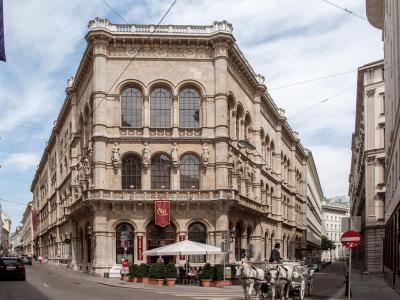
Café Central stands as a quintessential Viennese coffeehouse, nestled on the ground floor of the Palais Ferstel, formerly known as the Bank and Stockmarket Building, designed by architect Heinrich von Ferstel.
Established back in 1876, this café gained significant prominence during the late 19th century, evolving into a pivotal hub for Vienna's intellectual elite. Distinguished regulars included luminaries such as Peter Altenberg, Theodor Herzl, Alfred Adler, Egon Friedell, Hugo von Hofmannsthal, Anton Kuh, Adolf Loos, Leo Perutz, Robert Musil, Stefan Zweig, Alfred Polgar, Adolf Hitler, and Leon Trotsky. Remarkably, in January 1913 alone, notable figures like Josip Broz Tito, Sigmund Freud, and the ever-present Trotsky frequented this establishment.
It was often colloquially referred to as the "Chess school" (Die Schachhochschule), owing to the prevalence of chess enthusiasts who gathered on the first floor to engage in their games. The Vienna Circle, a group of logical positivists, convened numerous meetings here both before and after World War I.
One intriguing anecdote recalls a conversation between Victor Adler and Count Berchtold, the foreign minister of Austria-Hungary, where Adler warned that war might incite revolution in Russia, if not within the Habsburg monarchy itself. In response, Berchtold facetiously queried, "And who will lead this revolution? Perhaps Mr. Bronstein (Leon Trotsky) sitting over there at the Cafe Central?"
Following the conclusion of World War II, the café ceased its operations. However, in 1975, the Palais Ferstel underwent a renovation, and Café Central was resurrected in a different part of the building. Subsequently, in 1986, it underwent another comprehensive renovation.
Today, Café Central remains a cherished tourist attraction and a popular coffeehouse, revered for its enduring place in literary history.
Established back in 1876, this café gained significant prominence during the late 19th century, evolving into a pivotal hub for Vienna's intellectual elite. Distinguished regulars included luminaries such as Peter Altenberg, Theodor Herzl, Alfred Adler, Egon Friedell, Hugo von Hofmannsthal, Anton Kuh, Adolf Loos, Leo Perutz, Robert Musil, Stefan Zweig, Alfred Polgar, Adolf Hitler, and Leon Trotsky. Remarkably, in January 1913 alone, notable figures like Josip Broz Tito, Sigmund Freud, and the ever-present Trotsky frequented this establishment.
It was often colloquially referred to as the "Chess school" (Die Schachhochschule), owing to the prevalence of chess enthusiasts who gathered on the first floor to engage in their games. The Vienna Circle, a group of logical positivists, convened numerous meetings here both before and after World War I.
One intriguing anecdote recalls a conversation between Victor Adler and Count Berchtold, the foreign minister of Austria-Hungary, where Adler warned that war might incite revolution in Russia, if not within the Habsburg monarchy itself. In response, Berchtold facetiously queried, "And who will lead this revolution? Perhaps Mr. Bronstein (Leon Trotsky) sitting over there at the Cafe Central?"
Following the conclusion of World War II, the café ceased its operations. However, in 1975, the Palais Ferstel underwent a renovation, and Café Central was resurrected in a different part of the building. Subsequently, in 1986, it underwent another comprehensive renovation.
Today, Café Central remains a cherished tourist attraction and a popular coffeehouse, revered for its enduring place in literary history.
5) Demel
Step into the sugar-dusted time machine that is Demel, Vienna’s most regal sweet spot since 1786. Not just any pastry shop, mind you-this is the former Purveyor to the Imperial and Royal Court, which basically means it had the emperor’s official blessing to give everyone a sugar high.
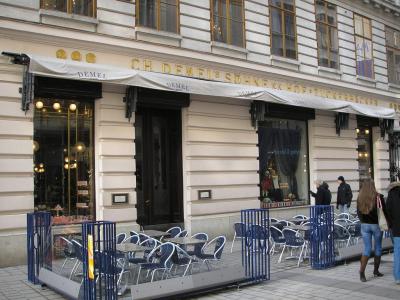
Decked out in full Neo-baroque glamour, Demel serves tradition with a flourish. The waitresses, known as Demelinerinnen, don’t just take your order-they address you in the third person, because in here, you are royalty too. “Would the gracious guest prefer their strudel warm?” Why yes, they would...
It all began at Saint Michael’s Square, thanks to Ludwig Dehne, a confectioner from Württemberg, Germany, with a sweet tooth and ambition. In 1857, the shop passed into the hands of Christoph Demel, one of Dehne’s employees, whose sons-Joseph and Karl-later moved the whole sugary operation to Kohlmarkt after the old Burgtheater was torn down. Turns out, even pastries need a fresh start sometimes...
Demel hit its golden era during the Austro-Hungarian monarchy, becoming a magnet for the upper crust. Empress Elisabeth (known as Sisi), Princess Pauline von Metternich, and actress Katharina Schratt all indulged in its delights-proof that even the elite couldn’t resist a good slice of cake.
Speaking of cake: cue the great Torte Wars of the 20th century. Demel and the Hotel Sacher engaged in a legal battle over the rights to the "Original Sacher Torte." After years of courtroom drama, a peace treaty was signed in 1963-Demel could keep baking its version, marked with a sleek triangular seal. Chocolate diplomacy at its finest.
Today, Demel is more than just cake and charm. It hosts a delightful museum showcasing its imperial connections and the fine craft of chocolate-making. So, whether you're here for history, sugar, or a touch of old-world theatrics, one thing is certain: no one leaves Demel unimpressed-or hungry.
Decked out in full Neo-baroque glamour, Demel serves tradition with a flourish. The waitresses, known as Demelinerinnen, don’t just take your order-they address you in the third person, because in here, you are royalty too. “Would the gracious guest prefer their strudel warm?” Why yes, they would...
It all began at Saint Michael’s Square, thanks to Ludwig Dehne, a confectioner from Württemberg, Germany, with a sweet tooth and ambition. In 1857, the shop passed into the hands of Christoph Demel, one of Dehne’s employees, whose sons-Joseph and Karl-later moved the whole sugary operation to Kohlmarkt after the old Burgtheater was torn down. Turns out, even pastries need a fresh start sometimes...
Demel hit its golden era during the Austro-Hungarian monarchy, becoming a magnet for the upper crust. Empress Elisabeth (known as Sisi), Princess Pauline von Metternich, and actress Katharina Schratt all indulged in its delights-proof that even the elite couldn’t resist a good slice of cake.
Speaking of cake: cue the great Torte Wars of the 20th century. Demel and the Hotel Sacher engaged in a legal battle over the rights to the "Original Sacher Torte." After years of courtroom drama, a peace treaty was signed in 1963-Demel could keep baking its version, marked with a sleek triangular seal. Chocolate diplomacy at its finest.
Today, Demel is more than just cake and charm. It hosts a delightful museum showcasing its imperial connections and the fine craft of chocolate-making. So, whether you're here for history, sugar, or a touch of old-world theatrics, one thing is certain: no one leaves Demel unimpressed-or hungry.
6) Hofburg Imperial Palace (must see)
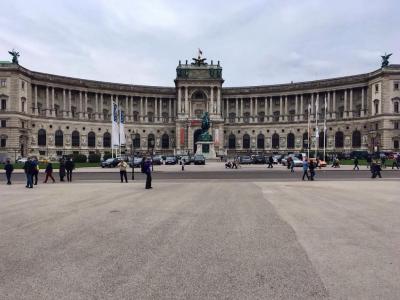
The Hofburg-or as it’s known in more regal circles, the “Castle of the Court”-is a sprawling architectural beast of a palace, a centuries-old flex of Habsburg power, pageantry, and perfectly symmetrical courtyards.
It all began back in 1279, when the Dukes of Austria needed a nice little place to call home. Fast forward a few empires and renovations later, and you've got the winter playground of the Holy Roman Emperors (until 1806) and the Emperors of Austria (until 1918). Today, the palace has swapped imperial intrigue for political paperwork-it’s now the official residence of the Austrian President and hosts the headquarters of the OSCE. Less crown, more conference...
Now, brace yourself: the Hofburg covers more than 240,000 square meters of space, comprising 18 wings, 19 courtyards, and a whopping 2,600 rooms. That’s not really a palace-it’s a small city. It houses everything from the elegant Amalienburg and Albertina museum, to the Imperial Chapel, the Court Library, the Treasure Chamber, and even the Spanish Riding School, where horses have more training than most people’s resumes.
The Swiss Wing is one of the oldest parts of the palace, dating back to the 13th century-yes, it’s older than your great-great-anything. Emperor Ferdinand I added the Swiss Gate in the 1550s, with his personal insignia on full display, just in case anyone forgot who was in charge.
The 17th-century Leopoldine Wing, built and later re-styled in Late Renaissance flair, adds even more imperial swagger, while the Court Library is basically a Baroque fever dream-with its majestic Prunksaal hall, frescoed ceilings, and emperors carved in stone, looking as dramatic as ever.
And it doesn’t stop there: the Winter Riding School, the Imperial Chancellery Wing (once home to Napoleon himself), and the elegant Redoute Wing-a former opera house-round out the complex. Even the Imperial Mews got a glow-up and now host those classy Lipizzaner horses.
Tip:
On Sundays, pop into the Imperial Chapel for Mass and catch the Vienna Boys Choir-angelic voices echoing through centuries of history. Because when in Vienna, you don’t just visit a palace… you enter a whole imperial universe.
It all began back in 1279, when the Dukes of Austria needed a nice little place to call home. Fast forward a few empires and renovations later, and you've got the winter playground of the Holy Roman Emperors (until 1806) and the Emperors of Austria (until 1918). Today, the palace has swapped imperial intrigue for political paperwork-it’s now the official residence of the Austrian President and hosts the headquarters of the OSCE. Less crown, more conference...
Now, brace yourself: the Hofburg covers more than 240,000 square meters of space, comprising 18 wings, 19 courtyards, and a whopping 2,600 rooms. That’s not really a palace-it’s a small city. It houses everything from the elegant Amalienburg and Albertina museum, to the Imperial Chapel, the Court Library, the Treasure Chamber, and even the Spanish Riding School, where horses have more training than most people’s resumes.
The Swiss Wing is one of the oldest parts of the palace, dating back to the 13th century-yes, it’s older than your great-great-anything. Emperor Ferdinand I added the Swiss Gate in the 1550s, with his personal insignia on full display, just in case anyone forgot who was in charge.
The 17th-century Leopoldine Wing, built and later re-styled in Late Renaissance flair, adds even more imperial swagger, while the Court Library is basically a Baroque fever dream-with its majestic Prunksaal hall, frescoed ceilings, and emperors carved in stone, looking as dramatic as ever.
And it doesn’t stop there: the Winter Riding School, the Imperial Chancellery Wing (once home to Napoleon himself), and the elegant Redoute Wing-a former opera house-round out the complex. Even the Imperial Mews got a glow-up and now host those classy Lipizzaner horses.
Tip:
On Sundays, pop into the Imperial Chapel for Mass and catch the Vienna Boys Choir-angelic voices echoing through centuries of history. Because when in Vienna, you don’t just visit a palace… you enter a whole imperial universe.
7) Augustinerkirche (Augustinian Church)
The Augustinerkirche, also known as the Augustinian Church, was originally constructed to serve the royal court of the Habsburg dynasty. It was built in 1339, initially situated within the palace grounds. Over time, as the palace expanded, the church became integrated into the Hofburg complex. Notably, the church boasts an exquisite steeple that distinguishes it from the rest of the Hofburg.
This church also includes a cloister intended for Augustinian friars. Presently, it is tended to by six monks who cater to the spiritual needs of the local congregation. Throughout its history, this church has been the venue for numerous royal events, including the marriage of Archduchess Marie-Louise to Napoleon Bonaparte in 1810. Interestingly, Napoleon himself did not attend the wedding, and it was conducted by proxy.
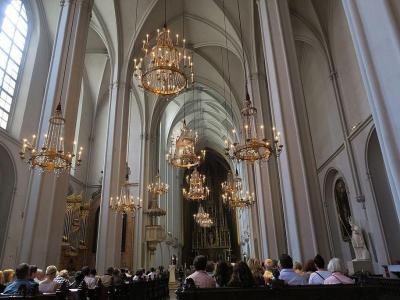
Upon entering the Gothic church, one is immediately struck by its austere yet captivating beauty. It features tall, slender windows and magnificent chandeliers. Of particular note is the cenotaph dedicated to Maria Christina of Austria, located near the rear entrance. This poignant memorial, sculpted in 1805, portrays the entire family entering a temple.
The church also houses several chapels, with two of them open to visitors on a limited basis. The Loreto chapel is notable for its collection of 54 silver urns containing the hearts of departed Habsburg rulers, which can be glimpsed through a windowed door. The physical remains of these rulers are entombed in the Kapuzinerkirche.
For those interested in visiting these chapels, the optimal time is after the Sunday mass. During the summer, the mass includes awe-inspiring organ music that resonates beautifully within this setting. It's advisable to arrive no later than 10:15 to secure a seat for the 11 am mass, as it tends to be very popular.
This church also includes a cloister intended for Augustinian friars. Presently, it is tended to by six monks who cater to the spiritual needs of the local congregation. Throughout its history, this church has been the venue for numerous royal events, including the marriage of Archduchess Marie-Louise to Napoleon Bonaparte in 1810. Interestingly, Napoleon himself did not attend the wedding, and it was conducted by proxy.
Upon entering the Gothic church, one is immediately struck by its austere yet captivating beauty. It features tall, slender windows and magnificent chandeliers. Of particular note is the cenotaph dedicated to Maria Christina of Austria, located near the rear entrance. This poignant memorial, sculpted in 1805, portrays the entire family entering a temple.
The church also houses several chapels, with two of them open to visitors on a limited basis. The Loreto chapel is notable for its collection of 54 silver urns containing the hearts of departed Habsburg rulers, which can be glimpsed through a windowed door. The physical remains of these rulers are entombed in the Kapuzinerkirche.
For those interested in visiting these chapels, the optimal time is after the Sunday mass. During the summer, the mass includes awe-inspiring organ music that resonates beautifully within this setting. It's advisable to arrive no later than 10:15 to secure a seat for the 11 am mass, as it tends to be very popular.
8) Sacher Cafe
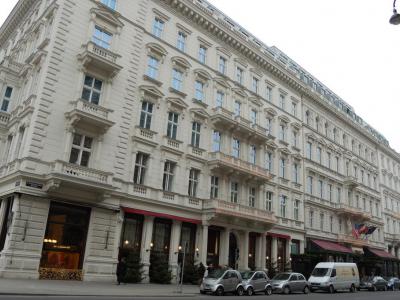
If you're on a mission to track down the best chocolate cake in Vienna-if not on Earth-then point your sweet tooth straight toward Café Sacher. Now, this isn’t just any cake shop-it’s the birthplace of the legendary Original Sacher-Torte, first whipped up in 1832 by young Franz Sacher for a Habsburg royal party. Apparently, the emperor needed dessert, the head chef was sick, and history was made with a spatula.
Decades later, in 1876, Franz’s son Ed Sacher opened the now-iconic Sacher Hotel and its equally iconic café. Ed didn’t stick around long, passing away just 16 years later, but his wife Anna took the reins like a true empress of pastry. Under her watch, the hotel and cake brand rose to international fame-think of her as the Beyoncé of Viennese hospitality...
Since 1934, the whole operation has been in the hands of the Gürtler family, and the place's guestbook reads like a who’s who of global royalty and icons: Gandhi, Queen Elizabeth II, John F. Kennedy… all graced the café with their presence, presumably seduced by that rich chocolate glaze and discreet charm.
Now, here’s the best part: even if you're pinching euros, a fairly modest sum will land you a genuinely good coffee and a slice of chocolate royalty on a plate. No need to break the bank to live deliciously.
Insider tip: Beyond the main café, the Sacher Hotel houses three rather swanky salons-each in its own chic color scheme-plus the two-story Eck, which gives you a side of Opera House views with your whipped cream. And if the main café’s packed (which it often is), just slip next door to Sacher Stube, run by the same family and serving the same glorious torte.
Oh, and about the coffee-if you’re not sure what to order, play it classic. Go for a "Einspänner"-Vienna’s beloved black coffee topped with foamed milk and a dollop of whipped cream. It’s the perfect companion for that slice of legend.
Trust us-this is one cake worth crossing a continent for...
Decades later, in 1876, Franz’s son Ed Sacher opened the now-iconic Sacher Hotel and its equally iconic café. Ed didn’t stick around long, passing away just 16 years later, but his wife Anna took the reins like a true empress of pastry. Under her watch, the hotel and cake brand rose to international fame-think of her as the Beyoncé of Viennese hospitality...
Since 1934, the whole operation has been in the hands of the Gürtler family, and the place's guestbook reads like a who’s who of global royalty and icons: Gandhi, Queen Elizabeth II, John F. Kennedy… all graced the café with their presence, presumably seduced by that rich chocolate glaze and discreet charm.
Now, here’s the best part: even if you're pinching euros, a fairly modest sum will land you a genuinely good coffee and a slice of chocolate royalty on a plate. No need to break the bank to live deliciously.
Insider tip: Beyond the main café, the Sacher Hotel houses three rather swanky salons-each in its own chic color scheme-plus the two-story Eck, which gives you a side of Opera House views with your whipped cream. And if the main café’s packed (which it often is), just slip next door to Sacher Stube, run by the same family and serving the same glorious torte.
Oh, and about the coffee-if you’re not sure what to order, play it classic. Go for a "Einspänner"-Vienna’s beloved black coffee topped with foamed milk and a dollop of whipped cream. It’s the perfect companion for that slice of legend.
Trust us-this is one cake worth crossing a continent for...
9) Mozart Monument
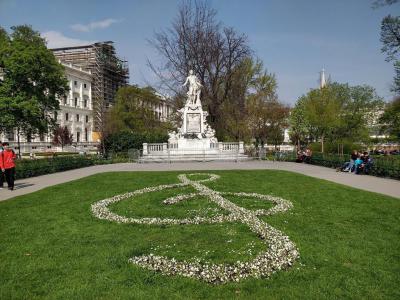
In the quiet oasis of Burggarten stands an elegant statue of Mozart, moved here from the Albertinaplatz after the war, when the city's charred ruins were being rebuilt. This intimate place is an excellent spot for Mozart lovers to have a photo with the 7.5-meter-high statue made by architect Karl König (1841–1915) and sculptor Viktor Tilgner (1844–96) which features Mozart with a music stand. The putti on the socle, representing the power of Mozart's music, are stylistically suggestive of Art Nouveau.
On the front, a relief refers to two scenes of Mozart's opera "Don Giovanni", while above it are a stone keyboard, masks, instruments and music-making cherubs. The rear side relief shows the six-year-old prodigy at the piano, with beloved sister Maria Anna ("Nannerl") and father Leopold by his side. Unfortunately, the siblings' partnership would experience a sudden and severe fracture in 1769, when Nannerl turned 18, meaning she was of marriageable age, which, as far as father Leopold was concerned, signaled the end of her performing career. As father and son continued to travel Europe and play to distinguished audiences, Nannerl remained at home with her mother.
From spring to autumn, the statue is surrounded by a small manicured lawn with a trebleclef-shaped flower bed. The steeples of Saint Stephen's and the Augustinerkirche, old trees and blooming shrubs add to the atmosphere. Noteworthy, also, is the nice sculpture of famous philosopher Goethe in the same area.
On the front, a relief refers to two scenes of Mozart's opera "Don Giovanni", while above it are a stone keyboard, masks, instruments and music-making cherubs. The rear side relief shows the six-year-old prodigy at the piano, with beloved sister Maria Anna ("Nannerl") and father Leopold by his side. Unfortunately, the siblings' partnership would experience a sudden and severe fracture in 1769, when Nannerl turned 18, meaning she was of marriageable age, which, as far as father Leopold was concerned, signaled the end of her performing career. As father and son continued to travel Europe and play to distinguished audiences, Nannerl remained at home with her mother.
From spring to autumn, the statue is surrounded by a small manicured lawn with a trebleclef-shaped flower bed. The steeples of Saint Stephen's and the Augustinerkirche, old trees and blooming shrubs add to the atmosphere. Noteworthy, also, is the nice sculpture of famous philosopher Goethe in the same area.
10) Naschmarkt (must see)
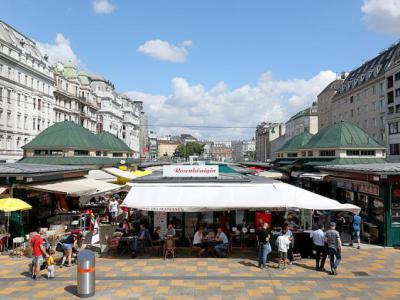
Vienna's most famous market boasts approximately 120 market stalls and restaurants, offering a diverse range of culinary delights that span from traditional Viennese dishes to Indian, Vietnamese, and Italian cuisine. The Naschmarkt has evolved into a popular gathering spot for both young and old alike. The Saturday Flea Market has even attained a cult-like status.
At the Naschmarkt, a vibrant mix of people can be seen purchasing fresh produce, vegetables, and various gourmet treats from around the world, from the early morning until sunset. In recent times, an increasing number of trendy establishments have found their place among the market's 120 or so stalls.
Do-An and Naschmarkt Deli were among the pioneering gastronomic ventures that succeeded in making the Naschmarkt an attractive destination for the young, urban crowd. On weekends, DJs provide entertainment at these locations. Consequently, numerous traditional market stalls have also garnered popularity due to their modern architectural designs.
Tewa at the Naschmarkt offers organic cuisine, while Neni serves Israeli-Oriental specialties ranging from shakshuka (eggs with vegetables) to taboulleh (a Lebanese salad). Orient & Occident, on the other hand, features Turkish home cooking prepared by the owner's wives. Umar is a haven for seafood enthusiasts and is often regarded as the best fish restaurant in Vienna.
Urbanek, initially a fine food and cheese store, doubles as a legendary wine bar-a quintessentially Viennese experience. The delicacies on offer here are simply a must-try. Kilgers am Naschmarkt also functions as a wine bar and gourmet grocery store, while the little market kitchen serves up delightful dishes. For a taste of traditional Viennese fare, Eiserne Zeit is an excellent choice; dining here is an experience in itself.
Many dining and drinking spots surround Naschmarkt. Drechsler offers all-day breakfast, Market serves Asian-inspired cuisine from morning to late night with colorful decor, and ChinaBar an der Wien serves Sichuan cuisine. Naschmarkt is vibrant, especially on Saturdays, with a diverse crowd and outdoor dining in the summer for food, drinks, and people-watching.
At the Naschmarkt, a vibrant mix of people can be seen purchasing fresh produce, vegetables, and various gourmet treats from around the world, from the early morning until sunset. In recent times, an increasing number of trendy establishments have found their place among the market's 120 or so stalls.
Do-An and Naschmarkt Deli were among the pioneering gastronomic ventures that succeeded in making the Naschmarkt an attractive destination for the young, urban crowd. On weekends, DJs provide entertainment at these locations. Consequently, numerous traditional market stalls have also garnered popularity due to their modern architectural designs.
Tewa at the Naschmarkt offers organic cuisine, while Neni serves Israeli-Oriental specialties ranging from shakshuka (eggs with vegetables) to taboulleh (a Lebanese salad). Orient & Occident, on the other hand, features Turkish home cooking prepared by the owner's wives. Umar is a haven for seafood enthusiasts and is often regarded as the best fish restaurant in Vienna.
Urbanek, initially a fine food and cheese store, doubles as a legendary wine bar-a quintessentially Viennese experience. The delicacies on offer here are simply a must-try. Kilgers am Naschmarkt also functions as a wine bar and gourmet grocery store, while the little market kitchen serves up delightful dishes. For a taste of traditional Viennese fare, Eiserne Zeit is an excellent choice; dining here is an experience in itself.
Many dining and drinking spots surround Naschmarkt. Drechsler offers all-day breakfast, Market serves Asian-inspired cuisine from morning to late night with colorful decor, and ChinaBar an der Wien serves Sichuan cuisine. Naschmarkt is vibrant, especially on Saturdays, with a diverse crowd and outdoor dining in the summer for food, drinks, and people-watching.
11) Johann Strauss Monument
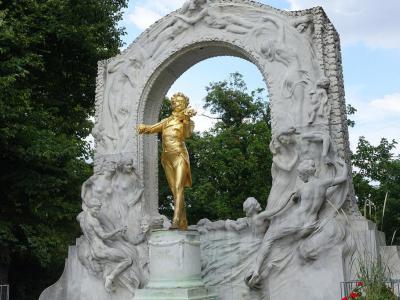
The gilded bronze tribute to the Waltz King is easily one of the most known and most frequently photographed monuments in Vienna – including after dark when beautifully illuminated. Compared to the many traditional 19th-century-style statues at Stadtpark, this certainly is a more playful, elegant and interesting composition to view. Framed by a marble relief made by founding member of the Vienna Secession, Edmund Hellmer, it was unveiled to the public on 26 June 1921.
The statue is located right behind the opulent Kursalon concert hall where Strauss Jr. gave his first concert on 15 October 1868, turning it into a popular place for concerts and for dancing ever since. After undergoing some renovation, the Kursalon is still used for balls and waltz concerts where one can hear the composer's music.
Tip:
Scattered throughout the park are other statues of famous Viennese artists, writers, and composers: Hans Canon, E. J. Schindler, Franz Schubert, Anton Bruckner.
The statue is located right behind the opulent Kursalon concert hall where Strauss Jr. gave his first concert on 15 October 1868, turning it into a popular place for concerts and for dancing ever since. After undergoing some renovation, the Kursalon is still used for balls and waltz concerts where one can hear the composer's music.
Tip:
Scattered throughout the park are other statues of famous Viennese artists, writers, and composers: Hans Canon, E. J. Schindler, Franz Schubert, Anton Bruckner.
12) Stephansdom (St. Stephen's Cathedral) (must see)
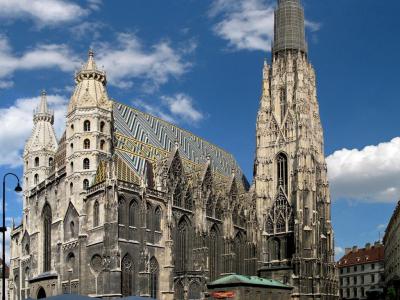
In a city where “stunning architecture” is practically the dress code, Saint Stephen’s Cathedral still manages to steal the spotlight-and possibly your neck muscles too, as you crane to admire that towering spire. Known locally as Stephansdom, this Gothic-Romanesque powerhouse has stood at the heart of Vienna’s skyline and soul since 1147, rising on the bones of two earlier churches like the overachiever it is.
In the 14th century, Duke Rudolf IV decided the cathedral needed a serious makeover. The idea worked. As a result, today we have the building stretching 107 meters long, 40 meters wide, and topped by the South Tower-or “Steffl,” if you're on nickname terms-a 136-meter-high feat of medieval determination that took 65 years to complete. It even moonlighted as a lookout post during Vienna’s sieges, complete with a live-in watchman until 1955. One heck of a long shift...
Meanwhile, the North Tower never quite hit its growth spurt. It stalled at 68 meters and got a Renaissance hat in 1578-basically the architectural equivalent of saying “this is fine” and walking away.
But the real showstopper here is the roof. A kaleidoscope of 230,000 glazed tiles arranged into imperial emblems like the double-headed eagle of the Habsburgs and the crests of Vienna and Austria. After being torched in World War II, it was rebuilt with steel instead of wood-600 metric tons of it-making the new roof not just durable, but also self-cleaning. Because even cathedrals love low-maintenance routines...
Inside, things get just as grand. There’s Pummerin, Europe’s second-largest swinging bell, forged from Turkish cannons in 1711 and recast in 1951-because nothing says peace like a bell made from wartime leftovers. Oh, and she lives in the North Tower, ringing out for special moments and daily rituals.
Musical legends haunt these hallowed halls too: Beethoven figured out he was deaf here (tragic), Haydn sang here as a kid (sweet), Strauss got married here-twice (bold), and Mozart? He got married and buried here. Yes, Saint Stephen's is basically the VIP lounge of Viennese music history.
Inside, you’ll find 18 altars, miraculous icons, bone relics-including those of Saint Valentine-and a maze of crypts holding 11,000 souls, including Habsburg royalty.
Tip:
Do a lap around the outside. Gargoyles, engravings, medieval graffiti-you never know what stories the stones will whisper...
In the 14th century, Duke Rudolf IV decided the cathedral needed a serious makeover. The idea worked. As a result, today we have the building stretching 107 meters long, 40 meters wide, and topped by the South Tower-or “Steffl,” if you're on nickname terms-a 136-meter-high feat of medieval determination that took 65 years to complete. It even moonlighted as a lookout post during Vienna’s sieges, complete with a live-in watchman until 1955. One heck of a long shift...
Meanwhile, the North Tower never quite hit its growth spurt. It stalled at 68 meters and got a Renaissance hat in 1578-basically the architectural equivalent of saying “this is fine” and walking away.
But the real showstopper here is the roof. A kaleidoscope of 230,000 glazed tiles arranged into imperial emblems like the double-headed eagle of the Habsburgs and the crests of Vienna and Austria. After being torched in World War II, it was rebuilt with steel instead of wood-600 metric tons of it-making the new roof not just durable, but also self-cleaning. Because even cathedrals love low-maintenance routines...
Inside, things get just as grand. There’s Pummerin, Europe’s second-largest swinging bell, forged from Turkish cannons in 1711 and recast in 1951-because nothing says peace like a bell made from wartime leftovers. Oh, and she lives in the North Tower, ringing out for special moments and daily rituals.
Musical legends haunt these hallowed halls too: Beethoven figured out he was deaf here (tragic), Haydn sang here as a kid (sweet), Strauss got married here-twice (bold), and Mozart? He got married and buried here. Yes, Saint Stephen's is basically the VIP lounge of Viennese music history.
Inside, you’ll find 18 altars, miraculous icons, bone relics-including those of Saint Valentine-and a maze of crypts holding 11,000 souls, including Habsburg royalty.
Tip:
Do a lap around the outside. Gargoyles, engravings, medieval graffiti-you never know what stories the stones will whisper...
13) Graben Street
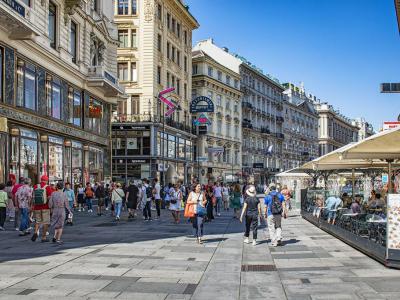
The Graben-Vienna’s glitzy catwalk of history, high fashion, and a bit of medieval ditch drama. Yes, believe it or not, this elegant boulevard began life as… a trench. That’s right-“Graben” means “ditch” in German, and it once ran right in front of the city walls back when this area was still the Roman outpost of Vindobona.
Fast forward to the 12th century: the ditch gets filled in-thanks in part to a juicy ransom paid for none other than Richard the Lionheart-and suddenly, Vienna’s growing faster than a Baroque wig in a windstorm. The Babenberg Dukes extended the city, and voilà-the Graben became a proper street. Still called "the Ditch," though. Old names die hard...
Look closely and you’ll notice the split personality of this street. On the north side, it's a bit of a chaotic maze. On the south, neat side streets fanning out like clockwork-proof of some seriously medieval city planning chops. Over time, the Graben morphed into Vienna’s main artery, pumping life, gossip, and powdered wigs through the city’s heart.
By the Baroque era, the Graben was the place to see and be seen. Think of it as 18th-century Instagram, but with actual human interaction. Nobles strolled, markets bustled, and the elite shopped, dined, and judged your fashion choices in real time. Come the 19th century, luxury shops arrived, and by the mid-20th, it became the pedestrian haven we know today-ditch-free and proudly strut-worthy.
Start your walk at Stock-im-Eisen-Platz, end at Tuchlauben, and enjoy a lineup of architectural heavyweights along the way. There’s the Ankerhaus, once home to architect Otto Wagner, and Bartolotti-Partenfeld Palace, the summer hangout of one very well-to-do Baron family.
Music lovers-don’t miss the Generalihof, once headquarters of the Musikalisches Magazin, which first published some of Mozart’s work back in 1784. And keep going till you reach the Grabenhof, built in 1876, now radiating all the grandeur of a Viennese power pose.
And before you go: tip your metaphorical hat to the Plague Column, that theatrical swirl of angels and anguish, erected by Emperor Leopold I after the Great Plague of 1679. A monument to survival, faith, and the baroque love of a dramatic statue.
Happy strolling-mind the history underfoot...
Fast forward to the 12th century: the ditch gets filled in-thanks in part to a juicy ransom paid for none other than Richard the Lionheart-and suddenly, Vienna’s growing faster than a Baroque wig in a windstorm. The Babenberg Dukes extended the city, and voilà-the Graben became a proper street. Still called "the Ditch," though. Old names die hard...
Look closely and you’ll notice the split personality of this street. On the north side, it's a bit of a chaotic maze. On the south, neat side streets fanning out like clockwork-proof of some seriously medieval city planning chops. Over time, the Graben morphed into Vienna’s main artery, pumping life, gossip, and powdered wigs through the city’s heart.
By the Baroque era, the Graben was the place to see and be seen. Think of it as 18th-century Instagram, but with actual human interaction. Nobles strolled, markets bustled, and the elite shopped, dined, and judged your fashion choices in real time. Come the 19th century, luxury shops arrived, and by the mid-20th, it became the pedestrian haven we know today-ditch-free and proudly strut-worthy.
Start your walk at Stock-im-Eisen-Platz, end at Tuchlauben, and enjoy a lineup of architectural heavyweights along the way. There’s the Ankerhaus, once home to architect Otto Wagner, and Bartolotti-Partenfeld Palace, the summer hangout of one very well-to-do Baron family.
Music lovers-don’t miss the Generalihof, once headquarters of the Musikalisches Magazin, which first published some of Mozart’s work back in 1784. And keep going till you reach the Grabenhof, built in 1876, now radiating all the grandeur of a Viennese power pose.
And before you go: tip your metaphorical hat to the Plague Column, that theatrical swirl of angels and anguish, erected by Emperor Leopold I after the Great Plague of 1679. A monument to survival, faith, and the baroque love of a dramatic statue.
Happy strolling-mind the history underfoot...
