Custom Walk in Munich, Germany by rmbouchard242_8f5557 created on 2026-06-03
Guide Location: Germany » Munich
Guide Type: Custom Walk
# of Sights: 12
Tour Duration: 2 Hour(s)
Travel Distance: 3.7 Km or 2.3 Miles
Share Key: TD5DZ
Guide Type: Custom Walk
# of Sights: 12
Tour Duration: 2 Hour(s)
Travel Distance: 3.7 Km or 2.3 Miles
Share Key: TD5DZ
How It Works
Please retrieve this walk in the GPSmyCity app. Once done, the app will guide you from one tour stop to the next as if you had a personal tour guide. If you created the walk on this website or come to the page via a link, please follow the instructions below to retrieve the walk in the app.
Retrieve This Walk in App
Step 1. Download the app "GPSmyCity: Walks in 1K+ Cities" on Apple App Store or Google Play Store.



Step 2. In the GPSmyCity app, download(or launch) the guide "Munich Map and Walking Tours".
Step 3. Tap the menu button located at upper right corner of the "Walks" screen and select "Retrieve custom walk". Enter the share key: TD5DZ
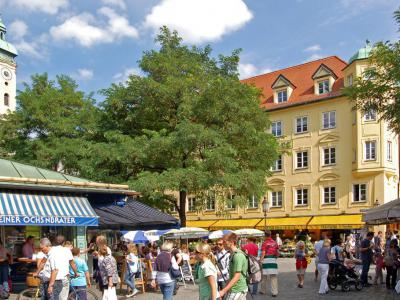
1) Viktualienmarkt (Farmer's Market) (must see)
Welcome to Munich’s oldest and most charming market. Since the early 1800s, it’s been the go-to spot for just about anything edible-fresh produce, dairy, meats, fine French wines, seafood, and rare delicacies from around the globe. Prices tend to be on the higher side, but the variety and quality are hard to beat. Of course, you’ll also find classic Bavarian favorites like pretzels, sausages, and local cheeses, all offering a true taste of the region.
People from all walks of life gather here-locals picking up ingredients for dinner, tourists exploring with wide eyes, and regulars who’ve made it part of their daily routine. Local customs involve eating white sausage, sipping hot soup, and enjoying a cold beer in one of the city’s most beloved beer gardens, set around a decorated maypole. Under the shade of chestnut trees, folks gather to sip cold brews and enjoy a break from the buzz.
But this market is more than a place to shop, drink or snack-it’s actually woven into Munich’s cultural identity. Throughout the year, it plays host to everything from folk dances and live music to seasonal festivals, and an especially lively Mardi Gras parade. The fountain erected to commemorate German cabaret artists emphasizes the spirit that has always animated this place.
In every sense, it’s a feast-for the senses, for the culture, and most definitely for the appetite.
People from all walks of life gather here-locals picking up ingredients for dinner, tourists exploring with wide eyes, and regulars who’ve made it part of their daily routine. Local customs involve eating white sausage, sipping hot soup, and enjoying a cold beer in one of the city’s most beloved beer gardens, set around a decorated maypole. Under the shade of chestnut trees, folks gather to sip cold brews and enjoy a break from the buzz.
But this market is more than a place to shop, drink or snack-it’s actually woven into Munich’s cultural identity. Throughout the year, it plays host to everything from folk dances and live music to seasonal festivals, and an especially lively Mardi Gras parade. The fountain erected to commemorate German cabaret artists emphasizes the spirit that has always animated this place.
In every sense, it’s a feast-for the senses, for the culture, and most definitely for the appetite.
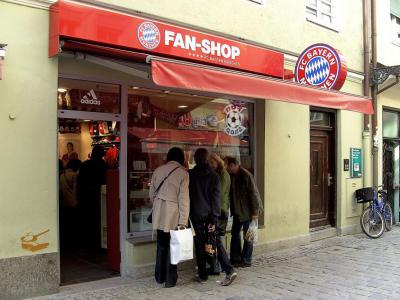
2) FC Bayern Munchen Fan Shop
Represented by the colors red and white, with a little bit of the typical Bavarian blue and white diamond pattern thrown into the logo for effect, FC Bayern München is a very beloved German sports club that is based out of Munich. And while the FC Bayern München does host other sports besides soccer (like basketball, handball, chess, gymnastics, bowling, and table tennis), they are most known for their “Fussball” as the Germans call it.
Pride for FC Bayern München runs thick in Bavaria, and with good reason; they have won 22 national titles and 15 cups. Three of the European Cups that the team won occurred consecutively in the 1970s, when the club was being run by Franz Beckenbauer. Because of this, some people believe that that was the club’s heyday, but in actuality, they are still going pretty strongly now. On game days, especially when playing at home (which now takes place in the Allianz Arena, rather than the Olympic Stadium, as it did for 33 years), fans come out in droves, decked out in red and white from top to bottom to support the team. Singing throughout the streets, underground trains, trams, and busses, the fans certainly make themselves seen and heard.
FC Bayern Munchen Fan Shop is the place to pick up a team jersey so you can feel being part of the city. Cost for a jersey of your own: around 50 to 70 Euros.
Pride for FC Bayern München runs thick in Bavaria, and with good reason; they have won 22 national titles and 15 cups. Three of the European Cups that the team won occurred consecutively in the 1970s, when the club was being run by Franz Beckenbauer. Because of this, some people believe that that was the club’s heyday, but in actuality, they are still going pretty strongly now. On game days, especially when playing at home (which now takes place in the Allianz Arena, rather than the Olympic Stadium, as it did for 33 years), fans come out in droves, decked out in red and white from top to bottom to support the team. Singing throughout the streets, underground trains, trams, and busses, the fans certainly make themselves seen and heard.
FC Bayern Munchen Fan Shop is the place to pick up a team jersey so you can feel being part of the city. Cost for a jersey of your own: around 50 to 70 Euros.
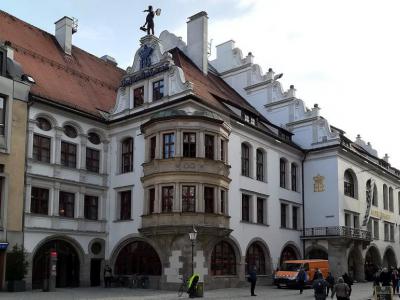
3) Hofbrauhaus Beer Hall (must see)
Arguably the most famous ‘watering hole’ in Munich, this spot is the embodiment of Bavarian tradition and spirit. Its story began in 1589, founded as part of the Royal Brewery by Wilhelm V. Back then, it wasn’t even open to the public-reserved instead for royal use. That changed in 1828, when the doors were finally thrown open to everyone. Today, it's among the city’s most beloved gathering places, steeped in old-world charm.
On the ground floor, long tables fill the hall that can hold 1,000 drinkers while bands belt out folk tunes. The menu is full of Bavarian classics, and the atmosphere is pure celebration. Upstairs, a vaulted ceremonial hall can seat another 1,300 people, with additional side rooms for smaller gatherings. And when the weather’s warm, the beer garden becomes a favorite hangout-with its shady chestnut trees, bubbling fountain, and relaxed outdoor vibe. On a typical day, around 10,000 liters of beer are served here-that’s over 17,000 pints.
True to tradition, the beer follows the Bavarian Beer Purity Law of 1516, which allows only natural ingredients. That standard is still upheld across the city, and the brews here are no exception-crafted with care and full of flavor.
But not all of the building’s history is festive. On February 24, 1920, Adolf Hitler stood here to announce the official program of the then-fledgling Nazi Party. Just over a year later, on July 29, 1921, he was elected as the Party’s leader-right in this very hall. So while the beer house is rightly remembered for joy, music, and beer, it also witnessed one of the more sobering moments of 20th-century history.
On the ground floor, long tables fill the hall that can hold 1,000 drinkers while bands belt out folk tunes. The menu is full of Bavarian classics, and the atmosphere is pure celebration. Upstairs, a vaulted ceremonial hall can seat another 1,300 people, with additional side rooms for smaller gatherings. And when the weather’s warm, the beer garden becomes a favorite hangout-with its shady chestnut trees, bubbling fountain, and relaxed outdoor vibe. On a typical day, around 10,000 liters of beer are served here-that’s over 17,000 pints.
True to tradition, the beer follows the Bavarian Beer Purity Law of 1516, which allows only natural ingredients. That standard is still upheld across the city, and the brews here are no exception-crafted with care and full of flavor.
But not all of the building’s history is festive. On February 24, 1920, Adolf Hitler stood here to announce the official program of the then-fledgling Nazi Party. Just over a year later, on July 29, 1921, he was elected as the Party’s leader-right in this very hall. So while the beer house is rightly remembered for joy, music, and beer, it also witnessed one of the more sobering moments of 20th-century history.
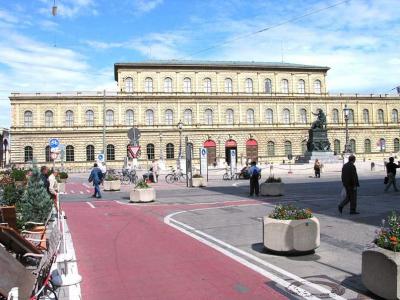
4) Residenz Royal Palace (must see)
The Residenz was the home of Bavaria’s Wittelsbach dynasty all the way up until 1918. With its gilded grandeur and Versailles-like scale, this royal palace complex ranks among Europe’s most impressive, and a throrough exploration could easily take a few days. It’s massive to begin with, and even larger now that more rooms and passageways have been restored and opened to the public.
A good place to start is outside, with the three imposing facades and a series of stunning courtyards, many of which are freely accessible. From there, you can step into the Residenz Museum itself, as well as the Cuvilliés-arguably the finest Rococo theater in Europe, and the Treasure Chamber, where you’ll find a glittering display of jewels, gold, silver, crystal, and enamelwork-collected over a thousand years.
There’s a huge amount to see in the 10 courtyards and nearly 130 rooms, halls and galleries. Among the standout highlights is the Gallery of the Ancestors, where you’ll meet 121 members of the Wittelsbach family; the Antiquarium-the largest Renaissance hall north of the Alps; the extensive porcelain collections, including an array of pieces from France, England, Germany, Japan, and China; and the lavish State Rooms, where German Rococo reaches its decorative peak, especially in the Green Gallery and the Cabinet of Mirrors. Oh, and don’t miss the Grottenhof courtyard, known for its elegant arcade and bronze fountain of Perseus.
For the full experience, consider a combined ticket that includes the Museum, the Theatre and the Treasury. And if you want to tailor your visit, the audio guide lets you jump straight to the rooms, artworks, or stories that interest you most.
A good place to start is outside, with the three imposing facades and a series of stunning courtyards, many of which are freely accessible. From there, you can step into the Residenz Museum itself, as well as the Cuvilliés-arguably the finest Rococo theater in Europe, and the Treasure Chamber, where you’ll find a glittering display of jewels, gold, silver, crystal, and enamelwork-collected over a thousand years.
There’s a huge amount to see in the 10 courtyards and nearly 130 rooms, halls and galleries. Among the standout highlights is the Gallery of the Ancestors, where you’ll meet 121 members of the Wittelsbach family; the Antiquarium-the largest Renaissance hall north of the Alps; the extensive porcelain collections, including an array of pieces from France, England, Germany, Japan, and China; and the lavish State Rooms, where German Rococo reaches its decorative peak, especially in the Green Gallery and the Cabinet of Mirrors. Oh, and don’t miss the Grottenhof courtyard, known for its elegant arcade and bronze fountain of Perseus.
For the full experience, consider a combined ticket that includes the Museum, the Theatre and the Treasury. And if you want to tailor your visit, the audio guide lets you jump straight to the rooms, artworks, or stories that interest you most.
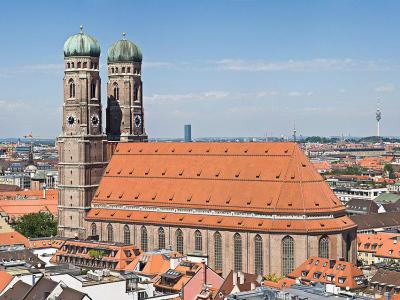
5) Frauenkirche (Cathedral of Our Lady) (must see)
The largest Gothic structure in southern Germany, this church was built at an astonishing pace. Construction began in 1468 and wrapped up just 20 years later, a remarkable feat for the time. With its twin towers capped by distinctive onion-shaped domes rising 99 meters high, it remains the city’s most iconic landmark.
Entry is free, though there’s a small charge if you’d rather take the elevator up the South Tower instead of making the climb yourself. The panoramic view from the top is well worth the effort-an unforgettable way to view the city from above.
Inside, the atmosphere is stark and reverent. What you may see today was rebuilt from the ruins left by World War II bombings. Having been safely stored away during the war, the Gothic windows offer a glimpse of the church’s former glory. In the choir, you’ll find sculptures of the Apostles and Prophets, created in 1502 and miraculously preserved. The north chapel holds a striking altarpiece of Christ’s baptism, alongside Jan Polack’s panels depicting scenes from the Passion. Also look out for his painting “The Protecting Cloak”, as well as an elaborate cenotaph of Holy Roman Emperor Louis IV.
And then, of course, there’s the legend-the infamous Devil’s Footprint. As the story goes, architect Jörg von Halsbach made a deal with the devil: the funds to finish the church, in exchange for a design with no visible windows. From one specific spot near the entrance, the illusion holds-no windows in sight. When the devil realized he’d been tricked, he stomped his foot in rage, leaving a footprint behind. Both the footprint and the trick of perspective can still be seen today.
Since this is Munich’s mother church, photography is discouraged out of respect for those who come here to pray. So take a quiet moment, soak in the stillness, and let the space speak for itself.
Entry is free, though there’s a small charge if you’d rather take the elevator up the South Tower instead of making the climb yourself. The panoramic view from the top is well worth the effort-an unforgettable way to view the city from above.
Inside, the atmosphere is stark and reverent. What you may see today was rebuilt from the ruins left by World War II bombings. Having been safely stored away during the war, the Gothic windows offer a glimpse of the church’s former glory. In the choir, you’ll find sculptures of the Apostles and Prophets, created in 1502 and miraculously preserved. The north chapel holds a striking altarpiece of Christ’s baptism, alongside Jan Polack’s panels depicting scenes from the Passion. Also look out for his painting “The Protecting Cloak”, as well as an elaborate cenotaph of Holy Roman Emperor Louis IV.
And then, of course, there’s the legend-the infamous Devil’s Footprint. As the story goes, architect Jörg von Halsbach made a deal with the devil: the funds to finish the church, in exchange for a design with no visible windows. From one specific spot near the entrance, the illusion holds-no windows in sight. When the devil realized he’d been tricked, he stomped his foot in rage, leaving a footprint behind. Both the footprint and the trick of perspective can still be seen today.
Since this is Munich’s mother church, photography is discouraged out of respect for those who come here to pray. So take a quiet moment, soak in the stillness, and let the space speak for itself.
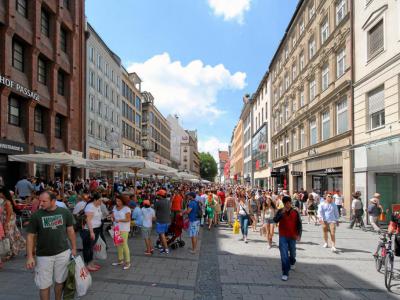
6) Kaufinger Street & Neuhauser Street (must see)
Just west of Mary’s Square lies one of Munich’s oldest streets-Kaufinger. In fact, it holds the title for the city's oldest recorded street name, first mentioned in a document dated May 28, 1239. While it suffered heavy damage during World War II, the decades that followed brought a fresh architectural wave. By the 1990s, many of the utilitarian post-war buildings had been replaced with sleek, postmodern designs. Today, Kaufinger remains a key artery in Munich’s Old Town, forming part of the main west-to-east route through the historic center.
As you continue along, Kaufinger flows directly into Neuhauser, forming a broad thoroughfare. Once a busy traffic route with tram tracks, Neuhauser was transformed into a pedestrian zone in 1972, just ahead of the Munich Summer Olympics. The goal was to accommodate the anticipated crowds-and the result is now the most profitable shopping street in all of Germany.
Naturally, both streets are lined with a rich mix of shops and restaurants. Global brands rub shoulders with local vendors selling everything from fresh flowers and fruit to roasted nuts and souvenirs. Outdoor cafés spill onto the pavement, offering shoppers a place to rest, sip a coffee, enjoy a meal, and take in the architecture, along with the energy of the crowd.
Tip: If you're looking to escape the mainstream retail chains while staying in the city center, make your way to Sendlinger Street. It’s just nearby and offers a more laid-back, boutique shopping experience.
As you continue along, Kaufinger flows directly into Neuhauser, forming a broad thoroughfare. Once a busy traffic route with tram tracks, Neuhauser was transformed into a pedestrian zone in 1972, just ahead of the Munich Summer Olympics. The goal was to accommodate the anticipated crowds-and the result is now the most profitable shopping street in all of Germany.
Naturally, both streets are lined with a rich mix of shops and restaurants. Global brands rub shoulders with local vendors selling everything from fresh flowers and fruit to roasted nuts and souvenirs. Outdoor cafés spill onto the pavement, offering shoppers a place to rest, sip a coffee, enjoy a meal, and take in the architecture, along with the energy of the crowd.
Tip: If you're looking to escape the mainstream retail chains while staying in the city center, make your way to Sendlinger Street. It’s just nearby and offers a more laid-back, boutique shopping experience.
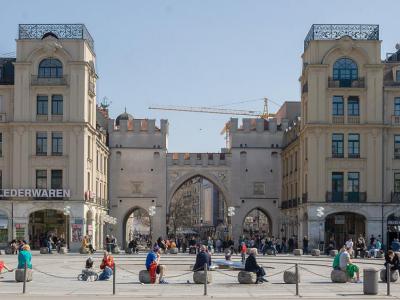
7) Karlsplatz (Karl's Square)
In 1791, after the city’s old fortifications were demolished on the orders of Elector of Bavaria Karl Theodor, a wide-open square was created on the western edge of Munich’s Old Town. Second only to Mary’s Square in size, it was officially named Karl’s Square in honor of the ruler-and the nearby gate took on the name Karl’s Gate. Locals, meanwhile, had another name in mind for this space; they called it Stachus, a nickname that stuck and is still widely used today. The name comes from a popular inn that stood on the corner of the square since the 1750s.
More recently, in 1902, architect Gabriel von Seidl added two elegant wings to the Karl's Gate, known as the Rondel Buildings. These Neo-Baroque structures feature two prominent towers and ground-floor arcades lined with shops-an early nod to the area’s commercial appeal.
Fast forward to the 1970s, and you’ll find a large circular fountain, now a favorite meeting spot for both locals and visitors. It’s also a great place to take a break, especially on warm summer afternoons. On the west side stands Kaufhof, Munich’s very first postwar department store. Meanwhile, beneath the surface, an entire network of underground shops spreads out from the U-Bahn and S-Bahn exits, making this one of the city’s busiest retail intersections.
All in all, Karl's Square isn’t just a square-it’s a crossroads of history, shopping, transport, and local life. And if you’re catching a tram, chances are you’ll pass through here-it’s one of the key hubs of Munich’s streetcar network.
More recently, in 1902, architect Gabriel von Seidl added two elegant wings to the Karl's Gate, known as the Rondel Buildings. These Neo-Baroque structures feature two prominent towers and ground-floor arcades lined with shops-an early nod to the area’s commercial appeal.
Fast forward to the 1970s, and you’ll find a large circular fountain, now a favorite meeting spot for both locals and visitors. It’s also a great place to take a break, especially on warm summer afternoons. On the west side stands Kaufhof, Munich’s very first postwar department store. Meanwhile, beneath the surface, an entire network of underground shops spreads out from the U-Bahn and S-Bahn exits, making this one of the city’s busiest retail intersections.
All in all, Karl's Square isn’t just a square-it’s a crossroads of history, shopping, transport, and local life. And if you’re catching a tram, chances are you’ll pass through here-it’s one of the key hubs of Munich’s streetcar network.
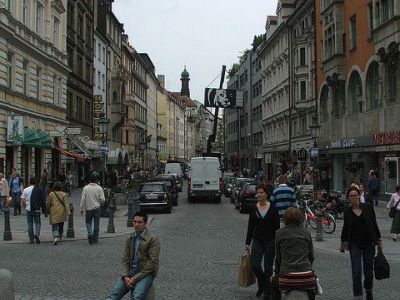
8) Sendlinger Strasse
Sendlinger Street in Munich is a historic and key retail area, stretching from Marienplatz to the Sendlinger Tor gate in the city's old quarter. The name comes from the district of Sendling, which it originally led to in the 14th century, through the Sendlinger Gate, beyond Munich's ancient fortifications.
After World War II, Sendlinger Street became known for its red-light district. However, with time, the area evolved, with wider footpaths and narrower roads for cars. In 2009, Munich's city council turned a segment of the street into a pedestrian zone, enhancing its appeal as a shopping destination. The street is lined with boutique shops offering unique finds, including antiques, crafts, books, and jewelry. These shops are usually family-owned, with a legacy of enduring through multiple generations. The shopping variety has grown with the development of courtyards like "Asam Hof" and "Hofstatt," which occupy historical and cultural sites.
The street is now not just for shopping but also for leisure, with many small cafés and restaurants where people can unwind and savor the ambiance.
After World War II, Sendlinger Street became known for its red-light district. However, with time, the area evolved, with wider footpaths and narrower roads for cars. In 2009, Munich's city council turned a segment of the street into a pedestrian zone, enhancing its appeal as a shopping destination. The street is lined with boutique shops offering unique finds, including antiques, crafts, books, and jewelry. These shops are usually family-owned, with a legacy of enduring through multiple generations. The shopping variety has grown with the development of courtyards like "Asam Hof" and "Hofstatt," which occupy historical and cultural sites.
The street is now not just for shopping but also for leisure, with many small cafés and restaurants where people can unwind and savor the ambiance.
9) Asamkirche (Asam Church) (must see)
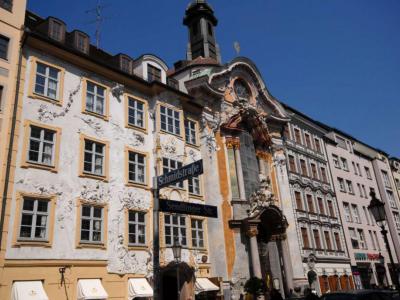
Although modest in size, this church is famed for having the most lavish interior of any religious site in Munich. What it lacks in square footage, it more than makes up for in sheer decorative intensity-frescoes, marble, stucco, and layer upon layer of gold leaf all compete for the eye’s attention. The style might not be to everyone’s taste, but it’s difficult not to be captivated. It’s gaudy, yes-and unmistakably Baroque-but in a very special way that you don't get to see very often.
Built in the 1730s and 1740s by the talented Asam brothers, the church was originally intended as their private chapel. It was later opened to the public and consecrated in honor of Saint Johann Nepomuk, a Bohemian monk and martyr. According to legend, he was executed by drowning in the Danube after refusing to reveal the Queen’s confessions-an act ordered by King Wenceslaus.
Inside, you’ll find a visual feast. The ceiling bursts with frescoes, including a dramatic scene depicting Saint Nepomuk’s final moments in the river. The high altar is flanked by four elaborately twisted columns and features a glass shrine holding a wax figure of the saint. Look upward, and you'll spot a striking sculpture of God the Father leaning over the crucified Christ, perched above the cornice. Much of what you see today is the result of a detailed restoration carried out between 1975 and 1982.
Here’s a tip: try to visit early in the morning, before the crowds arrive-or outside of mass hours if possible. And if the sun’s shining, even better. The light catches the gilded surfaces beautifully, making the whole interior shimmer like a golden dream.
Built in the 1730s and 1740s by the talented Asam brothers, the church was originally intended as their private chapel. It was later opened to the public and consecrated in honor of Saint Johann Nepomuk, a Bohemian monk and martyr. According to legend, he was executed by drowning in the Danube after refusing to reveal the Queen’s confessions-an act ordered by King Wenceslaus.
Inside, you’ll find a visual feast. The ceiling bursts with frescoes, including a dramatic scene depicting Saint Nepomuk’s final moments in the river. The high altar is flanked by four elaborately twisted columns and features a glass shrine holding a wax figure of the saint. Look upward, and you'll spot a striking sculpture of God the Father leaning over the crucified Christ, perched above the cornice. Much of what you see today is the result of a detailed restoration carried out between 1975 and 1982.
Here’s a tip: try to visit early in the morning, before the crowds arrive-or outside of mass hours if possible. And if the sun’s shining, even better. The light catches the gilded surfaces beautifully, making the whole interior shimmer like a golden dream.
10) Neues Rathaus (New Town Hall) (must see)
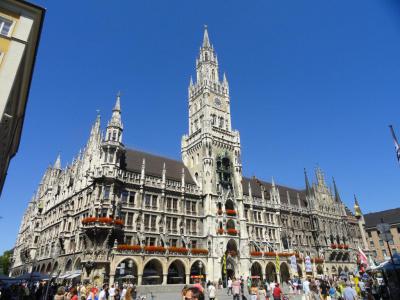
In the second half of the 19th century, as Munich was growing rapidly and riding a wave of prosperity, city leaders decided they needed a new home for local government. The Old Town Hall had simply outgrown its purpose. They chose a prominent spot on the south side of Mary’s Square, cleared out around two dozen houses, and set the stage for something grand. Construction began in 1867 and continued all the way to 1909. Overseeing the project was a remarkably young architect-Georg Hauberrisser-just 24 when he started.
What emerged is a prime example of German pseudo-historical architecture-mock-Netherlands Gothic, to be exact. The building features six courtyards and a small garden at the back. Its façade is covered in intricate sculptures that reference Bavarian legends, local saints, and allegorical figures. At the top of the steeple stands a bronze statue of the “Munich Child,” the city’s traditional symbol. The tower also houses the fourth-largest chiming clock in Europe.
Every day, 43 bells ring out as copper figures dance in two scenes: a knightly tournament honoring the wedding of Duke Wilhelm V and Renata of Lorraine, and the legendary “Dance of the Coopers.” That dance, by the way, is still performed in the streets every seven years during Carnival to commemorate the passing of a plague epidemic in the early 1500s. Legend has it that coopers, loyal to the Duke, danced through the streets to inspire courage during tough times. The official dance moves were defined as far back as 1871.
The full carillon performance plays at 11 a.m., noon, and 5 p.m. in the summer, lasting up to 15 minutes depending on the day’s tune. As a whimsical finale, a tiny golden rooster perched above the clock lets out three soft chirps. And when evening falls, figures of a night watchman and the Angel of Peace appear in the upper windows, quietly blessing the “Munich Child” and the city below.
Visitors can ride the elevator to the viewing platform for sweeping views of the city. And beneath the building, the historic Ratskeller restaurant offers not just a good meal, but a truly atmospheric dining experience.
What emerged is a prime example of German pseudo-historical architecture-mock-Netherlands Gothic, to be exact. The building features six courtyards and a small garden at the back. Its façade is covered in intricate sculptures that reference Bavarian legends, local saints, and allegorical figures. At the top of the steeple stands a bronze statue of the “Munich Child,” the city’s traditional symbol. The tower also houses the fourth-largest chiming clock in Europe.
Every day, 43 bells ring out as copper figures dance in two scenes: a knightly tournament honoring the wedding of Duke Wilhelm V and Renata of Lorraine, and the legendary “Dance of the Coopers.” That dance, by the way, is still performed in the streets every seven years during Carnival to commemorate the passing of a plague epidemic in the early 1500s. Legend has it that coopers, loyal to the Duke, danced through the streets to inspire courage during tough times. The official dance moves were defined as far back as 1871.
The full carillon performance plays at 11 a.m., noon, and 5 p.m. in the summer, lasting up to 15 minutes depending on the day’s tune. As a whimsical finale, a tiny golden rooster perched above the clock lets out three soft chirps. And when evening falls, figures of a night watchman and the Angel of Peace appear in the upper windows, quietly blessing the “Munich Child” and the city below.
Visitors can ride the elevator to the viewing platform for sweeping views of the city. And beneath the building, the historic Ratskeller restaurant offers not just a good meal, but a truly atmospheric dining experience.
11) Marienplatz (Mary's Square) (must see)
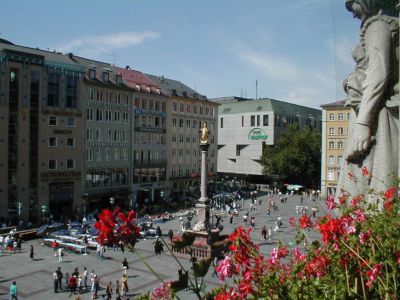
Right in the center of Munich lies Mary’s Square, the city’s lively, historic core. Established back in 1158, it started out as a busy marketplace and a stage for medieval tournaments and public events. These days, it’s still the place where everything seems to converge-a perfect starting point for anyone exploring the city. Grand buildings rise on all sides, cafés spill onto the streets, and the square hums with energy from morning until night.
The star attraction is the New Town Hall, an elaborate neo-Gothic masterpiece brimming with stone figures, ornate carvings, and the famous Glockenspiel. At 11 a.m., noon, and again at 5 p.m. during the warmer months, the Glockenspiel puts on its quirky performance. Thirty-two mechanical figures spin into action, reenacting Bavarian legends to a soundtrack of bells and music. It’s theatrical, a little over-the-top, and completely delightful.
Across the square, you’ll also find the Old Town Hall, with its storybook tower and a toy museum tucked inside-great if you’re traveling with kids or just enjoy a touch of childhood nostalgia. Meanwhile in the center stands the Column of Saint Mary, raised in 1638 to mark the end of Swedish occupation during the Thirty Years' War. A gilded statue of the Virgin crowns the column-a quiet symbol in a bustling space, and the inspiration for the square’s name.
Street musicians, traditional restaurants, souvenir stalls-there’s always something happening around you. Want to shop? Stroll down Kaufinger Street, one of Munich’s busiest pedestrian avenues. If you’re more in the mood for architecture, the city’s Cathedral, with its distinctive twin domes, is just around the corner.
In short, Mary’s Square offers the perfect snapshot of Munich. Don’t rush through it-it’s a place to linger, look up, and let the city reveal itself one detail at a time.
The star attraction is the New Town Hall, an elaborate neo-Gothic masterpiece brimming with stone figures, ornate carvings, and the famous Glockenspiel. At 11 a.m., noon, and again at 5 p.m. during the warmer months, the Glockenspiel puts on its quirky performance. Thirty-two mechanical figures spin into action, reenacting Bavarian legends to a soundtrack of bells and music. It’s theatrical, a little over-the-top, and completely delightful.
Across the square, you’ll also find the Old Town Hall, with its storybook tower and a toy museum tucked inside-great if you’re traveling with kids or just enjoy a touch of childhood nostalgia. Meanwhile in the center stands the Column of Saint Mary, raised in 1638 to mark the end of Swedish occupation during the Thirty Years' War. A gilded statue of the Virgin crowns the column-a quiet symbol in a bustling space, and the inspiration for the square’s name.
Street musicians, traditional restaurants, souvenir stalls-there’s always something happening around you. Want to shop? Stroll down Kaufinger Street, one of Munich’s busiest pedestrian avenues. If you’re more in the mood for architecture, the city’s Cathedral, with its distinctive twin domes, is just around the corner.
In short, Mary’s Square offers the perfect snapshot of Munich. Don’t rush through it-it’s a place to linger, look up, and let the city reveal itself one detail at a time.
12) Peterskirche (St. Peter's Church) (must see)
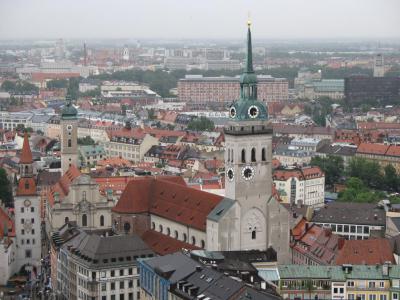
Saint Peter’s Church rises from the highest point of Munich’s Old Town and holds the title of the city’s oldest public building. It played a key role in the city’s early development, with roots reaching back to the 12th century. In fact, the church was once part of the original monastery that gave the city its name-“ménchen” meaning “monks.” After the first structure was lost to fire, a new Gothic-style design took its place in the 13th century. Over time, the church evolved even further, getting a Baroque facelift in the 17th century and then a Rococo reimagining in the 18th. After World War II, major restoration work was carried out to return it to its former glory.
Step inside today, and you're met with an unexpectedly lavish interior. The high altar features a commanding statue of Saint Peter, surrounded by the Church Fathers, while the choir displays five intricately carved scenes from Peter’s life. Look closely and you may even spot the jeweled remains of Saint Mundita-an ornate, if somewhat haunting, presence.
The church’s tower, known as “Old Peter,” is another highlight. Equipped with eight clocks, seven bells, and a viewing gallery, it offers panoramic views over the city-and on clear days, even as far as the Alps. A set of color-coded markers on the lower platform helps gauge visibility; if you spot a white circle, it means you’re in luck. Climbing to the top is well worth the price, but be warned: it’s a steep ascent and not ideal for anyone with a fear of heights. For those who make it, two binocular viewers let you take in the rooftops, church spires, and skyline in vivid detail. And if you arrive before noon, you’ll get an unbeatable vantage point for watching the carillon perform over at Mary’s Square.
Step inside today, and you're met with an unexpectedly lavish interior. The high altar features a commanding statue of Saint Peter, surrounded by the Church Fathers, while the choir displays five intricately carved scenes from Peter’s life. Look closely and you may even spot the jeweled remains of Saint Mundita-an ornate, if somewhat haunting, presence.
The church’s tower, known as “Old Peter,” is another highlight. Equipped with eight clocks, seven bells, and a viewing gallery, it offers panoramic views over the city-and on clear days, even as far as the Alps. A set of color-coded markers on the lower platform helps gauge visibility; if you spot a white circle, it means you’re in luck. Climbing to the top is well worth the price, but be warned: it’s a steep ascent and not ideal for anyone with a fear of heights. For those who make it, two binocular viewers let you take in the rooftops, church spires, and skyline in vivid detail. And if you arrive before noon, you’ll get an unbeatable vantage point for watching the carillon perform over at Mary’s Square.
