Custom Walk in Catania, Italy by dc11main_ca694d created on 2026-06-09
Guide Location: Italy » Catania
Guide Type: Custom Walk
# of Sights: 16
Tour Duration: 2 Hour(s)
Travel Distance: 2.5 Km or 1.6 Miles
Share Key: 78EYH
Guide Type: Custom Walk
# of Sights: 16
Tour Duration: 2 Hour(s)
Travel Distance: 2.5 Km or 1.6 Miles
Share Key: 78EYH
How It Works
Please retrieve this walk in the GPSmyCity app. Once done, the app will guide you from one tour stop to the next as if you had a personal tour guide. If you created the walk on this website or come to the page via a link, please follow the instructions below to retrieve the walk in the app.
Retrieve This Walk in App
Step 1. Download the app "GPSmyCity: Walks in 1K+ Cities" on Apple App Store or Google Play Store.



Step 2. In the GPSmyCity app, download(or launch) the guide "Catania Map and Walking Tours".
Step 3. Tap the menu button located at upper right corner of the "Walks" screen and select "Retrieve custom walk". Enter the share key: 78EYH
1) Palazzo Biscari (Biscari Palace) (must see)
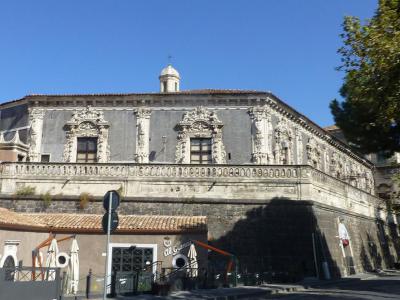
Biscari Palace is an aristocratic residences of Baroque and Rococo design. Conceived after the devastating earthquake of 1693, the palace was commissioned by Ignazio Paternò Castello, 3rd Prince of Biscari, with construction beginning in 1702 and continuing through much of the 18th century. Completed in 1763 by the fifth Prince of Biscari, its inauguration was marked by lavish celebrations that reflected the family’s status and Catania’s renewed confidence during the reconstruction era.
The palace’s most amazing exterior façade faces Cardinale Dusmet Street, where richly carved balconies curve outward on stone brackets. When this façade was built, it rose directly above the 16th-century city walls, overlooking the sea at their base. The visitor entrance is marked by a stone portal adorned with cartouches and the Biscari coat of arms, opening into a spacious courtyard with an outdoor staircase that prepares visitors for the decorative richness inside.
The interior reveals a fully developed Rococo style. Frescoes, mirrors, and elaborate stucco work animate the grand rooms, culminating in the octagonal ballroom, the palace’s most celebrated space. Decorated by Matteo Desiderato and Sebastiano Lo Monaco, the ballroom is notable for its illusionistic effects and fluid lines. A distinctive spiral staircase shaped like a sea shell leads to a balcony beneath the dome, originally intended to hold an orchestra and now regarded as one of the palace’s most elegant architectural details.
Beyond the ballroom, the palace unfolds through a sequence of named rooms, each reflecting a specific function or theme. The Fief Room displays large paintings of the Biscari family’s feudal lands, while the Princess Apartment, created for the wife of Ignazio V, is paved with salvaged Roman marble. This reuse of ancient material reflects the interests of Ignazio V, a renowned archaeologist whose collections form the basis of the palace museum. Today, although parts of Biscari Palace remain privately inhabited, sections are open for visits and cultural events.
The palace’s most amazing exterior façade faces Cardinale Dusmet Street, where richly carved balconies curve outward on stone brackets. When this façade was built, it rose directly above the 16th-century city walls, overlooking the sea at their base. The visitor entrance is marked by a stone portal adorned with cartouches and the Biscari coat of arms, opening into a spacious courtyard with an outdoor staircase that prepares visitors for the decorative richness inside.
The interior reveals a fully developed Rococo style. Frescoes, mirrors, and elaborate stucco work animate the grand rooms, culminating in the octagonal ballroom, the palace’s most celebrated space. Decorated by Matteo Desiderato and Sebastiano Lo Monaco, the ballroom is notable for its illusionistic effects and fluid lines. A distinctive spiral staircase shaped like a sea shell leads to a balcony beneath the dome, originally intended to hold an orchestra and now regarded as one of the palace’s most elegant architectural details.
Beyond the ballroom, the palace unfolds through a sequence of named rooms, each reflecting a specific function or theme. The Fief Room displays large paintings of the Biscari family’s feudal lands, while the Princess Apartment, created for the wife of Ignazio V, is paved with salvaged Roman marble. This reuse of ancient material reflects the interests of Ignazio V, a renowned archaeologist whose collections form the basis of the palace museum. Today, although parts of Biscari Palace remain privately inhabited, sections are open for visits and cultural events.
2) Palazzo San Giuliano (San Giuliano Palace)
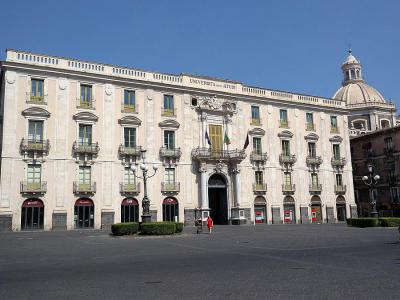
The San Giuliano Palace (Palazzo San Giuliano), located in the bustling University Square (Piazza Universitaria) at the heart of Catania, is a masterpiece of Baroque architecture and a monument to the city's resilience and historical depth. Originally commissioned by the Marquise of San Giuliano from the House of Paternò following the devastating 1693 Sicily earthquake, the palace was designed by renowned architect Giovanni Battista Vaccarini and completed in 1738.
Over the centuries, this iconic structure has served various roles, including a private residence, hospital, bank, theater, and hotel. Since the 1980s, it has been the administrative hub of the University of Catania, standing opposite the University Building (Palazzo dell'Università), which houses the university's rectorate, a library, and a museum.
The San Giuliano Palace is celebrated for its striking façade, adorned with intricate stone carvings and ornate balconies that exude the grandeur of the Baroque era. The rooftop balustrade, a later addition from the 1930s, complements the historic aesthetic. Inside, the courtyard features a characteristic double staircase leading to the piano nobile, a testament to the architectural elegance of its time.
The entrance portal is embellished with two coats of arms: the Paternò Castello family crest on the left and the Asmundos crest on the right, marking its lineage of aristocratic ownership.
Today, San Giuliano Palace is more than a historical landmark; it is a vibrant cultural icon. Nestled in the lively University Square, surrounded by bustling cafés and shops, it invites visitors to immerse themselves in Catania's unique blend of history, art, and local charm. Whether you're drawn by its architectural splendor or its storied past, a visit to San Giuliano Palace promises an unforgettable glimpse into the spirit of Sicily.
Over the centuries, this iconic structure has served various roles, including a private residence, hospital, bank, theater, and hotel. Since the 1980s, it has been the administrative hub of the University of Catania, standing opposite the University Building (Palazzo dell'Università), which houses the university's rectorate, a library, and a museum.
The San Giuliano Palace is celebrated for its striking façade, adorned with intricate stone carvings and ornate balconies that exude the grandeur of the Baroque era. The rooftop balustrade, a later addition from the 1930s, complements the historic aesthetic. Inside, the courtyard features a characteristic double staircase leading to the piano nobile, a testament to the architectural elegance of its time.
The entrance portal is embellished with two coats of arms: the Paternò Castello family crest on the left and the Asmundos crest on the right, marking its lineage of aristocratic ownership.
Today, San Giuliano Palace is more than a historical landmark; it is a vibrant cultural icon. Nestled in the lively University Square, surrounded by bustling cafés and shops, it invites visitors to immerse themselves in Catania's unique blend of history, art, and local charm. Whether you're drawn by its architectural splendor or its storied past, a visit to San Giuliano Palace promises an unforgettable glimpse into the spirit of Sicily.
3) Piazza dell'Universita (University Square)
University Square is one of the city's symbols of Baroque design. Laid out after the devastating earthquake of 1693, it formed part of the city’s 18th-century reconstruction. Compared with the busier squares nearby, University Square has a calmer, more composed atmosphere.
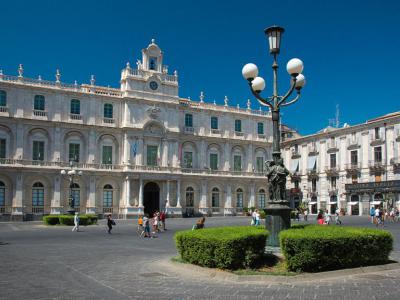
The square takes its name from the University of Catania. Late Baroque palaces associated with the university line the square. For this reason, the square is also sometimes referred to as Student Square. Facing the west side of the square, the University Palace serves as the institution’s main seat. To the right corner of the north side, stands Gioeni Palace, while San Giuliano Palace completes the frame on the east side.
At the center of University Square stand four elaborate bronze lampposts designed by Vincenzo Corsaro, arranged together like a monumental candelabrum. Each lamppost is richly sculpted and illustrates a story drawn from Sicilian legend or history, celebrating virtues traditionally admired on the island: chastity, represented by Gammazita; patriotism, embodied by Paladin; filial devotion, shown by the Brothers Pii; and cleverness, symbolized by Colapesce.
Gammazita is located at the north-east corner, near San Giuliano Palace, depicting a woman who dives into a well to escape a soldier. Paladin stands at the south-east corner, showing a knight overcoming a Saracen. The Brothers Pii, at the north-west corner, near the University Palace, portray siblings saving their parents from a river of lava. Finally, Colapesce, at the south-west corner, represents the legendary youth who dives beneath the sea to support the island and is never seen again.
The square takes its name from the University of Catania. Late Baroque palaces associated with the university line the square. For this reason, the square is also sometimes referred to as Student Square. Facing the west side of the square, the University Palace serves as the institution’s main seat. To the right corner of the north side, stands Gioeni Palace, while San Giuliano Palace completes the frame on the east side.
At the center of University Square stand four elaborate bronze lampposts designed by Vincenzo Corsaro, arranged together like a monumental candelabrum. Each lamppost is richly sculpted and illustrates a story drawn from Sicilian legend or history, celebrating virtues traditionally admired on the island: chastity, represented by Gammazita; patriotism, embodied by Paladin; filial devotion, shown by the Brothers Pii; and cleverness, symbolized by Colapesce.
Gammazita is located at the north-east corner, near San Giuliano Palace, depicting a woman who dives into a well to escape a soldier. Paladin stands at the south-east corner, showing a knight overcoming a Saracen. The Brothers Pii, at the north-west corner, near the University Palace, portray siblings saving their parents from a river of lava. Finally, Colapesce, at the south-west corner, represents the legendary youth who dives beneath the sea to support the island and is never seen again.
4) Basilica della Collegiata
The Ancient Royal and Eminent Basilica Collegiate of Our Lady of the Alms, more commonly referred to as the Basilica della Collegiata, stands as a remarkable example of Sicilian Baroque architecture in the heart of Catania, Sicily. Completed in 1794, the church is a testament to the city’s resilience, having been rebuilt in the early 18th century following the devastating earthquake of 1693 that destroyed much of Catania. Originally constructed in the Middle Ages, it was elevated to a collegiate church by Pope Eugenius IV.
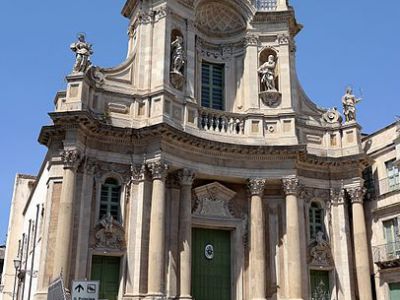
The Basilica's redesign by Angelo Italia reoriented it towards the newly planned Via Uzeda (now Etnea Street) as part of post-earthquake urban renewal. Stefano Ittar, a Polish architect, crafted the stunning late Baroque façade with a two-tiered design: six stone columns on the lower level, statues flanking a central window on the upper level, and a bell structure above. A grand staircase with a wrought iron parapet leads to the church.
The Basilica's interior follows a traditional plan with a nave, two aisles, and three apses. The central apse, housing the rectory, is the focal point. The right aisle features a baptistery, three saintly altars, and the Altar of the Virgin of the Immaculate Conception, adorned with a marble balustrade and statue. Above the high altar in the nave’s apse is an icon of the Virgin with Child, a copy of a Byzantine original. An 18th-century wooden organ and choir enhance the sacred atmosphere. The left aisle leads to the Holy Sacrament Chapel with a polychrome marble altar and includes Olivio Sozzi's altarpiece of Sant’Apollonia. The 1896 frescoes by Giuseppe Sciuti depict the Life of Mary, Angels, and Saints.
The Basilica della Collegiata is not only a jewel of Sicilian Baroque but also a testament to the enduring faith and artistic legacy of Catania.
The Basilica's redesign by Angelo Italia reoriented it towards the newly planned Via Uzeda (now Etnea Street) as part of post-earthquake urban renewal. Stefano Ittar, a Polish architect, crafted the stunning late Baroque façade with a two-tiered design: six stone columns on the lower level, statues flanking a central window on the upper level, and a bell structure above. A grand staircase with a wrought iron parapet leads to the church.
The Basilica's interior follows a traditional plan with a nave, two aisles, and three apses. The central apse, housing the rectory, is the focal point. The right aisle features a baptistery, three saintly altars, and the Altar of the Virgin of the Immaculate Conception, adorned with a marble balustrade and statue. Above the high altar in the nave’s apse is an icon of the Virgin with Child, a copy of a Byzantine original. An 18th-century wooden organ and choir enhance the sacred atmosphere. The left aisle leads to the Holy Sacrament Chapel with a polychrome marble altar and includes Olivio Sozzi's altarpiece of Sant’Apollonia. The 1896 frescoes by Giuseppe Sciuti depict the Life of Mary, Angels, and Saints.
The Basilica della Collegiata is not only a jewel of Sicilian Baroque but also a testament to the enduring faith and artistic legacy of Catania.
5) Via Etnea (Etnea Street)
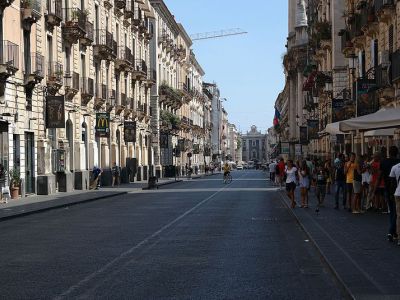
Etnea Street is Catania’s main thoroughfare and the clearest expression of the city’s post-1693 reconstruction. Although a road existed here in Roman times, the present street took shape after the devastating earthquake. Running north from Cathedral Square toward Mount Etna, Etnea Street was conceived as a monumental axis, guiding movement through the historic center.
The street is visually defined by dark lava-stone façades, rebuilt largely in the 18th century in Baroque style. Many of these buildings were designed by architects such as Giovanni Battista Vaccarini and Francesco Battaglia, whose work established the strong contrast between black volcanic stone and lighter decorative details. Beyond its architectural role, Etnea Street offers commercial facilities. The ground floors of its Baroque buildings are largely occupied by shops, cafés, bars, and restaurants.
Etnea Street also serves as a continuous link between several of Catania’s key squares and landmarks. Along its route stands Gioeni Asmundo Palace at University Square. Continuing north, you reach Stesicoro Square, where Tezzano Palace occupies the left side and Toscano Palace the right side of the square’s northern frontage. Here, the Vincenzo Bellini Monument stands to the east, while the Church of San Biagio marks the west edge.
The route eventually leads to Villa Bellini, Catania’s main public garden, continues to the Botanical Garden of Catania on the left side, and finishes farther out at Gioeni Park, offering a welcome transition from dense urban architecture to increasingly green spaces.
The street is visually defined by dark lava-stone façades, rebuilt largely in the 18th century in Baroque style. Many of these buildings were designed by architects such as Giovanni Battista Vaccarini and Francesco Battaglia, whose work established the strong contrast between black volcanic stone and lighter decorative details. Beyond its architectural role, Etnea Street offers commercial facilities. The ground floors of its Baroque buildings are largely occupied by shops, cafés, bars, and restaurants.
Etnea Street also serves as a continuous link between several of Catania’s key squares and landmarks. Along its route stands Gioeni Asmundo Palace at University Square. Continuing north, you reach Stesicoro Square, where Tezzano Palace occupies the left side and Toscano Palace the right side of the square’s northern frontage. Here, the Vincenzo Bellini Monument stands to the east, while the Church of San Biagio marks the west edge.
The route eventually leads to Villa Bellini, Catania’s main public garden, continues to the Botanical Garden of Catania on the left side, and finishes farther out at Gioeni Park, offering a welcome transition from dense urban architecture to increasingly green spaces.
6) Roman Amphitheater
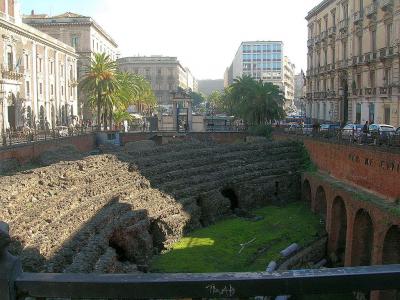
The Roman Amphitheater reveals the immense scale of ancient Catania below today’s streets. Built around 200 AD during the Roman Imperial period, it ranked among the largest amphitheaters in Italy. Positioned on the northern side of the ancient city, at the base of Montevergine Hill, it once hosted public spectacles for an audience of around 15,000, with additional standing room likely added for major events.
The amphitheater was constructed using lava stone and brick. Elliptical in plan, it featured radial walls and vaulted structures to support tiered seating, with an external gallery encircling the arena. Its dimensions were considerable, with an arena measuring roughly 268 by 164 feet, and an outer circumference of more than 1,000 feet. Evidence suggests the structure was sophisticated enough to stage naumachiae, or mock sea battles, using water supplied by the city’s aqueduct.
Over time, natural disasters and urban growth gradually erased the amphitheater from view. Although legend claims it was spared by lava during Mount Etna’s eruption in 251, the catastrophic earthquake of 1693 buried most of the structure. Stone from the ruins was reused in nearby buildings, including parts of the Church of San Biagio, and the site was covered and turned into garden ground.
The amphitheater re-emerged only during excavations in the 18th century, when its true scale became clear once again. Today, only about one-tenth of the amphitheater is visible, accessed through an iron gate flanked by Ionic columns. Now part of the Greek–Roman Archaeological Park of Catania, the exposed corridors and walls create a wonderful contrast with the surrounding streets, cafés, and shops.
The amphitheater was constructed using lava stone and brick. Elliptical in plan, it featured radial walls and vaulted structures to support tiered seating, with an external gallery encircling the arena. Its dimensions were considerable, with an arena measuring roughly 268 by 164 feet, and an outer circumference of more than 1,000 feet. Evidence suggests the structure was sophisticated enough to stage naumachiae, or mock sea battles, using water supplied by the city’s aqueduct.
Over time, natural disasters and urban growth gradually erased the amphitheater from view. Although legend claims it was spared by lava during Mount Etna’s eruption in 251, the catastrophic earthquake of 1693 buried most of the structure. Stone from the ruins was reused in nearby buildings, including parts of the Church of San Biagio, and the site was covered and turned into garden ground.
The amphitheater re-emerged only during excavations in the 18th century, when its true scale became clear once again. Today, only about one-tenth of the amphitheater is visible, accessed through an iron gate flanked by Ionic columns. Now part of the Greek–Roman Archaeological Park of Catania, the exposed corridors and walls create a wonderful contrast with the surrounding streets, cafés, and shops.
7) Villa Cerami
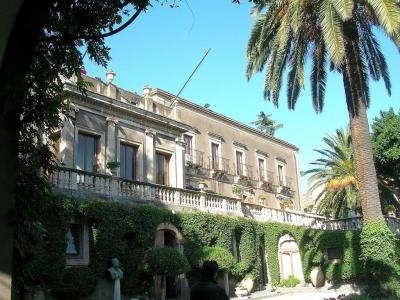
Villa Cerami, an emblem of Baroque grandeur in Catania, boasts a storied history intertwined with the city's resilience and artistic legacy. Originally a semirural villa on the outskirts of the urban center, it was constructed atop the ruins of a Roman amphitheater, some remnants of which are visible in nearby Stesicoro Square (Piazza Stesicoro). Today, Villa Cerami houses the School of Jurisprudence (Law) of the University of Catania, offering a striking blend of historical significance and contemporary academic use.
The villa’s history begins with Giuseppe Lanza, Duca di Camastra, later owned by the Duca di San Donato and acquired by Domenico Rosso, 3rd Prince of Cerami, in 1724. After the 1693 earthquake, architect Giovanni Battista Vaccarini led its reconstruction, adding a grand staircase, portico, and Cerami coat of arms. Domenico’s son, the 4th Prince of Cerami, owned it from 1735 to 1768, befriending Ignazio Paternò Castello and aiding during the 1763 famine. In the late 19th century, Carlo Sada refurbished it for King Umberto I and Queen Margherita, replacing Olivio Sozzi’s fresco with Guido Reni’s Aurora.
The villa was neglected before being acquired by the University of Catania in 1957. Restoration efforts included converting the ballroom into the Great Hall and creating classrooms and a library. However, a controversial five-story modern glass tower was added in the 1960s, replacing part of the villa’s gardens.
Today, visitors are greeted by the Baroque portico, leading to a forecourt where the former carriage house (scuderia) has been repurposed into classrooms. Outside the villa’s portal stands a marble water font, a gift from the Cerami family to the neighborhood, echoing its enduring connection to the city. Villa Cerami remains a remarkable testament to Catania’s layered history and architectural evolution.
The villa’s history begins with Giuseppe Lanza, Duca di Camastra, later owned by the Duca di San Donato and acquired by Domenico Rosso, 3rd Prince of Cerami, in 1724. After the 1693 earthquake, architect Giovanni Battista Vaccarini led its reconstruction, adding a grand staircase, portico, and Cerami coat of arms. Domenico’s son, the 4th Prince of Cerami, owned it from 1735 to 1768, befriending Ignazio Paternò Castello and aiding during the 1763 famine. In the late 19th century, Carlo Sada refurbished it for King Umberto I and Queen Margherita, replacing Olivio Sozzi’s fresco with Guido Reni’s Aurora.
The villa was neglected before being acquired by the University of Catania in 1957. Restoration efforts included converting the ballroom into the Great Hall and creating classrooms and a library. However, a controversial five-story modern glass tower was added in the 1960s, replacing part of the villa’s gardens.
Today, visitors are greeted by the Baroque portico, leading to a forecourt where the former carriage house (scuderia) has been repurposed into classrooms. Outside the villa’s portal stands a marble water font, a gift from the Cerami family to the neighborhood, echoing its enduring connection to the city. Villa Cerami remains a remarkable testament to Catania’s layered history and architectural evolution.
8) Via dei Crociferi
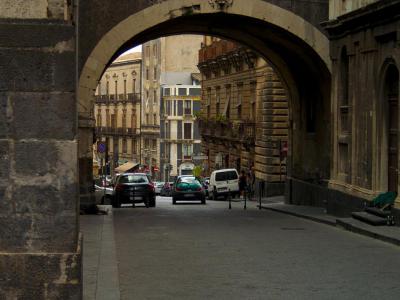
Via dei Crociferi in Catania is a masterpiece of 18th-century urban design and one of the finest examples of Baroque unity in Italy. Stretching a mere 410 meters, this monumental street is a visual feast of churches, monasteries, and select civilian houses. Beginning at San Francesco d'Assisi Square, the street is accessed through the graceful Arch of San Benedetto, which serves as a gateway to this Baroque treasure trove.
The first landmark is the Church of San Benedetto, situated on the west side. This church is intricately connected to the Benedictine convent via the namesake arch, which links the Badia Grande and Badia Piccola. The church is elevated above the street, accessible by a staircase framed by a wrought iron gate, adding to its imposing charm.
Further along the west side, the Church of San Francesco Borgia greets visitors with dual staircases leading to its grand entrance. This church is separated from San Benedetto by Via San Benedetto, a small street that leads to the elegant Asmundo Francica-Nava Palace, which overlooks Asmundo Square. Adjacent to the church is the former Jesuit College, now housing the old Art Institute. This structure boasts a magnificent cloister with columned porticoes and arches, a serene retreat amidst the bustling city.
Directly opposite the college stands the Church of San Giuliano, a pinnacle of Catania’s Baroque architecture attributed to Giovan Battista Vaccarini. Its convex façade and clean, harmonious lines make it a standout structure. Continuing further and crossing Via Antonino Di Sangiuliano, visitors encounter the Convent of the Crociferi and the Church of San Camillo.
The street concludes with Villa Cerami, a historic building now home to the Faculty of Law of the University of Catania. This villa, nestled at the end of Via dei Crociferi, adds a touch of academic prestige to the artistic splendor of the street.
The first landmark is the Church of San Benedetto, situated on the west side. This church is intricately connected to the Benedictine convent via the namesake arch, which links the Badia Grande and Badia Piccola. The church is elevated above the street, accessible by a staircase framed by a wrought iron gate, adding to its imposing charm.
Further along the west side, the Church of San Francesco Borgia greets visitors with dual staircases leading to its grand entrance. This church is separated from San Benedetto by Via San Benedetto, a small street that leads to the elegant Asmundo Francica-Nava Palace, which overlooks Asmundo Square. Adjacent to the church is the former Jesuit College, now housing the old Art Institute. This structure boasts a magnificent cloister with columned porticoes and arches, a serene retreat amidst the bustling city.
Directly opposite the college stands the Church of San Giuliano, a pinnacle of Catania’s Baroque architecture attributed to Giovan Battista Vaccarini. Its convex façade and clean, harmonious lines make it a standout structure. Continuing further and crossing Via Antonino Di Sangiuliano, visitors encounter the Convent of the Crociferi and the Church of San Camillo.
The street concludes with Villa Cerami, a historic building now home to the Faculty of Law of the University of Catania. This villa, nestled at the end of Via dei Crociferi, adds a touch of academic prestige to the artistic splendor of the street.
9) San Francesco Borgia (Church of Saint Francis Borgia)
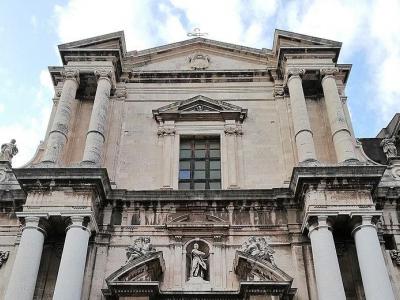
The Church of Saint Francis Borgia in Catania is a former Jesuit church now repurposed as a cultural venue under the administration of the Regional Superintendence of Cultural Heritage. Located adjacent to the Collegio Gesuita and parallel to the Church of San Benedetto, this deconsecrated church is notable for its Jesuit heritage and the preservation of much of its original artwork.
The church’s facade exemplifies classical design, adorned with five statues of Jesuit saints. Central to this arrangement is a statue of the titular Saint Francis Borgia positioned above the portal. Flanking him are Ignatius Loyola and Francis Xavier on the lower level, with Aloysius Gonzaga and Stanislaus Kostka depicted on the upper tier. This sculptural ensemble underscores the Jesuit influence on the church's identity.
The church's Latin cross layout features a central nave and two aisles lined with chapels. Completed in 1740, its interior boasts frescoes, altarpieces, and sculptures. Highlights include the first altar on the right, depicting the Vision of Madonna and Child to San Giovanni Francesco Regis; the second altar, showing Saints Stanislaus Kostka and Aloysius Gonzaga; and the main altar, adorned with polychrome marble and sculptures by Giovanni Battista Marino. At its center is a 1567 copy of the Madonna of the Snow (Madonna della Neve), gifted by Saint Francis Borgia.
The dome’s base is adorned with statues of the four Evangelists, complementing frescoes that celebrate the Triumph of Saint Ignatius and the Jesuits over heresy. The apse features trompe-l'œil painted curtains, adding to the grandeur of the space. On the left altars, notable artworks include depictions of Saint Agatha visited in jail and the Glory of Saint Joseph, further enriching the church's artistic legacy.
Although no longer serving as a place of worship, the Church of Saint Francis Borgia remains an important cultural and historical landmark in Catania, hosting exhibits and events that continue to draw attention to its artistic and architectural significance.
The church’s facade exemplifies classical design, adorned with five statues of Jesuit saints. Central to this arrangement is a statue of the titular Saint Francis Borgia positioned above the portal. Flanking him are Ignatius Loyola and Francis Xavier on the lower level, with Aloysius Gonzaga and Stanislaus Kostka depicted on the upper tier. This sculptural ensemble underscores the Jesuit influence on the church's identity.
The church's Latin cross layout features a central nave and two aisles lined with chapels. Completed in 1740, its interior boasts frescoes, altarpieces, and sculptures. Highlights include the first altar on the right, depicting the Vision of Madonna and Child to San Giovanni Francesco Regis; the second altar, showing Saints Stanislaus Kostka and Aloysius Gonzaga; and the main altar, adorned with polychrome marble and sculptures by Giovanni Battista Marino. At its center is a 1567 copy of the Madonna of the Snow (Madonna della Neve), gifted by Saint Francis Borgia.
The dome’s base is adorned with statues of the four Evangelists, complementing frescoes that celebrate the Triumph of Saint Ignatius and the Jesuits over heresy. The apse features trompe-l'œil painted curtains, adding to the grandeur of the space. On the left altars, notable artworks include depictions of Saint Agatha visited in jail and the Glory of Saint Joseph, further enriching the church's artistic legacy.
Although no longer serving as a place of worship, the Church of Saint Francis Borgia remains an important cultural and historical landmark in Catania, hosting exhibits and events that continue to draw attention to its artistic and architectural significance.
10) Roman Theater of Catania (must see)
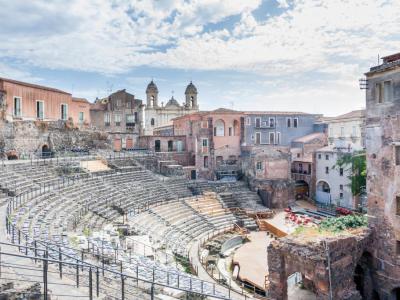
Although the visible structure dates mainly to the 2nd century AD, the Roman Theater was built directly over an earlier Greek theater. Together with the adjacent Odeon, the complex formed the city’s principal venue for performance and public gatherings. Constructed primarily from lava stone and limestone, the seating rises northward, uphill, while spectators would have looked south toward the stage, orchestra, and the sea beyond.
The elliptical structure measured roughly 330 feet in diameter and could accommodate around 7,000 spectators across twenty-one seating rows, accessed through corridors built beneath the cavea. The smaller Odeon, with a capacity of about 1,500, was reserved for music and poetry competitions and is among the best-preserved examples of its kind in Sicily.
One of the theater’s most impressive features is the Amenano River flowing directly underneath the structure. Buried by the 1669 eruption of Mount Etna, the river still runs below the orchestra, which is why parts of the lower theater are often partially flooded with clear freshwater. After the 5th century AD, the complex fell out of use, and much of its marble seating and columns were stripped during the Middle Ages. Reused in major buildings such as Catania Cathedral, recycled theater columns can still be seen in the apse.
Excavations began in the 18th century under Ignazio Paternò Castello, Prince of Biscari, and continued into the 19th century, but it was only in 1959 that modern houses encroaching on the site were removed, fully exposing the theater and Odeon. Two of those former residences on the north side of the theater, Pandolfo House and Liberti House, remain integrated into the complex today, serving as entrance spaces and small museums displaying statues, marble fragments, and architectural elements found on site.
The elliptical structure measured roughly 330 feet in diameter and could accommodate around 7,000 spectators across twenty-one seating rows, accessed through corridors built beneath the cavea. The smaller Odeon, with a capacity of about 1,500, was reserved for music and poetry competitions and is among the best-preserved examples of its kind in Sicily.
One of the theater’s most impressive features is the Amenano River flowing directly underneath the structure. Buried by the 1669 eruption of Mount Etna, the river still runs below the orchestra, which is why parts of the lower theater are often partially flooded with clear freshwater. After the 5th century AD, the complex fell out of use, and much of its marble seating and columns were stripped during the Middle Ages. Reused in major buildings such as Catania Cathedral, recycled theater columns can still be seen in the apse.
Excavations began in the 18th century under Ignazio Paternò Castello, Prince of Biscari, and continued into the 19th century, but it was only in 1959 that modern houses encroaching on the site were removed, fully exposing the theater and Odeon. Two of those former residences on the north side of the theater, Pandolfo House and Liberti House, remain integrated into the complex today, serving as entrance spaces and small museums displaying statues, marble fragments, and architectural elements found on site.
11) Palazzo Bruca (Bruca Palace)
The Bruca Palace, also known as Palazzo Scammacca della Bruca, stands as a testament to the grandeur and elegance of Catania’s Baroque period. Nestled in the heart of the city, just 150 meters from Cathedral Square (Piazza del Duomo), this 18th-century palace reflects the splendor of a bygone era. Originally built for the Scammacca della Bruca princes, it has retained much of its historical allure despite the passing of centuries.
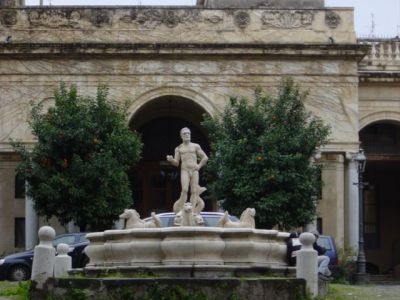
One of the palace’s most striking features is its large walled inner courtyard, which boasts a magnificent Neoclassical fountain depicting Neptune, a symbol of power and majesty. Encircled by a loggia of Ionic columns, this courtyard is a sight to behold, often capturing the attention of curious passers-by who seize fleeting moments when the gates are open.
Palazzo Bruca’s history is deeply intertwined with the rebirth of Catania after the devastating earthquake of 1693. It was designed to project the wealth and influence of its aristocratic owners. Though time has left its mark, traces of its opulence remain. Notably, some rooms feature original painted ceilings from the 19th century, depicting scenes of grand parties hosted by Duke Scammacca Bruca.
Today, part of the palace has been transformed into an exclusive B&B, offering guests a unique opportunity to immerse themselves in history. Staying here is not just about enjoying modern comforts but also experiencing the enduring charm of a building that has witnessed Catania’s evolution through the centuries. The B&B is the only historic structure in the city center to preserve its original layout, including its storehouses, mezzanine, and main floors, untouched by 20th-century redesigns or post-war renovations.
The Bruca Palace is not just a place to stay-it’s a journey through the art, history, and legends of Sicily. Visitors are invited to explore its storied halls and hear captivating tales, making their time in Catania a truly unforgettable experience.
One of the palace’s most striking features is its large walled inner courtyard, which boasts a magnificent Neoclassical fountain depicting Neptune, a symbol of power and majesty. Encircled by a loggia of Ionic columns, this courtyard is a sight to behold, often capturing the attention of curious passers-by who seize fleeting moments when the gates are open.
Palazzo Bruca’s history is deeply intertwined with the rebirth of Catania after the devastating earthquake of 1693. It was designed to project the wealth and influence of its aristocratic owners. Though time has left its mark, traces of its opulence remain. Notably, some rooms feature original painted ceilings from the 19th century, depicting scenes of grand parties hosted by Duke Scammacca Bruca.
Today, part of the palace has been transformed into an exclusive B&B, offering guests a unique opportunity to immerse themselves in history. Staying here is not just about enjoying modern comforts but also experiencing the enduring charm of a building that has witnessed Catania’s evolution through the centuries. The B&B is the only historic structure in the city center to preserve its original layout, including its storehouses, mezzanine, and main floors, untouched by 20th-century redesigns or post-war renovations.
The Bruca Palace is not just a place to stay-it’s a journey through the art, history, and legends of Sicily. Visitors are invited to explore its storied halls and hear captivating tales, making their time in Catania a truly unforgettable experience.
12) Elephant Fountain
The Elephant Fountain (Fontana dell'Elefante) is a striking landmark in the heart of Cathedral Square (Piazza del Duomo) in Catania. Designed by architect Giovanni Battista Vaccarini between 1735 and 1737, this monument has become the emblem of Catania, showcasing the city’s resilience and cultural richness following the devastating earthquake of 1693.
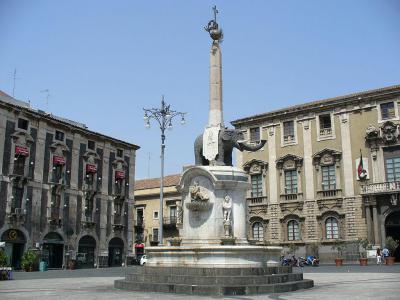
The fountain's centerpiece is a black basalt statue of an elephant, affectionately called U Liotru, a symbol of the city. The origins of Vaccarini's inspiration are debated, with some attributing it to Gian Lorenzo Bernini’s Elephant and Obelisk in Rome, while others see a link to the Hypnerotomachia Poliphili, a Renaissance text.
The fountain’s base, made of white marble, features sculptures representing the Simeto and Amenano rivers, the key to Catania’s identity. The elephant statue itself faces the Cathedral of Saint Agatha, the city's patron saint, with an Egyptian-style obelisk mounted on its back. This granite obelisk, likely from ancient Syene, bears decorative motifs but no decipherable hieroglyphs. Atop the obelisk are symbolic elements: a globe, palm leaves for martyrdom, lilies for purity, and a metal tablet inscribed with a dedication to Saint Agatha, crowned by a cross.
Since its creation, the fountain has undergone multiple renovations, reflecting its central role in Catania’s history. Initially completed in 1737, a marble basin was added in 1757. In 1826, an iron fence and garden were installed, though these were later removed in 1998 to create a more accessible public space. Notably, the fountain narrowly escaped relocation to Piazza Palestro in 1862, thanks to a popular uprising led by Bonaventura Gravina.
Today, the Elephant Fountain stands as a symbol of Catania's spirit, blending history, artistry, and devotion in one iconic monument.
The fountain's centerpiece is a black basalt statue of an elephant, affectionately called U Liotru, a symbol of the city. The origins of Vaccarini's inspiration are debated, with some attributing it to Gian Lorenzo Bernini’s Elephant and Obelisk in Rome, while others see a link to the Hypnerotomachia Poliphili, a Renaissance text.
The fountain’s base, made of white marble, features sculptures representing the Simeto and Amenano rivers, the key to Catania’s identity. The elephant statue itself faces the Cathedral of Saint Agatha, the city's patron saint, with an Egyptian-style obelisk mounted on its back. This granite obelisk, likely from ancient Syene, bears decorative motifs but no decipherable hieroglyphs. Atop the obelisk are symbolic elements: a globe, palm leaves for martyrdom, lilies for purity, and a metal tablet inscribed with a dedication to Saint Agatha, crowned by a cross.
Since its creation, the fountain has undergone multiple renovations, reflecting its central role in Catania’s history. Initially completed in 1737, a marble basin was added in 1757. In 1826, an iron fence and garden were installed, though these were later removed in 1998 to create a more accessible public space. Notably, the fountain narrowly escaped relocation to Piazza Palestro in 1862, thanks to a popular uprising led by Bonaventura Gravina.
Today, the Elephant Fountain stands as a symbol of Catania's spirit, blending history, artistry, and devotion in one iconic monument.
13) At 'Piscaria (Catania Fish Market) (must see)
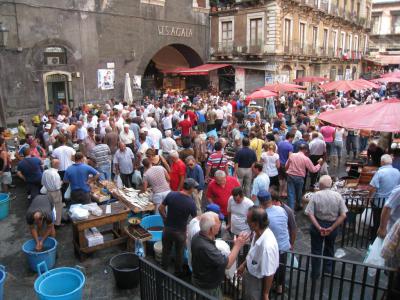
Catania Fish Market has operated continuously since the early 19th century and remains inseparable from the rhythms of the sea. Part of the market unfolds beneath the Tunnel of Charles V, a 16th-century stone passage dug under the Palace of the Seminary of the Clerics and the former defensive walls built during the reign of Emperor Charles V. The vaulted tunnel amplifies sound and smell alike: vendors’ shouted prices echo against lava-stone walls, while the scent of saltwater and fresh fish lingers in the air.
From early morning, stalls spill into surrounding streets, piled high with seafood from the Ionian Sea: swordfish, tuna, sea bass, shrimp, anchovies, clams, mussels, and sea urchins, some of it still moving as it is cleaned and cut on the spot. Vendors compete for attention with loud shouted calls in a lively contest for attention, while water is constantly thrown across the pavement to keep the fish fresh.
In recent years, the Fish Market has also become a place where visitors can actively take part in Catania’s food culture. Travelers often wander through the stalls to watch fishmongers skillfully clean swordfish or open sea urchins, sometimes offering a quick taste of the bright orange roe. Small counters nearby prepare seafood on the spot, frying anchovies, calamari, or shrimp and serving them in paper cones for an easy snack while walking through the market. Some vendors also shuck oysters or slice raw fish for simple tastings. Arriving early in the morning gives visitors the best chance to see the market at full energy, when the stalls are busiest and the day’s catch is still being sorted and sold.
From early morning, stalls spill into surrounding streets, piled high with seafood from the Ionian Sea: swordfish, tuna, sea bass, shrimp, anchovies, clams, mussels, and sea urchins, some of it still moving as it is cleaned and cut on the spot. Vendors compete for attention with loud shouted calls in a lively contest for attention, while water is constantly thrown across the pavement to keep the fish fresh.
In recent years, the Fish Market has also become a place where visitors can actively take part in Catania’s food culture. Travelers often wander through the stalls to watch fishmongers skillfully clean swordfish or open sea urchins, sometimes offering a quick taste of the bright orange roe. Small counters nearby prepare seafood on the spot, frying anchovies, calamari, or shrimp and serving them in paper cones for an easy snack while walking through the market. Some vendors also shuck oysters or slice raw fish for simple tastings. Arriving early in the morning gives visitors the best chance to see the market at full energy, when the stalls are busiest and the day’s catch is still being sorted and sold.
14) Porta Uzeda (Uzeda Gate)
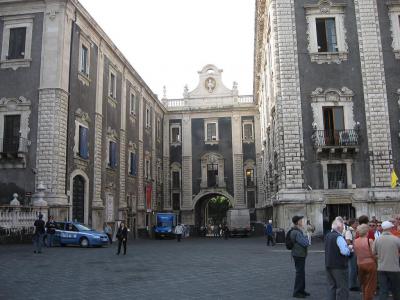
The Uzeda Gate, a striking symbol of Catania, embodies the city’s rich Baroque heritage and resilience. Built in 1695 under the direction of the Duke of Camastra, the gate was commissioned to honor Juan Francisco Pacheco Téllez-Girón, the Duke of Uzeda and viceroy of Sicily (1689–1696), for his pivotal role in rebuilding the city after the catastrophic earthquake of 1693. It was completed in 1696, seamlessly linking Via Etnea to the bustling port.
The gate serves as a connection between the two sections of the old Clerks' Seminary, now housing the Diocesan Museum and Chierici Palace. Its façade is a masterpiece of Catania Baroque architecture, characterized by a harmonious interplay of black lava stone and white marble, mirroring the style of the adjacent Chierici Palace. Nestled within the sixteenth-century city walls originally built under Spanish King Charles V, the Uzeda Gate represents a "new" defensive addition constructed following the 1669 lava flow and the 1693 earthquake.
Uzeda Gate’s location is as iconic as its design. It bridges Cathedral Square (Piazza Duomo) with Dusmet Street (Via Dusmet), offering breathtaking views from its connecting bridge. Visitors can admire the Baroque skyline of Catania and the majestic Mount Etna to the north, while the arches of the Marina and the shimmering sea extend to the south.
The gate’s history is intertwined with the governance of the Spanish Viceroys in Sicily (1412–1830). Though dedicated to the Duke of Uzeda as a tribute to his reconstruction efforts, local chronicles from the 18th century suggest that his strict rule was not universally appreciated. Nevertheless, the Uzeda Gate remains a testament to his enduring legacy and a key architectural jewel in the heart of Catania.
The gate serves as a connection between the two sections of the old Clerks' Seminary, now housing the Diocesan Museum and Chierici Palace. Its façade is a masterpiece of Catania Baroque architecture, characterized by a harmonious interplay of black lava stone and white marble, mirroring the style of the adjacent Chierici Palace. Nestled within the sixteenth-century city walls originally built under Spanish King Charles V, the Uzeda Gate represents a "new" defensive addition constructed following the 1669 lava flow and the 1693 earthquake.
Uzeda Gate’s location is as iconic as its design. It bridges Cathedral Square (Piazza Duomo) with Dusmet Street (Via Dusmet), offering breathtaking views from its connecting bridge. Visitors can admire the Baroque skyline of Catania and the majestic Mount Etna to the north, while the arches of the Marina and the shimmering sea extend to the south.
The gate’s history is intertwined with the governance of the Spanish Viceroys in Sicily (1412–1830). Though dedicated to the Duke of Uzeda as a tribute to his reconstruction efforts, local chronicles from the 18th century suggest that his strict rule was not universally appreciated. Nevertheless, the Uzeda Gate remains a testament to his enduring legacy and a key architectural jewel in the heart of Catania.
15) Piazza Duomo (Cathedral Square) (must see)
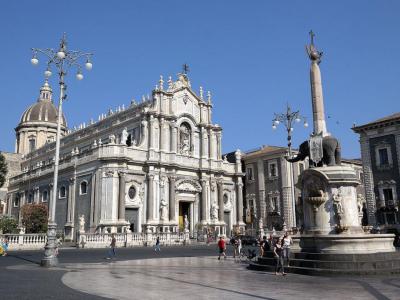
Cathedral Square is a civic and symbolic space where the city’s past and everyday rhythm come together in a single open setting. Rebuilt after the devastating earthquake of 1693, the square is a showcase of Sicilian Baroque, shaped largely in the 18th century as part of Catania’s comprehensive rebuilding plan. Its layout is defined by symmetry, broad sightlines, and a strong sense of order, framed by elegant façades and paved in pale stone that reflects the Mediterranean light.
At the center of the square stands the Elephant Fountain, Catania’s most recognizable symbol. Carved from dark lava stone in the 18th century, the elephant, known locally as Liotru, supports an ancient Egyptian obelisk whose hieroglyphs predate the city itself and echoes the city’s long relationship with Mount Etna.
On the north side of Cathedral Square rises the Elephants’ Palace, which serves as Catania’s City Hall. Built in the 18th century after the earthquake, the palace takes its name from the Elephant Fountain and continues to function as the seat of municipal government, reinforcing the square’s civic role. On the south side, stands the Palace of the Clerics, originally built to house members of the cathedral clergy and today forming part of the architectural frame of the square.
Together with the nearby Cathedral of Saint Agatha, these buildings form a cohesive architectural ensemble that reinforces both the civic and religious importance of this place. Cathedral Square is also a place of constant movement. Cafés line the edges of the square, while the nearby Fish Market fills the surrounding streets with sound, color, and activity.
At the center of the square stands the Elephant Fountain, Catania’s most recognizable symbol. Carved from dark lava stone in the 18th century, the elephant, known locally as Liotru, supports an ancient Egyptian obelisk whose hieroglyphs predate the city itself and echoes the city’s long relationship with Mount Etna.
On the north side of Cathedral Square rises the Elephants’ Palace, which serves as Catania’s City Hall. Built in the 18th century after the earthquake, the palace takes its name from the Elephant Fountain and continues to function as the seat of municipal government, reinforcing the square’s civic role. On the south side, stands the Palace of the Clerics, originally built to house members of the cathedral clergy and today forming part of the architectural frame of the square.
Together with the nearby Cathedral of Saint Agatha, these buildings form a cohesive architectural ensemble that reinforces both the civic and religious importance of this place. Cathedral Square is also a place of constant movement. Cafés line the edges of the square, while the nearby Fish Market fills the surrounding streets with sound, color, and activity.
16) Cathedral of Catania (must see)
Catania Cathedral, officially the Cathedral of Saint Agatha, stands as both the city’s main religious landmark and a witness to centuries of upheaval. The site has been sacred since the Norman period, when the first cathedral was completed in the 11th century. Repeated earthquakes and eruptions from Mount Etna caused extensive damage, most dramatically in 1169 and in the catastrophic earthquake of 1693. Rather than erasing its past, each reconstruction added another layer.
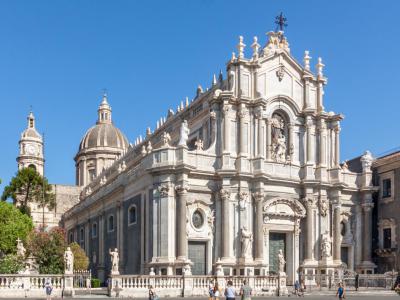
The present building is a refined example of Sicilian Baroque, shaped largely in the early 18th century. The façade, designed by Giovanni Battista Vaccarini after 1693, rises in three tiers articulated by columns and niches, with pale limestone set against darker volcanic stone. The broad parvis is edged by a white stone balustrade and lined with Carrara marble statues of saints. The central wooden door is carved with panels illustrating episodes from the life of Saint Agatha. The dome was completed in the early 19th century and the bell tower rebuilt following earlier collapses.
Inside, the cathedral follows a Latin cross plan with three naves. The austere rhythm of columns leads toward an apse that dates back to the 12th century, preserving traces of the medieval structure. Several chapels punctuate the interior, including the Chapel of the Holy Crucifix in the north transept. The cathedral also houses, close to the right transept, the tomb of Vincenzo Bellini, Catania’s most celebrated composer, as well as the burial places of King Frederick III of Sicily, John of Randazzo, and Constance of Aragon.
Saint Agatha herself remains central to the cathedral’s meaning. According to tradition, she was a young noblewoman who refused the advances of the Roman prefect Quintianus and was martyred in the 3rd century. Local belief holds that she continues to protect Catania from enemies, injustice, and even Mount Etna. This faith is captured in the letters carved into the façade: N.O.P.A.Q.V.I.E., an acronym of a Latin phrase affirming that Agatha avenges wrongs committed against her land.
The present building is a refined example of Sicilian Baroque, shaped largely in the early 18th century. The façade, designed by Giovanni Battista Vaccarini after 1693, rises in three tiers articulated by columns and niches, with pale limestone set against darker volcanic stone. The broad parvis is edged by a white stone balustrade and lined with Carrara marble statues of saints. The central wooden door is carved with panels illustrating episodes from the life of Saint Agatha. The dome was completed in the early 19th century and the bell tower rebuilt following earlier collapses.
Inside, the cathedral follows a Latin cross plan with three naves. The austere rhythm of columns leads toward an apse that dates back to the 12th century, preserving traces of the medieval structure. Several chapels punctuate the interior, including the Chapel of the Holy Crucifix in the north transept. The cathedral also houses, close to the right transept, the tomb of Vincenzo Bellini, Catania’s most celebrated composer, as well as the burial places of King Frederick III of Sicily, John of Randazzo, and Constance of Aragon.
Saint Agatha herself remains central to the cathedral’s meaning. According to tradition, she was a young noblewoman who refused the advances of the Roman prefect Quintianus and was martyred in the 3rd century. Local belief holds that she continues to protect Catania from enemies, injustice, and even Mount Etna. This faith is captured in the letters carved into the façade: N.O.P.A.Q.V.I.E., an acronym of a Latin phrase affirming that Agatha avenges wrongs committed against her land.
