Custom Walk in Santa Cruz de Tenerife, Spain by wluengen_22e3ad created on 2026-06-18
Guide Location: Spain » Santa Cruz de Tenerife
Guide Type: Custom Walk
# of Sights: 13
Tour Duration: 3 Hour(s)
Travel Distance: 6.7 Km or 4.2 Miles
Share Key: VJUCU
Guide Type: Custom Walk
# of Sights: 13
Tour Duration: 3 Hour(s)
Travel Distance: 6.7 Km or 4.2 Miles
Share Key: VJUCU
How It Works
Please retrieve this walk in the GPSmyCity app. Once done, the app will guide you from one tour stop to the next as if you had a personal tour guide. If you created the walk on this website or come to the page via a link, please follow the instructions below to retrieve the walk in the app.
Retrieve This Walk in App
Step 1. Download the app "GPSmyCity: Walks in 1K+ Cities" on Apple App Store or Google Play Store.



Step 2. In the GPSmyCity app, download(or launch) the guide "Santa Cruz de Tenerife Map and Walking Tours".
Step 3. Tap the menu button located at upper right corner of the "Walks" screen and select "Retrieve custom walk". Enter the share key: VJUCU
1) Plaza de España (Spain Square) (must see)
On July 25, 1797, British Rear Admiral Horatio Nelson lost his right arm to a musket ball fired from the Tiger Cannon of the Castle of San Cristobal in the Battle of Santa Cruz de Tenerife. The Admiral had attempted an amphibious landing to take the town. He lost the battle and his arm.
The Spain Square was laid down over the Castle of San Cristobal in 1929. Remains of the castle walls are on display in a tunnel under the square. The notorious Tiger Cannon is also there, looking fine after all these years. The square is located in the center of town. It is one of the main squares of the island of Tenerife.
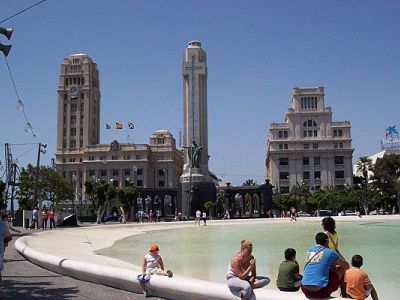
The square is the work of architects Jacques Herzog and Pierre de Meuron of Herzog & Meuron of Switzerland. The Plaza has a lake and a fountain. Around the square is the Insular Palace of Tenerife, the Palace of the Charter and the Candelaria Square. The Monument to the Fallen of the Spanish Civil War is in the center of the square.
A sign, reading "Santa Cruz" (short for the slogan "Sant Cruz, the heart of Tenerife") is at one end of the square. The last letter of the word "Santa" is in the form of two hearts, one green, one blue. A sculpture "I AM Fine (Lo Llevo bien)" by Basque artist Julio Nieto is next to the lake. It is a man in the shape of a tree, a symbol of optimism.
The Spain Square was laid down over the Castle of San Cristobal in 1929. Remains of the castle walls are on display in a tunnel under the square. The notorious Tiger Cannon is also there, looking fine after all these years. The square is located in the center of town. It is one of the main squares of the island of Tenerife.
The square is the work of architects Jacques Herzog and Pierre de Meuron of Herzog & Meuron of Switzerland. The Plaza has a lake and a fountain. Around the square is the Insular Palace of Tenerife, the Palace of the Charter and the Candelaria Square. The Monument to the Fallen of the Spanish Civil War is in the center of the square.
A sign, reading "Santa Cruz" (short for the slogan "Sant Cruz, the heart of Tenerife") is at one end of the square. The last letter of the word "Santa" is in the form of two hearts, one green, one blue. A sculpture "I AM Fine (Lo Llevo bien)" by Basque artist Julio Nieto is next to the lake. It is a man in the shape of a tree, a symbol of optimism.
2) Plaza de la Candelaria (Candelaria Square)
Forty days after Christmas is the celebration of the Candelaria. This is the day when Mary, mother of Jesus, presented her infant son in the temple for the first time. In the Canary Islands Candelaria is also observed on August 15th, the day of the Assumption. Before the Spanish conquest, August 15th was the harvest feast of the indigenous people.
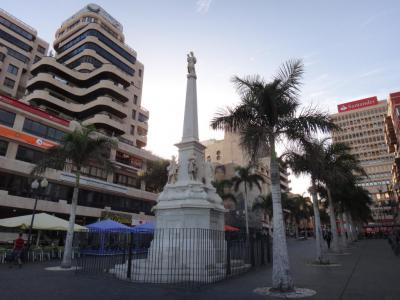
The Candelaria Square is located next to the Spain Square. Featured in the square is the monument, Triumph of Candelaria. It is in the form of an obelisk of white marble sculpted by the artist, Pasquale Bocciardo, in 1768.
Originally the obelisk was 36 feet high, mounted on a square base. Currently it is 13 feet tall. Four marble statues of indigenous Guanche people are at the base venerating the image of Mary atop the obelisk. In May the "Feast of May" is held in the square memorializing the founding of the city.
The Candelaria Square is located next to the Spain Square. Featured in the square is the monument, Triumph of Candelaria. It is in the form of an obelisk of white marble sculpted by the artist, Pasquale Bocciardo, in 1768.
Originally the obelisk was 36 feet high, mounted on a square base. Currently it is 13 feet tall. Four marble statues of indigenous Guanche people are at the base venerating the image of Mary atop the obelisk. In May the "Feast of May" is held in the square memorializing the founding of the city.
3) Castillo de San Cristóbal (Castle of San Cristóbal)
The Castle of San Cristóbal served as the city’s main line of defense against invaders for centuries. Built in 1575 on the orders of King Philip II, this coastal fortress helped shape the early history of Tenerife and played a crucial role during key events-most famously repelling Admiral Horatio Nelson’s attack in 1797.
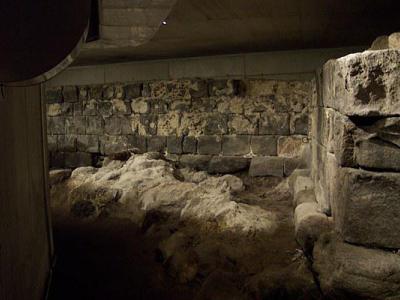
Today, the original structure is largely gone, but its legacy lives on beneath the Spain Square. Visitors can explore the Castle of San Cristóbal Interpretation Centre, where sections of the old walls remain preserved underground. The exhibition space uses models, artifacts, and interactive displays to illuminate the daily life of the fortress, recounting stories of sieges, cannons, and the strategic importance of Santa Cruz’s harbor.
A highlight of the visit is the chance to see the iconic “Tiger Cannon”, the historic castel's bronze cannon, which, according to legend, helped wound Nelson himself, by losing his right arm.
Today, the original structure is largely gone, but its legacy lives on beneath the Spain Square. Visitors can explore the Castle of San Cristóbal Interpretation Centre, where sections of the old walls remain preserved underground. The exhibition space uses models, artifacts, and interactive displays to illuminate the daily life of the fortress, recounting stories of sieges, cannons, and the strategic importance of Santa Cruz’s harbor.
A highlight of the visit is the chance to see the iconic “Tiger Cannon”, the historic castel's bronze cannon, which, according to legend, helped wound Nelson himself, by losing his right arm.
4) Almeida Castle and Military Museum
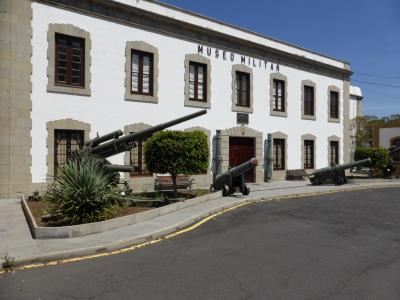
Regional Military Museum is located in the historic Almeida Castle completed in 1884 occupying the Almeida quarter, in the northern part of the city.
In 1854, the construction of the Fort of Almeyda was decided, and on April 21 the engineer colonel Clavijo y Plo presented his project, approved on September 22 of that year, starting the work on November 6. In 1884 the work was terminated, although by then it no longer had much military value, due to improvements in artillery techniques and population growth.
To the west it has a fort that dominates with its fires a small valley formed by the mountains that rise in its vicinity. It belongs to the Vauban system , its semicircular plan being closed by the diameter with the main facade, with two floors. To the east there is a single-storey corrugated front and a battery was built on the upper esplanade; to the north another crenellated front and three casemates with two floors; in the west three single-storey casemates and in the gorge the defensive barracks.
The Military Museum (Museo Militar) was founded in 1988 and is one of the best Canarien cartography research centers, and a great depository of armaments and objects invoking the military history of the islands, with respect to the successful defence of the city. The most referred exhibit items are the El Tigre (The Tiger) artillery-type weapon and a scale replica of the flagship Theseus. There is also an exposition dedicated to the life of Admiral Nelson, a collection of flags as well as early paintings by Canarien artists.
In 1854, the construction of the Fort of Almeyda was decided, and on April 21 the engineer colonel Clavijo y Plo presented his project, approved on September 22 of that year, starting the work on November 6. In 1884 the work was terminated, although by then it no longer had much military value, due to improvements in artillery techniques and population growth.
To the west it has a fort that dominates with its fires a small valley formed by the mountains that rise in its vicinity. It belongs to the Vauban system , its semicircular plan being closed by the diameter with the main facade, with two floors. To the east there is a single-storey corrugated front and a battery was built on the upper esplanade; to the north another crenellated front and three casemates with two floors; in the west three single-storey casemates and in the gorge the defensive barracks.
The Military Museum (Museo Militar) was founded in 1988 and is one of the best Canarien cartography research centers, and a great depository of armaments and objects invoking the military history of the islands, with respect to the successful defence of the city. The most referred exhibit items are the El Tigre (The Tiger) artillery-type weapon and a scale replica of the flagship Theseus. There is also an exposition dedicated to the life of Admiral Nelson, a collection of flags as well as early paintings by Canarien artists.
5) Parque García Sanabria (García Sanabria Park)
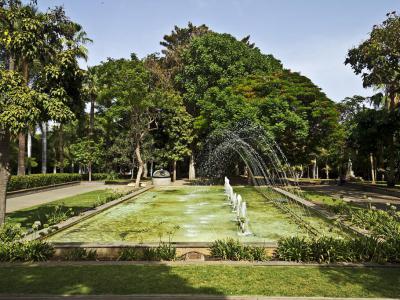
Garcia Sanabria Park is a large area of gardens, fountains and what might be called "architectural groups." It is named for mayor Garcia Sanabria, who enabled its construction. The park covers an area of more than 67,000 square feet. In 1973 an international exhibition of thirteen sculptures were unveiled in the park.
The park also features a floral clock. It was made in Switzerland and donated to Tenerife by the Consul of Denmark in 1958. Two staircases are on either side of the clock. The clock is continually replanted throughout the year so it is always blooming. The central fountain of the park is directly behind the clock.
The Fernando Pessoa Square is right by the park. Fernando Pessoa was a famous Portuguese poet and writer who wrote prolifically in French, Spanish and English as well as Portuguese. The square is a representation of the astral situation when Lisbon was founded. It shows the position of the planets and the signs of the zodiac.
The park also features a floral clock. It was made in Switzerland and donated to Tenerife by the Consul of Denmark in 1958. Two staircases are on either side of the clock. The clock is continually replanted throughout the year so it is always blooming. The central fountain of the park is directly behind the clock.
The Fernando Pessoa Square is right by the park. Fernando Pessoa was a famous Portuguese poet and writer who wrote prolifically in French, Spanish and English as well as Portuguese. The square is a representation of the astral situation when Lisbon was founded. It shows the position of the planets and the signs of the zodiac.
6) Rambla de Santa Cruz (Santa Cruz Avenue)
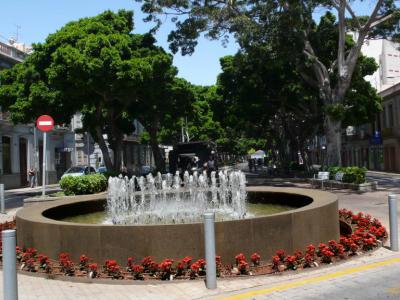
The Santa Cruz Avenue began its ramble in 1661. It is still the main road in Santa Cruz de Tenerife today. It goes from Peace Square (Plaza de la Paz) to Anaga Avenue (Avenida de Anaga). There is no lack of interesting sculptures along the way and a sea of bright flowers. The longitudinal center of the avenue is a wide parkway with driving lanes on each side.
The promenade is vast, nearly two kilometers long. It is the lengthiest avenue of its like in the Canary Islands. It is an easy walk from the port. It connects with Garcia Sanabria Park along the way. It is bordered by tall trees. There are benches and kiosks selling magazines and things to eat.
There are large chain stores along the avenue but there are also many side streets for more adventuresome shoppers. While the center mall may be restful, it is still a busy avenue. Still no comparison to a noisy Barcelona Rambla, but there is a tad more serenity.
The promenade is vast, nearly two kilometers long. It is the lengthiest avenue of its like in the Canary Islands. It is an easy walk from the port. It connects with Garcia Sanabria Park along the way. It is bordered by tall trees. There are benches and kiosks selling magazines and things to eat.
There are large chain stores along the avenue but there are also many side streets for more adventuresome shoppers. While the center mall may be restful, it is still a busy avenue. Still no comparison to a noisy Barcelona Rambla, but there is a tad more serenity.
7) Plaza Weyler & Fuente (Weyler Square and Fountain)
Spanish General Valeriano Weyler, Captain General of the Canary Islands, had experience in building buildings before he ordered the construction of the Palace of the Captaincy General in Santa Cruz de Tenerife. He had been Captain General of Cuba during the Cuban War of Independence.
Clearly, Valeriano Weyler was a man who could get things done. Weyler Square was built in 1893 by Vincente Armino. The square has an area of 3600 square meters and it connects to the Castillo Street, an important commercial avenue. The square originally was intended to be a forecourt to the neoclassical Captaincy General. It was provided with a circular, simple fountain in 1883, which was replaced by a new fountain in 1899.
The replacement fountain is luxurious and it was expensive. More than 11,000 lire was raised through donations, raffles, dances and bazaars. They even had to sell the lumber taken from the soldiers' temporary barracks.
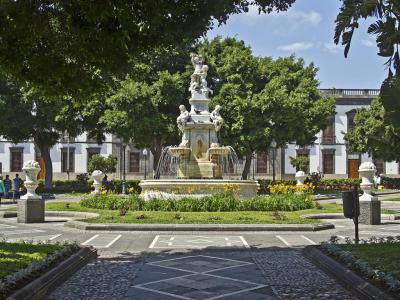
The finished monumental fountain, made by Achille Canessa of Genoa, is of Carrera marble. A bit neo-Renaissance, it is in two sections, a central pillar and a basin. Atop the pillar are children holding flowers. On each of the four corners of the square base is a child holding a dolphin spewing water which falls into shells in the wide basin.
Clearly, Valeriano Weyler was a man who could get things done. Weyler Square was built in 1893 by Vincente Armino. The square has an area of 3600 square meters and it connects to the Castillo Street, an important commercial avenue. The square originally was intended to be a forecourt to the neoclassical Captaincy General. It was provided with a circular, simple fountain in 1883, which was replaced by a new fountain in 1899.
The replacement fountain is luxurious and it was expensive. More than 11,000 lire was raised through donations, raffles, dances and bazaars. They even had to sell the lumber taken from the soldiers' temporary barracks.
The finished monumental fountain, made by Achille Canessa of Genoa, is of Carrera marble. A bit neo-Renaissance, it is in two sections, a central pillar and a basin. Atop the pillar are children holding flowers. On each of the four corners of the square base is a child holding a dolphin spewing water which falls into shells in the wide basin.
8) Calle del Castillo (Castle Street)
Castle Street is named for the Castillo Cristobal, built in 1575 and demolished in 1929 to make way for the Spain Square. Castle Street is among the oldest streets in the city of Santa Cruz. It extends from Weyler Square to Plaza Candelaria Square and ends in Spain Square.
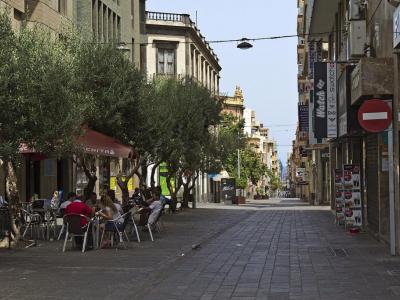
Castle Street is a pedestrian street in the heart of the city. It has always been a shopping street. It features international franchise stores and local retailers. Buildings on the street are a fish-mash of styles: Canadian, Victorian, neoclassical, Moorish revival, etc.
Castle Street is a street where one can find literally everything, from clothes to Canary Islands food specialties. Combine shopping with sightseeing. End the shopping expedition at the Spain Square. Go under the square and check out the remains of the original castillo.
Castle Street is a pedestrian street in the heart of the city. It has always been a shopping street. It features international franchise stores and local retailers. Buildings on the street are a fish-mash of styles: Canadian, Victorian, neoclassical, Moorish revival, etc.
Castle Street is a street where one can find literally everything, from clothes to Canary Islands food specialties. Combine shopping with sightseeing. End the shopping expedition at the Spain Square. Go under the square and check out the remains of the original castillo.
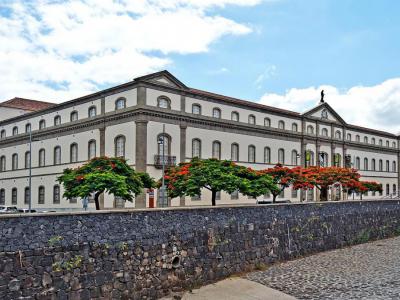
9) Museo de la Naturaleza y Arqueologia (Museum of Nature and Archaeology) (must see)
The Museum of Nature and Archeology is better known locally by its former name, the Museum of Nature and Man. The name was changed officially in November 2018 to give the museum a more inclusive image. The museum was founded in 1958. Its first director was Luis Diego Cuscoy. Luis's specialty was human prehistory remains, i.e., mummies.
The museum has a vast collection of mummies of the indigenous peoples of the Canary Islands, the Guanches. The stars of the collection are the mummy kings, the Menceyes, and the artifacts entombed with them. The ornaments, pottery, tools and weapons reveal the history of the Guanche culture from the beginnings to the conquest of the islands.
The museum is located in downtown Santa Cruz in the old neoclassical Civil Hospital building. The museum is internationally famous. It is considered to be the most important museum of Macaronesia, the volcanic island archipelagos of the Atlantic.
The museum also has a fine collection of prehistoric fossils peculiar to the Canary Islands, including the Giant Lizard of Tenerife, the Tenerife Giant Tortise, a Megladon Shark tooth, lots of trilobites and the ever popular Giant Rat.
The museum has a vast collection of mummies of the indigenous peoples of the Canary Islands, the Guanches. The stars of the collection are the mummy kings, the Menceyes, and the artifacts entombed with them. The ornaments, pottery, tools and weapons reveal the history of the Guanche culture from the beginnings to the conquest of the islands.
The museum is located in downtown Santa Cruz in the old neoclassical Civil Hospital building. The museum is internationally famous. It is considered to be the most important museum of Macaronesia, the volcanic island archipelagos of the Atlantic.
The museum also has a fine collection of prehistoric fossils peculiar to the Canary Islands, including the Giant Lizard of Tenerife, the Tenerife Giant Tortise, a Megladon Shark tooth, lots of trilobites and the ever popular Giant Rat.
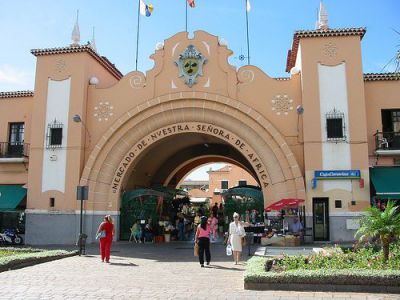
10) Mercado Nuestra Señora de Africa (Market of Our Lady of Africa) (must see)
By the ornate entrance arch of the Market of Our Lady of Africa are two sculptures. First, La Lechera ("Milkmaid"), is a shoeless woman hurrying along, a jug in one hand while supporting with the other hand a basket of dairy products on her head. It is in honor of the generations of hard-working milkmaids of Tenerife.
The second sculpture, Homenaje Al Chicharrero ("People of Santa Cruz"), is of two fishermen launching a boat in the surf. The main catch in the old days was horse mackerel, locally known as "chicharos." At one time Santa Cruz was a fishing village. It produced poverty and fish, and was generally looked down on by folks in the city.
The Market of our Lady of Africa is dedicated to food and the people who produce it. Founded in 1944, it is housed in an exotic building of arches and patios with Latin American and Moorish touches. A minaret-like clock tower announces the location of the market. For drivers, there is underground parking with stairs to the market.
Stalls and shops are housed on two busy floors offering fresh produce, flowers, fruit, fish, bread, cheeses, wines and yes, cold cuts. There are also lots of deli offerings, including salsa, cactus marmalade, honey, and spices. For hungry shoppers who can't wait, there are restaurants and tasting stalls.
The second sculpture, Homenaje Al Chicharrero ("People of Santa Cruz"), is of two fishermen launching a boat in the surf. The main catch in the old days was horse mackerel, locally known as "chicharos." At one time Santa Cruz was a fishing village. It produced poverty and fish, and was generally looked down on by folks in the city.
The Market of our Lady of Africa is dedicated to food and the people who produce it. Founded in 1944, it is housed in an exotic building of arches and patios with Latin American and Moorish touches. A minaret-like clock tower announces the location of the market. For drivers, there is underground parking with stairs to the market.
Stalls and shops are housed on two busy floors offering fresh produce, flowers, fruit, fish, bread, cheeses, wines and yes, cold cuts. There are also lots of deli offerings, including salsa, cactus marmalade, honey, and spices. For hungry shoppers who can't wait, there are restaurants and tasting stalls.
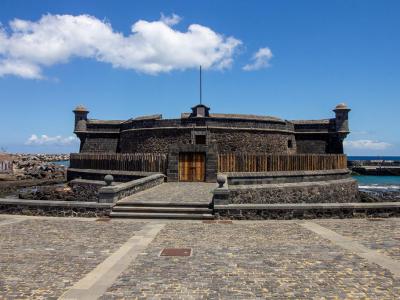
11) Castillo de San Juan Bautista (Castle of John Baptist)
The Castle of John Baptist, also known as the Black Castle, is a 17th-century coastal fortress. Built between 1641 and 1644 from locally sourced black volcanic stone, this round bastion was designed to safeguard the port from pirates and foreign navies. In 1765, its defensive strength was enhanced with the addition of a cylindrical tower overlooking the sea.
Today, the fortress stands as one of the best-preserved military monuments on the island. Most notably, every July 25, the castle comes to life with a theatrical reenactment of Admiral Horatio Nelson’s failed 1797 invasion-offering a captivating glimpse into Tenerife’s storied past. Even though it is currently closed for interior visits, its historical significance and unique architecture make it a noteworthy landmark in the city.
Today, the fortress stands as one of the best-preserved military monuments on the island. Most notably, every July 25, the castle comes to life with a theatrical reenactment of Admiral Horatio Nelson’s failed 1797 invasion-offering a captivating glimpse into Tenerife’s storied past. Even though it is currently closed for interior visits, its historical significance and unique architecture make it a noteworthy landmark in the city.
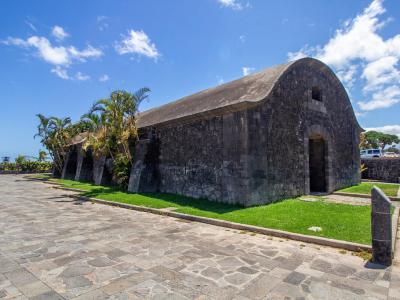
12) Casa de la Pólvora (Gunpowder House)
The Gunpowder House is a hidden gem of 18th-century military architecture. Constructed between 1756 and 1758 under the direction of engineer Francisco La Pierre, this robust structure was originally built to store artillery powder for the city’s coastal defences. Its rectangular basalt stone construction, rounded end walls, and barrel-vaulted roof provided a fire-resistant chamber capable of holding up to 150 000 kg of gunpowder while withstanding potential bombardment.
In 1779, additional earthworks were added to mask the building from naval view and absorb enemy cannon fire, ensuring the safety of its volatile contents. For roughly 150 years, the Gunpowder House served as the island’s primary powder magazine. In 1926, by royal decree, control transferred from the military to the city council, marking the end of its direct military use.
Today, the Gunpowder House remains one of the few surviving fortification buildings. While the interior is not currently open to visitors, the exterior and its scenic riverside gardens offer a glimpse into Tenerife’s defensive past.
In 1779, additional earthworks were added to mask the building from naval view and absorb enemy cannon fire, ensuring the safety of its volatile contents. For roughly 150 years, the Gunpowder House served as the island’s primary powder magazine. In 1926, by royal decree, control transferred from the military to the city council, marking the end of its direct military use.
Today, the Gunpowder House remains one of the few surviving fortification buildings. While the interior is not currently open to visitors, the exterior and its scenic riverside gardens offer a glimpse into Tenerife’s defensive past.
13) Palmetum (Botanical Garden) (must see)
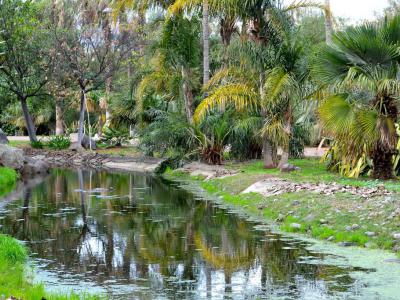
Located on an artificial hill of the city, the Palmetum is an botanical garden dedicated to palm trees-from classic Canarian date palms to rare island species from Madagascar, the Caribbean, Oceania, Asia, Africa and beyond. What once served as the city's landfill, closed in 1983, has been transformed through a remarkable ecological restoration project initiated in 1995-now flourishing with over 500 palm species.
Visitors can wander through lush, biogeographically themed sections that mimic their native habitats, complete with streams, ponds, waterfalls, and scenic lookouts overlooking the Atlantic Ocean and city skyline. The centrepiece is the “Octagon” a subterranean shade house, designed to nurture the most moisture-dependent species with a maze of jungle-like trails, bridges, and cascades.
Alongside its visual splendor, the Palmetum serves as a vital conservation and educational location. It operates a museum focused on palm ethnobotany, engages in ex situ propagation of endangered species, and functions as a research centre. Irrigation relies solely on recycled water, chemical use is prohibited, and native birds such as herons and hoopoes have flourished within its verdant grounds.
Visitors can wander through lush, biogeographically themed sections that mimic their native habitats, complete with streams, ponds, waterfalls, and scenic lookouts overlooking the Atlantic Ocean and city skyline. The centrepiece is the “Octagon” a subterranean shade house, designed to nurture the most moisture-dependent species with a maze of jungle-like trails, bridges, and cascades.
Alongside its visual splendor, the Palmetum serves as a vital conservation and educational location. It operates a museum focused on palm ethnobotany, engages in ex situ propagation of endangered species, and functions as a research centre. Irrigation relies solely on recycled water, chemical use is prohibited, and native birds such as herons and hoopoes have flourished within its verdant grounds.
