Custom Walk in Helsinki, Finland by bibimalallah_fec2a created on 2026-06-19
Guide Location: Finland » Helsinki
Guide Type: Custom Walk
# of Sights: 16
Tour Duration: 4 Hour(s)
Travel Distance: 9.2 Km or 5.7 Miles
Share Key: GR2MT
Guide Type: Custom Walk
# of Sights: 16
Tour Duration: 4 Hour(s)
Travel Distance: 9.2 Km or 5.7 Miles
Share Key: GR2MT
How It Works
Please retrieve this walk in the GPSmyCity app. Once done, the app will guide you from one tour stop to the next as if you had a personal tour guide. If you created the walk on this website or come to the page via a link, please follow the instructions below to retrieve the walk in the app.
Retrieve This Walk in App
Step 1. Download the app "GPSmyCity: Walks in 1K+ Cities" on Apple App Store or Google Play Store.



Step 2. In the GPSmyCity app, download(or launch) the guide "Helsinki Map and Walking Tours".
Step 3. Tap the menu button located at upper right corner of the "Walks" screen and select "Retrieve custom walk". Enter the share key: GR2MT
1) Stockmann
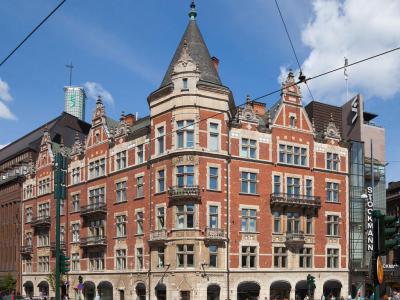
The Stockmann Helsinki Centre stands out as a significant cultural and commercial hub in downtown Helsinki. It's owned by the Stockmann corporation and is not only a part of their collection of stores but also a landmark in the Nordic region due to its size and sales figures. Stockmann is renowned for offering a wide range of luxury brands, making it a top choice for high-end shopping in Finland.
The Stockmann Delicatessen, located in the basement, is highly regarded for its quality and diverse selection of food items. Contrary to popular belief, the Stockmann logo, featuring escalators, doesn't signify the introduction of Finland's first escalators, a milestone achieved by the Forum department store in Turku back in 1926.
In 2017, the Stockmann Helsinki Centre was recognized as the fifth largest department store in Europe, covering an area of 50,500 square meters. One of its notable features is the clock at the main entrance, affectionately known as "Stockan kello" ("Stocka's clock"), which has become a symbol of Helsinki's urban culture and a popular meeting spot.
The history of the Stockmann department store is both triumphant and tragic. The original designers, Valter Thomé and his brother, won a competition to design the store in 1916 but tragically lost their lives during the Finnish Civil War. Sigurd Frosterus, initially the runner-up, took over and completed the construction in 1930. The building showcases Nordic Art Deco style, reflecting elegance and historical significance. Located in the Kluuvi district as part of the Gazelle block, the store's design and expansions have remained faithful to Frosterus's original vision, preserving its architectural integrity and aesthetic appeal over the years.
The Stockmann Delicatessen, located in the basement, is highly regarded for its quality and diverse selection of food items. Contrary to popular belief, the Stockmann logo, featuring escalators, doesn't signify the introduction of Finland's first escalators, a milestone achieved by the Forum department store in Turku back in 1926.
In 2017, the Stockmann Helsinki Centre was recognized as the fifth largest department store in Europe, covering an area of 50,500 square meters. One of its notable features is the clock at the main entrance, affectionately known as "Stockan kello" ("Stocka's clock"), which has become a symbol of Helsinki's urban culture and a popular meeting spot.
The history of the Stockmann department store is both triumphant and tragic. The original designers, Valter Thomé and his brother, won a competition to design the store in 1916 but tragically lost their lives during the Finnish Civil War. Sigurd Frosterus, initially the runner-up, took over and completed the construction in 1930. The building showcases Nordic Art Deco style, reflecting elegance and historical significance. Located in the Kluuvi district as part of the Gazelle block, the store's design and expansions have remained faithful to Frosterus's original vision, preserving its architectural integrity and aesthetic appeal over the years.
2) Helsinki Forum
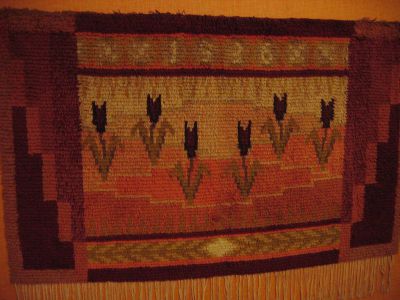
A ryija rug is an art form unique to Finland. While there is some similarity to Persian carpets, the ryija knots are farther apart and much larger and longer. Slices and splashes of vibrant colors are used in dyes which add great color intensity and variation. Yellow, green, red and blue are popular colors employed in different patterns but there are many other colors available, too. Geometric shapes are often used along with figures of humans, animals, and birds.
Ryija rugs can be hung as handsome wall hangings or used as couch or bed spreads. Basically they are a decorative feature so they aren’t used on floors. Wool is the basic material used to make ryija rug, but new fibers have come into play. This is a question one should ask when buying ryija rugs.
Ryija rugs can be found in the Helsinki Forum, located on Mannerheimintie 20, and in other shops. You can shop both by price, size, and color variation, often depending on what the planned use is for. These rugs make excellent gift items. Price starts from $20 and up.
What to buy here: Ryija rugs/wall hangings.
Ryija rugs can be hung as handsome wall hangings or used as couch or bed spreads. Basically they are a decorative feature so they aren’t used on floors. Wool is the basic material used to make ryija rug, but new fibers have come into play. This is a question one should ask when buying ryija rugs.
Ryija rugs can be found in the Helsinki Forum, located on Mannerheimintie 20, and in other shops. You can shop both by price, size, and color variation, often depending on what the planned use is for. These rugs make excellent gift items. Price starts from $20 and up.
What to buy here: Ryija rugs/wall hangings.
3) Alko
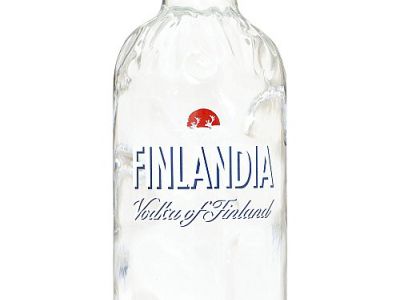
Some Finnish vodka is made from Arctic-grown berries. Their taste is distinctive, heavy and often sweet. They are most likely appreciated by those with a sweet tooth or are served with desserts and as an after-dinner drink in small liqueur glasses.
The Finnish vodka made from Arctic-grown berries are rarely found outside of Finland and they are not sold in all the store in Helsinki either, so you need to know where to go to find them.
One store where you can find such Finnish Vodka is Alko at Salmisaarennaukio 1. Please check the label on the bottle to make sure that it is made from Arctic-grown berries.
What to buy here: Finnish Vodka.
The Finnish vodka made from Arctic-grown berries are rarely found outside of Finland and they are not sold in all the store in Helsinki either, so you need to know where to go to find them.
One store where you can find such Finnish Vodka is Alko at Salmisaarennaukio 1. Please check the label on the bottle to make sure that it is made from Arctic-grown berries.
What to buy here: Finnish Vodka.
4) Ruoholahti Shopping Centre
What to buy here: Packed Karelian Pasties.
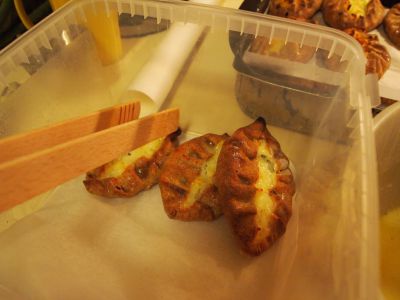
Karelia is a region in eastern Finland bordering on Russia. The area is deservedly famous for its traditional and tasty pasties which are also called Kirelian piirakkas; note, though that there are other piirakka variations than the Karelian version. A steady consumption of these rich foods, sometimes sold in street stalls, may add some unwelcome weight but visitors are usually quite ready to try one. They can be habit forming as the pasties are simple, hearty and delicious. They also offer different taste sensations.
The pasties are made from a thin rye crust with a filling of rice. Butter, often mixed with a boiled egg, is spread over the heated pastie. Crusty ridges, rising in a small pyramidal shape, can surround the oblong shaped pastie. Variations include being topped with a variety of Finnish cheeses, slices of ham, roast reindeer, shrimp, or Arctic berries like lingonberry, cloudberry, and blueberry. Trying one kind often leads to trying others.
You can find packed Karelian pasties boxes in many stores, such as the Ruoholahti Shopping Centre. They’re easily transported, and make excellent gifts. A basic six-piece package with either rice or potato filling will cost around $6-7.
Karelia is a region in eastern Finland bordering on Russia. The area is deservedly famous for its traditional and tasty pasties which are also called Kirelian piirakkas; note, though that there are other piirakka variations than the Karelian version. A steady consumption of these rich foods, sometimes sold in street stalls, may add some unwelcome weight but visitors are usually quite ready to try one. They can be habit forming as the pasties are simple, hearty and delicious. They also offer different taste sensations.
The pasties are made from a thin rye crust with a filling of rice. Butter, often mixed with a boiled egg, is spread over the heated pastie. Crusty ridges, rising in a small pyramidal shape, can surround the oblong shaped pastie. Variations include being topped with a variety of Finnish cheeses, slices of ham, roast reindeer, shrimp, or Arctic berries like lingonberry, cloudberry, and blueberry. Trying one kind often leads to trying others.
You can find packed Karelian pasties boxes in many stores, such as the Ruoholahti Shopping Centre. They’re easily transported, and make excellent gifts. A basic six-piece package with either rice or potato filling will cost around $6-7.
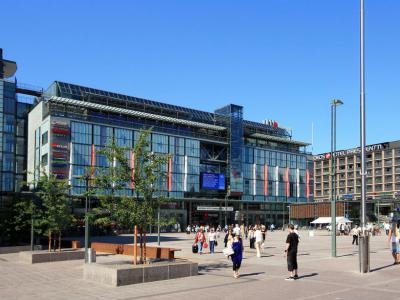
5) Kamppi Shopping Centre
Moomins are the charming characters in a series of books and comic strips that have taken off in Finland. Their images now appear on a wide range of popular products including glasses, coffee cups, handbags, placemats, t-shirts, towels, bed liners, pillow cases, puzzles, bookstands, etc. There’s even a Moomin theme park in Finland, but it’s in Naantali and not in Helsinki.
The trolls, unmistakable in appearance, convey an aura of fun and serenity despite their eccentric and odd shapes. They tend to be white and roundish with distinctively large snouts that give them a hippopotamus-like look. Many pithy sayings emanate from them, and you can buy books for children in English about the assorted adventures of the Moomins.
The placemats, which make a fine gift, are among the most popular items. They’re sold in virtually all the stores, but it’s worth looking around for what catches your eye. Try the Kamppi Shopping Centre on Urho Kekkosenkatu. There you can find a wide selection of Moonins trolls and placemats.
What to buy here: Moomin Trolls and Placemats.
The trolls, unmistakable in appearance, convey an aura of fun and serenity despite their eccentric and odd shapes. They tend to be white and roundish with distinctively large snouts that give them a hippopotamus-like look. Many pithy sayings emanate from them, and you can buy books for children in English about the assorted adventures of the Moomins.
The placemats, which make a fine gift, are among the most popular items. They’re sold in virtually all the stores, but it’s worth looking around for what catches your eye. Try the Kamppi Shopping Centre on Urho Kekkosenkatu. There you can find a wide selection of Moonins trolls and placemats.
What to buy here: Moomin Trolls and Placemats.
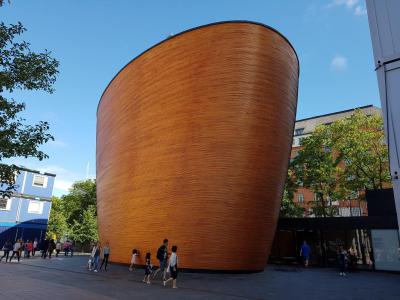
6) Kamppi Chapel of Silence (must see)
The Kamppi Chapel is a non-denominational spot for people to seek sanctuary from busy Helsinki's hustle and bustle. The striking building is found in Narinkka Square. It's oval on the outside and inside and is often described as neutral, austere, or unadorned. It is similar in that way to many multi-faith prayer rooms found around the world.
But just because it is minimalist does not mean that the building is not noteworthy. It was built as part of the World Design Capital program, which Helsinki won in 2012. The Chapel won the International Architecture Award in 2010.
The Chapel of Silence is located right in one of Helsinki's busiest areas, which is part of its charm. Many visitors say they wish more cities had spots like this; it's an uplifting place to slow down and disconnect from the busy world.
But just because it is minimalist does not mean that the building is not noteworthy. It was built as part of the World Design Capital program, which Helsinki won in 2012. The Chapel won the International Architecture Award in 2010.
The Chapel of Silence is located right in one of Helsinki's busiest areas, which is part of its charm. Many visitors say they wish more cities had spots like this; it's an uplifting place to slow down and disconnect from the busy world.
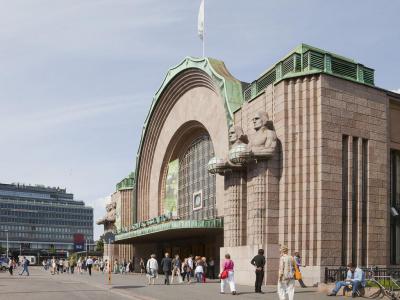
7) Helsinki Central Railway Station (must see)
The Central Railway Station is one of the most visited and well-known sites in the city. There are over two hundred thousand passengers that pass through this place every day. On that basis, it is the single busiest building in the whole country.
The whole complex of rails in the country was started in 1860 when the first track was opened for business between Helsinki and Hameenlinna, a city 100 kilometer north of Helsinki. The first station here was designed by Carl Edelfelt. The station's popularity grew through the years, and so the location had to be renovated multiple times. The last such renovation was completed in 2003 when a shopping center was added to the complex.
One little known tidbit about this station is the Presidential Lounge. This private 50-square-meter waiting lounge is available for exclusive use of the President of Finland and his/her official guests. It was first built for the Emperor of Russia in 1911. After a short stint as a military hospital, it has been the private lounge for the President ever since. It is the only such structure known in the world.
Tip:
Underneath the station, there is a multitude of shops, including supermarkets, and also a walkway over to the other side of Kaivokatu street, which gets you into downtown.
The whole complex of rails in the country was started in 1860 when the first track was opened for business between Helsinki and Hameenlinna, a city 100 kilometer north of Helsinki. The first station here was designed by Carl Edelfelt. The station's popularity grew through the years, and so the location had to be renovated multiple times. The last such renovation was completed in 2003 when a shopping center was added to the complex.
One little known tidbit about this station is the Presidential Lounge. This private 50-square-meter waiting lounge is available for exclusive use of the President of Finland and his/her official guests. It was first built for the Emperor of Russia in 1911. After a short stint as a military hospital, it has been the private lounge for the President ever since. It is the only such structure known in the world.
Tip:
Underneath the station, there is a multitude of shops, including supermarkets, and also a walkway over to the other side of Kaivokatu street, which gets you into downtown.
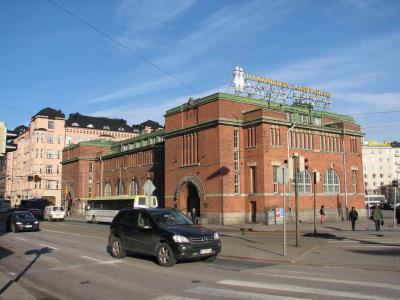
8) Hakaniemi Market
The Hakaniemi Market, located in the lively Hakaniemi neighborhood of Helsinki, is a symbol of the area's vibrant cultural and commercial history. Renowned for its bustling marketplace, the neighborhood also features a unique selection of Asian food stores offering imported products. A notable landmark, the Hakaniemi Market Hall is one of Helsinki's top three market halls.
With roots in history, Hakaniemi Square, where the market is situated, was built on reclaimed land and has hosted a farmers' market since 1897, reflecting the area's long tradition of trade. The market hall itself, a two-story building, provides insight into the daily life of Helsinki residents through its diverse range of vendors. Visitors can find groceries, home goods, gifts, jewelry, and textiles, as well as specialty items like coffee, tea, organic products, and flowers.
The Hakaniemi Market Hall isn't just a shopping destination; it's also a culinary hotspot. Its cafes and restaurants offer a welcoming environment for patrons to enjoy breakfast, pastries, and a variety of lunch options. Notably, Restaurant Kirsikka, located on the second floor, is famous for its international cuisine with a Finnish twist, reflecting the market's fusion of local and global flavors.
Designed by architect Karl Hård af Segerstad and opened in 1914, the market hall is celebrated as Helsinki’s most authentic market, valued for its commitment to quality in both goods and food. With vendors spread across two floors, selling high-quality products, the market hall’s eateries have become popular spots for locals and tourists alike to savor a delicious meal amidst the lively ambiance of the market.
With roots in history, Hakaniemi Square, where the market is situated, was built on reclaimed land and has hosted a farmers' market since 1897, reflecting the area's long tradition of trade. The market hall itself, a two-story building, provides insight into the daily life of Helsinki residents through its diverse range of vendors. Visitors can find groceries, home goods, gifts, jewelry, and textiles, as well as specialty items like coffee, tea, organic products, and flowers.
The Hakaniemi Market Hall isn't just a shopping destination; it's also a culinary hotspot. Its cafes and restaurants offer a welcoming environment for patrons to enjoy breakfast, pastries, and a variety of lunch options. Notably, Restaurant Kirsikka, located on the second floor, is famous for its international cuisine with a Finnish twist, reflecting the market's fusion of local and global flavors.
Designed by architect Karl Hård af Segerstad and opened in 1914, the market hall is celebrated as Helsinki’s most authentic market, valued for its commitment to quality in both goods and food. With vendors spread across two floors, selling high-quality products, the market hall’s eateries have become popular spots for locals and tourists alike to savor a delicious meal amidst the lively ambiance of the market.
9) Kluuvi Shopping Centre
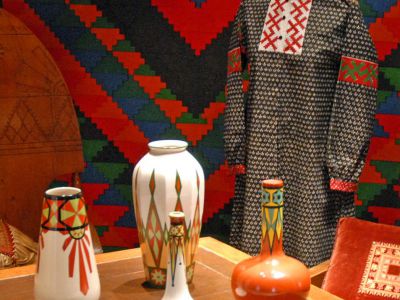
Arabia ceramics is a brand name recognized throughout the world. One can choose from among a wide range of well-made and innovative products that feature both functionality and decorative style. They withstand wear well and are likely to last a long time.
Coffee cups and mugs with Moomin (troll) designs are especially popular.
The selection includes tea pots, dishes, cups, ovenware, costume dishes, jugs, tableware/trays, salad bowl, candle holders, hors d’oeuvre dishes etc. Anything you find in most kitchens probably has an Arabia prototype or version. Exquisite pottery and vases, as well as lanterns, are among many other products, all showing the same high degree of artistry.
One can find a great variety of products at Kluuvi Shopping Centre located on Aleksaninkatu.
What to buy here: Arabia Ceramics.
Coffee cups and mugs with Moomin (troll) designs are especially popular.
The selection includes tea pots, dishes, cups, ovenware, costume dishes, jugs, tableware/trays, salad bowl, candle holders, hors d’oeuvre dishes etc. Anything you find in most kitchens probably has an Arabia prototype or version. Exquisite pottery and vases, as well as lanterns, are among many other products, all showing the same high degree of artistry.
One can find a great variety of products at Kluuvi Shopping Centre located on Aleksaninkatu.
What to buy here: Arabia Ceramics.
10) Helsinki Cathedral (must see)
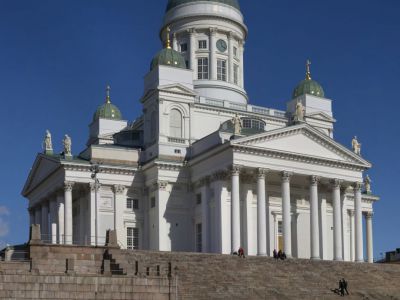
Helsinki Cathedral is an important symbol of Finnish culture and architecture, situated in the heart of Helsinki's Kruununhaka neighborhood on Senate Square. This impressive building serves as the main Lutheran cathedral for the Diocese of Helsinki and has a rich history dating back to the early 19th century. Initially built between 1830 and 1852, the cathedral was dedicated to the Grand Duke of Finland, Tsar Nicholas I, and was known as Saint Nicholas's Church until Finland gained independence in 1917. Today, it is renowned worldwide as one of Finland's most significant historical landmarks.
Designed by Carl Ludvig Engel in the Neoclassical style, Helsinki Cathedral features a distinctive green dome surrounded by four smaller domes, creating a striking silhouette against the city skyline. Engel intended the cathedral to be the focal point of his design for Senate Square, with other structures complementing its grandeur. The cathedral's architectural plan, based on a Greek cross, emphasizes symmetry with colonnades and pediments adorning each arm, though Engel's original vision for additional columns at the entrance was never realized.
Built on the site of the earlier Ulrika Eleonora Church from the 18th century, Helsinki Cathedral's foundation has historical significance. Construction was funded by a decree from Alexander I, tying its origins to Helsinki's designation as the nation's capital in 1812. While Engel passed away before its completion, Ernst Lohrmann, his successor, made further contributions to the design, including the addition of four small domes and a bell tower. Notable zinc statues of the Twelve Apostles, crafted by renowned artists of the time, adorn the roofline.
Throughout its existence, Helsinki Cathedral has undergone renovations and restorations, including the conversion of its crypt into a functional space for exhibitions and events beyond religious ceremonies. It remains an important center for worship, hosting regular services and special occasions like weddings. With half a million visitors in 2018 alone, it is a popular tourist destination, embodying Finnish culture and spirituality through its historical significance, architectural grandeur, and active community involvement.
Tips:
Plenty of steps to get to the cathedral's main entrance (no handrails, so be prepared). There are some wheelchair ramps if needed.
Also worth a visit is an atypical café right under the cathedral (Cafe Krypta). The entrance is at the back of Kirkkokatu Street or via elevator from the cathedral. Friendly staff, delicious pastries, and inexpensive coffee.
Designed by Carl Ludvig Engel in the Neoclassical style, Helsinki Cathedral features a distinctive green dome surrounded by four smaller domes, creating a striking silhouette against the city skyline. Engel intended the cathedral to be the focal point of his design for Senate Square, with other structures complementing its grandeur. The cathedral's architectural plan, based on a Greek cross, emphasizes symmetry with colonnades and pediments adorning each arm, though Engel's original vision for additional columns at the entrance was never realized.
Built on the site of the earlier Ulrika Eleonora Church from the 18th century, Helsinki Cathedral's foundation has historical significance. Construction was funded by a decree from Alexander I, tying its origins to Helsinki's designation as the nation's capital in 1812. While Engel passed away before its completion, Ernst Lohrmann, his successor, made further contributions to the design, including the addition of four small domes and a bell tower. Notable zinc statues of the Twelve Apostles, crafted by renowned artists of the time, adorn the roofline.
Throughout its existence, Helsinki Cathedral has undergone renovations and restorations, including the conversion of its crypt into a functional space for exhibitions and events beyond religious ceremonies. It remains an important center for worship, hosting regular services and special occasions like weddings. With half a million visitors in 2018 alone, it is a popular tourist destination, embodying Finnish culture and spirituality through its historical significance, architectural grandeur, and active community involvement.
Tips:
Plenty of steps to get to the cathedral's main entrance (no handrails, so be prepared). There are some wheelchair ramps if needed.
Also worth a visit is an atypical café right under the cathedral (Cafe Krypta). The entrance is at the back of Kirkkokatu Street or via elevator from the cathedral. Friendly staff, delicious pastries, and inexpensive coffee.
11) Senaatintori (Senate Square) (must see)
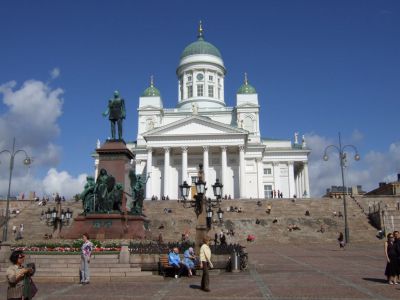
Senate Square, or Senaatintori, is a city square surrounded by beautiful Neo-Classical buildings. The square and its buildings are the oldest part of Helsinki. The structures on the square include the Cathedral, the main building of the University of Helsinki, the Government Palace, and the Sederholm House dating from 1757.
The square is built on the site of a 17th and 18th-century graveyard. The city plan, designed by Johan Albrecht Ehrenström, designated the square in 1812. By 1822, the Government Palace was completed. The Senate of Finland met there until the Council of State replaced it in 1918. Today, the building is used by the Prime Minister and Cabinet officials.
The University Building was constructed in 1832. But the most dominant building in the square is by far the Helsinki Cathedral. It was designed by Carl Ludvig Engel but was not completed until 12 years after his death. It was initially called the Church of Saint Nicholas.
Walter Runeberg carved the central statue of Emperor Alexander II in 1894. During the Russian years, the Alexander statue was a symbol of resistance. People would leave flowers under the statue as a gesture of protest against Alexander's grandson, tsar Nicolas II. Alexander was known locally as "the good tsar."
Why You Should Visit:
Today, Senate Square is a popular destination. There's often a festival, art exhibition, or concert going on.
The square is the site of the oldest buildings in Helsinki. The Cathedral is especially worth seeing as it is one of the most iconic buildings in the city. From the stairs to the Cathedral, be sure to take in the view of the city all around.
Tips:
Every day a digital carillon plays at 17:49. The acoustically best spot to hear the piece is at the central statue of Alexander II.
If visiting in the wintertime, the Helsinki Christmas Market is held every December in Senate Square.
The square has appeared in many movies, including many scenes that were supposedly set in Russia. By omitting the distinctive Cathedral from his shots, Warren Beatty convincingly used Senate Square as a substitute for Soviet Saint Petersburg in the 1981 film Reds.
The square is built on the site of a 17th and 18th-century graveyard. The city plan, designed by Johan Albrecht Ehrenström, designated the square in 1812. By 1822, the Government Palace was completed. The Senate of Finland met there until the Council of State replaced it in 1918. Today, the building is used by the Prime Minister and Cabinet officials.
The University Building was constructed in 1832. But the most dominant building in the square is by far the Helsinki Cathedral. It was designed by Carl Ludvig Engel but was not completed until 12 years after his death. It was initially called the Church of Saint Nicholas.
Walter Runeberg carved the central statue of Emperor Alexander II in 1894. During the Russian years, the Alexander statue was a symbol of resistance. People would leave flowers under the statue as a gesture of protest against Alexander's grandson, tsar Nicolas II. Alexander was known locally as "the good tsar."
Why You Should Visit:
Today, Senate Square is a popular destination. There's often a festival, art exhibition, or concert going on.
The square is the site of the oldest buildings in Helsinki. The Cathedral is especially worth seeing as it is one of the most iconic buildings in the city. From the stairs to the Cathedral, be sure to take in the view of the city all around.
Tips:
Every day a digital carillon plays at 17:49. The acoustically best spot to hear the piece is at the central statue of Alexander II.
If visiting in the wintertime, the Helsinki Christmas Market is held every December in Senate Square.
The square has appeared in many movies, including many scenes that were supposedly set in Russia. By omitting the distinctive Cathedral from his shots, Warren Beatty convincingly used Senate Square as a substitute for Soviet Saint Petersburg in the 1981 film Reds.
12) OKRA Arts, Crafts & Design Gallery
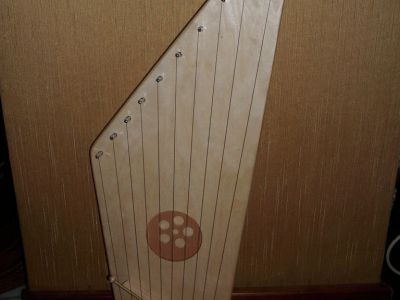
OKRA Arts, Crafts & Design Gallery showcases a vibrant and elegant atmosphere with a unique and limited series collection from their 10 members. You'll find jewelry, studio and functional glass, ceramics, fashion, and textiles. It also features a curated selection of products from other Finnish artists that align with its design philosophy. Every piece at Okra is crafted in Finland by Finnish artists and crafters. Over the past 20 years, OKRA has become one of Helsinki's leading galleries for top-quality, innovative crafts.
13) Kauppatori (Market Square) (must see)
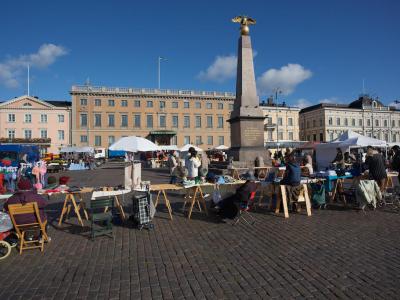
On the Baltic Sea at the eastern end of the Esplanadi Park likes Market Square. Many local cruises and sightseeing boats depart from the port next to the square in the summer, including the year-round ferry to Suomenlinna Sea Fortress. Many vendors congregate here to sell souvenirs and fresh fish and seafood. Cafes are dotted around the square, and it's a great place to grab a lihapiirakka, a Finnish meat pastry.
The square is the site of the famous annual herring market in October. Many popular sites are located next to Market Square, including the Presidential Palace, Swedish Embassy, and the Helsinki City Hall. The square is a beautiful place to stroll, and the ships in the harbor and vendors selling their goods will take you back to a bygone era.
On the south side of the square, look for the Vanha Kauppahalli, or Old Market Hall. This is a popular shopping spot and a great place to sample local delicacies.
Why You Should Visit:
Fun place to get a taste of Finnish food and try something you haven't eaten before.
Tip:
Do not leave without trying the "neulamuikut" (deep fried whitefish), which is usually served with potatoes and garlic sauce. If you visit when the season for wild berries & mushrooms starts, stop by to stock on some fresh wonderful cloudberries or chanterelles.
The square is the site of the famous annual herring market in October. Many popular sites are located next to Market Square, including the Presidential Palace, Swedish Embassy, and the Helsinki City Hall. The square is a beautiful place to stroll, and the ships in the harbor and vendors selling their goods will take you back to a bygone era.
On the south side of the square, look for the Vanha Kauppahalli, or Old Market Hall. This is a popular shopping spot and a great place to sample local delicacies.
Why You Should Visit:
Fun place to get a taste of Finnish food and try something you haven't eaten before.
Tip:
Do not leave without trying the "neulamuikut" (deep fried whitefish), which is usually served with potatoes and garlic sauce. If you visit when the season for wild berries & mushrooms starts, stop by to stock on some fresh wonderful cloudberries or chanterelles.
14) Vanha kauppahalli (Old Market Hall) (must see)
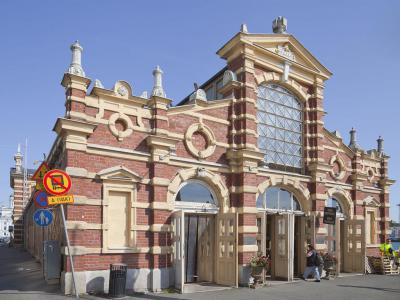
The Old Market Hall in Helsinki has a special significance in the city's business and cultural life. It's the oldest among Helsinki's market halls, opening its doors to the public back in 1889. This architectural marvel came during a time when Helsinki was moving from chaotic open-air markets to more organized indoor setups. Concerns about food hygiene and the need for structured trading spaces drove this transition away from the haphazard market squares of the 19th century.
Construction of the Old Market Hall began in 1888, led by Gustaf Nyström, who had experience designing market halls across Europe. However, delays due to issues with the cement supply pushed its opening to a year later. Nyström aimed for a design that combined functionality with aesthetic appeal, creating a sophisticated trading environment. The hall proudly displays the year of its opening at its southern end, underscoring its historical significance.
Situated next to the Helsinki Market Square, the Old Market Hall adds richness to the city's culinary offerings. It's a paradise for food lovers, hosting various vendors selling cheeses, fish, shellfish, meats, fruits, vegetables, and spices, as well as coffee, tea, small gifts, and tableware. It even houses Finland's smallest Alko store, enhancing its uniqueness.
Beyond being a shopping destination, the Old Market Hall offers culinary experiences, renowned for its delicious salmon soup and fish sandwiches that draw visitors from afar. It's also a convenient stop for lunch, especially for those heading to Suomenlinna, as the ferry departure point is nearby at the Helsinki Market Square.
Why You Should Visit:
Amazing selection of food and drinks and a great place to pick up a couple of presents to take home. If you're a fish lover, especially salmon, you have to visit as there are lots of different types to try. If you are more of a meat lover, there are stalls selling reindeer burgers/kebabs which are worth tasting.
Construction of the Old Market Hall began in 1888, led by Gustaf Nyström, who had experience designing market halls across Europe. However, delays due to issues with the cement supply pushed its opening to a year later. Nyström aimed for a design that combined functionality with aesthetic appeal, creating a sophisticated trading environment. The hall proudly displays the year of its opening at its southern end, underscoring its historical significance.
Situated next to the Helsinki Market Square, the Old Market Hall adds richness to the city's culinary offerings. It's a paradise for food lovers, hosting various vendors selling cheeses, fish, shellfish, meats, fruits, vegetables, and spices, as well as coffee, tea, small gifts, and tableware. It even houses Finland's smallest Alko store, enhancing its uniqueness.
Beyond being a shopping destination, the Old Market Hall offers culinary experiences, renowned for its delicious salmon soup and fish sandwiches that draw visitors from afar. It's also a convenient stop for lunch, especially for those heading to Suomenlinna, as the ferry departure point is nearby at the Helsinki Market Square.
Why You Should Visit:
Amazing selection of food and drinks and a great place to pick up a couple of presents to take home. If you're a fish lover, especially salmon, you have to visit as there are lots of different types to try. If you are more of a meat lover, there are stalls selling reindeer burgers/kebabs which are worth tasting.
15) Kalevala Koru
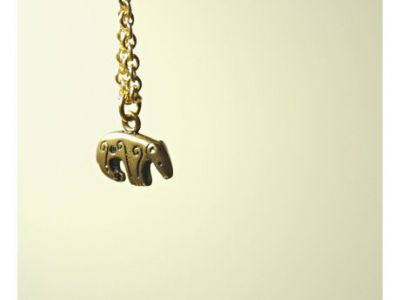
Designs of Kalevala jewelry, renowned for their vivid and bold shapes, are often derived from the Kalevala, the colorful national folk epic. Some models are also replicas of ancient Iron Age jewelry discovered by archeologists.
The jewelry items are all quite striking and likely to attract attention due to their distinctive design. They make excellent gift items, especially for occasions like anniversaries and birthdays.
Among the many items are necklaces, pendants, earrings, brooches, bracelets, charms, etc. Tie pins and cufflinks are also available for men. Bronze, silver and gold are the basic materials used. Hooks in bronze earrings are made of gold-plated silver. The jewelry is free of nickel and other allergenic material. Price are $40-50 and up.
What to buy here: Kalevala Jewelry.
The jewelry items are all quite striking and likely to attract attention due to their distinctive design. They make excellent gift items, especially for occasions like anniversaries and birthdays.
Among the many items are necklaces, pendants, earrings, brooches, bracelets, charms, etc. Tie pins and cufflinks are also available for men. Bronze, silver and gold are the basic materials used. Hooks in bronze earrings are made of gold-plated silver. The jewelry is free of nickel and other allergenic material. Price are $40-50 and up.
What to buy here: Kalevala Jewelry.
16) Esplanadi Park (must see)
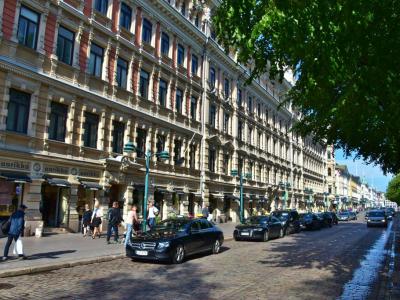
Between Erottaja Square and Market Square, you will find Esplanadi Park. Known simply as ‘Espa’ by the locals, this long promenade is a popular walking area. The park opened in 1818 and was designed by Carl Ludwig Engel. In 1827, Engels Teater was the first theater built in Helsinki.
Espa is a popular spot with locals to enjoy a picnic or see live performances. The central section of the park features roses bushes, crab apple trees, and aspen trees. You'll see many monuments and statues, including one of national poet Johan Ludvig Runeberg. He wrote the Finnish national anthem, and his was the first monument erected in Helsinki in 1885.
The Kappeli Restaurant opened in 1867, and it’s still known for great food in a beautiful setting. Espa Stage hosts live music throughout the year, including the longest music festival in Finland. It's held from May until the end of August and features 200 or more artists hosted by the Cultural Office of the City of Helsinki.
Why You Should Visit:
Beautiful open space in the middle of the city, great for sitting on the bench and people watching, or bringing food and having a picnic.
Tip:
Be sure to take in the architecture on both sides – the old buildings are splendid.
Espa is a popular spot with locals to enjoy a picnic or see live performances. The central section of the park features roses bushes, crab apple trees, and aspen trees. You'll see many monuments and statues, including one of national poet Johan Ludvig Runeberg. He wrote the Finnish national anthem, and his was the first monument erected in Helsinki in 1885.
The Kappeli Restaurant opened in 1867, and it’s still known for great food in a beautiful setting. Espa Stage hosts live music throughout the year, including the longest music festival in Finland. It's held from May until the end of August and features 200 or more artists hosted by the Cultural Office of the City of Helsinki.
Why You Should Visit:
Beautiful open space in the middle of the city, great for sitting on the bench and people watching, or bringing food and having a picnic.
Tip:
Be sure to take in the architecture on both sides – the old buildings are splendid.
