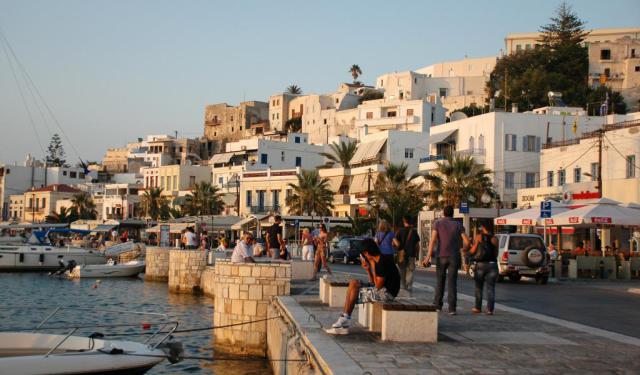


Audio Guide: Naxos Orientation Walking Tour (Self Guided), Naxos
Steeped in mythological mystique and ancient history, the captivating city of Naxos on the eponymous Greek island in the Aegean Sea is renowned for its cultural landmarks and stunning attractions.
The name "Naxos" is believed to be of ancient Greek origin, possibly stemming from the word "naxai," which means "vines" or "vineyards." This is quite fitting, as the island's fertile land has supported agriculture, including grape cultivation, for centuries.
Naxos boasts a fascinating history that dates back to antiquity. It was once a significant center of the Cycladic civilization, which flourished during the Bronze Age. During the 8th and 7th centuries BC, Naxos held significant control over trade in the Cyclades.
In 502 BC, Naxos initiated a rebellion against the Persian Empire, sparking the broader Ionian Revolt and eventually the Persian War with Greece. After the Fourth Crusade in the early 13th century, Marco Sanudo, a Venetian, conquered Naxos and the nearby Cyclades islands, establishing himself as the Duke of Naxia, leading a line of 21 dukes until 1566.
Under Ottoman rule, from 1564 to 1821, Venetian influence remained dominant, while Turkish impact on Naxos was limited. In 1821, the islands rebelled against Ottoman control, and Naxos officially became part of the Greek state in 1832.
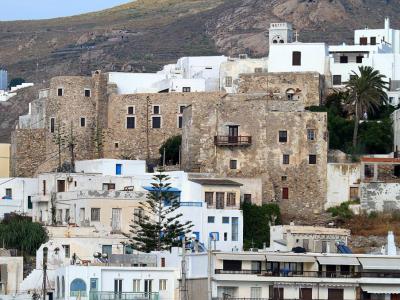
The imposing Naxos Castle, otherwise known as Kastro, is a historical fortress built by the Venetians in the 13th century. It stands as a testament to the island's medieval past, offering panoramic views of the town, Naxos Marina, and the sea.
For those interested in Byzantine art and history, the Byzantine Museum of Naxos is a must-do, much like the Mitropolis On-Site Museum, adjacent to the architectural gem of the Holy Orthodox Metropolitan Church. Another charming religious sight not to miss is the Church of Our Lady of the Myrtle, a serene place to immerse yourself in local spirituality.
And of course, you would want to see the iconic ruins of The Temple of Apollo, or Portara, framing the sky like a door to another world, while renovated Venetian mansions offer a glimpse into the upper crust of yesteryear.
The purported home of Dionysus, the Greek god of wine, fringed with glorious beaches, collisions of turquoise waters and sapphire horizons, Naxos invites you to delve into its rich history, explore its cultural treasures, and bask in its Mediterranean charm. So wait no more! Embark on this self-guided journey and uncover the layers of Naxos' captivating past. Immerse yourself in the stories of ancient civilizations, marvel at architectural wonders, and experience the magic of this enchanting place for yourself!
The name "Naxos" is believed to be of ancient Greek origin, possibly stemming from the word "naxai," which means "vines" or "vineyards." This is quite fitting, as the island's fertile land has supported agriculture, including grape cultivation, for centuries.
Naxos boasts a fascinating history that dates back to antiquity. It was once a significant center of the Cycladic civilization, which flourished during the Bronze Age. During the 8th and 7th centuries BC, Naxos held significant control over trade in the Cyclades.
In 502 BC, Naxos initiated a rebellion against the Persian Empire, sparking the broader Ionian Revolt and eventually the Persian War with Greece. After the Fourth Crusade in the early 13th century, Marco Sanudo, a Venetian, conquered Naxos and the nearby Cyclades islands, establishing himself as the Duke of Naxia, leading a line of 21 dukes until 1566.
Under Ottoman rule, from 1564 to 1821, Venetian influence remained dominant, while Turkish impact on Naxos was limited. In 1821, the islands rebelled against Ottoman control, and Naxos officially became part of the Greek state in 1832.
The imposing Naxos Castle, otherwise known as Kastro, is a historical fortress built by the Venetians in the 13th century. It stands as a testament to the island's medieval past, offering panoramic views of the town, Naxos Marina, and the sea.
For those interested in Byzantine art and history, the Byzantine Museum of Naxos is a must-do, much like the Mitropolis On-Site Museum, adjacent to the architectural gem of the Holy Orthodox Metropolitan Church. Another charming religious sight not to miss is the Church of Our Lady of the Myrtle, a serene place to immerse yourself in local spirituality.
And of course, you would want to see the iconic ruins of The Temple of Apollo, or Portara, framing the sky like a door to another world, while renovated Venetian mansions offer a glimpse into the upper crust of yesteryear.
The purported home of Dionysus, the Greek god of wine, fringed with glorious beaches, collisions of turquoise waters and sapphire horizons, Naxos invites you to delve into its rich history, explore its cultural treasures, and bask in its Mediterranean charm. So wait no more! Embark on this self-guided journey and uncover the layers of Naxos' captivating past. Immerse yourself in the stories of ancient civilizations, marvel at architectural wonders, and experience the magic of this enchanting place for yourself!
How it works: Download the app "GPSmyCity: Walks in 1K+ Cities" from Apple App Store or Google Play Store to your mobile phone or tablet. The app turns your mobile device into a personal tour guide and its built-in GPS navigation functions guide you from one tour stop to next. The app works offline, so no data plan is needed when traveling abroad.
Naxos Orientation Walking Tour Map
Guide Name: Naxos Orientation Walking Tour
Guide Location: Greece » Naxos (See other walking tours in Naxos)
Guide Type: Self-guided Walking Tour (Sightseeing)
# of Attractions: 8
Tour Duration: 1 Hour(s)
Travel Distance: 2.0 Km or 1.2 Miles
Author: DanaOffice
Sight(s) Featured in This Guide:
Guide Location: Greece » Naxos (See other walking tours in Naxos)
Guide Type: Self-guided Walking Tour (Sightseeing)
# of Attractions: 8
Tour Duration: 1 Hour(s)
Travel Distance: 2.0 Km or 1.2 Miles
Author: DanaOffice
Sight(s) Featured in This Guide:
- Naxos Castle
- Archeological Museum
- Byzantine Museum
- Naxos Marina
- Church of Our Lady of the Myrtle
- Holy Orthodox Metropolitan Church
- Mitropolis On-Site Museum
- Temple of Apollo
1) Naxos Castle (must see)
Naxos Castle, known locally as the Kastro, rises above the harbor in the oldest part of Naxos Town. The fortified district was established in the early 13th century by Venetian nobleman Marco Sanudo, who founded the Duchy of the Archipelago after the Fourth Crusade. Rather than building a single fortress, the Venetians created a small walled town on the hill, surrounded by defensive walls and gates. Many of the original medieval structures remain, making the Kastro one of the most historically significant parts of Naxos and one of the best places on the island to experience its layered Greek and Venetian heritage.
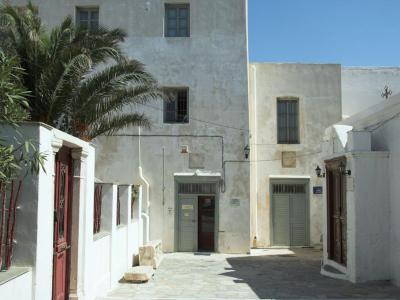
As you pass through the stone entrance and begin walking uphill, the character of the old castle district quickly becomes clear. The streets are narrow and winding, often just wide enough for two people to pass. Look at the doorways and walls along the lanes and you will notice carved coats of arms and architectural details that once marked the homes of Venetian noble families. The neighborhood still has a lived-in atmosphere, with small houses, quiet courtyards, and occasional views opening toward the harbor below.
One of the most important buildings inside the castle is the Archaeological Museum of Naxos, located in a former Jesuit school. Its galleries display artifacts discovered across the island, including Cycladic marble figurines dating back to the third millennium BCE, Mycenaean pottery, jewelry, and sculptures from ancient sanctuaries. These objects reveal Naxos has been an important center in the Aegean world long before the Venetian castle was built.
Continue toward the highest part of the district and you will reach the Naxos Cathedral, the island’s main Roman Catholic church. Built during the Venetian period and later renovated, the cathedral reflects the lasting influence of Western rule in the Cyclades. From nearby viewpoints along the castle’s edges, you can also look out over the rooftops of the old town, the harbor, and the surrounding sea. These elevated views help explain why the Venetians chose this hilltop location: it provided both protection and a commanding perspective over the port that shaped Naxos’s history.
As you pass through the stone entrance and begin walking uphill, the character of the old castle district quickly becomes clear. The streets are narrow and winding, often just wide enough for two people to pass. Look at the doorways and walls along the lanes and you will notice carved coats of arms and architectural details that once marked the homes of Venetian noble families. The neighborhood still has a lived-in atmosphere, with small houses, quiet courtyards, and occasional views opening toward the harbor below.
One of the most important buildings inside the castle is the Archaeological Museum of Naxos, located in a former Jesuit school. Its galleries display artifacts discovered across the island, including Cycladic marble figurines dating back to the third millennium BCE, Mycenaean pottery, jewelry, and sculptures from ancient sanctuaries. These objects reveal Naxos has been an important center in the Aegean world long before the Venetian castle was built.
Continue toward the highest part of the district and you will reach the Naxos Cathedral, the island’s main Roman Catholic church. Built during the Venetian period and later renovated, the cathedral reflects the lasting influence of Western rule in the Cyclades. From nearby viewpoints along the castle’s edges, you can also look out over the rooftops of the old town, the harbor, and the surrounding sea. These elevated views help explain why the Venetians chose this hilltop location: it provided both protection and a commanding perspective over the port that shaped Naxos’s history.
2) Archeological Museum
The Archaeological Museum of Naxos is nestled within the walls of a graceful 17th-century Venetian building, and the museum serves as a remarkable embodiment of architectural aesthetics from that era. Originally conceived as a school for Jesuits, its storied past saw it transform into the School of Commerce during the late 19th century before ultimately embracing its destiny as the Archaeological Museum in 1973. Such a remarkable journey through time has led to its designation as a historical monument, an emblem of the island's profound historical significance.
As visitors traverse the museum's five floors, they embark on a captivating journey through Naxos' history, encapsulating the remnants of a civilization that flourished from the Late Neolithic period to the early days of Christianity. Treasures gleaned from excavations across the island adorn its halls, from mundane artifacts of daily life to exquisite works of art that breathe life into bygone eras.
The Cycladic Civilization, having reached its zenith in the third millennium BC, finds a proud representation within the museum's walls. Naxos, a beacon of Cycladic art during that period, comes alive through the exhibits. Fragments of history are meticulously curated – the marble Cycladic statues, elegant and enigmatic, showcasing a progression from rudimentary violin shapes to intricately carved female forms, their features imbued with symbolic meanings. These sculptures, once gracing sacred sites, tell tales of grave and fertility goddesses, their male counterparts perhaps serving as humble attendants.
As visitors traverse the museum's five floors, they embark on a captivating journey through Naxos' history, encapsulating the remnants of a civilization that flourished from the Late Neolithic period to the early days of Christianity. Treasures gleaned from excavations across the island adorn its halls, from mundane artifacts of daily life to exquisite works of art that breathe life into bygone eras.
The Cycladic Civilization, having reached its zenith in the third millennium BC, finds a proud representation within the museum's walls. Naxos, a beacon of Cycladic art during that period, comes alive through the exhibits. Fragments of history are meticulously curated – the marble Cycladic statues, elegant and enigmatic, showcasing a progression from rudimentary violin shapes to intricately carved female forms, their features imbued with symbolic meanings. These sculptures, once gracing sacred sites, tell tales of grave and fertility goddesses, their male counterparts perhaps serving as humble attendants.
3) Byzantine Museum
The Byzantine Museum is housed within a commanding four-level tower in the Kastro. The museum offers visitors a unique journey through time, where the past is intricately woven with the present.
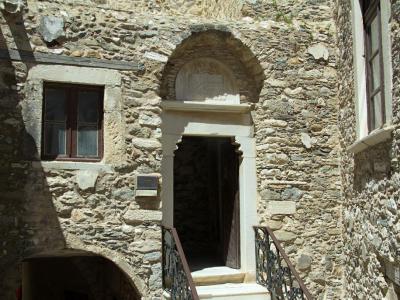
The tower itself is a remarkable piece of history, exuding an air of majesty that is enhanced by its panoramic view of the harbor and its strategic location near the northwestern gate of the Kastro. As visitors approach the tower's main entrance, they are greeted by the Barozzi family coat of arms, an emblem that speaks of the tower's illustrious lineage. The interior door, adorned with the Crispi family coat of arms, further evokes a sense of the tower's storied past.
However, it was the P. Glezos family, the tower's final owners, who forever linked their legacy with this architectural gem. Their benevolent act of donating the tower to the state ensured its preservation and transformation into a cultural treasure. Today, the tower is affectionately referred to as the Glezos Tower, or Apirathitissa (which means “woman from Apiranthos”), a name derived from Apiranthos, the hometown of the donor family.
After meticulous restoration efforts, the tower now stands as the proud home of the Byzantine Museum, encompassing the entire Cycladic region. Within its walls, visitors are treated to a captivating collection of Byzantine sculptures originating from Naxos and the surrounding Cycladic islands. These sculptures, meticulously dated between the 7th and 12th centuries, bridge the gap between eras and offer a glimpse into the artistic expressions of the past.
The tower itself is a remarkable piece of history, exuding an air of majesty that is enhanced by its panoramic view of the harbor and its strategic location near the northwestern gate of the Kastro. As visitors approach the tower's main entrance, they are greeted by the Barozzi family coat of arms, an emblem that speaks of the tower's illustrious lineage. The interior door, adorned with the Crispi family coat of arms, further evokes a sense of the tower's storied past.
However, it was the P. Glezos family, the tower's final owners, who forever linked their legacy with this architectural gem. Their benevolent act of donating the tower to the state ensured its preservation and transformation into a cultural treasure. Today, the tower is affectionately referred to as the Glezos Tower, or Apirathitissa (which means “woman from Apiranthos”), a name derived from Apiranthos, the hometown of the donor family.
After meticulous restoration efforts, the tower now stands as the proud home of the Byzantine Museum, encompassing the entire Cycladic region. Within its walls, visitors are treated to a captivating collection of Byzantine sculptures originating from Naxos and the surrounding Cycladic islands. These sculptures, meticulously dated between the 7th and 12th centuries, bridge the gap between eras and offer a glimpse into the artistic expressions of the past.
4) Naxos Marina
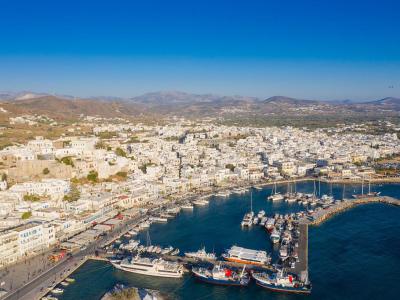
Naxos Marina stands as a beacon of modern maritime hospitality. Situated against the backdrop of a picturesque bay, this marina presents a seamless blend of tranquility and convenience, welcoming boaters from all corners of the world. With its comprehensive services and stunning surroundings, Naxos Marina is the ultimate gateway to a maritime adventure of a lifetime.
Boasting a well-equipped facility, Naxos Marina caters to a diverse array of boating needs. Anchored by 70 berths, it provides ample space for vessels of varying sizes and types. Safety is a paramount concern, and the marina's commitment is evident through its round-the-clock security and vigilant surveillance, ensuring that boaters can enjoy their stay with peace of mind.
One of the marina's most captivating features is its proximity to a treasure trove of attractions that beckon to be explored. Immerse yourself in the whispers of history by visiting the ancient ruins of the Temple of Apollo, a testament to the island's storied past. Nearby, the Byzantine Castle stands as a sentinel of time, offering a glimpse into the island's medieval heritage. Nature enthusiasts are in for a treat as well, with the allure of the Naxos Town Beach and the enchanting Golden Beach, both renowned for their beauty and tranquility.
Naxos itself is a tapestry of archaeological wonders, traditional villages, and awe-inspiring landscapes, setting the stage for a plethora of activities to indulge in. From wandering through ancient sites that hold the secrets of past civilizations to embarking on invigorating hikes that reveal the island's hidden gems, Naxos offers an experience that resonates with both history enthusiasts and nature lovers.
Boasting a well-equipped facility, Naxos Marina caters to a diverse array of boating needs. Anchored by 70 berths, it provides ample space for vessels of varying sizes and types. Safety is a paramount concern, and the marina's commitment is evident through its round-the-clock security and vigilant surveillance, ensuring that boaters can enjoy their stay with peace of mind.
One of the marina's most captivating features is its proximity to a treasure trove of attractions that beckon to be explored. Immerse yourself in the whispers of history by visiting the ancient ruins of the Temple of Apollo, a testament to the island's storied past. Nearby, the Byzantine Castle stands as a sentinel of time, offering a glimpse into the island's medieval heritage. Nature enthusiasts are in for a treat as well, with the allure of the Naxos Town Beach and the enchanting Golden Beach, both renowned for their beauty and tranquility.
Naxos itself is a tapestry of archaeological wonders, traditional villages, and awe-inspiring landscapes, setting the stage for a plethora of activities to indulge in. From wandering through ancient sites that hold the secrets of past civilizations to embarking on invigorating hikes that reveal the island's hidden gems, Naxos offers an experience that resonates with both history enthusiasts and nature lovers.
5) Church of Our Lady of the Myrtle (must see)
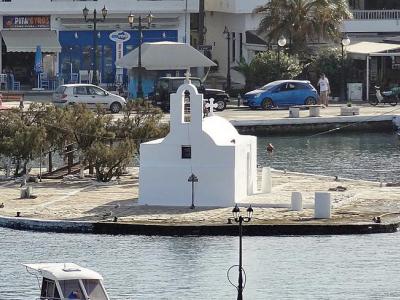
Perched atop a tranquil islet in the heart of Naxos harbor, the Church of Our Lady of the Myrtle stands as a charming beacon that warmly welcomes all who arrive on the island. Its picturesque white facade and humble design offer a striking contrast against the azure waters that surround it. This small but captivating chapel boasts a history that intertwines the ancient beliefs of the Greeks with the devotion of modern-day pilgrims.
In the days of old, the islet upon which the church now stands was a place of reverence dedicated to Poseidon, the mighty god of the sea in Greek mythology. Sailors and islanders would gather on this sacred land to pay homage, seeking his favor and protection for their maritime endeavors. The echoes of this ancient worship still linger, giving the site an air of mystique and spiritual significance.
Today, the Church of Our Lady of the Myrtle has transformed from a place of pagan worship to a sanctuary of Christian devotion. The chapel's namesake is the Virgin Mary, a central figure in the Christian faith. The chapel's unassuming beauty is a testament to the harmony of its surroundings, harmoniously blending history, religion, and the serene natural landscape. The whitewashed walls and simple architecture create an atmosphere of serenity and contemplation.
The islet's name and the church's dedication to the Virgin Mary are commemorated annually on September 24, a date that holds special significance in the hearts of both locals and visitors alike. This day is marked by a meaningful ceremony that pays homage to the Virgin Mary's role in the spiritual life of Naxos. It's an occasion that unites the island's residents and invites those who are fortunate enough to be present to partake in the shared faith and culture.
In the days of old, the islet upon which the church now stands was a place of reverence dedicated to Poseidon, the mighty god of the sea in Greek mythology. Sailors and islanders would gather on this sacred land to pay homage, seeking his favor and protection for their maritime endeavors. The echoes of this ancient worship still linger, giving the site an air of mystique and spiritual significance.
Today, the Church of Our Lady of the Myrtle has transformed from a place of pagan worship to a sanctuary of Christian devotion. The chapel's namesake is the Virgin Mary, a central figure in the Christian faith. The chapel's unassuming beauty is a testament to the harmony of its surroundings, harmoniously blending history, religion, and the serene natural landscape. The whitewashed walls and simple architecture create an atmosphere of serenity and contemplation.
The islet's name and the church's dedication to the Virgin Mary are commemorated annually on September 24, a date that holds special significance in the hearts of both locals and visitors alike. This day is marked by a meaningful ceremony that pays homage to the Virgin Mary's role in the spiritual life of Naxos. It's an occasion that unites the island's residents and invites those who are fortunate enough to be present to partake in the shared faith and culture.
6) Holy Orthodox Metropolitan Church (must see)
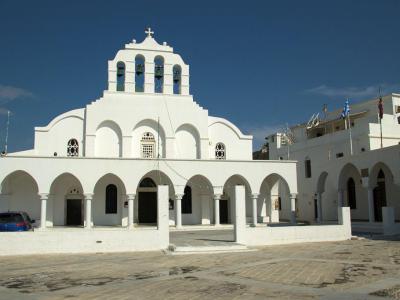
The Holy Orthodox Metropolitan Church is the principal Greek Orthodox cathedral of the city and an important religious landmark near the harbor. The church serves as the seat of the Orthodox bishop of Naxos and stands close to the busy waterfront streets that connect the harbor with the historic quarter of the town. The present building dates mainly to the late 18th century, replacing earlier churches that once stood in this area. Its whitewashed exterior and tall bell tower reflect the simple architectural style typical of the Cycladic islands, making it easy to recognize among the surrounding houses.
As you approach the church from the harbor, the bell tower rising above the nearby buildings quickly becomes visible. The small square in front of the cathedral often serves as a gathering place for locals, particularly during religious celebrations. From here, narrow streets lead toward the hilltop district of Naxos Castle, the medieval Venetian center of the town. The cathedral’s location between the harbor and the castle reflects how the town developed over centuries, with Orthodox, Venetian, and later Greek influences shaping the surrounding neighborhoods.
Step inside and you will notice several striking architectural features. At the front stands a rich iconostasis, covered with traditional icons depicting Christ, the Virgin Mary, and various saints. Supporting the roof above are large monolithic granite columns, an unusual detail that connects the church to the island’s much older past. These columns are believed to have been reused from ancient structures—possibly from the ruins of the nearby Temple of Dionysus or transported from the sacred island of Delos. Their presence reflects a common practice in Greek architecture, where materials from ancient temples were incorporated into later buildings.
The cathedral is dedicated to Zoodochos Pigi, meaning “Life-Giving Spring,” a title of the Virgin Mary widely honored in the Orthodox Church. The dedication symbolizes spiritual renewal and protection, and the church remains central to the island’s religious life. During important Orthodox feast days, ceremonies and processions take place here and in the surrounding streets.
As you approach the church from the harbor, the bell tower rising above the nearby buildings quickly becomes visible. The small square in front of the cathedral often serves as a gathering place for locals, particularly during religious celebrations. From here, narrow streets lead toward the hilltop district of Naxos Castle, the medieval Venetian center of the town. The cathedral’s location between the harbor and the castle reflects how the town developed over centuries, with Orthodox, Venetian, and later Greek influences shaping the surrounding neighborhoods.
Step inside and you will notice several striking architectural features. At the front stands a rich iconostasis, covered with traditional icons depicting Christ, the Virgin Mary, and various saints. Supporting the roof above are large monolithic granite columns, an unusual detail that connects the church to the island’s much older past. These columns are believed to have been reused from ancient structures—possibly from the ruins of the nearby Temple of Dionysus or transported from the sacred island of Delos. Their presence reflects a common practice in Greek architecture, where materials from ancient temples were incorporated into later buildings.
The cathedral is dedicated to Zoodochos Pigi, meaning “Life-Giving Spring,” a title of the Virgin Mary widely honored in the Orthodox Church. The dedication symbolizes spiritual renewal and protection, and the church remains central to the island’s religious life. During important Orthodox feast days, ceremonies and processions take place here and in the surrounding streets.
7) Mitropolis On-Site Museum
The Mitropolis On-Site Museum was established in 1999 and holds the distinction of being the first museum of its kind in Greece and one of the few in the world that provides visitors with the unique experience of witnessing ancient artifacts in their original context. This museum serves as a bridge between the past and the present, allowing visitors to immerse themselves in the tangible remnants of bygone eras.
Situated amidst the picturesque landscapes of Naxos, the museum's significance extends beyond its physical structure. It is a repository of archaeological wonders that have been meticulously excavated from the grounds upon which it stands. The artifacts on display are not merely objects frozen in time; they are fragments of a living history, narratives etched in stone, pottery, and metal.
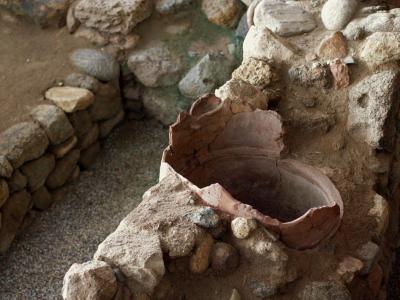
At the heart of the museum's collection lies a Mycenaean workshop of vessels, an invaluable window into the artistic and technological achievements of an ancient civilization. This workshop, where skilled artisans crafted vessels of both utilitarian and aesthetic value, speaks volumes about the craftsmanship and creativity of the Mycenaean people. The artifacts found here provide insights into the daily lives, trade, and cultural practices of this civilization that once thrived in the region.
Intriguingly, the museum also houses a tomb dating back to the Geometric period. This tomb, a silent witness to the passage of time, unveils stories of the rituals, beliefs, and burial practices of an ancient society. The tomb's contents, meticulously preserved, offer a glimpse into the cosmology and reverence for the afterlife that defined the spiritual realm of these people.
Situated amidst the picturesque landscapes of Naxos, the museum's significance extends beyond its physical structure. It is a repository of archaeological wonders that have been meticulously excavated from the grounds upon which it stands. The artifacts on display are not merely objects frozen in time; they are fragments of a living history, narratives etched in stone, pottery, and metal.
At the heart of the museum's collection lies a Mycenaean workshop of vessels, an invaluable window into the artistic and technological achievements of an ancient civilization. This workshop, where skilled artisans crafted vessels of both utilitarian and aesthetic value, speaks volumes about the craftsmanship and creativity of the Mycenaean people. The artifacts found here provide insights into the daily lives, trade, and cultural practices of this civilization that once thrived in the region.
Intriguingly, the museum also houses a tomb dating back to the Geometric period. This tomb, a silent witness to the passage of time, unveils stories of the rituals, beliefs, and burial practices of an ancient society. The tomb's contents, meticulously preserved, offer a glimpse into the cosmology and reverence for the afterlife that defined the spiritual realm of these people.
8) Temple of Apollo (must see)
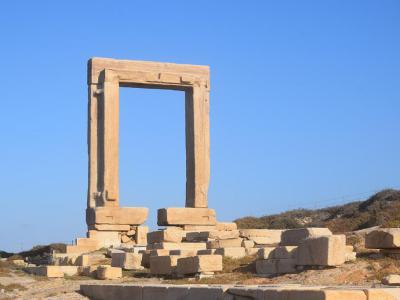
The Temple of Apollo, also known as Portara, is the most recognizable landmark of Naxos and one of the most striking ancient monuments in the Cyclades. Standing on the small islet of Palatia at the entrance to the harbor of Naxos Town, the structure is best known for its massive marble doorway, called the Portara. This monumental gateway is all that remains of a large temple that was begun in the 6th century BCE but never completed. Even in its unfinished state, the site gives visitors a powerful impression of the ambition and importance of ancient Naxos.
As you walk along the stone causeway that connects the islet of Palatia to the main harbor, the Portara gradually rises in front of you. The enormous marble gateway stands about six meters high and is built from large blocks of local Naxian marble, a material for which the island was famous in antiquity. Passing through the gateway, you are standing where the entrance to the temple’s main chamber would have been. From this point you can easily imagine the scale of the sanctuary that was planned here more than 2,500 years ago.
Construction of the temple began around 530 BCE during the rule of the local tyrant Lygdamis, who intended to create a grand sanctuary dedicated to the god Apollo. However, the project was abandoned when Lygdamis was overthrown, leaving the temple unfinished. Over time, much of the structure was dismantled or lost, but the enormous gateway remained standing. The location of the monument at the entrance of the harbor was also symbolic, greeting ancient sailors arriving on the island and emphasizing Naxos’s importance as a maritime center in the Aegean.
Stand near the edge of the site and look back toward the harbor and the white houses of Naxos Town, and you will see why this spot is one of the most photographed places on the island. The view stretches across the sea, the town, and the surrounding hills. The site is also linked to Greek mythology: according to legend, this is where the hero Theseus abandoned Ariadne after leaving Crete. Today, the Portara is especially famous at sunset, when the sun slowly descends behind the marble gateway and frames the monument against the colors of the Aegean sky.
As you walk along the stone causeway that connects the islet of Palatia to the main harbor, the Portara gradually rises in front of you. The enormous marble gateway stands about six meters high and is built from large blocks of local Naxian marble, a material for which the island was famous in antiquity. Passing through the gateway, you are standing where the entrance to the temple’s main chamber would have been. From this point you can easily imagine the scale of the sanctuary that was planned here more than 2,500 years ago.
Construction of the temple began around 530 BCE during the rule of the local tyrant Lygdamis, who intended to create a grand sanctuary dedicated to the god Apollo. However, the project was abandoned when Lygdamis was overthrown, leaving the temple unfinished. Over time, much of the structure was dismantled or lost, but the enormous gateway remained standing. The location of the monument at the entrance of the harbor was also symbolic, greeting ancient sailors arriving on the island and emphasizing Naxos’s importance as a maritime center in the Aegean.
Stand near the edge of the site and look back toward the harbor and the white houses of Naxos Town, and you will see why this spot is one of the most photographed places on the island. The view stretches across the sea, the town, and the surrounding hills. The site is also linked to Greek mythology: according to legend, this is where the hero Theseus abandoned Ariadne after leaving Crete. Today, the Portara is especially famous at sunset, when the sun slowly descends behind the marble gateway and frames the monument against the colors of the Aegean sky.
The Most Popular Cities
/ view all