

Audio Guide: Walking Through Santa Fe's Charming Historic Downtown (Self Guided), Santa Fe
“Every calculation based on experience elsewhere fails in New Mexico”, Governor Lew Wallace once observed. Santa Fe proves his point: few American capitals combine Pueblo traditions, Spanish colonial streets, Mexican history, and modern art.
Santa Fe, the capital of New Mexico, stands on a high plateau near the southern end of the Rocky Mountains. Long before Europeans arrived, Pueblo peoples inhabited the region, building farming communities sustained by the waters of the Santa Fe River. The area was part of an extensive Indigenous cultural landscape connected by trade routes stretching across the Southwest.
Spanish colonists established Santa Fe around 1609-1610 under Governor Pedro de Peralta, making it the administrative center of the province of New Mexico. Its full ceremonial name means “The Royal Town of the Holy Faith of Saint Francis of Assisi.” The shortened name, Santa Fe, simply means “Holy Faith” in Spanish.
Relations between the Spanish authorities and the Pueblo communities were frequently tense. Forced labor, religious suppression, and food shortages contributed to the Pueblo Revolt of 1680, during which Indigenous forces drove the Spanish from northern New Mexico. Spanish rule was restored in 1692-1693 under Diego de Vargas, although Pueblo traditions continued to shape the region’s identity.
After Mexico gained independence from Spain in 1821, Santa Fe became a Mexican provincial capital. That same year, the opening of the Santa Fe Trail connected the city with Missouri, encouraging commerce with the United States. During the Mexican-American War, American troops occupied Santa Fe in 1846. New Mexico formally became part of the United States under the 1848 Treaty of Guadalupe Hidalgo, and Santa Fe remained the territorial capital.
When New Mexico achieved statehood in 1912, Santa Fe became the country’s oldest state capital. During the early 20th century, artists, writers, archaeologists, and collectors were drawn to its landscapes and blend of Pueblo, Hispanic, and Anglo-American traditions.
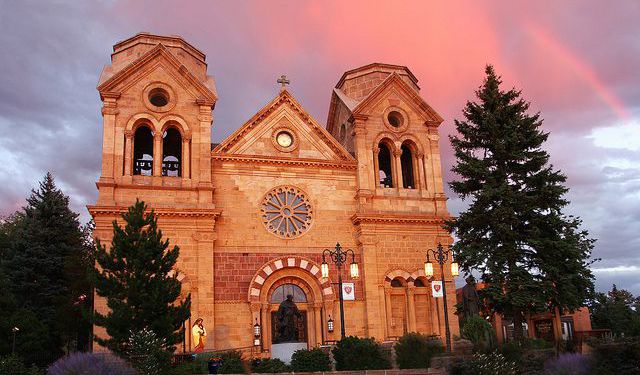
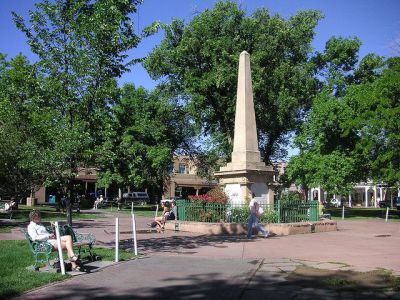
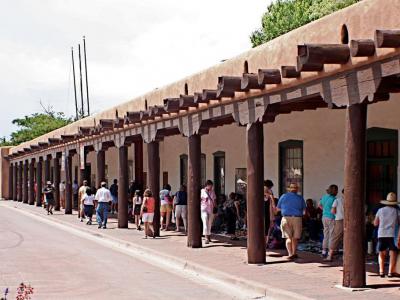
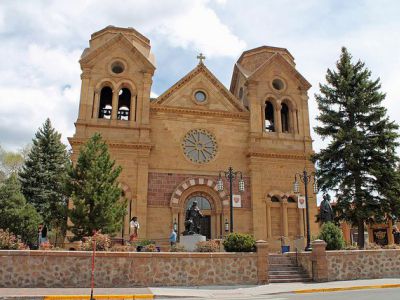
Downtown Santa Fe brings together centuries of history within a compact area. Santa Fe Plaza forms the lively civic heart, framed by adobe-style buildings and shaded walkways. On its northern side stands the Palace of the Governors, now part of the New Mexico History Museum. Nearby, the Cathedral Basilica of Saint Francis of Assisi rises with twin towers, while the modest adobe San Miguel Mission reflects the city’s earliest Spanish colonial and enduring religious heritage.
Today, Santa Fe is known for its adobe architecture, museums, galleries, and living Indigenous and Hispanic cultures. Strict architectural regulations have helped preserve its low-rise appearance, while the historic plaza remains the core of civic life, continuing a role it has held for more than four centuries.
Santa Fe, the capital of New Mexico, stands on a high plateau near the southern end of the Rocky Mountains. Long before Europeans arrived, Pueblo peoples inhabited the region, building farming communities sustained by the waters of the Santa Fe River. The area was part of an extensive Indigenous cultural landscape connected by trade routes stretching across the Southwest.
Spanish colonists established Santa Fe around 1609-1610 under Governor Pedro de Peralta, making it the administrative center of the province of New Mexico. Its full ceremonial name means “The Royal Town of the Holy Faith of Saint Francis of Assisi.” The shortened name, Santa Fe, simply means “Holy Faith” in Spanish.
Relations between the Spanish authorities and the Pueblo communities were frequently tense. Forced labor, religious suppression, and food shortages contributed to the Pueblo Revolt of 1680, during which Indigenous forces drove the Spanish from northern New Mexico. Spanish rule was restored in 1692-1693 under Diego de Vargas, although Pueblo traditions continued to shape the region’s identity.
After Mexico gained independence from Spain in 1821, Santa Fe became a Mexican provincial capital. That same year, the opening of the Santa Fe Trail connected the city with Missouri, encouraging commerce with the United States. During the Mexican-American War, American troops occupied Santa Fe in 1846. New Mexico formally became part of the United States under the 1848 Treaty of Guadalupe Hidalgo, and Santa Fe remained the territorial capital.
When New Mexico achieved statehood in 1912, Santa Fe became the country’s oldest state capital. During the early 20th century, artists, writers, archaeologists, and collectors were drawn to its landscapes and blend of Pueblo, Hispanic, and Anglo-American traditions.
Downtown Santa Fe brings together centuries of history within a compact area. Santa Fe Plaza forms the lively civic heart, framed by adobe-style buildings and shaded walkways. On its northern side stands the Palace of the Governors, now part of the New Mexico History Museum. Nearby, the Cathedral Basilica of Saint Francis of Assisi rises with twin towers, while the modest adobe San Miguel Mission reflects the city’s earliest Spanish colonial and enduring religious heritage.
Today, Santa Fe is known for its adobe architecture, museums, galleries, and living Indigenous and Hispanic cultures. Strict architectural regulations have helped preserve its low-rise appearance, while the historic plaza remains the core of civic life, continuing a role it has held for more than four centuries.
How it works: Download the app "GPSmyCity: Walks in 1K+ Cities" from Apple App Store or Google Play Store to your mobile phone or tablet. The app turns your mobile device into a personal tour guide and its built-in GPS navigation functions guide you from one tour stop to next. The app works offline, so no data plan is needed when traveling abroad.
Download The GPSmyCity App



Walking Through Santa Fe's Charming Historic Downtown Map
Guide Name: Walking Through Santa Fe's Charming Historic Downtown
Guide Location: USA » Santa Fe (See other walking tours in Santa Fe)
Guide Type: Self-guided Walking Tour (Sightseeing)
Tour Duration: 2 Hours
Travel Distance: 3.4 Km or 2.1 Miles
Tour Best Suited For: First-time visit
Guide Location: USA » Santa Fe (See other walking tours in Santa Fe)
Guide Type: Self-guided Walking Tour (Sightseeing)
Tour Duration: 2 Hours
Travel Distance: 3.4 Km or 2.1 Miles
Tour Best Suited For: First-time visit
Sights Featured in This Walk
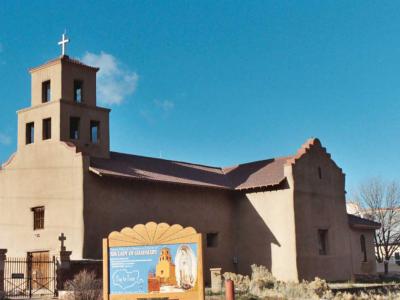
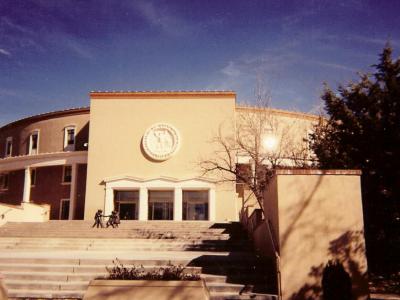
![San Miguel Mission [Oldest Church in the U.S.]](/img/gd_attr/35140.jpg)
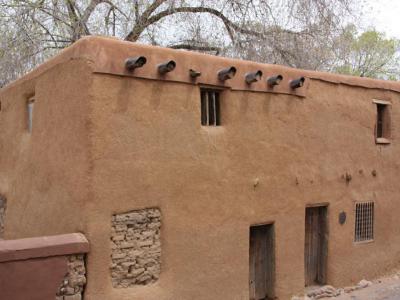
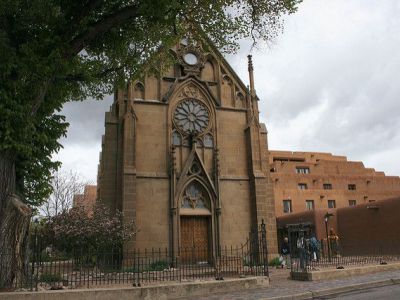
Walking Tours in Santa Fe, New Mexico

Create Your Own Walk in Santa Fe
Creating your own self-guided walk in Santa Fe is easy and fun. Choose the city attractions that you want to see and a walk route map will be created just for you. You can even set your hotel as the start point of the walk.
Canyon Road Art and Architecture Tour
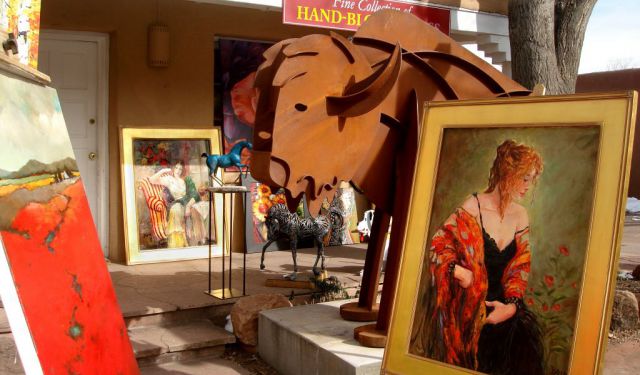
In 1921, sculptor and ceramics teacher Frank Applegate came to Santa Fe to study clay, camped for a week in an artist’s orchard, and decided never to leave.
Canyon Road began not as an art district but as a route between the Santa Fe River valley and the foothills of the Sangre de Cristo Mountains. Long before Spanish settlement, Indigenous travelers followed a path through this corridor.... view more
Tour Duration: 1 Hour
Travel Distance: 1 Km or 0.6 Miles
Canyon Road began not as an art district but as a route between the Santa Fe River valley and the foothills of the Sangre de Cristo Mountains. Long before Spanish settlement, Indigenous travelers followed a path through this corridor.... view more
Tour Duration: 1 Hour
Travel Distance: 1 Km or 0.6 Miles
Historical Churches
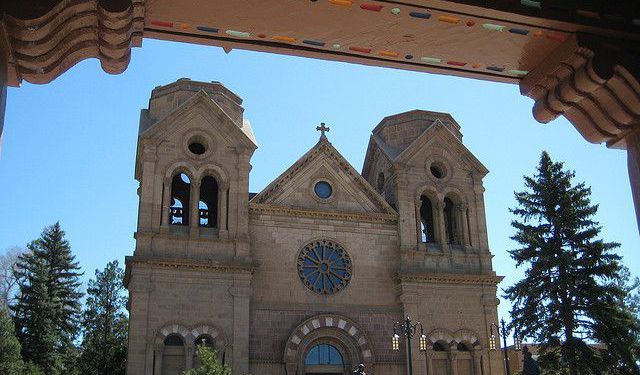
In Santa Fe, there's no shortage of religious sites fit to impress. Some of the local churches date back as far as the foundation of the city itself. As you immerse in their hallowed halls, prepare yourself to be enraptured by their architectural and spiritual splendor.
One such venerable place is undoubtedly the San Miguel Mission. The oldest church in the United States, it was built... view more
Tour Duration: 1 Hour
Travel Distance: 2.8 Km or 1.7 Miles
One such venerable place is undoubtedly the San Miguel Mission. The oldest church in the United States, it was built... view more
Tour Duration: 1 Hour
Travel Distance: 2.8 Km or 1.7 Miles
The Most Popular Cities
/ view all