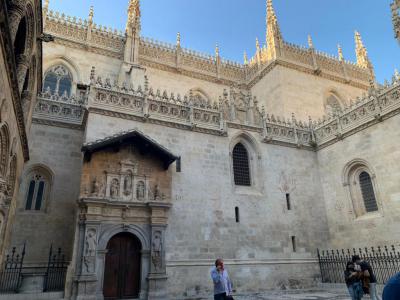


Capilla Real de Granada (Royal Chapel), Granada (must see)
The Royal Chapel of Granada was created as the burial place of the Catholic Monarchs, Isabella I of Castile and Ferdinand II of Aragon, whose conquest of Granada in 1492 brought the last Muslim kingdom in the Iberian Peninsula under Christian rule. When Isabella made Granada her new home, she was determined to leave her mark on the city. Among her priorities was a grand funerary chapel attached to the new cathedral. Construction was completed in 1517 in the Isabelline style, a transitional form combining late Gothic and early Renaissance elements.
Approach the chapel along Oficios Street, pausing in the courtyard to examine the coats of arms and delicate Plateresque carvings surrounding the main portal.
The chapel is dedicated to Saint John the Baptist and Saint John the Evangelist. Its interior is reminiscent of the Monastery of San Juan de los Reyes in Toledo, with four side chapels arranged around the transept and an ornate Gothic vault. At the center of the transept stand the monumental, raised marble tombs of Ferdinand and Isabella. Nearby are the tombs of their daughter, Joanna I of Castile, and her husband, Philip I. To see them, step inside the nave and proceed toward the center of the transept to view the intricate Carrara marble mausoleums.
The magnificent marble monuments in the transept serve as elaborate artistic memorials, while the actual royal remains rest directly below them in a simpler, more austere crypt. Visitors can look into this crypt to view the five modest lead coffins where the monarchs and the young Prince Miguel are laid to rest.
Next, turn back toward the nave to inspect the massive gilded wrought-iron screen forged by Master Bartolomé, before browsing the adjoining sacristy museum, which displays Queen Isabella's personal art collection and royal crown.
The chapel offers a powerful reminder of Granada’s transformation in 1492. The monarchs buried here accepted the surrender of Muhammad XII, the last Nasrid ruler, and supported Christopher Columbus on the voyage that same year, which opened Spain’s way to the Americas.
Approach the chapel along Oficios Street, pausing in the courtyard to examine the coats of arms and delicate Plateresque carvings surrounding the main portal.
The chapel is dedicated to Saint John the Baptist and Saint John the Evangelist. Its interior is reminiscent of the Monastery of San Juan de los Reyes in Toledo, with four side chapels arranged around the transept and an ornate Gothic vault. At the center of the transept stand the monumental, raised marble tombs of Ferdinand and Isabella. Nearby are the tombs of their daughter, Joanna I of Castile, and her husband, Philip I. To see them, step inside the nave and proceed toward the center of the transept to view the intricate Carrara marble mausoleums.
The magnificent marble monuments in the transept serve as elaborate artistic memorials, while the actual royal remains rest directly below them in a simpler, more austere crypt. Visitors can look into this crypt to view the five modest lead coffins where the monarchs and the young Prince Miguel are laid to rest.
Next, turn back toward the nave to inspect the massive gilded wrought-iron screen forged by Master Bartolomé, before browsing the adjoining sacristy museum, which displays Queen Isabella's personal art collection and royal crown.
The chapel offers a powerful reminder of Granada’s transformation in 1492. The monarchs buried here accepted the surrender of Muhammad XII, the last Nasrid ruler, and supported Christopher Columbus on the voyage that same year, which opened Spain’s way to the Americas.
Want to visit this sight? Check out these Self-Guided Walking Tours in Granada. Alternatively, you can download the mobile app "GPSmyCity: Walks in 1K+ Cities" from Apple App Store or Google Play Store. The app turns your mobile device to a personal tour guide and it works offline, so no data plan is needed when traveling abroad.
Download The GPSmyCity App



Capilla Real de Granada (Royal Chapel) on Map
Sight Name: Capilla Real de Granada (Royal Chapel)
Sight Location: Granada, Spain (See walking tours in Granada)
Sight Type: Religious
Guide(s) Containing This Sight:
Sight Location: Granada, Spain (See walking tours in Granada)
Sight Type: Religious
Guide(s) Containing This Sight:
Nearby Sights


Walking Tours in Granada, Spain

Create Your Own Walk in Granada
Creating your own self-guided walk in Granada is easy and fun. Choose the city attractions that you want to see and a walk route map will be created just for you. You can even set your hotel as the start point of the walk.
Albayzín Walking Tour
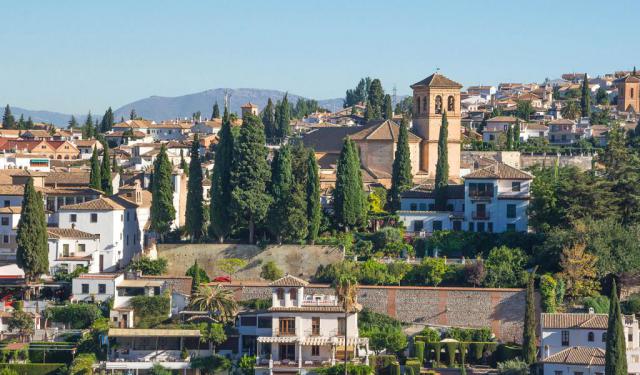
American writer Washington Irving’s book Tales of the Alhambra repeatedly features the Albayzín quarter. He was particularly struck by the district at night, when he heard “the tinkling of innumerable guitars, and the clicking of castanets” rising from its streets and gardens.
The Albayzín occupies the hill opposite the Alhambra, on the northern side of the Darro River. It is one of... view more
Tour Duration: 2 Hour(s)
Travel Distance: 2.3 Km or 1.4 Miles
The Albayzín occupies the hill opposite the Alhambra, on the northern side of the Darro River. It is one of... view more
Tour Duration: 2 Hour(s)
Travel Distance: 2.3 Km or 1.4 Miles
Alhambra Walking Tour
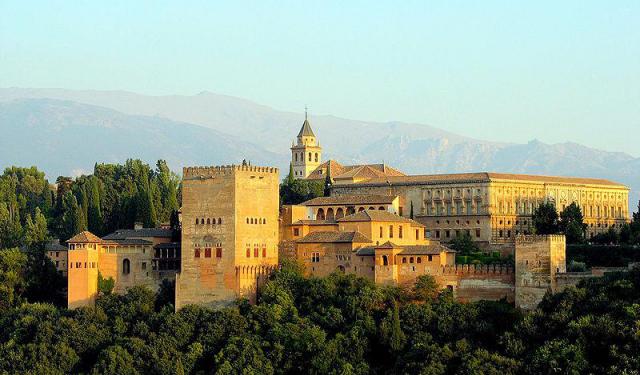
The Alhambra is Granada’s most famous monument and one of the finest surviving examples of medieval Islamic architecture in Europe. Its name comes from Arabic and is generally translated as “The Red One,” probably referring to the reddish walls of the fortress. The complex occupies Sabika Hill, overlooking Granada and the Albaicín.
The hill was fortified as early as the 9th century, but... view more
Tour Duration: 2 Hour(s)
Travel Distance: 2.0 Km or 1.2 Miles
The hill was fortified as early as the 9th century, but... view more
Tour Duration: 2 Hour(s)
Travel Distance: 2.0 Km or 1.2 Miles
Granada's Architectural Jewels
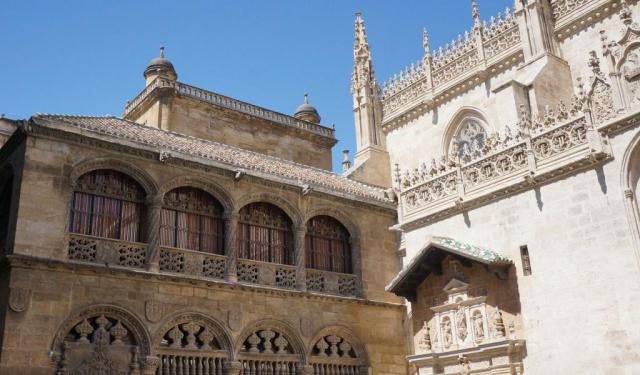
Over the course of centuries, Granada's architecture has been influenced by four major styles – Moorish, Renaissance, Gothic and Baroque. The city’s most impressive buildings date from the period of Arabic rule and the subsequent Catholic epoch which started after the Moors were displaced in 1492.
From the dazzling majesty of the Alhambra to the awe-inspiring churches and the subtly... view more
Tour Duration: 2 Hour(s)
Travel Distance: 3.5 Km or 2.2 Miles
From the dazzling majesty of the Alhambra to the awe-inspiring churches and the subtly... view more
Tour Duration: 2 Hour(s)
Travel Distance: 3.5 Km or 2.2 Miles
A Walk in Granada's Historical Old Town
American writer Washington Irving arrived at the Alhambra in 1829-and stayed for nearly three months. He became so concerned about visitors scratching their names into the monument that he and Prince Dolgorouki provided a leather-bound visitors’ book as an alternative.
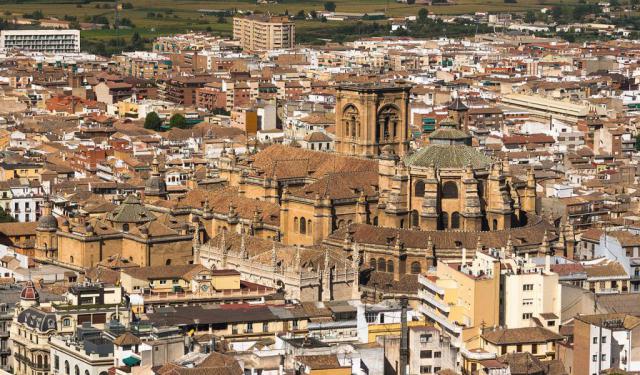
Granada lies at the foot of the Sierra Nevada mountain range, where the Darro and Genil rivers meet. Its history reaches back... view more
Tour Duration: 3 Hour(s)
Travel Distance: 3.5 Km or 2.2 Miles
Granada lies at the foot of the Sierra Nevada mountain range, where the Darro and Genil rivers meet. Its history reaches back... view more
Tour Duration: 3 Hour(s)
Travel Distance: 3.5 Km or 2.2 Miles