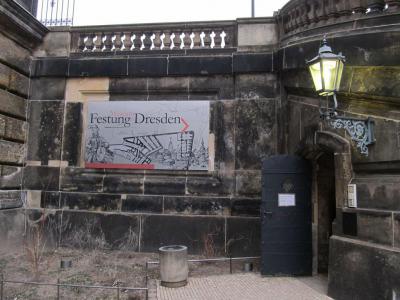


Museum of Dresden Fortress, Dresden
The Dresden Fortress Museum (Festung Dresden), nestled beneath Brühl's Terrace in the heart of Dresden’s historic center and near the Dresden University of Fine Arts, offers a comprehensive look into the city’s rich historical and architectural past. This museum forms a large section of the city’s northern wall along the Elbe River.
Originally opening its doors in 1992, the museum was extensively renovated beginning in 2017 and reopened in 2019 with a new exhibit titled “Celebrations, Dramas and Disasters.” These improvements were designed to enrich the visitor experience with state-of-the-art audiovisual presentations, allowing it to attract around 100,000 visitors each year.
The museum’s exhibits detail the long history of Dresden’s fortifications, starting from their initial construction in 1546 under Prince Moritz of Saxony. Notable among its architectural treasures is the 450-year-old Brick Gate, Dresden’s only surviving city gate, which features parts of the original guard rooms, ancient iron door hinges, and what is believed to be the city’s oldest stone bridge.
In addition, the museum displays well-preserved fortifications like the Small Bastion with its exposed weapon corridors that extend toward the Elbe and the Maiden Bastion, also known as Bastion Venus. These fortifications played crucial roles throughout history, serving as armament storage, shelters in wartime, and as a research facility where Johann Friedrich Böttger developed European hard porcelain.
Over the centuries, the fortress transitioned from a vital military post to a more ceremonial site under Heinrich von Brühl, who added the second Belvedere and the Brühl Terraces. Despite suffering from a major explosion in 1747 and the bombings of World War II, its historical significance has been maintained through ongoing archaeological and preservation work, particularly since the 1990s following Germany’s reunification.
Today, the museum stands as a tribute to Dresden’s enduring historical significance and resilience, providing visitors with a unique perspective on its past through a combination of original architecture and innovative modern exhibits.
Originally opening its doors in 1992, the museum was extensively renovated beginning in 2017 and reopened in 2019 with a new exhibit titled “Celebrations, Dramas and Disasters.” These improvements were designed to enrich the visitor experience with state-of-the-art audiovisual presentations, allowing it to attract around 100,000 visitors each year.
The museum’s exhibits detail the long history of Dresden’s fortifications, starting from their initial construction in 1546 under Prince Moritz of Saxony. Notable among its architectural treasures is the 450-year-old Brick Gate, Dresden’s only surviving city gate, which features parts of the original guard rooms, ancient iron door hinges, and what is believed to be the city’s oldest stone bridge.
In addition, the museum displays well-preserved fortifications like the Small Bastion with its exposed weapon corridors that extend toward the Elbe and the Maiden Bastion, also known as Bastion Venus. These fortifications played crucial roles throughout history, serving as armament storage, shelters in wartime, and as a research facility where Johann Friedrich Böttger developed European hard porcelain.
Over the centuries, the fortress transitioned from a vital military post to a more ceremonial site under Heinrich von Brühl, who added the second Belvedere and the Brühl Terraces. Despite suffering from a major explosion in 1747 and the bombings of World War II, its historical significance has been maintained through ongoing archaeological and preservation work, particularly since the 1990s following Germany’s reunification.
Today, the museum stands as a tribute to Dresden’s enduring historical significance and resilience, providing visitors with a unique perspective on its past through a combination of original architecture and innovative modern exhibits.
Want to visit this sight? Check out these Self-Guided Walking Tours in Dresden. Alternatively, you can download the mobile app "GPSmyCity: Walks in 1K+ Cities" from Apple App Store or Google Play Store. The app turns your mobile device to a personal tour guide and it works offline, so no data plan is needed when traveling abroad.
Download The GPSmyCity App



Museum of Dresden Fortress on Map
Sight Name: Museum of Dresden Fortress
Sight Location: Dresden, Germany (See walking tours in Dresden)
Sight Type: Museum/Gallery
Sight Location: Dresden, Germany (See walking tours in Dresden)
Sight Type: Museum/Gallery
Nearby Sights

Walking Tours in Dresden, Germany

Create Your Own Walk in Dresden
Creating your own self-guided walk in Dresden is easy and fun. Choose the city attractions that you want to see and a walk route map will be created just for you. You can even set your hotel as the start point of the walk.
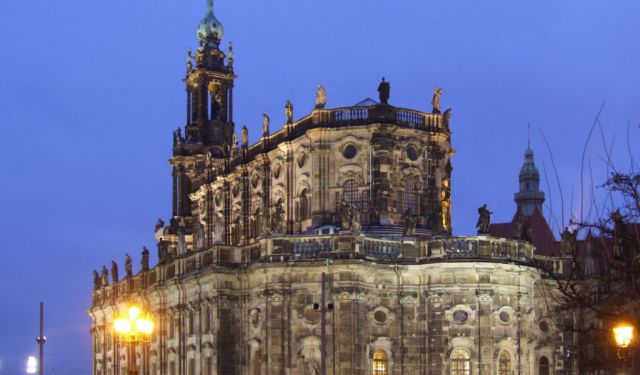
Dresden's Architectural Jewels
If there is one thing Dresden is particularly famous for, it is the magnificent architecture. Although known primarily for its Baroque buildings, the city has several other architectural styles present too, such as Renaissance, Historicism, Modernism and Post-modernism.
Much of downtown Dresden was destroyed in February 1945 by Allied bombing, which in turn prompted the rebuilding of the... view more
Tour Duration: 1 Hour(s)
Travel Distance: 1.9 Km or 1.2 Miles
Much of downtown Dresden was destroyed in February 1945 by Allied bombing, which in turn prompted the rebuilding of the... view more
Tour Duration: 1 Hour(s)
Travel Distance: 1.9 Km or 1.2 Miles
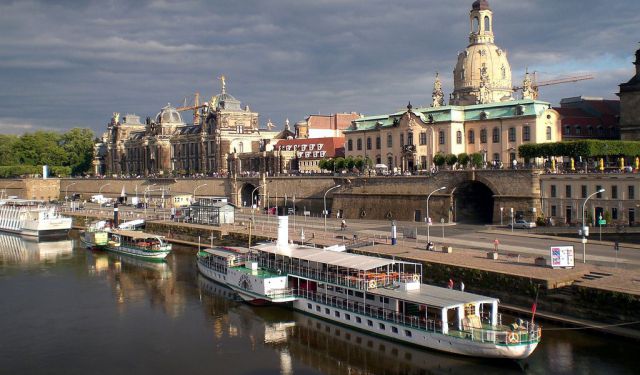
A Walk Through Dresden's Historic Old Town
Dresden’s reputation as a city of art and architecture has earned it the nickname “Florence on the Elbe.”
Dresden, the capital of Saxony, lies on the banks of the River Elbe in eastern Germany. The area may have been settled by Neolithic communities as early as 7500 BC, but Dresden’s documented history begins much later. The city developed within the Margraviate of Meissen, a territory... view more
Tour Duration: 2 Hour(s)
Travel Distance: 2.5 Km or 1.6 Miles
Dresden, the capital of Saxony, lies on the banks of the River Elbe in eastern Germany. The area may have been settled by Neolithic communities as early as 7500 BC, but Dresden’s documented history begins much later. The city developed within the Margraviate of Meissen, a territory... view more
Tour Duration: 2 Hour(s)
Travel Distance: 2.5 Km or 1.6 Miles
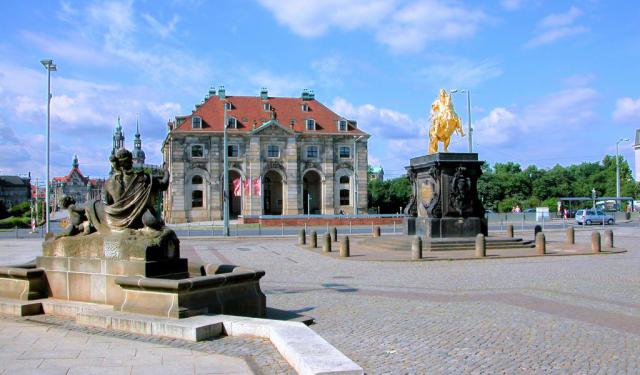
Exploring Dresden New Town on Foot
Dresden’s New Town occupies the northern bank of the Elbe, directly opposite the historic Old Town. Despite its name, it is far from new. The area was settled in the Middle Ages and was historically known as Old Dresden. It was incorporated into Dresden in 1549 under Elector Moritz but remained a relatively modest settlement for centuries compared with the more prestigious city on the opposite... view more
Tour Duration: 1 Hour(s)
Travel Distance: 2.2 Km or 1.4 Miles
Tour Duration: 1 Hour(s)
Travel Distance: 2.2 Km or 1.4 Miles