

Santa Cruz Church, Manila
Santa Cruz Church is one of Manila’s oldest Roman Catholic churches and has long been the spiritual heart of the historic Santa Cruz district. Founded by the Jesuits in 1608, it was originally built to serve the growing community of Chinese converts to Catholicism. After the Jesuits were expelled from the Philippines in 1768, the Dominicans took over the parish. Over the centuries, the church suffered damage from earthquakes, fires, and the Second World War, before the present structure was completed in 1947.
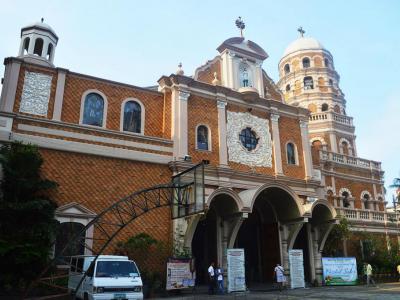
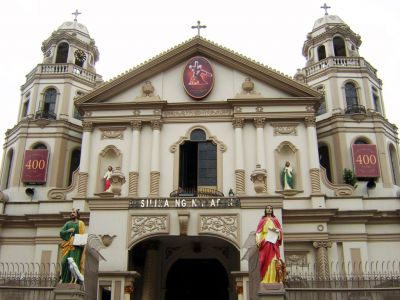
Before entering, take a moment to observe how the rebuilt church preserves the symmetry and restrained elegance of Spanish colonial architecture using modern construction suited to Manila's earthquake-prone setting. Notice the solid proportions of the façade and a domed bell tower on the right side, whose simpler design reflects the practical engineering priorities of the reconstruction. Step inside and look upward to appreciate the high ceilings, graceful arches, and stained-glass windows, which create a calm and devotional atmosphere away from the noise outside. From the nave, move toward the side chapels. On your left, a chapel displays statues of various Catholic saints, while on your right, another chapel houses a replica of the revered Jesus of Nazareth, along with tombs of prominent Filipino-Chinese residents of the district.
Continue toward the main altar area: the image of Our Lady of the Pillar was venerated here since the eighteenth century. Introduced from Spain and canonically established in 1743, it remains central to the church’s religious traditions. After your visit, return outside to see the historic Carriedo Fountain beside the church, a reminder of Manila’s early public water system, while nearby sites such as the former San Lazaro Hospital reflect the district’s long civic and educational history.
Before entering, take a moment to observe how the rebuilt church preserves the symmetry and restrained elegance of Spanish colonial architecture using modern construction suited to Manila's earthquake-prone setting. Notice the solid proportions of the façade and a domed bell tower on the right side, whose simpler design reflects the practical engineering priorities of the reconstruction. Step inside and look upward to appreciate the high ceilings, graceful arches, and stained-glass windows, which create a calm and devotional atmosphere away from the noise outside. From the nave, move toward the side chapels. On your left, a chapel displays statues of various Catholic saints, while on your right, another chapel houses a replica of the revered Jesus of Nazareth, along with tombs of prominent Filipino-Chinese residents of the district.
Continue toward the main altar area: the image of Our Lady of the Pillar was venerated here since the eighteenth century. Introduced from Spain and canonically established in 1743, it remains central to the church’s religious traditions. After your visit, return outside to see the historic Carriedo Fountain beside the church, a reminder of Manila’s early public water system, while nearby sites such as the former San Lazaro Hospital reflect the district’s long civic and educational history.
Want to visit this sight? Check out these Self-Guided Walking Tours in Manila. Alternatively, you can download the mobile app "GPSmyCity: Walks in 1K+ Cities" from Apple App Store or Google Play Store. The app turns your mobile device to a personal tour guide and it works offline, so no data plan is needed when traveling abroad.
Download The GPSmyCity App



Santa Cruz Church on Map
Sight Name: Santa Cruz Church
Sight Location: Manila, Philippines (See walking tours in Manila)
Sight Type: Religious
Guide(s) Containing This Sight:
Sight Location: Manila, Philippines (See walking tours in Manila)
Sight Type: Religious
Guide(s) Containing This Sight:
Nearby Sights

Walking Tours in Manila, Philippines

Create Your Own Walk in Manila
Creating your own self-guided walk in Manila is easy and fun. Choose the city attractions that you want to see and a walk route map will be created just for you. You can even set your hotel as the start point of the walk.
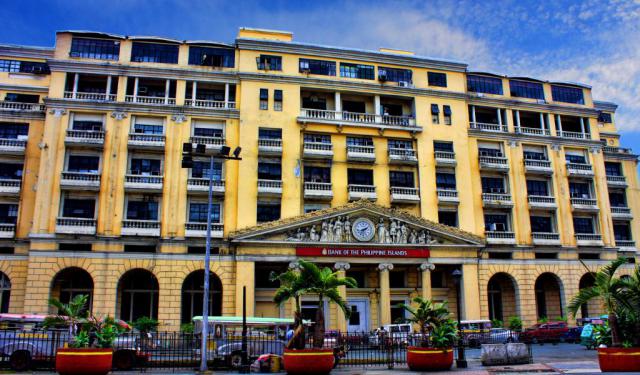
Historical Buildings Walking Tour
Every city tells a story, but few have witnessed as many triumphs and tragedies as Manila. Behind these façades lie the chapters of empire, revolution, war, and rebirth. As José Rizal wisely observed, 'To foretell the destiny of a nation, it is necessary to open the book that tells of her past.'
The historic buildings of Manila tell the story of more than four centuries of... view more
Tour Duration: 2 Hours
Travel Distance: 3.3 Km or 2.1 Miles
The historic buildings of Manila tell the story of more than four centuries of... view more
Tour Duration: 2 Hours
Travel Distance: 3.3 Km or 2.1 Miles
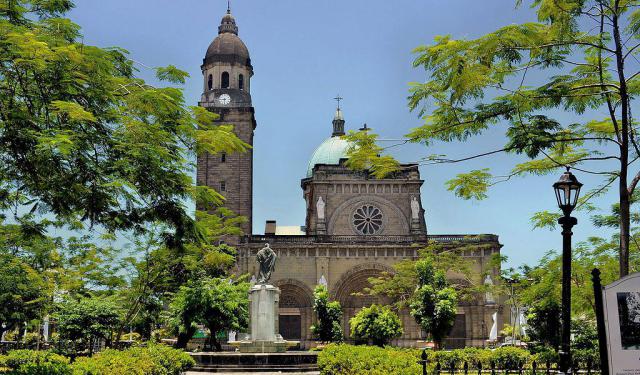
Manila Old Town (Intramuros) Walking Tour
For centuries, travelers arrived here searching for the 'Pearl of the Orient.' Behind these walls lies a city where Asian kingdoms, Spanish conquistadors, American planners, and Filipino revolutionaries all left their mark.
Manila, the capital of the Philippines, is one of Southeast Asia's oldest continuously inhabited cities and has served for centuries as the country's... view more
Tour Duration: 2 Hours
Travel Distance: 2.3 Km or 1.4 Miles
Manila, the capital of the Philippines, is one of Southeast Asia's oldest continuously inhabited cities and has served for centuries as the country's... view more
Tour Duration: 2 Hours
Travel Distance: 2.3 Km or 1.4 Miles
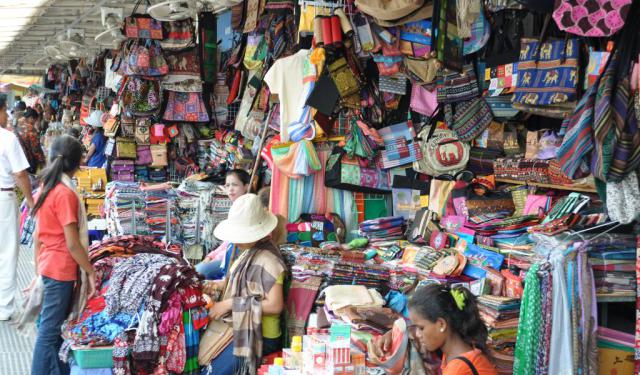
Traditional Markets
Traditional markets showcase a unique aspect of life in any city. The ones featured in this walk offer a glance into the authentic life and habits of Manila’s people and play a vital role in the Philippines' capital's economic and cultural landscape. Traditionally, local markets sell a broader range of products than regular shops can provide: from veggies and fruits to dried fish and... view more
Tour Duration: 1 Hour
Travel Distance: 3 Km or 1.9 Miles
Tour Duration: 1 Hour
Travel Distance: 3 Km or 1.9 Miles
Useful Travel Guides for Planning Your Trip

Manila Shopping: 20 Filipino Goods To Bring Home
An archipelago of 7,000+ islands, The Philippines is a diverse nation populated by different tribes, each having their own culture and traditions. In Manila, one can find a whole lot of things worth keeping as a Filipino memento; it just might take one a little while to figure out what's best...