

Exploring the City Walls and Alcazar of Segovia, Segovia, Spain
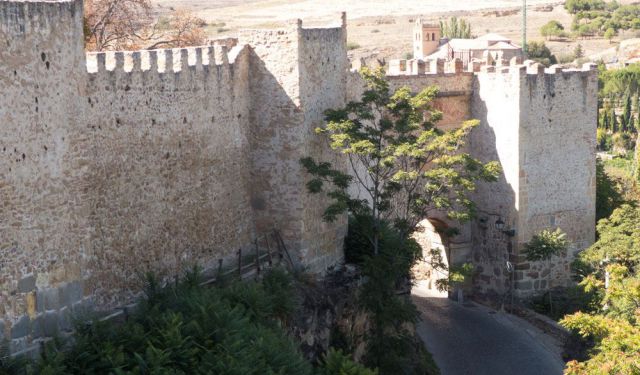
Segovia’s fortifications tend to be a bit overshadowed by the city’s main tourist atraction, the Roman aqueduct. But the city walls and Alcazar (fortified castle) are an important part of Segovia’s history. And they offer the visitor some spectacular views of the surrounding countryside, and a peaceful walk around a less visited part of town.
The Romans began enclosing their towns during the 2nd century, and it is likely that Segovia’s first fortifications were built at this time. However, the walls and castle that you see today are medieval in origin, built to defend the city from the Moors. They fell into disuse in later years, and gradually declined, but were restored in the 20th century.
The walls are 3.5 km long. They originally included a number of gates, fortresses and towers, but many of these have now disappeared. Work has been done on recreating some parts of the wall, such as the Puerta de San Andres, and on making it accessible for tourists. Together with the old town and aqueduct of Segovia, the walls and Alcazar became part of a UNESCO World Heritage Site in 1985.
The walls of Segovia are no longer complete and in the past many houses were built right up to the wall. This means that you can’t walk all the way around. However with a bit of persistence you can explore much of what still exists. You will also find vantage points around the town where you can see the line of the walls. ...... (follow the instructions below for accessing the rest of this article).
How it works: The full article is featured in the app "GPSmyCity: Walks in 1K+ Cities" on Apple App Store and Google Play Store.
Download the app to your mobile device to read the article offline and create a self-guided walking tour to visit the sights featured in this article. The app's navigation functions guide you from one sight to the next. The app works offline, so no data plan is needed when traveling abroad.
Download The GPSmyCity App



Sights Featured in This Article
Guide Name: Exploring the City Walls and Alcazar of Segovia
Guide Location: Spain » Segovia
Guide Type: Self-guided Walking Tour (Insider Tips)
Author: Karen Warren
Read it on Author's Website: https://www.worldwidewriter.co.uk/city-walls-and-alcazar-of-segovia.html
Sight(s) Featured in This Guide:
Guide Location: Spain » Segovia
Guide Type: Self-guided Walking Tour (Insider Tips)
Author: Karen Warren
Read it on Author's Website: https://www.worldwidewriter.co.uk/city-walls-and-alcazar-of-segovia.html
Sight(s) Featured in This Guide:
- Puerta de San Andres
- Eurostars Convento Capuchinos
- Puerta de San Cebrian
- Alcazar of Segovia
Insider Tips for Segovia, Spain
Segovia: For Architecture and Food
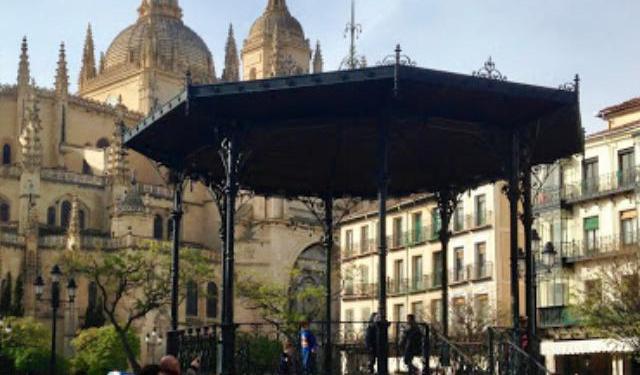
Segovia deserves to be recognized as maybe the inspiration for all of the fake kingdom names! Segovia has some of the best preserved Roman, Gothic, and Romanesque architecture, in addition to the Jewish quarter that has retained much of its original structure.
Segovia in 6 Hours
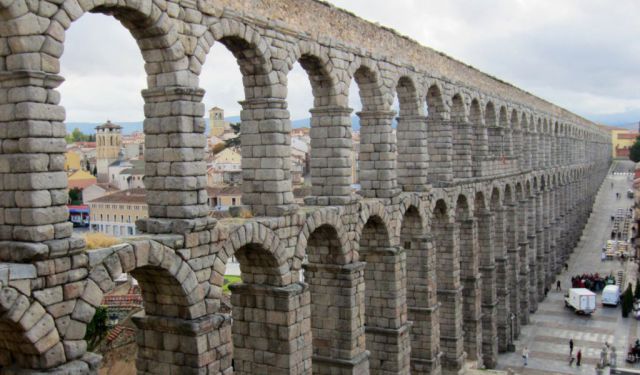
Located only 30 minutes away from Madrid by train, Segovia is an easy and convenient daytrip that offers a balance of larger-than-life sights and laid-back European charm. This snapshot guide covers how to get there and what to see.
Exploring the Roman Aqueduct of Segovia
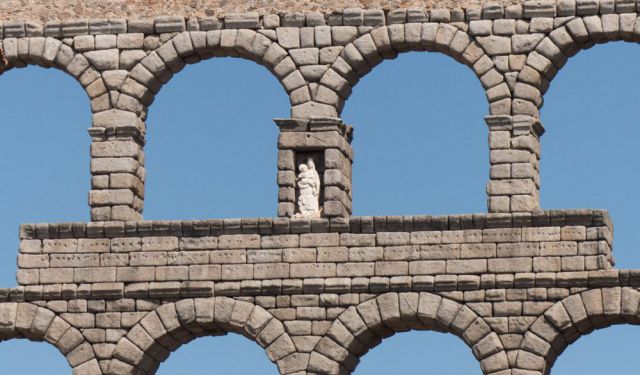
It is the classic view of Segovia. The spectacular Roman aqueduct that dominates the town and reaches out towards the mountains. Visitors clamber to the top for the views, or walk between its arches.
Insider Tips Overview
