

Kobe Self-guided Walking Tour, Kobe, Japan
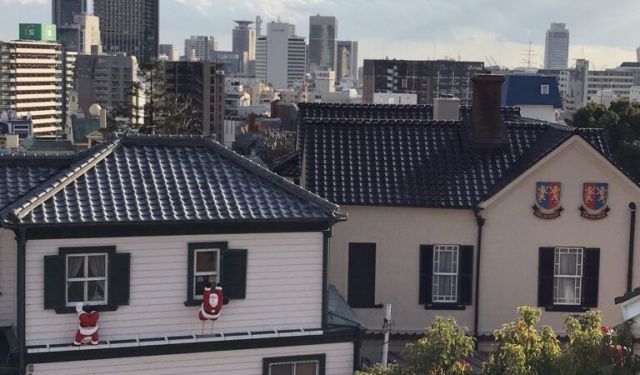
Unlike its esteemed Kansai neighbours of Osaka, Nara and Kyoto, Kobe is a relatively modern city which developed during the late 19th and early 20th century - Japan’s Meiji era. This was one of the Five Ports of Japan - the designated ports which were opened to foreign ships following the Meiji Restoration in 1868, ending the nation’s centuries of isolation. Although the treaties of the time stipulated that foreigners should reside in a designated ‘foreign settlement’, Kobe also had significant ‘mixed residential areas’ in which foreign merchants and settlers lived side-by-side with Japanese locals. As a result, Kobe developed a cosmopolitan character and an open, welcoming nature which it maintains to this day. This self-guided tour takes in some of the main sites around the waterfront area and former foreign settlements.
Also known as Nankin-machi, Chinatown is one of the notable landmarks of Kobe. The Chinese settlement here was established in 1868 following the opening of Kobe Port to foreign ships. As China was initially a ‘non-treaty’ country (having not signed a treaty with Japan at the same time as the Western powers), the Chinese were not permitted to settle in the designated foreign settlement and so established their own separate district in the mixed residential area near to the port. The Chinese and Japanese later signed a deal in 1871 which permitted the Chinese to use the foreign settlement, however the Chinese district remained and grew over time. The area’s name, Nankin-machi or ‘nankin’ town, is a reference to the city of Nanjing in China. ...... (follow the instructions below for accessing the rest of this article).
Also known as Nankin-machi, Chinatown is one of the notable landmarks of Kobe. The Chinese settlement here was established in 1868 following the opening of Kobe Port to foreign ships. As China was initially a ‘non-treaty’ country (having not signed a treaty with Japan at the same time as the Western powers), the Chinese were not permitted to settle in the designated foreign settlement and so established their own separate district in the mixed residential area near to the port. The Chinese and Japanese later signed a deal in 1871 which permitted the Chinese to use the foreign settlement, however the Chinese district remained and grew over time. The area’s name, Nankin-machi or ‘nankin’ town, is a reference to the city of Nanjing in China. ...... (follow the instructions below for accessing the rest of this article).
How it works: The full article is featured in the app "GPSmyCity: Walks in 1K+ Cities" on Apple App Store and Google Play Store.
Download the app to your mobile device to read the article offline and create a self-guided walking tour to visit the sights featured in this article. The app's navigation functions guide you from one sight to the next. The app works offline, so no data plan is needed when traveling abroad.
Download The GPSmyCity App



Sights Featured in This Article
Guide Name: Kobe Self-guided Walking Tour
Guide Location: Japan » Kobe
Guide Type: Self-guided Walking Tour (Insider Tips)
Author: Summer Buckley
Read it on Author's Website: https://thehelpfulstranger.blog/kobe-self-guided-walking-tour/
Sight(s) Featured in This Guide:
Guide Location: Japan » Kobe
Guide Type: Self-guided Walking Tour (Insider Tips)
Author: Summer Buckley
Read it on Author's Website: https://thehelpfulstranger.blog/kobe-self-guided-walking-tour/
Sight(s) Featured in This Guide:
- Kobe’s Chinatown
- Meriken Park
- Kobe Port Tower
- Maritime Museum
- Port of Kobe Earthquake Memorial
- Meriken Building
- Kaigan Building
- Old Kobe Residence 15th Hall
- Kobe City Museum
- Higashi Yuenchi
- Flower Road
- Memorial and Recovery Monument
- Kobe City Hall
- Kitano Ijinkan-Gai
- Nunobiki Herb Gardens & Ropeway
- Uroko House
- Moegi House
- Weathercock House
- Rhine House
- Starbucks
Insider Tips for Kobe, Japan
Kobe Travel Guide: Must-See Sites, Dining, and Activities
Kobe, a city of exquisite beauty and enduring spirit, is one of Japan’s 10 largest cities, a bustling metropolis perched between the sea and the Rokko mountains. Its captivating beauty and urban charm has earned it a cherished place among Japan’s most attractive cities. For centuries, Kobe has served as a maritime hub. Indeed, its port was among the first in Japan to open its doors to... view more
Insider Tips Overview
