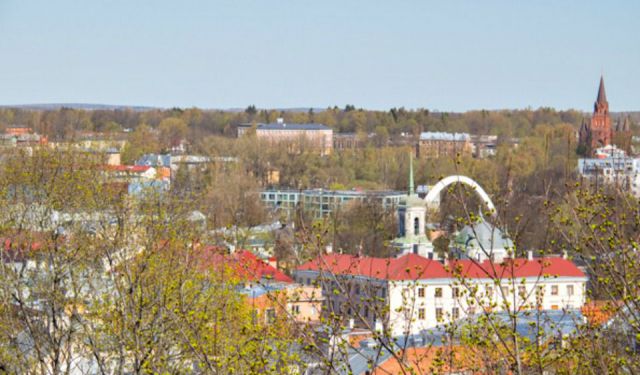


Tartu, the Cultural Capital of Estonia, Tartu, Estonia
Tartu, in Estonia prides itself on being the town of good or free thinking. Some free thinkers may consider the tradition of walking over the arch of the Kaarsild pedestrian bridge (pictured above) to prove that person is courageous is a good idea. Others may think this is dangerous and worthy of the fine that the police can impose. Somehow this town avoids extremes and produces interesting and harmonious projects. The Estonian National Museum, which opened in October 2016, is its latest triumph.
Various collections relating to the history of Estonia are now housed in a super-modern building that looks more likely to house space ships than historical artefacts. Visitors may wonder why this new museum was built on barren wasteland outside the city centre. This area is very much part of the history of Tartu as it was once an aerodrome. Air field Raadi (also known as Tartu Air Base) began operations in 1912 when Estonia was occupied by Russia. After Estonia gained independence in 1920 two hangars were built at Raadi and the airfield was expanded. In 1940 the Soviets took control and banned all flying. The Germans drove the Russians out of Estonia and began upgrading the airfield with a concrete runway. After the Soviets regained control of Raadi in 1944 the Luftwaffe bombed the airfield and destroyed several historical buildings. One of these buildings, Raadi Manor, housed the first National Estonian Museum. After the Second World War the airfield was expanded and became a secret Soviet air base. Tartu was cut off from the outside world and only permitted to meet family and friends once a year at a designated place outside Tartu. During that period large mounds were built around the airfield to conceal the aircraft using the base. ...... (follow the instructions below for accessing the rest of this article).
Various collections relating to the history of Estonia are now housed in a super-modern building that looks more likely to house space ships than historical artefacts. Visitors may wonder why this new museum was built on barren wasteland outside the city centre. This area is very much part of the history of Tartu as it was once an aerodrome. Air field Raadi (also known as Tartu Air Base) began operations in 1912 when Estonia was occupied by Russia. After Estonia gained independence in 1920 two hangars were built at Raadi and the airfield was expanded. In 1940 the Soviets took control and banned all flying. The Germans drove the Russians out of Estonia and began upgrading the airfield with a concrete runway. After the Soviets regained control of Raadi in 1944 the Luftwaffe bombed the airfield and destroyed several historical buildings. One of these buildings, Raadi Manor, housed the first National Estonian Museum. After the Second World War the airfield was expanded and became a secret Soviet air base. Tartu was cut off from the outside world and only permitted to meet family and friends once a year at a designated place outside Tartu. During that period large mounds were built around the airfield to conceal the aircraft using the base. ...... (follow the instructions below for accessing the rest of this article).
How it works: The full article is featured in the app "GPSmyCity: Walks in 1K+ Cities" on Apple App Store and Google Play Store.
Download the app to your mobile device to read the article offline and create a self-guided walking tour to visit the sights featured in this article. The app's navigation functions guide you from one sight to the next. The app works offline, so no data plan is needed when traveling abroad.
Download The GPSmyCity App



Sights Featured in This Article
Guide Name: Tartu, the Cultural Capital of Estonia
Guide Location: Estonia » Tartu
Guide Type: Self-guided Walking Tour (Insider Tips)
Author: Valery Collins
Read it on Author's Website: https://experiencedtraveller.com/journal/2017-01-01-tartu-the-cultural-capital-of-estonia
Sight(s) Featured in This Guide:
Guide Location: Estonia » Tartu
Guide Type: Self-guided Walking Tour (Insider Tips)
Author: Valery Collins
Read it on Author's Website: https://experiencedtraveller.com/journal/2017-01-01-tartu-the-cultural-capital-of-estonia
Sight(s) Featured in This Guide:
- Kaarsild pedestrian bridge
- Estonian National Museum
- Raadi Manor
- Vanemuine
- Teatri Kodu
- Toy Museum
- Karlova Manor
- Printing and Paper Museum
- St. John’s church
- Chez André
Insider Tips for Tartu, Estonia
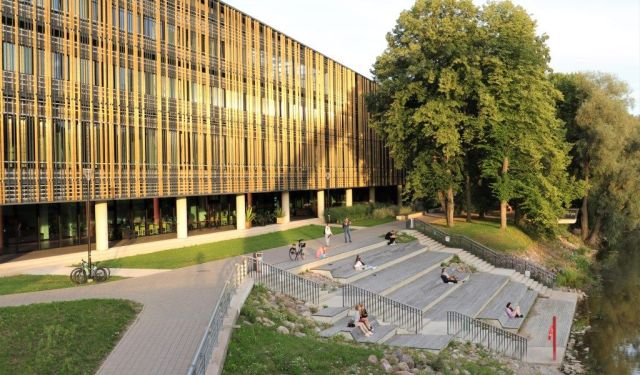
Some of the Best Things to Do in Tartu
Located in the south of Estonia, Tartu, its second largest city in size, has a whimsical appeal to it drawing you in with its pastel-coloured buildings, overflowing flower beds and cosy cafes that invite you to spend a few hours in the sun, slowly sipping a cup of tea in pure, undiluted peace. Tartu is best known as Estonia’s student capital thanks to the University of Tartu, which was... view more
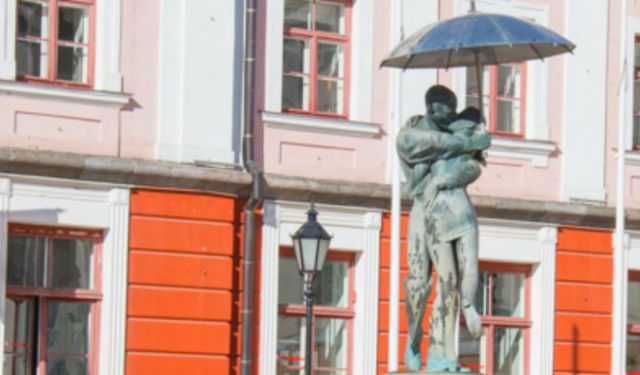
Tartu, the University Town of Estonia
Outside the Town Hall of Tartu, in Estonia is a statue of two students kissing. Or maybe they are newlyweds? The Kissing Statue was added to the fountain in Town Hall Square fifty years after it was built.
Insider Tips Overview
