Custom Walk in Palm Springs, California by helen_mar2946 created on 2022-05-03
Guide Location: USA » Palm Springs
Guide Type: Custom Walk
# of Sights: 15
Tour Duration: 7 Hour(s)
Travel Distance: 18.4 Km or 11.4 Miles
Share Key: MHCV6
Guide Type: Custom Walk
# of Sights: 15
Tour Duration: 7 Hour(s)
Travel Distance: 18.4 Km or 11.4 Miles
Share Key: MHCV6
How It Works
Please retrieve this walk in the GPSmyCity app. Once done, the app will guide you from one tour stop to the next as if you had a personal tour guide. If you created the walk on this website or come to the page via a link, please follow the instructions below to retrieve the walk in the app.
Retrieve This Walk in App
Step 1. Download the app "GPSmyCity: Walks in 1K+ Cities" on Apple App Store or Google Play Store.



Step 2. In the GPSmyCity app, download(or launch) the guide "Palm Springs Map and Walking Tours".
Step 3. Tap the menu button located at upper right corner of the "Walks" screen and select "Retrieve custom walk". Enter the share key: MHCV6
1) Palm Springs Walk of Stars (must see)
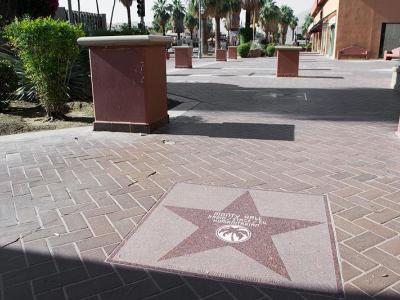
Located downtown along parts of Museum Drive, Tahquitz Canyon Way, and Palm Canyon Drive, the Walk of Stars is Palm Springs' answer to the Hollywood Walk of Fame. Stars are dedicated to important local figures, from famous residents, local philanthropists and humanitarians, and Medal of Honor recipients. It was started in 1992 with five stars and has now grown to include more than 400.
The main section of town along Palm Canyon Drive is a shopping and dining district, with great strolling and people watching. Palm Springs continues to surprise, and even as more luxury and chain brands move into the city, the place maintains its getaway village feel.
Around town, you will also find statues and monuments to other notable residents and city leaders. A few notable people mentioned include local businessman Pearl McCallum McManus and famous Hollywood icons like Marilyn Monroe, Liberace, Sophia Loren, Sonny Bono, and Elvis Presley.
Why You Should Visit:
Palm Springs has long been the getaway destination for the Hollywood elite. The Walk of Stars here is far less crowded than its western cousin but just as meaningful. You'll enjoy strolling along the main town streets and seeing how many names you recognize. It's partly a walk down memory lane and partly an excellent destination for some shopping or a fine meal.
Tips:
The noteworthy statue of Marilyn Monroe, Forever Marilyn, was set to be displayed permanently near the art museum. The statue has toured all over the world and has often appeared as a fixture in Palm Springs. Sculptor Seward Johnson designed the 26-foot tall, 34,000-pound statue. However, there's been some local controversy, and its ultimate fate is currently up in the air–much like Marilyn's dress.
The main section of town along Palm Canyon Drive is a shopping and dining district, with great strolling and people watching. Palm Springs continues to surprise, and even as more luxury and chain brands move into the city, the place maintains its getaway village feel.
Around town, you will also find statues and monuments to other notable residents and city leaders. A few notable people mentioned include local businessman Pearl McCallum McManus and famous Hollywood icons like Marilyn Monroe, Liberace, Sophia Loren, Sonny Bono, and Elvis Presley.
Why You Should Visit:
Palm Springs has long been the getaway destination for the Hollywood elite. The Walk of Stars here is far less crowded than its western cousin but just as meaningful. You'll enjoy strolling along the main town streets and seeing how many names you recognize. It's partly a walk down memory lane and partly an excellent destination for some shopping or a fine meal.
Tips:
The noteworthy statue of Marilyn Monroe, Forever Marilyn, was set to be displayed permanently near the art museum. The statue has toured all over the world and has often appeared as a fixture in Palm Springs. Sculptor Seward Johnson designed the 26-foot tall, 34,000-pound statue. However, there's been some local controversy, and its ultimate fate is currently up in the air–much like Marilyn's dress.
2) Liberace House
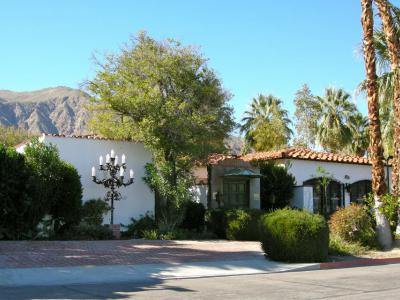
Although throughout his lifetime flamboyant pianist, Władziu Valentino Liberace, (the Grammy winner and possibly the music world's ultimate showman) had owned four Palm Springs homes, this beautiful Mediterranean estate at the intersection of Alejo and Belardo roads is most widely known for representing his particularly eclectic vision.
After the acquisition, Liberace turned this former boutique hotel with five bedrooms into a set of thematic units. Prime among them was the Valentino bedroom, featuring a sleigh bed and other furnishings, all originally from Valentino's home "Falcon's Lair", purchased at an auction. There was also the perky Safari Room with a tiger painting, a lion tapestry, and a life-size horse sculpture; and a Persian tent room by the side of the pool. Outside the rooms, Liberace spent daily some time praying in his onsite shrine dedicated to Saint Anthony. The musician reportedly passed away here in February 1987.
While the property has now lost some of its dazzles brought in by Liberace, the presence of several L's strategically placed throughout the exterior – including spots like the garden fencing, doors of the garage (where the pianist reportedly took to living at one point), and mosaic tiles in cement in front of the side door – remove any doubt as to the owner's identity.
After the acquisition, Liberace turned this former boutique hotel with five bedrooms into a set of thematic units. Prime among them was the Valentino bedroom, featuring a sleigh bed and other furnishings, all originally from Valentino's home "Falcon's Lair", purchased at an auction. There was also the perky Safari Room with a tiger painting, a lion tapestry, and a life-size horse sculpture; and a Persian tent room by the side of the pool. Outside the rooms, Liberace spent daily some time praying in his onsite shrine dedicated to Saint Anthony. The musician reportedly passed away here in February 1987.
While the property has now lost some of its dazzles brought in by Liberace, the presence of several L's strategically placed throughout the exterior – including spots like the garden fencing, doors of the garage (where the pianist reportedly took to living at one point), and mosaic tiles in cement in front of the side door – remove any doubt as to the owner's identity.
3) Elizabeth Taylor’s House
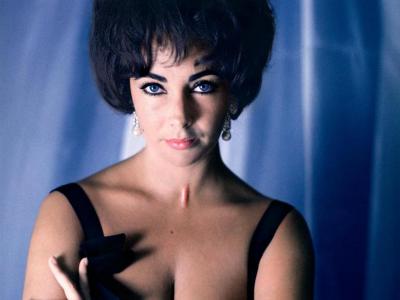
It is here, in the upscale Old Las Palmas neighborhood, that you find the oasis of the one and only Elisabeth Taylor. Known as Casa Elizabeth, this home is full of Taylor's art collection, from photography to oil paintings, including Andy Warhol's famous portrait of the hostess.
Dame Elizabeth Taylor was a British-American actress who took Hollywood by storm as a child-actress in the early 1940s and continued starring in feature films up until the mid-1970s. Her most critically-acclaimed films include “Cleopatra” (that hit the screens in 1961) and “Who’s Afraid of Virginia Woolf?” (released in 1966). Later in her career, Taylor became known for stage productions and television movies as well. She was constantly in the spotlight, with eight marriages to seven men and a jet-set lifestyle.
The property includes three detached casitas for guests, a large courtyard veranda, a second-story observation deck, and luxury landscaping. The pool is one of the finest in Southern California. An open-air pavilion, fountains, and lots of palm trees complete the oasis getaway look.
Renovated by Kathy Ireland and now sometimes referred to as "The Jewel of the Desert," the home is currently available for rent nightly or as a wedding venue.
Dame Elizabeth Taylor was a British-American actress who took Hollywood by storm as a child-actress in the early 1940s and continued starring in feature films up until the mid-1970s. Her most critically-acclaimed films include “Cleopatra” (that hit the screens in 1961) and “Who’s Afraid of Virginia Woolf?” (released in 1966). Later in her career, Taylor became known for stage productions and television movies as well. She was constantly in the spotlight, with eight marriages to seven men and a jet-set lifestyle.
The property includes three detached casitas for guests, a large courtyard veranda, a second-story observation deck, and luxury landscaping. The pool is one of the finest in Southern California. An open-air pavilion, fountains, and lots of palm trees complete the oasis getaway look.
Renovated by Kathy Ireland and now sometimes referred to as "The Jewel of the Desert," the home is currently available for rent nightly or as a wedding venue.
4) Dean Martin's Home
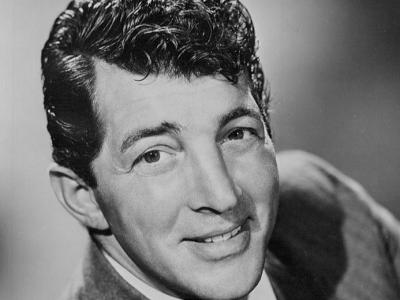
Legendary crooner, TV host and "Rat Pack" member, Dean Martin was among the last of the Hollywood elite to have moved to the desert. He was also among the last to have acquired a Mid-century modern marvel from the father-and-son architect team of George and Robert Alexander before they died in a plane crash. Martin, renowned for throwing lavish dinner parties, bought this house for $56,000 and luxuriated here for a while, along with his gorgeous second wife, Jeanne, back in the 1960s and '70s.
Like almost all the other homes built for life in the desert, 'Dino's Den' lies low and blends with the surrounding topography. Easily visible from the street, it has been a favorite on celebrity tours from the time the Martins moved in. The three-bedroom, three-bathroom dwelling features a pool, spa, ceiling-to-floor glass sliding walls, and fruit trees on the quarter-acre lot. The tan-and-white pattern, conjoined with several lush palms and rocks, augments the eye-catchy, modern design.
Like almost all the other homes built for life in the desert, 'Dino's Den' lies low and blends with the surrounding topography. Easily visible from the street, it has been a favorite on celebrity tours from the time the Martins moved in. The three-bedroom, three-bathroom dwelling features a pool, spa, ceiling-to-floor glass sliding walls, and fruit trees on the quarter-acre lot. The tan-and-white pattern, conjoined with several lush palms and rocks, augments the eye-catchy, modern design.
5) Kennedy/Lawford Home
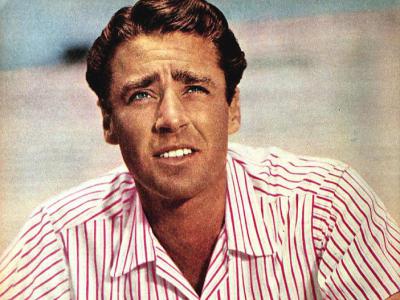
No other house reflects Palm Springs’ famed heyday in the 1950s and '60s better than this one – the hideaway of screen star Peter Lawford and his wife, Pat Kennedy, sister of the famed president John Fitzgerald Kennedy. A close friend and confidant of Marilyn Monroe, and as a brother-in-law of JFK, Lawford introduced the two in 1954, with rumors of an affair still holding their mystique.
Besides his successful career and being a socialite, Lawford was also part of the Rat Pack, with Dean Martin, Frank Sinatra, Joey Bishop and Sammy Davis Jr. When the Pack was not partying at Sinatra's mansion, it was often here with the stars and moguls of Hollywood's Golden Age.
If you've ever been interested in seeing how legends lived back in the day, you can rent this recently restored home on a per-night basis and get a first-hand experience.
Besides his successful career and being a socialite, Lawford was also part of the Rat Pack, with Dean Martin, Frank Sinatra, Joey Bishop and Sammy Davis Jr. When the Pack was not partying at Sinatra's mansion, it was often here with the stars and moguls of Hollywood's Golden Age.
If you've ever been interested in seeing how legends lived back in the day, you can rent this recently restored home on a per-night basis and get a first-hand experience.
6) Elvis Honeymoon Hideaway (must see)
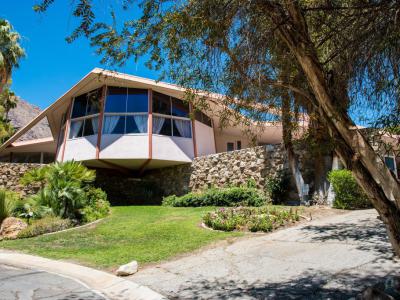
Another exemplar of Modernist style, this is the house where Elvis and Priscilla Presley lived in luxury during their first year of marriage, from 1966 to 1967, throwing infamously lavish parties. With its Jetsons-style furniture and lava rock wall, complete with electronic controls for indoor climate, outside lights and automatic rain, this place was considered, at the time, an innovative "home of the future". It also has a lush garden, large in-ground pool, and a tennis court.
Located close to the San Jacinto Mountains and offering a wonderful view of the Coachella Valley and Santa Rosa Mountains, the property was carefully restored to its original splendor in the 1990s.
For a peek inside, a private one-hour guided tour – starting at 1pm or 3:30pm – can be arranged ahead of time. If you're an Elvis fan, you will feel special being able to sit on the same furniture the King of Rock and Roll once sat, walk through the same rooms he did (which have retained much of the original layout, including kitchen counters, appliances, and other fixtures) and thus enjoy a personal connection to the King. The tour guide is very knowledgeable and more than willing to take pictures for you, as there are quite a few fantastic photo ops here to take advantage of!
Located close to the San Jacinto Mountains and offering a wonderful view of the Coachella Valley and Santa Rosa Mountains, the property was carefully restored to its original splendor in the 1990s.
For a peek inside, a private one-hour guided tour – starting at 1pm or 3:30pm – can be arranged ahead of time. If you're an Elvis fan, you will feel special being able to sit on the same furniture the King of Rock and Roll once sat, walk through the same rooms he did (which have retained much of the original layout, including kitchen counters, appliances, and other fixtures) and thus enjoy a personal connection to the King. The tour guide is very knowledgeable and more than willing to take pictures for you, as there are quite a few fantastic photo ops here to take advantage of!

7) Marilyn Monroe House
Throughout her lifetime, Ms. Monroe had lived in 43 different homes – some belonging to her lovers and husbands, while others, including this one, were mostly rented.
With its Spanish-tiled steps, black-and-white striped sunshades, abundant foliage, and gold-trimmed wrought-iron front gate, this charming bungalow-style dwelling, described as "the most beautiful house on the block", literally screams "fifties"!!!
The shrubbery in front of the property has grown considerably in recent years, blocking quite a bit of the exterior from view. But the home is surprisingly stalker-friendly otherwise, located very close to the street and with no gate or wall to block it off, either.
With its Spanish-tiled steps, black-and-white striped sunshades, abundant foliage, and gold-trimmed wrought-iron front gate, this charming bungalow-style dwelling, described as "the most beautiful house on the block", literally screams "fifties"!!!
The shrubbery in front of the property has grown considerably in recent years, blocking quite a bit of the exterior from view. But the home is surprisingly stalker-friendly otherwise, located very close to the street and with no gate or wall to block it off, either.
8) Kaufmann Desert House
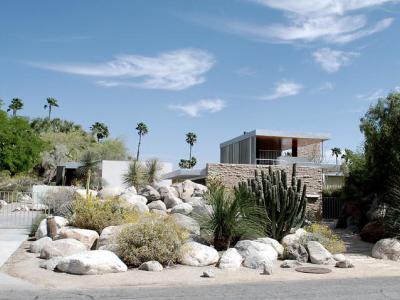
Owning the most famous house in the world – the Fallingwater – was not enough for department store magnate Edgar J. Kaufmann: he needed a winter residence and he needed it in Palm Springs. In 1946, Kaufmann chose architect Richard Neutra – revered in his time as a pillar of American Modernism – to build a luxurious Desert House that would also function as an "efficient machine". The result was, arguably, Neutra's most famous design. Soon after its completion in 1949, for what was then considered astronomical $300,000, the sleek forms and mechanical imagery of this building became an emblem of high Modernist style in the US.
The five-bedroom, six-bathroom vacation house was designed to provide a seamless connection to the surrounding desert landscape, simultaneously offering shelter from the harsh climatic conditions. Large sliding glass walls bring the desert practically indoors, while the major outdoor rooms are enclosed by a row of movable vertical fins that offer flexible protection against sandstorms and intense heat. After Kaufmann's death in 1955, the house had a series of owners, including singer Barry Manilow.
Today, many critics place the Kaufmann House among the most important buildings of the 20th century in the United States, along with the likes of the Fallingwater, Robie House, Gropius House, and the Gamble House. Interestingly, despite its location in Palm Springs, this property was also included in an expert-reviewed list of all-time top 10 houses in Los Angeles, too.
The five-bedroom, six-bathroom vacation house was designed to provide a seamless connection to the surrounding desert landscape, simultaneously offering shelter from the harsh climatic conditions. Large sliding glass walls bring the desert practically indoors, while the major outdoor rooms are enclosed by a row of movable vertical fins that offer flexible protection against sandstorms and intense heat. After Kaufmann's death in 1955, the house had a series of owners, including singer Barry Manilow.
Today, many critics place the Kaufmann House among the most important buildings of the 20th century in the United States, along with the likes of the Fallingwater, Robie House, Gropius House, and the Gamble House. Interestingly, despite its location in Palm Springs, this property was also included in an expert-reviewed list of all-time top 10 houses in Los Angeles, too.
9) Las Palomas – Cary Grant Estate
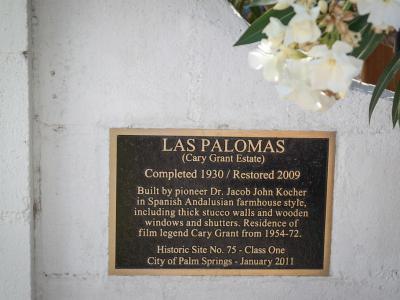
Originally built in 1927 by the commission of Palm Springs' very first pharmacist, Dr. Jacob John Kocher, the magnificent Andalusian-style "Las Palomas" mansion was Cary Grant's desert home for nearly two decades, from 1954 to 1972. During his ownership, the legendary actor made it a gathering spot for celebrities and the Old Hollywood elite. Among the guests here were the likes of Alfred Hitchcock, Clark Gable, Grace Kelly, Katharine Hepburn, Howard Hughes, Frank Sinatra, and Sophia Loren, to mention but a few. A lifelong supporter of the US armed forces, Grant also made it a practice of hosting events for the troops stationed at the nearby 29 Palms – the largest Marine Corps base.
Successfully restored in 2009, the 6,000-square-foot house features such details as thick whitewashed walls, hand-painted tile, custom cabinetry, and wood-burning fireplaces. Sadly, not much of the ultra-private abode can be seen from the street, but the estate's mailbox, designed as a miniature replica of "Las Palomas" (which means "The Doves" in Spanish), is still there!
Successfully restored in 2009, the 6,000-square-foot house features such details as thick whitewashed walls, hand-painted tile, custom cabinetry, and wood-burning fireplaces. Sadly, not much of the ultra-private abode can be seen from the street, but the estate's mailbox, designed as a miniature replica of "Las Palomas" (which means "The Doves" in Spanish), is still there!
10) Bob Hope's House
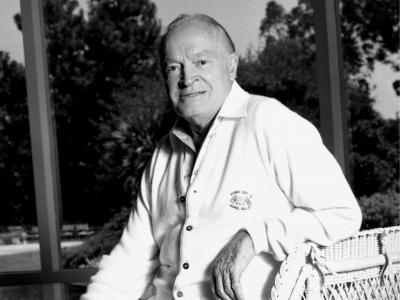
Tucked away on East El Alameda in the heart of Palm Springs, the "Home of Hope" is more than just a house-it’s a slice of Hollywood history. This elegant 1935 California Ranch-style residence was the longtime desert retreat of legendary entertainer Bob Hope and his wife Dolores. The couple moved here in 1946, having lived nearby since 1941, and called it their main Palm Springs residence until 1978, when they relocated to a more modernist home. Remaining in the family until 2013, the property is now marked by a plaque at the front gate that proudly declares its place in history.
The estate sits on a lush double lot spanning over 16,000 square feet, encircled by tall hedges and citrus trees, offering privacy and the feel of a serene oasis. The house itself features nearly 3,000 square feet of living space, including five bedrooms and seven bathrooms, all retaining the charm of the original design with thoughtful updates.
The outdoor space is designed for entertaining, with a massive swimming pool, an expansive deck, and a retractable awning perfect for shaded gatherings or sun-soaked afternoons. Recent renovations include eco-conscious additions like solar panels, a fully upgraded kitchen, and chic wallpaper from Schumacher and Cole & Sons. A detached casita with its entrance offers extra guest space or vacation rental potential.
This was the second of three homes the Hopes owned in Palm Springs, and it reflects the quiet glamour of its era-updated but unmistakably rooted in mid-century elegance. With its ties to a showbiz icon who starred in more than 70 films, this estate remains a captivating reminder of Palm Springs’ golden age.
The estate sits on a lush double lot spanning over 16,000 square feet, encircled by tall hedges and citrus trees, offering privacy and the feel of a serene oasis. The house itself features nearly 3,000 square feet of living space, including five bedrooms and seven bathrooms, all retaining the charm of the original design with thoughtful updates.
The outdoor space is designed for entertaining, with a massive swimming pool, an expansive deck, and a retractable awning perfect for shaded gatherings or sun-soaked afternoons. Recent renovations include eco-conscious additions like solar panels, a fully upgraded kitchen, and chic wallpaper from Schumacher and Cole & Sons. A detached casita with its entrance offers extra guest space or vacation rental potential.
This was the second of three homes the Hopes owned in Palm Springs, and it reflects the quiet glamour of its era-updated but unmistakably rooted in mid-century elegance. With its ties to a showbiz icon who starred in more than 70 films, this estate remains a captivating reminder of Palm Springs’ golden age.
11) Twin Palms Estate – Sinatra House
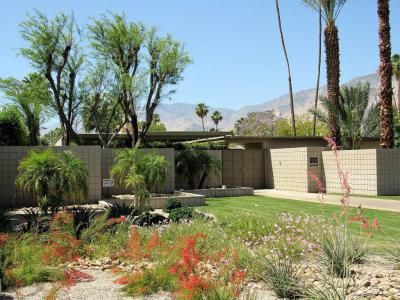
Designed by then-still-unknown Mid-century Modern architect E. Stewart Williams, this long and low structure became the unofficial prototype for much of the construction that followed in the desert oasis of Palm Springs. Despite being Williams's first designed home, privately commissioned by Frank Sinatra after he had made his first million dollars, he knew exactly what worked in a desert environment and what didn't. Although initially Sinatra had his sights set on a Georgian-style mansion with several stories, the architect patiently guided him in the direction of something more daring and appropriate to living in California's sometimes harsh climatic conditions.
With guest quarters at 4,500 square feet and post-war Hollywood glamour at full throttle, this house soon became the scene of countless star-studded, cocktail-flowing parties. It is even rumored that the famous crooner would put up a flag in front of the property, so that neighbors would know when to come by for a drink (how very neighborly!).
Despite Sinatra's occupying the place for no more than 10 years, remnants of his personality remain here to this day – from the grand piano-shaped swimming pool to the well-represented train collection and the numerous celebrity portraits lining the walls (two of which are of Marilyn Monroe).
With guest quarters at 4,500 square feet and post-war Hollywood glamour at full throttle, this house soon became the scene of countless star-studded, cocktail-flowing parties. It is even rumored that the famous crooner would put up a flag in front of the property, so that neighbors would know when to come by for a drink (how very neighborly!).
Despite Sinatra's occupying the place for no more than 10 years, remnants of his personality remain here to this day – from the grand piano-shaped swimming pool to the well-represented train collection and the numerous celebrity portraits lining the walls (two of which are of Marilyn Monroe).
12) Sonny Bono's Estate
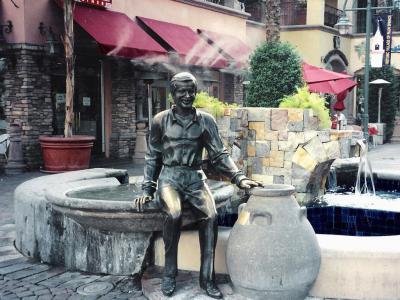
Tucked at the base of the San Jacinto Mountains in Palm Springs’ prestigious Mesa neighborhood, the Sonny Bono Estate on West Crestview Drive is a rare desert gem blending Hollywood history with timeless charm. Originally built in 1940 by the Gillette razor family, this 1.5-acre gated property offers privacy, elegance, and a touch of celebrity sparkle.
The estate gained its nickname from one of its most famous owners, Sonny Bono, the singer-turned-politician known for his hits with Cher like “I Got You Babe” and “Baby Don’t Go.” Bono lived here during his tenure as Mayor of Palm Springs (1988–1992) and while serving as a U.S. Congressman (1994–1998), before his untimely death in a skiing accident in 1998.
The main house spans 6,648 square feet and features six bedrooms, including three suites, a spacious kitchen, and two living areas-one offering stunning down-valley views, the other brimming with 1940s character and anchored by a classic rock fireplace. The master suite includes a sitting area, dual bathrooms, two walk-in closets, and a private veranda overlooking lush gardens and the mountains.
Complementing the main house are two guest houses: a 1,599 square feet residence with two bedrooms, two bathrooms, a full kitchen, and a private yard with patio; and a cozy 742 square feet cottage, currently outfitted as a gym, with a bedroom and bathroom.
More than just a luxury property, the Sonny Bono Estate captures the quintessential South Palm Springs atmosphere-a seamless blend of elegance, nature, and mid-century allure. It remains one of Palm Springs' most iconic and desirable historic estates.
The estate gained its nickname from one of its most famous owners, Sonny Bono, the singer-turned-politician known for his hits with Cher like “I Got You Babe” and “Baby Don’t Go.” Bono lived here during his tenure as Mayor of Palm Springs (1988–1992) and while serving as a U.S. Congressman (1994–1998), before his untimely death in a skiing accident in 1998.
The main house spans 6,648 square feet and features six bedrooms, including three suites, a spacious kitchen, and two living areas-one offering stunning down-valley views, the other brimming with 1940s character and anchored by a classic rock fireplace. The master suite includes a sitting area, dual bathrooms, two walk-in closets, and a private veranda overlooking lush gardens and the mountains.
Complementing the main house are two guest houses: a 1,599 square feet residence with two bedrooms, two bathrooms, a full kitchen, and a private yard with patio; and a cozy 742 square feet cottage, currently outfitted as a gym, with a bedroom and bathroom.
More than just a luxury property, the Sonny Bono Estate captures the quintessential South Palm Springs atmosphere-a seamless blend of elegance, nature, and mid-century allure. It remains one of Palm Springs' most iconic and desirable historic estates.
13) Moorten Botanical Garden and Cactarium (must see)
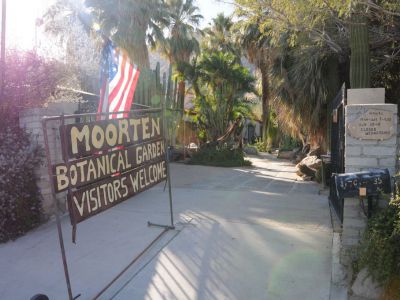
The Moorten Botanical Garden and Cactarium is a one-acre family-owned botanical haven located in Palm Springs, right in the heart of Riverside County’s Coachella Valley-part of the Colorado Desert ecosystem. Established as a nursery in 1939 by Patricia and Chester “Cactus Slim” Moorten, it officially blossomed into the serene desert garden we know today in 1955.
This compact yet rich garden is home to over 3,000 specimens of desert plants, including cacti, succulents, mesquite trees, and other arid-climate flora, collected from diverse regions such as Arizona, Texas, Mexico, Africa, and Madagascar. The plants are thoughtfully grouped by geographic origin, offering a natural world tour through spines and blooms.
Beyond its prickly plants, the garden includes the historic Moorten residence, affectionately called the “Cactus Castle”. Built in a Mediterranean style by photographer Stephen H. Willard, it became the Moortens’ base for collecting rare plants-some gathered as far afield as Guatemala.
Adding a touch of Hollywood lore, Chester Moorten, before dedicating his life to desert flora, was one of the original Keystone Cops, appearing in silent films like Two Flaming Youths (1927) and The Sideshow (1928).
Today, Moorten Botanical Garden remains a peaceful and shaded escape just minutes from downtown Palm Springs. Recognized for their botanical and community contributions, the Moortens have been honored with Golden Palm Stars on the Palm Springs Walk of Stars.
Why You Should Visit:
To explore one of the best succulent collections in SoCal – there's a pretty exciting section of rare varieties!
Tip:
There are lots of plants to buy, starting at $1 for baby plants and going up depending on size. Tons of variety!
The staff helps answer all questions on what plants to pick for your purpose and any other general questions.
This compact yet rich garden is home to over 3,000 specimens of desert plants, including cacti, succulents, mesquite trees, and other arid-climate flora, collected from diverse regions such as Arizona, Texas, Mexico, Africa, and Madagascar. The plants are thoughtfully grouped by geographic origin, offering a natural world tour through spines and blooms.
Beyond its prickly plants, the garden includes the historic Moorten residence, affectionately called the “Cactus Castle”. Built in a Mediterranean style by photographer Stephen H. Willard, it became the Moortens’ base for collecting rare plants-some gathered as far afield as Guatemala.
Adding a touch of Hollywood lore, Chester Moorten, before dedicating his life to desert flora, was one of the original Keystone Cops, appearing in silent films like Two Flaming Youths (1927) and The Sideshow (1928).
Today, Moorten Botanical Garden remains a peaceful and shaded escape just minutes from downtown Palm Springs. Recognized for their botanical and community contributions, the Moortens have been honored with Golden Palm Stars on the Palm Springs Walk of Stars.
Why You Should Visit:
To explore one of the best succulent collections in SoCal – there's a pretty exciting section of rare varieties!
Tip:
There are lots of plants to buy, starting at $1 for baby plants and going up depending on size. Tons of variety!
The staff helps answer all questions on what plants to pick for your purpose and any other general questions.
14) Elrod House
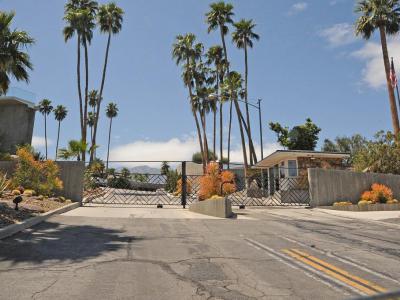
Once a filming location for the James Bond film "Diamonds Are Forever" (as Willard Whyte's mansion) and for Playboy photoshoots, the Elrod House – built in 1968 for interior designer Arthur Elrod – is one of John Lautner's many houses in Palm Springs and an example of his so-called "free architecture", where nature and architecture are fused into one. Considered to be one of the architect's most important works, the 8,900-square-foot structure is now praised for its relationship with its mountain landscape and its sense of drama.
When construction started, Lautner instructed the excavators to extract the soil and leave the rocks in place, thus making them part of the interior as they run straight through walls and surroundings. From the outside, the house may not seem too attractive but once inside, one is mesmerized by the elegant, timeless beauty.
A copper gate-door separates the courtyard from the street level while also providing a first glimpse of the enormous domed concrete roof, with wedge-like sections cut out to accommodate skylights and provide indirect light. The front door is just short of spectacular with frameless glazing, creating an illusion of entering a luxurious cave.
When construction started, Lautner instructed the excavators to extract the soil and leave the rocks in place, thus making them part of the interior as they run straight through walls and surroundings. From the outside, the house may not seem too attractive but once inside, one is mesmerized by the elegant, timeless beauty.
A copper gate-door separates the courtyard from the street level while also providing a first glimpse of the enormous domed concrete roof, with wedge-like sections cut out to accommodate skylights and provide indirect light. The front door is just short of spectacular with frameless glazing, creating an illusion of entering a luxurious cave.
15) Hope Residence
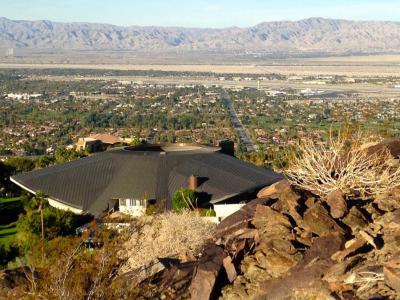
Located in a gated community on Southridge Drive is the Hope Residence, a unique looking house built on a spectacular location. John Lautner was hired for the project, as the Hopes had loved the work he had done for the Elrod House.
The house is noteworthy for its undulating roof around a central large round skylight. When comedian Bob Hope first saw a model of the home in 1969, he quipped, "Well, at least when they come down from Mars, they'll know where to go."
Construction was delayed for several years due to a fire during construction and the resulting lawsuits. Further complications arose after the death of Arthur Elrod, the primary interior designer on the project. Dolores Hope became more involved in the project, and the architect distanced himself. Hope brought in a Beverley Hills director, inspired by the nearby home of Walter and Leonore Annenberg, Sunnylands.
The Hope Estate sold the property in 2016. The former owner of the Elrod House purchased the home and went to work redesigning it more in line with how John Lautner had initially envisioned. The interior was stripped and replaced with a modernist interior using natural materials and light.
The house is noteworthy for its undulating roof around a central large round skylight. When comedian Bob Hope first saw a model of the home in 1969, he quipped, "Well, at least when they come down from Mars, they'll know where to go."
Construction was delayed for several years due to a fire during construction and the resulting lawsuits. Further complications arose after the death of Arthur Elrod, the primary interior designer on the project. Dolores Hope became more involved in the project, and the architect distanced himself. Hope brought in a Beverley Hills director, inspired by the nearby home of Walter and Leonore Annenberg, Sunnylands.
The Hope Estate sold the property in 2016. The former owner of the Elrod House purchased the home and went to work redesigning it more in line with how John Lautner had initially envisioned. The interior was stripped and replaced with a modernist interior using natural materials and light.
