Custom Walk in Guadalajara, Mexico by jmmtz19_5efbe created on 2025-03-26
Guide Location: Mexico » Guadalajara
Guide Type: Custom Walk
# of Sights: 16
Tour Duration: 6 Hour(s)
Travel Distance: 12.8 Km or 8 Miles
Share Key: ZB5J2
Guide Type: Custom Walk
# of Sights: 16
Tour Duration: 6 Hour(s)
Travel Distance: 12.8 Km or 8 Miles
Share Key: ZB5J2
How It Works
Please retrieve this walk in the GPSmyCity app. Once done, the app will guide you from one tour stop to the next as if you had a personal tour guide. If you created the walk on this website or come to the page via a link, please follow the instructions below to retrieve the walk in the app.
Retrieve This Walk in App
Step 1. Download the app "GPSmyCity: Walks in 1K+ Cities" on Apple App Store or Google Play Store.



Step 2. In the GPSmyCity app, download(or launch) the guide "Guadalajara Map and Walking Tours".
Step 3. Tap the menu button located at upper right corner of the "Walks" screen and select "Retrieve custom walk". Enter the share key: ZB5J2
1) Plaza Tapatia (Tapatia Square)
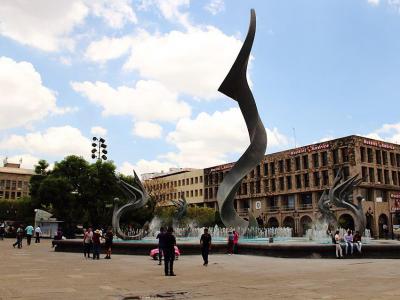
Tapatia Square is a bustling urban square near the center of Guadalajara. The large square is comprised of other smaller squares, the Central Esplanade and the Paseo del Hospicio. There are a number of places to shop and eat around the square. There is also ample room for resting while in the midst of exploring the city.
The square is known as the home of the Immolation of Quetzalcoatl fountain and sculpture by artist Victor Manuel Contreras. The sculpture has the appearance of a lightning bolt. It was inspired by what may have been the final immolation of Quetzalcoatl who was said to have gone to hell to bring fire to the sun.
Four smaller sculptures surround the main sculpture. These represent the four cardinal points. This is adorned by a flower-shaped fountain whose purpose is to make the sculpture appear as if it is in flight.
The square is known as the home of the Immolation of Quetzalcoatl fountain and sculpture by artist Victor Manuel Contreras. The sculpture has the appearance of a lightning bolt. It was inspired by what may have been the final immolation of Quetzalcoatl who was said to have gone to hell to bring fire to the sun.
Four smaller sculptures surround the main sculpture. These represent the four cardinal points. This is adorned by a flower-shaped fountain whose purpose is to make the sculpture appear as if it is in flight.
2) Palacio de Justicia (Palace of Justice of Jalisco)
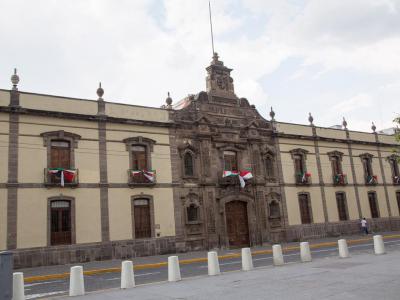
The Palace of Justice of Jalisco was originally built in 1588. The palace building was originally used as the main building of the convent and temple of Santa Maria de Gracia. The building was then used for several different institutions until 1952 when it was remodeled and became the state judiciary.
The palace has a central courtyard with orange trees. In the interior, visitors will find several statues and an impressive mural. The statue on the left of the staircase depicts Mariano Otero, who was a writer, politician, and Guadalajara resident. The statue on the right of the staircase shows Ignacio Vallarta, a governor of Jalisco.
Guillermo Chavez Vega painted a famous mural that depicts scenes showing Mexico's history. The mural depicts prominent Mexican leaders Benito Juarez, Melchor Ocampo, and Valentin Gomez Farias. The mural shows Mariano Otero defending the town and Ignacio Vallarta holding a flag. In addition, the mural shows a female figure welding a sword.
The palace has a central courtyard with orange trees. In the interior, visitors will find several statues and an impressive mural. The statue on the left of the staircase depicts Mariano Otero, who was a writer, politician, and Guadalajara resident. The statue on the right of the staircase shows Ignacio Vallarta, a governor of Jalisco.
Guillermo Chavez Vega painted a famous mural that depicts scenes showing Mexico's history. The mural depicts prominent Mexican leaders Benito Juarez, Melchor Ocampo, and Valentin Gomez Farias. The mural shows Mariano Otero defending the town and Ignacio Vallarta holding a flag. In addition, the mural shows a female figure welding a sword.
3) Teatro Degollado (Degollado Theatre) (must see)
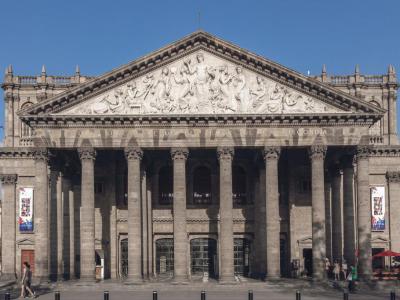
Degollado Theater is a stunning classical-style theater that was commissioned in 1855 and built between 1856 and 1866. When the theater was commissioned, it was called Alarcon Theater after actor Juan Ruiz de Alarcon.
Santos Degollado was Jalisco's governor and laid the theater's cornerstone in 1856. He died in battle in 1861, and the theatre was renamed to honor Degollado in December 1866.
The exterior has grand Corinthian columns. The pediment features a mosaic showing Apollo and the Nine Muses.
Degollado Theater's interior features golden walls with beautiful paintings. Artists Gerardo Suarez and Carlos Villasenor created an impressive mural depicting Dante's Divine Comedy's fourth canto.
Internationally acclaimed opera singer Angela Peralta de Castera sang Lucia of Lammermoor at the theater's opening in 1866. Famous tenor Placido Domingo sang the same opera to commemorate the theater's centennial in 1966.
Today, the theater hosts the Jalisco Philharmonic Orchestra, opera, dance, theater, and artistic festivals.
Santos Degollado was Jalisco's governor and laid the theater's cornerstone in 1856. He died in battle in 1861, and the theatre was renamed to honor Degollado in December 1866.
The exterior has grand Corinthian columns. The pediment features a mosaic showing Apollo and the Nine Muses.
Degollado Theater's interior features golden walls with beautiful paintings. Artists Gerardo Suarez and Carlos Villasenor created an impressive mural depicting Dante's Divine Comedy's fourth canto.
Internationally acclaimed opera singer Angela Peralta de Castera sang Lucia of Lammermoor at the theater's opening in 1866. Famous tenor Placido Domingo sang the same opera to commemorate the theater's centennial in 1966.
Today, the theater hosts the Jalisco Philharmonic Orchestra, opera, dance, theater, and artistic festivals.
4) Plaza de la Liberación (Freedom Square) (must see)
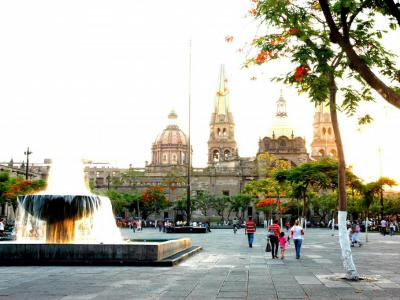
Freedom Square is dedicated to Miguel Hidalgo, who signed the Abolition of Slavery in 1810. The square features a bronze sculpture showing Miguel Hidalgo breaking the chains of slavery. Hidalgo also led the Mexican War of Independence and is known as the Father of the Nation.
Freedom Square features two impressive fountains designed by Ignacio Díaz Morales. The fountains look like two large cups, and the square is sometimes called Two Cups Plaza (La Plaza de Dos Copas).
Because of its large size, the square hosts many exhibitions and events. The square is also home to a Guadalajara sign, which is a popular backdrop for photos.
Freedom Square has a vibrant market where you can find clothing, pottery, ceramics, art, and souvenirs. The square also has several cafes with outdoor seating so you can grab a refreshment and enjoy people-watching.
Freedom Square features two impressive fountains designed by Ignacio Díaz Morales. The fountains look like two large cups, and the square is sometimes called Two Cups Plaza (La Plaza de Dos Copas).
Because of its large size, the square hosts many exhibitions and events. The square is also home to a Guadalajara sign, which is a popular backdrop for photos.
Freedom Square has a vibrant market where you can find clothing, pottery, ceramics, art, and souvenirs. The square also has several cafes with outdoor seating so you can grab a refreshment and enjoy people-watching.
5) Palacio de Gobierno (Government Palace) (must see)
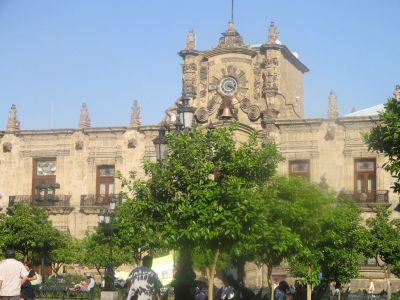
The original Government Palace was built in 1650. However, an earthquake in 1750 destroyed the original adobe building. Governor Don Jose de Basarte commissioned a new building that was designed by Manuel Jose Conique and Nicolas Enrique del Castillo.
The construction was funded by taxes placed on local tequila producers. Spain prohibited any local production of alcohol, so instead of legally producing alcohol and sending tax money to Spain, the local government secretly allowed alcohol production to continue while keeping the tax money for local improvements. The palace was officially inaugurated in 1790.
Government Palace has a magnificent baroque facade with attractive balconies and large windows. The palace features an impressive Doric gate and a large courtyard with colonial-style columns and arches.
The historic Decree for the Abolition of Slavery was signed at the palace in 1810. Every year, the palace commemorates this important event.
President of the Mexican Republic Benito Juarez narrowly escaped assassination in the palace on March 13, 1858.
In the main courtyard's stairwell, visitors can see three murals painted by the renowned Mexican caricaturist and painter Jose Clemente Orozco in 1937.
The construction was funded by taxes placed on local tequila producers. Spain prohibited any local production of alcohol, so instead of legally producing alcohol and sending tax money to Spain, the local government secretly allowed alcohol production to continue while keeping the tax money for local improvements. The palace was officially inaugurated in 1790.
Government Palace has a magnificent baroque facade with attractive balconies and large windows. The palace features an impressive Doric gate and a large courtyard with colonial-style columns and arches.
The historic Decree for the Abolition of Slavery was signed at the palace in 1810. Every year, the palace commemorates this important event.
President of the Mexican Republic Benito Juarez narrowly escaped assassination in the palace on March 13, 1858.
In the main courtyard's stairwell, visitors can see three murals painted by the renowned Mexican caricaturist and painter Jose Clemente Orozco in 1937.
6) Catedral de Guadalajara (Guadalajara Cathedral) (must see)
Guadalajara's first cathedral was built in 1541. This cathedral was damaged in a fire, and Phillip II, King of Spain, commissioned a new cathedral. Construction began in 1561 and was completed in 1618. The Spanish Renaissance-style Guadalajara Cathedral was consecrated in 1716.
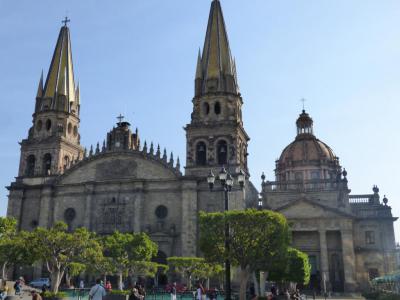
After earthquakes damaged the cathedral in 1818 and 1849, architect Manuel Gómez Ibarra designed new Neo-Gothic towers. The towers were completed in 1854. Several more earthquakes have damaged the cathedral over the last one hundred years.
Guadalajara Cathedral has eleven altars gifted by King Fernando VII of Spain. The altars are dedicated to Our Lady of Guadalupe, Our Lady of the Assumption, Our Lady of Zapopan, and Our Lady of Sorrows. In addition, there are also altars dedicated to Saint Thomas Aquinas, Saint Nicholas, Saint Dominic, Saint Christopher, and Saint John of God.
The relics of Santa Innocencia are housed in the cathedral. In the 1700s, Santa Innocencia was killed by her father for converting to Catholicism. In addition, the cathedral houses the remains of several prominent cardinals and bishops.
In the Martyrs Relic, you can see the bones of 23 men that died during the Cristero Wars. The Cristero War, also known as the Cristero Rebellion, was a widespread struggle in central and western Mexico against the implementation of secularist and anticlerical articles of the 1917 Constitution. Pope John Paul II beatified these remains in 1992.
Spanish artist Bartolome Murillo painted the beautiful The Assumption of the Virgin in 1650. Emperor Carlos V donated the Virgin of the Roses sculpture.
The 19th-century organ was imported from France and took an entire year to assemble. The beautiful stained glass windows also came from France.
The cathedral has hidden tunnels that were used as escape routes and hiding places.
After earthquakes damaged the cathedral in 1818 and 1849, architect Manuel Gómez Ibarra designed new Neo-Gothic towers. The towers were completed in 1854. Several more earthquakes have damaged the cathedral over the last one hundred years.
Guadalajara Cathedral has eleven altars gifted by King Fernando VII of Spain. The altars are dedicated to Our Lady of Guadalupe, Our Lady of the Assumption, Our Lady of Zapopan, and Our Lady of Sorrows. In addition, there are also altars dedicated to Saint Thomas Aquinas, Saint Nicholas, Saint Dominic, Saint Christopher, and Saint John of God.
The relics of Santa Innocencia are housed in the cathedral. In the 1700s, Santa Innocencia was killed by her father for converting to Catholicism. In addition, the cathedral houses the remains of several prominent cardinals and bishops.
In the Martyrs Relic, you can see the bones of 23 men that died during the Cristero Wars. The Cristero War, also known as the Cristero Rebellion, was a widespread struggle in central and western Mexico against the implementation of secularist and anticlerical articles of the 1917 Constitution. Pope John Paul II beatified these remains in 1992.
Spanish artist Bartolome Murillo painted the beautiful The Assumption of the Virgin in 1650. Emperor Carlos V donated the Virgin of the Roses sculpture.
The 19th-century organ was imported from France and took an entire year to assemble. The beautiful stained glass windows also came from France.
The cathedral has hidden tunnels that were used as escape routes and hiding places.
7) Palacio Municipal (City Palace)
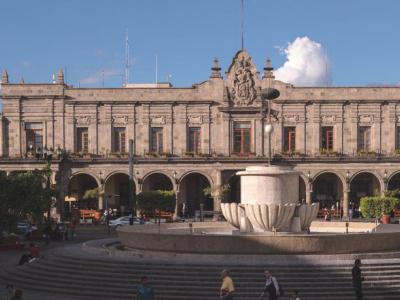
The City Palace was built between 1949 and 1952, but its neoclassical style makes it seem older. The palace has a central courtyard and features colonial-style arches and columns in addition to an ornate staircase. This beautiful building houses Jalisco's city council offices.
Inside, visitors will find the Hall of Presidents and the Hall of Councils. The Hall of Presidents features sculptures of historical figures. Visitors will find sculptures of Manuel Lopez Cotilla, Pedro Moreno, Agustin Yanez, and Clemente Aguirre.
The Hall of Councils features dramatic murals painted by artist Gabriel Flores in 1963. The mural includes five panels that show Guadalajara's history. The scenes show the Spanish conquest, the Mixton War, Guadalajara's founding, the colonial era, and the the oath of the royal banner (Paseo del Pendon).
Visitors can see Guadalajara's coat of arms at the palace's entrance. The Palacio Municipal is open Monday to Friday from 9:00 to 19:00.
Inside, visitors will find the Hall of Presidents and the Hall of Councils. The Hall of Presidents features sculptures of historical figures. Visitors will find sculptures of Manuel Lopez Cotilla, Pedro Moreno, Agustin Yanez, and Clemente Aguirre.
The Hall of Councils features dramatic murals painted by artist Gabriel Flores in 1963. The mural includes five panels that show Guadalajara's history. The scenes show the Spanish conquest, the Mixton War, Guadalajara's founding, the colonial era, and the the oath of the royal banner (Paseo del Pendon).
Visitors can see Guadalajara's coat of arms at the palace's entrance. The Palacio Municipal is open Monday to Friday from 9:00 to 19:00.
8) Estatua de José Antonio Torres (The Statue of José Antonio Torres)
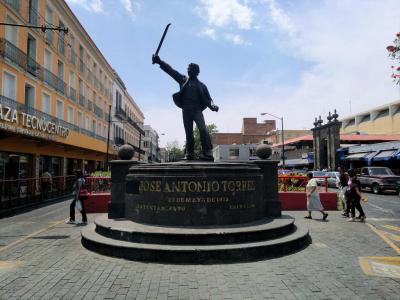
The Statue of José Antonio Torres honors one of Mexico’s lesser-known yet pivotal heroes of independence. The bronze monument, crafted by Juan José Méndez Hernández, stands at a striking 2.5 meters tall and portrays Torres with sword raised, his face animated by fierce determination.
José Antonio(1760–1812) earned his moniker while managing haciendas before joining Miguel Hidalgo’s insurgent movement. In 1810, leading a force of guerrillas, Torres led a key battle at Zacoalco, forcing Guadalajara's gates open on November 11, 1810, in a largely bloodless victory. His efforts paved the way for Hidalgo’s formal arrival in the city, marking a significant milestone in the campaign for Mexican independence.
Tragically, Torres was captured in 1812, hanged in Guadalajara, and his body was gruesomely dismembered-his execution site later became the location of Corona Market.
José Antonio(1760–1812) earned his moniker while managing haciendas before joining Miguel Hidalgo’s insurgent movement. In 1810, leading a force of guerrillas, Torres led a key battle at Zacoalco, forcing Guadalajara's gates open on November 11, 1810, in a largely bloodless victory. His efforts paved the way for Hidalgo’s formal arrival in the city, marking a significant milestone in the campaign for Mexican independence.
Tragically, Torres was captured in 1812, hanged in Guadalajara, and his body was gruesomely dismembered-his execution site later became the location of Corona Market.
9) Edificio Arroniz (Arroniz Building)
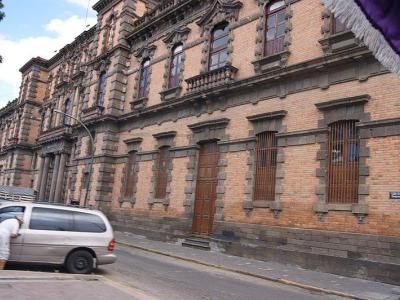
The Arróniz Building (Edificio Arroniz) is a historic Mexican building located in the heart of the city of Guadalajara. It was built in 1733 and was originally part of the convent of La Encarnación. However, due to the Reform Laws of 1859, the nuns of the convent were dispossessed, and the building was left abandoned. In 1868, it was ceded to the Archdiocese of Guadalajara to serve as a seminary, and by 1890, the building had many structural problems.
Archbishop Pedro Loza y Pardavé recommended that the building be rebuilt, and the engineer Antonio Arróniz Topete was put in charge of the reconstruction. In 1902, the Guadalajara Council Seminary was inaugurated. The three-story building is made of red and gray quarry with bricks baked at high temperatures, made in a factory by the same architect Arróniz. The north and south part of the property have Moorish architecture, while the ground floor has Renaissance and modernist influences.
The main façade faces Zaragoza street and has a portico framed by four columns. The ground floor has entrances, and the upper floors have balconies. The ground floor also has a central courtyard with open aisles on each side with arches supported by pillars. There are a pair of Mannerist stairs that connect the three floors and the mezzanine.
The building has had several uses throughout its history. In 1914, it was turned into the headquarters of the XV Military Zone, and it remained in military hands for 96 years. In 1995, it changed from the XV military zone to the V military zone. In 2009, the Secretary of National Defense ceded the compound to the state government, which converted it into the Western Archeology Museum. In 2015, it became the headquarters of the Secretary of Culture of the State of Jalisco.
One of the highlights of the building is its library, which is on two levels and has a wooden pedestal sheltered by a staircase that goes up to the second level. The collection in the library belongs to the historian and genealogist Gabriel Agraz García de Alba.
The Arróniz Building is an excellent example of the combination of different architectural elements that dates back to the time of the Porfiriato. Its preservation as a historic monument by the National Institute of Anthropology and History (INAH) is a testament to its cultural significance and importance to the city of Guadalajara.
Archbishop Pedro Loza y Pardavé recommended that the building be rebuilt, and the engineer Antonio Arróniz Topete was put in charge of the reconstruction. In 1902, the Guadalajara Council Seminary was inaugurated. The three-story building is made of red and gray quarry with bricks baked at high temperatures, made in a factory by the same architect Arróniz. The north and south part of the property have Moorish architecture, while the ground floor has Renaissance and modernist influences.
The main façade faces Zaragoza street and has a portico framed by four columns. The ground floor has entrances, and the upper floors have balconies. The ground floor also has a central courtyard with open aisles on each side with arches supported by pillars. There are a pair of Mannerist stairs that connect the three floors and the mezzanine.
The building has had several uses throughout its history. In 1914, it was turned into the headquarters of the XV Military Zone, and it remained in military hands for 96 years. In 1995, it changed from the XV military zone to the V military zone. In 2009, the Secretary of National Defense ceded the compound to the state government, which converted it into the Western Archeology Museum. In 2015, it became the headquarters of the Secretary of Culture of the State of Jalisco.
One of the highlights of the building is its library, which is on two levels and has a wooden pedestal sheltered by a staircase that goes up to the second level. The collection in the library belongs to the historian and genealogist Gabriel Agraz García de Alba.
The Arróniz Building is an excellent example of the combination of different architectural elements that dates back to the time of the Porfiriato. Its preservation as a historic monument by the National Institute of Anthropology and History (INAH) is a testament to its cultural significance and importance to the city of Guadalajara.
10) El Parque de la Revolución (Revolution Park)
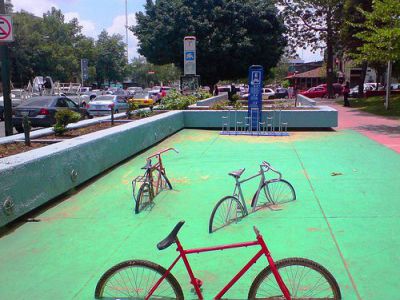
The Revolution Park-popularly known as Red Park-is a historic and lively urban oasis, designed by renowned architect Luis Barragán with his brother Juan José Barragán and inaugurated on February 28, 1935. The park was built on the former site of the Escobedo Prison, itself once the orchard of the Carmelite convent.
True to its nickname, the park features red benches, pavements, and shelters, offering bold visual contrast with surrounding greenery. Strolling its paths, visitors discover bronze statues of revolutionary leaders Francisco I. Madero and Venustiano Carranza, both installed in 1959 as monuments to Mexico’s struggle for freedom. The lush canopy of mature trees creates a shady, relaxed atmosphere-ideal for resting after nearby sightseeing or commuting, since the Juárez light rail station lies just beneath the park.
The Red Park hosts everything from chess games and picnics to skateboard sessions and casual performances under its signature shelters. As the sun sets, community gatherings, art displays, and occasional live music bring the space to life.
True to its nickname, the park features red benches, pavements, and shelters, offering bold visual contrast with surrounding greenery. Strolling its paths, visitors discover bronze statues of revolutionary leaders Francisco I. Madero and Venustiano Carranza, both installed in 1959 as monuments to Mexico’s struggle for freedom. The lush canopy of mature trees creates a shady, relaxed atmosphere-ideal for resting after nearby sightseeing or commuting, since the Juárez light rail station lies just beneath the park.
The Red Park hosts everything from chess games and picnics to skateboard sessions and casual performances under its signature shelters. As the sun sets, community gatherings, art displays, and occasional live music bring the space to life.
11) Los Arcos de Guadalajara (The Arches of Guadalajara)
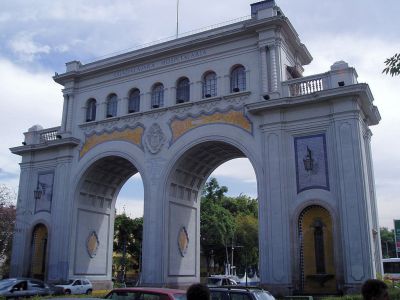
The Arches of Guadalajara is one of the city’s most emblematic landmarks. Commissioned to celebrate Guadalajara’s 400th anniversary and constructed between 1939 and 1942 under Governor Silvano Barba González with architect Aurelio Aceves, these majestic neoclassical arches were inspired by European triumphal monuments and originally served as the ceremonial portal for visitors arriving via the highway from Morelia.
Measuring approximately eight meters wide and fourteen meters tall, the dual archways are topped by a “Hall of Flags”-a balcony-like structure once used as a lookout point. The façade is elegantly adorned with white, blue, and yellow tiles, complemented by built-in fountains and the city’s coat of arms. Inscriptions greet travelers: “Guadalajara, capital of the Kingdom of Nueva Galicia” and “Guadalajara, a hospitable city”.
Today, The Arches of Guadalajara continues to welcome residents and tourists, sometimes illuminated at night in vivid hues. Visitors can climb the stairs inside the structure to enjoy sweeping views of the bustling neighborhood and nearby Minerva Fountain. A small tourist information office in one of the pillars offers helpful guidance for exploring Guadalajara.
Measuring approximately eight meters wide and fourteen meters tall, the dual archways are topped by a “Hall of Flags”-a balcony-like structure once used as a lookout point. The façade is elegantly adorned with white, blue, and yellow tiles, complemented by built-in fountains and the city’s coat of arms. Inscriptions greet travelers: “Guadalajara, capital of the Kingdom of Nueva Galicia” and “Guadalajara, a hospitable city”.
Today, The Arches of Guadalajara continues to welcome residents and tourists, sometimes illuminated at night in vivid hues. Visitors can climb the stairs inside the structure to enjoy sweeping views of the bustling neighborhood and nearby Minerva Fountain. A small tourist information office in one of the pillars offers helpful guidance for exploring Guadalajara.
12) Glorieta de La Minerva (Statue of Minerva)
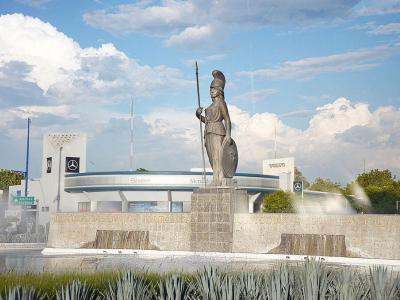
The Statue of Minerva is one of Guadalajara’s most iconic landmarks, majestically rising from the center of a grand circular fountain. Carved from bronze and standing 8 m (26 ft) tall atop a 25 m (82 ft) pedestal, she dramatically holds a spear and shield, donning a Roman ridge helmet-symbols of strategic might and ancient wisdom. Completed in 1957 and commissioned by Jalisco’s governor, Agustín Yáñez, the statue was created by Joaquín Arias and designed by architect Julio de la Peña.
Unlike classical Greek interpretations, Arias modeled Minerva with indigenous facial features, a deliberate choice that reflects local identity; rumors suggest her visage may even have been inspired by the governor’s wife, Olivia Ramírez Ramos. Bas-reliefs carved into the circular pedestal honor 18 notable citizens of Guadalajara, and an inscription proclaims, “May justice, wisdom and strength guard this loyal city,” underlining the statue’s role as the city’s vigilant guardian .
Since its inauguration on September 15, 1957, La Minerva has transcended its artistic origins to become a center of social celebration and civic pride. She marks the center stage for jubilant gatherings, as well as concerts and festivals held in her fountain’s embrace.
Unlike classical Greek interpretations, Arias modeled Minerva with indigenous facial features, a deliberate choice that reflects local identity; rumors suggest her visage may even have been inspired by the governor’s wife, Olivia Ramírez Ramos. Bas-reliefs carved into the circular pedestal honor 18 notable citizens of Guadalajara, and an inscription proclaims, “May justice, wisdom and strength guard this loyal city,” underlining the statue’s role as the city’s vigilant guardian .
Since its inauguration on September 15, 1957, La Minerva has transcended its artistic origins to become a center of social celebration and civic pride. She marks the center stage for jubilant gatherings, as well as concerts and festivals held in her fountain’s embrace.
13) Glorieta de los Niños Héroes (Roundabout of the Heroic Cadets)
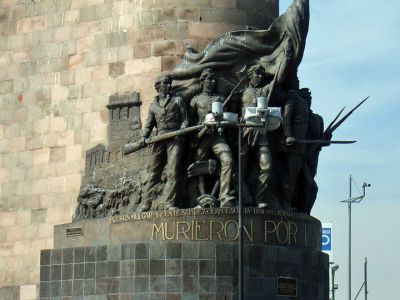
The Roundabout of the Heroic Cadets, also known today as the Roundabout of the Disappeared, is a remarkable monument and traffic roundabout in Guadalajara. Designed in the early 1950s by sculptor Juan Fernando Olaguíbel and architect Vicente Morales Mendiola, it commemorates the six teenage cadets-collectively known as the “Heroic Cadets”-who died defending Mexico City’s Chapultepec Castle during the Mexican-American War in 1847.
Rising from a wide circular plaza is a towering stone column topped by a pink limestone figure of the Homeland, clutching a wreath. Below at the base are bronze sculptures of the six cadets, standing solemnly before an eagle perched on a cactus devouring a serpent-a powerful emblem of Mexican identity and sacrifice. Crafted with attention to both scale and symbolism, the monument stands approximately 50 meters tall and dominates the intersection where Chapultepec Avenue meets Heroic Cadets Avenue and Mariano Otero Avenue.
In recent years, the site has taken on deeper significance as a space of civic memory. Since 2018, it has also been embraced by families of the disappeared and human-rights activists, who have renamed it the Roundabout of the Disappeared, using it to display banners and photographs to demand justice and public attention to missing persons in Jalisco. Rather than erase its original purpose, this layered history highlights how monuments can evolve to reflect ongoing social challenges in contemporary Mexico.
Rising from a wide circular plaza is a towering stone column topped by a pink limestone figure of the Homeland, clutching a wreath. Below at the base are bronze sculptures of the six cadets, standing solemnly before an eagle perched on a cactus devouring a serpent-a powerful emblem of Mexican identity and sacrifice. Crafted with attention to both scale and symbolism, the monument stands approximately 50 meters tall and dominates the intersection where Chapultepec Avenue meets Heroic Cadets Avenue and Mariano Otero Avenue.
In recent years, the site has taken on deeper significance as a space of civic memory. Since 2018, it has also been embraced by families of the disappeared and human-rights activists, who have renamed it the Roundabout of the Disappeared, using it to display banners and photographs to demand justice and public attention to missing persons in Jalisco. Rather than erase its original purpose, this layered history highlights how monuments can evolve to reflect ongoing social challenges in contemporary Mexico.
14) Monumento a la Independencia (Independence Monument)
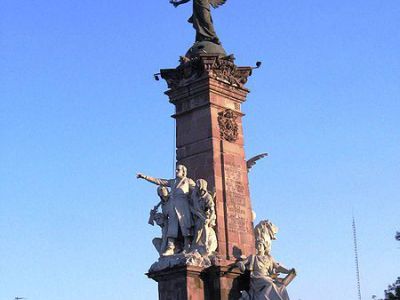
The Independence Monument, is a historic landmark erected in 1910 to commemorate the centennial of Mexico’s independence and the abolition of slavery. The monument serves as a symbolic gateway to the city and a reminder of pivotal moments in Mexican history.
This elegant monument rises from a stone base and features a tall pillar adorned with marble sculptures representing female allegorical figures-Justice, Peace, and History-accompanied by a statue of priest-hero Miguel Hidalgo on its main face. Atop the column stands a bronze statue of Victory, portrayed as a winged figure holding a laurel wreath and broken chains-symbolic of freedom and national sovereignty.
Located on one of Guadalajara’s most important thoroughfares, the monument is a daily meeting place for locals and a scenic photo spot for tourists. Its resemblance to Mexico City’s famous Angel of Independence has earned it the affectionate nickname “Guadalajara’s Angel”.
This elegant monument rises from a stone base and features a tall pillar adorned with marble sculptures representing female allegorical figures-Justice, Peace, and History-accompanied by a statue of priest-hero Miguel Hidalgo on its main face. Atop the column stands a bronze statue of Victory, portrayed as a winged figure holding a laurel wreath and broken chains-symbolic of freedom and national sovereignty.
Located on one of Guadalajara’s most important thoroughfares, the monument is a daily meeting place for locals and a scenic photo spot for tourists. Its resemblance to Mexico City’s famous Angel of Independence has earned it the affectionate nickname “Guadalajara’s Angel”.
15) Mercado de San Juan de Dios (Libertad Market)
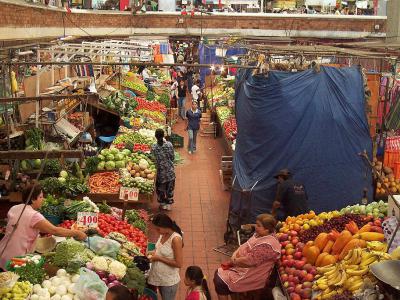
Libertad Market is one of Mexico's largest covered markets, with around 40,000 square meters of shopping space. Shoppers can find all sorts of goods, arts, and crafts at over 2,800 stands.
The market was designed by architect Alejandro Zohn and first opened in 1958.
Shoppers will find endless groceries such as fresh fruits and vegetables. Visitors can shop for clothing items such as leather coats, sweaters, and embroidered clothes. You'll find other household and fashion items such as cozy blankets, shoes, and attractive bags. In addition, you can find items like electronics, movies, and music.
Stalls sell different crafts using materials such as silver, blown glass, ceramic, leather, and palm leaves. Shoppers can find arts and crafts from a variety of Mexican regions.
On the second floor, visitors will find various restaurants focused on Mexican dishes like torta ahogadas, pozole, and tacos.
The market was designed by architect Alejandro Zohn and first opened in 1958.
Shoppers will find endless groceries such as fresh fruits and vegetables. Visitors can shop for clothing items such as leather coats, sweaters, and embroidered clothes. You'll find other household and fashion items such as cozy blankets, shoes, and attractive bags. In addition, you can find items like electronics, movies, and music.
Stalls sell different crafts using materials such as silver, blown glass, ceramic, leather, and palm leaves. Shoppers can find arts and crafts from a variety of Mexican regions.
On the second floor, visitors will find various restaurants focused on Mexican dishes like torta ahogadas, pozole, and tacos.
16) Hospicio Cabañas (Cabañas Orphanage) (must see)
The Bishop of Guadalajara founded the Cabanas Orphanage in the 1700s. Architect Manuel Tolsa designed the current building, which opened in 1810. The orphanage was named after Juan Ruiz de Cabanas, who oversaw the orphanage's construction. The orphanage was built to function as a hospital, workhouse, orphanage, and almshouse. It housed 500 children at a time.
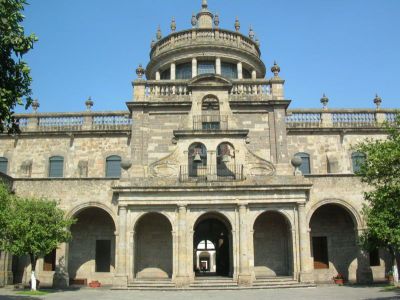
The orphanage was built as a single-level building to make moving children, patients, and the elderly easy. Most of the building is 7.5 meters high (25 feet), but the chapel's dome rises to 32.5 meters high (107 feet). The orphanage's exterior features six Doric columns. The interior has 23 courtyards that are surrounded by hallways.
The building continued to function as a hospital until 1980 when the Cabanas Cultural Institute took over. Hospicio Cabana was designated a UNESCO World Heritage Site in 1997.
Visitors can see several impressive artworks and frescoes in the Cabana Orphanage. The interior features dozens of frescoes painted by renowned Mexican artist Jose Clemente Orozco. One such fresco is the celebrated The Man of Fire, painted between 1936 and 1939. In this mural, a human figure is wreathed in flames, and figures resembling zombies watch from below.
In 2014, Daniel Buren created a series of artworks in the orphanage's courtyards. Buren painted geometric shapes and used bright colors and mirrored structures to distort the traditional surroundings.
Artist Alejandro Colunga created two impressive sculptures outside the orphanage. The sculptures are called The Hall of the Magicians (La Sala de Los Magos) and The Universal Wizards (Los Magos Universales).
The orphanage was built as a single-level building to make moving children, patients, and the elderly easy. Most of the building is 7.5 meters high (25 feet), but the chapel's dome rises to 32.5 meters high (107 feet). The orphanage's exterior features six Doric columns. The interior has 23 courtyards that are surrounded by hallways.
The building continued to function as a hospital until 1980 when the Cabanas Cultural Institute took over. Hospicio Cabana was designated a UNESCO World Heritage Site in 1997.
Visitors can see several impressive artworks and frescoes in the Cabana Orphanage. The interior features dozens of frescoes painted by renowned Mexican artist Jose Clemente Orozco. One such fresco is the celebrated The Man of Fire, painted between 1936 and 1939. In this mural, a human figure is wreathed in flames, and figures resembling zombies watch from below.
In 2014, Daniel Buren created a series of artworks in the orphanage's courtyards. Buren painted geometric shapes and used bright colors and mirrored structures to distort the traditional surroundings.
Artist Alejandro Colunga created two impressive sculptures outside the orphanage. The sculptures are called The Hall of the Magicians (La Sala de Los Magos) and The Universal Wizards (Los Magos Universales).
