Custom Walk in Munich, Germany by rafjaggard_e7e32 created on 2025-06-02
Guide Location: Germany » Munich
Guide Type: Custom Walk
# of Sights: 12
Tour Duration: 3 Hour(s)
Travel Distance: 4.5 Km or 2.8 Miles
Share Key: HT8JM
Guide Type: Custom Walk
# of Sights: 12
Tour Duration: 3 Hour(s)
Travel Distance: 4.5 Km or 2.8 Miles
Share Key: HT8JM
How It Works
Please retrieve this walk in the GPSmyCity app. Once done, the app will guide you from one tour stop to the next as if you had a personal tour guide. If you created the walk on this website or come to the page via a link, please follow the instructions below to retrieve the walk in the app.
Retrieve This Walk in App
Step 1. Download the app "GPSmyCity: Walks in 1K+ Cities" on Apple App Store or Google Play Store.



Step 2. In the GPSmyCity app, download(or launch) the guide "Munich Map and Walking Tours".
Step 3. Tap the menu button located at upper right corner of the "Walks" screen and select "Retrieve custom walk". Enter the share key: HT8JM
1) Marienplatz (Mary's Square) (must see)
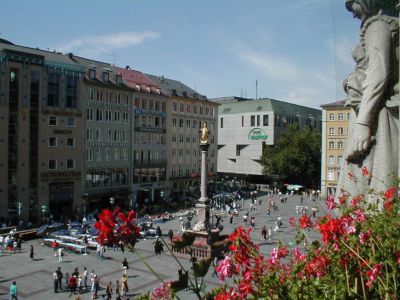
Right in the center of Munich lies Mary’s Square, the city’s lively, historic core. Established back in 1158, it started out as a busy marketplace and a stage for medieval tournaments and public events. These days, it’s still the place where everything seems to converge-a perfect starting point for anyone exploring the city. Grand buildings rise on all sides, cafés spill onto the streets, and the square hums with energy from morning until night.
The star attraction is the New Town Hall, an elaborate neo-Gothic masterpiece brimming with stone figures, ornate carvings, and the famous Glockenspiel. At 11 a.m., noon, and again at 5 p.m. during the warmer months, the Glockenspiel puts on its quirky performance. Thirty-two mechanical figures spin into action, reenacting Bavarian legends to a soundtrack of bells and music. It’s theatrical, a little over-the-top, and completely delightful.
Across the square, you’ll also find the Old Town Hall, with its storybook tower and a toy museum tucked inside-great if you’re traveling with kids or just enjoy a touch of childhood nostalgia. Meanwhile in the center stands the Column of Saint Mary, raised in 1638 to mark the end of Swedish occupation during the Thirty Years' War. A gilded statue of the Virgin crowns the column-a quiet symbol in a bustling space, and the inspiration for the square’s name.
Street musicians, traditional restaurants, souvenir stalls-there’s always something happening around you. Want to shop? Stroll down Kaufinger Street, one of Munich’s busiest pedestrian avenues. If you’re more in the mood for architecture, the city’s Cathedral, with its distinctive twin domes, is just around the corner.
In short, Mary’s Square offers the perfect snapshot of Munich. Don’t rush through it-it’s a place to linger, look up, and let the city reveal itself one detail at a time.
The star attraction is the New Town Hall, an elaborate neo-Gothic masterpiece brimming with stone figures, ornate carvings, and the famous Glockenspiel. At 11 a.m., noon, and again at 5 p.m. during the warmer months, the Glockenspiel puts on its quirky performance. Thirty-two mechanical figures spin into action, reenacting Bavarian legends to a soundtrack of bells and music. It’s theatrical, a little over-the-top, and completely delightful.
Across the square, you’ll also find the Old Town Hall, with its storybook tower and a toy museum tucked inside-great if you’re traveling with kids or just enjoy a touch of childhood nostalgia. Meanwhile in the center stands the Column of Saint Mary, raised in 1638 to mark the end of Swedish occupation during the Thirty Years' War. A gilded statue of the Virgin crowns the column-a quiet symbol in a bustling space, and the inspiration for the square’s name.
Street musicians, traditional restaurants, souvenir stalls-there’s always something happening around you. Want to shop? Stroll down Kaufinger Street, one of Munich’s busiest pedestrian avenues. If you’re more in the mood for architecture, the city’s Cathedral, with its distinctive twin domes, is just around the corner.
In short, Mary’s Square offers the perfect snapshot of Munich. Don’t rush through it-it’s a place to linger, look up, and let the city reveal itself one detail at a time.
2) Neues Rathaus (New Town Hall) (must see)
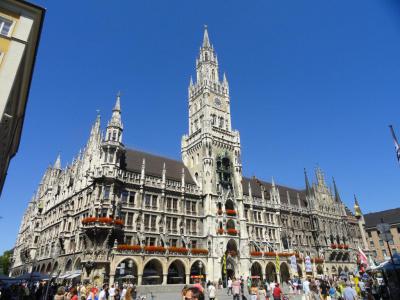
In the second half of the 19th century, as Munich was growing rapidly and riding a wave of prosperity, city leaders decided they needed a new home for local government. The Old Town Hall had simply outgrown its purpose. They chose a prominent spot on the south side of Mary’s Square, cleared out around two dozen houses, and set the stage for something grand. Construction began in 1867 and continued all the way to 1909. Overseeing the project was a remarkably young architect-Georg Hauberrisser-just 24 when he started.
What emerged is a prime example of German pseudo-historical architecture-mock-Netherlands Gothic, to be exact. The building features six courtyards and a small garden at the back. Its façade is covered in intricate sculptures that reference Bavarian legends, local saints, and allegorical figures. At the top of the steeple stands a bronze statue of the “Munich Child,” the city’s traditional symbol. The tower also houses the fourth-largest chiming clock in Europe.
Every day, 43 bells ring out as copper figures dance in two scenes: a knightly tournament honoring the wedding of Duke Wilhelm V and Renata of Lorraine, and the legendary “Dance of the Coopers.” That dance, by the way, is still performed in the streets every seven years during Carnival to commemorate the passing of a plague epidemic in the early 1500s. Legend has it that coopers, loyal to the Duke, danced through the streets to inspire courage during tough times. The official dance moves were defined as far back as 1871.
The full carillon performance plays at 11 a.m., noon, and 5 p.m. in the summer, lasting up to 15 minutes depending on the day’s tune. As a whimsical finale, a tiny golden rooster perched above the clock lets out three soft chirps. And when evening falls, figures of a night watchman and the Angel of Peace appear in the upper windows, quietly blessing the “Munich Child” and the city below.
Visitors can ride the elevator to the viewing platform for sweeping views of the city. And beneath the building, the historic Ratskeller restaurant offers not just a good meal, but a truly atmospheric dining experience.
What emerged is a prime example of German pseudo-historical architecture-mock-Netherlands Gothic, to be exact. The building features six courtyards and a small garden at the back. Its façade is covered in intricate sculptures that reference Bavarian legends, local saints, and allegorical figures. At the top of the steeple stands a bronze statue of the “Munich Child,” the city’s traditional symbol. The tower also houses the fourth-largest chiming clock in Europe.
Every day, 43 bells ring out as copper figures dance in two scenes: a knightly tournament honoring the wedding of Duke Wilhelm V and Renata of Lorraine, and the legendary “Dance of the Coopers.” That dance, by the way, is still performed in the streets every seven years during Carnival to commemorate the passing of a plague epidemic in the early 1500s. Legend has it that coopers, loyal to the Duke, danced through the streets to inspire courage during tough times. The official dance moves were defined as far back as 1871.
The full carillon performance plays at 11 a.m., noon, and 5 p.m. in the summer, lasting up to 15 minutes depending on the day’s tune. As a whimsical finale, a tiny golden rooster perched above the clock lets out three soft chirps. And when evening falls, figures of a night watchman and the Angel of Peace appear in the upper windows, quietly blessing the “Munich Child” and the city below.
Visitors can ride the elevator to the viewing platform for sweeping views of the city. And beneath the building, the historic Ratskeller restaurant offers not just a good meal, but a truly atmospheric dining experience.
3) Asamkirche (Asam Church) (must see)
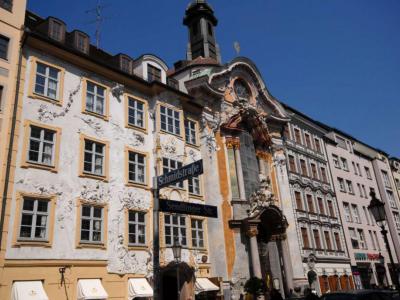
Although modest in size, this church is famed for having the most lavish interior of any religious site in Munich. What it lacks in square footage, it more than makes up for in sheer decorative intensity-frescoes, marble, stucco, and layer upon layer of gold leaf all compete for the eye’s attention. The style might not be to everyone’s taste, but it’s difficult not to be captivated. It’s gaudy, yes-and unmistakably Baroque-but in a very special way that you don't get to see very often.
Built in the 1730s and 1740s by the talented Asam brothers, the church was originally intended as their private chapel. It was later opened to the public and consecrated in honor of Saint Johann Nepomuk, a Bohemian monk and martyr. According to legend, he was executed by drowning in the Danube after refusing to reveal the Queen’s confessions-an act ordered by King Wenceslaus.
Inside, you’ll find a visual feast. The ceiling bursts with frescoes, including a dramatic scene depicting Saint Nepomuk’s final moments in the river. The high altar is flanked by four elaborately twisted columns and features a glass shrine holding a wax figure of the saint. Look upward, and you'll spot a striking sculpture of God the Father leaning over the crucified Christ, perched above the cornice. Much of what you see today is the result of a detailed restoration carried out between 1975 and 1982.
Here’s a tip: try to visit early in the morning, before the crowds arrive-or outside of mass hours if possible. And if the sun’s shining, even better. The light catches the gilded surfaces beautifully, making the whole interior shimmer like a golden dream.
Built in the 1730s and 1740s by the talented Asam brothers, the church was originally intended as their private chapel. It was later opened to the public and consecrated in honor of Saint Johann Nepomuk, a Bohemian monk and martyr. According to legend, he was executed by drowning in the Danube after refusing to reveal the Queen’s confessions-an act ordered by King Wenceslaus.
Inside, you’ll find a visual feast. The ceiling bursts with frescoes, including a dramatic scene depicting Saint Nepomuk’s final moments in the river. The high altar is flanked by four elaborately twisted columns and features a glass shrine holding a wax figure of the saint. Look upward, and you'll spot a striking sculpture of God the Father leaning over the crucified Christ, perched above the cornice. Much of what you see today is the result of a detailed restoration carried out between 1975 and 1982.
Here’s a tip: try to visit early in the morning, before the crowds arrive-or outside of mass hours if possible. And if the sun’s shining, even better. The light catches the gilded surfaces beautifully, making the whole interior shimmer like a golden dream.
4) Frauenkirche (Cathedral of Our Lady) (must see)
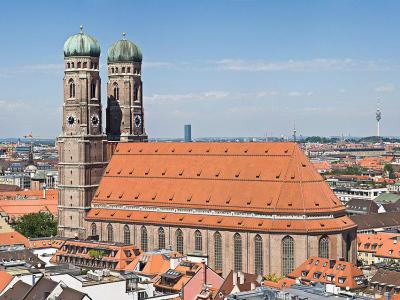
The largest Gothic structure in southern Germany, this church was built at an astonishing pace. Construction began in 1468 and wrapped up just 20 years later, a remarkable feat for the time. With its twin towers capped by distinctive onion-shaped domes rising 99 meters high, it remains the city’s most iconic landmark.
Entry is free, though there’s a small charge if you’d rather take the elevator up the South Tower instead of making the climb yourself. The panoramic view from the top is well worth the effort-an unforgettable way to view the city from above.
Inside, the atmosphere is stark and reverent. What you may see today was rebuilt from the ruins left by World War II bombings. Having been safely stored away during the war, the Gothic windows offer a glimpse of the church’s former glory. In the choir, you’ll find sculptures of the Apostles and Prophets, created in 1502 and miraculously preserved. The north chapel holds a striking altarpiece of Christ’s baptism, alongside Jan Polack’s panels depicting scenes from the Passion. Also look out for his painting “The Protecting Cloak”, as well as an elaborate cenotaph of Holy Roman Emperor Louis IV.
And then, of course, there’s the legend-the infamous Devil’s Footprint. As the story goes, architect Jörg von Halsbach made a deal with the devil: the funds to finish the church, in exchange for a design with no visible windows. From one specific spot near the entrance, the illusion holds-no windows in sight. When the devil realized he’d been tricked, he stomped his foot in rage, leaving a footprint behind. Both the footprint and the trick of perspective can still be seen today.
Since this is Munich’s mother church, photography is discouraged out of respect for those who come here to pray. So take a quiet moment, soak in the stillness, and let the space speak for itself.
Entry is free, though there’s a small charge if you’d rather take the elevator up the South Tower instead of making the climb yourself. The panoramic view from the top is well worth the effort-an unforgettable way to view the city from above.
Inside, the atmosphere is stark and reverent. What you may see today was rebuilt from the ruins left by World War II bombings. Having been safely stored away during the war, the Gothic windows offer a glimpse of the church’s former glory. In the choir, you’ll find sculptures of the Apostles and Prophets, created in 1502 and miraculously preserved. The north chapel holds a striking altarpiece of Christ’s baptism, alongside Jan Polack’s panels depicting scenes from the Passion. Also look out for his painting “The Protecting Cloak”, as well as an elaborate cenotaph of Holy Roman Emperor Louis IV.
And then, of course, there’s the legend-the infamous Devil’s Footprint. As the story goes, architect Jörg von Halsbach made a deal with the devil: the funds to finish the church, in exchange for a design with no visible windows. From one specific spot near the entrance, the illusion holds-no windows in sight. When the devil realized he’d been tricked, he stomped his foot in rage, leaving a footprint behind. Both the footprint and the trick of perspective can still be seen today.
Since this is Munich’s mother church, photography is discouraged out of respect for those who come here to pray. So take a quiet moment, soak in the stillness, and let the space speak for itself.
5) Theatinerkirche (Theatine Church)
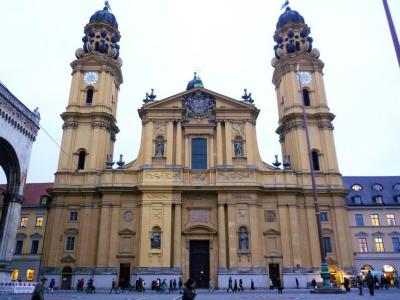
In 1662, to celebrate the long-awaited birth of their son and heir, Elector Ferdinand and his wife, Henriette of Savoy, commissioned the construction of a church and monastery for the Italian Theatine order. The task fell to Antonio Barelli of Bologna, who envisioned nothing less than the most ornate and splendid temple imaginable. He based his design on Sant’Andrea della Valle in Rome, bringing a piece of pure Roman Baroque to the heart of Munich.
Bathed in sun-washed yellow-orange and radiating a bright Mediterranean vibe, the church instantly stood out in the city’s skyline. Its distinctive style brought a fresh twist to Munich’s architecture and went on to inspire many church designs across Southern Germany.
The soaring domes reach up to 70 meters and echo the curves and scrolls of Venice’s Santa Maria della Salute. The façade, richly sculpted in late Baroque style, steps forward in dramatic layers, with pilasters, scrolling cornices, and niches containing statues of Ferdinand and Henriette, their son Maximilian, and Saint Cajetan, the church’s patron. Just above the entrance, a cartouche displays coats of arms, including those of Bavaria and Saxony.
Among Munich’s many richly decorated churches, this one is remarkable for its radiant white interior, which seems to glow in natural light. Intricate stuccowork fills the space, with allegorical figures and playful cherubs adding drama and charm. The main altar is flanked by twisted columns, drawing the eye upward, while below, the crypt houses the tombs of Bavarian dukes and kings-including the church’s founders, their son Maximilian Emanuel, and his wife. It’s a place where architectural splendor and dynastic history intertwine.
Bathed in sun-washed yellow-orange and radiating a bright Mediterranean vibe, the church instantly stood out in the city’s skyline. Its distinctive style brought a fresh twist to Munich’s architecture and went on to inspire many church designs across Southern Germany.
The soaring domes reach up to 70 meters and echo the curves and scrolls of Venice’s Santa Maria della Salute. The façade, richly sculpted in late Baroque style, steps forward in dramatic layers, with pilasters, scrolling cornices, and niches containing statues of Ferdinand and Henriette, their son Maximilian, and Saint Cajetan, the church’s patron. Just above the entrance, a cartouche displays coats of arms, including those of Bavaria and Saxony.
Among Munich’s many richly decorated churches, this one is remarkable for its radiant white interior, which seems to glow in natural light. Intricate stuccowork fills the space, with allegorical figures and playful cherubs adding drama and charm. The main altar is flanked by twisted columns, drawing the eye upward, while below, the crypt houses the tombs of Bavarian dukes and kings-including the church’s founders, their son Maximilian Emanuel, and his wife. It’s a place where architectural splendor and dynastic history intertwine.
6) Odeonsplatz
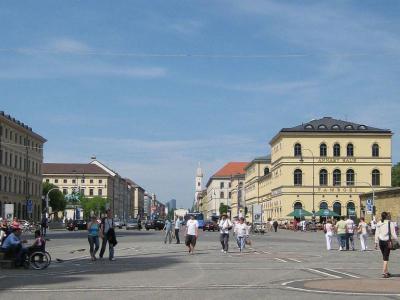
The Odeonsplatz is a significant square in Munich's heart, created in the early 19th century by architect Leo von Klenze. It marks the end of Ludwigstraße, a grand street designed concurrently. The square gets its name from a concert hall called the Odeon situated on its northwest side. Over time, the term "Odeonsplatz" has also come to describe the open area in front of the Residenz palace, bounded by the Theatine Church and the Feldherrnhalle, a monumental loggia to the south.
Situated to the north of Munich's historic center, Odeonsplatz borders two districts: Altstadt-Lehel to the east and Maxvorstadt to the west. Along the west side, set back from Ludwigstraße, stand the Odeon building and the Palais Leuchtenberg, both inspired by Rome's Palazzo Farnese. To the east is Klenze's commercial arcade with Café Tambosi included. A street runs between the western buildings toward the Palais Ludwig Ferdinand, leading also to Wittelsbacherplatz, another square Klenze designed.
The Feldherrnhalle at the square's edge is modeled on Florence's Loggia dei Lanzi. Odeonsplatz is accessible by its U-Bahn station and a bus line that connects to various museums. In 1972, it became part of Munich's pedestrian-only zone.
Historically, Odeonsplatz has been central to various public ceremonies, from funeral marches to victory parades, moving along Ludwigstraße to the Feldherrnhalle, with a special viewing stand by Ludwig I's statue. The path from Odeonsplatz to the annual Oktoberfest parade has remained unchanged for years.
Situated to the north of Munich's historic center, Odeonsplatz borders two districts: Altstadt-Lehel to the east and Maxvorstadt to the west. Along the west side, set back from Ludwigstraße, stand the Odeon building and the Palais Leuchtenberg, both inspired by Rome's Palazzo Farnese. To the east is Klenze's commercial arcade with Café Tambosi included. A street runs between the western buildings toward the Palais Ludwig Ferdinand, leading also to Wittelsbacherplatz, another square Klenze designed.
The Feldherrnhalle at the square's edge is modeled on Florence's Loggia dei Lanzi. Odeonsplatz is accessible by its U-Bahn station and a bus line that connects to various museums. In 1972, it became part of Munich's pedestrian-only zone.
Historically, Odeonsplatz has been central to various public ceremonies, from funeral marches to victory parades, moving along Ludwigstraße to the Feldherrnhalle, with a special viewing stand by Ludwig I's statue. The path from Odeonsplatz to the annual Oktoberfest parade has remained unchanged for years.
7) Feldherrnhalle (Field Marshall’s Hall)
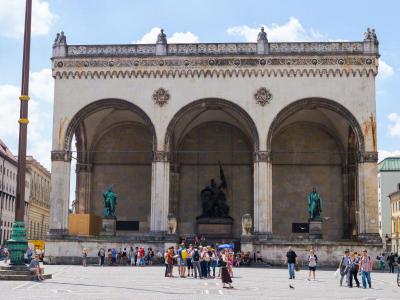
The Field Marshal's Hall is a grand open-air loggia built to honor Bavaria’s military leaders and the soldiers who died in the Franco-Prussian War. Commissioned by King Ludwig I in the 1840s, it was constructed on the site of a former city gate. The design was inspired by Florence’s famous Loggia dei Lanzi, bringing a touch of Italian grandeur to Munich’s historic center.
Standing at the front are two imposing bronze statues commemorating key figures in Bavarian military history: Count Tilly, who played a major role during the Thirty Years’ War, and Count von Wrede, a marshal from the Napoleonic era. In 1882, a third sculpture was added at the center-this one celebrating the Bavarian army’s role in the Franco-Prussian War. As you approach, you’ll also spot two lion statues at the steps, crafted in 1906. One, mouth open, faces the Residenz Royal Palace; the other, with mouth closed, looks toward the nearby church.
Yet for many, the site is remembered most for the dramatic events of 1923. That year, during the failed Beer Hall Putsch, Adolf Hitler led around 2,000 followers in an attempted coup, marching toward the center of Munich in what he called a “people’s revolution.” They were met by the Bavarian police in front of this very loggia. A deadly confrontation followed-four officers and sixteen insurgents were killed. Hitler was arrested shortly after and imprisoned. A decade later, after coming to power, he elevated the failed revolt into a cornerstone of the Nazi cult.
Standing at the front are two imposing bronze statues commemorating key figures in Bavarian military history: Count Tilly, who played a major role during the Thirty Years’ War, and Count von Wrede, a marshal from the Napoleonic era. In 1882, a third sculpture was added at the center-this one celebrating the Bavarian army’s role in the Franco-Prussian War. As you approach, you’ll also spot two lion statues at the steps, crafted in 1906. One, mouth open, faces the Residenz Royal Palace; the other, with mouth closed, looks toward the nearby church.
Yet for many, the site is remembered most for the dramatic events of 1923. That year, during the failed Beer Hall Putsch, Adolf Hitler led around 2,000 followers in an attempted coup, marching toward the center of Munich in what he called a “people’s revolution.” They were met by the Bavarian police in front of this very loggia. A deadly confrontation followed-four officers and sixteen insurgents were killed. Hitler was arrested shortly after and imprisoned. A decade later, after coming to power, he elevated the failed revolt into a cornerstone of the Nazi cult.
8) Residenz Royal Palace (must see)
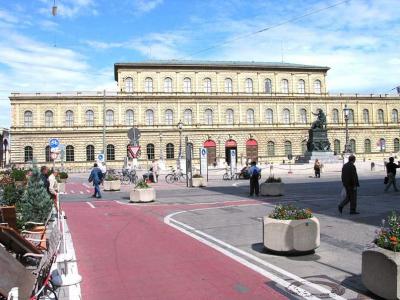
The Residenz was the home of Bavaria’s Wittelsbach dynasty all the way up until 1918. With its gilded grandeur and Versailles-like scale, this royal palace complex ranks among Europe’s most impressive, and a throrough exploration could easily take a few days. It’s massive to begin with, and even larger now that more rooms and passageways have been restored and opened to the public.
A good place to start is outside, with the three imposing facades and a series of stunning courtyards, many of which are freely accessible. From there, you can step into the Residenz Museum itself, as well as the Cuvilliés-arguably the finest Rococo theater in Europe, and the Treasure Chamber, where you’ll find a glittering display of jewels, gold, silver, crystal, and enamelwork-collected over a thousand years.
There’s a huge amount to see in the 10 courtyards and nearly 130 rooms, halls and galleries. Among the standout highlights is the Gallery of the Ancestors, where you’ll meet 121 members of the Wittelsbach family; the Antiquarium-the largest Renaissance hall north of the Alps; the extensive porcelain collections, including an array of pieces from France, England, Germany, Japan, and China; and the lavish State Rooms, where German Rococo reaches its decorative peak, especially in the Green Gallery and the Cabinet of Mirrors. Oh, and don’t miss the Grottenhof courtyard, known for its elegant arcade and bronze fountain of Perseus.
For the full experience, consider a combined ticket that includes the Museum, the Theatre and the Treasury. And if you want to tailor your visit, the audio guide lets you jump straight to the rooms, artworks, or stories that interest you most.
A good place to start is outside, with the three imposing facades and a series of stunning courtyards, many of which are freely accessible. From there, you can step into the Residenz Museum itself, as well as the Cuvilliés-arguably the finest Rococo theater in Europe, and the Treasure Chamber, where you’ll find a glittering display of jewels, gold, silver, crystal, and enamelwork-collected over a thousand years.
There’s a huge amount to see in the 10 courtyards and nearly 130 rooms, halls and galleries. Among the standout highlights is the Gallery of the Ancestors, where you’ll meet 121 members of the Wittelsbach family; the Antiquarium-the largest Renaissance hall north of the Alps; the extensive porcelain collections, including an array of pieces from France, England, Germany, Japan, and China; and the lavish State Rooms, where German Rococo reaches its decorative peak, especially in the Green Gallery and the Cabinet of Mirrors. Oh, and don’t miss the Grottenhof courtyard, known for its elegant arcade and bronze fountain of Perseus.
For the full experience, consider a combined ticket that includes the Museum, the Theatre and the Treasury. And if you want to tailor your visit, the audio guide lets you jump straight to the rooms, artworks, or stories that interest you most.
9) Bayerische Staatsoper
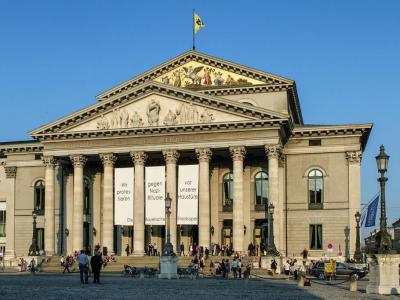
The Bayerische Staatsoper, also known as the Bavarian National Theater, stands as the largest theater in Munich, prominently situated at Max Joseph Platz in the heart of the city.
This architectural gem was conceived by the renowned architect Karl von Fischer, drawing inspiration from the Odeon in Paris. Its construction was commissioned by Maximilian I, the Bavarian King. In 1818, the theater made its grand debut with a performance of Ferdinand Fränzl's 'Die Weihe.' However, unfortunate events marred its history, as a fire ravaged the structure in 1823, and a subsequent reconstruction in 1825 met a similar fate during World War II bombings. It wasn't until 1963 that the current incarnation of the theater opened its doors with the performance of Richard Wagner's 'Die Meistersinger von Nürnberg.'
The present Bayerische Staatsoper boasts an impressive capacity of 21,000 seats, with five rows of seats and a Royal box overlooking a circular stage. It hosts a diverse array of performances, including ballets, operas, and operettas on a daily basis. Additionally, the annual Munich Opera Festival graces this venue every summer. The theater is home to its own orchestra, known as the Bayerisches Staatsorchester, and serves as the headquarters for both the Bavarian State Opera and the Bavarian State Ballet. For those eager to explore its inner workings, guided tours lasting about an hour are available, typically scheduled at 2 pm on most afternoons. Tour dates can be found on the Bayerische Staatsoper's website.
Why You Should Visit:
The 'Staatsoper' always has the top notch stars. Tickets are quite expensive but the overall experience is worth it.
There's a sense of occasion here that you don't always get at the opera or ballet. It's a perfect chocolate box theatre with helpful staff and comfortable seats. The interval refreshments are served quickly and are tasty.
Tip:
Opera or show at this place is a proper affair, so you should aim to make this a proper night out. People will be dressed up in suits and dresses.
Book your tickets early. If you also want a seat that has a view of the whole theatre setup, consider getting one near the front on the side and balcony, rather than front facing but at the back.
This architectural gem was conceived by the renowned architect Karl von Fischer, drawing inspiration from the Odeon in Paris. Its construction was commissioned by Maximilian I, the Bavarian King. In 1818, the theater made its grand debut with a performance of Ferdinand Fränzl's 'Die Weihe.' However, unfortunate events marred its history, as a fire ravaged the structure in 1823, and a subsequent reconstruction in 1825 met a similar fate during World War II bombings. It wasn't until 1963 that the current incarnation of the theater opened its doors with the performance of Richard Wagner's 'Die Meistersinger von Nürnberg.'
The present Bayerische Staatsoper boasts an impressive capacity of 21,000 seats, with five rows of seats and a Royal box overlooking a circular stage. It hosts a diverse array of performances, including ballets, operas, and operettas on a daily basis. Additionally, the annual Munich Opera Festival graces this venue every summer. The theater is home to its own orchestra, known as the Bayerisches Staatsorchester, and serves as the headquarters for both the Bavarian State Opera and the Bavarian State Ballet. For those eager to explore its inner workings, guided tours lasting about an hour are available, typically scheduled at 2 pm on most afternoons. Tour dates can be found on the Bayerische Staatsoper's website.
Why You Should Visit:
The 'Staatsoper' always has the top notch stars. Tickets are quite expensive but the overall experience is worth it.
There's a sense of occasion here that you don't always get at the opera or ballet. It's a perfect chocolate box theatre with helpful staff and comfortable seats. The interval refreshments are served quickly and are tasty.
Tip:
Opera or show at this place is a proper affair, so you should aim to make this a proper night out. People will be dressed up in suits and dresses.
Book your tickets early. If you also want a seat that has a view of the whole theatre setup, consider getting one near the front on the side and balcony, rather than front facing but at the back.
10) Hitler's Early Residence in Munich
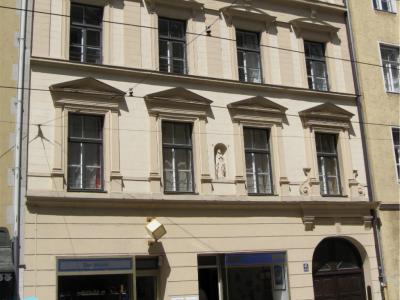
Adolf Hitler’s early residence in Munich played a significant role during the years when his political influence was taking shape. From May 1920 to October 1929, he lived in this third-floor flat-a period that saw him rise from fringe agitator to leader of the Nazi Party.
The building itself was well-situated: close enough to major meeting halls, yet far enough removed to offer a degree of privacy. During this time, Hitler wasn’t just living-he was strategizing. He worked on his autobiography, “My Struggle”, hosted party loyalists, and slowly built the organizational backbone of National Socialism from this very spot.
In the late 1920s, his half-niece, Geli Raubal, moved in. Their close and controversial relationship became the subject of intense speculation, ending in tragedy when Geli took her own life in 1931, after moving out. Her death left a lasting mark on Hitler.
After he relocated in 1929, the apartment faded into anonymity. Today, the building still stands, serving as a regular residential address with no plaque, no signage, no public trace of what once took place behind its doors. A quiet relic of a deeply consequential chapter.
The building itself was well-situated: close enough to major meeting halls, yet far enough removed to offer a degree of privacy. During this time, Hitler wasn’t just living-he was strategizing. He worked on his autobiography, “My Struggle”, hosted party loyalists, and slowly built the organizational backbone of National Socialism from this very spot.
In the late 1920s, his half-niece, Geli Raubal, moved in. Their close and controversial relationship became the subject of intense speculation, ending in tragedy when Geli took her own life in 1931, after moving out. Her death left a lasting mark on Hitler.
After he relocated in 1929, the apartment faded into anonymity. Today, the building still stands, serving as a regular residential address with no plaque, no signage, no public trace of what once took place behind its doors. A quiet relic of a deeply consequential chapter.
11) Viktualienmarkt (Farmer's Market) (must see)
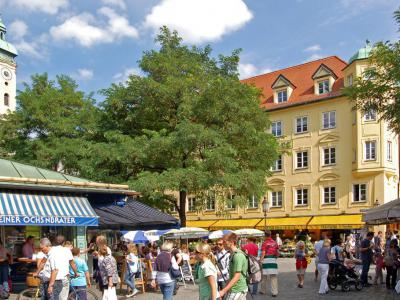
Welcome to Munich’s oldest and most charming market. Since the early 1800s, it’s been the go-to spot for just about anything edible-fresh produce, dairy, meats, fine French wines, seafood, and rare delicacies from around the globe. Prices tend to be on the higher side, but the variety and quality are hard to beat. Of course, you’ll also find classic Bavarian favorites like pretzels, sausages, and local cheeses, all offering a true taste of the region.
People from all walks of life gather here-locals picking up ingredients for dinner, tourists exploring with wide eyes, and regulars who’ve made it part of their daily routine. Local customs involve eating white sausage, sipping hot soup, and enjoying a cold beer in one of the city’s most beloved beer gardens, set around a decorated maypole. Under the shade of chestnut trees, folks gather to sip cold brews and enjoy a break from the buzz.
But this market is more than a place to shop, drink or snack-it’s actually woven into Munich’s cultural identity. Throughout the year, it plays host to everything from folk dances and live music to seasonal festivals, and an especially lively Mardi Gras parade. The fountain erected to commemorate German cabaret artists emphasizes the spirit that has always animated this place.
In every sense, it’s a feast-for the senses, for the culture, and most definitely for the appetite.
People from all walks of life gather here-locals picking up ingredients for dinner, tourists exploring with wide eyes, and regulars who’ve made it part of their daily routine. Local customs involve eating white sausage, sipping hot soup, and enjoying a cold beer in one of the city’s most beloved beer gardens, set around a decorated maypole. Under the shade of chestnut trees, folks gather to sip cold brews and enjoy a break from the buzz.
But this market is more than a place to shop, drink or snack-it’s actually woven into Munich’s cultural identity. Throughout the year, it plays host to everything from folk dances and live music to seasonal festivals, and an especially lively Mardi Gras parade. The fountain erected to commemorate German cabaret artists emphasizes the spirit that has always animated this place.
In every sense, it’s a feast-for the senses, for the culture, and most definitely for the appetite.
12) Altes Rathaus (Old Town Hall)
Before the New Town Hall took over in 1874, the Old Town Hall was where Munich’s city government did its business. Unlike many buildings that were torn down to make way for the new structure, this one remained-preserved as a testament to the city’s commitment to restoration over replacement.
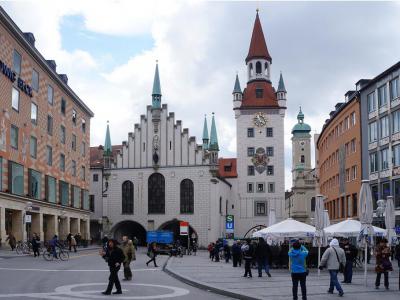
With its dove-grey façade, amber-tiled steeple, and delicate Gothic spires, the Hall captures the essence of its 15th-century origins-though what stands today isn’t an exact replica. Over time, additions like a baroque onion dome and later, an overly enthusiastic attempt at “regothification,” took the structure further from its medieval roots than what the current version reflects. Ironically, the faithful postwar reconstruction you see today may be closer to the spirit of the original than what existed before the Allied bombing.
The oldest surviving element is the 12th-century tower, once part of the city’s medieval fortifications. Today, it houses the Toy Museum, where you’ll find a charming collection of vintage toys-from antique train sets to miniature zoos-spread across four narrow floors connected by a spiral staircase. There's also a gift shop with hand-picked items that make for great souvenirs.
The ceremonial hall still retains its Gothic grandeur, with broad wooden barrel vaults and a frieze of 96 coats of arms lining one wall. Meanwhile, on the building’s side, there's a whimsical surprise: a bronze statue of Shakespeare’s Juliet, a gift from the city of Verona in the 1970s.
But the building also carries a darker legacy. In 1938, Nazi propaganda minister Joseph Goebbels delivered a speech here that triggered the “Night of Broken Glass.” That night of terror saw synagogues burned, Jewish businesses destroyed, and thousands arrested. It’s widely seen as the moment when Nazi anti-Semitic violence escalated into what became the Holocaust.
With its dove-grey façade, amber-tiled steeple, and delicate Gothic spires, the Hall captures the essence of its 15th-century origins-though what stands today isn’t an exact replica. Over time, additions like a baroque onion dome and later, an overly enthusiastic attempt at “regothification,” took the structure further from its medieval roots than what the current version reflects. Ironically, the faithful postwar reconstruction you see today may be closer to the spirit of the original than what existed before the Allied bombing.
The oldest surviving element is the 12th-century tower, once part of the city’s medieval fortifications. Today, it houses the Toy Museum, where you’ll find a charming collection of vintage toys-from antique train sets to miniature zoos-spread across four narrow floors connected by a spiral staircase. There's also a gift shop with hand-picked items that make for great souvenirs.
The ceremonial hall still retains its Gothic grandeur, with broad wooden barrel vaults and a frieze of 96 coats of arms lining one wall. Meanwhile, on the building’s side, there's a whimsical surprise: a bronze statue of Shakespeare’s Juliet, a gift from the city of Verona in the 1970s.
But the building also carries a darker legacy. In 1938, Nazi propaganda minister Joseph Goebbels delivered a speech here that triggered the “Night of Broken Glass.” That night of terror saw synagogues burned, Jewish businesses destroyed, and thousands arrested. It’s widely seen as the moment when Nazi anti-Semitic violence escalated into what became the Holocaust.
