Custom Walk in Thessaloniki, Greece by zoenfd_cef28 created on 2025-06-05
Guide Location: Greece » Thessaloniki
Guide Type: Custom Walk
# of Sights: 10
Tour Duration: 3 Hour(s)
Travel Distance: 6.7 Km or 4.2 Miles
Share Key: CFYA7
Guide Type: Custom Walk
# of Sights: 10
Tour Duration: 3 Hour(s)
Travel Distance: 6.7 Km or 4.2 Miles
Share Key: CFYA7
How It Works
Please retrieve this walk in the GPSmyCity app. Once done, the app will guide you from one tour stop to the next as if you had a personal tour guide. If you created the walk on this website or come to the page via a link, please follow the instructions below to retrieve the walk in the app.
Retrieve This Walk in App
Step 1. Download the app "GPSmyCity: Walks in 1K+ Cities" on Apple App Store or Google Play Store.



Step 2. In the GPSmyCity app, download(or launch) the guide "Thessaloniki Map and Walking Tours".
Step 3. Tap the menu button located at upper right corner of the "Walks" screen and select "Retrieve custom walk". Enter the share key: CFYA7
1) Aristotelous Square (must see)
It was August, 1917. Greece had taken the Allied side in the Great War and the city of Thessaloniki was teeming with British and French troops and refugees from Turkey. In a small house of refugees at OLympiados 3, an ember from the kitchen fire set some straw alight. The fire spread, driven by the wind, and Thessaloniki burned for two days.
French architect Ernest Hebrard was in town. Prime Minister Eleftherios Venizelos forbade any reconstruction without a modern plan and he commissioned Hebrard for the job.
Hebrard came up with a city-wide plan of large squares and broad avenues and buildings with imposing facades derived from Byzantine elements. Among the large squares was Alexander the Great Square, now called Aristotelous Square.
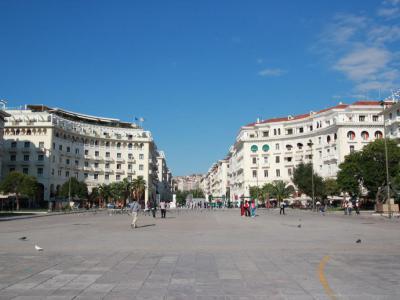
A monumental axis stretches from sea-facing Aristotelous Square to Dikastirion Square and the Roman Forum. Looking uphill from the square one can see the ancient Byzantine walls of the city. A statue of Alexander the Great rides the waterfront esplanade of the square. Eleftherios Venizelos raises his right hand in benediction.
Aristotle relaxes in his chiton and sandals. The big toe of his left foot shines from rubbings of students hoping his wisdom will rub off. The square is a venue for rallies and demonstrations and cultural events, including annual Christmas and carnival celebrations.
The square is also home to several landmark buildings, such as the Electra Palace Hotel. This iconic hotel features stunning architecture and lavish interior decorations. In addition, visitors can check out the Orizontes Roof Garden and enjoy a spectacular waterfront view while dining or enjoying a cocktail.
The Olympion Theatre Cinema is another popular attraction. The neoclassical Olympion hosts the annual International Film Festival of Thessalonica. This film festival began in 1960 and facilities film viewers to discuss the chosen movies with film directors.
French architect Ernest Hebrard was in town. Prime Minister Eleftherios Venizelos forbade any reconstruction without a modern plan and he commissioned Hebrard for the job.
Hebrard came up with a city-wide plan of large squares and broad avenues and buildings with imposing facades derived from Byzantine elements. Among the large squares was Alexander the Great Square, now called Aristotelous Square.
A monumental axis stretches from sea-facing Aristotelous Square to Dikastirion Square and the Roman Forum. Looking uphill from the square one can see the ancient Byzantine walls of the city. A statue of Alexander the Great rides the waterfront esplanade of the square. Eleftherios Venizelos raises his right hand in benediction.
Aristotle relaxes in his chiton and sandals. The big toe of his left foot shines from rubbings of students hoping his wisdom will rub off. The square is a venue for rallies and demonstrations and cultural events, including annual Christmas and carnival celebrations.
The square is also home to several landmark buildings, such as the Electra Palace Hotel. This iconic hotel features stunning architecture and lavish interior decorations. In addition, visitors can check out the Orizontes Roof Garden and enjoy a spectacular waterfront view while dining or enjoying a cocktail.
The Olympion Theatre Cinema is another popular attraction. The neoclassical Olympion hosts the annual International Film Festival of Thessalonica. This film festival began in 1960 and facilities film viewers to discuss the chosen movies with film directors.
2) White Tower of Thessaloniki (must see)
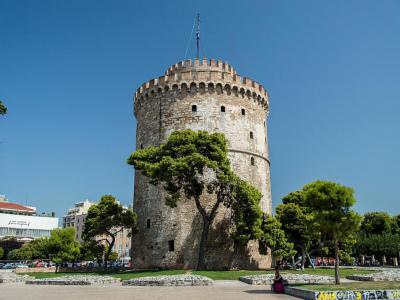
The 23 meters (75 feet) tall White Tower is known as the symbol of Thessaloniki. The Ottomans built the tower around 15th century. It is thought that the fortress was designed by the famous Ottoman architect Mirmar Sinan. It was originally surrounded by fortified walls and was an essential part of Thessaloniki's defenses.
When it was first constructed, it was known as the Lion Tower to honor the Ottoman's victory. The tower was part of the old city's walls and separated the Jewish quarter from the Muslim quarter.
It was renamed the Tower of Kalamaria in the 17th century. It was then used as a garrison. Next, the tower was used as a prison and became known as the Tower of Blood or the Red Tower. During this time, the tower was the site of torture and execution. For example, in 1826, Sultan Mahmud II ordered the massacre of the rebellious Janissaries imprisoned in the tower.
Finally, the tower was painted white in 1891 and named the White Tower. Some historians suggest that the Ottoman Empire sought to "whitewash" the tower's brutal torture history with a change of paint and a new name. While the truth behind the change is unknown, the White Tower name has stuck.
King George I of Greece was assassinated near the White Tower in 1913. Hopefully this was the last drop of blood for the White Tower.
The tower served as an Allied forces communication center during World War I. At this time, the defensive walls were taken down. The White Tower also protected priceless antiquities during World War I.
Thessaloniki's air defense operated from the tower from 1912 to 1983. The tower also housed a meteorological laboratory.
Visitors can enjoy expansive views of the city and Thermaic Gulf from the top floor. In addition, the promenade in front of the tower is a popular spot for photos and meetings.
The White Tower is home to a museum that celebrates Thessaloniki's history. Exhibitions explore the city's history from its founding in 316 BC to today.
When it was first constructed, it was known as the Lion Tower to honor the Ottoman's victory. The tower was part of the old city's walls and separated the Jewish quarter from the Muslim quarter.
It was renamed the Tower of Kalamaria in the 17th century. It was then used as a garrison. Next, the tower was used as a prison and became known as the Tower of Blood or the Red Tower. During this time, the tower was the site of torture and execution. For example, in 1826, Sultan Mahmud II ordered the massacre of the rebellious Janissaries imprisoned in the tower.
Finally, the tower was painted white in 1891 and named the White Tower. Some historians suggest that the Ottoman Empire sought to "whitewash" the tower's brutal torture history with a change of paint and a new name. While the truth behind the change is unknown, the White Tower name has stuck.
King George I of Greece was assassinated near the White Tower in 1913. Hopefully this was the last drop of blood for the White Tower.
The tower served as an Allied forces communication center during World War I. At this time, the defensive walls were taken down. The White Tower also protected priceless antiquities during World War I.
Thessaloniki's air defense operated from the tower from 1912 to 1983. The tower also housed a meteorological laboratory.
Visitors can enjoy expansive views of the city and Thermaic Gulf from the top floor. In addition, the promenade in front of the tower is a popular spot for photos and meetings.
The White Tower is home to a museum that celebrates Thessaloniki's history. Exhibitions explore the city's history from its founding in 316 BC to today.
3) Archaeological Museum of Thessaloniki (must see)
The Archaeological Museum of Thessaloniki, situated in Thessaloniki, is a significant institution dedicated to safeguarding and interpreting a wide range of artifacts spanning from the Prehistoric era to the Roman times. Its collections mainly focus on Thessaloniki and the broader region of Macedonia, providing valuable insights into the area's rich historical background.
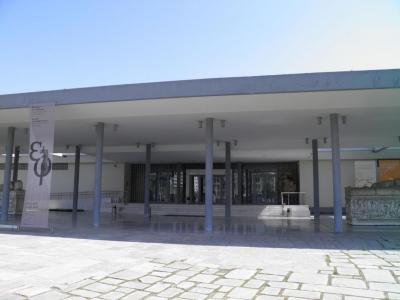
Designed by Patroklos Karantinos, the museum's architecture reflects modern Greek architectural styles. Since its opening in 1962, the museum has undergone notable expansions, including the addition of a new wing in 1980 to exhibit findings from Vergina until 1997. Substantial renovations and reorganization of permanent exhibits were carried out in preparation for the 2004 Athens Olympics, further solidifying its role in cultural preservation and education.
The museum's main displays showcase archaeological discoveries from Thessaloniki and Macedonia as a whole. Particularly noteworthy is the new wing, featuring exhibitions such as "The Gold of Macedon" and "The Thessaloniki Area in Prehistory," which delve into ancient cemeteries and prehistoric settlements, providing insights into the culture and customs of the time.
Of central importance are the collections of sculptures from the Archaic to Late Roman periods found in Macedonia, which narrate the history of Thessaloniki and its surroundings from ancient times to Late Antiquity. Highlights include remnants of an Ionic temple from the 6th century BC, various sculptures, and artifacts from the palace complex of Galerius. Notable exhibits also include a reconstructed façade of a Macedonian tomb and discoveries from the Sindos cemetery, particularly gold artifacts from the Archaic and Classical periods.
In addition to its permanent collections, the Archaeological Museum hosts temporary and thematic exhibitions of significance. For instance, the "Coins of Macedonia from the 6th Century to 148 BC" exhibition in the Manolis Andronikos Room showcases the region's numismatic history.
The "Gold of Macedon" exhibition not only presents numerous finds from central Macedonia but also explores the historical significance of gold in culture, technology, and burial practices. Similarly, "The Thessaloniki in Prehistory" exhibition seeks to reconstruct the landscape of the Thermaic Gulf area before the establishment of Thessaloniki, drawing on excavations dating back to World War I and covering essential prehistoric settlements.
Designed by Patroklos Karantinos, the museum's architecture reflects modern Greek architectural styles. Since its opening in 1962, the museum has undergone notable expansions, including the addition of a new wing in 1980 to exhibit findings from Vergina until 1997. Substantial renovations and reorganization of permanent exhibits were carried out in preparation for the 2004 Athens Olympics, further solidifying its role in cultural preservation and education.
The museum's main displays showcase archaeological discoveries from Thessaloniki and Macedonia as a whole. Particularly noteworthy is the new wing, featuring exhibitions such as "The Gold of Macedon" and "The Thessaloniki Area in Prehistory," which delve into ancient cemeteries and prehistoric settlements, providing insights into the culture and customs of the time.
Of central importance are the collections of sculptures from the Archaic to Late Roman periods found in Macedonia, which narrate the history of Thessaloniki and its surroundings from ancient times to Late Antiquity. Highlights include remnants of an Ionic temple from the 6th century BC, various sculptures, and artifacts from the palace complex of Galerius. Notable exhibits also include a reconstructed façade of a Macedonian tomb and discoveries from the Sindos cemetery, particularly gold artifacts from the Archaic and Classical periods.
In addition to its permanent collections, the Archaeological Museum hosts temporary and thematic exhibitions of significance. For instance, the "Coins of Macedonia from the 6th Century to 148 BC" exhibition in the Manolis Andronikos Room showcases the region's numismatic history.
The "Gold of Macedon" exhibition not only presents numerous finds from central Macedonia but also explores the historical significance of gold in culture, technology, and burial practices. Similarly, "The Thessaloniki in Prehistory" exhibition seeks to reconstruct the landscape of the Thermaic Gulf area before the establishment of Thessaloniki, drawing on excavations dating back to World War I and covering essential prehistoric settlements.
4) Museum of Byzantine Culture (must see)
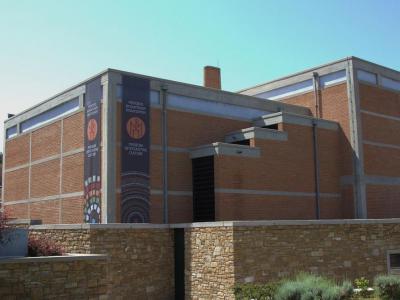
The Museum of Byzantine Culture in Thessaloniki is a significant institution dedicated to showcasing the magnificence of Byzantine civilization. It was established in 1994, following a process that began in 1977 with a national architectural competition to design a suitable building for displaying the rich Byzantine heritage. Kyriakos Krokos won the competition, and his vision for the museum was realized with construction starting in March 1989 and completed in October 1993.
The museum officially opened in June 1994 with the transfer of antiquities from the Byzantine & Christian Museum in Athens to Thessaloniki. These artifacts formed the inaugural exhibition titled "Byzantine Treasures of Thessaloniki: The Return Journey," highlighting the city's important role in the Byzantine Empire.
Today, the Museum of Byzantine Culture features three main exhibitions. The first one, "Early Christian Churches," explores the architecture and decoration of early Christian churches, showcasing the religious and artistic developments of the time. The second exhibition, "Early Christian Cities and Dwellings," offers insights into the daily life of early Christians, including economic activities, housing, and lifestyle practices. The third exhibition, "From the Elysian Fields to the Christian Paradise," examines early Christian funeral customs and beliefs through the display of jewelry, burial art, and grave objects, illustrating the transition from pagan to Christian burial practices.
Through these exhibitions, the Museum of Byzantine Culture preserves the heritage of the Byzantine Empire and provides visitors with a deeper understanding of Byzantine and early Christian life. It serves as a link between the past and present, offering insights into the cultural and historical significance of these periods.
The museum officially opened in June 1994 with the transfer of antiquities from the Byzantine & Christian Museum in Athens to Thessaloniki. These artifacts formed the inaugural exhibition titled "Byzantine Treasures of Thessaloniki: The Return Journey," highlighting the city's important role in the Byzantine Empire.
Today, the Museum of Byzantine Culture features three main exhibitions. The first one, "Early Christian Churches," explores the architecture and decoration of early Christian churches, showcasing the religious and artistic developments of the time. The second exhibition, "Early Christian Cities and Dwellings," offers insights into the daily life of early Christians, including economic activities, housing, and lifestyle practices. The third exhibition, "From the Elysian Fields to the Christian Paradise," examines early Christian funeral customs and beliefs through the display of jewelry, burial art, and grave objects, illustrating the transition from pagan to Christian burial practices.
Through these exhibitions, the Museum of Byzantine Culture preserves the heritage of the Byzantine Empire and provides visitors with a deeper understanding of Byzantine and early Christian life. It serves as a link between the past and present, offering insights into the cultural and historical significance of these periods.
5) Arch of Galerius (must see)
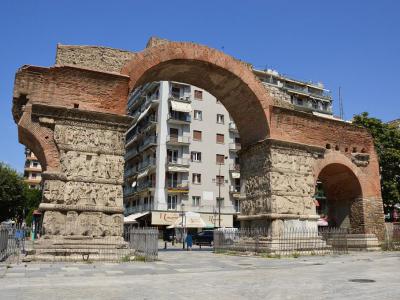
The Arch of Galerius was dedicated in 303 AD to celebrate Roman co-emperor Galerius' victory against the Persians. The structure originally featured an eight-pillared gateway that formed a triple arch. A road connected the Arch with the Rotunda and the Palace complex.
Today, only three of the eight pillars survive. However, the Arch of Galerius is still one of Thessaloniki's most distinctive landmarks. Locals know it as Kamara and often use the landmark as a meeting point.
The two central pillars feature sculpted marble slabs, depicting Galerius fighting the Persians. Another marble relief shows the imperial family making a thanksgiving sacrifice. Unfortunately, all faces have been chiseled off the reliefs. This damage was possibly done to commemorate the dead.
Another panel shows the unity of the tetrarchy, with Galerius dressed in armor. The Arch of Galerius is on the UNESCO World Heritage List.
Today, only three of the eight pillars survive. However, the Arch of Galerius is still one of Thessaloniki's most distinctive landmarks. Locals know it as Kamara and often use the landmark as a meeting point.
The two central pillars feature sculpted marble slabs, depicting Galerius fighting the Persians. Another marble relief shows the imperial family making a thanksgiving sacrifice. Unfortunately, all faces have been chiseled off the reliefs. This damage was possibly done to commemorate the dead.
Another panel shows the unity of the tetrarchy, with Galerius dressed in armor. The Arch of Galerius is on the UNESCO World Heritage List.
6) Rotunda of Galerius (must see)
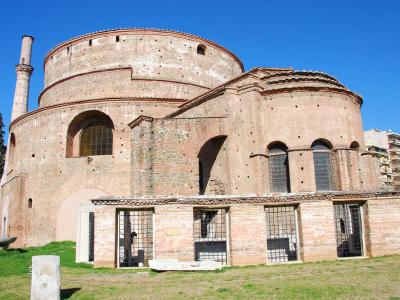
The Rotunda of Galerius is an impressive cylindrical structure. Roman co-emperor Galerius built the Rotunda in 306 AD. Some historians believe that Galerius intended the structure to be a mausoleum, while others believe it was a temple.
The Rotunda's walls are over six meters (18 feet) thick and have helped the Rotunda survive earthquakes. The building is over 29 meters (95 feet) tall and 24.5 meters (80 feet) in diameter.
The Rotunda is architecturally similar to the famous Pantheon in Rome.
A road links the Rotunda to the Arch of Galerius. The Rotunda served as a Christian church during the Byzantine Empire era when an additional sanctuary was added to the building.
The interior features mosaics dating to the Early Byzantine period. The Rotunda served as Thessaloniki's cathedral from 1524 to 1591. In 1591, it was converted to a mosque when the Ottoman Empire invaded. The Rotunda served as a mosque until the city's liberation in 1912. After the liberation, the church was dedicated to Saint George.
Visitors will be delighted by the myriad of exceptional mosaics. The mosaics in the barrel vaults feature natural scenes such as birds, flowers, and fruit baskets. The southern niche's mosaic features a gold Latin Cross surrounded by birds, stars, flowers, and fruits.
Earthquakes have damaged the dome's mosaics throughout the centuries. The "martyrs frieze" features mosaics of several saints.
A mosaic medallion is located in the apex of the dome. This mosaic shows angels holding a medallion. Unfortunately, the depiction of a young Christ holding a cross has been heavily damaged.
The semidome of the apse features a painting of the Ascension.
When the Rotunda was converted into a mosque in 1591, a minaret was added. The minaret is one of the few still standing at full height.
The Rotunda's walls are over six meters (18 feet) thick and have helped the Rotunda survive earthquakes. The building is over 29 meters (95 feet) tall and 24.5 meters (80 feet) in diameter.
The Rotunda is architecturally similar to the famous Pantheon in Rome.
A road links the Rotunda to the Arch of Galerius. The Rotunda served as a Christian church during the Byzantine Empire era when an additional sanctuary was added to the building.
The interior features mosaics dating to the Early Byzantine period. The Rotunda served as Thessaloniki's cathedral from 1524 to 1591. In 1591, it was converted to a mosque when the Ottoman Empire invaded. The Rotunda served as a mosque until the city's liberation in 1912. After the liberation, the church was dedicated to Saint George.
Visitors will be delighted by the myriad of exceptional mosaics. The mosaics in the barrel vaults feature natural scenes such as birds, flowers, and fruit baskets. The southern niche's mosaic features a gold Latin Cross surrounded by birds, stars, flowers, and fruits.
Earthquakes have damaged the dome's mosaics throughout the centuries. The "martyrs frieze" features mosaics of several saints.
A mosaic medallion is located in the apex of the dome. This mosaic shows angels holding a medallion. Unfortunately, the depiction of a young Christ holding a cross has been heavily damaged.
The semidome of the apse features a painting of the Ascension.
When the Rotunda was converted into a mosque in 1591, a minaret was added. The minaret is one of the few still standing at full height.
7) Vlatadon Monastery
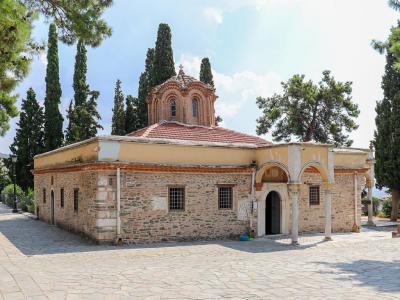
Vlatadon Monastery is part of the Ano Poli Upper Town. Its also known as the Monastery of the Vlatades. When it was founded, it was called the Monastery of the Pantocrator. It was built during the 14th century during the end of the Byzantine Empire. It's part of Thessaloniki's UNESCO World Heritage Site.
Dorotheus and Markus Vlatadon founded the monastery in 1351. Historians believe the monastery was built on the same site that the Apostle Paul preached in AD 51. In 1351, Empress Anna Palaiologos retired to Thessalonica and gave the monastery its royal status.
Ottoman Turks began occupying the monastery in 1387. The main church was converted into a mosque, and the Turks plastered over the interior frescoes. Turkish troops billeted in the monastery during this time. When the Turks left in 1403, the monastery was returned to its original purpose. The Turks returned in 1430 but did not sequester the monastery again.
The monastery was renovated throughout the 20th century. The Patriarchal Institute for Patristic Studies operates in the monastery.
Several of the monastery's arches, semi-columns, and pediments are original. Most of the frescoes date to the 14th century. The monastery houses an extensive collection of Byzantine religious icons, scripts, codecs, patriarchal sigillum, and imperial golden seals.
The monastery is 120 meters (394 feet) above sea level and offers beautiful city and sea views.
Dorotheus and Markus Vlatadon founded the monastery in 1351. Historians believe the monastery was built on the same site that the Apostle Paul preached in AD 51. In 1351, Empress Anna Palaiologos retired to Thessalonica and gave the monastery its royal status.
Ottoman Turks began occupying the monastery in 1387. The main church was converted into a mosque, and the Turks plastered over the interior frescoes. Turkish troops billeted in the monastery during this time. When the Turks left in 1403, the monastery was returned to its original purpose. The Turks returned in 1430 but did not sequester the monastery again.
The monastery was renovated throughout the 20th century. The Patriarchal Institute for Patristic Studies operates in the monastery.
Several of the monastery's arches, semi-columns, and pediments are original. Most of the frescoes date to the 14th century. The monastery houses an extensive collection of Byzantine religious icons, scripts, codecs, patriarchal sigillum, and imperial golden seals.
The monastery is 120 meters (394 feet) above sea level and offers beautiful city and sea views.
8) Hagios Demetrios (Church of St. Demetrios) (must see)
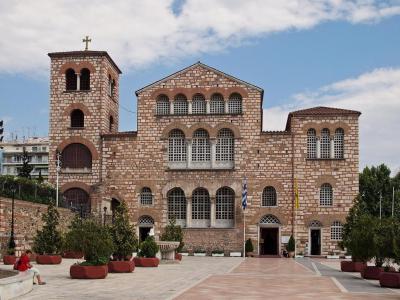
Church of Saint Demetrios is a Paleochristian and Byzantine Monument of Thessaloniki. It is listed as a UNESCO World Heritage Site since 1988.
Demetrios was born in 270 AD. He rose to a high rank in the Roman army and secretly converted many Romans to the Christian faith. Emperor Galerius Maximianus, persecutor of Christians, had Demetrios killed and his body dumped into a bath house. Demetrios is referred as a military saint. He is credited with guarding the city through its many sieges.
A church was built over the bath house where Demetrios was killed. The prefect of Illyricum later replaced the church with a three aisled basilica. In the 7th century the basilica was rebuilt after a fire. The rebuilt basilica had five aisles and took the form it retains today.
After the Great Fire of 1917 the Church of Hagios Demetrios was a charred ruin. Restoration began in 1925. Bricks as well as tombstones from the Jewish Cemetery were used. In the fire of 1917, 30 synagogues were destroyed.
Only nine mosaics from the 5th through the 9th centuries survived the fire. They depict children making offerings to the saint, the saint with priests, and the saint with patrons of the church. The mosaics are mostly on the west wall of the nave.
The columns of the central nave vary in height and color. The variation in height is compensated for by adjustment of the bases. The motifs of the capitals involve Theodosian capitals, doves, rams, eagles and acanthus leaves.
The crypt is below the altar. It functions as a museum and contains artifacts excavated from ruins of the fire.
Demetrios was born in 270 AD. He rose to a high rank in the Roman army and secretly converted many Romans to the Christian faith. Emperor Galerius Maximianus, persecutor of Christians, had Demetrios killed and his body dumped into a bath house. Demetrios is referred as a military saint. He is credited with guarding the city through its many sieges.
A church was built over the bath house where Demetrios was killed. The prefect of Illyricum later replaced the church with a three aisled basilica. In the 7th century the basilica was rebuilt after a fire. The rebuilt basilica had five aisles and took the form it retains today.
After the Great Fire of 1917 the Church of Hagios Demetrios was a charred ruin. Restoration began in 1925. Bricks as well as tombstones from the Jewish Cemetery were used. In the fire of 1917, 30 synagogues were destroyed.
Only nine mosaics from the 5th through the 9th centuries survived the fire. They depict children making offerings to the saint, the saint with priests, and the saint with patrons of the church. The mosaics are mostly on the west wall of the nave.
The columns of the central nave vary in height and color. The variation in height is compensated for by adjustment of the bases. The motifs of the capitals involve Theodosian capitals, doves, rams, eagles and acanthus leaves.
The crypt is below the altar. It functions as a museum and contains artifacts excavated from ruins of the fire.
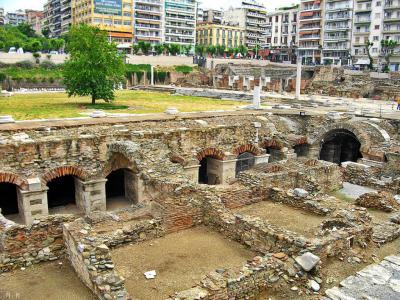
9) Greek Agora and Roman Forum
The Roman Forum is an excavated Roman-era forum, also known as the "Ancient Agora." In 1966, workmen, while digging the foundations for the new Thessaloniki Municipal Courthouse, uncovered the remains of the agora. The Municipal Courthouse was moved to another location and archeologists excavated the area.
When the Romans came to Thessaloniki they enlarged the Greek agora and created a forum on two levels. The complex features two Roman baths and a theater used for gladiator games. The original Roman forum was built in the second century and used through the sixth century. It was the religious, administrative, and social center of the city. The forum was connected to the city's main streets.
The Roman Forum was decorated with ornate arches, fountains, and cloisters. Visitors can see the restored amphitheater inside the agora. Parts of ancient Corinthia columns are still standing. These columns formed two-story porticoes. The forum also had beautiful mosaic floors.
The Cryptoporticus semi-subterranean corridors are very well preserved. Visitors can follow this corridor to the forum's underground museum. The museum includes exhibits with artifacts from the site, including silver coins and marble sculptures.
When the Romans came to Thessaloniki they enlarged the Greek agora and created a forum on two levels. The complex features two Roman baths and a theater used for gladiator games. The original Roman forum was built in the second century and used through the sixth century. It was the religious, administrative, and social center of the city. The forum was connected to the city's main streets.
The Roman Forum was decorated with ornate arches, fountains, and cloisters. Visitors can see the restored amphitheater inside the agora. Parts of ancient Corinthia columns are still standing. These columns formed two-story porticoes. The forum also had beautiful mosaic floors.
The Cryptoporticus semi-subterranean corridors are very well preserved. Visitors can follow this corridor to the forum's underground museum. The museum includes exhibits with artifacts from the site, including silver coins and marble sculptures.

10) Church of Hagia Sophia (must see)
Hagia Sophia means "Holy Wisdom". The Church of Hagia Sophia is listed as a UNESCO World Heritage Site and is one of Thessaloniki's most striking and iconic landmarks.
A church has been located on the site since the third century. The current church was built in the seventh century and emulated Istanbul's Hagia Sophia.
The Church of Hagia Sophia features a domed Greek cross basilica floor plan and is one of the main examples of this architectural style.
The gold mosaic in the dome depicts the Ascension and is surrounded by the Twelve Apostles, Mary, and two angels.
The Hagia Sophia was converted to the cathedral of Thessaloniki in 1205 during the Fourth Crusade. From 1205 to 1224, the Hagia Sophia was used as a Catholic church.
In 1430, the Ottoman Empire captured Thessaloniki and turned the Church of Hagia Sophia into a mosque in 1524. The mosque was called Ayia Sofia. In order to complete its transformation into a mosque, workers added an arched portico, a minaret, and a tower. When Thessaloniki was liberated in 1912, the church was finally reconverted to a Christian church.
The porch and minaret were removed, but the tower's base remains.
The church was damaged in the 1917 fire and wasn't restored until 1980. The interior features beautiful mosaics and stunning frescoes. Most of the frescoes date from the 11th century.
The dome features a spectacular 9th-century mosaic that shows Christ's Ascension. Capitals on the interior columns date to the fifth century and were likely originally in the previous church. The columns have a deep relief and dramatic carvings.
A church has been located on the site since the third century. The current church was built in the seventh century and emulated Istanbul's Hagia Sophia.
The Church of Hagia Sophia features a domed Greek cross basilica floor plan and is one of the main examples of this architectural style.
The gold mosaic in the dome depicts the Ascension and is surrounded by the Twelve Apostles, Mary, and two angels.
The Hagia Sophia was converted to the cathedral of Thessaloniki in 1205 during the Fourth Crusade. From 1205 to 1224, the Hagia Sophia was used as a Catholic church.
In 1430, the Ottoman Empire captured Thessaloniki and turned the Church of Hagia Sophia into a mosque in 1524. The mosque was called Ayia Sofia. In order to complete its transformation into a mosque, workers added an arched portico, a minaret, and a tower. When Thessaloniki was liberated in 1912, the church was finally reconverted to a Christian church.
The porch and minaret were removed, but the tower's base remains.
The church was damaged in the 1917 fire and wasn't restored until 1980. The interior features beautiful mosaics and stunning frescoes. Most of the frescoes date from the 11th century.
The dome features a spectacular 9th-century mosaic that shows Christ's Ascension. Capitals on the interior columns date to the fifth century and were likely originally in the previous church. The columns have a deep relief and dramatic carvings.
