Custom Walk in New York, New York by mariacarrillo94_44be9 created on 2025-06-14
Guide Location: USA » New York
Guide Type: Custom Walk
# of Sights: 11
Tour Duration: 11 Hour(s)
Travel Distance: 30.5 Km or 19 Miles
Share Key: 8UBLT
Guide Type: Custom Walk
# of Sights: 11
Tour Duration: 11 Hour(s)
Travel Distance: 30.5 Km or 19 Miles
Share Key: 8UBLT
How It Works
Please retrieve this walk in the GPSmyCity app. Once done, the app will guide you from one tour stop to the next as if you had a personal tour guide. If you created the walk on this website or come to the page via a link, please follow the instructions below to retrieve the walk in the app.
Retrieve This Walk in App
Step 1. Download the app "GPSmyCity: Walks in 1K+ Cities" on Apple App Store or Google Play Store.



Step 2. In the GPSmyCity app, download(or launch) the guide "New York Map and Walking Tours".
Step 3. Tap the menu button located at upper right corner of the "Walks" screen and select "Retrieve custom walk". Enter the share key: 8UBLT
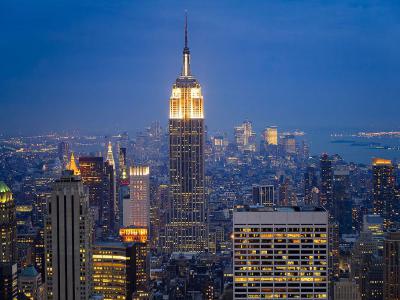
1) Rockefeller Center (must see)
Back in 1801, a New York physician named David Hosack bought 22 acres of empty land from the city with an aim to establish America’s first botanical garden. And for the next ten years, the Elgin Botanic Garden really did bloom—until funding wilted, the plants went wild, and Columbia University had to step in to take over the property in 1823.
Fast-forward a century to 1926, when the Metropolitan Opera went searching for a grand new home. Columbia leased the land to its generous patron, John D. Rockefeller, Jr., setting the stage for a glittering cultural palace. Then the stock market crashed in 1929, the opera backed out, and Rockefeller found himself with prime New York real estate and no tenant. So, he pivoted—and decided to build a mass-media powerhouse instead.
In 1930, after months of negotiations involving Radio Corporation of America, National Broadcasting Company, and Radio-Keith-Orpheum, the plan was set: an entertainment complex of unprecedented scale. To make room, 228 buildings were cleared and 4,000 tenants relocated. Early name ideas included “Radio City,” “Rockefeller City,” and the dramatic “Metropolitan Square,” before the now-famous title finally stuck.
Today, Rockefeller Center stretches across all of Doctor Hosack’s original 22 acres—though the botanicals have long been replaced with 14 Art Deco buildings, a standalone tower along 51st Street, and four more rising on the west side of Sixth Avenue. There are rooftop gardens, but you’ll have to crane your neck to see anything green.
On the west side sits Radio City Music Hall, still flashing its neon glamour. And at the heart of it all lies the sunken Lower Plaza, praised by Chinese-American architect Ieoh Ming Pei as “the most successful open space in the United States, perhaps in the world.” Most visitors simply know it as “the place with the ice rink,” which has been delighting skaters since 1936.
Then there’s the view. “Top of the Rock” offers three levels of indoor and outdoor decks with clear, cinematic vistas of the New York skyline. Back on the ground, the shops spread out in every direction—big names, small designers, and everything in between. It’s the kind of place where you realize: shopping isn’t just about what you buy; it’s about where you buy it...
Fast-forward a century to 1926, when the Metropolitan Opera went searching for a grand new home. Columbia leased the land to its generous patron, John D. Rockefeller, Jr., setting the stage for a glittering cultural palace. Then the stock market crashed in 1929, the opera backed out, and Rockefeller found himself with prime New York real estate and no tenant. So, he pivoted—and decided to build a mass-media powerhouse instead.
In 1930, after months of negotiations involving Radio Corporation of America, National Broadcasting Company, and Radio-Keith-Orpheum, the plan was set: an entertainment complex of unprecedented scale. To make room, 228 buildings were cleared and 4,000 tenants relocated. Early name ideas included “Radio City,” “Rockefeller City,” and the dramatic “Metropolitan Square,” before the now-famous title finally stuck.
Today, Rockefeller Center stretches across all of Doctor Hosack’s original 22 acres—though the botanicals have long been replaced with 14 Art Deco buildings, a standalone tower along 51st Street, and four more rising on the west side of Sixth Avenue. There are rooftop gardens, but you’ll have to crane your neck to see anything green.
On the west side sits Radio City Music Hall, still flashing its neon glamour. And at the heart of it all lies the sunken Lower Plaza, praised by Chinese-American architect Ieoh Ming Pei as “the most successful open space in the United States, perhaps in the world.” Most visitors simply know it as “the place with the ice rink,” which has been delighting skaters since 1936.
Then there’s the view. “Top of the Rock” offers three levels of indoor and outdoor decks with clear, cinematic vistas of the New York skyline. Back on the ground, the shops spread out in every direction—big names, small designers, and everything in between. It’s the kind of place where you realize: shopping isn’t just about what you buy; it’s about where you buy it...
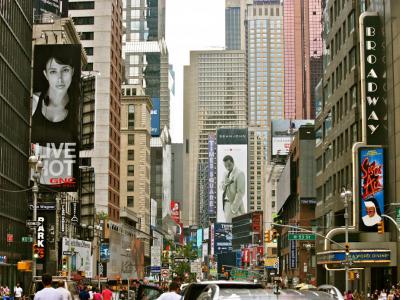
2) Broadway (must see)
Trying to follow Broadway back to its beginnings, you’d find yourself tracing a much older path: the Wickquasgeck Trail, a route carved into Manhattan in the times of New Amsterdam, long before New York dreamed of skyscrapers or neon marquees... That trail stretched up the island like a wandering spine, and when the Dutch arrived, they simply widened it and gave it a new name: Heeren (or “Gentlemen’s”) Way. The British, who arrived later, noticing how wide the street really was, promptly declared it Broadway—a name that clearly stuck.
Today’s Broadway runs a lot farther than its original ancestor. It launches from Bowling Green at Manhattan’s southern tip, slips through the boroughs, wanders into Westchester County, and keeps going until it reaches Sleepy Hollow. If you’re searching for New York’s oldest continuous street, this is the one.
Jump to 1907, when part of Broadway—stretching from Times Square to Sherman Square—earned a new identity as Automobile Row. Car dealerships, repair shops, and glittering showrooms lined both sides, turning the street into a motor-age catwalk. Over time, the traffic patterns tightened, and Broadway became mainly a one-way river of cars.
In recent decades, though, the city has rewritten Broadway’s script. Cars have gradually ceded space to people, and sections of the street have transformed into pedestrian plazas, pocket parks, and bike lanes. Times Square, Duffy Square, and Herald Square traded honking horns for café tables and performers in painted outfits. Even Madison and Union Square saw Broadway narrow to make room for walkers instead of windshields.
At the southern end, near Bowling Green and City Hall Park, Lower Broadway still plays host to the city’s legendary ticker-tape parades—snowstorms of paper drifting from office towers as heroes of every kind roll past. These days, it’s more shredded confetti and fewer actual tickers, but the “Canyon of Heroes” effect remains.
And then there’s the stretch that needs no introduction: The Great White Way, a phrase coined in 1901 to describe Broadway’s theater district. Between 42nd and 53rd Streets, the lights burn bright, the marquees compete for your attention, and the plays and musicals rewrite themselves nightly through applause.
From colonial trail to cultural artery, Broadway carries centuries of stories—and somehow still finds room for more...
Today’s Broadway runs a lot farther than its original ancestor. It launches from Bowling Green at Manhattan’s southern tip, slips through the boroughs, wanders into Westchester County, and keeps going until it reaches Sleepy Hollow. If you’re searching for New York’s oldest continuous street, this is the one.
Jump to 1907, when part of Broadway—stretching from Times Square to Sherman Square—earned a new identity as Automobile Row. Car dealerships, repair shops, and glittering showrooms lined both sides, turning the street into a motor-age catwalk. Over time, the traffic patterns tightened, and Broadway became mainly a one-way river of cars.
In recent decades, though, the city has rewritten Broadway’s script. Cars have gradually ceded space to people, and sections of the street have transformed into pedestrian plazas, pocket parks, and bike lanes. Times Square, Duffy Square, and Herald Square traded honking horns for café tables and performers in painted outfits. Even Madison and Union Square saw Broadway narrow to make room for walkers instead of windshields.
At the southern end, near Bowling Green and City Hall Park, Lower Broadway still plays host to the city’s legendary ticker-tape parades—snowstorms of paper drifting from office towers as heroes of every kind roll past. These days, it’s more shredded confetti and fewer actual tickers, but the “Canyon of Heroes” effect remains.
And then there’s the stretch that needs no introduction: The Great White Way, a phrase coined in 1901 to describe Broadway’s theater district. Between 42nd and 53rd Streets, the lights burn bright, the marquees compete for your attention, and the plays and musicals rewrite themselves nightly through applause.
From colonial trail to cultural artery, Broadway carries centuries of stories—and somehow still finds room for more...
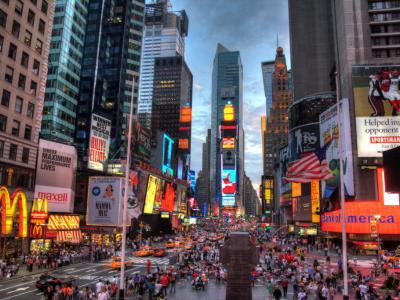
3) Times Square (must see)
Long before Manhattan’s tidy street plan straightened everything out, Broadway, unlike other streets in New York, followed an older native pathway, wandering freely up the island. This is why it slices across Seventh Avenue and 42nd Street, forming two triangular pockets, like a bow tie. The southern one is called Times Square, while the northern, Duffy Square, is named for World War I chaplain Father Francis P. Duffy, whose statue now watches over the crowds with admirable patience.
The stretch of Broadway from 41st to 53rd Streets goes by a different name: the Great White Way. That nickname wasn’t poetic exaggeration—those glowing billboards, marquees, and oversized posters once made the area one of the brightest electrified spots on Earth. Today, it’s still blazing away with advertisements for Broadway’s latest musicals and plays, pulling in nearly 50 million visitors a year. That’s roughly 330,000 people a day, all weaving through the lights, noise, and spectacle in search of something unforgettable.
Before it was Times Square, this chaotic crossroads answered to the far calmer name of Longacre Square. Everything changed in 1904, when New York Times publisher Adolph S. Ochs moved his newspaper into the brand-new Times Building—now known as One Times Square—and happily lent his name to the neighborhood. The Times moved out within a decade, but not before launching a little tradition in 1907: the New Year’s Eve Ball Drop. A century later, the glittering descent still draws over a million people every year, along with countless viewers around the world.
Today, Times Square is a fluorescent buffet of attractions—ABC’s Times Square Studios, Planet Hollywood, Bubba Gump Shrimp Company, and whichever character impersonator is bravest that day. The towering illuminated signs, nicknamed “spectaculars” or “jumbotrons,” compete with the neon bravado of Las Vegas and often win.
Amid all that glow, shoppers duck into stores like Gap, Old Navy, Forever 21, Levi’s, the Disney Store, Hershey’s Chocolate World, and M&M’s World—each one flashing its own brand of temptation. Whether you’re hunting for a souvenir, a show, or just a moment to stand still and stare, this Midtown crossroads remains New York at its most unfiltered and unmistakable.
The stretch of Broadway from 41st to 53rd Streets goes by a different name: the Great White Way. That nickname wasn’t poetic exaggeration—those glowing billboards, marquees, and oversized posters once made the area one of the brightest electrified spots on Earth. Today, it’s still blazing away with advertisements for Broadway’s latest musicals and plays, pulling in nearly 50 million visitors a year. That’s roughly 330,000 people a day, all weaving through the lights, noise, and spectacle in search of something unforgettable.
Before it was Times Square, this chaotic crossroads answered to the far calmer name of Longacre Square. Everything changed in 1904, when New York Times publisher Adolph S. Ochs moved his newspaper into the brand-new Times Building—now known as One Times Square—and happily lent his name to the neighborhood. The Times moved out within a decade, but not before launching a little tradition in 1907: the New Year’s Eve Ball Drop. A century later, the glittering descent still draws over a million people every year, along with countless viewers around the world.
Today, Times Square is a fluorescent buffet of attractions—ABC’s Times Square Studios, Planet Hollywood, Bubba Gump Shrimp Company, and whichever character impersonator is bravest that day. The towering illuminated signs, nicknamed “spectaculars” or “jumbotrons,” compete with the neon bravado of Las Vegas and often win.
Amid all that glow, shoppers duck into stores like Gap, Old Navy, Forever 21, Levi’s, the Disney Store, Hershey’s Chocolate World, and M&M’s World—each one flashing its own brand of temptation. Whether you’re hunting for a souvenir, a show, or just a moment to stand still and stare, this Midtown crossroads remains New York at its most unfiltered and unmistakable.
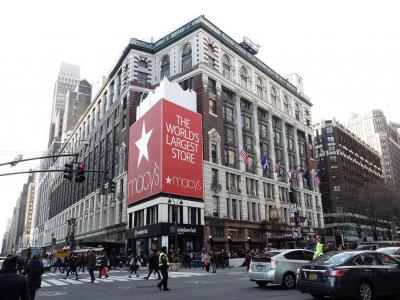
4) Macy's in Herald Square
Step into Herald Square, and you’ll find a retail heavyweight that has been dazzling New Yorkers since 1902. Macy’s flagship store isn’t just big—it’s the kind of big that makes you wonder if someone accidentally ordered the “extra-large city block” option. From the moment it opened, the place was already ahead of its time, proudly installing one of the very first modern escalators and setting the tone for every shopper who ever wanted to be whisked upward in style. With more than 1.2 million square feet packed under one roof, it still ranks among the largest department stores in the United States and earned the National Historic Landmark status back in 1978.
Inside, the scale only gets more impressive. Eleven levels of fashion, accessories, cosmetics, and designer labels unfold like a vertical universe of retail possibilities. You can wander from trendy streetwear to luxury couture in a single elevator ride, pausing along the way for anything from a caffeine boost to a sit-down meal. Macy’s hosts events throughout the year as well, so you may stumble upon a mini-concert, a product launch, or a holiday-themed spectacle when you least expect it.
Speaking of holidays, the store is practically a Broadway production in its own right every December. Its animated window displays along the Broadway side attract crowds who gather to admire whatever whimsical theme Macy’s dreams up for that season. Each year brings a fresh set of scenes, crafted with enough charm and detail to stop even the most hurried New Yorkers in their tracks.
And of course, part of Macy’s fame comes from its sales—serious discounts that often outshine those at other major department stores in the city. Whenever your shopping spirit needs a break, the food options scattered throughout the building make refueling easy, from quick bites to full meals. In short, this is one place where you can shop, snack, explore, and repeat without ever stepping outside.
Inside, the scale only gets more impressive. Eleven levels of fashion, accessories, cosmetics, and designer labels unfold like a vertical universe of retail possibilities. You can wander from trendy streetwear to luxury couture in a single elevator ride, pausing along the way for anything from a caffeine boost to a sit-down meal. Macy’s hosts events throughout the year as well, so you may stumble upon a mini-concert, a product launch, or a holiday-themed spectacle when you least expect it.
Speaking of holidays, the store is practically a Broadway production in its own right every December. Its animated window displays along the Broadway side attract crowds who gather to admire whatever whimsical theme Macy’s dreams up for that season. Each year brings a fresh set of scenes, crafted with enough charm and detail to stop even the most hurried New Yorkers in their tracks.
And of course, part of Macy’s fame comes from its sales—serious discounts that often outshine those at other major department stores in the city. Whenever your shopping spirit needs a break, the food options scattered throughout the building make refueling easy, from quick bites to full meals. In short, this is one place where you can shop, snack, explore, and repeat without ever stepping outside.
5) Empire State Building (must see)
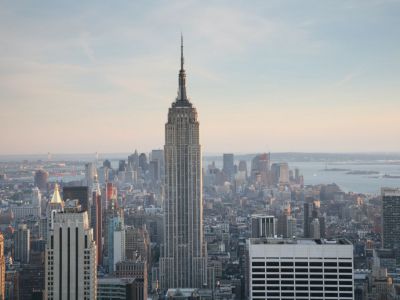
Meet the undisputed champion of New York’s Art Deco era: the Empire State Building, a 102-story giant that rises over 1,450 feet above Midtown’s daily hustle. It once ruled as the tallest building on Earth; today it’s still impressive enough to hold a lineup of titles—seventh-tallest in New York, ninth in the United States, and still one of the tallest freestanding structures anywhere in the Americas.
Its name comes straight from New York’s proud nickname, the “Empire State,” and its streamlined design was the work of the Shreve, Lamb & Harmon architectural firm. Construction began in 1930, wrapped up just a year later, and replaced the former Waldorf-Astoria Hotel that once stood on the same block. From the start, the goal was simple: to build the biggest, boldest skyscraper the world had ever seen.
You’ll find this landmark in Midtown South, planted along Fifth Avenue between 34th and 35th Streets. Three observatories—on the 80th, 86th, and 102nd floors—offer wraparound views that make the city look like an architectural toy box. And thanks to its starring role in more than 250 films and TV shows, beginning with King Kong in 1933, the building’s Hollywood résumé is nearly as tall as the tower itself.
The exterior keeps things classic: Indiana limestone, granite, and clean geometric ornamentation that embodies Art Deco style without telling a story in symbols. The main entrance features metal doors framed by sleek vertical piers topped with sculpted eagles, along with a gold-lettered transom that proudly spells out the building’s name.
In recognition of its cultural and architectural significance, the Empire State Building was declared a New York City Landmark in 1980 and added to the National Register of Historic Places in 1986. Today, it remains one of Manhattan’s most enduring icons—an unmistakable marker on the skyline and an essential stop for anyone wanting to feel the full vertical spirit of New York.
Its name comes straight from New York’s proud nickname, the “Empire State,” and its streamlined design was the work of the Shreve, Lamb & Harmon architectural firm. Construction began in 1930, wrapped up just a year later, and replaced the former Waldorf-Astoria Hotel that once stood on the same block. From the start, the goal was simple: to build the biggest, boldest skyscraper the world had ever seen.
You’ll find this landmark in Midtown South, planted along Fifth Avenue between 34th and 35th Streets. Three observatories—on the 80th, 86th, and 102nd floors—offer wraparound views that make the city look like an architectural toy box. And thanks to its starring role in more than 250 films and TV shows, beginning with King Kong in 1933, the building’s Hollywood résumé is nearly as tall as the tower itself.
The exterior keeps things classic: Indiana limestone, granite, and clean geometric ornamentation that embodies Art Deco style without telling a story in symbols. The main entrance features metal doors framed by sleek vertical piers topped with sculpted eagles, along with a gold-lettered transom that proudly spells out the building’s name.
In recognition of its cultural and architectural significance, the Empire State Building was declared a New York City Landmark in 1980 and added to the National Register of Historic Places in 1986. Today, it remains one of Manhattan’s most enduring icons—an unmistakable marker on the skyline and an essential stop for anyone wanting to feel the full vertical spirit of New York.
6) Grand Central Terminal (must see)
It may well be puzzling as to why New Yorkers use the terms “Grand Central Terminal” and “Grand Central Station” as if they’re the same thing... Here’s the secret: one is the rail terminal, the other is the post office attached to it, and the whole complex is busy enough that no one pauses to sort out the terminology.
The place's story began with Cornelius Vanderbilt, the 19th-century business titan, who collected railroads the way others collect postcards. After buying the Hudson River and New York Central lines in 1867, he fused them together and launched the construction of Grand Central Depot two years later.
The original depot, designed by architect John B. Snook, arrived in full Second Empire style—mansard roofs, ornate flourishes, and the confidence of a building that knew it had somewhere important to be. By 1874, it was ready for service. Trains glided into the Park Avenue Tunnel at 96th Street, slipping underground for the final approach. This solved the small problem of locomotives barreling down Manhattan streets, which city residents understandably found less than charming.
Then came 1902. A steam locomotive, blinded by smoke in the Park Avenue Tunnel, missed its signals and collided with another train. The crash sealed the depot’s fate. Within a few years, it was demolished, making way for the Grand Central Terminal we know today. The firms Reed & Stern and Warren & Wetmore teamed up to create the Beaux-Arts landmark—one focused on the functional layout, the other on the dramatic exterior.
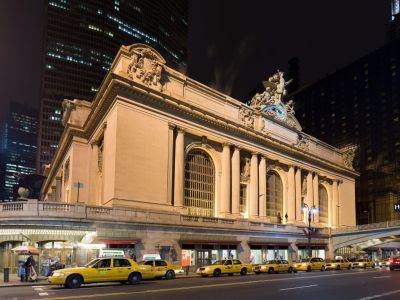
Inside, the terminal doubled as an art gallery long before that was fashionable. The Main Concourse ceiling famously charts a glowing, backwards zodiac. The façade features the Glory of Commerce sculpture, a bronze statue of Vanderbilt stands guard out front, and cast-iron eagles keep watch over the whole scene.
Vanderbilt Hall regularly hosts exhibitions and seasonal events, while the Dining Concourse adds its own glow with rows of illuminated lightboxes. And every so often, the terminal surprises commuters with performance art—from choreographed flash mobs to unexpected installations—turning an everyday commute into something slightly cinematic.
The place's story began with Cornelius Vanderbilt, the 19th-century business titan, who collected railroads the way others collect postcards. After buying the Hudson River and New York Central lines in 1867, he fused them together and launched the construction of Grand Central Depot two years later.
The original depot, designed by architect John B. Snook, arrived in full Second Empire style—mansard roofs, ornate flourishes, and the confidence of a building that knew it had somewhere important to be. By 1874, it was ready for service. Trains glided into the Park Avenue Tunnel at 96th Street, slipping underground for the final approach. This solved the small problem of locomotives barreling down Manhattan streets, which city residents understandably found less than charming.
Then came 1902. A steam locomotive, blinded by smoke in the Park Avenue Tunnel, missed its signals and collided with another train. The crash sealed the depot’s fate. Within a few years, it was demolished, making way for the Grand Central Terminal we know today. The firms Reed & Stern and Warren & Wetmore teamed up to create the Beaux-Arts landmark—one focused on the functional layout, the other on the dramatic exterior.
Inside, the terminal doubled as an art gallery long before that was fashionable. The Main Concourse ceiling famously charts a glowing, backwards zodiac. The façade features the Glory of Commerce sculpture, a bronze statue of Vanderbilt stands guard out front, and cast-iron eagles keep watch over the whole scene.
Vanderbilt Hall regularly hosts exhibitions and seasonal events, while the Dining Concourse adds its own glow with rows of illuminated lightboxes. And every so often, the terminal surprises commuters with performance art—from choreographed flash mobs to unexpected installations—turning an everyday commute into something slightly cinematic.
7) St. Patrick's Cathedral (must see)
In case you wonder why New York has two Saint Patrick’s Cathedrals, it’s not because the city has twice as many saints—it’s because the first one simply couldn’t keep up. The Old Cathedral from 1815 did its best, but by the mid-1800s, the Archdiocese had outgrown it. So, in 1858, construction began on a new spiritual heavyweight: the towering Gothic Revival cathedral that now occupies the block between 50th and 51st Streets on Madison Avenue. Designed by James Renwick Jr. and formally opened in 1879, it rises directly across from Rockefeller Center, as if keeping an eye on the skating rink...
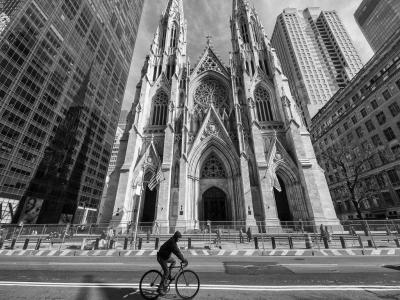
From the outside, the building is a full Gothic drama. Marble everywhere, pointed arches stacked like architectural exclamation marks, and stained-glass windows glowing in neat vertical ranks. The whole structure stretches 332 feet in length, with transepts spanning 174 feet. But the true attention-grabbers are the twin spires—330 feet of pure, sky-seeking ambition—framing the bronze entrance doors.
Step inside, and the scale refuses to let up. A broad central aisle is flanked by two narrower ones, separated by 32 marble columns that seem determined to out-pose each other. Look up, and you’ll see ribbed Gothic vaults meeting in elegant bosses overhead. Along the sides, twelve chapels create quieter pockets of devotion, while seating for 2,400 fills the nave with long lines of wooden pews.
Even the high altar has a story. The original version was shipped off to Fordham University Church in the Bronx, making room for the current altar carved from grey-white Italian marble and crowned by a bronze baldachin. It rises beneath a statue of Christ the King, complete with angels and decorative pinnacles.
Today, the “new” Saint Patrick’s Cathedral is firmly established as one of Manhattan’s defining landmarks, recognized both as a New York City designated landmark and listed on the National Register of Historic Places—a cathedral built to impress, and one that still succeeds brilliantly!
From the outside, the building is a full Gothic drama. Marble everywhere, pointed arches stacked like architectural exclamation marks, and stained-glass windows glowing in neat vertical ranks. The whole structure stretches 332 feet in length, with transepts spanning 174 feet. But the true attention-grabbers are the twin spires—330 feet of pure, sky-seeking ambition—framing the bronze entrance doors.
Step inside, and the scale refuses to let up. A broad central aisle is flanked by two narrower ones, separated by 32 marble columns that seem determined to out-pose each other. Look up, and you’ll see ribbed Gothic vaults meeting in elegant bosses overhead. Along the sides, twelve chapels create quieter pockets of devotion, while seating for 2,400 fills the nave with long lines of wooden pews.
Even the high altar has a story. The original version was shipped off to Fordham University Church in the Bronx, making room for the current altar carved from grey-white Italian marble and crowned by a bronze baldachin. It rises beneath a statue of Christ the King, complete with angels and decorative pinnacles.
Today, the “new” Saint Patrick’s Cathedral is firmly established as one of Manhattan’s defining landmarks, recognized both as a New York City designated landmark and listed on the National Register of Historic Places—a cathedral built to impress, and one that still succeeds brilliantly!
8) Metropolitan Museum of Art (must see)
Regarded as the largest and most comprehensive museum in the Western hemisphere, the Metropolitan Museum of Art was founded in 1870 by a collective of American businessmen, artists, and intellectuals. Initially located at 681 Fifth Avenue, its mission was to safeguard and foster appreciation for some of the world's most exceptional artistic creations.
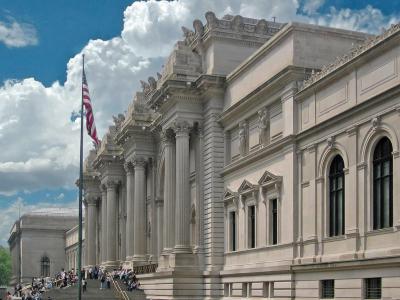
The museum's Gothic Revival red-brick facade was initially designed by Calvert Vaux and Jacob Wrey Mould. However, in 1926, it underwent a transformation, resulting in the grand entrance we see today, embellished with majestic white columns. Although a significant portion of the original facade has been replaced, a fragment still remains visible from the Robert Lehman Wing, providing a glimpse towards the galleries of European Sculpture and Decorative Arts.
With an annual attendance surpassing 4 million visitors, The Met welcomes art enthusiasts from around the globe who come to admire the vast collection of over 2 million artworks it houses. Even with multiple visits, it would be challenging to explore more than a fraction of the museum's permanent collection. The vast paintings anthology had a modest beginning in 1870 with a small donation of 174 European paintings and has now swelled to include works spanning 5,000 years of world culture, from the prehistoric to the present and from every corner of the globe.
The Met is organized into various smaller museums within its buildings. The American Wing, for example, houses an extensive collection of American paintings, sculptures, and decorative arts, including period rooms that offer insights into domestic life throughout the nation's history. The Egyptian collection rivals that of Cairo, while the Islamic art exhibition remains unparalleled. The Met also showcases a mass of 2,500 European paintings, as well as an impressive selection of Impressionist and Post-Impressionist works. Noteworthy renovations have taken place, such as the refurbishment of the Islamic art galleries in 2008, following a decade-long restoration of the Greek & Roman collection. These redesigned spaces display artworks that had been in storage for many years, ensuring that even frequent visitors will discover something fresh to admire, including the museum's newly restored, world-renowned Etruscan chariot.
Other prominent collections encompass arms and armor, Asian art, costumes, European sculpture and decorative arts, medieval and Renaissance art, musical instruments, drawings, prints, ancient antiquities from various regions, photography, and modern art. Furthermore, the museum regularly hosts special exhibitions and performances throughout the year, further solidifying its status as a world-class institution with Central Park serving as its picturesque backdrop.
Why You Should Visit:
Thousands of masterpieces gathered within the space of two million square feet!
There's something for every art lover here, regardless of nationality, ethnicity, interest or familiarity.
Tips:
To prevent exhaustion, it is advisable to divide your visit into multiple sessions. By utilizing entry tickets that grant access to the museum for a three-day period, you have the flexibility to explore at your own pace and take breaks as needed. Additionally, these tickets may also include entry to some Met annexes located elsewhere in NYC, further enhancing your cultural experience.
Given the museum's immense size, seating can be scarce during busy weekends. If you find yourself in need of a restful spot, the ideal location to unwind is the serene furniture storage area on the 2nd floor, which exudes an air of elegance and offers a selection of plush, modern upholstered chairs that provide utmost comfort. When in need of a respite from the abundance of cultural riches, visitors can otherwise enjoy a snack at the American Wing Café or have lunch in the cafeteria. For a more indulgent experience, there is the option to dine at the Members Dining Room, which offers a breathtaking view of the park. During the summer, ascending to the Roof Garden Café presents an opportunity to savor a glass of wine while admiring the unparalleled beauty of Central Park, without breaking the bank.
The museum's Gothic Revival red-brick facade was initially designed by Calvert Vaux and Jacob Wrey Mould. However, in 1926, it underwent a transformation, resulting in the grand entrance we see today, embellished with majestic white columns. Although a significant portion of the original facade has been replaced, a fragment still remains visible from the Robert Lehman Wing, providing a glimpse towards the galleries of European Sculpture and Decorative Arts.
With an annual attendance surpassing 4 million visitors, The Met welcomes art enthusiasts from around the globe who come to admire the vast collection of over 2 million artworks it houses. Even with multiple visits, it would be challenging to explore more than a fraction of the museum's permanent collection. The vast paintings anthology had a modest beginning in 1870 with a small donation of 174 European paintings and has now swelled to include works spanning 5,000 years of world culture, from the prehistoric to the present and from every corner of the globe.
The Met is organized into various smaller museums within its buildings. The American Wing, for example, houses an extensive collection of American paintings, sculptures, and decorative arts, including period rooms that offer insights into domestic life throughout the nation's history. The Egyptian collection rivals that of Cairo, while the Islamic art exhibition remains unparalleled. The Met also showcases a mass of 2,500 European paintings, as well as an impressive selection of Impressionist and Post-Impressionist works. Noteworthy renovations have taken place, such as the refurbishment of the Islamic art galleries in 2008, following a decade-long restoration of the Greek & Roman collection. These redesigned spaces display artworks that had been in storage for many years, ensuring that even frequent visitors will discover something fresh to admire, including the museum's newly restored, world-renowned Etruscan chariot.
Other prominent collections encompass arms and armor, Asian art, costumes, European sculpture and decorative arts, medieval and Renaissance art, musical instruments, drawings, prints, ancient antiquities from various regions, photography, and modern art. Furthermore, the museum regularly hosts special exhibitions and performances throughout the year, further solidifying its status as a world-class institution with Central Park serving as its picturesque backdrop.
Why You Should Visit:
Thousands of masterpieces gathered within the space of two million square feet!
There's something for every art lover here, regardless of nationality, ethnicity, interest or familiarity.
Tips:
To prevent exhaustion, it is advisable to divide your visit into multiple sessions. By utilizing entry tickets that grant access to the museum for a three-day period, you have the flexibility to explore at your own pace and take breaks as needed. Additionally, these tickets may also include entry to some Met annexes located elsewhere in NYC, further enhancing your cultural experience.
Given the museum's immense size, seating can be scarce during busy weekends. If you find yourself in need of a restful spot, the ideal location to unwind is the serene furniture storage area on the 2nd floor, which exudes an air of elegance and offers a selection of plush, modern upholstered chairs that provide utmost comfort. When in need of a respite from the abundance of cultural riches, visitors can otherwise enjoy a snack at the American Wing Café or have lunch in the cafeteria. For a more indulgent experience, there is the option to dine at the Members Dining Room, which offers a breathtaking view of the park. During the summer, ascending to the Roof Garden Café presents an opportunity to savor a glass of wine while admiring the unparalleled beauty of Central Park, without breaking the bank.
9) Brooklyn Bridge (must see)
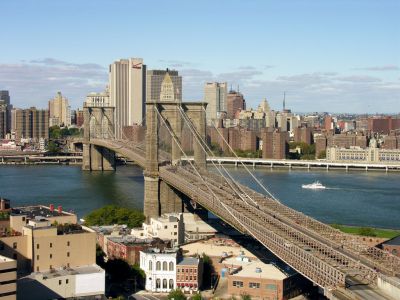
Seeking the most dramatic entrance into Manhattan?—The Brooklyn Bridge is the one. Stretching across the East River like a steel-wire tightrope for giants, this is one of New York’s most recognizable silhouettes since 1883—equal parts engineering flex and architectural poetry. The country took notice of it rather early, awarding the bridge the National Historic Landmark status in 1964, following which, civil engineers gave it their own stamp of admiration (as a National Historic Civil Engineering Landmark) in 1972.
The idea of linking Brooklyn and Manhattan had been floating around since the early 1800s, but it took the engineering duo—of John Augustus Roebling with the design, and his son Washington with the execution—to actually make it happen. Construction kicked off in 1869, and after fourteen ambitious, chaotic, and occasionally hazardous years, the bridge finally opened on May 24, 1883. President Chester A. Arthur even showed up for the ceremony, thus proving that ribbon-cuttings were the hot ticket long before Instagram...
Architecturally, the bridge is a hybrid marvel: part suspension bridge, part cable-stayed experiment, all held together by an orchestra of vertical and diagonal cables. Its stone towers, crowned with Neo-Gothic arches, rise from the river like a pair of cathedral doorways, guiding a roadway that stays well above passing ships thanks to long, raised viaducts.
The structure's numbers are just as solid. The main span clocks in at nearly 2,000 feet, the bridge itself expands and contracts by up to 16 inches, depending on the weather’s mood swings, and ships can glide under it with 127 feet of clearance to spare. Six trusses run beneath the roadway, while four enormous cables hold everything aloft—convincing evidence that 19th-century engineering was not messing around...
But the bridge saves its finest touch for people on foot. Eighteen feet above the cars is the elevated promenade, a wooden boardwalk divided down the middle, so cyclists and pedestrians can coexist in relative peace. Step onto it, and the city opens around you—skyline ahead, river below, and the gentle hum of New York all around. Indeed, it’s more than just a crossing, but a small, unforgettable performance...
The idea of linking Brooklyn and Manhattan had been floating around since the early 1800s, but it took the engineering duo—of John Augustus Roebling with the design, and his son Washington with the execution—to actually make it happen. Construction kicked off in 1869, and after fourteen ambitious, chaotic, and occasionally hazardous years, the bridge finally opened on May 24, 1883. President Chester A. Arthur even showed up for the ceremony, thus proving that ribbon-cuttings were the hot ticket long before Instagram...
Architecturally, the bridge is a hybrid marvel: part suspension bridge, part cable-stayed experiment, all held together by an orchestra of vertical and diagonal cables. Its stone towers, crowned with Neo-Gothic arches, rise from the river like a pair of cathedral doorways, guiding a roadway that stays well above passing ships thanks to long, raised viaducts.
The structure's numbers are just as solid. The main span clocks in at nearly 2,000 feet, the bridge itself expands and contracts by up to 16 inches, depending on the weather’s mood swings, and ships can glide under it with 127 feet of clearance to spare. Six trusses run beneath the roadway, while four enormous cables hold everything aloft—convincing evidence that 19th-century engineering was not messing around...
But the bridge saves its finest touch for people on foot. Eighteen feet above the cars is the elevated promenade, a wooden boardwalk divided down the middle, so cyclists and pedestrians can coexist in relative peace. Step onto it, and the city opens around you—skyline ahead, river below, and the gentle hum of New York all around. Indeed, it’s more than just a crossing, but a small, unforgettable performance...

10) National September 11 Memorial & Museum (must see)
September 11, 2001, Tuesday morning, 7 am. Flights were bound from New York to points west. By 8:45 am an American Airlines Boeing 767 slammed into the north tower of the World Trade Center. Less than 20 minutes later, another 767 hit the south tower. The Twin Towers collapsed in flames and 2,977 people died. This day would never be forgotten.
The National September 11 Memorial & Museum is a memorial and museum in New York City commemorating the September 11, 2001, and the 1993 World Trade Center bombing attacks. By November 2003, the memorial design project had been awarded to architect Michael Arad and landscape architect Peter Walker. Their memorial is called "Reflecting Absence." It is a forest of white oak trees surrounding two recessed pools formed by the footprints of the Twin Towers.
The park is level with the street. The names of victims who died from the attacks, including the 1993 bombing, are inscribed on parapets around the waterfalls. The waterfalls are intended to mute outside noises and create a meditative atmosphere at the site.
A callery pear tree that survived, called the "Survivor Tree," was replanted at the World Trade Center. It is thriving. Six other "survivor" pear trees and linden trees have been planted at other sites.
The "Memorial Glade" is a path that follows a temporary ramp used by first responders. It has six enormous stones that jut up through the ground as if violently pushed. The stones simply "strength and resistance."
The September 11 Museum at the site opened in May 2014. It has a collection of over 40,000 images, 14,000 artifacts, and about 3,500 recordings, including 500 hours of videos. There are steel items from the towers, such as the "Last Column." The museum is designed by the architectural firm Davis Brody Bond. It is 70 feet underground, accessible through a pavilion.
The pavilion follows a deconstructivist design, resembling collapsed buildings. Two "tridents" from the towers are inside. One of the museum walls is the old "slurry" wall holding back the Hudson River. The bodies of 1,115 victims were moved to a bedrock crypt space as part of the museum.
The National September 11 Memorial & Museum is a memorial and museum in New York City commemorating the September 11, 2001, and the 1993 World Trade Center bombing attacks. By November 2003, the memorial design project had been awarded to architect Michael Arad and landscape architect Peter Walker. Their memorial is called "Reflecting Absence." It is a forest of white oak trees surrounding two recessed pools formed by the footprints of the Twin Towers.
The park is level with the street. The names of victims who died from the attacks, including the 1993 bombing, are inscribed on parapets around the waterfalls. The waterfalls are intended to mute outside noises and create a meditative atmosphere at the site.
A callery pear tree that survived, called the "Survivor Tree," was replanted at the World Trade Center. It is thriving. Six other "survivor" pear trees and linden trees have been planted at other sites.
The "Memorial Glade" is a path that follows a temporary ramp used by first responders. It has six enormous stones that jut up through the ground as if violently pushed. The stones simply "strength and resistance."
The September 11 Museum at the site opened in May 2014. It has a collection of over 40,000 images, 14,000 artifacts, and about 3,500 recordings, including 500 hours of videos. There are steel items from the towers, such as the "Last Column." The museum is designed by the architectural firm Davis Brody Bond. It is 70 feet underground, accessible through a pavilion.
The pavilion follows a deconstructivist design, resembling collapsed buildings. Two "tridents" from the towers are inside. One of the museum walls is the old "slurry" wall holding back the Hudson River. The bodies of 1,115 victims were moved to a bedrock crypt space as part of the museum.
11) Statue of Liberty (must see)
In modern times, few are aware that the world-renowned Statue of Liberty in New York Harbor bears the full title of "Liberty Enlightening the World" (or "La Liberté éclairant le monde" in French). The reason for its French designation lies in the fact that this colossal copper figure was a gift from France.
Frédéric Auguste Bartholdi, the French sculptor, created the statue, drawing inspiration from the words of his compatriot, Édouard René de Laboulaye, a law professor and politician who believed that a monument celebrating American independence should be a joint endeavor between the French and American people. True to this vision, France financed the statue while the United States provided the site and constructed the pedestal.
Every element of the statue was crafted in France. The metal framework, in particular, was fashioned by Gustave Eiffel, renowned for his iconic creation, the Eiffel Tower in Paris (which was completed three years later in 1889). The statue's components were shipped in crates across the Atlantic and assembled atop the finished pedestal on what was then known as Bedloe's Island (now Liberty Island). Bartholdi deliberately chose this location, as he envisioned that passing vessels would sail by, and passengers, particularly those visiting the U.S. for the first time, would perceive the statue as a welcoming symbol.
On October 28, 1886, the statue was dedicated in a ceremony that coincided with the centennial anniversary of the signing of the U.S. Declaration of Independence. President Grover Cleveland presided over the momentous occasion.
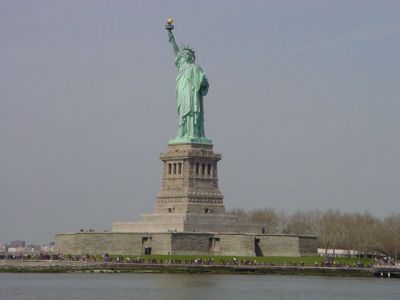
The robed female figure represents Libertas, the Roman goddess of freedom. She holds a torch aloft in one hand and carries a tabula ansata, a tablet evoking the concept of law, inscribed with the date of the U.S. Declaration of Independence, July 4, 1776, in the other. At her feet lie a broken shackle and a chain, symbolizing the nation's abolition of slavery.
Popular accounts, though unverified, claim that the sculptor modeled the woman's face after his own mother, Charlotte Beysser Bartholdi. He intentionally designed the figure with a strong, uncomplicated silhouette, which would be accentuated by its prominent position in the harbor, allowing viewers sailing toward Manhattan to perceive the statue from varying perspectives.
Presently, visitors can explore the interior of the statue through a glass ceiling, enhanced lighting, and a surrounding video system. They are free to roam Liberty Island at their leisure, appreciating the serene surroundings, visiting the museum, and perusing nearby gift shops.
Frédéric Auguste Bartholdi, the French sculptor, created the statue, drawing inspiration from the words of his compatriot, Édouard René de Laboulaye, a law professor and politician who believed that a monument celebrating American independence should be a joint endeavor between the French and American people. True to this vision, France financed the statue while the United States provided the site and constructed the pedestal.
Every element of the statue was crafted in France. The metal framework, in particular, was fashioned by Gustave Eiffel, renowned for his iconic creation, the Eiffel Tower in Paris (which was completed three years later in 1889). The statue's components were shipped in crates across the Atlantic and assembled atop the finished pedestal on what was then known as Bedloe's Island (now Liberty Island). Bartholdi deliberately chose this location, as he envisioned that passing vessels would sail by, and passengers, particularly those visiting the U.S. for the first time, would perceive the statue as a welcoming symbol.
On October 28, 1886, the statue was dedicated in a ceremony that coincided with the centennial anniversary of the signing of the U.S. Declaration of Independence. President Grover Cleveland presided over the momentous occasion.
The robed female figure represents Libertas, the Roman goddess of freedom. She holds a torch aloft in one hand and carries a tabula ansata, a tablet evoking the concept of law, inscribed with the date of the U.S. Declaration of Independence, July 4, 1776, in the other. At her feet lie a broken shackle and a chain, symbolizing the nation's abolition of slavery.
Popular accounts, though unverified, claim that the sculptor modeled the woman's face after his own mother, Charlotte Beysser Bartholdi. He intentionally designed the figure with a strong, uncomplicated silhouette, which would be accentuated by its prominent position in the harbor, allowing viewers sailing toward Manhattan to perceive the statue from varying perspectives.
Presently, visitors can explore the interior of the statue through a glass ceiling, enhanced lighting, and a surrounding video system. They are free to roam Liberty Island at their leisure, appreciating the serene surroundings, visiting the museum, and perusing nearby gift shops.
