Custom Walk in Tallinn, Estonia by tosheaclane_3359d created on 2025-07-30
Guide Location: Estonia » Tallinn
Guide Type: Custom Walk
# of Sights: 13
Tour Duration: 2 Hour(s)
Travel Distance: 3.4 Km or 2.1 Miles
Share Key: F54X6
Guide Type: Custom Walk
# of Sights: 13
Tour Duration: 2 Hour(s)
Travel Distance: 3.4 Km or 2.1 Miles
Share Key: F54X6
How It Works
Please retrieve this walk in the GPSmyCity app. Once done, the app will guide you from one tour stop to the next as if you had a personal tour guide. If you created the walk on this website or come to the page via a link, please follow the instructions below to retrieve the walk in the app.
Retrieve This Walk in App
Step 1. Download the app "GPSmyCity: Walks in 1K+ Cities" on Apple App Store or Google Play Store.



Step 2. In the GPSmyCity app, download(or launch) the guide "Tallinn Map and Walking Tours".
Step 3. Tap the menu button located at upper right corner of the "Walks" screen and select "Retrieve custom walk". Enter the share key: F54X6
1) Viru Värav (Viru Gate)
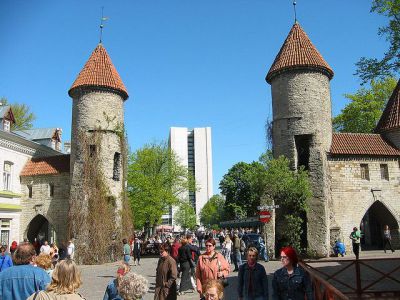
The Viru Gate forms one of the most recognizable entrances into Tallinn’s Medieval Old Town. Dating to the 14th century, these twin stone towers are the surviving outer section of a much larger gate complex that once guarded the city. At its height, Tallinn’s fortifications included around 45 towers, of which roughly half still remain today. The Viru towers originally stood as the foregate, with a second, more heavily fortified inner gate positioned further along the passage.
Approaching the gate, the symmetry of the towers stands out, with their conical roofs and narrow openings reflecting their original military purpose. Over time, however, their appearance has softened. Ivy often climbs their surfaces, and during warmer months, flower stalls gather at their base. Passing through the towers, the transition is immediate. The wider modern streets give way to narrower, cobbled lanes, where merchant houses, small shops, and cafés line the route into the Lower Town.
Much of the original gate complex was dismantled in the late 19th century, around 1880, to ease growing traffic demands. What remains today are the two round towers. While no longer part of an active defense system, they continue to define the city’s edge, offering a clear starting point for exploring one of the most intact medieval urban landscapes in Europe.
Approaching the gate, the symmetry of the towers stands out, with their conical roofs and narrow openings reflecting their original military purpose. Over time, however, their appearance has softened. Ivy often climbs their surfaces, and during warmer months, flower stalls gather at their base. Passing through the towers, the transition is immediate. The wider modern streets give way to narrower, cobbled lanes, where merchant houses, small shops, and cafés line the route into the Lower Town.
Much of the original gate complex was dismantled in the late 19th century, around 1880, to ease growing traffic demands. What remains today are the two round towers. While no longer part of an active defense system, they continue to define the city’s edge, offering a clear starting point for exploring one of the most intact medieval urban landscapes in Europe.
2) Hellemann Tower and City Wall
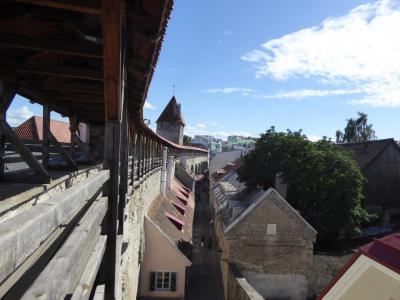
Parts of Tallinn's City Wall have stood since the 13th century. This wall was one of the strongest defense systems in Northern Europe. At its peak, the wall had 45 wall and gate towers and was over two and a quarter kilometers long. Today, 26 towers and less than two kilometers of the wall remain.
The Hellemann Tower was built in the early 15th century. It was named after a resident who owned land nearby and was built to protect Viru Gate. Helleman Tower has three levels and a three quarter circle layout. The 11 meters (33 feet) tall first floor was used as an ammunition room. The tower has also been used as a prison.
Today, Helleman Tower houses an art gallery and offers wonderful views of Town Hall and the rest of Tallinn.
Visitors can also walk along a 200 meter (656 feet) section of the City Wall. This is the longest portion of the wall that is open to visitors. It's surprisingly high up; visitors can see the city streets below and be transported back through the centuries.
The Hellemann Tower was built in the early 15th century. It was named after a resident who owned land nearby and was built to protect Viru Gate. Helleman Tower has three levels and a three quarter circle layout. The 11 meters (33 feet) tall first floor was used as an ammunition room. The tower has also been used as a prison.
Today, Helleman Tower houses an art gallery and offers wonderful views of Town Hall and the rest of Tallinn.
Visitors can also walk along a 200 meter (656 feet) section of the City Wall. This is the longest portion of the wall that is open to visitors. It's surprisingly high up; visitors can see the city streets below and be transported back through the centuries.
3) Dominican Monastery Claustrum
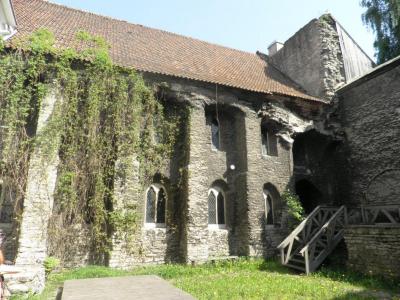
The Dominican Monastery Claustrum dates back to 1246, when Dominican friars established one of the city’s earliest religious complexes. At the time, Tallinn was developing into a thriving commercial center, and the monastery quickly became an important place not only for spiritual life but also for learning and administration. The cloister formed the core of the complex, organizing daily routines around a central courtyard.
In the 14th and 15th centuries, it hosted meetings of regional authorities, including the leadership of the Harju and Virumaa knighthoods. One of Tallinn’s earliest libraries was located here. Visitors today can still explore spaces that once served as the sacristy, dormitories, and other functional rooms that supported both monastic and administrative life.
The architecture remains deliberately restrained, with stone walls, vaulted passages, and simple arcades defining the space. Among the artistic details, visitors can find medieval and Renaissance elements, including carved tombstones and decorative reliefs such as the angel motif attributed to the sculptor Arent Passer. Today, this narrow lane is lined with artisan workshops. Within the claustrum itself, exhibitions and cultural events bring contemporary use to the historic setting.
In the 14th and 15th centuries, it hosted meetings of regional authorities, including the leadership of the Harju and Virumaa knighthoods. One of Tallinn’s earliest libraries was located here. Visitors today can still explore spaces that once served as the sacristy, dormitories, and other functional rooms that supported both monastic and administrative life.
The architecture remains deliberately restrained, with stone walls, vaulted passages, and simple arcades defining the space. Among the artistic details, visitors can find medieval and Renaissance elements, including carved tombstones and decorative reliefs such as the angel motif attributed to the sculptor Arent Passer. Today, this narrow lane is lined with artisan workshops. Within the claustrum itself, exhibitions and cultural events bring contemporary use to the historic setting.
4) Katariina Käik (St. Catherine’s Passage) (must see)
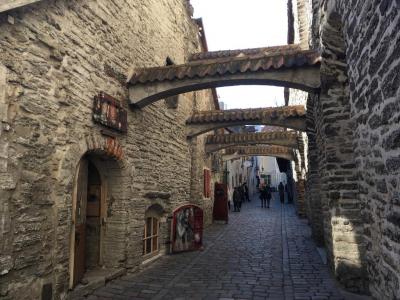
Saint Catherine’s Passage is a narrow medieval lane connecting Vene Street with Müürivahe Street, following the outer wall of the former Dominican monastery. Dating back to the 13th century, the passage developed alongside the monastery complex and preserves sections of its original stonework. Overhead arches linking the buildings were added later to reinforce the structures and remain one of the passage’s defining features.
The passage takes its name from Saint Catherine and the adjacent Dominican monastery, founded in 1246. Along the northern section, you can see the remains of the monastery church, one of the oldest surviving ecclesiastical structures in Tallinn. Several tombstones are set directly into the walls. These belonged to burials associated with the monastery and date mainly from the 14th to 16th centuries.
Toward the southern end, the passage becomes a center for traditional crafts. A group of working studios, often referred to as Saint Catherine’s Guild, continues long-established artisanal practices. Here, visitors can observe glass-blowing, ceramics, leatherwork, and textile production, with many workshops maintaining techniques rooted in historical craftsmanship rather than modern mass production.
The passage is short and can be walked in minutes, but it is best explored slowly. Entry points are easy to miss, and the northern section near the monastery remains the most historically intact, while the southern end is more active with workshops. Unlike larger streets in the Old Town, this lane functions more as a preserved corridor than a thoroughfare.
The passage takes its name from Saint Catherine and the adjacent Dominican monastery, founded in 1246. Along the northern section, you can see the remains of the monastery church, one of the oldest surviving ecclesiastical structures in Tallinn. Several tombstones are set directly into the walls. These belonged to burials associated with the monastery and date mainly from the 14th to 16th centuries.
Toward the southern end, the passage becomes a center for traditional crafts. A group of working studios, often referred to as Saint Catherine’s Guild, continues long-established artisanal practices. Here, visitors can observe glass-blowing, ceramics, leatherwork, and textile production, with many workshops maintaining techniques rooted in historical craftsmanship rather than modern mass production.
The passage is short and can be walked in minutes, but it is best explored slowly. Entry points are easy to miss, and the northern section near the monastery remains the most historically intact, while the southern end is more active with workshops. Unlike larger streets in the Old Town, this lane functions more as a preserved corridor than a thoroughfare.
5) Masters’ Courtyard
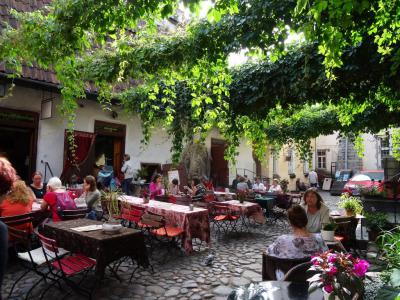
Set within a cluster of buildings dating back to at least 1371, the Masters’ Courtyard has served many purposes over the centuries. After falling into disrepair, it was revived in 1993 by a non-profit organization with the aim of restoring the space and transforming it into a center for local craftsmanship. Today, the courtyard functions as a small artisan quarter, home to around a dozen workshops and shops run by local craftspeople.
Here, visitors can find ceramics, glasswork, textiles, leather goods, and handmade accessories, many of which are created on-site. Some studios allow a closer look at the crafting process, and in certain cases, items can be made to order.
Entered through the narrow passage from Vene Street, the courtyard opens directly in front of you. As you step inside, turn slightly right, here you’ll find Pierre Chocolaterie, recognizable by its dark wood entrance and window displays of chocolates and cakes. From there, continue forward and this is where Villa Hortensia Guesthouse is located, set back a bit and identifiable by its lighter-toned façade and quieter, residential feel, with windows and doors that look more like a small private house than a shop.
Look toward the left side of the courtyard as you enter. Just beside the entrance is Anneli Endla Glass, set slightly below ground level, notice the small stairway leading down, as seen in front of the shop, which signals that you need to step down to enter. Continuing along the same left-hand stretch, but a little further in, you’ll come across Puu- ja Putukapood. It stands out with its distinct orange façade and strong wooden details, making it one of the easiest spots to recognize in the courtyard.
For visitors, Masters’ Courtyard provides a glimpse into the everyday creative life that once supported Tallinn’s trading economy. Rather than grand monuments, it highlights the skills and trades that sustained the city over centuries.
Here, visitors can find ceramics, glasswork, textiles, leather goods, and handmade accessories, many of which are created on-site. Some studios allow a closer look at the crafting process, and in certain cases, items can be made to order.
Entered through the narrow passage from Vene Street, the courtyard opens directly in front of you. As you step inside, turn slightly right, here you’ll find Pierre Chocolaterie, recognizable by its dark wood entrance and window displays of chocolates and cakes. From there, continue forward and this is where Villa Hortensia Guesthouse is located, set back a bit and identifiable by its lighter-toned façade and quieter, residential feel, with windows and doors that look more like a small private house than a shop.
Look toward the left side of the courtyard as you enter. Just beside the entrance is Anneli Endla Glass, set slightly below ground level, notice the small stairway leading down, as seen in front of the shop, which signals that you need to step down to enter. Continuing along the same left-hand stretch, but a little further in, you’ll come across Puu- ja Putukapood. It stands out with its distinct orange façade and strong wooden details, making it one of the easiest spots to recognize in the courtyard.
For visitors, Masters’ Courtyard provides a glimpse into the everyday creative life that once supported Tallinn’s trading economy. Rather than grand monuments, it highlights the skills and trades that sustained the city over centuries.
6) Kiek in de Kök Museum and Bastion Tunnels
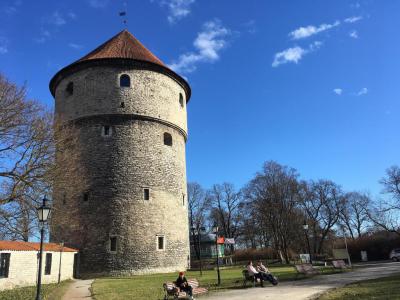
The Kiek in de Kök Museum and Bastion Tunnels provides insight into how the city was defended over centuries. At its center stands the Kiek in de Kök tower, built in 1475 as part of the medieval city walls. Its name, derived from Low German and meaning “peek into the kitchen,” refers to the view soldiers reportedly had into nearby homes from its elevated position.
The tower was designed for artillery defense, rising about 38 meters high with walls up to four meters thick, built to withstand cannon fire. Evidence of this military past can still be seen today, including cannonballs embedded in the stone from 16th-century attacks. In the 17th century, the tower was modified with additional gun ports as warfare evolved, before gradually falling out of active military use by the 18th century.
As Tallinn’s defenses expanded, bastions were added in the 17th century to strengthen the city against new military technologies. Beneath these earthwork structures, a network of tunnels was constructed, dating mainly from the 17th to 18th centuries. Originally used for troop movement, storage, and strategic positioning, these tunnels later took on additional roles, including use during the 20th century.
Today, the tower functions as a museum dedicated to Tallinn’s fortification system, with exhibitions covering the development of the city’s walls, towers, and daily life in earlier periods. From here, visitors can descend into the bastion tunnels, where dimly lit corridors and stone passageways create a distinct underground atmosphere.
The tower was designed for artillery defense, rising about 38 meters high with walls up to four meters thick, built to withstand cannon fire. Evidence of this military past can still be seen today, including cannonballs embedded in the stone from 16th-century attacks. In the 17th century, the tower was modified with additional gun ports as warfare evolved, before gradually falling out of active military use by the 18th century.
As Tallinn’s defenses expanded, bastions were added in the 17th century to strengthen the city against new military technologies. Beneath these earthwork structures, a network of tunnels was constructed, dating mainly from the 17th to 18th centuries. Originally used for troop movement, storage, and strategic positioning, these tunnels later took on additional roles, including use during the 20th century.
Today, the tower functions as a museum dedicated to Tallinn’s fortification system, with exhibitions covering the development of the city’s walls, towers, and daily life in earlier periods. From here, visitors can descend into the bastion tunnels, where dimly lit corridors and stone passageways create a distinct underground atmosphere.
7) Toompea Hill (must see)
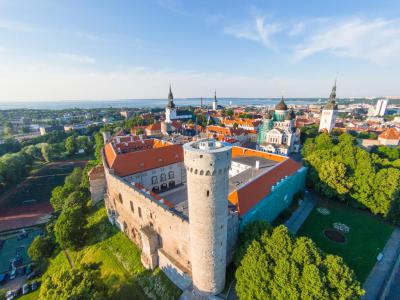
Rising about 20 to 30 meters above the surrounding city, Toompea Hill has long been the political and symbolic center of Tallinn. This limestone plateau has served as a defensive stronghold since medieval times, its elevated position offering both protection and wide views over the harbor and surrounding lands. In Estonian mythology, the hill is said to be the burial mound of the legendary king Kalev, raised by his wife Linda, whose tears are believed to have formed nearby Lake Ülemiste.
At the heart of the hill stands Toompea Castle, now home to Estonia’s parliament. The castle incorporates medieval foundations with later Baroque additions, including its distinctive pink façade completed in the 18th century. Rising above it is the Tall Hermann Tower, first built in the 14th century and still used for the daily raising and lowering of the Estonian flag. Nearby, the ornate Alexander Nevsky Cathedral adds a contrasting architectural presence with its 19th-century Russian Orthodox design.
Walking through Toompea, the setting feels more formal and contained than the lower town. Streets are lined with government buildings, embassies, and historic residences. Saint Mary's Cathedral, dating back to the 13th century and one of the oldest churches in Estonia, survived a major fire in 1684 that reshaped much of the hill. Inside, medieval coats of arms and memorials reflect centuries of noble influence and religious life.
Along the edges of the hill, several viewpoints open out across the city. These vantage points highlight the historic divide between the upper town and the merchant quarters below, while also offering one of the most complete views of Tallinn’s layout.
At the heart of the hill stands Toompea Castle, now home to Estonia’s parliament. The castle incorporates medieval foundations with later Baroque additions, including its distinctive pink façade completed in the 18th century. Rising above it is the Tall Hermann Tower, first built in the 14th century and still used for the daily raising and lowering of the Estonian flag. Nearby, the ornate Alexander Nevsky Cathedral adds a contrasting architectural presence with its 19th-century Russian Orthodox design.
Walking through Toompea, the setting feels more formal and contained than the lower town. Streets are lined with government buildings, embassies, and historic residences. Saint Mary's Cathedral, dating back to the 13th century and one of the oldest churches in Estonia, survived a major fire in 1684 that reshaped much of the hill. Inside, medieval coats of arms and memorials reflect centuries of noble influence and religious life.
Along the edges of the hill, several viewpoints open out across the city. These vantage points highlight the historic divide between the upper town and the merchant quarters below, while also offering one of the most complete views of Tallinn’s layout.
8) Alexander Nevsky Cathedral (must see)
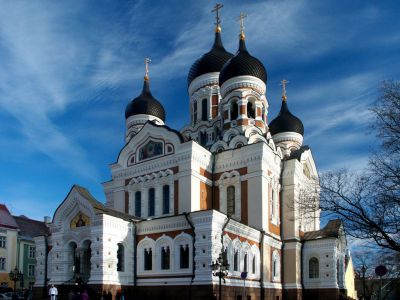
Built between 1894 and 1900 to a design by Mikhail Preobrazhensky, Alexander Nevsky Cathedral reflects the period when Estonia was part of the Russian Empire. It is dedicated to Saint Alexander Nevsky, the Russian prince who secured victory at the Battle of the Ice in 1242 on nearby Lake Peipus.
Its architecture stands in clear contrast to the surrounding medieval cityscape. Designed in the Russian Revival style, the cathedral features onion-shaped domes, richly ornamented façades, and layered decorative details that distinguish it from the Gothic and Baroque buildings nearby. As Tallinn’s largest Orthodox cathedral, its scale and elevated location make it visible from many points across the city.
Inside, the cathedral presents a richly decorated interior typical of Orthodox tradition. Gilded icons, mosaics, and painted surfaces create a dense visual environment, centered around the iconostasis that separates the altar from the nave. The interplay of light and gold surfaces gives the space a distinct atmosphere, differing markedly from the more restrained interiors of Lutheran churches in Estonia. The cathedral’s bells, among the largest in Tallinn, add another defining feature with their deep, resonant sound.
The cathedral’s history has not been without controversy. Built during a period of Russification, it was at times viewed as a symbol of imperial authority, and plans for its demolition were even considered in the 1920s, though never carried out. During the Soviet era, when religious practice declined, the building fell into disrepair. Since Estonia regained independence in 1991, the cathedral has been carefully restored and continues to function as an active place of worship, while also welcoming visitors interested in this distinct chapter of Tallinn’s past.
Its architecture stands in clear contrast to the surrounding medieval cityscape. Designed in the Russian Revival style, the cathedral features onion-shaped domes, richly ornamented façades, and layered decorative details that distinguish it from the Gothic and Baroque buildings nearby. As Tallinn’s largest Orthodox cathedral, its scale and elevated location make it visible from many points across the city.
Inside, the cathedral presents a richly decorated interior typical of Orthodox tradition. Gilded icons, mosaics, and painted surfaces create a dense visual environment, centered around the iconostasis that separates the altar from the nave. The interplay of light and gold surfaces gives the space a distinct atmosphere, differing markedly from the more restrained interiors of Lutheran churches in Estonia. The cathedral’s bells, among the largest in Tallinn, add another defining feature with their deep, resonant sound.
The cathedral’s history has not been without controversy. Built during a period of Russification, it was at times viewed as a symbol of imperial authority, and plans for its demolition were even considered in the 1920s, though never carried out. During the Soviet era, when religious practice declined, the building fell into disrepair. Since Estonia regained independence in 1991, the cathedral has been carefully restored and continues to function as an active place of worship, while also welcoming visitors interested in this distinct chapter of Tallinn’s past.
9) Saint Mary Cathedral
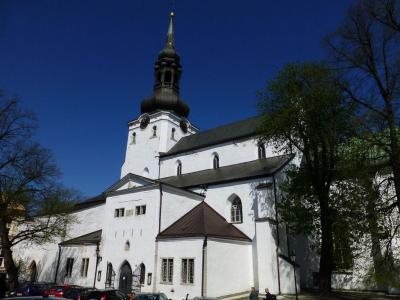
Saint Mary’s Cathedral is the oldest church in Tallinn and the principal Lutheran cathedral of Estonia. Its origins date back to 1219, when a wooden church was established following the Danish conquest. In the early 13th century, this structure was replaced by a stone building, completed around 1240 and dedicated to the Virgin Mary. Over time, the cathedral became closely associated with the Baltic German nobility, reflecting its role within the upper town’s political and social life.
Originally Gothic in form, the cathedral was enlarged during the 14th century and later heavily damaged in the great fire of 1684. Much of the interior woodwork was lost, and subsequent restoration introduced Baroque elements that still define parts of the church today. The tower, added later, dates largely from the 18th century, while the exterior retains a relatively restrained appearance compared to other major churches in Tallinn. If the tower is open, access is typically through a staircase inside the church, usually near the entrance area, and leads to views over Toompea and the Old Town.
Once inside, begin by walking down the central aisle. The walls on both sides are lined with an extensive collection of coats of arms belonging to noble families, many of whom were buried here. As you walk, look down at the floor, stone tomb slabs are set into the paving, marking burial sites. Continue toward the front of the church to reach the main altar. Here, you will find the Baroque altarpiece created by the 17th century German sculptor Christian Ackermann. Before turning back, look to your right-hand side as you face the altar to see the richly decorated Baroque pulpit, another of Ackermann’s works.
After exiting the cathedral, you can step into the surrounding churchyard, which is accessible directly from the church grounds. This area contains historic burial sites and memorials. Among those associated with the cathedral are Adam Johann von Krusenstern, a naval explorer known for leading Russia’s first circumnavigation, and Samuel Greig, a naval commander of Scottish origin who served in the Russian fleet.
Originally Gothic in form, the cathedral was enlarged during the 14th century and later heavily damaged in the great fire of 1684. Much of the interior woodwork was lost, and subsequent restoration introduced Baroque elements that still define parts of the church today. The tower, added later, dates largely from the 18th century, while the exterior retains a relatively restrained appearance compared to other major churches in Tallinn. If the tower is open, access is typically through a staircase inside the church, usually near the entrance area, and leads to views over Toompea and the Old Town.
Once inside, begin by walking down the central aisle. The walls on both sides are lined with an extensive collection of coats of arms belonging to noble families, many of whom were buried here. As you walk, look down at the floor, stone tomb slabs are set into the paving, marking burial sites. Continue toward the front of the church to reach the main altar. Here, you will find the Baroque altarpiece created by the 17th century German sculptor Christian Ackermann. Before turning back, look to your right-hand side as you face the altar to see the richly decorated Baroque pulpit, another of Ackermann’s works.
After exiting the cathedral, you can step into the surrounding churchyard, which is accessible directly from the church grounds. This area contains historic burial sites and memorials. Among those associated with the cathedral are Adam Johann von Krusenstern, a naval explorer known for leading Russia’s first circumnavigation, and Samuel Greig, a naval commander of Scottish origin who served in the Russian fleet.
10) Patkuli Viewing Platform
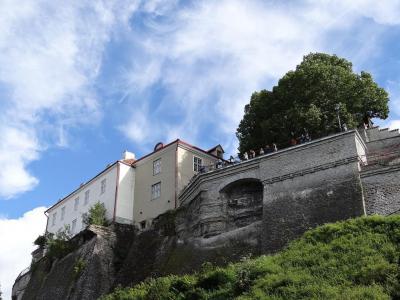
Perched along the northern edge of Toompea Hill, the Patkuli Viewing Platform offers one of the most iconic views over Tallinn’s Old Town. From this terrace, the city unfolds in layers: medieval walls and towers in the foreground, clusters of red-tiled rooftops beyond, and church spires rising above the skyline. It is one of the clearest vantage points for understanding the structure and scale of the historic lower town.
Reaching the platform can be part of the experience. A steep staircase of 157 steps begins in Toompark near the Snelli Pond, providing a direct route upward, originally constructed in the early 20th century. Alternatively, a gentler approach leads across Toompea, passing through the Danish King’s Garden.
From the top, Tallinn’s defensive system is particularly visible. The preserved city walls and towers form a continuous line. Beyond the Old Town, the view extends toward the port and the Gulf of Finland. The platform itself is designed as a stable viewing terrace with railings, making it an accessible place to pause and take in the surroundings. Light conditions change the experience throughout the day: clear views in the morning, warmer tones toward sunset, and illuminated rooftops in the evening.
Reaching the platform can be part of the experience. A steep staircase of 157 steps begins in Toompark near the Snelli Pond, providing a direct route upward, originally constructed in the early 20th century. Alternatively, a gentler approach leads across Toompea, passing through the Danish King’s Garden.
From the top, Tallinn’s defensive system is particularly visible. The preserved city walls and towers form a continuous line. Beyond the Old Town, the view extends toward the port and the Gulf of Finland. The platform itself is designed as a stable viewing terrace with railings, making it an accessible place to pause and take in the surroundings. Light conditions change the experience throughout the day: clear views in the morning, warmer tones toward sunset, and illuminated rooftops in the evening.
11) Kohtuotsa Viewing Point (must see)
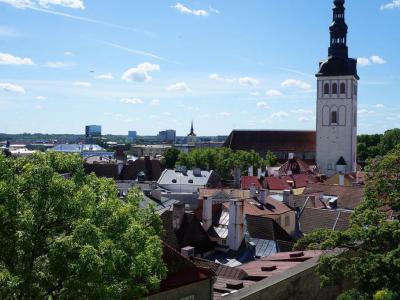
Perched along the edge of Toompea Hill, the Kohtuotsa Viewing Platform is one of the most popular vantage points in Tallinn, offering a wide and uninterrupted panorama over the city. Easily reached on foot from the Old Town, the platform sits in a slightly more open and informal setting compared to other viewpoints, allowing visitors to take in the view without the visual interruption of nearby walls or towers.
From here, Tallinn unfolds in a broad sweep. The red rooftops of the Old Town stretch out below, punctuated by church spires such as Saint Olav’s Church. Beyond the medieval core, the view extends toward the modern city, the harbor, and the Gulf of Finland. The perspective offers a clear sense of how the historic center fits within the wider urban landscape.
Kohtuotsa is also known for small contemporary details that contrast with the historic setting. A section of the wall near the platform often features changing graffiti, including the well-known phrase “The Times We Had”, which has become a recognizable visual element for visitors. This blend of historic panorama and modern expression gives the viewpoint a slightly different character from other spots on Toompea.
The platform itself is simple, with a raised area and safety railings that make it a comfortable place to pause. It is particularly popular for photography, especially at sunrise and sunset when the light softens across the rooftops and the sea. Free to access and open year-round, Kohtuotsa Viewing Platform offers one of the most expansive and memorable views of Tallinn.
From here, Tallinn unfolds in a broad sweep. The red rooftops of the Old Town stretch out below, punctuated by church spires such as Saint Olav’s Church. Beyond the medieval core, the view extends toward the modern city, the harbor, and the Gulf of Finland. The perspective offers a clear sense of how the historic center fits within the wider urban landscape.
Kohtuotsa is also known for small contemporary details that contrast with the historic setting. A section of the wall near the platform often features changing graffiti, including the well-known phrase “The Times We Had”, which has become a recognizable visual element for visitors. This blend of historic panorama and modern expression gives the viewpoint a slightly different character from other spots on Toompea.
The platform itself is simple, with a raised area and safety railings that make it a comfortable place to pause. It is particularly popular for photography, especially at sunrise and sunset when the light softens across the rooftops and the sea. Free to access and open year-round, Kohtuotsa Viewing Platform offers one of the most expansive and memorable views of Tallinn.
12) Raekoja Plats (Town Hall Square) (must see)
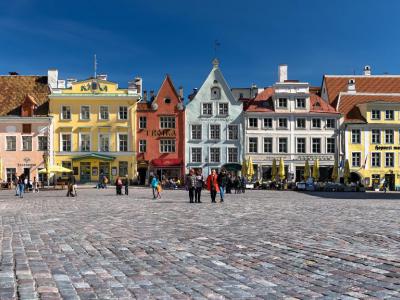
At the center of Tallinn’s Old Town, Town Hall Square has functioned as the city’s main gathering place since at least the medieval period, with market activity recorded here as early as the 11th century. The square is framed by pastel-toned merchant houses and dominated by the Gothic Town Hall, completed in 1404, widely regarded as the oldest surviving town hall in Northern Europe. Look toward the southern side of the square to take in its full façade and tower.
The surrounding buildings, dating mainly from the 15th to 17th centuries, illustrate the prosperity of the city during its time within the Hanseatic network. Among them is the historic Raeapteek, located on the northeastern edge of the square. Established in the early 15th century, it is often cited as one of Europe’s oldest continuously operating pharmacies. Inside, a small exhibition presents early medical tools and remedies, offering a glimpse into centuries-old practices.
As you cross the cobbled square, smaller details begin to stand out. Near the center lies a circular stone marked with a compass rose. Stand directly on this stone and look around. You can align your view to spot five of Tallinn’s historic church spires rising above the rooftops, including those of Saint Olaf’s Church, Saint Nicholas’ Church, Saint Mary’s Cathedral, Church of the Holy Spirit, and Saint Michael’s Church. A short distance from this marker, slightly off-center toward the Town Hall side, lies an L-shaped stone linked to a local legend: it is said to mark the spot where a priest was executed after a violent dispute. In summer, cafés extend their seating into the square, and depending on their layout, the temporary flooring may partially or completely cover this subtle piece.
In warmer months, café terraces fill the edges of the square, while markets and open-air events bring a steady flow of activity. The annual Tallinn Old Town Days festival transforms the area into a stage for performances and exhibitions. In winter, the square is centered around a large decorated Christmas tree, linked to a tradition often associated with the Brotherhood of the Blackheads, who are said to have erected one of the earliest public Christmas trees here in the 15th century.
The surrounding buildings, dating mainly from the 15th to 17th centuries, illustrate the prosperity of the city during its time within the Hanseatic network. Among them is the historic Raeapteek, located on the northeastern edge of the square. Established in the early 15th century, it is often cited as one of Europe’s oldest continuously operating pharmacies. Inside, a small exhibition presents early medical tools and remedies, offering a glimpse into centuries-old practices.
As you cross the cobbled square, smaller details begin to stand out. Near the center lies a circular stone marked with a compass rose. Stand directly on this stone and look around. You can align your view to spot five of Tallinn’s historic church spires rising above the rooftops, including those of Saint Olaf’s Church, Saint Nicholas’ Church, Saint Mary’s Cathedral, Church of the Holy Spirit, and Saint Michael’s Church. A short distance from this marker, slightly off-center toward the Town Hall side, lies an L-shaped stone linked to a local legend: it is said to mark the spot where a priest was executed after a violent dispute. In summer, cafés extend their seating into the square, and depending on their layout, the temporary flooring may partially or completely cover this subtle piece.
In warmer months, café terraces fill the edges of the square, while markets and open-air events bring a steady flow of activity. The annual Tallinn Old Town Days festival transforms the area into a stage for performances and exhibitions. In winter, the square is centered around a large decorated Christmas tree, linked to a tradition often associated with the Brotherhood of the Blackheads, who are said to have erected one of the earliest public Christmas trees here in the 15th century.
13) Tallinna Raekoda (Tallinn Town Hall) (must see)
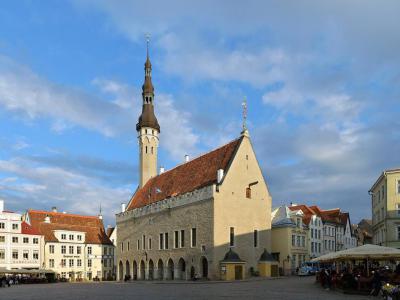
The Tallinn Town Hall stands as one of the best-preserved Gothic town halls in Northern Europe, and the only one of its kind still standing in the region. First mentioned in 1322 and completed in its current form in 1404, it reflects the wealth and independence of a medieval trading city at the height of its Hanseatic influence. Until 1970, it served as the center of civic life, where the town council governed, trade was regulated, and public ceremonies were held.
From the outside, the building is defined by its limestone construction, clay-tiled roof, and a slender spire rising about 64 meters above Town Hall Square. The tower is crowned by “Old Thomas”, a weather vane figure first installed in 1530, symbolizing the city’s watchful guardian. Along the façade, a series of arches supported by pillars form a sheltered arcade, where merchants once gathered during poor weather. In earlier times, this space also served as a place of public display, where offenders could be chained to a pillar as a form of punishment.
Inside, the Town Hall reveals a series of spaces designed for both governance and representation. The main room, known as the Citizens’ Hall, could accommodate around 100 people and continues to host concerts and events today. Elsewhere, the Council Chamber features carved wooden details dating back to the 14th century, while benches, arches, and decorative elements reflect the craftsmanship of the period. Copies of historic tapestries line the walls, with the originals preserved in the Tallinn City Museum.
Today, the Town Hall remains an active cultural venue, open to visitors during the warmer months. You can explore its interior, attend an event, or climb the tower for views across the red rooftops of the Old Town.
From the outside, the building is defined by its limestone construction, clay-tiled roof, and a slender spire rising about 64 meters above Town Hall Square. The tower is crowned by “Old Thomas”, a weather vane figure first installed in 1530, symbolizing the city’s watchful guardian. Along the façade, a series of arches supported by pillars form a sheltered arcade, where merchants once gathered during poor weather. In earlier times, this space also served as a place of public display, where offenders could be chained to a pillar as a form of punishment.
Inside, the Town Hall reveals a series of spaces designed for both governance and representation. The main room, known as the Citizens’ Hall, could accommodate around 100 people and continues to host concerts and events today. Elsewhere, the Council Chamber features carved wooden details dating back to the 14th century, while benches, arches, and decorative elements reflect the craftsmanship of the period. Copies of historic tapestries line the walls, with the originals preserved in the Tallinn City Museum.
Today, the Town Hall remains an active cultural venue, open to visitors during the warmer months. You can explore its interior, attend an event, or climb the tower for views across the red rooftops of the Old Town.
