Custom Walk in Athens, Greece by junk_6006_junk_244cd created on 2025-06-28
Guide Location: Greece » Athens
Guide Type: Custom Walk
# of Sights: 14
Tour Duration: 4 Hour(s)
Travel Distance: 8.8 Km or 5.5 Miles
Share Key: PESD9
Guide Type: Custom Walk
# of Sights: 14
Tour Duration: 4 Hour(s)
Travel Distance: 8.8 Km or 5.5 Miles
Share Key: PESD9
How It Works
Please retrieve this walk in the GPSmyCity app. Once done, the app will guide you from one tour stop to the next as if you had a personal tour guide. If you created the walk on this website or come to the page via a link, please follow the instructions below to retrieve the walk in the app.
Retrieve This Walk in App
Step 1. Download the app "GPSmyCity: Walks in 1K+ Cities" on Apple App Store or Google Play Store.



Step 2. In the GPSmyCity app, download(or launch) the guide "Athens Map and Walking Tours".
Step 3. Tap the menu button located at upper right corner of the "Walks" screen and select "Retrieve custom walk". Enter the share key: PESD9
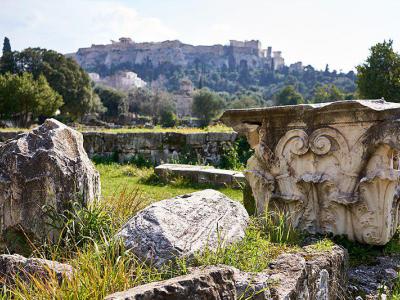
1) Ancient Agora of Athens (must see)
The ancient Agora of Athens sits beneath the revered hill of the Acropolis. This sprawling site contains the remnants of what was once a vast and intricate marketplace complex. In ancient times, the Agora served as the beating heart of public life in the city-state of Athens. Numerous administrative buildings, temples, altars, and roofed shopping arcades known as 'stoas', as well as fountains were constructed around the open square, which took its final shape in the 2nd century AD. Common citizens would gather here to engage in political discussions and participate in the voting process for proposed laws. It was within the Agora council buildings, law courts, and streets that democracy took root and thrived.
In 507 BC, Athenian leader Cleisthenes introduced a system of political reforms which he termed "demokratia", or the "rule of the people". This consisted of three distinct institutions, such as the "ekklesia", a sovereign governing body responsible for drafting laws and shaping foreign policy; the "boule", a council of representatives from the ten Athenian tribes; and the "dikasteria" – popular courts where citizens presented cases to a panel of randomly selected jurors. Although Athenian democracy lasted only two centuries, it stands as one of ancient Greece's most enduring legacies to the modern world.
Beyond its role as the city's political center, the Agora also served as a venue for religious ceremonies, commercial transactions, theatrical and musical shows, and even athletic competitions. The city mint producing Athens' silver currency was here, just as the state prison in which philosopher Socrates was executed in 399 BC.
Tips:
Admission to the on-site museum is included in the Agora ticket. Water fountains and restrooms are conveniently located nearby.
The site also features a well-marked ancient temple complete with the remains of the ancient drainage system.
In 507 BC, Athenian leader Cleisthenes introduced a system of political reforms which he termed "demokratia", or the "rule of the people". This consisted of three distinct institutions, such as the "ekklesia", a sovereign governing body responsible for drafting laws and shaping foreign policy; the "boule", a council of representatives from the ten Athenian tribes; and the "dikasteria" – popular courts where citizens presented cases to a panel of randomly selected jurors. Although Athenian democracy lasted only two centuries, it stands as one of ancient Greece's most enduring legacies to the modern world.
Beyond its role as the city's political center, the Agora also served as a venue for religious ceremonies, commercial transactions, theatrical and musical shows, and even athletic competitions. The city mint producing Athens' silver currency was here, just as the state prison in which philosopher Socrates was executed in 399 BC.
Tips:
Admission to the on-site museum is included in the Agora ticket. Water fountains and restrooms are conveniently located nearby.
The site also features a well-marked ancient temple complete with the remains of the ancient drainage system.
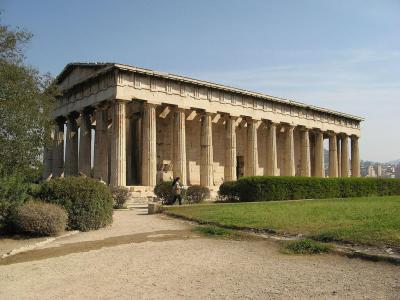
2) Temple of Hephaestus (must see)
The Temple of Hephaestus is arguably the best-kept piece of real estate in ancient Athens. While other temples crumbled under time, earthquakes, and general neglect, this one decided to stick around, much like a friend who refuses to leave a party.
Dedicated to Hephaestus, the god of fire, metalworking, and crafting all things indestructible (including the Olympian gods’ celestial mansions), this temple sits proudly on Agoraios Kolonos hill, as if keeping an eye on the Agora below. Thanks to its side hustle as a Greek Orthodox church from the 7th century until 1834, it avoided the fate of so many ancient ruins-namely, becoming an oversized jigsaw puzzle.
Its construction started in 449 BC during the Golden Days of Athens, but progress was a bit delayed. Why? Because Athens was busy throwing money at the Parthenon. Eventually, circa 421–415 BC, the builders got back to it, completing this Doric peripteral beauty-a 13+ by 31+ meter marble masterpiece, with six columns at the front, thirteen on the sides, and all the classical elegance you’d expect. Inside, it once housed bronze statues of Hephaestus and Athena, as noted by the Greek travel influencer of antiquity, Pausanias.
The decoration?-A delightful mix of Doric and Ionic flair. The east pediment showed Athena being born (classic), while the west pediment depicted Hephaestus returning to Olympus (presumably after being thrown off it as a baby-tough childhood). The pronaos frieze captured Theseus vs. the Pallantides, while the opisthodomos frieze threw in a good old-fashioned Centaurs vs. Lapiths battle. Meanwhile, 18 sculpted metopes (out of 68) focused on the heroic labors of Heracles and Theseus.
Like all good historical sites, the temple went through a few career changes. By the late Roman Empire, it stopped serving as a pagan sanctuary, and by 700 AD, it was reborn as the Church of Saint George Akamates (why "Akamates"? No one quite knows). Then, in 1833, it hosted one last Divine Liturgy to welcome Greece’s first modern king, Otto, before transforming into a museum. By 1934, the temple officially retired, designated as an ancient monument.
Tips:
The surrounding garden offers shaded spots-perfect for a scenic break.
It’s included in the Acropolis multi-site ticket, so bundle up for the full Athenian experience.
An audio guide is a smart move for deeper insight.
While you can’t waltz inside, the exterior friezes are well worth the admiration.
In short, whether you're a history buff, an architecture lover, or just here for the views, the Temple of Hephaestus is a must-see survivor of ancient Athens-no time machine required.
Dedicated to Hephaestus, the god of fire, metalworking, and crafting all things indestructible (including the Olympian gods’ celestial mansions), this temple sits proudly on Agoraios Kolonos hill, as if keeping an eye on the Agora below. Thanks to its side hustle as a Greek Orthodox church from the 7th century until 1834, it avoided the fate of so many ancient ruins-namely, becoming an oversized jigsaw puzzle.
Its construction started in 449 BC during the Golden Days of Athens, but progress was a bit delayed. Why? Because Athens was busy throwing money at the Parthenon. Eventually, circa 421–415 BC, the builders got back to it, completing this Doric peripteral beauty-a 13+ by 31+ meter marble masterpiece, with six columns at the front, thirteen on the sides, and all the classical elegance you’d expect. Inside, it once housed bronze statues of Hephaestus and Athena, as noted by the Greek travel influencer of antiquity, Pausanias.
The decoration?-A delightful mix of Doric and Ionic flair. The east pediment showed Athena being born (classic), while the west pediment depicted Hephaestus returning to Olympus (presumably after being thrown off it as a baby-tough childhood). The pronaos frieze captured Theseus vs. the Pallantides, while the opisthodomos frieze threw in a good old-fashioned Centaurs vs. Lapiths battle. Meanwhile, 18 sculpted metopes (out of 68) focused on the heroic labors of Heracles and Theseus.
Like all good historical sites, the temple went through a few career changes. By the late Roman Empire, it stopped serving as a pagan sanctuary, and by 700 AD, it was reborn as the Church of Saint George Akamates (why "Akamates"? No one quite knows). Then, in 1833, it hosted one last Divine Liturgy to welcome Greece’s first modern king, Otto, before transforming into a museum. By 1934, the temple officially retired, designated as an ancient monument.
Tips:
The surrounding garden offers shaded spots-perfect for a scenic break.
It’s included in the Acropolis multi-site ticket, so bundle up for the full Athenian experience.
An audio guide is a smart move for deeper insight.
While you can’t waltz inside, the exterior friezes are well worth the admiration.
In short, whether you're a history buff, an architecture lover, or just here for the views, the Temple of Hephaestus is a must-see survivor of ancient Athens-no time machine required.
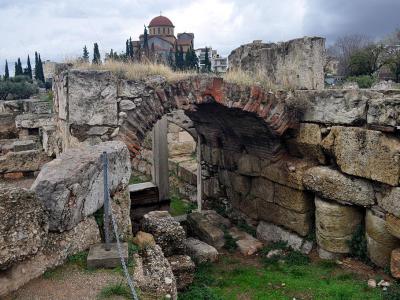
3) Kerameikos Ancient Cemetery
If ancient Athens had a VIP section for the dearly departed, Kerameikos would be it. Now, before you start picturing some dusty ruins with a few sad stones, let’s set the record straight-this place is an oasis. Really. Thanks to the lush Iridhanós stream decorated with water lilies, which lazily meanders through the site, it makes it feel more like a secret garden than a burial ground.
As you enter, glance to your right. There’s the impressive double line of the city wall. Ancient Athens wasn’t an open-door policy kind of town-two major roads once sliced through these defenses, each with its own grand gate-now unearthed through excavations.
First up, the Dipylon Gate, the city’s busiest entrance in its heyday. If ancient Athenians had morning traffic, this is where it all happened-the hustle and bustle of traders, travelers, and festival-goers pouring in from Piraeus, Eleusis, and the north. Then, there’s the Sacred Gate, which wasn’t just a fancy name-it had a VIP role, welcoming the famous Eleusinian and Panathenaic processions into the city, which were basically parades of the gods.
Wander left from the Sacred Way, and you’ll find the Street of the Tombs, where Classical Athens put its best funerary art on display. Expect a mix of solemn ancient headstones and sarcophagi from later Hellenistic and Roman times. Among the highlights is The Memorial of Dexileos, honoring a 20-year-old warrior who fell in battle in 394 BC, and the Monument of Dionysios of Kollytos, topped with a striking, exquisitely sculpted Pentelic marble bull-why settle for a regular tombstone when you can have a full-on animal guardian?
Now, if you love artifacts, the Kerameikos Museum is a must. A chic, marble-floored gallery showcasing stunning ceramics, intricate grave markers, and even children’s burial toys (poignant, yet fascinating). The pottery collection is particularly dazzling, with everything from horse-adorned dishes from the 8th century BC to those famous black-and-red figure vases of the 5th century BC.
Tip:
Your ticket to Kerameikos is part of the Acropolis multi-site pass, so don’t let it go to waste! And before you leave, climb the hill near the entrance-there’s a charming little church and a sweeping panorama of the entire site, perfect for a quiet moment of contemplation… or a dramatic selfie.
As you enter, glance to your right. There’s the impressive double line of the city wall. Ancient Athens wasn’t an open-door policy kind of town-two major roads once sliced through these defenses, each with its own grand gate-now unearthed through excavations.
First up, the Dipylon Gate, the city’s busiest entrance in its heyday. If ancient Athenians had morning traffic, this is where it all happened-the hustle and bustle of traders, travelers, and festival-goers pouring in from Piraeus, Eleusis, and the north. Then, there’s the Sacred Gate, which wasn’t just a fancy name-it had a VIP role, welcoming the famous Eleusinian and Panathenaic processions into the city, which were basically parades of the gods.
Wander left from the Sacred Way, and you’ll find the Street of the Tombs, where Classical Athens put its best funerary art on display. Expect a mix of solemn ancient headstones and sarcophagi from later Hellenistic and Roman times. Among the highlights is The Memorial of Dexileos, honoring a 20-year-old warrior who fell in battle in 394 BC, and the Monument of Dionysios of Kollytos, topped with a striking, exquisitely sculpted Pentelic marble bull-why settle for a regular tombstone when you can have a full-on animal guardian?
Now, if you love artifacts, the Kerameikos Museum is a must. A chic, marble-floored gallery showcasing stunning ceramics, intricate grave markers, and even children’s burial toys (poignant, yet fascinating). The pottery collection is particularly dazzling, with everything from horse-adorned dishes from the 8th century BC to those famous black-and-red figure vases of the 5th century BC.
Tip:
Your ticket to Kerameikos is part of the Acropolis multi-site pass, so don’t let it go to waste! And before you leave, climb the hill near the entrance-there’s a charming little church and a sweeping panorama of the entire site, perfect for a quiet moment of contemplation… or a dramatic selfie.
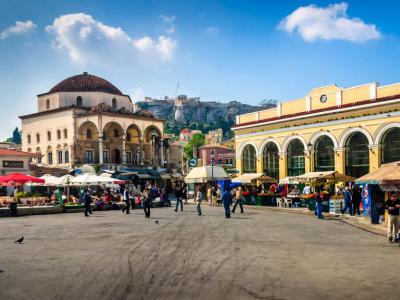
4) Monastiraki Square (must see)
Monastiraki Square is a major gathering spot for locals and tourists in Athens. As such, it is well worth a visit, if only for a few minutes, just to soak up the lively and often festive atmosphere, which is as Greek as it gets. You can also indulge in some local street snacks like "koulouri", a bagel-like roll sprinkled with sesame seeds.
Monastiraki Square is renowned for its striking juxtaposition of architectural styles. Visitors are greeted by the iconic clock tower of the Ottoman-era Tzistarakis Mosque, which stands alongside the remnants of the ancient Agora and the ruins of the Hadrian’s Library. This eclectic mix of historical landmarks reflects the square’s evolution through various periods, from ancient Greece to Roman, Byzantine, and Ottoman times.
The vibrant flea market offers everything from antiques and souvenirs to contemporary fashion. On weekends, the square comes alive with an energetic atmosphere, showcasing traditional Greek music, street performances, and a lively exchange of local culture. And if that's not enough, the surrounding streets are dotted with shops, taverns, bistros, cafes, and tea houses, luring visitors with a chance for a pleasant break.
Monastiraki Square is renowned for its striking juxtaposition of architectural styles. Visitors are greeted by the iconic clock tower of the Ottoman-era Tzistarakis Mosque, which stands alongside the remnants of the ancient Agora and the ruins of the Hadrian’s Library. This eclectic mix of historical landmarks reflects the square’s evolution through various periods, from ancient Greece to Roman, Byzantine, and Ottoman times.
The vibrant flea market offers everything from antiques and souvenirs to contemporary fashion. On weekends, the square comes alive with an energetic atmosphere, showcasing traditional Greek music, street performances, and a lively exchange of local culture. And if that's not enough, the surrounding streets are dotted with shops, taverns, bistros, cafes, and tea houses, luring visitors with a chance for a pleasant break.
5) Temple of Athena Nike (must see)
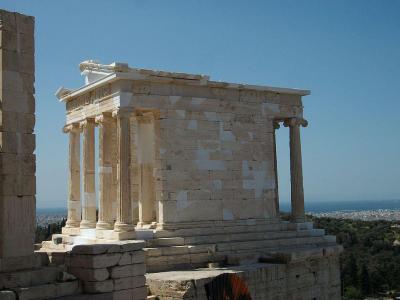
The Temple of Athena Nike-a tiny, jewel-box of a temple perched atop the Acropolis. At just 11 feet (or 3.3 meters, for the metric-minded), it’s easy to miss in the shadow of its grander neighbors. But rest assured, it’s well worth a closer look. As you pass through the mighty Propylaea Gate, sneak a glance to your upper right-there it is, standing proudly on the edge of the rock wall, as if keeping an eye on everything below.
This little temple has had a rough ride through history, being knocked down not once, but twice! Thankfully, the ancient puzzle pieces were carefully put back together using original fragments, restoring its elegant form. And what a form it is-four Ionic columns at each end, perfectly symmetrical, just as it was in 420 BC. Back in the day, Athenians gathered here to toast their victories over the Persians (its frieze even depicts scenes from the Battle of Plataea in 479 BC-because what’s a victory without some artistic bragging?).
Designed by the architect Kallikrates, this temple wasn’t just for show. It served as both a shrine and a lookout post-because even the goddess of victory needs a good vantage point. Speaking of which, the temple’s balustrade once featured a stunning sculpture of Athena Nike. But there’s a twist! Unlike your usual winged depiction of the goddess, this one is wingless-a symbolic way of saying, “Victory is staying right here in Athens, thank you very much.”
And then there’s the legend. This very spot is where King Aegeus is said to have waited anxiously for his son, Theseus, to return from slaying the Minotaur in Crete. The plan? If Theseus survived, he’d raise white sails instead of black. The reality? He forgot. And when poor Aegeus saw the black sails, he assumed the worst and hurled himself into the sea-thus giving the Aegean Sea its name. Talk about a tragic mix-up...
So next time you visit the Acropolis, don’t just rush to the Parthenon. Take a moment to appreciate this small but mighty temple-because in Athens, even the little things come with epic stories.
This little temple has had a rough ride through history, being knocked down not once, but twice! Thankfully, the ancient puzzle pieces were carefully put back together using original fragments, restoring its elegant form. And what a form it is-four Ionic columns at each end, perfectly symmetrical, just as it was in 420 BC. Back in the day, Athenians gathered here to toast their victories over the Persians (its frieze even depicts scenes from the Battle of Plataea in 479 BC-because what’s a victory without some artistic bragging?).
Designed by the architect Kallikrates, this temple wasn’t just for show. It served as both a shrine and a lookout post-because even the goddess of victory needs a good vantage point. Speaking of which, the temple’s balustrade once featured a stunning sculpture of Athena Nike. But there’s a twist! Unlike your usual winged depiction of the goddess, this one is wingless-a symbolic way of saying, “Victory is staying right here in Athens, thank you very much.”
And then there’s the legend. This very spot is where King Aegeus is said to have waited anxiously for his son, Theseus, to return from slaying the Minotaur in Crete. The plan? If Theseus survived, he’d raise white sails instead of black. The reality? He forgot. And when poor Aegeus saw the black sails, he assumed the worst and hurled himself into the sea-thus giving the Aegean Sea its name. Talk about a tragic mix-up...
So next time you visit the Acropolis, don’t just rush to the Parthenon. Take a moment to appreciate this small but mighty temple-because in Athens, even the little things come with epic stories.
6) Parthenon (must see)
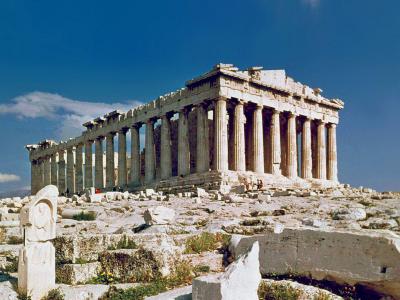
Presiding over the Acropolis like a timeless guardian of Athens, the Parthenon is one of the finest and most recognizable examples of classical architecture. This 5th-century BC temple was the brainchild of Pericles, the man who decided Athens needed an upgrade-preferably in glorious white Pentelic marble.
Replacing an older sanctuary, the Parthenon was dedicated to Athena, the city's patron goddess, whose grand 12-meter-tall statue, adorned in ivory and gold, once dazzled anyone lucky enough to lay eyes on it. More than just a temple, the Parthenon was a statement piece-loud and clear-about Athens' dominance following its victories in the Persian Wars and its leading role in the Delian League (uniting under its umbrella equal city-states against Persia). In other words, it wasn’t just about worship; it was about showing off.
Designed in the Doric style, the temple was built to withstand the test of time-but history had other plans. Over the centuries, it transformed from a Greek temple to a Byzantine church, then a Turkish mosque, and finally, in 1687, into a really unlucky storage facility for gunpowder. That decision ended about as well as you'd expect when the Venetians decided to bombard the Acropolis, causing a spectacular explosion. And if that wasn't enough, Lord Elgin of Great Britain came along in the 19th century and helped himself to much of its sculptural beauty, now sitting in the British Museum.
Yet, despite the looting, wars, and centuries of wear, the Parthenon still reigns supreme, standing as an enduring emblem of Greek culture and a favorite inspiration for neoclassical buildings worldwide.
Tips:
Go early-unless you enjoy waiting in long lines under the scorching Athenian sun.
Use both entrances to explore the site fully.
Get a combined ticket-it covers multiple iconic spots, including the Odeon of Herodes Atticus, the Theater of Dionysus, the Temple of Olympian Zeus, and the Ancient Agora. Because if you're traveling back in time, you might as well see it all.
Replacing an older sanctuary, the Parthenon was dedicated to Athena, the city's patron goddess, whose grand 12-meter-tall statue, adorned in ivory and gold, once dazzled anyone lucky enough to lay eyes on it. More than just a temple, the Parthenon was a statement piece-loud and clear-about Athens' dominance following its victories in the Persian Wars and its leading role in the Delian League (uniting under its umbrella equal city-states against Persia). In other words, it wasn’t just about worship; it was about showing off.
Designed in the Doric style, the temple was built to withstand the test of time-but history had other plans. Over the centuries, it transformed from a Greek temple to a Byzantine church, then a Turkish mosque, and finally, in 1687, into a really unlucky storage facility for gunpowder. That decision ended about as well as you'd expect when the Venetians decided to bombard the Acropolis, causing a spectacular explosion. And if that wasn't enough, Lord Elgin of Great Britain came along in the 19th century and helped himself to much of its sculptural beauty, now sitting in the British Museum.
Yet, despite the looting, wars, and centuries of wear, the Parthenon still reigns supreme, standing as an enduring emblem of Greek culture and a favorite inspiration for neoclassical buildings worldwide.
Tips:
Go early-unless you enjoy waiting in long lines under the scorching Athenian sun.
Use both entrances to explore the site fully.
Get a combined ticket-it covers multiple iconic spots, including the Odeon of Herodes Atticus, the Theater of Dionysus, the Temple of Olympian Zeus, and the Ancient Agora. Because if you're traveling back in time, you might as well see it all.
7) Erechtheion (must see)
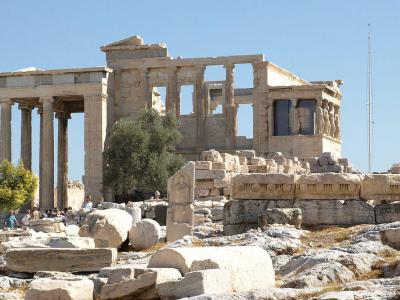
The Erechtheion-a temple with a front-row seat to one of the pettiest godly rivalries in history. Built between 421 and 406 BC, this elegant structure was dedicated to Athena (the goddess of wisdom, warfare, and handicraft) and Poseidon (the god of the sea), who once had a dramatic showdown over who would get Athens as their VIP city. Poseidon, ever the dramatic type, slammed his trident into the rock, and-voilà-a saltwater spring appeared. Impressive, but not exactly practical for drinking. Athena, on the other hand, planted an olive tree, which was far more useful for making oil, food, and, let’s be honest, rubbing into everything. The locals made their choice, and Athena took the crown as the city’s patron. Poseidon? Well, let’s just say he didn’t take it well, but they eventually made peace. Allegedly, you can still see where his trident threw a tantrum on the temple’s ground.
The Erechtheion wasn’t just a temple-it was an architectural masterpiece, showcasing the graceful Ionic style. Inside, there were three chambers: one for the sacred olivewood statue of Athena, and the others for Poseidon, presumably as a consolation prize. The temple’s north, east, and south sides were framed by grand porticoes, but the real showstopper? The Porch of the Caryatids, where six elegantly sculpted female figures held up the roof with their heads-because who needs columns when you have ancient supermodels? The ones you see today are replicas; the originals are safely housed in the Acropolis Museum, away from pollution, weather, and pigeon-related hazards.
As history marched on, the Erechtheion saw some... unexpected tenants. In 1463, it was converted into a harem for the Ottoman commander’s wives-probably not what the ancient Greeks had in mind. Later, during the Greek War of Independence, a Turkish shell crashed into it, causing significant damage. Despite all this, the Erechtheion still stands, now a UNESCO World Heritage site and a must-visit for history lovers and architecture buffs alike.
Tip:
Want the full story? A guided tour will give you all the juicy details. Prefer to wander solo? Visit in the morning to beat the heat, and don’t forget to bring water-there’s no ancient vending machine up there!
The Erechtheion wasn’t just a temple-it was an architectural masterpiece, showcasing the graceful Ionic style. Inside, there were three chambers: one for the sacred olivewood statue of Athena, and the others for Poseidon, presumably as a consolation prize. The temple’s north, east, and south sides were framed by grand porticoes, but the real showstopper? The Porch of the Caryatids, where six elegantly sculpted female figures held up the roof with their heads-because who needs columns when you have ancient supermodels? The ones you see today are replicas; the originals are safely housed in the Acropolis Museum, away from pollution, weather, and pigeon-related hazards.
As history marched on, the Erechtheion saw some... unexpected tenants. In 1463, it was converted into a harem for the Ottoman commander’s wives-probably not what the ancient Greeks had in mind. Later, during the Greek War of Independence, a Turkish shell crashed into it, causing significant damage. Despite all this, the Erechtheion still stands, now a UNESCO World Heritage site and a must-visit for history lovers and architecture buffs alike.
Tip:
Want the full story? A guided tour will give you all the juicy details. Prefer to wander solo? Visit in the morning to beat the heat, and don’t forget to bring water-there’s no ancient vending machine up there!
8) Hadrian's Arch
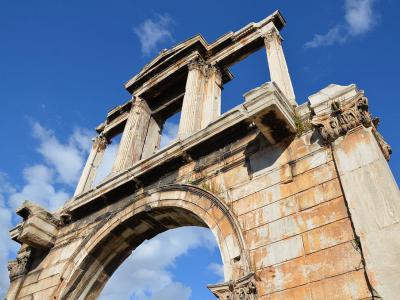
Resembling a triumphal arch, this monumental gateway was built to celebrate the arrival of Roman Emperor Hadrian and pay tribute to his many benefactions to the city. It serves as a symbolic passage between the ancient part of Athens and the newly developed district, largely conceived during Hadrian's rule, which extended until the year 138 A.D. Hadrian was a great admirer of classical Greek literature, philosophy, and arts. During his reign, he generously sponsored several significant projects in Athens, including Hadrian's Library, the Hadrianic Aqueduct, and the completion of the Temple of Olympian Zeus, among others.
The entire structure dedicated to honoring Hadrian is constructed from marble quarried from Mount Pentelicus, located 18 kilometers away. In terms of design, it is fully symmetrical, both from the front and the sides; however, while the lower section draws inspiration from similar Roman arches, the upper part is typical of Greek ones. Inscriptions etched into the monument's surfaces celebrate the new Roman era: the northwest frieze bears the inscription, 'This is Athens, the Ancient city of Theseus,' whereas the southeast frieze declares, 'This is the city of Hadrian, and not of Theseus.'
Why You Should Visit:
One of the most important Roman monuments surviving in Athens, providing an opportunity to gain insights into the relationship between the Roman Empire and its province of Achaea, conquered by the Romans in the year 146 BC.
Tip:
While the monument can be admired from a distance during a stroll through Athens, for a closer view, you may opt to purchase a ticket for the Temple of Olympian Zeus or a combination ticket providing access to the city's major archaeological sites.
The entire structure dedicated to honoring Hadrian is constructed from marble quarried from Mount Pentelicus, located 18 kilometers away. In terms of design, it is fully symmetrical, both from the front and the sides; however, while the lower section draws inspiration from similar Roman arches, the upper part is typical of Greek ones. Inscriptions etched into the monument's surfaces celebrate the new Roman era: the northwest frieze bears the inscription, 'This is Athens, the Ancient city of Theseus,' whereas the southeast frieze declares, 'This is the city of Hadrian, and not of Theseus.'
Why You Should Visit:
One of the most important Roman monuments surviving in Athens, providing an opportunity to gain insights into the relationship between the Roman Empire and its province of Achaea, conquered by the Romans in the year 146 BC.
Tip:
While the monument can be admired from a distance during a stroll through Athens, for a closer view, you may opt to purchase a ticket for the Temple of Olympian Zeus or a combination ticket providing access to the city's major archaeological sites.
9) Temple of Olympian Zeus (must see)
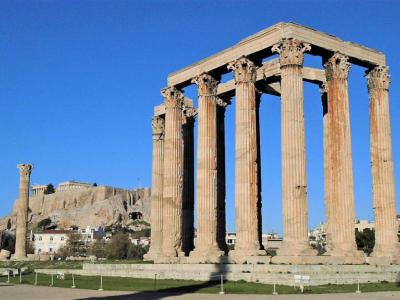
Even in its ruined state, the Athenian temple of Olympian Zeus remains a monument of awe-inspiring proportions, surpassing even the Parthenon in size. This colossal edifice saw its construction commence in the 6th century BC during the rule of the tyrant Peisistratos, who allegedly initiated the ambitious project to garner public favor. However, despite numerous attempts spanning many years to complete what would have been the greatest temple in the ancient world, it remained unfinished for over six and a half centuries.
In AD 132, the Roman emperor Hadrian, renowned for his admiration of classical Greek culture, dedicated the temple to Zeus Olympios during the Panhellenic festival, a competition of music and poetry held the year before the Olympics. This act took place during his second visit to Athens, and Hadrian also placed a gold and ivory inlaid statue of the god Zeus inside the temple. Regrettably, both the statue of Zeus and a colossal statue of the emperor himself have since been lost to history.
Today, only 15 of the original 104 Corinthian columns remain standing, each at a height of 17 meters (56 feet) – but enough to provide a sense of the temple's immense scale, which would have spanned about 96 meters (315 feet) in length and 40 meters (130 feet) in width. Nearby, there lies a 16th column that toppled during a storm in 1852, bearing witness to the passage of time. The temple's ruins extend beyond the towering columns, although entry into the temple may be restricted at times due to ongoing archaeological excavations.
Adjacent stands Hadrian's Arch, constructed in AD 131 and intentionally positioned to demarcate the boundary between the ancient city and the new Athens envisioned by Emperor Hadrian.
Tip:
For visitors who have acquired the Acropolis multi-site ticket, access to this historical site is automatically granted.
In AD 132, the Roman emperor Hadrian, renowned for his admiration of classical Greek culture, dedicated the temple to Zeus Olympios during the Panhellenic festival, a competition of music and poetry held the year before the Olympics. This act took place during his second visit to Athens, and Hadrian also placed a gold and ivory inlaid statue of the god Zeus inside the temple. Regrettably, both the statue of Zeus and a colossal statue of the emperor himself have since been lost to history.
Today, only 15 of the original 104 Corinthian columns remain standing, each at a height of 17 meters (56 feet) – but enough to provide a sense of the temple's immense scale, which would have spanned about 96 meters (315 feet) in length and 40 meters (130 feet) in width. Nearby, there lies a 16th column that toppled during a storm in 1852, bearing witness to the passage of time. The temple's ruins extend beyond the towering columns, although entry into the temple may be restricted at times due to ongoing archaeological excavations.
Adjacent stands Hadrian's Arch, constructed in AD 131 and intentionally positioned to demarcate the boundary between the ancient city and the new Athens envisioned by Emperor Hadrian.
Tip:
For visitors who have acquired the Acropolis multi-site ticket, access to this historical site is automatically granted.
10) Panathenaic Stadium (must see)
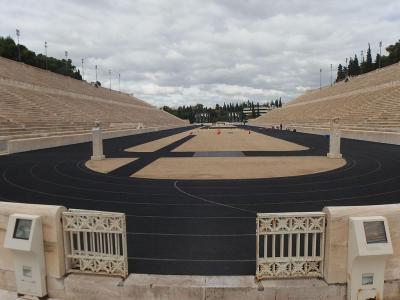
The Panathenaic is truly a remarkable historical site, being the only major stadium in the world constructed entirely of white marble. Its origins trace back to ancient times when it served as the venue for the athletic competitions of the Panathenaic Games, dedicated to the Goddess Athena and held every four years. The stadium underwent significant transformations, with a marble reconstruction in 329 BC and later expansion and renovation in 140 AD, accommodating up to 50,000 spectators.
Having fallen into disuse and disrepair after the 4th century AD, it was rediscovered and revitalized for the modern era, playing a pivotal role in the revival of the Olympic Games in the late 19th century. Despite its smaller scale compared to contemporary Olympic venues, the Panathenaic's elegant simplicity and iconic five Olympic rings continue to inspire awe. At the entrance, you'll encounter four stones engraved with the interesting history of the Olympics from the late 19th century to the present day.
The inaugural international Olympic Games in modern history were held here in 1896, with King George I of Greece opening the ceremony. Among participants were 241 male athletes from 14 countries, competing in 9 sports and 43 events. These early modern Olympic sports included athletics, cycling, fencing, gymnastics, tennis, shooting, swimming, weightlifting, and wrestling. Since then, athletes from across the globe have convened every four years, with the tradition enduring through the tumultuous 20th century wars.
Why You Should Visit:
A captivating place to explore, and you can enhance your visit with the free audio guide provided.
The on-site museum provides an engaging exhibition on the fascinating history of the Olympics.
Tip:
Don't miss the opportunity to climb to the upper tier for stunning views of the stadium.
Having fallen into disuse and disrepair after the 4th century AD, it was rediscovered and revitalized for the modern era, playing a pivotal role in the revival of the Olympic Games in the late 19th century. Despite its smaller scale compared to contemporary Olympic venues, the Panathenaic's elegant simplicity and iconic five Olympic rings continue to inspire awe. At the entrance, you'll encounter four stones engraved with the interesting history of the Olympics from the late 19th century to the present day.
The inaugural international Olympic Games in modern history were held here in 1896, with King George I of Greece opening the ceremony. Among participants were 241 male athletes from 14 countries, competing in 9 sports and 43 events. These early modern Olympic sports included athletics, cycling, fencing, gymnastics, tennis, shooting, swimming, weightlifting, and wrestling. Since then, athletes from across the globe have convened every four years, with the tradition enduring through the tumultuous 20th century wars.
Why You Should Visit:
A captivating place to explore, and you can enhance your visit with the free audio guide provided.
The on-site museum provides an engaging exhibition on the fascinating history of the Olympics.
Tip:
Don't miss the opportunity to climb to the upper tier for stunning views of the stadium.
11) National Garden
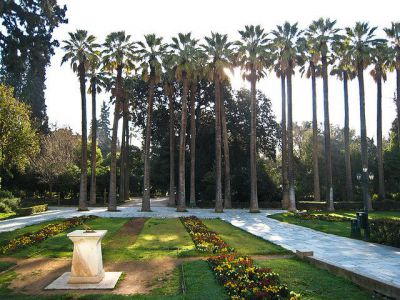
Just behind the Voulí parliament building, this expansive 16-hectare (40-acre) park, held dear by all Athenians and formerly referred to as the "Royal Gardens", was officially renamed the National Gardens in 1923 by decree. The park's origins date back to the 1840s when Queen Amalía spearheaded its creation, even using the fledgling Greek navy to transport 15,000 seedlings from various corners of the world. Landscaping was entrusted to Prussian horticulturalist Friedrich Schmidt, an avid traveler who scoured the globe in search of rare plant specimens. Notably, Queen Amalía herself planted the avenue of Washingtonia fan palms, native to the southwestern United States.
While the gardens have undergone changes over the years, they remain a serene oasis in the heart of the city. Winding paths lead visitors past charming squares, park benches, and ponds inhabited by koi fish. Adding to the ambiance, visitors can explore remnants of Roman mosaics unearthed within the park and an ancient aqueduct. Throughout the gardens, you'll also encounter modern sculptures paying tribute to renowned writers such as Dionýsios Solomós (author of the Greek National Hymn), Aristotélis Valaorítis, and Jean Moreas. Towards the eastern end stands the neoclassical Zappeion Hall, constructed in 1888 as an Olympic facility. You will also find a duck pond, a small zoo, a small cafe, and a Children's Library and playground. The place is quite clean, suitable and safe for everyone in daytime.
Tip:
The pine-covered Ardittos Hill nearby offers one of the city's most serene and tranquil public spaces, along with stunning viewpoints.
While the gardens have undergone changes over the years, they remain a serene oasis in the heart of the city. Winding paths lead visitors past charming squares, park benches, and ponds inhabited by koi fish. Adding to the ambiance, visitors can explore remnants of Roman mosaics unearthed within the park and an ancient aqueduct. Throughout the gardens, you'll also encounter modern sculptures paying tribute to renowned writers such as Dionýsios Solomós (author of the Greek National Hymn), Aristotélis Valaorítis, and Jean Moreas. Towards the eastern end stands the neoclassical Zappeion Hall, constructed in 1888 as an Olympic facility. You will also find a duck pond, a small zoo, a small cafe, and a Children's Library and playground. The place is quite clean, suitable and safe for everyone in daytime.
Tip:
The pine-covered Ardittos Hill nearby offers one of the city's most serene and tranquil public spaces, along with stunning viewpoints.
12) Museum of Cycladic Art (must see)
This museum is home to one of the world's most exquisite collections of Cycladic art, featuring elegant carvings that are unlike anything found in contemporary civilizations. These artifacts are remnants of an ancient culture that thrived in the Cycladic Islands of the Aegean Sea from around 3,200 to 1,000 BC. The islands formed a homogenous unit, with pristine white marble from places like Paros and Naxos, as well as rich mineral deposits including gold, silver, and copper on other islands. Such an abundance of resources led to a flourishing industry in various arts and crafts, especially sculpture, metallurgy, and jewelry-making. The items were traded not only within Greece but also with Asia Minor (modern-day Turkey).
The museum's collection was initially curated by Nikolaos and Dolly Goulandrís, members of Greece's most prominent shipping dynasty, and it has grown over time with contributions from other Greek collectors. Dating back to the 3rd millennium BC, the Cycladic marble sculptures depicting both women and men exhibit a haunting simplicity that has inspired numerous 20th-century artists and sculptors, including Henry Moore, Picasso, and Modigliani. Additionally, the museum features an outstanding selection of ancient Greek and Cypriot art pieces, some dating as far back as 5,000 years ago.
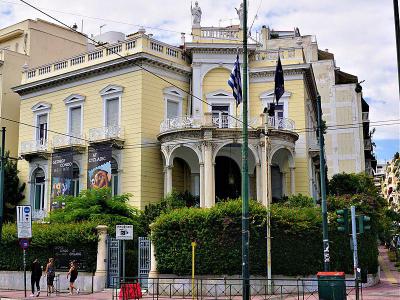
In the main building, the Cycladic collection is on the first floor, ancient Greek art is on the second floor, and the third floor features ancient Cypriot art, while the fourth floor houses objects depicting everyday life in antiquity. The neoclassical Stathátos Mansion, an adjacent structure designed by Bavarian architect Ernst Ziller in 1895, hosts temporary exhibitions, receptions, and lectures.
Why You Should Visit:
The four floors of this exceptional museum offer a comprehensive exploration of the history and culture of the Cycladic Islands through various means, including exhibits, artifacts, soundscapes, and films.
Tip:
Be sure to explore the second building as well. While you may come across interesting temporary exhibitions, the building itself is worth a brief stroll.
The museum's collection was initially curated by Nikolaos and Dolly Goulandrís, members of Greece's most prominent shipping dynasty, and it has grown over time with contributions from other Greek collectors. Dating back to the 3rd millennium BC, the Cycladic marble sculptures depicting both women and men exhibit a haunting simplicity that has inspired numerous 20th-century artists and sculptors, including Henry Moore, Picasso, and Modigliani. Additionally, the museum features an outstanding selection of ancient Greek and Cypriot art pieces, some dating as far back as 5,000 years ago.
In the main building, the Cycladic collection is on the first floor, ancient Greek art is on the second floor, and the third floor features ancient Cypriot art, while the fourth floor houses objects depicting everyday life in antiquity. The neoclassical Stathátos Mansion, an adjacent structure designed by Bavarian architect Ernst Ziller in 1895, hosts temporary exhibitions, receptions, and lectures.
Why You Should Visit:
The four floors of this exceptional museum offer a comprehensive exploration of the history and culture of the Cycladic Islands through various means, including exhibits, artifacts, soundscapes, and films.
Tip:
Be sure to explore the second building as well. While you may come across interesting temporary exhibitions, the building itself is worth a brief stroll.
13) National Archaeological Museum (must see)
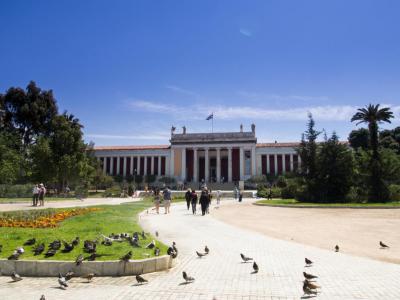
With an extraordinary exhibits that include stunning Mycenaean gold and an unparalleled quantity of sculpture, pottery, and jewelry, this museum stands as one of the world's most remarkable. Originally opened in 1891, it consolidated a collection that had been scattered throughout the city, only to be dispersed again and buried during World War II to protect it from potential damage. The museum reopened in 1946, but it took an additional 65 years of renovation and reorganization to truly showcase its treasures.
The ground floor features Mycenaean, Neolithic, and Cycladic artifacts, followed by Geometric, Archaic, Classical, Roman, and Hellenistic sculpture. You'll also find Egyptian artifacts, a significant jewelry collection, and the Karapános collection on this level. Meanwhile, the first floor houses pottery, glassware, jewelry, and items from ancient Thera (on Santorini).
Highlights include a gold death mask discovered at Mycenae by Heinrich Schliemann, initially believed to have belonged to the legendary king Agamemnon, dating from the mid-1600s BC. The immense 'Dípylon Amphora', a geometric vase found in the Kerameikos cemetery, was used to mark the burial of an 8th-century BC woman and depicts the deceased surrounded by mourning women. Cycladic sculpture, such as the 'Harp Player', flourished in the 3rd millennium BC; its simple lines and bold forms influenced many early 20th-century artists, including the British sculptor Henry Moore. The 'Ephebe of Antikythera' is a splendid Hellenistic bronze statue discovered in 1900; standing at around 2 meters (7 feet) tall, it is larger than life. Another notable piece is a marble sculpture of Aphrodite, Eros, and the goat-footed Pan, dating from around 100 BC.
The museum's building has a neoclassical design and features an adjacent neoclassical-style garden studded with many ancient statues. There is also a café and a gift shop that sells reproductions of many of the objects displayed inside.
Why You Should Visit:
While not entirely off the beaten path, this place tends to have fewer tourists compared to other central locations, making it easier to examine the impressive exhibits and read the informational descriptions. If needed, you can also request an English-speaking guide for an even deeper understanding of the history behind the artifacts.
Tip:
Visit during the heat of the day to enjoy the air-conditioning, and don't forget your camera – photography is allowed.
The ground floor features Mycenaean, Neolithic, and Cycladic artifacts, followed by Geometric, Archaic, Classical, Roman, and Hellenistic sculpture. You'll also find Egyptian artifacts, a significant jewelry collection, and the Karapános collection on this level. Meanwhile, the first floor houses pottery, glassware, jewelry, and items from ancient Thera (on Santorini).
Highlights include a gold death mask discovered at Mycenae by Heinrich Schliemann, initially believed to have belonged to the legendary king Agamemnon, dating from the mid-1600s BC. The immense 'Dípylon Amphora', a geometric vase found in the Kerameikos cemetery, was used to mark the burial of an 8th-century BC woman and depicts the deceased surrounded by mourning women. Cycladic sculpture, such as the 'Harp Player', flourished in the 3rd millennium BC; its simple lines and bold forms influenced many early 20th-century artists, including the British sculptor Henry Moore. The 'Ephebe of Antikythera' is a splendid Hellenistic bronze statue discovered in 1900; standing at around 2 meters (7 feet) tall, it is larger than life. Another notable piece is a marble sculpture of Aphrodite, Eros, and the goat-footed Pan, dating from around 100 BC.
The museum's building has a neoclassical design and features an adjacent neoclassical-style garden studded with many ancient statues. There is also a café and a gift shop that sells reproductions of many of the objects displayed inside.
Why You Should Visit:
While not entirely off the beaten path, this place tends to have fewer tourists compared to other central locations, making it easier to examine the impressive exhibits and read the informational descriptions. If needed, you can also request an English-speaking guide for an even deeper understanding of the history behind the artifacts.
Tip:
Visit during the heat of the day to enjoy the air-conditioning, and don't forget your camera – photography is allowed.
14) Field of Ares Park
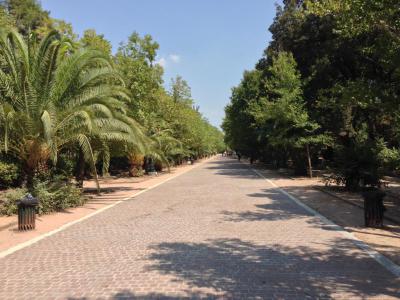
The Fields of Ares, also known as "Pedion tou Areos", is not only one of the largest public parks in Athens but also the name of the broader neighborhood. Originally designed in 1934, the park serves as a tribute to the heroes of the Greek Revolution of 1821, with twenty-one marble busts of these heroes displayed throughout.
At the main entrance, you'll find an equestrian statue of King Constantine I, erected in 1938. The park's other entrance, near Alexandras Avenue, features a memorial honoring English, Australian, and New Zealander soldiers who fought in the Battle of Greece during World War II. This memorial is crowned with a statue of the goddess Athena.
The park underwent extensive renovation and was reopened in December 2010.
Why You Should Visit:
Large, welcoming, clean, and safe park. During the summer, it serves as an oasis of cool air and humidity. Visitors can enjoy picnics, walk their dogs, attend events, or engage in activities like jogging, walking, or biking. The park also includes a children's playground, a summer cinema, and occasional markets offering food and other items.
At the main entrance, you'll find an equestrian statue of King Constantine I, erected in 1938. The park's other entrance, near Alexandras Avenue, features a memorial honoring English, Australian, and New Zealander soldiers who fought in the Battle of Greece during World War II. This memorial is crowned with a statue of the goddess Athena.
The park underwent extensive renovation and was reopened in December 2010.
Why You Should Visit:
Large, welcoming, clean, and safe park. During the summer, it serves as an oasis of cool air and humidity. Visitors can enjoy picnics, walk their dogs, attend events, or engage in activities like jogging, walking, or biking. The park also includes a children's playground, a summer cinema, and occasional markets offering food and other items.
