Custom Walk in Vienna, Austria by sekoza_68da3 created on 2025-07-09
Guide Location: Austria » Vienna
Guide Type: Custom Walk
# of Sights: 14
Tour Duration: 8 Hour(s)
Travel Distance: 21.5 Km or 13.4 Miles
Share Key: GWVGG
Guide Type: Custom Walk
# of Sights: 14
Tour Duration: 8 Hour(s)
Travel Distance: 21.5 Km or 13.4 Miles
Share Key: GWVGG
How It Works
Please retrieve this walk in the GPSmyCity app. Once done, the app will guide you from one tour stop to the next as if you had a personal tour guide. If you created the walk on this website or come to the page via a link, please follow the instructions below to retrieve the walk in the app.
Retrieve This Walk in App
Step 1. Download the app "GPSmyCity: Walks in 1K+ Cities" on Apple App Store or Google Play Store.



Step 2. In the GPSmyCity app, download(or launch) the guide "Vienna Map and Walking Tours".
Step 3. Tap the menu button located at upper right corner of the "Walks" screen and select "Retrieve custom walk". Enter the share key: GWVGG
1) Naschmarkt (must see)
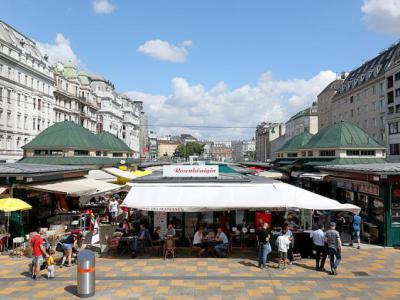
Vienna's most famous market boasts approximately 120 market stalls and restaurants, offering a diverse range of culinary delights that span from traditional Viennese dishes to Indian, Vietnamese, and Italian cuisine. The Naschmarkt has evolved into a popular gathering spot for both young and old alike. The Saturday Flea Market has even attained a cult-like status.
At the Naschmarkt, a vibrant mix of people can be seen purchasing fresh produce, vegetables, and various gourmet treats from around the world, from the early morning until sunset. In recent times, an increasing number of trendy establishments have found their place among the market's 120 or so stalls.
Do-An and Naschmarkt Deli were among the pioneering gastronomic ventures that succeeded in making the Naschmarkt an attractive destination for the young, urban crowd. On weekends, DJs provide entertainment at these locations. Consequently, numerous traditional market stalls have also garnered popularity due to their modern architectural designs.
Tewa at the Naschmarkt offers organic cuisine, while Neni serves Israeli-Oriental specialties ranging from shakshuka (eggs with vegetables) to taboulleh (a Lebanese salad). Orient & Occident, on the other hand, features Turkish home cooking prepared by the owner's wives. Umar is a haven for seafood enthusiasts and is often regarded as the best fish restaurant in Vienna.
Urbanek, initially a fine food and cheese store, doubles as a legendary wine bar-a quintessentially Viennese experience. The delicacies on offer here are simply a must-try. Kilgers am Naschmarkt also functions as a wine bar and gourmet grocery store, while the little market kitchen serves up delightful dishes. For a taste of traditional Viennese fare, Eiserne Zeit is an excellent choice; dining here is an experience in itself.
Many dining and drinking spots surround Naschmarkt. Drechsler offers all-day breakfast, Market serves Asian-inspired cuisine from morning to late night with colorful decor, and ChinaBar an der Wien serves Sichuan cuisine. Naschmarkt is vibrant, especially on Saturdays, with a diverse crowd and outdoor dining in the summer for food, drinks, and people-watching.
At the Naschmarkt, a vibrant mix of people can be seen purchasing fresh produce, vegetables, and various gourmet treats from around the world, from the early morning until sunset. In recent times, an increasing number of trendy establishments have found their place among the market's 120 or so stalls.
Do-An and Naschmarkt Deli were among the pioneering gastronomic ventures that succeeded in making the Naschmarkt an attractive destination for the young, urban crowd. On weekends, DJs provide entertainment at these locations. Consequently, numerous traditional market stalls have also garnered popularity due to their modern architectural designs.
Tewa at the Naschmarkt offers organic cuisine, while Neni serves Israeli-Oriental specialties ranging from shakshuka (eggs with vegetables) to taboulleh (a Lebanese salad). Orient & Occident, on the other hand, features Turkish home cooking prepared by the owner's wives. Umar is a haven for seafood enthusiasts and is often regarded as the best fish restaurant in Vienna.
Urbanek, initially a fine food and cheese store, doubles as a legendary wine bar-a quintessentially Viennese experience. The delicacies on offer here are simply a must-try. Kilgers am Naschmarkt also functions as a wine bar and gourmet grocery store, while the little market kitchen serves up delightful dishes. For a taste of traditional Viennese fare, Eiserne Zeit is an excellent choice; dining here is an experience in itself.
Many dining and drinking spots surround Naschmarkt. Drechsler offers all-day breakfast, Market serves Asian-inspired cuisine from morning to late night with colorful decor, and ChinaBar an der Wien serves Sichuan cuisine. Naschmarkt is vibrant, especially on Saturdays, with a diverse crowd and outdoor dining in the summer for food, drinks, and people-watching.
2) Schonbrunn Palace (must see)
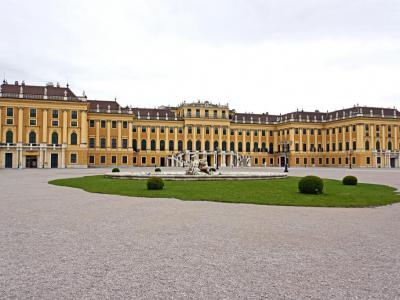
Schönbrunn Palace, also known as Schloss Schönbrunn in German, used to be the primary summer residence for the Habsburg monarchs. Its name, Schönbrunn, which means "beautiful spring" in English, comes from a well that used to be on the property and provided water to the royal court.
The palace has a rich history spanning over 300 years and reflects the changing tastes and interests of the Habsburg dynasty. It took its present form during the 1740s and 1750s under the rule of Empress Maria Theresa, who received it as a wedding gift. The neoclassical exterior we see today was the result of renovations ordered by Franz I.
Franz Joseph, the longest-reigning emperor of Austria, was born at Schönbrunn and spent most of his life there. He passed away in the palace on November 21, 1916, at the age of 86. After the Habsburg monarchy fell in November 1918, the palace became property of the newly-established Austrian Republic and was preserved as a museum.
During World War II and the Allied Occupation of Austria from 1945 to 1955, Schönbrunn was used as office space for the British Delegation to the Allied Commission for Austria and the headquarters of the British Military Garrison in Vienna. It returned to its museum status when the Austrian republic was re-established in 1955. Occasionally, it's still used for important events, like the meeting between U.S. President John F. Kennedy and Soviet Premier Nikita Khrushchev in 1961.
A significant part of the palace grounds is occupied by gardens, including the French and English gardens in the western section. You can also find the Ruin of Carthage, a Roman-style feature added in 1778, which includes a rectangular pool with a massive arch and stone fragments symbolizing the rivers Vltava and Elbe.
Schönbrunn, with its impressive Baroque architecture and gardens, earned UNESCO World Heritage status in 1996. Along with attractions like the Tiergarten Schönbrunn (Schönbrunn Zoo), Palmenhaus (a greenhouse with exotic plants), Wüstenhaus (a desert botanical exhibit), the Wagenburg (The Imperial Carriage Museum), and the Schoenbrunn Palace Concerts (an annual summer concert series on the grounds), the entire complex is a vital part of Vienna's architectural, cultural, and historical heritage and draws over five million visitors each year.
The palace has a rich history spanning over 300 years and reflects the changing tastes and interests of the Habsburg dynasty. It took its present form during the 1740s and 1750s under the rule of Empress Maria Theresa, who received it as a wedding gift. The neoclassical exterior we see today was the result of renovations ordered by Franz I.
Franz Joseph, the longest-reigning emperor of Austria, was born at Schönbrunn and spent most of his life there. He passed away in the palace on November 21, 1916, at the age of 86. After the Habsburg monarchy fell in November 1918, the palace became property of the newly-established Austrian Republic and was preserved as a museum.
During World War II and the Allied Occupation of Austria from 1945 to 1955, Schönbrunn was used as office space for the British Delegation to the Allied Commission for Austria and the headquarters of the British Military Garrison in Vienna. It returned to its museum status when the Austrian republic was re-established in 1955. Occasionally, it's still used for important events, like the meeting between U.S. President John F. Kennedy and Soviet Premier Nikita Khrushchev in 1961.
A significant part of the palace grounds is occupied by gardens, including the French and English gardens in the western section. You can also find the Ruin of Carthage, a Roman-style feature added in 1778, which includes a rectangular pool with a massive arch and stone fragments symbolizing the rivers Vltava and Elbe.
Schönbrunn, with its impressive Baroque architecture and gardens, earned UNESCO World Heritage status in 1996. Along with attractions like the Tiergarten Schönbrunn (Schönbrunn Zoo), Palmenhaus (a greenhouse with exotic plants), Wüstenhaus (a desert botanical exhibit), the Wagenburg (The Imperial Carriage Museum), and the Schoenbrunn Palace Concerts (an annual summer concert series on the grounds), the entire complex is a vital part of Vienna's architectural, cultural, and historical heritage and draws over five million visitors each year.
3) Mozart Monument
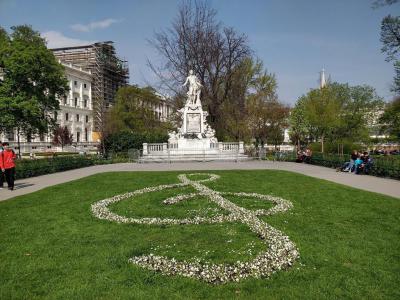
In the quiet oasis of Burggarten stands an elegant statue of Mozart, moved here from the Albertinaplatz after the war, when the city's charred ruins were being rebuilt. This intimate place is an excellent spot for Mozart lovers to have a photo with the 7.5-meter-high statue made by architect Karl König (1841–1915) and sculptor Viktor Tilgner (1844–96) which features Mozart with a music stand. The putti on the socle, representing the power of Mozart's music, are stylistically suggestive of Art Nouveau.
On the front, a relief refers to two scenes of Mozart's opera "Don Giovanni", while above it are a stone keyboard, masks, instruments and music-making cherubs. The rear side relief shows the six-year-old prodigy at the piano, with beloved sister Maria Anna ("Nannerl") and father Leopold by his side. Unfortunately, the siblings' partnership would experience a sudden and severe fracture in 1769, when Nannerl turned 18, meaning she was of marriageable age, which, as far as father Leopold was concerned, signaled the end of her performing career. As father and son continued to travel Europe and play to distinguished audiences, Nannerl remained at home with her mother.
From spring to autumn, the statue is surrounded by a small manicured lawn with a trebleclef-shaped flower bed. The steeples of Saint Stephen's and the Augustinerkirche, old trees and blooming shrubs add to the atmosphere. Noteworthy, also, is the nice sculpture of famous philosopher Goethe in the same area.
On the front, a relief refers to two scenes of Mozart's opera "Don Giovanni", while above it are a stone keyboard, masks, instruments and music-making cherubs. The rear side relief shows the six-year-old prodigy at the piano, with beloved sister Maria Anna ("Nannerl") and father Leopold by his side. Unfortunately, the siblings' partnership would experience a sudden and severe fracture in 1769, when Nannerl turned 18, meaning she was of marriageable age, which, as far as father Leopold was concerned, signaled the end of her performing career. As father and son continued to travel Europe and play to distinguished audiences, Nannerl remained at home with her mother.
From spring to autumn, the statue is surrounded by a small manicured lawn with a trebleclef-shaped flower bed. The steeples of Saint Stephen's and the Augustinerkirche, old trees and blooming shrubs add to the atmosphere. Noteworthy, also, is the nice sculpture of famous philosopher Goethe in the same area.
4) Naturhistorisches Museum (must see)
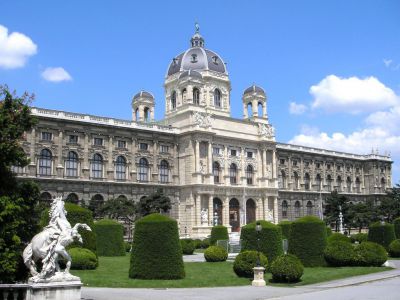
The Naturhistorisches Museum is a prominent component of the extensive collection of exhibitions spread throughout Vienna. The current facility occupies an impressive 90,000 square feet of space. In recent years, they've developed software that allows visitors to explore parts of the museum virtually.
This location enjoys global recognition, as it houses one of the most significant collections of natural history artifacts worldwide. Its inception dates back more than 250 years, resulting in a staggering collection of over 20 million noteworthy specimens.
The central edifice of the museum is an ancient palace, originally serving as the inaugural museum structure. It officially opened its doors in 1869, operating under the name "Imperial Natural Museum." Today, many of the initial exhibits have been relocated to various sections within the broader Wien Museum of Vienna.
Visitors can encounter exceedingly rare artifacts here. For instance, the Venus of Willendorf, an object that boasts an age of more than 25,000 years, is on display. Additionally, you can marvel at a dinosaur skeleton, over 250 million years old, showcased on the museum's floors. In total, you can leisurely explore 39 different sections within the museum.
Why You Should Visit:
Incredible because of the upgrading of many exhibits, which brilliantly combine the old (showcases of artifacts from the late 1880s in their original cases) with the new (an amazing exhibit room of meteorites with interactive cases or an exhibit on our planet which is incredibly interesting and educational).
Almost everything is in English as well as in German. The museum has also gone out of its way to cater to kids, so a great place for the family.
Tip:
It is strongly recommended to take an audio guide and learn more about the most important collection items.
If you are a student, make sure to bring your student card to capitalize on the discount they offer.
This location enjoys global recognition, as it houses one of the most significant collections of natural history artifacts worldwide. Its inception dates back more than 250 years, resulting in a staggering collection of over 20 million noteworthy specimens.
The central edifice of the museum is an ancient palace, originally serving as the inaugural museum structure. It officially opened its doors in 1869, operating under the name "Imperial Natural Museum." Today, many of the initial exhibits have been relocated to various sections within the broader Wien Museum of Vienna.
Visitors can encounter exceedingly rare artifacts here. For instance, the Venus of Willendorf, an object that boasts an age of more than 25,000 years, is on display. Additionally, you can marvel at a dinosaur skeleton, over 250 million years old, showcased on the museum's floors. In total, you can leisurely explore 39 different sections within the museum.
Why You Should Visit:
Incredible because of the upgrading of many exhibits, which brilliantly combine the old (showcases of artifacts from the late 1880s in their original cases) with the new (an amazing exhibit room of meteorites with interactive cases or an exhibit on our planet which is incredibly interesting and educational).
Almost everything is in English as well as in German. The museum has also gone out of its way to cater to kids, so a great place for the family.
Tip:
It is strongly recommended to take an audio guide and learn more about the most important collection items.
If you are a student, make sure to bring your student card to capitalize on the discount they offer.
5) Rathaus (City Hall) (must see)
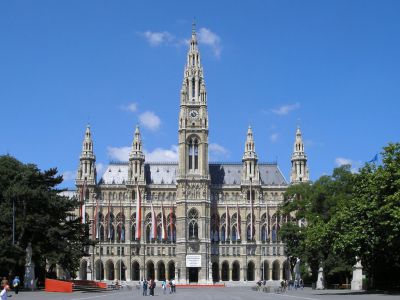
Vienna City Hall-a place where both the municipal government and the legislative assembly get down to business. By no means a dull office block, this neo-Gothic showstopper was built between 1872 and 1883 by architect Friedrich von Schmidt, who, rather humbly, now stands in a statue form just behind the building, keeping an eye on things from his very own square.
Drawing inspiration from the medieval architecture of Flanders and Brabant, the City Hall flaunts five towers like a crown. The tallest of them pierces the skyline at 98 meters, topped with the "City Hall Man"-not a superhero, but close... Clad in armor inspired by Emperor Maximilian I, this statue has been watching over Vienna since 1882 and has become something of a local mascot.
Inside, the building doesn’t just rest on its aesthetic laurels. There's the "City Hall Cellar"-a grand baroque dining hall where you can dig into proper Viennese culinary classics without a hint of modern guilt. “Schnitzel under chandeliers? Yes, please...”
The façade is a sculptural buffet in its own right, brimming with emperors, virtues like Power and Justice, and even good ol’ Vindobona, the Roman forebear of Vienna, lounging surrounded by heraldic flair. Think of it as Vienna’s resume carved in stone.
And on the flanks is a lineup of statues dedicated to trades and professions-because in this city, bakers, builders, and bookbinders all get a standing ovation in stone!
Now, if you're feeling adventurous (and are in good shape), brave the 331 steps up to the central tower that’s worth every groan from your knees. Your reward will be the sweeping views of Vienna in all its baroque-meets-modern glory-plus bragging rights for conquering the city one stair at a time. Trust us-Vienna looks even better from above.
Tip:
For the inside scoop, join the free German-language guided tour on Mondays, Wednesdays, and Fridays at 1 pm. Not fluent in German? No problem-audio guides are available in multiple languages. Just be ready to temporarily part ways with your passport. The view-and the tales-are absolutely worth it.
Drawing inspiration from the medieval architecture of Flanders and Brabant, the City Hall flaunts five towers like a crown. The tallest of them pierces the skyline at 98 meters, topped with the "City Hall Man"-not a superhero, but close... Clad in armor inspired by Emperor Maximilian I, this statue has been watching over Vienna since 1882 and has become something of a local mascot.
Inside, the building doesn’t just rest on its aesthetic laurels. There's the "City Hall Cellar"-a grand baroque dining hall where you can dig into proper Viennese culinary classics without a hint of modern guilt. “Schnitzel under chandeliers? Yes, please...”
The façade is a sculptural buffet in its own right, brimming with emperors, virtues like Power and Justice, and even good ol’ Vindobona, the Roman forebear of Vienna, lounging surrounded by heraldic flair. Think of it as Vienna’s resume carved in stone.
And on the flanks is a lineup of statues dedicated to trades and professions-because in this city, bakers, builders, and bookbinders all get a standing ovation in stone!
Now, if you're feeling adventurous (and are in good shape), brave the 331 steps up to the central tower that’s worth every groan from your knees. Your reward will be the sweeping views of Vienna in all its baroque-meets-modern glory-plus bragging rights for conquering the city one stair at a time. Trust us-Vienna looks even better from above.
Tip:
For the inside scoop, join the free German-language guided tour on Mondays, Wednesdays, and Fridays at 1 pm. Not fluent in German? No problem-audio guides are available in multiple languages. Just be ready to temporarily part ways with your passport. The view-and the tales-are absolutely worth it.
6) Cafe Central (must see)
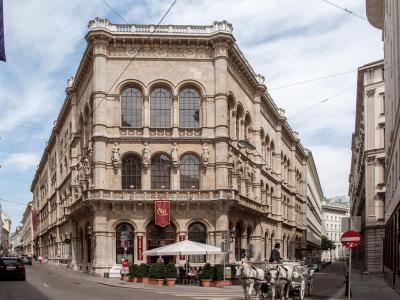
Café Central stands as a quintessential Viennese coffeehouse, nestled on the ground floor of the Palais Ferstel, formerly known as the Bank and Stockmarket Building, designed by architect Heinrich von Ferstel.
Established back in 1876, this café gained significant prominence during the late 19th century, evolving into a pivotal hub for Vienna's intellectual elite. Distinguished regulars included luminaries such as Peter Altenberg, Theodor Herzl, Alfred Adler, Egon Friedell, Hugo von Hofmannsthal, Anton Kuh, Adolf Loos, Leo Perutz, Robert Musil, Stefan Zweig, Alfred Polgar, Adolf Hitler, and Leon Trotsky. Remarkably, in January 1913 alone, notable figures like Josip Broz Tito, Sigmund Freud, and the ever-present Trotsky frequented this establishment.
It was often colloquially referred to as the "Chess school" (Die Schachhochschule), owing to the prevalence of chess enthusiasts who gathered on the first floor to engage in their games. The Vienna Circle, a group of logical positivists, convened numerous meetings here both before and after World War I.
One intriguing anecdote recalls a conversation between Victor Adler and Count Berchtold, the foreign minister of Austria-Hungary, where Adler warned that war might incite revolution in Russia, if not within the Habsburg monarchy itself. In response, Berchtold facetiously queried, "And who will lead this revolution? Perhaps Mr. Bronstein (Leon Trotsky) sitting over there at the Cafe Central?"
Following the conclusion of World War II, the café ceased its operations. However, in 1975, the Palais Ferstel underwent a renovation, and Café Central was resurrected in a different part of the building. Subsequently, in 1986, it underwent another comprehensive renovation.
Today, Café Central remains a cherished tourist attraction and a popular coffeehouse, revered for its enduring place in literary history.
Established back in 1876, this café gained significant prominence during the late 19th century, evolving into a pivotal hub for Vienna's intellectual elite. Distinguished regulars included luminaries such as Peter Altenberg, Theodor Herzl, Alfred Adler, Egon Friedell, Hugo von Hofmannsthal, Anton Kuh, Adolf Loos, Leo Perutz, Robert Musil, Stefan Zweig, Alfred Polgar, Adolf Hitler, and Leon Trotsky. Remarkably, in January 1913 alone, notable figures like Josip Broz Tito, Sigmund Freud, and the ever-present Trotsky frequented this establishment.
It was often colloquially referred to as the "Chess school" (Die Schachhochschule), owing to the prevalence of chess enthusiasts who gathered on the first floor to engage in their games. The Vienna Circle, a group of logical positivists, convened numerous meetings here both before and after World War I.
One intriguing anecdote recalls a conversation between Victor Adler and Count Berchtold, the foreign minister of Austria-Hungary, where Adler warned that war might incite revolution in Russia, if not within the Habsburg monarchy itself. In response, Berchtold facetiously queried, "And who will lead this revolution? Perhaps Mr. Bronstein (Leon Trotsky) sitting over there at the Cafe Central?"
Following the conclusion of World War II, the café ceased its operations. However, in 1975, the Palais Ferstel underwent a renovation, and Café Central was resurrected in a different part of the building. Subsequently, in 1986, it underwent another comprehensive renovation.
Today, Café Central remains a cherished tourist attraction and a popular coffeehouse, revered for its enduring place in literary history.
7) Hofburg Imperial Palace (must see)
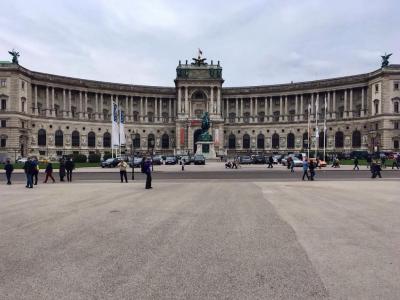
The Hofburg-or as it’s known in more regal circles, the “Castle of the Court”-is a sprawling architectural beast of a palace, a centuries-old flex of Habsburg power, pageantry, and perfectly symmetrical courtyards.
It all began back in 1279, when the Dukes of Austria needed a nice little place to call home. Fast forward a few empires and renovations later, and you've got the winter playground of the Holy Roman Emperors (until 1806) and the Emperors of Austria (until 1918). Today, the palace has swapped imperial intrigue for political paperwork-it’s now the official residence of the Austrian President and hosts the headquarters of the OSCE. Less crown, more conference...
Now, brace yourself: the Hofburg covers more than 240,000 square meters of space, comprising 18 wings, 19 courtyards, and a whopping 2,600 rooms. That’s not really a palace-it’s a small city. It houses everything from the elegant Amalienburg and Albertina museum, to the Imperial Chapel, the Court Library, the Treasure Chamber, and even the Spanish Riding School, where horses have more training than most people’s resumes.
The Swiss Wing is one of the oldest parts of the palace, dating back to the 13th century-yes, it’s older than your great-great-anything. Emperor Ferdinand I added the Swiss Gate in the 1550s, with his personal insignia on full display, just in case anyone forgot who was in charge.
The 17th-century Leopoldine Wing, built and later re-styled in Late Renaissance flair, adds even more imperial swagger, while the Court Library is basically a Baroque fever dream-with its majestic Prunksaal hall, frescoed ceilings, and emperors carved in stone, looking as dramatic as ever.
And it doesn’t stop there: the Winter Riding School, the Imperial Chancellery Wing (once home to Napoleon himself), and the elegant Redoute Wing-a former opera house-round out the complex. Even the Imperial Mews got a glow-up and now host those classy Lipizzaner horses.
Tip:
On Sundays, pop into the Imperial Chapel for Mass and catch the Vienna Boys Choir-angelic voices echoing through centuries of history. Because when in Vienna, you don’t just visit a palace… you enter a whole imperial universe.
It all began back in 1279, when the Dukes of Austria needed a nice little place to call home. Fast forward a few empires and renovations later, and you've got the winter playground of the Holy Roman Emperors (until 1806) and the Emperors of Austria (until 1918). Today, the palace has swapped imperial intrigue for political paperwork-it’s now the official residence of the Austrian President and hosts the headquarters of the OSCE. Less crown, more conference...
Now, brace yourself: the Hofburg covers more than 240,000 square meters of space, comprising 18 wings, 19 courtyards, and a whopping 2,600 rooms. That’s not really a palace-it’s a small city. It houses everything from the elegant Amalienburg and Albertina museum, to the Imperial Chapel, the Court Library, the Treasure Chamber, and even the Spanish Riding School, where horses have more training than most people’s resumes.
The Swiss Wing is one of the oldest parts of the palace, dating back to the 13th century-yes, it’s older than your great-great-anything. Emperor Ferdinand I added the Swiss Gate in the 1550s, with his personal insignia on full display, just in case anyone forgot who was in charge.
The 17th-century Leopoldine Wing, built and later re-styled in Late Renaissance flair, adds even more imperial swagger, while the Court Library is basically a Baroque fever dream-with its majestic Prunksaal hall, frescoed ceilings, and emperors carved in stone, looking as dramatic as ever.
And it doesn’t stop there: the Winter Riding School, the Imperial Chancellery Wing (once home to Napoleon himself), and the elegant Redoute Wing-a former opera house-round out the complex. Even the Imperial Mews got a glow-up and now host those classy Lipizzaner horses.
Tip:
On Sundays, pop into the Imperial Chapel for Mass and catch the Vienna Boys Choir-angelic voices echoing through centuries of history. Because when in Vienna, you don’t just visit a palace… you enter a whole imperial universe.

8) Imperial Crypt
Just beneath Vienna’s bustling New Market square-right next to the Hofburg Palace and well within ghost-whispering distance of history-you’ll find the Imperial Crypt, also known as the Capuchin Crypt. Sounds mysterious? Oh, it is indeed. This underground vault has been hosting the who’s-who of the Habsburg dynasty since 1633, and let's just say... the guest list is pretty exclusive.
The idea for this eternal VIP lounge came from Anna of Tyrol, wife of Emperor Matthias. In a rather poetic twist, she signed off on the funds in her will in 1617 and died a year later, followed promptly by her husband. Talk about a couple with a plan...
Formally consecrated in 1632, the crypt now holds 145 Habsburgs, including 12 emperors and 18 empresses. And for those who preferred a more minimalist approach to eternal rest, there are also heart urns-because why be buried once when you can be distributed like royalty?
Inside, you’ll find 107 ornate metal sarcophagi ranging from “modestly morbid” to “rococo realness.” It’s part cemetery, part sculpture gallery, and part history lesson with a Gothic flourish.
Come to think of it, this isn’t just a tomb. It’s the final chapter of an empire written in bronze and baroque. It’s where Vienna whispers her imperial secrets. And let’s be honest-what’s a trip to Vienna without a little royal drama from six feet under?
The idea for this eternal VIP lounge came from Anna of Tyrol, wife of Emperor Matthias. In a rather poetic twist, she signed off on the funds in her will in 1617 and died a year later, followed promptly by her husband. Talk about a couple with a plan...
Formally consecrated in 1632, the crypt now holds 145 Habsburgs, including 12 emperors and 18 empresses. And for those who preferred a more minimalist approach to eternal rest, there are also heart urns-because why be buried once when you can be distributed like royalty?
Inside, you’ll find 107 ornate metal sarcophagi ranging from “modestly morbid” to “rococo realness.” It’s part cemetery, part sculpture gallery, and part history lesson with a Gothic flourish.
Come to think of it, this isn’t just a tomb. It’s the final chapter of an empire written in bronze and baroque. It’s where Vienna whispers her imperial secrets. And let’s be honest-what’s a trip to Vienna without a little royal drama from six feet under?
9) Stephansplatz (St. Stephen's Square)
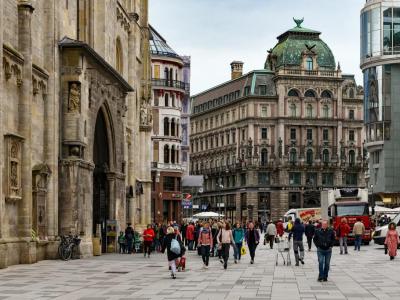
St. Stephen's Square-Vienna’s beating heart-is the kind of square that doesn’t just mark the center of the city, but commands it with flair.
Named after the towering St. Stephen’s Cathedral, a Gothic powerhouse of stone and spire, this cathedral is not merely Vienna’s main church-it’s one of the tallest in the world. Basically, if you're anywhere nearby and don’t see it, check your glasses...
Back in the day-before the 20th century, that is-this square and the nearby Stock-im-Eisen-Platz were awkward neighbors separated by a row of buildings. Those were eventually knocked down, and voilà, a grand unification. Now, St. Stephen's Square graciously includes the whole area, like a generous host absorbing the entire block party.
To the west and south, the scene gets posh with Graben Street (which literally translates as "the Ditch," though it’s far more champagne than shovel these days) and Carinthian Street, named so after the Carinthia region of Austria, but now better known for shopping that could make your wallet nervous.
And then there’s Haas Haus, lounging across from St. Stephen’s Cathedral like the cool, modern cousin at a family reunion. Designed by Hans Hollein and made of glass, steel, and unapologetic modernism, it was once the source of much civic side-eye. Now it’s celebrated as the poster child for architectural harmony: medieval meets mirror-polished millennium.
While this square may not be the best location for fine dining-unless your idea of haute cuisine is a schnitzel sandwich-sitting in one of the local cafés provides you with the front row for the city’s greatest spectacle: the people of Vienna. Locals, tourists, street performers, and the occasional opera enthusiast all sweep through under the cathedral’s watchful gaze.
So pull up a chair, order something strong, and take it all in-because this is more than just a square. It’s Vienna condensed...
Tip:
Stroll around the cathedral’s side and you’ll find its miniature version. It’s like someone said, “Let’s make it travel-sized,” and it’s oddly satisfying. Great for photos, or just for pretending you’re a giant for a moment.
Named after the towering St. Stephen’s Cathedral, a Gothic powerhouse of stone and spire, this cathedral is not merely Vienna’s main church-it’s one of the tallest in the world. Basically, if you're anywhere nearby and don’t see it, check your glasses...
Back in the day-before the 20th century, that is-this square and the nearby Stock-im-Eisen-Platz were awkward neighbors separated by a row of buildings. Those were eventually knocked down, and voilà, a grand unification. Now, St. Stephen's Square graciously includes the whole area, like a generous host absorbing the entire block party.
To the west and south, the scene gets posh with Graben Street (which literally translates as "the Ditch," though it’s far more champagne than shovel these days) and Carinthian Street, named so after the Carinthia region of Austria, but now better known for shopping that could make your wallet nervous.
And then there’s Haas Haus, lounging across from St. Stephen’s Cathedral like the cool, modern cousin at a family reunion. Designed by Hans Hollein and made of glass, steel, and unapologetic modernism, it was once the source of much civic side-eye. Now it’s celebrated as the poster child for architectural harmony: medieval meets mirror-polished millennium.
While this square may not be the best location for fine dining-unless your idea of haute cuisine is a schnitzel sandwich-sitting in one of the local cafés provides you with the front row for the city’s greatest spectacle: the people of Vienna. Locals, tourists, street performers, and the occasional opera enthusiast all sweep through under the cathedral’s watchful gaze.
So pull up a chair, order something strong, and take it all in-because this is more than just a square. It’s Vienna condensed...
Tip:
Stroll around the cathedral’s side and you’ll find its miniature version. It’s like someone said, “Let’s make it travel-sized,” and it’s oddly satisfying. Great for photos, or just for pretending you’re a giant for a moment.
10) Stephansdom (St. Stephen's Cathedral) (must see)
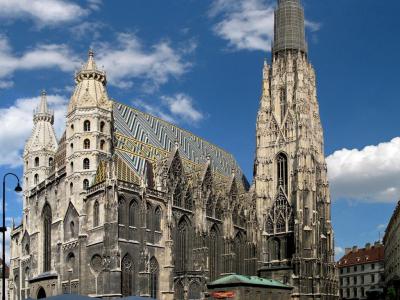
In a city where “stunning architecture” is practically the dress code, Saint Stephen’s Cathedral still manages to steal the spotlight-and possibly your neck muscles too, as you crane to admire that towering spire. Known locally as Stephansdom, this Gothic-Romanesque powerhouse has stood at the heart of Vienna’s skyline and soul since 1147, rising on the bones of two earlier churches like the overachiever it is.
In the 14th century, Duke Rudolf IV decided the cathedral needed a serious makeover. The idea worked. As a result, today we have the building stretching 107 meters long, 40 meters wide, and topped by the South Tower-or “Steffl,” if you're on nickname terms-a 136-meter-high feat of medieval determination that took 65 years to complete. It even moonlighted as a lookout post during Vienna’s sieges, complete with a live-in watchman until 1955. One heck of a long shift...
Meanwhile, the North Tower never quite hit its growth spurt. It stalled at 68 meters and got a Renaissance hat in 1578-basically the architectural equivalent of saying “this is fine” and walking away.
But the real showstopper here is the roof. A kaleidoscope of 230,000 glazed tiles arranged into imperial emblems like the double-headed eagle of the Habsburgs and the crests of Vienna and Austria. After being torched in World War II, it was rebuilt with steel instead of wood-600 metric tons of it-making the new roof not just durable, but also self-cleaning. Because even cathedrals love low-maintenance routines...
Inside, things get just as grand. There’s Pummerin, Europe’s second-largest swinging bell, forged from Turkish cannons in 1711 and recast in 1951-because nothing says peace like a bell made from wartime leftovers. Oh, and she lives in the North Tower, ringing out for special moments and daily rituals.
Musical legends haunt these hallowed halls too: Beethoven figured out he was deaf here (tragic), Haydn sang here as a kid (sweet), Strauss got married here-twice (bold), and Mozart? He got married and buried here. Yes, Saint Stephen's is basically the VIP lounge of Viennese music history.
Inside, you’ll find 18 altars, miraculous icons, bone relics-including those of Saint Valentine-and a maze of crypts holding 11,000 souls, including Habsburg royalty.
Tip:
Do a lap around the outside. Gargoyles, engravings, medieval graffiti-you never know what stories the stones will whisper...
In the 14th century, Duke Rudolf IV decided the cathedral needed a serious makeover. The idea worked. As a result, today we have the building stretching 107 meters long, 40 meters wide, and topped by the South Tower-or “Steffl,” if you're on nickname terms-a 136-meter-high feat of medieval determination that took 65 years to complete. It even moonlighted as a lookout post during Vienna’s sieges, complete with a live-in watchman until 1955. One heck of a long shift...
Meanwhile, the North Tower never quite hit its growth spurt. It stalled at 68 meters and got a Renaissance hat in 1578-basically the architectural equivalent of saying “this is fine” and walking away.
But the real showstopper here is the roof. A kaleidoscope of 230,000 glazed tiles arranged into imperial emblems like the double-headed eagle of the Habsburgs and the crests of Vienna and Austria. After being torched in World War II, it was rebuilt with steel instead of wood-600 metric tons of it-making the new roof not just durable, but also self-cleaning. Because even cathedrals love low-maintenance routines...
Inside, things get just as grand. There’s Pummerin, Europe’s second-largest swinging bell, forged from Turkish cannons in 1711 and recast in 1951-because nothing says peace like a bell made from wartime leftovers. Oh, and she lives in the North Tower, ringing out for special moments and daily rituals.
Musical legends haunt these hallowed halls too: Beethoven figured out he was deaf here (tragic), Haydn sang here as a kid (sweet), Strauss got married here-twice (bold), and Mozart? He got married and buried here. Yes, Saint Stephen's is basically the VIP lounge of Viennese music history.
Inside, you’ll find 18 altars, miraculous icons, bone relics-including those of Saint Valentine-and a maze of crypts holding 11,000 souls, including Habsburg royalty.
Tip:
Do a lap around the outside. Gargoyles, engravings, medieval graffiti-you never know what stories the stones will whisper...
11) Mozarthaus (Mozart's Former Residence)
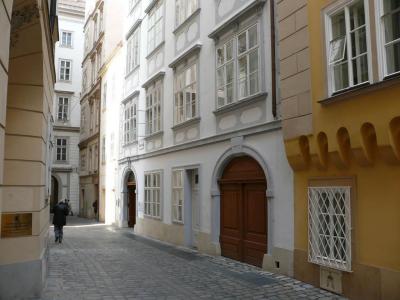
Out of the eleven places Mozart once called home in Vienna, only one is still standing-and lucky for us, it’s the Mozarthaus at Domgasse 5. Restored in 2006 to mark what would’ve been his 250th birthday, this is where the maestro supposedly had his happiest-and most productive-years. Think: Haydn-dedicated string quartets, a sprinkling of piano concertos, and, of course, The Marriage of Figaro and Don Giovanni. Not a bad output for one address...
Sadly, like many good things in life, the golden days didn’t last. Financial woes eventually pushed Mozart out to the suburbs-a polite way of saying, “the rent was too damn high.”
Now, before you get too excited: no original furniture here, folks. But that’s actually a plus-because instead of staring at dusty chairs, you’ll dive straight into the brain of a genius. The museum lets you imagine the space as it once was: spacious, elegant, and echoing with arpeggios. And yes, they do host concerts and even a few activities to keep the little ones from turning feral.
Here’s a pro tip: start at the top. Take the lift to the third floor and work your way down. Begin with Mozart the wonder-child, dazzling 18th-century Europe. Then descend into the delightful chaos of his Vienna years, peppered with gambling, womanizing, and a jaw-dropping knack for draining bank accounts. The second floor gets theatrical, literally, as you explore his operas-some in surround sound. And the first floor is the main event: the very rooms where musical magic once happened.
And in case you wonder, why go? Because nowhere else did Mozart compose more music, more joy, or more drama. It’s your chance to walk the parquet path of a legend, right in the heart of Vienna.
Bonus tip: Want to save a few Euros? Combine your ticket with a visit to Haus der Musik or the Dom Museum Wien. Mozart would approve-he loved a good deal...
Sadly, like many good things in life, the golden days didn’t last. Financial woes eventually pushed Mozart out to the suburbs-a polite way of saying, “the rent was too damn high.”
Now, before you get too excited: no original furniture here, folks. But that’s actually a plus-because instead of staring at dusty chairs, you’ll dive straight into the brain of a genius. The museum lets you imagine the space as it once was: spacious, elegant, and echoing with arpeggios. And yes, they do host concerts and even a few activities to keep the little ones from turning feral.
Here’s a pro tip: start at the top. Take the lift to the third floor and work your way down. Begin with Mozart the wonder-child, dazzling 18th-century Europe. Then descend into the delightful chaos of his Vienna years, peppered with gambling, womanizing, and a jaw-dropping knack for draining bank accounts. The second floor gets theatrical, literally, as you explore his operas-some in surround sound. And the first floor is the main event: the very rooms where musical magic once happened.
And in case you wonder, why go? Because nowhere else did Mozart compose more music, more joy, or more drama. It’s your chance to walk the parquet path of a legend, right in the heart of Vienna.
Bonus tip: Want to save a few Euros? Combine your ticket with a visit to Haus der Musik or the Dom Museum Wien. Mozart would approve-he loved a good deal...
12) The Prater (must see)
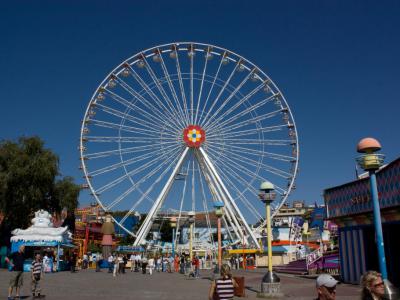
Situated in Vienna's Leopoldstadt district, Prater Park is a captivating destination boasting approximately 250 attractions. One of its standout features is the Giant Ferris Wheel, known as the Wiener Riesenrad, which elevates visitors 60 meters above the ground, providing breathtaking vistas. Erected in 1897, this iconic wheel has been delighting both locals and tourists for over a century.
For those seeking a more exhilarating experience than a leisurely ride, the Prater Tower is an option. This ride offers similarly stunning city views at a height of 117 meters, all while spinning at a speed of 61 kilometers per hour. Additionally, the park offers a planetarium for stargazing enthusiasts and a variety of rides to entertain children.
Prater Park boasts an impressive array of over 60 food establishments, catering to various tastes and preferences. Whether you desire a simple cup of coffee with a pastry and a panoramic view of passersby or a more substantial culinary experience, there's something to satisfy your cravings. After indulging in these delectable treats, consider taking a leisurely walk in the Green Prater. The Hauptallee, a 4.5-kilometer-long, tree-lined boulevard, provides a picturesque setting for walking, biking, skating, or even enjoying a carriage ride. It features more than 2,000 trees, and bicycles and horses are available for rent. Additionally, on the lake, you can rent boats, and there's even a golf course for those interested.
Plan on dedicating at least half a day to explore the Prater, although it's entirely possible to spend an entire day here and still not see everything it has to offer. Occasionally, themed events take place, but even without a special occasion, the rides and activities at Prater Park are worth experiencing. Entry is free, and you only pay for the rides and food if you choose to partake. Alternatively, you can simply enter and take a leisurely stroll around the park at no cost.
For those seeking a more exhilarating experience than a leisurely ride, the Prater Tower is an option. This ride offers similarly stunning city views at a height of 117 meters, all while spinning at a speed of 61 kilometers per hour. Additionally, the park offers a planetarium for stargazing enthusiasts and a variety of rides to entertain children.
Prater Park boasts an impressive array of over 60 food establishments, catering to various tastes and preferences. Whether you desire a simple cup of coffee with a pastry and a panoramic view of passersby or a more substantial culinary experience, there's something to satisfy your cravings. After indulging in these delectable treats, consider taking a leisurely walk in the Green Prater. The Hauptallee, a 4.5-kilometer-long, tree-lined boulevard, provides a picturesque setting for walking, biking, skating, or even enjoying a carriage ride. It features more than 2,000 trees, and bicycles and horses are available for rent. Additionally, on the lake, you can rent boats, and there's even a golf course for those interested.
Plan on dedicating at least half a day to explore the Prater, although it's entirely possible to spend an entire day here and still not see everything it has to offer. Occasionally, themed events take place, but even without a special occasion, the rides and activities at Prater Park are worth experiencing. Entry is free, and you only pay for the rides and food if you choose to partake. Alternatively, you can simply enter and take a leisurely stroll around the park at no cost.
13) Hundertwasser House
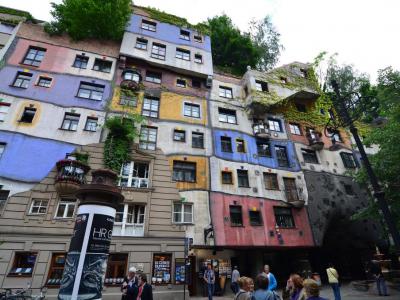
A relatively recent addition to Vienna's architectural heritage, the Hundertwasser House is a great example of 20th-century urban experimentation. If the surrounding architecture whispers "classical elegance," this one belts out "psychedelic daydream" through a megaphone!!!
Sitting as an antithetical statement about what architecture can be-a sort of riotous rebuttal to boring buildings- this gloriously eclectic (if not, say, surreal) block of flats explodes with color and curve. From a distance, it looks almost like a lovechild of Gaudí, a Lego set, and a fever dream combined. Consisting of a frenzy of oriel windows, loggias, gilded onion domes, ceramic columns, glass sparkles, roof gardens-and yes, even a salvaged slice of what stood here before 1983-it’s part sculpture, part protest, and part urban jungle. A rainbow having a rave, basically...
Designed in 1985 by the ever-unconventional, avant-garde artist Friedensreich Hundertwasser, this idiosyncratic building was his answer to what he perceived as the rather soulless modern concrete monotony sprouting across Vienna's suburbs. Further to his credit, and just to make sure his message landed, Hundertwasser refused payment for his work, declaring that the investment was worth it to "prevent something ugly from going up in its place". Mission absolutely accomplished...
So, whenever you're in Vienna, make sure to swing by this photogenic rebel-pure architectural exuberance, gleefully thumbing its nose at the capital’s polished palaces and baroque facades. Because your eyes deserve a holiday too...
Tip:
While the building itself is residential-so no snooping inside is possible-across the street you’ll find Hundertwasser Village. Open daily, from 9 am to 6 pm, this is a quirky marketplace-turned-art piece with shops, cafés, and enough eccentricity to keep your camera and curiosity well-fed.
Sitting as an antithetical statement about what architecture can be-a sort of riotous rebuttal to boring buildings- this gloriously eclectic (if not, say, surreal) block of flats explodes with color and curve. From a distance, it looks almost like a lovechild of Gaudí, a Lego set, and a fever dream combined. Consisting of a frenzy of oriel windows, loggias, gilded onion domes, ceramic columns, glass sparkles, roof gardens-and yes, even a salvaged slice of what stood here before 1983-it’s part sculpture, part protest, and part urban jungle. A rainbow having a rave, basically...
Designed in 1985 by the ever-unconventional, avant-garde artist Friedensreich Hundertwasser, this idiosyncratic building was his answer to what he perceived as the rather soulless modern concrete monotony sprouting across Vienna's suburbs. Further to his credit, and just to make sure his message landed, Hundertwasser refused payment for his work, declaring that the investment was worth it to "prevent something ugly from going up in its place". Mission absolutely accomplished...
So, whenever you're in Vienna, make sure to swing by this photogenic rebel-pure architectural exuberance, gleefully thumbing its nose at the capital’s polished palaces and baroque facades. Because your eyes deserve a holiday too...
Tip:
While the building itself is residential-so no snooping inside is possible-across the street you’ll find Hundertwasser Village. Open daily, from 9 am to 6 pm, this is a quirky marketplace-turned-art piece with shops, cafés, and enough eccentricity to keep your camera and curiosity well-fed.
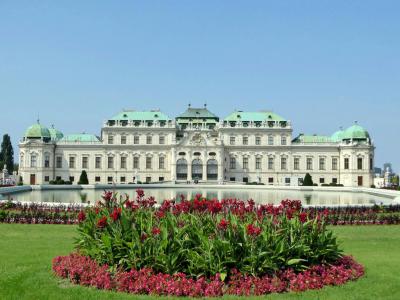
14) Belvedere Palace (must see)
Originally designed as a summer residence for Prince Eugene of Savoy, who apparently felt a standard palace simply wouldn't cut it, this lavish complex was built after Vienna stopped fending off Ottoman invasions and started flexing its imperial muscles in stone, stucco, and cascading fountains.
The Belvedere isn’t just one palace-it’s a full-on ensemble performance: Upper and Lower Belvedere, an Orangery for your fancy citrus needs, and palace stables fit for horses with noble bloodlines. All of it is wrapped in a park so meticulously designed, you’d think every hedge was hand-trimmed by a powdered wig.
Construction kicked off in 1712 with the Lower Belvedere, but things really got dramatic in 1717 when the Upper Belvedere was added-basically a Baroque ballroom with serious diplomatic swagger. Frescoes, gilded ceilings, and artwork by the who’s who of 18th-century painters helped Eugene throw parties that whispered, “empire” with every flute of champagne.
After Prince Eugene passed in 1736, the place got a second act as a Habsburg hangout, hosting royal refugees escaping the French Revolution and later transforming into one of Europe’s earliest public museums, thanks to Maria Theresa and Joseph II.
Fast forward to the 20th century: the Belvedere went national after World War I, becoming the proud home of Austria’s classical and modern art collections. World War II wasn’t kind to it-bombings left their mark-but meticulous restoration from 1945 through the '90s brought the glory back, detail by plastered detail.
Today, the Belvedere is a major world-class museum. Its galleries span centuries, from medieval devotionals to cutting-edge modernism. And yes, Gustav Klimt’s "The Kiss" lives here too, alongside his equally iconic "Judith." You’ll also find a respectable crowd of French Impressionists and Biedermeier charmers holding court on the walls.
It's in equal measure for those who appreciate architecture, arts, or just seek to pretend they’re 18th-century nobility strolling through your summer garden... The Belvedere delivers all of this with a flourish. So go ahead-wander, gaze, and maybe channel your inner prince or princess.
Tip:
If you don’t enjoy queuing in the sun, grab your tickets online. And for the love of Baroque opulence, don’t skip the gardens-those cascading fountains and smug statues have been waiting centuries for your admiration...
The Belvedere isn’t just one palace-it’s a full-on ensemble performance: Upper and Lower Belvedere, an Orangery for your fancy citrus needs, and palace stables fit for horses with noble bloodlines. All of it is wrapped in a park so meticulously designed, you’d think every hedge was hand-trimmed by a powdered wig.
Construction kicked off in 1712 with the Lower Belvedere, but things really got dramatic in 1717 when the Upper Belvedere was added-basically a Baroque ballroom with serious diplomatic swagger. Frescoes, gilded ceilings, and artwork by the who’s who of 18th-century painters helped Eugene throw parties that whispered, “empire” with every flute of champagne.
After Prince Eugene passed in 1736, the place got a second act as a Habsburg hangout, hosting royal refugees escaping the French Revolution and later transforming into one of Europe’s earliest public museums, thanks to Maria Theresa and Joseph II.
Fast forward to the 20th century: the Belvedere went national after World War I, becoming the proud home of Austria’s classical and modern art collections. World War II wasn’t kind to it-bombings left their mark-but meticulous restoration from 1945 through the '90s brought the glory back, detail by plastered detail.
Today, the Belvedere is a major world-class museum. Its galleries span centuries, from medieval devotionals to cutting-edge modernism. And yes, Gustav Klimt’s "The Kiss" lives here too, alongside his equally iconic "Judith." You’ll also find a respectable crowd of French Impressionists and Biedermeier charmers holding court on the walls.
It's in equal measure for those who appreciate architecture, arts, or just seek to pretend they’re 18th-century nobility strolling through your summer garden... The Belvedere delivers all of this with a flourish. So go ahead-wander, gaze, and maybe channel your inner prince or princess.
Tip:
If you don’t enjoy queuing in the sun, grab your tickets online. And for the love of Baroque opulence, don’t skip the gardens-those cascading fountains and smug statues have been waiting centuries for your admiration...
