Custom Walk in Houston, Texas by sosagdulce_b6cf9 created on 2025-07-15
Guide Location: USA » Houston
Guide Type: Custom Walk
# of Sights: 9
Tour Duration: 1 Hour(s)
Travel Distance: 1.8 Km or 1.1 Miles
Share Key: ZG3RA
Guide Type: Custom Walk
# of Sights: 9
Tour Duration: 1 Hour(s)
Travel Distance: 1.8 Km or 1.1 Miles
Share Key: ZG3RA
How It Works
Please retrieve this walk in the GPSmyCity app. Once done, the app will guide you from one tour stop to the next as if you had a personal tour guide. If you created the walk on this website or come to the page via a link, please follow the instructions below to retrieve the walk in the app.
Retrieve This Walk in App
Step 1. Download the app "GPSmyCity: Walks in 1K+ Cities" on Apple App Store or Google Play Store.



Step 2. In the GPSmyCity app, download(or launch) the guide "Houston Map and Walking Tours".
Step 3. Tap the menu button located at upper right corner of the "Walks" screen and select "Retrieve custom walk". Enter the share key: ZG3RA
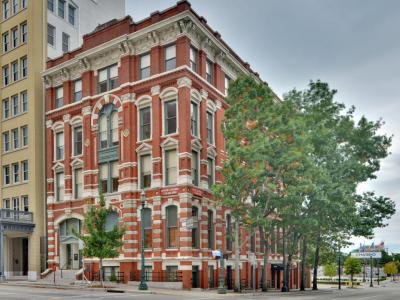
1) 1884 Houston Cotton Exchange Building
Standing as a reminder of Houston’s economic rise in the late 19th century, the Houston Cotton Exchange Building is a must-see landmark for anyone exploring downtown. Built in 1884, this elegant structure once served as the epicenter of the city’s booming cotton trade, a commodity that fueled Houston’s growth and helped establish its place as a commercial hub in Texas and beyond.
The building’s striking architecture reflects the ambitions of the era. Its brick façade, tall windows, and detailed cornices speak to the pride of a city at the height of the cotton boom. Walking past it today, you can imagine brokers and traders hustling through its doors, negotiating prices that would influence markets far beyond Houston.
While the building is no longer used for cotton trading, its preserved exterior allows visitors to glimpse a world of industry, ambition, and civic pride that shaped the city.
The building’s striking architecture reflects the ambitions of the era. Its brick façade, tall windows, and detailed cornices speak to the pride of a city at the height of the cotton boom. Walking past it today, you can imagine brokers and traders hustling through its doors, negotiating prices that would influence markets far beyond Houston.
While the building is no longer used for cotton trading, its preserved exterior allows visitors to glimpse a world of industry, ambition, and civic pride that shaped the city.
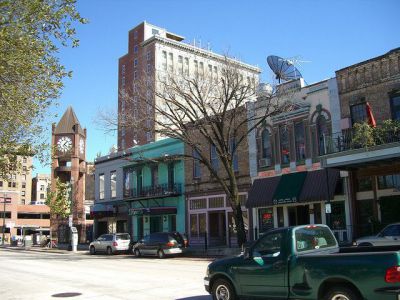
2) Historic Market Square
Historic Market Square is the heart of old Houston. In 1836, just months after Houston was founded, the city designated this site as the location for its first City Hall and public market. For decades, it was where residents gathered not only to buy and sell goods but also to debate politics, share news, and celebrate community events.
The original City Hall and Market House were built here in the 1840s, though the buildings faced repeated challenges. Fires destroyed several structures, and each time the community rebuilt, underscoring the square’s importance as the symbolic center of the city. By the late 19th century, Market Square had become surrounded by thriving businesses, saloons, and hotels, cementing its role as Houston’s commercial hub.
In 1939, City Hall was relocated to its current location on Bagby Street, and the old square began to evolve. Over time, it shifted from a purely civic space into a mix of restaurants, shops, and nightlife.
Today, Market Square Park celebrates both past and present, blending public art, memorials, and historic architecture with modern dining and entertainment.
The original City Hall and Market House were built here in the 1840s, though the buildings faced repeated challenges. Fires destroyed several structures, and each time the community rebuilt, underscoring the square’s importance as the symbolic center of the city. By the late 19th century, Market Square had become surrounded by thriving businesses, saloons, and hotels, cementing its role as Houston’s commercial hub.
In 1939, City Hall was relocated to its current location on Bagby Street, and the old square began to evolve. Over time, it shifted from a purely civic space into a mix of restaurants, shops, and nightlife.
Today, Market Square Park celebrates both past and present, blending public art, memorials, and historic architecture with modern dining and entertainment.
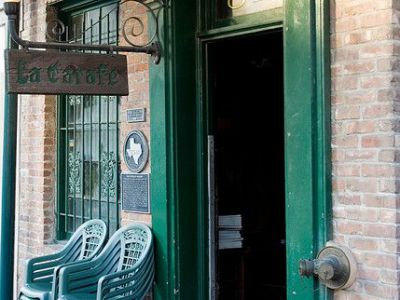
3) La Carafe Wine Bar
La Carafe Wine Bar is a unique and historic bar located in downtown Houston. Its location is easily accessible and has been well-preserved, looking like it's been around for over a century. The bar's long and rich history, coupled with its patrons, makes it feel like a time machine. The smooth sounds of the best jukebox in Houston and a wine list noted for its myriad of offerings make the experience even more unique.
La Carafe is the only wine and beer bar in the area and offers a great variety of both. They also have good beers on draft, making it a great spot for both wine and beer lovers. The bar features a cool, fun and romantic atmosphere, with calm and intimate ambiance. The music is awesome, and the crowd is friendly, welcoming and fun-filled, making it an ideal spot for a casual and intimate vibe.
The bar has a creative cocktail menu, and the bartenders and servers are attentive and professional, providing excellent service. The live music is fantastic, and the jukebox is the best in Houston. The covered patios and inside tables are perfect for enjoying drinks and dinner.
La Carafe is housed in one of the oldest buildings in Houston and is equipped with the oldest elevator in the area. The bar's history and unique atmosphere make it a must-visit spot in downtown Houston. The wine and beer selections are fabulous, and the prices are reasonable. The experience of going back in time as soon as you step through the door is truly remarkable. La Carafe is definitely a favorite spot to stop for a beer and conversation, receiving a 10/10 rating.
La Carafe is the only wine and beer bar in the area and offers a great variety of both. They also have good beers on draft, making it a great spot for both wine and beer lovers. The bar features a cool, fun and romantic atmosphere, with calm and intimate ambiance. The music is awesome, and the crowd is friendly, welcoming and fun-filled, making it an ideal spot for a casual and intimate vibe.
The bar has a creative cocktail menu, and the bartenders and servers are attentive and professional, providing excellent service. The live music is fantastic, and the jukebox is the best in Houston. The covered patios and inside tables are perfect for enjoying drinks and dinner.
La Carafe is housed in one of the oldest buildings in Houston and is equipped with the oldest elevator in the area. The bar's history and unique atmosphere make it a must-visit spot in downtown Houston. The wine and beer selections are fabulous, and the prices are reasonable. The experience of going back in time as soon as you step through the door is truly remarkable. La Carafe is definitely a favorite spot to stop for a beer and conversation, receiving a 10/10 rating.
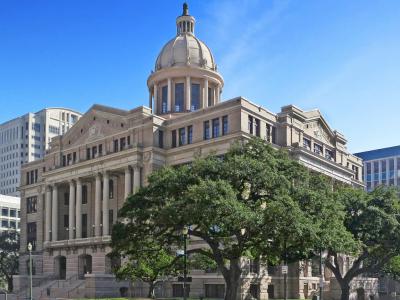
4) 1910 Harris County Courthouse
The 1910 Harris County Courthouse is one of Downtown Houston historic landmarks. Designed in the Beaux-Arts style by architect Kenneth Franzheim, the courthouse was completed in 1910 to accommodate the booming population and expanding legal needs of Harris County. Its grand façade, adorned with columns, arches, and intricate stonework, reflects the elegance and optimism of the era.
For decades, the courthouse was the center of justice in Houston, hosting trials, civic events, and important governmental proceedings. Its marble interiors, sweeping staircases, and ornate courtrooms were designed to convey both dignity and permanence, offering a glimpse into how Houstonians viewed law, order, and community at the time.
Today, the 1910 Harris County Courthouse has been preserved as a historic site. It has been listed on the National Register of Historic Places since May 13, 1981.
For decades, the courthouse was the center of justice in Houston, hosting trials, civic events, and important governmental proceedings. Its marble interiors, sweeping staircases, and ornate courtrooms were designed to convey both dignity and permanence, offering a glimpse into how Houstonians viewed law, order, and community at the time.
Today, the 1910 Harris County Courthouse has been preserved as a historic site. It has been listed on the National Register of Historic Places since May 13, 1981.
5) Christ Church Cathedral
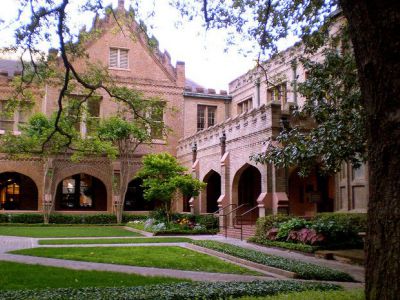
Christ Church Cathedral in Houston, Texas, stands as a testament to the city's rich history and architectural heritage. Founded on March 16, 1839, it is recognized as the first Christian congregation in Houston and one of the oldest non-Roman Catholic churches in Texas.
The current Gothic Revival structure was completed in 1893. This building replaced two earlier structures that the congregation had outgrown. In 1938, the church suffered significant damage due to a fire, but the restoration effort preserved its historic elements.
In 1949, Christ Church became the cathedral church of the Episcopal Diocese of Texas. Today, it remains a vibrant center for worship and community engagement, offering services, educational programs, and outreach initiatives. The cathedral is also recognized as a Recorded Texas Historic Landmark and is listed in the National Register of Historic Places.
Visitors to Christ Church Cathedral can appreciate its stunning architecture, serene courtyards, and the rich history that continues to influence the life of downtown Houston.
The current Gothic Revival structure was completed in 1893. This building replaced two earlier structures that the congregation had outgrown. In 1938, the church suffered significant damage due to a fire, but the restoration effort preserved its historic elements.
In 1949, Christ Church became the cathedral church of the Episcopal Diocese of Texas. Today, it remains a vibrant center for worship and community engagement, offering services, educational programs, and outreach initiatives. The cathedral is also recognized as a Recorded Texas Historic Landmark and is listed in the National Register of Historic Places.
Visitors to Christ Church Cathedral can appreciate its stunning architecture, serene courtyards, and the rich history that continues to influence the life of downtown Houston.
6) The Rice (fka Rice Hotel)
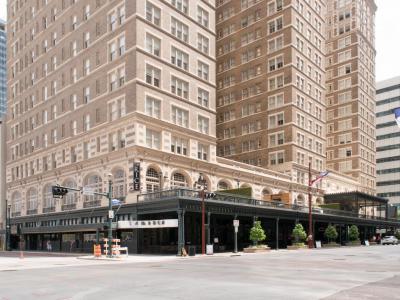
The Rice Hotel, now known simply as The Rice, is a historic landmark in downtown Houston. The original structure, the Capitol Hotel, was built in 1881 on the site of the former Capitol of the Republic of Texas. In 1886, William Marsh Rice, founder of Rice University, purchased the hotel and renamed it the Rice Hotel. After his death in 1900, the property was bequeathed to Rice University.
In 1911, the Rice Hotel was demolished to make way for a new building. The new Rice Hotel opened on May 17, 1913, as a 17-story steel-framed structure featuring modern amenities such as air conditioning and a rooftop deck. In 1925, a third wing was added, increasing the number of rooms to over 1,000 and creating the building’s current E-shaped configuration.
The Rice Hotel hosted numerous notable guests, including President John F. Kennedy. On the evening of November 21, 1963, Kennedy attended a gathering of the League of United Latin American Citizens (LULAC) in the Grand Ballroom. During the event, he and First Lady Jacqueline Kennedy were greeted by Mexican American World War II veterans.
The following day, November 22, 1963, President Kennedy was assassinated in Dallas, making his visit to Houston just hours before the tragic event. Today, a plaque at The Rice commemorates his final visit to the city.
In 1911, the Rice Hotel was demolished to make way for a new building. The new Rice Hotel opened on May 17, 1913, as a 17-story steel-framed structure featuring modern amenities such as air conditioning and a rooftop deck. In 1925, a third wing was added, increasing the number of rooms to over 1,000 and creating the building’s current E-shaped configuration.
The Rice Hotel hosted numerous notable guests, including President John F. Kennedy. On the evening of November 21, 1963, Kennedy attended a gathering of the League of United Latin American Citizens (LULAC) in the Grand Ballroom. During the event, he and First Lady Jacqueline Kennedy were greeted by Mexican American World War II veterans.
The following day, November 22, 1963, President Kennedy was assassinated in Dallas, making his visit to Houston just hours before the tragic event. Today, a plaque at The Rice commemorates his final visit to the city.
7) JPMorgan Chase Building
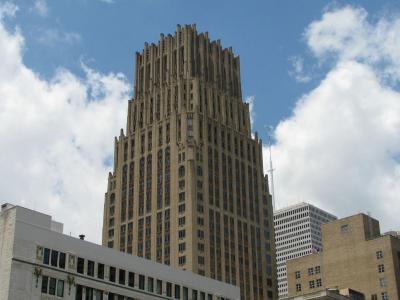
The JPMorgan Chase Building, originally known as the Gulf Building, is a distinguished 37-story Art Deco skyscraper located at 712 Main Street in downtown Houston, Texas. Completed in 1929, the building was intended to serve as a symbol of the city's economic growth and modernity.
Upon its completion, the Gulf Building stood as the tallest structure in Houston and was the tallest building west of the Mississippi River until 1931. Its design features a blend of Gothic and Art Deco elements, with a prominent spire and detailed stonework that convey a sense of grandeur and stability. For decades, the building's distinctive orange "Gulf" sign atop the tower became an iconic feature of the Houston skyline.
In 1983, the building was listed on the National Register of Historic Places, recognizing its architectural significance. The building underwent a significant restoration in 1989, which was reportedly the largest restoration ever undertaken in the country with private funds at the time. Today, the JPMorgan Chase Building continues to serve as a testament to Houston's rich architectural heritage and stands as a prominent landmark in the city's downtown area.
Upon its completion, the Gulf Building stood as the tallest structure in Houston and was the tallest building west of the Mississippi River until 1931. Its design features a blend of Gothic and Art Deco elements, with a prominent spire and detailed stonework that convey a sense of grandeur and stability. For decades, the building's distinctive orange "Gulf" sign atop the tower became an iconic feature of the Houston skyline.
In 1983, the building was listed on the National Register of Historic Places, recognizing its architectural significance. The building underwent a significant restoration in 1989, which was reportedly the largest restoration ever undertaken in the country with private funds at the time. Today, the JPMorgan Chase Building continues to serve as a testament to Houston's rich architectural heritage and stands as a prominent landmark in the city's downtown area.
8) Esperson Buildings
The Esperson Buildings in downtown Houston are a pair of historic skyscrapers that stand as testaments to the city's early 20th-century architectural ambition and the legacy of Mellie Keenan Esperson, a pioneering female developer.
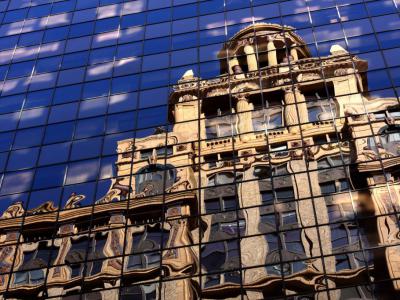
The first, the Niels Esperson Building, was completed in 1927 as a memorial to her late husband, Niels Esperson, a prominent oil and real estate magnate. Designed by architect John Eberson, the 32-story tower is the only complete example of Italian Renaissance architecture in Houston. Its ornate façade features massive columns, urns, terraces, and a grand tempietto at the top, reminiscent of the one in the courtyard of San Pietro in Rome
In 1941, on the 14th anniversary of the Niels Esperson Building, Mellie Esperson unveiled the Mellie Esperson Building, a 19-story Art Deco skyscraper. Notably, it was the first large building in Houston to be constructed with air conditioning, a significant technological advancement at the time. The two buildings are physically connected on all but two floors, creating a cohesive architectural ensemble.
Together, the Esperson Buildings symbolize Houston's growth and the Esperson family's enduring impact on the city's development. They remain prominent features of the downtown skyline, admired for their architectural beauty and historical significance.
The first, the Niels Esperson Building, was completed in 1927 as a memorial to her late husband, Niels Esperson, a prominent oil and real estate magnate. Designed by architect John Eberson, the 32-story tower is the only complete example of Italian Renaissance architecture in Houston. Its ornate façade features massive columns, urns, terraces, and a grand tempietto at the top, reminiscent of the one in the courtyard of San Pietro in Rome
In 1941, on the 14th anniversary of the Niels Esperson Building, Mellie Esperson unveiled the Mellie Esperson Building, a 19-story Art Deco skyscraper. Notably, it was the first large building in Houston to be constructed with air conditioning, a significant technological advancement at the time. The two buildings are physically connected on all but two floors, creating a cohesive architectural ensemble.
Together, the Esperson Buildings symbolize Houston's growth and the Esperson family's enduring impact on the city's development. They remain prominent features of the downtown skyline, admired for their architectural beauty and historical significance.
9) Julia Ideson Building
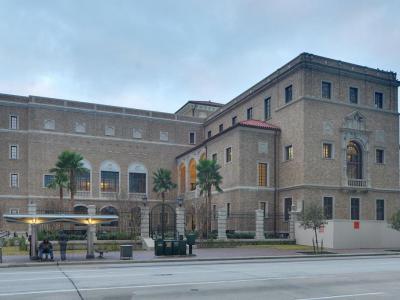
The Julia Ideson Building, completed in 1926, showcases Houston's rich architectural heritage. Designed by architect Ralph Adams Cram in the Spanish Renaissance Revival style, the building was constructed to house the city's growing library needs, replacing the earlier Houston Lyceum and Carnegie Library.
Named in honor of Julia Ideson, who served as the head librarian from 1903 to 1945, the building reflects her dedication to public service and education. Under her leadership, the library system expanded significantly, and the Julia Ideson Building became a central hub for knowledge and community engagement.
In 1976, the main library functions were moved to the Jesse H. Jones Building, and the Ideson Building was repurposed to house the Houston Metropolitan Research Center, focusing on archival collections and local history. The building underwent restoration to preserve its historic features, including murals painted during the Great Depression under the Works Progress Administration.
Its architectural beauty and historical significance make it a cherished landmark in downtown Houston.
Named in honor of Julia Ideson, who served as the head librarian from 1903 to 1945, the building reflects her dedication to public service and education. Under her leadership, the library system expanded significantly, and the Julia Ideson Building became a central hub for knowledge and community engagement.
In 1976, the main library functions were moved to the Jesse H. Jones Building, and the Ideson Building was repurposed to house the Houston Metropolitan Research Center, focusing on archival collections and local history. The building underwent restoration to preserve its historic features, including murals painted during the Great Depression under the Works Progress Administration.
Its architectural beauty and historical significance make it a cherished landmark in downtown Houston.
