Custom Walk in Oslo, Norway by tiina06_3d947 created on 2025-07-21
Guide Location: Norway » Oslo
Guide Type: Custom Walk
# of Sights: 13
Tour Duration: 7 Hour(s)
Travel Distance: 16 Km or 9.9 Miles
Share Key: G54VU
Guide Type: Custom Walk
# of Sights: 13
Tour Duration: 7 Hour(s)
Travel Distance: 16 Km or 9.9 Miles
Share Key: G54VU
How It Works
Please retrieve this walk in the GPSmyCity app. Once done, the app will guide you from one tour stop to the next as if you had a personal tour guide. If you created the walk on this website or come to the page via a link, please follow the instructions below to retrieve the walk in the app.
Retrieve This Walk in App
Step 1. Download the app "GPSmyCity: Walks in 1K+ Cities" on Apple App Store or Google Play Store.



Step 2. In the GPSmyCity app, download(or launch) the guide "Oslo Map and Walking Tours".
Step 3. Tap the menu button located at upper right corner of the "Walks" screen and select "Retrieve custom walk". Enter the share key: G54VU
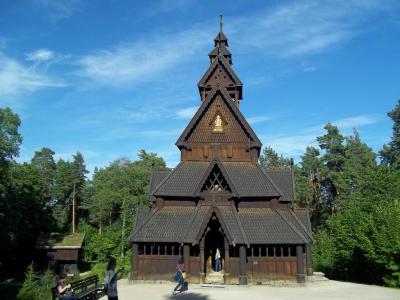
1) Gol Stave Church
The Gol Stave Church finds its home within the Norwegian Museum of Cultural History, situated in an open-air 'skansen' or dynamic living museum, showcasing a collection of historic structures from all corners of the nation. Originating from the early 13th century, this church embodies the architectural style of a stave church, characterized by its intricate timber-framed design with multiple tiers. While stave churches were once prevalent in medieval Scandinavia, only a handful remain unspoiled through time.
Initially erected in the quaint village of Gol in Southern Norway, the church's fate took a fortunate turn when the Society for the Preservation of Ancient Norwegian Monuments intervened in 1880. They acquired the structure, rescuing it from imminent demolition. Its journey led it to its current abode within the Museum of Cultural History. This relocation was facilitated by King Oscar II, who not only procured the church but also integrated it into his open-air museum. Over time, this merged with the church's present location.
As one of the finest-preserved timber churches in the entire country, the Gol Stave Church stands out as a remarkable highlight within the museum's offerings. Its popularity is such that a modern replica was established in its original hometown of Gol. This replica, constructed in the 1980s, pays homage to the original church that was displaced a century earlier, replaced by a new structure.
Why You Should Visit:
Great to start your learning about Norway's old churches in an intimate atmosphere.
Numerous runic inscriptions & carvings dated to the early Middle Ages can be seen inside!
Initially erected in the quaint village of Gol in Southern Norway, the church's fate took a fortunate turn when the Society for the Preservation of Ancient Norwegian Monuments intervened in 1880. They acquired the structure, rescuing it from imminent demolition. Its journey led it to its current abode within the Museum of Cultural History. This relocation was facilitated by King Oscar II, who not only procured the church but also integrated it into his open-air museum. Over time, this merged with the church's present location.
As one of the finest-preserved timber churches in the entire country, the Gol Stave Church stands out as a remarkable highlight within the museum's offerings. Its popularity is such that a modern replica was established in its original hometown of Gol. This replica, constructed in the 1980s, pays homage to the original church that was displaced a century earlier, replaced by a new structure.
Why You Should Visit:
Great to start your learning about Norway's old churches in an intimate atmosphere.
Numerous runic inscriptions & carvings dated to the early Middle Ages can be seen inside!
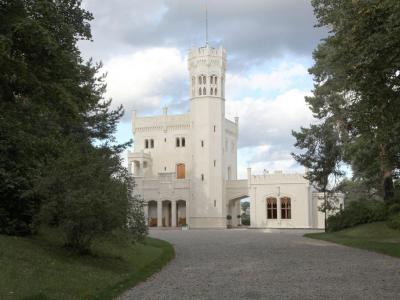
2) Oscarshall Castle
Oscarshall Palace finds its location nestled within the serene embrace of the Frognerkilen fjord on Bygdøy in Oslo. This elegant palace was meticulously crafted between 1847 and 1852, under the skilled guidance of Danish architect Johan Henrik Nebelong. Its creation was commissioned by King Oscar I and Queen Joséphine of Norway and Sweden. The year 1881 marked the moment when King Oscar II graciously unveiled the palace to the public as a museum.
Oscarshall Palace in Norway is a prime example of neo-Gothic architecture. It reflects the National Romantic style of its time, showcasing its captivating beauty. The palace, park, and ancillary buildings were all crafted by Norwegian artists and craftsmen. Inside, the dining hall features works by artists like Joachim Frich, Adolph Tidemand, and Hans Gude. The drawing room captures the ambiance of old Norwegian guildhalls.
In 1863, King Carl IV gave up Oscarshall to Norway. In 1929, plans arose to make it Crown Prince Olav and Princess Märtha's home, but obstacles like money and politics stopped this. Fritz Wedel Jarlsberg solved this by offering his estate, Skaugum. Now, the palace is state-owned and used by the current monarch.
Throughout the summer season, the palace doors swing open to welcome guided tours. The year 2013 witnessed the inauguration of the Queen Joséphine Gallery on the palace grounds, an initiative spearheaded by Queen Sonja. This gallery serves as a platform for exhibiting graphic prints, showcasing noteworthy works including those crafted by Her Majesty herself during its inaugural season.
Oscarshall Palace in Norway is a prime example of neo-Gothic architecture. It reflects the National Romantic style of its time, showcasing its captivating beauty. The palace, park, and ancillary buildings were all crafted by Norwegian artists and craftsmen. Inside, the dining hall features works by artists like Joachim Frich, Adolph Tidemand, and Hans Gude. The drawing room captures the ambiance of old Norwegian guildhalls.
In 1863, King Carl IV gave up Oscarshall to Norway. In 1929, plans arose to make it Crown Prince Olav and Princess Märtha's home, but obstacles like money and politics stopped this. Fritz Wedel Jarlsberg solved this by offering his estate, Skaugum. Now, the palace is state-owned and used by the current monarch.
Throughout the summer season, the palace doors swing open to welcome guided tours. The year 2013 witnessed the inauguration of the Queen Joséphine Gallery on the palace grounds, an initiative spearheaded by Queen Sonja. This gallery serves as a platform for exhibiting graphic prints, showcasing noteworthy works including those crafted by Her Majesty herself during its inaugural season.
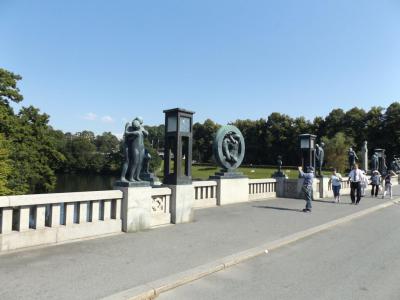
3) Vigeland Sculpture Park
Nestled within Frogner Park, a sprawling green expanse in the western outskirts of the city, lies the Vigeland Sculpture Park. Encompassing an impressive 80 acres, this park boasts a collection of 212 statues, all masterfully crafted by the renowned Norwegian sculptor, Gustav Vigeland. Adjacent to the park is the Vigeland Museum, a repository for many of the artist’s smaller sculptures and paintings. These two attractions came into being when Vigeland generously gifted several of his works to the city of Oslo in 1919. Following meticulous planning, the park was unveiled to the public in the year 1940.
At the heart of the park takes center stage a bridge that stretches from the Main Gate to the focal point, the Fountain sculpture. Along this bridge route, a third of the park's sculptures are gracefully displayed, each adorned in striking bronze. Notably, the beloved Angry Boy sculpture can be admired here. Culminating the bridge's path is the Fountain-an elaborate bronze Gothic masterpiece originally conceived for a location outside the Norwegian Parliament. This splendid sculpture is encircled by an expansive mosaic showcasing bold black and white designs.
Crowning the highest elevation within the park is the Monolith, indisputably the most celebrated attraction. Purposefully positioned, this colossal granite tower, hewn from a singular massive rock, showcases an assembly of over one hundred intricately carved human figures. The park has served as a wellspring of inspiration for music, literature, and even made a notable appearance in the successful Norwegian independent film 'Elling'. As a welcoming gift to the public, this park remains accessible throughout daylight hours all year round.
Tip:
Combine with the Vigeland Museum located right outside the park. Do it on the same day so that you can compare what you saw in the park to what you see in the museum.
At the heart of the park takes center stage a bridge that stretches from the Main Gate to the focal point, the Fountain sculpture. Along this bridge route, a third of the park's sculptures are gracefully displayed, each adorned in striking bronze. Notably, the beloved Angry Boy sculpture can be admired here. Culminating the bridge's path is the Fountain-an elaborate bronze Gothic masterpiece originally conceived for a location outside the Norwegian Parliament. This splendid sculpture is encircled by an expansive mosaic showcasing bold black and white designs.
Crowning the highest elevation within the park is the Monolith, indisputably the most celebrated attraction. Purposefully positioned, this colossal granite tower, hewn from a singular massive rock, showcases an assembly of over one hundred intricately carved human figures. The park has served as a wellspring of inspiration for music, literature, and even made a notable appearance in the successful Norwegian independent film 'Elling'. As a welcoming gift to the public, this park remains accessible throughout daylight hours all year round.
Tip:
Combine with the Vigeland Museum located right outside the park. Do it on the same day so that you can compare what you saw in the park to what you see in the museum.
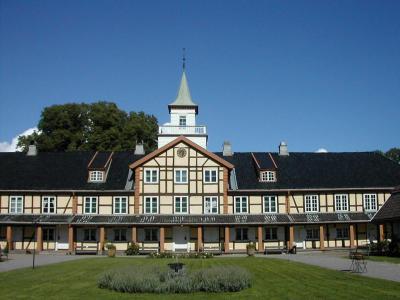
4) Oslo City Museum
The Oslo City Museum is located at Frogner Manor, within the leafy environs of Vigeland Sculpture Park. The museum charts the cultural history and development of the city of Oslo over the last thousand years. Oslo was founded in 1048 by King Harald III, but was practically destroyed by fire in 1624. After this tragedy, the city was moved and rebuilt around Akershus Castle by King Christian IV. The city then became known as Christiania in his honor. In the 1800s as the city grew, Christiania became a municipality, incorporating nearby historic towns like Aker and Bygdøy. The largest city in Norway throughout the region’s turbulent history, it became capital of a newly independent Norway in the early 20th century, and was renamed Oslo once again in 1924.
The museum covers the entire thousand year existence of the city through a collection of permanent exhibitions. The site also contains one of Norway’s largest art galleries. The manor house where the museum is based was built in the 18th century, and boasts an impressive interior that dates from 1750 to 1900. The museum is open from 11am to 4pm throughout the year, with guided tours of Frogner Manor available in the summer months. Admission to the museum and manor house is free of charge.
The museum covers the entire thousand year existence of the city through a collection of permanent exhibitions. The site also contains one of Norway’s largest art galleries. The manor house where the museum is based was built in the 18th century, and boasts an impressive interior that dates from 1750 to 1900. The museum is open from 11am to 4pm throughout the year, with guided tours of Frogner Manor available in the summer months. Admission to the museum and manor house is free of charge.
5) Royal Palace (must see)
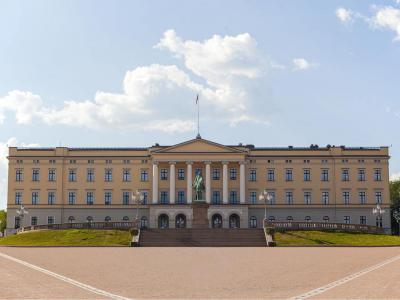
The Royal Palace (Slottet) in Oslo was constructed in the first half of the 19th century as the residence for King Karl III Johan of Norway. Originally from France, the king (also known as Karl XIV Johan of Sweden) reigned over Norway and Sweden from 1818 to 1844. Today, the palace serves as the official residence of the Norwegian monarch (whereas the Crown Prince resides at the Skaugum estate in Asker, west of Oslo).
Situated at the end of Karl Johans Gate, the palace is surrounded by Palace Park (Slottsparken) and is fronted by Palace Square (Slottsplassen). Before its completion, Norwegian royalty resided in Paléet, a grand townhouse in Christiania (now Oslo). The construction of the Royal Palace began in 1824 and lasted for nearly 25 years, based on the designs by Danish-born architect Hans Linstow.
Despite adopting a simpler three-story neo-classical design, the palace remained unfinished when King Karl passed away in 1844. His son and successor, Oscar I, and his wife, Queen Josephine, became its first residents five years later.
The Royal Palace Chapel, consecrated in 1844, is used for religious services and various events of the Norwegian royal family, such as baptisms and confirmations.
Following the dissolution of the Union with Sweden in 1905, the palace became the permanent royal residence of Norway’s new monarch, King Haakon VII. Significant renovations were undertaken during the reign of King Harald V to address structural issues and modernize the building. Public access to the palace began in 2002, and the daily changing of the guard has since become a popular attraction for visitors.
Moreover, in 2017, the former palace stables were renovated and converted into a versatile art venue called The Queen Sonja Art Stable (Dronning Sonja KunstStall). Open to the public, this building serves as an art gallery, museum, and concert hall.
Guided tours of the palace, predominantly in Norwegian, are offered throughout the afternoon during the summer months. However, English-language tours are also available daily at 12 pm, 2 pm, 2:20 pm, and 4 pm. Tickets for these guided tours can be purchased online starting from the 1st of March each year.
Tip:
Changing of the royal guards is at 1:30 pm daily. You can always politely approach one of the guard soldiers and take a nice photo or have a chat with them :)
The garden is peaceful and freely accessible – you can have a picnic there and quietly enjoy nature.
Situated at the end of Karl Johans Gate, the palace is surrounded by Palace Park (Slottsparken) and is fronted by Palace Square (Slottsplassen). Before its completion, Norwegian royalty resided in Paléet, a grand townhouse in Christiania (now Oslo). The construction of the Royal Palace began in 1824 and lasted for nearly 25 years, based on the designs by Danish-born architect Hans Linstow.
Despite adopting a simpler three-story neo-classical design, the palace remained unfinished when King Karl passed away in 1844. His son and successor, Oscar I, and his wife, Queen Josephine, became its first residents five years later.
The Royal Palace Chapel, consecrated in 1844, is used for religious services and various events of the Norwegian royal family, such as baptisms and confirmations.
Following the dissolution of the Union with Sweden in 1905, the palace became the permanent royal residence of Norway’s new monarch, King Haakon VII. Significant renovations were undertaken during the reign of King Harald V to address structural issues and modernize the building. Public access to the palace began in 2002, and the daily changing of the guard has since become a popular attraction for visitors.
Moreover, in 2017, the former palace stables were renovated and converted into a versatile art venue called The Queen Sonja Art Stable (Dronning Sonja KunstStall). Open to the public, this building serves as an art gallery, museum, and concert hall.
Guided tours of the palace, predominantly in Norwegian, are offered throughout the afternoon during the summer months. However, English-language tours are also available daily at 12 pm, 2 pm, 2:20 pm, and 4 pm. Tickets for these guided tours can be purchased online starting from the 1st of March each year.
Tip:
Changing of the royal guards is at 1:30 pm daily. You can always politely approach one of the guard soldiers and take a nice photo or have a chat with them :)
The garden is peaceful and freely accessible – you can have a picnic there and quietly enjoy nature.
6) National Theater (Nationaltheatret)
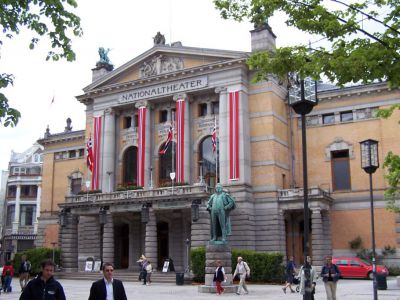
The National Theater (Nationaltheatret) in Oslo is one of Norway's main stages for performing arts. Located within Studenterlunden park adjacent to Karl Johans Gate, the building's site was debated for decades, facing initial resistance from the nearby university, which argued that a theater did not harmonize with the academic and governmental offices in the area. However, the success of Norwegian playwrights like Ibsen and Bjørnson eventually swayed public opinion, leading to the theater’s approval. The Baroque-style building, with its yellow-brick-and-granite facades, was designed by architect Henrik Bull and completed in September 1899.
The theater's first performances featured works by Ludvig Holberg, Henrik Ibsen, and Bjornstjerne Bjornson. The latter two are commemorated with statues flanking the front entrance. Likewise, the names of all three are inscribed on the building's facade.
The theater has faced challenges since its inception, including being too small. Over the years, various proposals for its expansion have been made, though none has materialized. Lately, a new project for rehabilitation and modernization has been initiated.
Alongside the main stage, seating 741, the building includes three other stages: the Amphitheatre, Painters' Hall, and Backstage. The former was opened in 1963, while the Painters' Hall, the smallest, was introduced in 1983.
The theater is open for guided tours – pre-scheduled, lasting for about 45 minutes. Visitors will see the foyer, which includes original furnishings dating back to the 1899 opening, plus the theater's workshops, stages, and other behind-the-scenes areas.
The theater's first performances featured works by Ludvig Holberg, Henrik Ibsen, and Bjornstjerne Bjornson. The latter two are commemorated with statues flanking the front entrance. Likewise, the names of all three are inscribed on the building's facade.
The theater has faced challenges since its inception, including being too small. Over the years, various proposals for its expansion have been made, though none has materialized. Lately, a new project for rehabilitation and modernization has been initiated.
Alongside the main stage, seating 741, the building includes three other stages: the Amphitheatre, Painters' Hall, and Backstage. The former was opened in 1963, while the Painters' Hall, the smallest, was introduced in 1983.
The theater is open for guided tours – pre-scheduled, lasting for about 45 minutes. Visitors will see the foyer, which includes original furnishings dating back to the 1899 opening, plus the theater's workshops, stages, and other behind-the-scenes areas.
7) Stortinget
The Stortinget building (whose name translates to 'the Great Thing') is the seat of the Norwegian Parliament (Storting).
Initially, the parliament, established in 1814, led a nomadic existence for nearly fifty years, meeting in various locations, including schools and university halls. Eventually, the need for a designated building was recognized, leading to the acquisition of land between the Royal Palace and Oslo East Station in 1857. An architectural competition held in 1856 resulted in the selection of a design by Swedish architect Emil Victor Langlet in 1860, after an earlier red brick, classically Scandinavian design by Schirmer and von Hanno was rejected for resembling a church. Construction began in 1860, and the parliament moved into its new home in March 1866.
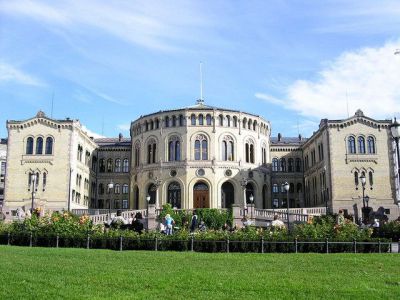
Made of yellow brick and light gray granite, the Stortinget architecture combines several styles inspired by French and Italian designs. The opulent interior abounds in red and gold, while on the outside the uniqueness is characterized by the plenary chamber in a semi-circular section at the front (rather than at the center) and arcade-style archways. The building's back mirrors its front.
Initially, the property was considered too large for its purpose, so other government agencies were also housed there. During World War II and the Nazi occupation of Norway, the country’s parliament fled abroad and the Stortinget was taken over by German forces and administration. Following liberation, from 1951 to 1959, the edifice was fully renovated and a modern four-story building was added at the back.
The approach to the entrance, called 'The Lions Hill' (Løvebakken), is named after the granite lion statues present there. The Lions Hill is also sometimes used as a metaphorical phrase to refer to the building itself.
Guided tours of Storting are available on a regular basis.
Initially, the parliament, established in 1814, led a nomadic existence for nearly fifty years, meeting in various locations, including schools and university halls. Eventually, the need for a designated building was recognized, leading to the acquisition of land between the Royal Palace and Oslo East Station in 1857. An architectural competition held in 1856 resulted in the selection of a design by Swedish architect Emil Victor Langlet in 1860, after an earlier red brick, classically Scandinavian design by Schirmer and von Hanno was rejected for resembling a church. Construction began in 1860, and the parliament moved into its new home in March 1866.
Made of yellow brick and light gray granite, the Stortinget architecture combines several styles inspired by French and Italian designs. The opulent interior abounds in red and gold, while on the outside the uniqueness is characterized by the plenary chamber in a semi-circular section at the front (rather than at the center) and arcade-style archways. The building's back mirrors its front.
Initially, the property was considered too large for its purpose, so other government agencies were also housed there. During World War II and the Nazi occupation of Norway, the country’s parliament fled abroad and the Stortinget was taken over by German forces and administration. Following liberation, from 1951 to 1959, the edifice was fully renovated and a modern four-story building was added at the back.
The approach to the entrance, called 'The Lions Hill' (Løvebakken), is named after the granite lion statues present there. The Lions Hill is also sometimes used as a metaphorical phrase to refer to the building itself.
Guided tours of Storting are available on a regular basis.
8) Oslo Cathedral
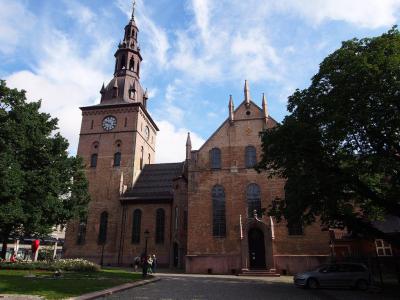
Oslo Cathedral (Oslo Domkirke), previously known as Our Savior's Church (Vår Frelsers Kirke), is the main temple of the Church of Norway. Located at Stortorvet square, near Karl Johans gate, the current cathedral – Oslo's third cathedral in total – was constructed between 1694 and 1697. The first one, Hallvards Cathedral, was established in the 12th century by King Sigurd I but fell into disrepair after the city was moved closer to Akershus Fortress following a fire in 1624. The second cathedral, Holy Trinity, lasted only 50 years before burning down, prompting the need to build a new one.
This elegant, if somewhat unassuming, neo-Gothic edifice has served as a religious center but also as a venue for significant national events such as royal weddings and public ceremonies. In 2001, it hosted Norway’s latest royal wedding – of Crown Prince Haakon and Mette Tjessem Hoiby. Following a major renovation in 2010, the cathedral reopened with a high mass attended by the members of the Norwegian royal family led by King Harald V.
The architecture features a blend of red brick construction with green copper accents, notably on the adjoining Bazaar and the Fire Watch buildings. Internally, the cathedral houses several art pieces including stained-glass windows by Emanuel Vigeland, silver sculpture by Arrigo Minerbi, bronze doors by Dagfin Werenskiold, and elaborate ceiling decoration by Norwegian painter Hugo Mohr.
The cathedral's main organ was installed in 1997 to mark its 300th anniversary. Since December 2016, the cathedral's carillon has been in regular use for hour- and quarter-strokes, as well as ritornelles, playing 18 different melodies between 7:00 am and midnight, changing according to the calendar. The church holds Mass every Sunday and is free to visit throughout the week. Guided group tours can also be arranged on weekdays.
This elegant, if somewhat unassuming, neo-Gothic edifice has served as a religious center but also as a venue for significant national events such as royal weddings and public ceremonies. In 2001, it hosted Norway’s latest royal wedding – of Crown Prince Haakon and Mette Tjessem Hoiby. Following a major renovation in 2010, the cathedral reopened with a high mass attended by the members of the Norwegian royal family led by King Harald V.
The architecture features a blend of red brick construction with green copper accents, notably on the adjoining Bazaar and the Fire Watch buildings. Internally, the cathedral houses several art pieces including stained-glass windows by Emanuel Vigeland, silver sculpture by Arrigo Minerbi, bronze doors by Dagfin Werenskiold, and elaborate ceiling decoration by Norwegian painter Hugo Mohr.
The cathedral's main organ was installed in 1997 to mark its 300th anniversary. Since December 2016, the cathedral's carillon has been in regular use for hour- and quarter-strokes, as well as ritornelles, playing 18 different melodies between 7:00 am and midnight, changing according to the calendar. The church holds Mass every Sunday and is free to visit throughout the week. Guided group tours can also be arranged on weekdays.
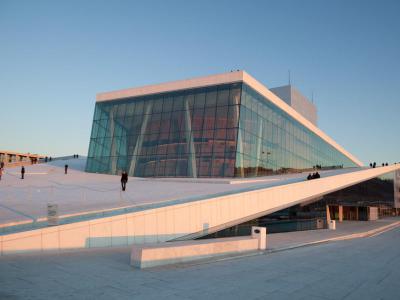
9) Oslo Opera House
The Oslo Opera House is a notable building that hosts the Norwegian National Ballet, the Opera Orchestra, and the Ballet School. Situated right by the harbour, its unique angled, white exterior looks as if it rises from the water, allowing visitors to climb the roof for stunning views of Oslo and the fjord throughout the year.
At street level, large windows offer a peek into rehearsals and workshop activities inside. The interior features mainly oak, and the main hall has a horseshoe shape, similar to traditional theatres. Designed by the Norwegian architecture firm Snøhetta, the building has won several prestigious awards.
The Norwegian National Opera & Ballet offers a diverse program from three stages: The Main House with 1369 seats, the Second House with 400 seats, and the Studio with 200 seats. Additionally, the opera roof and foyer are used for concerts. Guided tours are available in both Norwegian and English.
At street level, large windows offer a peek into rehearsals and workshop activities inside. The interior features mainly oak, and the main hall has a horseshoe shape, similar to traditional theatres. Designed by the Norwegian architecture firm Snøhetta, the building has won several prestigious awards.
The Norwegian National Opera & Ballet offers a diverse program from three stages: The Main House with 1369 seats, the Second House with 400 seats, and the Studio with 200 seats. Additionally, the opera roof and foyer are used for concerts. Guided tours are available in both Norwegian and English.
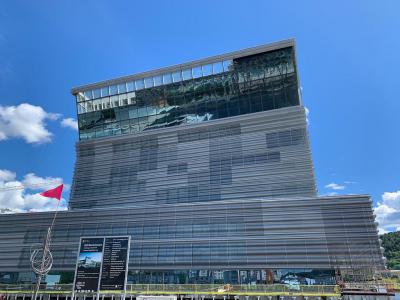
10) Munch Museum (must see)
The Munch Museum, situated in Oslo, is a dedicated art institution that honors the life and artistic creations of Norwegian painter Edvard Munch. His most renowned masterpiece, "The Scream," has transcended into an iconic emblem of global artistry. While Munch's art is profoundly personalized, many of his artworks possess a universally captivating essence, leaving a significant mark on the realm of art. Within the past century, Munch has emerged as arguably the most recognizable Norwegian painter.
The museum's compilation comprises Munch's original works and artifacts, generously bequeathed to the city of Oslo following his demise. Additionally, contributions from his sister Inger Munch, along with various other artworks acquired through the exchange of duplicate prints, enhance the collection.
Presently, the museum's permanent assemblage encompasses well over half of the artist's entire oeuvre, encompassing paintings, prints, sculptures, books, and a range of other items. With a staggering count of over 1,200 paintings, 18,000 prints, six sculptures, 500 plates, 2,240 books, and assorted artifacts, the museum vividly showcases Munch's prolific output. Moreover, the institution accommodates sections dedicated to education and conservation, as well as provisions for the performing arts.
Originally established at Tøyen in 1963, the museum later relocated to its contemporary home in Bjørvika, officially inaugurated on October 22, 2021.
Tip:
Check out the coffee shop (with tables inside and outside) and the gift shop right at the entrance. As an added bonus, you also get to watch interesting videos in the downstairs.
There's a booklet which has a lot of information on many of the important pieces. You can pick it up and turn it back in when you're done.
Once you've paid for your ticket you can access to the exhibition area for the rest of the day.
The museum's compilation comprises Munch's original works and artifacts, generously bequeathed to the city of Oslo following his demise. Additionally, contributions from his sister Inger Munch, along with various other artworks acquired through the exchange of duplicate prints, enhance the collection.
Presently, the museum's permanent assemblage encompasses well over half of the artist's entire oeuvre, encompassing paintings, prints, sculptures, books, and a range of other items. With a staggering count of over 1,200 paintings, 18,000 prints, six sculptures, 500 plates, 2,240 books, and assorted artifacts, the museum vividly showcases Munch's prolific output. Moreover, the institution accommodates sections dedicated to education and conservation, as well as provisions for the performing arts.
Originally established at Tøyen in 1963, the museum later relocated to its contemporary home in Bjørvika, officially inaugurated on October 22, 2021.
Tip:
Check out the coffee shop (with tables inside and outside) and the gift shop right at the entrance. As an added bonus, you also get to watch interesting videos in the downstairs.
There's a booklet which has a lot of information on many of the important pieces. You can pick it up and turn it back in when you're done.
Once you've paid for your ticket you can access to the exhibition area for the rest of the day.
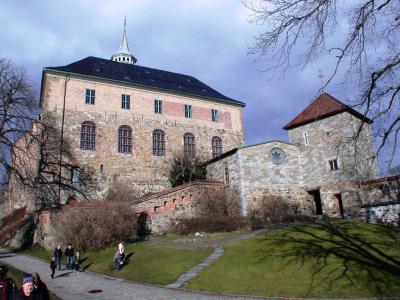
11) Akershus Fortress (must see)
Akershus Fortress (Akershus Festning), also known as Akershus Castle (Akershus Slott), is a medieval fortification in Oslo, central to the history of Norway. The exact date of its construction is unknown but is believed to have started in the late 1290s under King Haakon V. The fortress is the namesake of the county of Akershus, which used to encompass most of Eastern Norway.
Throughout its history, Akershus Fortress has withstood numerous sieges, including those by Swedish and Danish forces between 1308 and 1532. Despite these attacks, the fortress was never captured by a foreign enemy. However, during World War II, it surrendered to Nazi Germany without a fight and later became a site for executions by the German occupiers and post-war trials. The fortress was liberated in 1945 by the Norwegian resistance.
Akershus Castle also served as a royal residence during the Middle Ages, playing a key role in the shift of Norway's capital from Bergen to Oslo. Several notable Norwegian royals, including King Haakon V, resided there. After a significant fire in 1624, King Christian IV ordered the relocation of Oslo closer to the fortress, subsequently renaming the city Christiania. The fortress was modernized into a Renaissance-style castle and continued to function primarily as a palace until the 19th century.
In addition to its military and royal functions, Akershus has also been used as a prison, holding many rebels and criminals throughout its history. Some prisoners were famous, like the notorious criminal and writer Gjest Baardsen, who served there 18 years after being given a life sentence; the legendary bank robber Ole Høiland, who committed suicide at Akershus upon his second internment; and Lars Haetta, who was sentenced to death for rebellion but was later pardoned when he began translating the Christian Bible into Sami.
Today, Akershus Fortress is still a military area but is open to the public daily. Visitors can explore the castle, the Norwegian Armed Forces Museum, and Norway's Resistance Museum. The fortress also houses the Royal Mausoleum, the final resting place for several Norwegian monarchs. The Office of the Norwegian Prime Minister is temporarily located near the fortress, and the site is still guarded by His Majesty the King’s Guard.
Throughout its history, Akershus Fortress has withstood numerous sieges, including those by Swedish and Danish forces between 1308 and 1532. Despite these attacks, the fortress was never captured by a foreign enemy. However, during World War II, it surrendered to Nazi Germany without a fight and later became a site for executions by the German occupiers and post-war trials. The fortress was liberated in 1945 by the Norwegian resistance.
Akershus Castle also served as a royal residence during the Middle Ages, playing a key role in the shift of Norway's capital from Bergen to Oslo. Several notable Norwegian royals, including King Haakon V, resided there. After a significant fire in 1624, King Christian IV ordered the relocation of Oslo closer to the fortress, subsequently renaming the city Christiania. The fortress was modernized into a Renaissance-style castle and continued to function primarily as a palace until the 19th century.
In addition to its military and royal functions, Akershus has also been used as a prison, holding many rebels and criminals throughout its history. Some prisoners were famous, like the notorious criminal and writer Gjest Baardsen, who served there 18 years after being given a life sentence; the legendary bank robber Ole Høiland, who committed suicide at Akershus upon his second internment; and Lars Haetta, who was sentenced to death for rebellion but was later pardoned when he began translating the Christian Bible into Sami.
Today, Akershus Fortress is still a military area but is open to the public daily. Visitors can explore the castle, the Norwegian Armed Forces Museum, and Norway's Resistance Museum. The fortress also houses the Royal Mausoleum, the final resting place for several Norwegian monarchs. The Office of the Norwegian Prime Minister is temporarily located near the fortress, and the site is still guarded by His Majesty the King’s Guard.
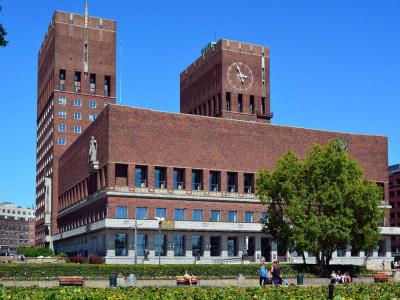
12) Oslo City Hall (must see)
Oslo City Hall (Oslo rådhus) is a mainstay of civic life in the Norwegian capital. Designed by architects Arnstein Arneberg and Magnus Poulsson, its construction took place between 1931 and 1950, with a pause during World War II. The red-brick structure features two towers – 63 and 66 meters tall. The eastern tower houses a carillon with 49 bells that chime every hour.
Historically, Oslo had different city halls, including one reportedly housing a public wine cellar. The Old City Hall (Gamle rådhus) was built near Akershus Fortress in 1641. As the city expanded, the need for a larger facility became evident by the 1800s. The idea for the current City Hall emerged in 1906 but was delayed for financial reasons.
When the building was officially opened in 1950, its brick style looked (at least to some) a bit outdated compared to the modern steel-and-glass architecture of the time. Influenced by functionalism, the design included two oblong, industrial-style office towers. The overall appearance combined modern forms and styling from the medieval era, including statues mounted on the walls and an ornate astronomical clock on the north face.
The artistic decorations, selected through contests in 1937, feature contributions from eight painters and 17 sculptors. The main hall features wall paintings by Henrik Sørensen and Alf Rolfsen, depicting Norway’s history. The City Council Hall is semi-circular, adorned with oak and tapestries, including one showing Saint Hallvard (the patron saint of Oslo) and the seven virtues, meant to inspire ethical governance.
Each year, on December 10th, the Nobel Peace Prize ceremony takes place at the Oslo City Hall, attended by the Norwegian royal family and prime minister. Barack Obama was among the first to be honored in the banqueting hall here after the ceremony was moved from the University of Oslo’s main building.
The City Hall is open to the general public. Apart from its decorated halls, visitors can enjoy a wonderful view of the harbor from the main balcony.
Tip:
Make sure to read the English captions under the wood carvings as you walk up to the City Hall.
Free guided tours in English (lasting approximately one hour) are also available, during which the guides explain the murals & artworks and their symbolism, as well as the functioning of the municipal government, in an entertaining way. Something not to be missed!
Historically, Oslo had different city halls, including one reportedly housing a public wine cellar. The Old City Hall (Gamle rådhus) was built near Akershus Fortress in 1641. As the city expanded, the need for a larger facility became evident by the 1800s. The idea for the current City Hall emerged in 1906 but was delayed for financial reasons.
When the building was officially opened in 1950, its brick style looked (at least to some) a bit outdated compared to the modern steel-and-glass architecture of the time. Influenced by functionalism, the design included two oblong, industrial-style office towers. The overall appearance combined modern forms and styling from the medieval era, including statues mounted on the walls and an ornate astronomical clock on the north face.
The artistic decorations, selected through contests in 1937, feature contributions from eight painters and 17 sculptors. The main hall features wall paintings by Henrik Sørensen and Alf Rolfsen, depicting Norway’s history. The City Council Hall is semi-circular, adorned with oak and tapestries, including one showing Saint Hallvard (the patron saint of Oslo) and the seven virtues, meant to inspire ethical governance.
Each year, on December 10th, the Nobel Peace Prize ceremony takes place at the Oslo City Hall, attended by the Norwegian royal family and prime minister. Barack Obama was among the first to be honored in the banqueting hall here after the ceremony was moved from the University of Oslo’s main building.
The City Hall is open to the general public. Apart from its decorated halls, visitors can enjoy a wonderful view of the harbor from the main balcony.
Tip:
Make sure to read the English captions under the wood carvings as you walk up to the City Hall.
Free guided tours in English (lasting approximately one hour) are also available, during which the guides explain the murals & artworks and their symbolism, as well as the functioning of the municipal government, in an entertaining way. Something not to be missed!
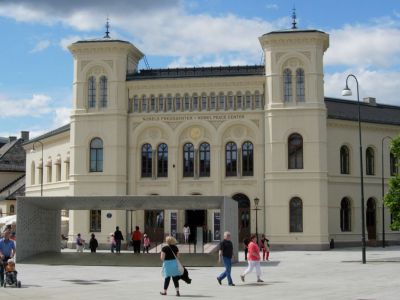
13) Nobel Peace Center
The Nobel Peace Center (Nobels Fredssenter) is a showcase for the Nobel Peace Prize and one of Oslo’s most recognizable sites. Overlooking the city’s harbor, it is located on City Hall Square (Rådhusplassen) near the City Hall, where the Nobel Peace Prize ceremony takes place every year, on December 10, commemorating Alfred Nobel's death.
The Nobel Peace Prize is awarded by a Norwegian committee supported by the Norwegian Nobel Institute, founded in 1904; other Nobel Prizes are awarded in Sweden.
The center opened in 2005 in a ceremony attended by His Majesty King Harald V and the Norwegian Royal Family. Today, this is one of the most popular museums in Norway, receiving annually some 250,000 visitors.
The center is housed in a cream-colored, elegant building constructed in 1872 by architect Georg Andreas Bull. Previously, it served as the Oslo West Railway Station (Oslo Vestbanestasjon). After the station closed in 1989, the building was converted for its current use by British architect David Adjaye; the American designer David Small developed all its hi-tech installations.
The center uses a wide range of multimedia and interactive technology to present information on all the Nobel Peace Prize laureates and their work, as well as the story of Alfred Nobel himself – a renowned physicist, who directed his fortune to fund prizes in physics, chemistry, medicine, literature, and peace.
As a part of a network of Nobel institutions, the center hosts regular exhibitions, meetings, debates, and conferences, as well as offers a broad educational program and guided tours.
The Nobel Peace Prize is awarded by a Norwegian committee supported by the Norwegian Nobel Institute, founded in 1904; other Nobel Prizes are awarded in Sweden.
The center opened in 2005 in a ceremony attended by His Majesty King Harald V and the Norwegian Royal Family. Today, this is one of the most popular museums in Norway, receiving annually some 250,000 visitors.
The center is housed in a cream-colored, elegant building constructed in 1872 by architect Georg Andreas Bull. Previously, it served as the Oslo West Railway Station (Oslo Vestbanestasjon). After the station closed in 1989, the building was converted for its current use by British architect David Adjaye; the American designer David Small developed all its hi-tech installations.
The center uses a wide range of multimedia and interactive technology to present information on all the Nobel Peace Prize laureates and their work, as well as the story of Alfred Nobel himself – a renowned physicist, who directed his fortune to fund prizes in physics, chemistry, medicine, literature, and peace.
As a part of a network of Nobel institutions, the center hosts regular exhibitions, meetings, debates, and conferences, as well as offers a broad educational program and guided tours.
