Custom Walk in Oxford, England by sebnaty_cbad9 created on 2025-07-24
Guide Location: England » Oxford
Guide Type: Custom Walk
# of Sights: 13
Tour Duration: 2 Hour(s)
Travel Distance: 3.9 Km or 2.4 Miles
Share Key: 8M6S3
Guide Type: Custom Walk
# of Sights: 13
Tour Duration: 2 Hour(s)
Travel Distance: 3.9 Km or 2.4 Miles
Share Key: 8M6S3
How It Works
Please retrieve this walk in the GPSmyCity app. Once done, the app will guide you from one tour stop to the next as if you had a personal tour guide. If you created the walk on this website or come to the page via a link, please follow the instructions below to retrieve the walk in the app.
Retrieve This Walk in App
Step 1. Download the app "GPSmyCity: Walks in 1K+ Cities" on Apple App Store or Google Play Store.



Step 2. In the GPSmyCity app, download(or launch) the guide "Oxford Map and Walking Tours".
Step 3. Tap the menu button located at upper right corner of the "Walks" screen and select "Retrieve custom walk". Enter the share key: 8M6S3
1) Bridge of Sighs (must see)
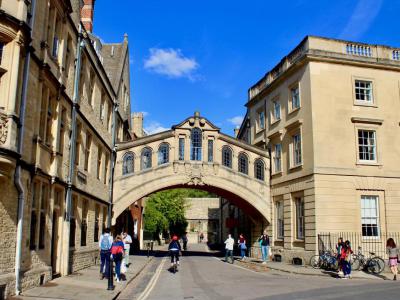
Unfortunately, if you are not a student of Hertford College, you won’t be able to cross the Bridge of Sighs, but you can certainly admire it from street level and add a photo of it to your collection of Oxford’s marvellous structures.
The real name of the bridge is the Hertford Bridge and it was built in 1914 by Sir Thomas Jackson. It took its popular name from the fact that it is supposed to look just like the bridge of the same name in Venice. Actually, it resembles the Rialto Bridge more than anything else, but the Bridge of Sighs sounds more romantic.
The bridge is a fine example of the Quadrature of the Parabola, developed by Archimedes in the 3rd century BC – a rather difficult geometrical concept in that the area of a parabolic segment is 4/3 of a certain inscribed triangle. It all comes down to the triangle (top) of the bridge being supported by the arch (parabola) because they are of the same base length and height.
Leaving the Maths lesson behind, the bridge is covered and glass panelled and links the college’s Old Quad with the New Quad. According to popular legend, the college once closed the bridge to overweight students, forcing them to get some exercise by taking the long route from one building to another.
***Harry Potter Walk***
Conveniently easy to spot behind Oxford’s very own Bridge of Sighs, the ancient (almost 200-year-old) giant Oak Tree, featured during a duel between Harry Potter and Draco Malfoy in Harry Potter and the Goblet of Fire, can be seen in New College Cloisters. And while the cloisters themselves are closed to the public, a photo of the tree can still be snapped from the roadside!
The real name of the bridge is the Hertford Bridge and it was built in 1914 by Sir Thomas Jackson. It took its popular name from the fact that it is supposed to look just like the bridge of the same name in Venice. Actually, it resembles the Rialto Bridge more than anything else, but the Bridge of Sighs sounds more romantic.
The bridge is a fine example of the Quadrature of the Parabola, developed by Archimedes in the 3rd century BC – a rather difficult geometrical concept in that the area of a parabolic segment is 4/3 of a certain inscribed triangle. It all comes down to the triangle (top) of the bridge being supported by the arch (parabola) because they are of the same base length and height.
Leaving the Maths lesson behind, the bridge is covered and glass panelled and links the college’s Old Quad with the New Quad. According to popular legend, the college once closed the bridge to overweight students, forcing them to get some exercise by taking the long route from one building to another.
***Harry Potter Walk***
Conveniently easy to spot behind Oxford’s very own Bridge of Sighs, the ancient (almost 200-year-old) giant Oak Tree, featured during a duel between Harry Potter and Draco Malfoy in Harry Potter and the Goblet of Fire, can be seen in New College Cloisters. And while the cloisters themselves are closed to the public, a photo of the tree can still be snapped from the roadside!
2) New College (must see)
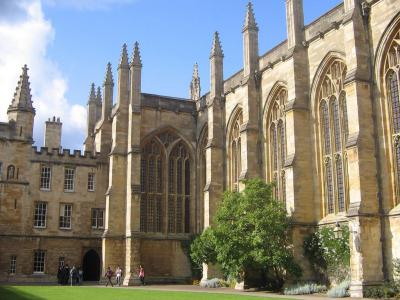
New College, one of the prestigious constituent colleges of the University of Oxford in the United Kingdom, stands out for its rich history and significant contributions to academia and culture. Founded in 1379 by William of Wykeham, the Bishop of Winchester, it was originally named "Saint Mary College of Winchester in Oxenford." Wykeham established New College alongside Winchester College, which served as its feeder school. Remarkably, New College was among the first in the university to admit and tutor undergraduate students.
Despite its misleading name, New College is one of Oxford's oldest colleges. In 2017, it achieved the top rank in the Norrington Table, which assesses the performance of Oxford undergraduates in final exams. Historically, it consistently ranks high, with a remarkable 3rd highest average in the Norrington Table over the past decade.
Reflecting societal changes, New College welcomed its first mixed-sex cohort in 1979, transitioning from a six-century tradition of being a male-only institution.
New College is also celebrated for its choral tradition, being one of the main choral foundations of the University of Oxford. Its choir is considered one of the world's leading choirs, a testament to which is its extensive discography and the two Gramophone Awards it has won.
New College is architecturally rich with historical significance. Originally built in the "perpendicular style," it has seen various additions and changes over the centuries. The Great Quad, initially constructed with attics in the sixteenth century, got a proper third storey in 1674. The oval turf at the center of the quad dates back to the eighteenth century. Many college buildings are known for their unique architectural and historical value. 'New Buildings' along Holywell Street showcase different architectural styles, including High Victorian and late Victorian by George Gilbert Scott and Basil Champneys, respectively.
***Harry Potter Walk***
The New College Cloisters appear in Harry Potter and the Goblet of Fire a good number of times – many of the corridor scenes within the film are shot here, including that in which Harry has to push through all the Gryffyndor students wearing Potter stinks badges to go and have a word with Cedric.
The New College Courtyard also served as a filming location for Harry Potter and the Goblet of Fire – the scene in which Harry tips off Cedric about the dragons which they will be battling in the first of the trials in the Triwizard Tournament. In the same movie, Harry comes face to face with Malfoy, who is sitting on a gigantic oak tree and where he is then turned into a ferret by Mad-Eye Moody. This particular tree is found in the New College Cloisters.
If you come to explore all things Harry Potter at Oxford during the colder period (October through March), then the entry to New College is free. However, if you go during the warmer months (March to October), you will need to buy a ticket.
Despite its misleading name, New College is one of Oxford's oldest colleges. In 2017, it achieved the top rank in the Norrington Table, which assesses the performance of Oxford undergraduates in final exams. Historically, it consistently ranks high, with a remarkable 3rd highest average in the Norrington Table over the past decade.
Reflecting societal changes, New College welcomed its first mixed-sex cohort in 1979, transitioning from a six-century tradition of being a male-only institution.
New College is also celebrated for its choral tradition, being one of the main choral foundations of the University of Oxford. Its choir is considered one of the world's leading choirs, a testament to which is its extensive discography and the two Gramophone Awards it has won.
New College is architecturally rich with historical significance. Originally built in the "perpendicular style," it has seen various additions and changes over the centuries. The Great Quad, initially constructed with attics in the sixteenth century, got a proper third storey in 1674. The oval turf at the center of the quad dates back to the eighteenth century. Many college buildings are known for their unique architectural and historical value. 'New Buildings' along Holywell Street showcase different architectural styles, including High Victorian and late Victorian by George Gilbert Scott and Basil Champneys, respectively.
***Harry Potter Walk***
The New College Cloisters appear in Harry Potter and the Goblet of Fire a good number of times – many of the corridor scenes within the film are shot here, including that in which Harry has to push through all the Gryffyndor students wearing Potter stinks badges to go and have a word with Cedric.
The New College Courtyard also served as a filming location for Harry Potter and the Goblet of Fire – the scene in which Harry tips off Cedric about the dragons which they will be battling in the first of the trials in the Triwizard Tournament. In the same movie, Harry comes face to face with Malfoy, who is sitting on a gigantic oak tree and where he is then turned into a ferret by Mad-Eye Moody. This particular tree is found in the New College Cloisters.
If you come to explore all things Harry Potter at Oxford during the colder period (October through March), then the entry to New College is free. However, if you go during the warmer months (March to October), you will need to buy a ticket.
3) Magdalen Bridge
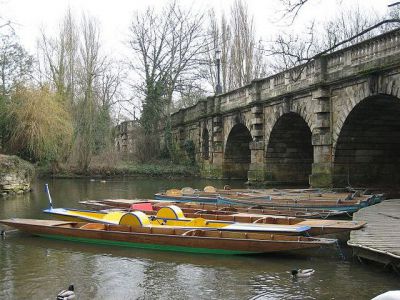
To travel between the Plain and the High Street, or in the opposite direction, you will need to cross Magdalen Bridge, which stretches over the River Cherwell and is separated by a small island at this location.
A bridge has existed at this location for many centuries. The earliest records of a bridge here date back to just before the year 1002, and it was initially a narrow wooden structure. Subsequent wooden bridges replaced the original one until the 16th century when the first stone bridge was constructed. This stone bridge measured 460 meters in length and featured 20 arches.
By the year 1769, the bridge had become too narrow to accommodate the increasing traffic to and from the expanding city center. Additionally, it suffered from deterioration due to inadequate maintenance and the frequent flooding of the river, which occurred several times a year. Ultimately, during the spring floods of 1772, several arches on the western side of the bridge deteriorated, leading to its closure.
The present-day bridge was designed by John Gwynn and constructed between 1772 and 1790 by John Randall. It comprises 11 arches, with the central one spanning the island and containing water only during periods of island flooding. Three arches span the two branches of the river, each flanked by two smaller arches on the outer banks. Initially, the bridge was 8 meters wide when it was built, but it was widened to 14 meters in 1882.
A recent tradition among students involves jumping off the bridge during the May Day celebrations. However, the water beneath the bridge is not very deep, and there have been accidents in the past. Consequently, the bridge is now closed to the public on May Day.
A bridge has existed at this location for many centuries. The earliest records of a bridge here date back to just before the year 1002, and it was initially a narrow wooden structure. Subsequent wooden bridges replaced the original one until the 16th century when the first stone bridge was constructed. This stone bridge measured 460 meters in length and featured 20 arches.
By the year 1769, the bridge had become too narrow to accommodate the increasing traffic to and from the expanding city center. Additionally, it suffered from deterioration due to inadequate maintenance and the frequent flooding of the river, which occurred several times a year. Ultimately, during the spring floods of 1772, several arches on the western side of the bridge deteriorated, leading to its closure.
The present-day bridge was designed by John Gwynn and constructed between 1772 and 1790 by John Randall. It comprises 11 arches, with the central one spanning the island and containing water only during periods of island flooding. Three arches span the two branches of the river, each flanked by two smaller arches on the outer banks. Initially, the bridge was 8 meters wide when it was built, but it was widened to 14 meters in 1882.
A recent tradition among students involves jumping off the bridge during the May Day celebrations. However, the water beneath the bridge is not very deep, and there have been accidents in the past. Consequently, the bridge is now closed to the public on May Day.
4) University Of Oxford Botanical Garden (must see)
A visit to the University of Oxford Botanical Garden, situated along the banks of the River Cherwell to the northeast of the Meadow, is an experience that should not be overlooked.
Established in 1621 originally as an herb garden primarily dedicated to medicinal plants, it holds the distinction of being the oldest botanical garden in the United Kingdom and the world's oldest scientific garden. Its founder, Henry Danvers, 1st Earl of Danby, was a prominent figure as a Knight of the Garter.
The garden occupies approximately four and a half acres of land, which previously served as a Jewish cemetery until the Jewish community was expelled from Oxford in 1290. To elevate the land above flood levels, a substantial amount of earth and manure, equivalent to 4000 cartloads, was required.
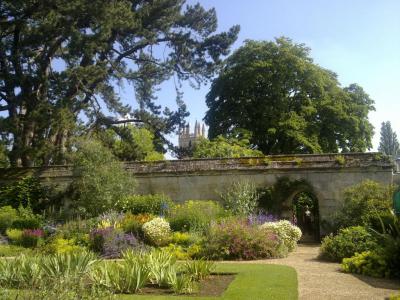
The garden showcases an impressive collection of over 8000 diverse plant species, thoughtfully organized into three main sections. The Walled Garden, encircled by the original stone walls, houses robust and hardy plants, neatly arranged in long, narrow beds, following a botanical classification. One notable exhibit in this section is the English Yew tree, which has been standing since 1645.
The second part of the garden is devoted to Glasshouses, catering to more delicate plant species. This section encompasses various specialized structures, such as the Alpine House, Conservatory, Fernery, Orchid House, Palm House, Succulent House, and Tropical Lily House.
The final segment, aptly named "Outside the Walled Garden," was established in 1947 and originated from the allotments that belonged to the Fellows of Christ Church. Within this area, you can explore the Autumn Border, Bog Garden, Glasshouse Borders, Herbaceous Borders, Merton Borders, Spring Walk, Vegetable Beds, and the Water Garden.
Established in 1621 originally as an herb garden primarily dedicated to medicinal plants, it holds the distinction of being the oldest botanical garden in the United Kingdom and the world's oldest scientific garden. Its founder, Henry Danvers, 1st Earl of Danby, was a prominent figure as a Knight of the Garter.
The garden occupies approximately four and a half acres of land, which previously served as a Jewish cemetery until the Jewish community was expelled from Oxford in 1290. To elevate the land above flood levels, a substantial amount of earth and manure, equivalent to 4000 cartloads, was required.
The garden showcases an impressive collection of over 8000 diverse plant species, thoughtfully organized into three main sections. The Walled Garden, encircled by the original stone walls, houses robust and hardy plants, neatly arranged in long, narrow beds, following a botanical classification. One notable exhibit in this section is the English Yew tree, which has been standing since 1645.
The second part of the garden is devoted to Glasshouses, catering to more delicate plant species. This section encompasses various specialized structures, such as the Alpine House, Conservatory, Fernery, Orchid House, Palm House, Succulent House, and Tropical Lily House.
The final segment, aptly named "Outside the Walled Garden," was established in 1947 and originated from the allotments that belonged to the Fellows of Christ Church. Within this area, you can explore the Autumn Border, Bog Garden, Glasshouse Borders, Herbaceous Borders, Merton Borders, Spring Walk, Vegetable Beds, and the Water Garden.
5) Merton College Chapel
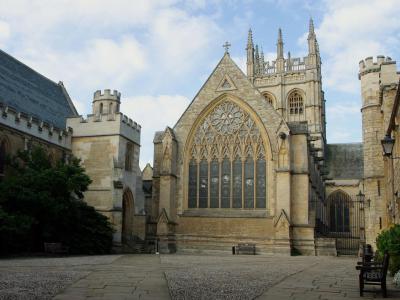
Of all the college chapels in Oxford University, Merton College Chapel is the largest and is one of the best examples of Early English Period architecture.
The first chapel built for the college in 1266, it wasn’t very sound and, by 1288, through bad upkeep, had almost fallen into ruin. The new church was started in 1290, with the Choir and the huge East Window finished in 1294.
Its Quire Walls have seven pairs of stained-glass windows, 12 of which, including the Annunciation Scene and heraldic glass in the East Window, were created in 1296. The other two windows date back to the 15th century; all of them survived the Reformation.
The Crossing and the South Transept were completed in the 14th century; the North Transept and the Great Tower were built in 1450. The Gothic roodscreen and the lectern, which was donated by John Martlock in 1504, were left untouched by King Henry VIII’s Suppression Acts.
In 1655, the roof of the South Transept collapsed and was rebuilt by Sir Christopher Wren in 1671; the medieval bells were recast at the same time. In 1802, the College Brewery was installed in the Sacristy, but was removed in 1886 when the chapel was restored, and the monuments in the Sanctuary were moved to the Ante Chapel. The beautiful chamber organ, built by Thomas Parker in 1762, was left in place and underwent restoration in 1999.
The chapel served for many years as the parish church of Saint John, as well as the college chapel, which explains its size. There is a door leading onto North Street, through which the parishioners entered, and two doors opening onto Merton College.
The first chapel built for the college in 1266, it wasn’t very sound and, by 1288, through bad upkeep, had almost fallen into ruin. The new church was started in 1290, with the Choir and the huge East Window finished in 1294.
Its Quire Walls have seven pairs of stained-glass windows, 12 of which, including the Annunciation Scene and heraldic glass in the East Window, were created in 1296. The other two windows date back to the 15th century; all of them survived the Reformation.
The Crossing and the South Transept were completed in the 14th century; the North Transept and the Great Tower were built in 1450. The Gothic roodscreen and the lectern, which was donated by John Martlock in 1504, were left untouched by King Henry VIII’s Suppression Acts.
In 1655, the roof of the South Transept collapsed and was rebuilt by Sir Christopher Wren in 1671; the medieval bells were recast at the same time. In 1802, the College Brewery was installed in the Sacristy, but was removed in 1886 when the chapel was restored, and the monuments in the Sanctuary were moved to the Ante Chapel. The beautiful chamber organ, built by Thomas Parker in 1762, was left in place and underwent restoration in 1999.
The chapel served for many years as the parish church of Saint John, as well as the college chapel, which explains its size. There is a door leading onto North Street, through which the parishioners entered, and two doors opening onto Merton College.
6) Christ Church Meadow (must see)
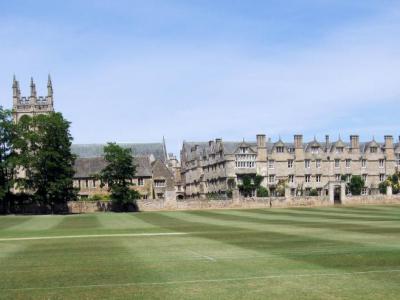
If it is a nice day and you don’t feel like having lunch in one of Oxford’s many excellent restaurants, why not take a picnic out to Christ Church Meadow, which is open to the public every day until sunset.
This roughly triangular-shaped stretch of land is a flood-meadow, which differs from a water-meadow which is man-made. The Meadow is bordered by the River Thames, called the Isis, the River Cherwell and Christ Church, which owns and maintains the land.
The upper part of the Meadow is given over to sports fields, while cattle graze for much of the year on the lower section. Deer are also brought here in the summer and autumn months.
Where the two rivers meet there is a small island on which stand several boathouses. Oxford’s Torpids bumping races are held here in March, and the Eights Week Regatta takes place in May.
You can see a plaque dedicated to James Sadler, who, in 1784, became the first Englishman to go up in a hot air balloon from the Meadow.
There are three entrances to the Meadow: one through the Memorial Gardens on Saint Aldate’s; a gate on Merton Street between Corpus Christi and Merton Colleges and the third, a gate at the eastern end next to the Botanical Garden. You are asked to please observe the rules on the notice boards outside each entrance.
This roughly triangular-shaped stretch of land is a flood-meadow, which differs from a water-meadow which is man-made. The Meadow is bordered by the River Thames, called the Isis, the River Cherwell and Christ Church, which owns and maintains the land.
The upper part of the Meadow is given over to sports fields, while cattle graze for much of the year on the lower section. Deer are also brought here in the summer and autumn months.
Where the two rivers meet there is a small island on which stand several boathouses. Oxford’s Torpids bumping races are held here in March, and the Eights Week Regatta takes place in May.
You can see a plaque dedicated to James Sadler, who, in 1784, became the first Englishman to go up in a hot air balloon from the Meadow.
There are three entrances to the Meadow: one through the Memorial Gardens on Saint Aldate’s; a gate on Merton Street between Corpus Christi and Merton Colleges and the third, a gate at the eastern end next to the Botanical Garden. You are asked to please observe the rules on the notice boards outside each entrance.
7) Cornmarket Street
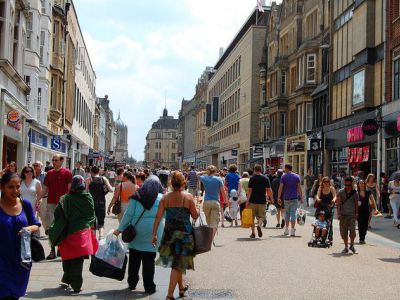
Cornmarket Street, commonly referred to as Cornmarket or simply The Corn, is a significant pedestrian pathway in Oxford. It stretches between Carfax Tower in the northern direction and Magdalen Street in the southern direction. In the year 1999, the street underwent a transformation and became a pedestrian-only zone.
To the east of Cornmarket Street, you'll find the charming Golden Cross arcade. This arcade houses a collection of small jewelry and craft shops within a historical courtyard, leading visitors to the Covered Market. On the western side of the street, there's the Clarendon Shopping Centre, an indoor shopping complex that extends in an L-shape and connects to Queen Street.
One notable historical structure on Cornmarket is the building located at 26–28 Cornmarket. This timber-framed building dates back to the 14th century and is a remnant of the New Inn, which was completed in 1386. This building is now owned by Jesus College and underwent an investigative and restorative process in 1983.
One of the most prominent retail establishments on Cornmarket Street is the largest department store in Oxford, situated at number 50. Boswells of Oxford founded this store in 1738. In 1928, the store introduced a new main entrance on Broad Street, while still maintaining an entrance on Cornmarket.
The tower of the Church of England parish church of Saint Michael at the Northgate holds the distinction of being the oldest structure in Oxford. It originates from the Saxon era and can be traced back to around the years 1000–1050. The church derives its name from the medieval gate that once existed at the northern terminus of Cornmarket, known as Oxford's city walls.
To the east of Cornmarket Street, you'll find the charming Golden Cross arcade. This arcade houses a collection of small jewelry and craft shops within a historical courtyard, leading visitors to the Covered Market. On the western side of the street, there's the Clarendon Shopping Centre, an indoor shopping complex that extends in an L-shape and connects to Queen Street.
One notable historical structure on Cornmarket is the building located at 26–28 Cornmarket. This timber-framed building dates back to the 14th century and is a remnant of the New Inn, which was completed in 1386. This building is now owned by Jesus College and underwent an investigative and restorative process in 1983.
One of the most prominent retail establishments on Cornmarket Street is the largest department store in Oxford, situated at number 50. Boswells of Oxford founded this store in 1738. In 1928, the store introduced a new main entrance on Broad Street, while still maintaining an entrance on Cornmarket.
The tower of the Church of England parish church of Saint Michael at the Northgate holds the distinction of being the oldest structure in Oxford. It originates from the Saxon era and can be traced back to around the years 1000–1050. The church derives its name from the medieval gate that once existed at the northern terminus of Cornmarket, known as Oxford's city walls.

8) The Saxon tower of Saint Michael at the North Gate
The Saxon Tower of Saint Michael at the North Gate is the oldest surviving building in Oxford and should be on your “must visit” list.
The tower is part of the church that stood on the site of the north gate when the city was a walled one. It was built in 1040, but the original church no longer exists. The tower was part of the city’s defences.
It was built of coral rag-stone, which is rough and very tough, but is virtually impossible to carve into pleasing shapes and wasn’t used for housing or church buildings. The Boccardo Prison adjoined the tower and in 1555 the Oxford Martyrs were kept there before being burnt at the stake. The martyrs’ cell door has been preserved and you can see in the tower, on the second floor.
The top of the tower is reached by climbing 99 steps, but it is an easy climb and well worth it for the splendid views. On the first floor you will find the former treasury where you will see some excellent examples of 16th century silver, a charter signed by King James I in 1612 and the wedding certificate of the writer William Morris and his wife, the artist’s model Jane Burden. There is also a rather repulsive sheela-na-gig, the figurine of a naked woman with an oversized vulva, which was once placed over the church doors to ward off evil.
The entrance to the tower is in the Visitor’s Reception Centre where you can buy souvenirs, postcards and guide books.
The tower is part of the church that stood on the site of the north gate when the city was a walled one. It was built in 1040, but the original church no longer exists. The tower was part of the city’s defences.
It was built of coral rag-stone, which is rough and very tough, but is virtually impossible to carve into pleasing shapes and wasn’t used for housing or church buildings. The Boccardo Prison adjoined the tower and in 1555 the Oxford Martyrs were kept there before being burnt at the stake. The martyrs’ cell door has been preserved and you can see in the tower, on the second floor.
The top of the tower is reached by climbing 99 steps, but it is an easy climb and well worth it for the splendid views. On the first floor you will find the former treasury where you will see some excellent examples of 16th century silver, a charter signed by King James I in 1612 and the wedding certificate of the writer William Morris and his wife, the artist’s model Jane Burden. There is also a rather repulsive sheela-na-gig, the figurine of a naked woman with an oversized vulva, which was once placed over the church doors to ward off evil.
The entrance to the tower is in the Visitor’s Reception Centre where you can buy souvenirs, postcards and guide books.

9) O'Neills
O'Neills in Oxford is a popular Irish pub known for offering a warm and friendly atmosphere, delicious Irish food and drinks, and a variety of live entertainment options. Located in the heart of Oxford, just a short walk from the train station, O'Neills is a go-to spot for locals and visitors alike.
One of the standout features of O'Neills is its extensive menu, which includes traditional Irish dishes and a selection of draught beers and ales, with the famous Guinness being a highlight. Whether you're looking for a quick drink, a hearty meal, or a combination of both, O'Neills has you covered.
The pub regularly hosts live concerts on Thursdays and Fridays, featuring different local bands or touring groups. These live performances create a vibrant and lively atmosphere, making it a great place to unwind and enjoy some music with friends.
In addition to live music, O'Neills offers live experiences across sports, music, and other events, ensuring that there's always something exciting happening. The pub is a fantastic venue to watch sports events with your friends or dance the night away to live music.
One of the standout features of O'Neills is its extensive menu, which includes traditional Irish dishes and a selection of draught beers and ales, with the famous Guinness being a highlight. Whether you're looking for a quick drink, a hearty meal, or a combination of both, O'Neills has you covered.
The pub regularly hosts live concerts on Thursdays and Fridays, featuring different local bands or touring groups. These live performances create a vibrant and lively atmosphere, making it a great place to unwind and enjoy some music with friends.
In addition to live music, O'Neills offers live experiences across sports, music, and other events, ensuring that there's always something exciting happening. The pub is a fantastic venue to watch sports events with your friends or dance the night away to live music.
10) Oxford Castle (must see)
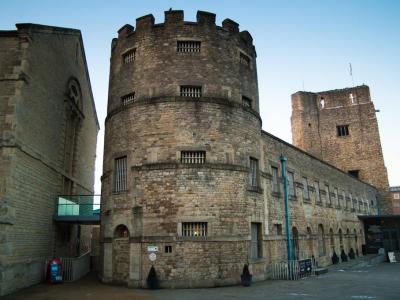
Oxford takes great pride in its rich history and dedicates significant resources to maintaining its ancient structures, as evidenced by the preservation efforts at Oxford Castle. This partially ruined Norman castle stands on the western outskirts of the town, just off New Road. Initially, it consisted of a wooden motte and bailey castle, which was later replaced by stone buildings in the 11th century.
During the conflict between England and Normandy from 1135 to 1153, the castle served as a strategic base for Empress Matilda, the daughter of King Henry I, in her quest to claim the English throne from her cousin, King Stephen. King Stephen besieged the castle with siege engines, but Matilda managed to escape, leading to the surrender of the castle's occupants before a full-scale battle could commence.
In the 13th century, further fortifications were added, including the construction of the Round Tower and the restoration of the chapel. King Henry III utilized the castle as a prison. However, during the English Civil War, the castle suffered significant damage and continued to function as a prison after the war's conclusion.
In 1888, the prison underwent expansion and operated as HM Prison Oxford until its closure in 1996. Today, only the motte and Saint George's Tower remain as remnants of the original castle.
The former prison buildings have been repurposed into a luxury hotel, office spaces, a shopping center, and a heritage complex. The castle's courtyard now hosts an open market and frequently features theater performances.
Additionally, Oxford Castle offers guided tours led by guides dressed in period costumes, providing insights into the castle's history. Visitors can explore Saint George's Tower, visit the crypt, and access the motte with its vaulted Well Chamber as part of the tour experience.
During the conflict between England and Normandy from 1135 to 1153, the castle served as a strategic base for Empress Matilda, the daughter of King Henry I, in her quest to claim the English throne from her cousin, King Stephen. King Stephen besieged the castle with siege engines, but Matilda managed to escape, leading to the surrender of the castle's occupants before a full-scale battle could commence.
In the 13th century, further fortifications were added, including the construction of the Round Tower and the restoration of the chapel. King Henry III utilized the castle as a prison. However, during the English Civil War, the castle suffered significant damage and continued to function as a prison after the war's conclusion.
In 1888, the prison underwent expansion and operated as HM Prison Oxford until its closure in 1996. Today, only the motte and Saint George's Tower remain as remnants of the original castle.
The former prison buildings have been repurposed into a luxury hotel, office spaces, a shopping center, and a heritage complex. The castle's courtyard now hosts an open market and frequently features theater performances.
Additionally, Oxford Castle offers guided tours led by guides dressed in period costumes, providing insights into the castle's history. Visitors can explore Saint George's Tower, visit the crypt, and access the motte with its vaulted Well Chamber as part of the tour experience.
11) Carfax Tower (must see)
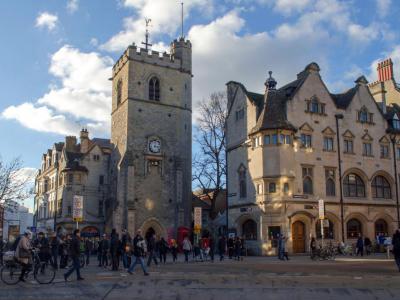
Carfax Tower stands at the junction of four streets – Cornmarket Street to the north, Saint Aldate’s to the south, High Street to the east, and Queen Street to the west – which is probably the exact geographical centre of Oxford.
The tower stands on the north-east corner of the junction and is the only remnant of the 13th century Saint Martin’s Church. From 1122 to 1896, this had been the City Church of Oxford until it was partially demolished to make way for a new road. Further road widening led to the rest of the church being pulled down in 1900.
The tower stands 23 metres high and no other building in the city is allowed to be higher. It has a ring of six bells that were cast in 1676 by Richard Keene. They still ring out the quarter hour, but the two quarter boys that used to strike them are no longer in use. The bells are rung on special occasions by the Oxford Society of Change Ringers.
Behind the tower you will see a solitary tombstone. It is that of William Butler, who was once the mayor of Oxford. He was buried here in 1865, but when the church was demolished, the tombstone was forgotten and, together with the tower, it is now classed as a Grade II listed building.
The tower stands on the north-east corner of the junction and is the only remnant of the 13th century Saint Martin’s Church. From 1122 to 1896, this had been the City Church of Oxford until it was partially demolished to make way for a new road. Further road widening led to the rest of the church being pulled down in 1900.
The tower stands 23 metres high and no other building in the city is allowed to be higher. It has a ring of six bells that were cast in 1676 by Richard Keene. They still ring out the quarter hour, but the two quarter boys that used to strike them are no longer in use. The bells are rung on special occasions by the Oxford Society of Change Ringers.
Behind the tower you will see a solitary tombstone. It is that of William Butler, who was once the mayor of Oxford. He was buried here in 1865, but when the church was demolished, the tombstone was forgotten and, together with the tower, it is now classed as a Grade II listed building.
12) Payne & Son Jewellers & Silversmiths
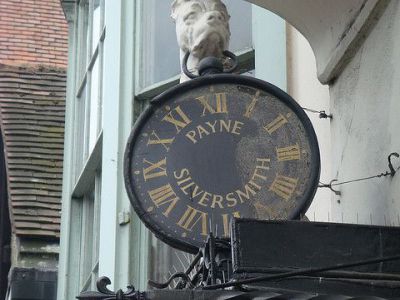
Payne & Son Jewellers & Silversmiths, located in Oxford, is a historic establishment that embodies a rich family heritage and expertise in the field of jewellery and silversmithing. This business began in 1790 when John Payne opened a silversmiths and jewellers in Wallingford. Over the years, the Payne family expanded their presence with shops in Abingdon, Banbury, and Tunbridge Wells. In 1874, George Septimus Payne inherited the Abingdon shop and moved it to Oxford in 1889. Since then, Payne & Son (Goldsmiths) has been a fixture on High Street, Oxford.
Now, Payne & Son is in the capable hands of the 7th and 8th generations of the Payne family, maintaining their reputation for excellence in 20th century and contemporary silver, as well as modern and wedding jewellery. They are notably a major stockist of Georg Jensen pieces.
Their services extend beyond retail, offering a unique commissioning service for both jewellery and silver items. Customers have the flexibility to modify existing designs with different gemstones or metal colors, request specific cuts or weights of gemstones in alternate styles, or create entirely original pieces. With a focus on handcrafted, one-of-a-kind designs, Payne & Son emphasizes that exact replicas may not always be possible due to the uniqueness of gemstone weights and qualities.
Payne & Son also provides expert engraving services, adhering to the standard styles of the National Association of Goldsmiths. Every purchase, whether made online or in-store, is elegantly packaged in special boxes and cases, with gift wrapping available for special occasions.
Now, Payne & Son is in the capable hands of the 7th and 8th generations of the Payne family, maintaining their reputation for excellence in 20th century and contemporary silver, as well as modern and wedding jewellery. They are notably a major stockist of Georg Jensen pieces.
Their services extend beyond retail, offering a unique commissioning service for both jewellery and silver items. Customers have the flexibility to modify existing designs with different gemstones or metal colors, request specific cuts or weights of gemstones in alternate styles, or create entirely original pieces. With a focus on handcrafted, one-of-a-kind designs, Payne & Son emphasizes that exact replicas may not always be possible due to the uniqueness of gemstone weights and qualities.
Payne & Son also provides expert engraving services, adhering to the standard styles of the National Association of Goldsmiths. Every purchase, whether made online or in-store, is elegantly packaged in special boxes and cases, with gift wrapping available for special occasions.
13) Radcliffe Camera (must see)
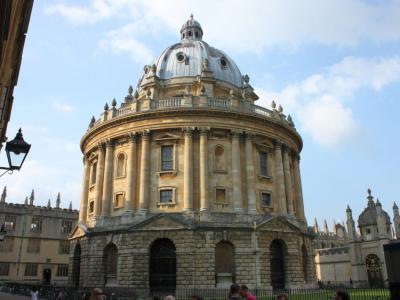
The Radcliffe Camera, despite its name, isn't a camera in the technical sense; rather, it is the first circular library ever constructed in the United Kingdom. In this context, "camera" is synonymous with "chamber."
John Radcliffe, a royal physician, expressed his desire to build a library at the University to house his collection of scientific materials. This led to a debate among several colleges over which of them should have the honor of hosting the library. Ultimately, none of the colleges were chosen.
To make room for the library, several terraced houses on Cattle Street, the Black Hall, and some outbuildings from Brasenose College were demolished. Constructed in 1749 by James Gibbes in the English Palladian architectural style, the exterior of the Radcliffe Camera appears to have three stories. The ground floor is rusticated, while the first floor is divided into sections by ten pairs of Corinthian columns. Above this section is a lantern and a dome covered in lead.
Inside the building, the first floor serves as an open gallery that runs along the walls. There is a 2-meter-high statue of John Radcliffe, sculpted by John Rysbrack. In 1912, an underground archives room was established, connected to the Bodleian Library through a passage.
The Radcliffe Camera houses an impressive collection of over 600,000 books and now functions as a reading room affiliated with the Bodleian Library. Unfortunately, it is not accessible to the general public.
John Radcliffe, a royal physician, expressed his desire to build a library at the University to house his collection of scientific materials. This led to a debate among several colleges over which of them should have the honor of hosting the library. Ultimately, none of the colleges were chosen.
To make room for the library, several terraced houses on Cattle Street, the Black Hall, and some outbuildings from Brasenose College were demolished. Constructed in 1749 by James Gibbes in the English Palladian architectural style, the exterior of the Radcliffe Camera appears to have three stories. The ground floor is rusticated, while the first floor is divided into sections by ten pairs of Corinthian columns. Above this section is a lantern and a dome covered in lead.
Inside the building, the first floor serves as an open gallery that runs along the walls. There is a 2-meter-high statue of John Radcliffe, sculpted by John Rysbrack. In 1912, an underground archives room was established, connected to the Bodleian Library through a passage.
The Radcliffe Camera houses an impressive collection of over 600,000 books and now functions as a reading room affiliated with the Bodleian Library. Unfortunately, it is not accessible to the general public.
