Custom Walk in Granada, Spain by kderbabian_75f22 created on 2025-11-05
Guide Location: Spain » Granada
Guide Type: Custom Walk
# of Sights: 14
Tour Duration: 3 Hour(s)
Travel Distance: 6 Km or 3.7 Miles
Share Key: 3LE3T
Guide Type: Custom Walk
# of Sights: 14
Tour Duration: 3 Hour(s)
Travel Distance: 6 Km or 3.7 Miles
Share Key: 3LE3T
How It Works
Please retrieve this walk in the GPSmyCity app. Once done, the app will guide you from one tour stop to the next as if you had a personal tour guide. If you created the walk on this website or come to the page via a link, please follow the instructions below to retrieve the walk in the app.
Retrieve This Walk in App
Step 1. Download the app "GPSmyCity: Walks in 1K+ Cities" on Apple App Store or Google Play Store.



Step 2. In the GPSmyCity app, download(or launch) the guide "Granada Map and Walking Tours".
Step 3. Tap the menu button located at upper right corner of the "Walks" screen and select "Retrieve custom walk". Enter the share key: 3LE3T
1) The Alhambra Palace and Fortress Complex (must see)
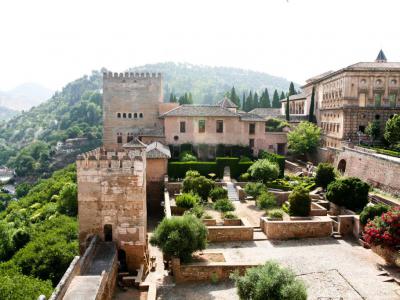
Alhambra in Arabic is "The Red One." It is a palace and fortress complex. It was originally built on the ruins of a Roman fortress in 889. It was rebuilt in the 13th century by the Muhammad I of Granada, the first ruler of the Emirate of Granada. It was converted to a palace by Yusuf I, Sultan of Granada. In 1492 it became the royal court of Ferdinand and Isabella.
The Alhambra was the place where Christopher Columbus received his commission to find the Indies which he never found. In 1526 Charles I of Spain ordered a Renaissance palace in the Mannerist style with its humanism contrasting with Nasrid architecture. After the decline of Nasrid influence, the Alhambra complex fell into neglect and disrepair.
Centuries later after Napoleon I had destroyed the site, the Alhambra was rediscovered. It is today one of the greatest tourist attractions in Spain. The Alhambra is a UNESCO World Heritage Site. It has been described by poets as a pearl in emeralds. This was a literal description of the colors of the stones imbedded in the surrounding woods.
The Alhambra park is stocked with nightingales. Running water from the fountains and cascades can be heard at all times. The idea was to create a kind of "paradise on earth." The exterior was made to be plain and austere.
The Alcazaba, also known as the old citidel, is the oldest part. All that is left are the great outer walls, towers and ramparts. Beyond the Alcazaba is the palace of the Arab rulers. There are the Nasrid Palaces of Alhambra and then the Alhambra Alta. originally meant for court officials.
The royal palace is of three parts. The Mexuar is plain and simple. It was for functions of business and government. Sersllo contains the Court of the Myrtles. The Harem is richly decorated. It was the living quarters for the wives and mistresses of the Sultan. It provided hot and cold running water, including showers.
Poets of the Nasrid period made poems for the Palace. Lines are inscribed in arches and columns in arabesque, cursive script. "There is no victor but God." appears often.
Why You Should Visit:
One should visit often in order to focus on the different places of interest. There are so many, all of them captivating. Don't travel thousands of miles to see a Spanish McDonald's. Visit to see what you can see nowhere else.
Tips:
Be prudent about crowds. There were cutpurses in Nasrid times, there are pickpockets now.
The Alhambra was the place where Christopher Columbus received his commission to find the Indies which he never found. In 1526 Charles I of Spain ordered a Renaissance palace in the Mannerist style with its humanism contrasting with Nasrid architecture. After the decline of Nasrid influence, the Alhambra complex fell into neglect and disrepair.
Centuries later after Napoleon I had destroyed the site, the Alhambra was rediscovered. It is today one of the greatest tourist attractions in Spain. The Alhambra is a UNESCO World Heritage Site. It has been described by poets as a pearl in emeralds. This was a literal description of the colors of the stones imbedded in the surrounding woods.
The Alhambra park is stocked with nightingales. Running water from the fountains and cascades can be heard at all times. The idea was to create a kind of "paradise on earth." The exterior was made to be plain and austere.
The Alcazaba, also known as the old citidel, is the oldest part. All that is left are the great outer walls, towers and ramparts. Beyond the Alcazaba is the palace of the Arab rulers. There are the Nasrid Palaces of Alhambra and then the Alhambra Alta. originally meant for court officials.
The royal palace is of three parts. The Mexuar is plain and simple. It was for functions of business and government. Sersllo contains the Court of the Myrtles. The Harem is richly decorated. It was the living quarters for the wives and mistresses of the Sultan. It provided hot and cold running water, including showers.
Poets of the Nasrid period made poems for the Palace. Lines are inscribed in arches and columns in arabesque, cursive script. "There is no victor but God." appears often.
Why You Should Visit:
One should visit often in order to focus on the different places of interest. There are so many, all of them captivating. Don't travel thousands of miles to see a Spanish McDonald's. Visit to see what you can see nowhere else.
Tips:
Be prudent about crowds. There were cutpurses in Nasrid times, there are pickpockets now.
2) Palace of Charles V (must see)
Inside the Nasrid fortification of the Alhambra, well fed cats peer dispassionately at The visitors who come from all over the world. The visitors take pictures of the cats. Then they pass through the lush flower gardens to the Palace of the Holy Roman Emperor, Charles V. The palace, begun in 1527, was not completed until the 20th century.
Charles was not only an emperor, he was a king. He was ruler of Spain and most of Southern Europe. He had palaces galore, but he needed a summer place. Ferdinand and Isabella had taken rooms at the Alhambra. He needed something new.
He chose Pedro Machuca as architect. Pedro had studied with Michelangelo. He would create something unique, something Italian. The palace is stylistically Mannerist. At that time Mannerism was all the rage in Italy. The exterior is a mix of rusticated stone on the first floor and ashlar smoothness above. The building was avant-garde, unique in Spain.
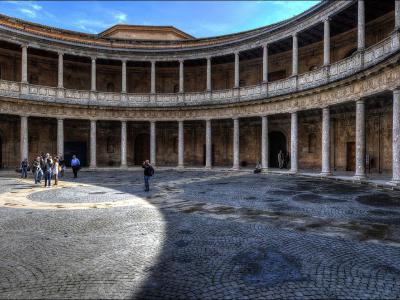
The palace is a square with a circular patio within. The roof has a circular opening above the patio. The patio is enclosed in two levels. A Doric colonnade encircles the lower level. The upper level is wrapped in a stylized Ionic colonnade. The visitors entering the patio are surprised, having passed from the square to the circle.
Charles never lived in the palace. As the visitors leave they pass through the gardens again. The cats watch them go.
Charles was not only an emperor, he was a king. He was ruler of Spain and most of Southern Europe. He had palaces galore, but he needed a summer place. Ferdinand and Isabella had taken rooms at the Alhambra. He needed something new.
He chose Pedro Machuca as architect. Pedro had studied with Michelangelo. He would create something unique, something Italian. The palace is stylistically Mannerist. At that time Mannerism was all the rage in Italy. The exterior is a mix of rusticated stone on the first floor and ashlar smoothness above. The building was avant-garde, unique in Spain.
The palace is a square with a circular patio within. The roof has a circular opening above the patio. The patio is enclosed in two levels. A Doric colonnade encircles the lower level. The upper level is wrapped in a stylized Ionic colonnade. The visitors entering the patio are surprised, having passed from the square to the circle.
Charles never lived in the palace. As the visitors leave they pass through the gardens again. The cats watch them go.
3) The Nasrid Royal Palaces (must see)
The Nasrid Royal Palaces in Granada are a stunning testament to the architectural and cultural grandeur of the last Muslim dynasty in the Iberian Peninsula. Founded by the Nasrid ruler Alhamar in the 13th century, the palaces primarily reflect 14th-century construction and aesthetics. This complex served as the royal residence of the kings of Granada and encapsulates the essence of the refined and delicate artistry of the Nasrid era in Al Andalus.
The complex is composed of three primary structures: the Mexuar, the Palace of Comares (or Yusuf I), and the Palace of the Lions (or Mohammed V). Each palace within the complex has its unique character and purpose, showcasing the intricate balance between robust exteriors and ornate interiors. This architectural design underscores the temporality of earthly existence, a theme recurrent in Islamic art and philosophy, emphasizing the fleeting nature of human achievements compared to the eternal cosmos.
The Mexuar is the simplest in terms of decoration and is primarily used for administration and governance. It is characterized by functional yet elegantly decorated spaces with strapwork, dark wooden ceilings, floors, and trim, creating a stark contrast against the white plaster walls.
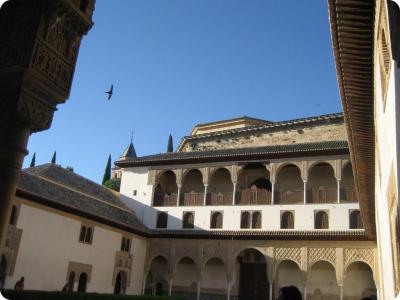
Palace of Comares, built under Yusuf I, is famous for the Patio de los Arrayanes (Court of the Myrtles). It features richly colored interiors with dado panels, plasterwork, ceramic tiles, cedar wood, and ornamental woodwork on ceilings. These elements combine to create a visually stunning environment that exemplifies Nasrid artistry.
Known for its luxurious decor, the Palace of the Lions housed the private quarters of the sultan’s family and was intricately adorned with various Islamic artistic elements. It included advanced amenities such as bathrooms with hot and cold running water, baths, and sophisticated water pressure systems, highlighting the technological advancement of the Nasrid dynasty. The design of these spaces allowed for natural light and air, enhancing the comfort and aesthetic appeal.
The palaces also integrate lush courtyards inspired by Persian and Muslim garden designs, symbolizing paradisiacal oases. These gardens, along with the flowing water and fountains, play a crucial role in the overall design, linking architecture with nature. The water features represent purity and life, reinforcing the palatial spaces' symbolic and sensual allure.
The complex is composed of three primary structures: the Mexuar, the Palace of Comares (or Yusuf I), and the Palace of the Lions (or Mohammed V). Each palace within the complex has its unique character and purpose, showcasing the intricate balance between robust exteriors and ornate interiors. This architectural design underscores the temporality of earthly existence, a theme recurrent in Islamic art and philosophy, emphasizing the fleeting nature of human achievements compared to the eternal cosmos.
The Mexuar is the simplest in terms of decoration and is primarily used for administration and governance. It is characterized by functional yet elegantly decorated spaces with strapwork, dark wooden ceilings, floors, and trim, creating a stark contrast against the white plaster walls.
Palace of Comares, built under Yusuf I, is famous for the Patio de los Arrayanes (Court of the Myrtles). It features richly colored interiors with dado panels, plasterwork, ceramic tiles, cedar wood, and ornamental woodwork on ceilings. These elements combine to create a visually stunning environment that exemplifies Nasrid artistry.
Known for its luxurious decor, the Palace of the Lions housed the private quarters of the sultan’s family and was intricately adorned with various Islamic artistic elements. It included advanced amenities such as bathrooms with hot and cold running water, baths, and sophisticated water pressure systems, highlighting the technological advancement of the Nasrid dynasty. The design of these spaces allowed for natural light and air, enhancing the comfort and aesthetic appeal.
The palaces also integrate lush courtyards inspired by Persian and Muslim garden designs, symbolizing paradisiacal oases. These gardens, along with the flowing water and fountains, play a crucial role in the overall design, linking architecture with nature. The water features represent purity and life, reinforcing the palatial spaces' symbolic and sensual allure.
4) Plaza Nueva (The New Square) (must see)
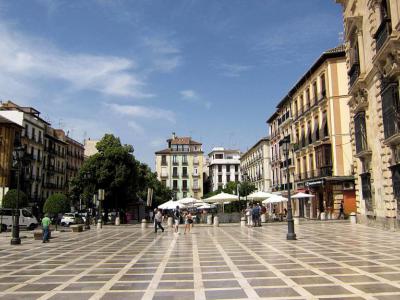
Despite its name, the Plaza Nueva (New Square) is one of the oldest squares in Granada. In former times the plaza was the scene of bull fights, tournaments and an occasional execution, definitely a spectator event. Before it was a square, however, it was a bridge. Called the Bridge of of Loggers, it spanned the River Darro.
The square is centrally located and is an ideal starting point for explorations on foot. Walk from the Puerto Granadas to the Alhambra forest to the Alhambra, a 15 or 20 minute journey. Exit by way of the cobbled street on the left of the Church of Santa Ana to the River Darro. Perhaps go up Elvira Street to the Mirador San Nicolas and the Albaicin.
The main attraction of the square itself is the High Court of Andalusia. The court building was formerly the Chancilleria Real (Royal Chancellery). Construction of the Chancellery began in 1530. In the rear of the building a prison, handy to the court. The square is also home to the Arborea Flamenco. Cafes, flamenco, ole!
The square is centrally located and is an ideal starting point for explorations on foot. Walk from the Puerto Granadas to the Alhambra forest to the Alhambra, a 15 or 20 minute journey. Exit by way of the cobbled street on the left of the Church of Santa Ana to the River Darro. Perhaps go up Elvira Street to the Mirador San Nicolas and the Albaicin.
The main attraction of the square itself is the High Court of Andalusia. The court building was formerly the Chancilleria Real (Royal Chancellery). Construction of the Chancellery began in 1530. In the rear of the building a prison, handy to the court. The square is also home to the Arborea Flamenco. Cafes, flamenco, ole!

5) Tablao Flamenco La Alborea (must see)
The mission of the Tablao Flamenco La Alborea is to deliver the unique dance experience called Flamenco to Granada. Located in the Plaza Nueva, it is easily accessible by foot from any place in the old city. One hour flamenco shows are presented by four artists. Seating is available by the stage or in the balcony. The acoustics are great.
A one hour show will consist of a singer, a guitarist, a bailaor or bailaora. Often the artists will be from the Sacromonte, one of the six districts of Albaicin.
In the dance there are five elements: cante (singing), Baile (dance), guitarra (guitar), palmas (hand clapping), jaleo (a call, like "ole!"). There is also a festero or festera, the one who is "throwing the party." The flamenco is performed on a tablao, a small stage usually of wood. The wood enhances the sounds of heels stamping in the dance.
The flamenco is gypsy in origin. During the Franco era in Spain, the flamenco was changed to become more sensual. Many aficianados feel this has had a corrupting effect on the dance itself, making it less genuine.
A one hour show will consist of a singer, a guitarist, a bailaor or bailaora. Often the artists will be from the Sacromonte, one of the six districts of Albaicin.
In the dance there are five elements: cante (singing), Baile (dance), guitarra (guitar), palmas (hand clapping), jaleo (a call, like "ole!"). There is also a festero or festera, the one who is "throwing the party." The flamenco is performed on a tablao, a small stage usually of wood. The wood enhances the sounds of heels stamping in the dance.
The flamenco is gypsy in origin. During the Franco era in Spain, the flamenco was changed to become more sensual. Many aficianados feel this has had a corrupting effect on the dance itself, making it less genuine.
6) La Madrasa (The Prayer Room) (must see)
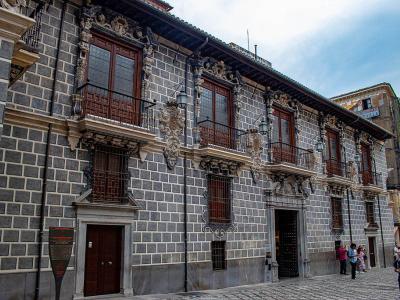
On the Oficios Street, between the Granada Cathedral and the Alcaiceria, where gold, and silk were traded long ago, sits the Madrasa of Granada. Founded in 1349 by Yusuf I, Nasrid Emir of Granada, the Madrasa was a school of Islamic law and grammar. The syllabus also included Rhetoric and Medicine.
The Madrasa survived when the city was ceded to Ferdinand and Isabella. Then in 1500, after a Muslim rebellion, Gonzalo Jimenez de Cisneros, Inquisitor-General, attacked the Madrasa. The building was sacked, the irreplaceable library books were burned in the Plaza Bib-Rambla. No one was ready for the Spanish Inquisition.
Subsequently, the building was variously standing empty, used as a city hall, or taken over to serve as a textile warehouse, its noble purpose long forgotten. In 1860 The Mihrab inscription dedicating the mosque to the month of Muharram was found. After several restorations, the Madrasa was opened to the public in 2011.
The sole part of the original Madrasa surviving today is the Prayer Room. It has a high ceiling. Halfway up the walls the shape of the room changes to an octagonal form. The upper walls are covered with stucco decorations and calligraphy. There are 16 windows and a wooden cupola overhead.
Within the entrance an inscription reads, "If in your spirit you provide a place for the desire to study...you will find within it the beautiful tree of honor..." The Inquisition tried to erase this place, and it failed.
The Madrasa survived when the city was ceded to Ferdinand and Isabella. Then in 1500, after a Muslim rebellion, Gonzalo Jimenez de Cisneros, Inquisitor-General, attacked the Madrasa. The building was sacked, the irreplaceable library books were burned in the Plaza Bib-Rambla. No one was ready for the Spanish Inquisition.
Subsequently, the building was variously standing empty, used as a city hall, or taken over to serve as a textile warehouse, its noble purpose long forgotten. In 1860 The Mihrab inscription dedicating the mosque to the month of Muharram was found. After several restorations, the Madrasa was opened to the public in 2011.
The sole part of the original Madrasa surviving today is the Prayer Room. It has a high ceiling. Halfway up the walls the shape of the room changes to an octagonal form. The upper walls are covered with stucco decorations and calligraphy. There are 16 windows and a wooden cupola overhead.
Within the entrance an inscription reads, "If in your spirit you provide a place for the desire to study...you will find within it the beautiful tree of honor..." The Inquisition tried to erase this place, and it failed.
7) Capilla Real de Granada (Royal Chapel) (must see)
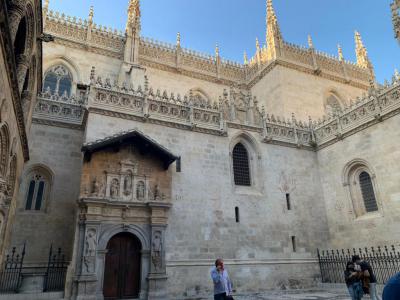
When Queen Isabella moved into Granada, she was a woman who had found her new home. She was determined to fix it up, to make it her own. Among the first things on her list was to make an addition to that new cathedral that was sitting on the old mosque. The add-on would be her very own chapel, not a little one either. It would be her Main Chapel.
The Main Chapel was constructed at last by 1517. It was built in the new Isabelline style. It is a transition from Gothic to early Renaissance architecture. Isabella planned to stay. By royal decree the chapel was declared to be the future burial site for herself and King Ferdinand. The King did not object.
The chapel is dedicated to Saint John the Baptist and Saint John the Evangelist. The interior is reminiscent of the Monastery of San Juan de los Reyes in Toledo. It has four side chapels in the form of a cross and a Gothic vault. In the center of the transept are the tombs of Isabella and Ferdinand. The tombs are sculpted and raised.
Spoiler alert. The tombs are empty. The royal remains are actually in the crypt below. Since the church is still used for services, the crypt is not always open to visitors. The Catholic kings and queens are joined in this chapel. Their memorials mark the emergence of the coming power and glory of Spain and the brilliant renaissance of Europe.
The Main Chapel was constructed at last by 1517. It was built in the new Isabelline style. It is a transition from Gothic to early Renaissance architecture. Isabella planned to stay. By royal decree the chapel was declared to be the future burial site for herself and King Ferdinand. The King did not object.
The chapel is dedicated to Saint John the Baptist and Saint John the Evangelist. The interior is reminiscent of the Monastery of San Juan de los Reyes in Toledo. It has four side chapels in the form of a cross and a Gothic vault. In the center of the transept are the tombs of Isabella and Ferdinand. The tombs are sculpted and raised.
Spoiler alert. The tombs are empty. The royal remains are actually in the crypt below. Since the church is still used for services, the crypt is not always open to visitors. The Catholic kings and queens are joined in this chapel. Their memorials mark the emergence of the coming power and glory of Spain and the brilliant renaissance of Europe.
8) Granada Cathedral (must see)
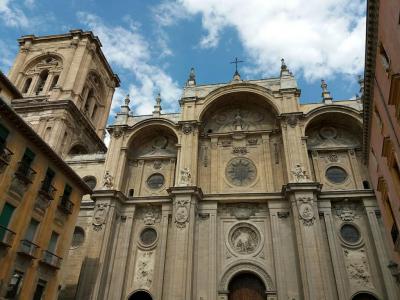
Granada Cathedral is a Roman Catholic church. It is the seat of the Archdiocese of Granada and it was built on top of the bones of the Mosque of the City. The construction took place in 1518 after the Christian Reconquest of Andalusia.
The Cathedral was started in The Spanish Renaissance style rather than the Gothic. In 1523 the first architect, Enrique Egas was replaced by Diego de Siloe. The work continued for forty years. Diego planned for a triforium of five naves rather than three. His principal chapel (capilla mayor) was circular, not a semicircular apse.
For 181 years alterations and revisions proceeded under different architects until 1667. Alonso Cano and Gaspar de la Pena introduced Baroque elements to the facade. In 1699 after 181 years, this document of stone might be considered almost complete. But two high towers were planned and never built. The ground underneath was considered unstable.
The Cathedral was meant to be the royal mausoleum but Philip II moved the royal burial site to the palace of El Escorial near Madrid.
The Cathedral was started in The Spanish Renaissance style rather than the Gothic. In 1523 the first architect, Enrique Egas was replaced by Diego de Siloe. The work continued for forty years. Diego planned for a triforium of five naves rather than three. His principal chapel (capilla mayor) was circular, not a semicircular apse.
For 181 years alterations and revisions proceeded under different architects until 1667. Alonso Cano and Gaspar de la Pena introduced Baroque elements to the facade. In 1699 after 181 years, this document of stone might be considered almost complete. But two high towers were planned and never built. The ground underneath was considered unstable.
The Cathedral was meant to be the royal mausoleum but Philip II moved the royal burial site to the palace of El Escorial near Madrid.
9) San Jerónimo Church (must see)
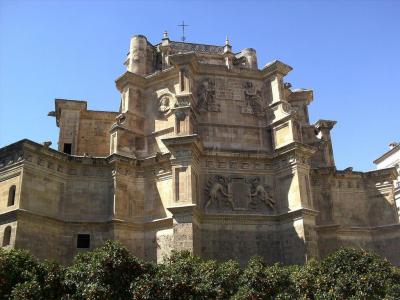
The San Jerónimo Monastery is located on Calle Rector Lopez Argueta, in the historic center of Granada. It was the first monastery to be built in the city following the Christian conquest of Granada in the Middle Ages. It was first founded in 1492 by Catholics in nearby Santa Fe, but was moved to its current location shortly after the city was retaken by Christian. Construction began on the current building four years later, next to an area known as the Almoravid, which now houses the city’s main hospital. It was built using the demolished Elvira gate during Moorish rule of Granada.
The church was a magnificent building with beautiful painted walls, a stunning celling and altar. The main chapel and transept were created by Jacopo Florentino and Diego de Siloé. The church holds many tributes to Gonzalez Fernando de Cordoba, the "Great Captain" of Spain’s Christian conquistadors, who ended Islamic influence on the Iberian peninsula with the conquest of Granada. The building’s exterior is adorned with his coat of arms, whilst a sepulchre of the military leader can be found inside the monastery, close to the ornate altarpiece.
The church was a magnificent building with beautiful painted walls, a stunning celling and altar. The main chapel and transept were created by Jacopo Florentino and Diego de Siloé. The church holds many tributes to Gonzalez Fernando de Cordoba, the "Great Captain" of Spain’s Christian conquistadors, who ended Islamic influence on the Iberian peninsula with the conquest of Granada. The building’s exterior is adorned with his coat of arms, whilst a sepulchre of the military leader can be found inside the monastery, close to the ornate altarpiece.
10) San Juan de Dios Church (must see)
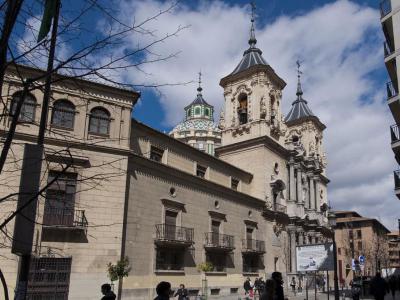
The San Juan de Dios Church is located on the street of the same name. Both are named after Juan Duarte, a local monk who arrived in Granada in 1536. In a time of hardship for the city and surrounding region, Duarte dedicated his life to caring for the sick and needy. He died in Casa de los Pisa in 1550, and was later canonized. The city’s main hospital also bears his name. Inside this stunning baroque church, you can see the silver urn, held within a raised shrine, which contains his ashes.
The church was erected in the 17th century, as a sanctuary and crypt for Juan Duarte. It was designed by Jose de Bada y Navajas, the high master of cathedrals in Granada and Malaga. Designed in a Latin cruciform plan, it is notable for its collection of paintings and sculpture, added soon after the church was completed. The main altar was designed by Francisco Guerrero, and is made from gilded wood. A four room chapel dedicated to the Virgin Mary can be found above the sacristy, close to the shrine to San Juan de Dios.
The church of San Juan de Dios is located in the very centre of Granada. It is open from 10am until 1pm, and from 4pm to 7pm, in summer. The church closes at 6pm during the winter months.
The church was erected in the 17th century, as a sanctuary and crypt for Juan Duarte. It was designed by Jose de Bada y Navajas, the high master of cathedrals in Granada and Malaga. Designed in a Latin cruciform plan, it is notable for its collection of paintings and sculpture, added soon after the church was completed. The main altar was designed by Francisco Guerrero, and is made from gilded wood. A four room chapel dedicated to the Virgin Mary can be found above the sacristy, close to the shrine to San Juan de Dios.
The church of San Juan de Dios is located in the very centre of Granada. It is open from 10am until 1pm, and from 4pm to 7pm, in summer. The church closes at 6pm during the winter months.
11) Mirador de San Nicolas (San Nicolas Lookout) (must see)
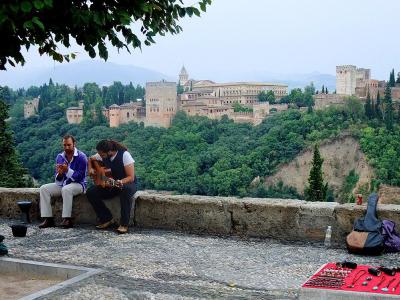
Bill Clinton is supposed to have said "the most beautiful sunset in the world" when speaking of the sunset view from San Nicolas Lookout. San Nicolas does offer the best view of the Alhambra at sunset, but there are a lot of spectacular lookouts in Granada. San Cristobal is reputed to be a fantastic viewpoint of the City.
Each clear day at sunset there is a crowd gathering in the square of San Nicolas. They are there to watch the Alhambra turn red in the setting sun. Alhambra in Arabic means "red castle." Tourists, locals, and travelers come together at the overlook. There are vendors hawking snacks, flamenco dancers, souvenir sellers and other entertainments.
The lookout is named for San Nicolas Church and Square. The church was built on the top of a mosque in 1525. There seems to have been a trend, when the Catholic Monarchs took over in 1491, to drop a church on a mosque. Location, location, the man said. The church has been destroyed several times by fires, but the original bell tower survives.
For only a few euros it is possible to climb the tower San Nicolas and get a better view.
Each clear day at sunset there is a crowd gathering in the square of San Nicolas. They are there to watch the Alhambra turn red in the setting sun. Alhambra in Arabic means "red castle." Tourists, locals, and travelers come together at the overlook. There are vendors hawking snacks, flamenco dancers, souvenir sellers and other entertainments.
The lookout is named for San Nicolas Church and Square. The church was built on the top of a mosque in 1525. There seems to have been a trend, when the Catholic Monarchs took over in 1491, to drop a church on a mosque. Location, location, the man said. The church has been destroyed several times by fires, but the original bell tower survives.
For only a few euros it is possible to climb the tower San Nicolas and get a better view.
12) Carrera del Darro (Darro Street) (must see)
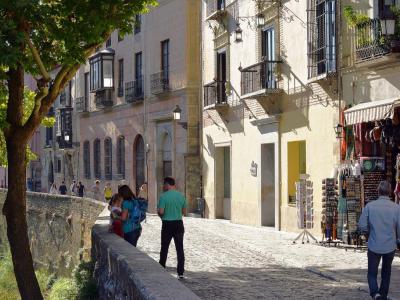
The whole left bank of the River Darro is called the Carrera del Darro. Carrera del Darro is unique in a city full of unique things. The street runs in between the river and the forest of Alhambra. At night the churches are lighted and the Alhambra at the top of its hill glows with light.
Starting in the sixteenth century the nobility of Granada made their homes in this picturesque place. Renaissance buildings, churches, and ruins beside bars and cafes line the street and the banks of the river. The Banuelo is here. Public baths came in the 11th century. Mudejar churches like Santa Ana and San Pedro date from 1567.
Then there is the tragic story of the House of Castril balcony. Today the Castril House is an archeology museum. It is a Renaissance dwelling built in 1539. It belonged to a rich nobleman named Zafra. Zafra was obsessive with keeping his daughter Elvira locked away from the local swains.
He ordered the death of a servant who was caught with a message for Elvira from a likely suitor. He believed the message of love was from the servant and ordered that he be hung from his daughter's balcony. When the servant protested his innocence, Zafra suggested he hang from the balcony and wait. Elvira took poison and killed herself.
There is an mysterious inscription that was found, "Esperando La Del Cielo" ("Waiting for Heaven") above Elvira's balcony. A melodramatic tragedy, the case was never solved.
Starting in the sixteenth century the nobility of Granada made their homes in this picturesque place. Renaissance buildings, churches, and ruins beside bars and cafes line the street and the banks of the river. The Banuelo is here. Public baths came in the 11th century. Mudejar churches like Santa Ana and San Pedro date from 1567.
Then there is the tragic story of the House of Castril balcony. Today the Castril House is an archeology museum. It is a Renaissance dwelling built in 1539. It belonged to a rich nobleman named Zafra. Zafra was obsessive with keeping his daughter Elvira locked away from the local swains.
He ordered the death of a servant who was caught with a message for Elvira from a likely suitor. He believed the message of love was from the servant and ordered that he be hung from his daughter's balcony. When the servant protested his innocence, Zafra suggested he hang from the balcony and wait. Elvira took poison and killed herself.
There is an mysterious inscription that was found, "Esperando La Del Cielo" ("Waiting for Heaven") above Elvira's balcony. A melodramatic tragedy, the case was never solved.

13) Paseo de los Tristes (The Promenade of the Sad) (must see)
Officially, the real name of Paseo de las Tristes is Paseo del Padre Manjon. The paseo was at one time a route for funeral processions. "Tristes" in Spanish can mean "sorrows." The paseo is easy to reach with the city's hop-on hop-off train or try a bus. When the weather is mild and clear the path is often crowded, especially at sunset.
The promenade is a pleasant walk bordered by the River Darro and some finer restaurants. There are stunning views of the Alhambra against the skyline. There is a flamenco venue (of course!) and tourist shops galore. The ancient cobblestone streets recall the medieval era.
The paseo leads to the San Jose cemetery, across the river and above the Alhambra. It was a long trip on foot for mourners. They must have stopped here, in this pleasant place to say their farewells. Today there is a spacious terrace with umbrellas from which to contemplate sunset views and have a drink and let go of the "sorrows".
The promenade is a pleasant walk bordered by the River Darro and some finer restaurants. There are stunning views of the Alhambra against the skyline. There is a flamenco venue (of course!) and tourist shops galore. The ancient cobblestone streets recall the medieval era.
The paseo leads to the San Jose cemetery, across the river and above the Alhambra. It was a long trip on foot for mourners. They must have stopped here, in this pleasant place to say their farewells. Today there is a spacious terrace with umbrellas from which to contemplate sunset views and have a drink and let go of the "sorrows".
14) Generalife Gardens (must see)
The name "Generalife" may be taken to mean "garden of paradise". It seems it was the dream of every Islamic gardener to create paradise in a garden. This theme can be seen in the gardens of the Alhambra, especially in the Generalife.
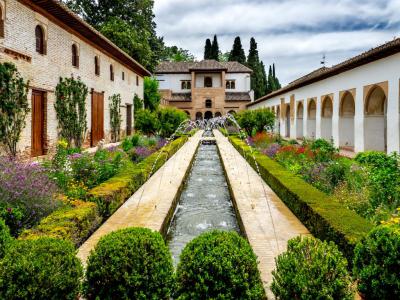
A promenade leads to the "Patio de la Acequia", the heart of the palace grounds. There is a gallery of arches on the western side. A portico on the north side is called the Mirador. The Mirador has five arches in front and three behind. Beyond the portico is the Patio de las Cipreses with a pool in the center.
A series of small pools are lined with oleander and myrtle shrubs. Go up a stone stairway to the Upper Gardens. The Upper Gardens were formerly olive groves. Today the former olive groves have an esplanade, and a stairway with cascading waterfalls. At the end there is a stage where the annual International Festival of Music and Dance is held.
The Spanish elite who moved into the palace installed long rows of fountains that would crash together in the air and splash into the central pool. The Spanish concept was a sharp departure from the Moorish style. The Moor loved a perfect garden, completely enclosed.
There are several legends about the Alhambra and the Generalife. One of the most intriguing concerns a Sultana and her lover, a knight of the opposition Abencerraje family. They rendezvoused beneath the branches of a great cypress, which is still alive today. They were found and the Sultan ordered all the men of that family to be killed.
The great Cypress, which is now called Cipres de la Sultana is waiting for them to return. War, romance, beautiful gardens, mosques and churches, what a mix!
Why You Should Visit:
This one of the few places in the world where the West and East commingle so well. They meet in architecture, history, culture, passion and civilization in the Alhambra.
Tips:
Go early as possible to have time and space. Go later and enjoy the sunsets. If considering staying at a parador, make a reservation well ahead.
A promenade leads to the "Patio de la Acequia", the heart of the palace grounds. There is a gallery of arches on the western side. A portico on the north side is called the Mirador. The Mirador has five arches in front and three behind. Beyond the portico is the Patio de las Cipreses with a pool in the center.
A series of small pools are lined with oleander and myrtle shrubs. Go up a stone stairway to the Upper Gardens. The Upper Gardens were formerly olive groves. Today the former olive groves have an esplanade, and a stairway with cascading waterfalls. At the end there is a stage where the annual International Festival of Music and Dance is held.
The Spanish elite who moved into the palace installed long rows of fountains that would crash together in the air and splash into the central pool. The Spanish concept was a sharp departure from the Moorish style. The Moor loved a perfect garden, completely enclosed.
There are several legends about the Alhambra and the Generalife. One of the most intriguing concerns a Sultana and her lover, a knight of the opposition Abencerraje family. They rendezvoused beneath the branches of a great cypress, which is still alive today. They were found and the Sultan ordered all the men of that family to be killed.
The great Cypress, which is now called Cipres de la Sultana is waiting for them to return. War, romance, beautiful gardens, mosques and churches, what a mix!
Why You Should Visit:
This one of the few places in the world where the West and East commingle so well. They meet in architecture, history, culture, passion and civilization in the Alhambra.
Tips:
Go early as possible to have time and space. Go later and enjoy the sunsets. If considering staying at a parador, make a reservation well ahead.
