Custom Walk in Zurich, Switzerland by steinfrau_a4f78 created on 2025-12-03
Guide Location: Switzerland » Zurich
Guide Type: Custom Walk
# of Sights: 11
Tour Duration: 2 Hour(s)
Travel Distance: 3.2 Km or 2 Miles
Share Key: D8RSC
Guide Type: Custom Walk
# of Sights: 11
Tour Duration: 2 Hour(s)
Travel Distance: 3.2 Km or 2 Miles
Share Key: D8RSC
How It Works
Please retrieve this walk in the GPSmyCity app. Once done, the app will guide you from one tour stop to the next as if you had a personal tour guide. If you created the walk on this website or come to the page via a link, please follow the instructions below to retrieve the walk in the app.
Retrieve This Walk in App
Step 1. Download the app "GPSmyCity: Walks in 1K+ Cities" on Apple App Store or Google Play Store.



Step 2. In the GPSmyCity app, download(or launch) the guide "Zurich Map and Walking Tours".
Step 3. Tap the menu button located at upper right corner of the "Walks" screen and select "Retrieve custom walk". Enter the share key: D8RSC
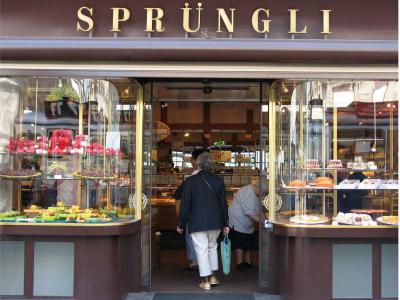
1) Confiserie Sprüngli (Sprüngli Confectionery)
Founded in 1836 by Rudolf Sprüngli, this sweet empire began churning out chocolate long before Zurich became a global banking giant (talking about priorities...). Indeed, Confiserie Sprüngli is one of the city's oldest and most luxurious confectioners, but the real showstopper here isn’t chocolate. What is, is the dainty, dangerously addictive “Luxemburgerli” macarons, invented by a homesick Luxembourger in the kitchen. These pastel treats have gone from petit four to cult status, faster than you can say “truffle overload.”
In 1892, Sprüngli’s chocolate-making arm went its own way (think conscious uncoupling, but with more cocoa) and became Lindt & Sprüngli. That’s right, the silky squares of Lindt you know and love-they’re the rebel offspring. Meanwhile, Confiserie Sprüngli stayed put, happily crafting pralines, Grand Cru truffles, and enough sugar-coated temptation to derail any diet.
Fast forward to today, and the business is still family-run, now in its sixth generation. You’ll find Sprüngli shops sprinkled around Zurich like edible jewels-inside the main train station and twice along Station Street, at No. 21 and No. 67.
But the real gem is the Parade Square café at Station Street 21. Picture this: a salon of elegance where Zurich’s high-society grandmothers sip coffee with diamond-studded discretion. Legend whispers that young bachelors used to signal their availability to the ladies by discreetly flipping their coffee spoons-a sort of edible Tinder for the silk-scarf set... Though Sprüngli’s director insists it’s just a myth born of stricter times, when the women of status had few public places to converse without raising eyebrows.
So, next time you're here, mind your spoon-just in case folklore decides to make a comeback...
In 1892, Sprüngli’s chocolate-making arm went its own way (think conscious uncoupling, but with more cocoa) and became Lindt & Sprüngli. That’s right, the silky squares of Lindt you know and love-they’re the rebel offspring. Meanwhile, Confiserie Sprüngli stayed put, happily crafting pralines, Grand Cru truffles, and enough sugar-coated temptation to derail any diet.
Fast forward to today, and the business is still family-run, now in its sixth generation. You’ll find Sprüngli shops sprinkled around Zurich like edible jewels-inside the main train station and twice along Station Street, at No. 21 and No. 67.
But the real gem is the Parade Square café at Station Street 21. Picture this: a salon of elegance where Zurich’s high-society grandmothers sip coffee with diamond-studded discretion. Legend whispers that young bachelors used to signal their availability to the ladies by discreetly flipping their coffee spoons-a sort of edible Tinder for the silk-scarf set... Though Sprüngli’s director insists it’s just a myth born of stricter times, when the women of status had few public places to converse without raising eyebrows.
So, next time you're here, mind your spoon-just in case folklore decides to make a comeback...
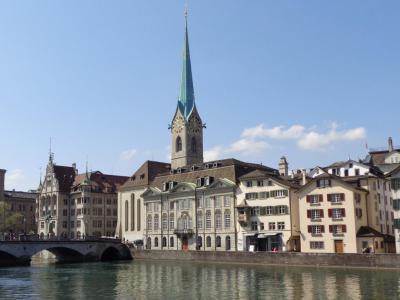
2) Fraumünster (Church of Our Lady) (must see)
The Church of Our Lady-or Fraumünster if you're feeling Swiss about it-is easily one of Zurich’s most eye-catching landmarks, thanks to that graceful blue spire that insists on being in every skyline photo. Founded way back in 853 by Emperor Louis the German for his daughter Hildegard (talk about a royal housewarming gift), this wasn’t an average cloistered convent. No, the abbess here wasn’t just praying and gardening-she was running the show. In medieval Zurich, she held market rights, minted coins, and had a firm grip on city affairs. Basically, before Zurich was ruled by bankers in suits, it was partly governed by nuns with serious executive power.
By 874, they’d added a basilica complete with a crypt that now houses Zurich’s patron saints, Felix and Regula-because a great city can certainly benefit from a couple of martyred siblings watching over it. But the good times for the abbey came to an end in 1524 during the Reformation. The last abbess handed the keys over to the city, and most of the religious art was either taken down or..., well, aggressively removed.
Today, people come not just for the medieval intrigue, but for the stunning mashup of Gothic architecture and Baroque flair. And then-boom-the stained glass. In the 1970s, none other than Marc Chagall himself stepped in and created five towering windows for the choir. Each one tells a biblical story in bold, glowing color. The “Prophet” window is all reds and oranges and righteous fire. Across from it are “Jacob,” “Christ,” and “Zion” in cooler, gentler hues, and the “Law” window fit to impress even Moses himself.
Also remarkable is the vibrant window near the entrance by Augusto Giacometti, adding another layer of artistic prestige to the church’s interior. So now it doubles as an accidental art museum.
If you're visiting, do grab the audio guide-it’s included with the ticket and actually quite good. You’ll get the full story, minus the Latin. Entry fees vary, and remember: while photos of the interior are generally allowed, pictures of the Chagall windows are strictly prohibited. Your phone will be tempted, but resist. Oh, and be sure to bring some Swiss francs, too-they still like their cash here.
So, whether you’re into saints, stained glass, or just need a break from the Station Street, the Church of Our Lady is a peaceful detour into Zurich’s soul-with a splash of color and a whole lot of history.
By 874, they’d added a basilica complete with a crypt that now houses Zurich’s patron saints, Felix and Regula-because a great city can certainly benefit from a couple of martyred siblings watching over it. But the good times for the abbey came to an end in 1524 during the Reformation. The last abbess handed the keys over to the city, and most of the religious art was either taken down or..., well, aggressively removed.
Today, people come not just for the medieval intrigue, but for the stunning mashup of Gothic architecture and Baroque flair. And then-boom-the stained glass. In the 1970s, none other than Marc Chagall himself stepped in and created five towering windows for the choir. Each one tells a biblical story in bold, glowing color. The “Prophet” window is all reds and oranges and righteous fire. Across from it are “Jacob,” “Christ,” and “Zion” in cooler, gentler hues, and the “Law” window fit to impress even Moses himself.
Also remarkable is the vibrant window near the entrance by Augusto Giacometti, adding another layer of artistic prestige to the church’s interior. So now it doubles as an accidental art museum.
If you're visiting, do grab the audio guide-it’s included with the ticket and actually quite good. You’ll get the full story, minus the Latin. Entry fees vary, and remember: while photos of the interior are generally allowed, pictures of the Chagall windows are strictly prohibited. Your phone will be tempted, but resist. Oh, and be sure to bring some Swiss francs, too-they still like their cash here.
So, whether you’re into saints, stained glass, or just need a break from the Station Street, the Church of Our Lady is a peaceful detour into Zurich’s soul-with a splash of color and a whole lot of history.
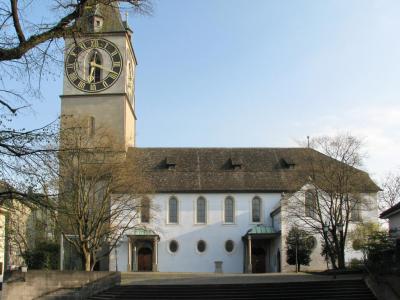
3) St. Peterskirche (St. Peter's Church) (must see)
Saint Peter's Church-Zurich’s oldest temple-is also, quite possibly, the city’s most punctual landmark. Built in the 9th century, this beauty has seen more centuries than your local pub’s clock has seen beers. And speaking of clocks, St. Peter’s claims the biggest clock face in all of Europe. At a whopping 8.6 meters in diameter, its minute hand alone is longer than most compact cars. No excuse for being late around here...
The church got some facelifts over the years-first in the 13th century and again in the 1700s-because, indeed, medieval landmarks deserve a little renovation every now and then. Until 1911, a firewatcher lived in the steeple, popping his head out the window four times an hour to scan for smoke. If flames were spotted, he’d wave a flag in the direction of the danger-simple, low-tech, and surprisingly effective. Thus, unlike many of its European cousins, Zurich avoided catastrophic fires. It turns out that medieval flag signals are not just for parades...
Inside the church, you’ll find a Baroque nave paired with a Romanesque choir-like architectural speed dating through the centuries. Look closely at the faded murals, and you might spot a saint lurking in the shadows. Above the pulpit, the name of God appears in Hebrew, a nod to the Reformation’s love for the Bible’s original languages. Think of it as ancient theological street cred...
Now here’s the kicker: Saint Peter’s Church has shared custody. The City of Zurich owns the tower, while the Swiss Reformed Church parish holds the rights to the bells, the belfry, and the staircase. It is, indeed, church co-parenting at its finest...
Tip for the savvy traveler: Admire it up close, but for peak Instagram potential, cross the river-the church is even prettier from a distance.
The church got some facelifts over the years-first in the 13th century and again in the 1700s-because, indeed, medieval landmarks deserve a little renovation every now and then. Until 1911, a firewatcher lived in the steeple, popping his head out the window four times an hour to scan for smoke. If flames were spotted, he’d wave a flag in the direction of the danger-simple, low-tech, and surprisingly effective. Thus, unlike many of its European cousins, Zurich avoided catastrophic fires. It turns out that medieval flag signals are not just for parades...
Inside the church, you’ll find a Baroque nave paired with a Romanesque choir-like architectural speed dating through the centuries. Look closely at the faded murals, and you might spot a saint lurking in the shadows. Above the pulpit, the name of God appears in Hebrew, a nod to the Reformation’s love for the Bible’s original languages. Think of it as ancient theological street cred...
Now here’s the kicker: Saint Peter’s Church has shared custody. The City of Zurich owns the tower, while the Swiss Reformed Church parish holds the rights to the bells, the belfry, and the staircase. It is, indeed, church co-parenting at its finest...
Tip for the savvy traveler: Admire it up close, but for peak Instagram potential, cross the river-the church is even prettier from a distance.
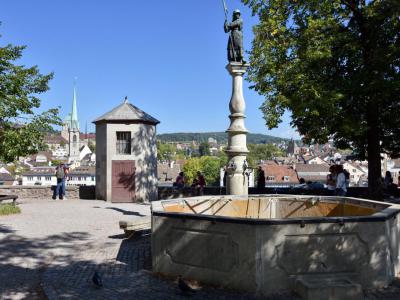
4) Lindenhofplatz (Lindenhof Square) (must see)
Perched above the Old Town of Zurich like a quiet, leafy crown, Lindenhof is both a park and a time machine with a view. And it's not just where the city began-it’s where the city still comes to breathe...
This peaceful hilltop was once the site of a Roman fortress, complete with ten towers and walls thick enough to make modern builders weep. The Romans got busy here in the 2nd century, but by the 9th, Louis the German decided the crumbling castle needed a royal facelift. Sadly, by the 13th century, the whole thing was abandoned, and locals did what locals do best-recycled the stones for new projects. Eco-friendly before it was cool...
And no, Zurich’s ancient swagger didn’t start with Roman togas and centurions. Long before Rome flexed its empire, Neolithic and Bronze Age folks had already claimed this hill as prime real estate. Back then, the Sihl River liked to flood the surrounding lands, and the elevated Lindenhof was the safe (and dry) bet.
Fast forward to the 1700s, and Lindenhof reinvented itself as a public park. The early crowd-pleaser, it was primarily about archery and crossbow contests that drew visitors in those days (indeed, nothing like a bit of target practice to go with your afternoon stroll...).
Nowadays, keep an eye out for the Hedwig Fountain, built in 1912 to honor one of Zurich’s boldest deceptions. During the 1292 siege by Duke Albert I, the city’s women donned full battle gear and manned the ramparts, while the men were off fighting elsewhere. The ruse worked, and Zurich lived to tell the tale. Today, Hedwig and her helmet still stand proudly in the park, thanks to sculptor Gustav Siber.
Apart from all the attractions inside, Lindenhof gives you panoramic eye-candy of Zurich’s rooftops, rivers, and lake-all in one relaxed snapshot. It’s the city’s breathing room, ideal for a pause between museum marathons and shopping sprees. Kids can run wild on the playgrounds, and for the tactically inclined, there’s an outdoor chessboard waiting to test your strategy.
Oh, and if you’re lucky, you might stumble onto a festival or event-just ask at the tourism office.
Insider tip:
Check out the replica of a Roman tombstone that first mentioned Turicum-Zurich’s name back when Latin was all the rage. The original is at the Swiss National Museum, but Lindenhof’s got its own copy for on-the-spot admiration...
This peaceful hilltop was once the site of a Roman fortress, complete with ten towers and walls thick enough to make modern builders weep. The Romans got busy here in the 2nd century, but by the 9th, Louis the German decided the crumbling castle needed a royal facelift. Sadly, by the 13th century, the whole thing was abandoned, and locals did what locals do best-recycled the stones for new projects. Eco-friendly before it was cool...
And no, Zurich’s ancient swagger didn’t start with Roman togas and centurions. Long before Rome flexed its empire, Neolithic and Bronze Age folks had already claimed this hill as prime real estate. Back then, the Sihl River liked to flood the surrounding lands, and the elevated Lindenhof was the safe (and dry) bet.
Fast forward to the 1700s, and Lindenhof reinvented itself as a public park. The early crowd-pleaser, it was primarily about archery and crossbow contests that drew visitors in those days (indeed, nothing like a bit of target practice to go with your afternoon stroll...).
Nowadays, keep an eye out for the Hedwig Fountain, built in 1912 to honor one of Zurich’s boldest deceptions. During the 1292 siege by Duke Albert I, the city’s women donned full battle gear and manned the ramparts, while the men were off fighting elsewhere. The ruse worked, and Zurich lived to tell the tale. Today, Hedwig and her helmet still stand proudly in the park, thanks to sculptor Gustav Siber.
Apart from all the attractions inside, Lindenhof gives you panoramic eye-candy of Zurich’s rooftops, rivers, and lake-all in one relaxed snapshot. It’s the city’s breathing room, ideal for a pause between museum marathons and shopping sprees. Kids can run wild on the playgrounds, and for the tactically inclined, there’s an outdoor chessboard waiting to test your strategy.
Oh, and if you’re lucky, you might stumble onto a festival or event-just ask at the tourism office.
Insider tip:
Check out the replica of a Roman tombstone that first mentioned Turicum-Zurich’s name back when Latin was all the rage. The original is at the Swiss National Museum, but Lindenhof’s got its own copy for on-the-spot admiration...
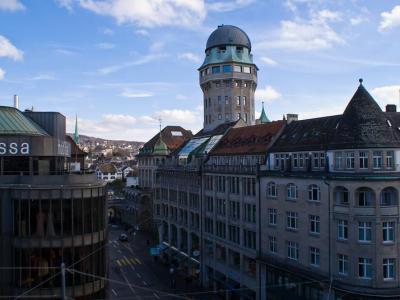
5) Urania Observatory
If you’ve ever dreamed of stargazing like an ancient Greek muse, look no further than the Urania Observatory-named, fittingly, after Urania, the celestial lady in charge of astronomy. This 50-meter (or 167-foot, if you're imperially inclined) tower pokes out above Zurich’s Old Town like a curious periscope aimed at the heavens. Construction kicked off in 1899, and by 1907, the public was officially invited to peer into the cosmos.
At the heart of the tower is a serious piece of optical wizardry: a Carl Zeiss refracting telescope with a two-lens system and a 600-times zoom that can make the moon look like it's ready for a selfie. The telescope stretches five meters long and rests on a vibration-proof pillar that goes straight through the building like a cosmic exclamation mark. Despite its age, it’s still a technical marvel-and yes, it got a full spa day in 2007 for its 100th birthday, courtesy of Carl Zeiss Co. in Germany.
But wait-this place isn’t just about interstellar eye candy. You’ll also get sweeping views of Zurich’s rooftops and skyline, which are particularly photogenic after sunset. Join a guided tour on a Friday or Saturday night, or time your visit with one of their special events throughout the year. And if all that stargazing stirs your appetite, don’t worry-they’ve got a bar and restaurant, too. Because sometimes nothing pairs with the rings of Saturn like a nice local beer...
At the heart of the tower is a serious piece of optical wizardry: a Carl Zeiss refracting telescope with a two-lens system and a 600-times zoom that can make the moon look like it's ready for a selfie. The telescope stretches five meters long and rests on a vibration-proof pillar that goes straight through the building like a cosmic exclamation mark. Despite its age, it’s still a technical marvel-and yes, it got a full spa day in 2007 for its 100th birthday, courtesy of Carl Zeiss Co. in Germany.
But wait-this place isn’t just about interstellar eye candy. You’ll also get sweeping views of Zurich’s rooftops and skyline, which are particularly photogenic after sunset. Join a guided tour on a Friday or Saturday night, or time your visit with one of their special events throughout the year. And if all that stargazing stirs your appetite, don’t worry-they’ve got a bar and restaurant, too. Because sometimes nothing pairs with the rings of Saturn like a nice local beer...
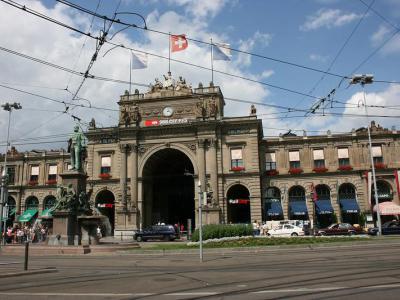
6) Zurich Hauptbahnhof (Central Railway Station)
Known to locals and rail nerds alike as Zurich HB, this train station is Switzerland’s largest and possibly its busiest overachiever. Thanks to Zurich’s prime perch in the heart of Europe, HB has long been the continent’s commuter magnet, currently juggling over 2,000 trains a day like it’s just another Tuesday.
Nestled between the charming wrinkles of the Old Town and flanked by the Limmat and Sihl Rivers, this station even has a river running under it. Yes, the Sihl cruises through a tunnel beneath the platforms like it’s got a ticket too. And speaking of platforms, Zurich HB runs on two levels-one up top, one down below-with a fully functional shopping mall called ShopVille connecting the two.
The station’s railway roots go back to 1847, when the very first Zurich terminal linked to Baden via the Swiss Northern Railway. But as train traffic multiplied like clockwork, the city had to go big. The grand 1871 upgrade produced a neo-Renaissance beauty with soaring arches, stylish lobbies, and even a statue out front of Alfred Escher, the man who made Swiss trains cool before it was cool.
Modern tweaks followed: electrified lines in the early 1900s, computer-controlled signals in the 60s-because even old souls need fresh software. Today, Zurich HB is more than a transit point; it’s a full-blown railway cathedral with shopping, history, and a river casually flowing underneath. All aboard!
Nestled between the charming wrinkles of the Old Town and flanked by the Limmat and Sihl Rivers, this station even has a river running under it. Yes, the Sihl cruises through a tunnel beneath the platforms like it’s got a ticket too. And speaking of platforms, Zurich HB runs on two levels-one up top, one down below-with a fully functional shopping mall called ShopVille connecting the two.
The station’s railway roots go back to 1847, when the very first Zurich terminal linked to Baden via the Swiss Northern Railway. But as train traffic multiplied like clockwork, the city had to go big. The grand 1871 upgrade produced a neo-Renaissance beauty with soaring arches, stylish lobbies, and even a statue out front of Alfred Escher, the man who made Swiss trains cool before it was cool.
Modern tweaks followed: electrified lines in the early 1900s, computer-controlled signals in the 60s-because even old souls need fresh software. Today, Zurich HB is more than a transit point; it’s a full-blown railway cathedral with shopping, history, and a river casually flowing underneath. All aboard!
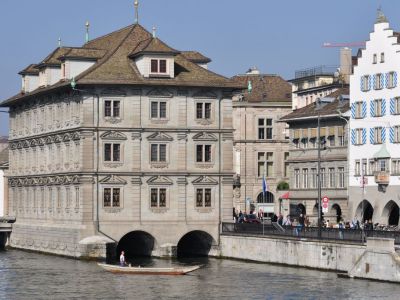
7) Rathaus (Town Hall)
Zurich’s power couple: the Town Hall and the City House-two buildings, one river, and several centuries of political drama.
The former of the two, the Town Hall, is a stately beauty dating back to the 1690s, sitting atop a historical layer cake. It's built on the bones of a 1397 city council hall, which itself rose from a 13th-century courthouse. Basically, if these walls could talk, they’d probably be exhausted. Once the seat of the Republic of Zurich until 1798, it is now the proud property of the Canton of Zurich and hosts both the cantonal and city parliaments. Talk about multitasking...
Just across the river (because Zurich doesn’t believe in overcrowding its government buildings), you’ll find the City House, the edifice in which the executive government gets down to business. It's on the Limmat’s west side, just south of the Town Hall Bridge. If you time it right, you can watch democracy in action from a second-floor terrace. It’s like political theater, but with less shouting.
Speaking of the Town Hall Bridge, this isn’t just any river crossing. It’s a plaza, a market, a pedestrian hangout, and a time machine all rolled into one. The locals used to call it the “vegetable bridge,” because medieval farmers once hawked their carrots and cabbages here. Today, you're more likely to find bratwurst and espresso.
This bridge has been around since the Middle Ages, originally made entirely of wood. Expanded in 1375 and again in 1420, it’s always been extra-wide enough for buildings to sit on top. By the 1600s, it had grown into its current footprint, and in the 1800s, it ditched the timber look for some serious stone-and-cast-iron swagger.
The bridge and surrounding square still buzz with life-festivals, markets, street performers, and all the postcard-perfect souvenir shops your heart desires. It’s pedestrian-only, so, put on your comfy footwear and let history meet you halfway across the Limmat.
The former of the two, the Town Hall, is a stately beauty dating back to the 1690s, sitting atop a historical layer cake. It's built on the bones of a 1397 city council hall, which itself rose from a 13th-century courthouse. Basically, if these walls could talk, they’d probably be exhausted. Once the seat of the Republic of Zurich until 1798, it is now the proud property of the Canton of Zurich and hosts both the cantonal and city parliaments. Talk about multitasking...
Just across the river (because Zurich doesn’t believe in overcrowding its government buildings), you’ll find the City House, the edifice in which the executive government gets down to business. It's on the Limmat’s west side, just south of the Town Hall Bridge. If you time it right, you can watch democracy in action from a second-floor terrace. It’s like political theater, but with less shouting.
Speaking of the Town Hall Bridge, this isn’t just any river crossing. It’s a plaza, a market, a pedestrian hangout, and a time machine all rolled into one. The locals used to call it the “vegetable bridge,” because medieval farmers once hawked their carrots and cabbages here. Today, you're more likely to find bratwurst and espresso.
This bridge has been around since the Middle Ages, originally made entirely of wood. Expanded in 1375 and again in 1420, it’s always been extra-wide enough for buildings to sit on top. By the 1600s, it had grown into its current footprint, and in the 1800s, it ditched the timber look for some serious stone-and-cast-iron swagger.
The bridge and surrounding square still buzz with life-festivals, markets, street performers, and all the postcard-perfect souvenir shops your heart desires. It’s pedestrian-only, so, put on your comfy footwear and let history meet you halfway across the Limmat.
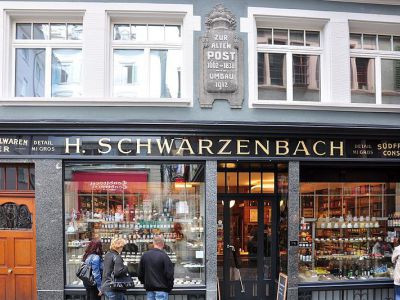
8) Schwarzenbach Kolonialwaren (Schwarzenbach Colonial Goods Shop)
If your legs are protesting and your eyes are glazed from all the churches, towers, and charming cobblestones of Zurich’s Old Town-fear not. Schwarzenbach Colonial Goods Shop is your elegant excuse to hit pause. This isn’t just any pit stop. It’s a gourmet time machine disguised as a shop, roasting beans and tempting tastebuds since 1864. It was back then that Heini Schwarzenbach decided Zurich needed less boredom and more spice. Quite literally...
Step inside, and you're instantly wrapped in the old-world charm and the sweet, seductive smell of freshly roasted coffee. The wooden shelves groan (happily) under the weight of dried fruits, artisan jams, wild honey, and enough chocolate to make your dentist nervous. Also, there’s wine. There are syrups. There’s rice that probably has a better passport than you. And yes, the teas and coffee beans come from just about every corner of the globe that knows how to grow something aromatic.
But what's more. Next door, you’ll find their cozy little café. Just grab a seat, order a cup of their lovingly roasted coffee or fragrant tea, and pair it with a baked good that whispers sweet nothings to your soul. It’s the perfect break-part history lesson, part foodie fantasy.
So, if you're strolling through the Old Town of Zurich and feel the need for a snack with a story, Schwarzenbach is ready to serve.
Step inside, and you're instantly wrapped in the old-world charm and the sweet, seductive smell of freshly roasted coffee. The wooden shelves groan (happily) under the weight of dried fruits, artisan jams, wild honey, and enough chocolate to make your dentist nervous. Also, there’s wine. There are syrups. There’s rice that probably has a better passport than you. And yes, the teas and coffee beans come from just about every corner of the globe that knows how to grow something aromatic.
But what's more. Next door, you’ll find their cozy little café. Just grab a seat, order a cup of their lovingly roasted coffee or fragrant tea, and pair it with a baked good that whispers sweet nothings to your soul. It’s the perfect break-part history lesson, part foodie fantasy.
So, if you're strolling through the Old Town of Zurich and feel the need for a snack with a story, Schwarzenbach is ready to serve.
9) Grossmünster (Great Minster) (must see)
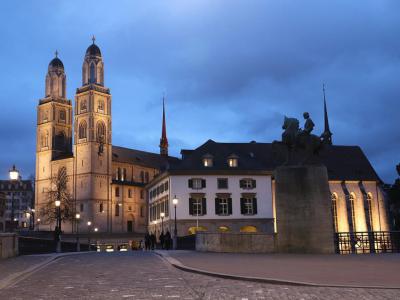
Now, if Zurich’s skyline had a king of the hill, it would probably be the Great Minster-standing tall, proud, and unmistakably Romanesque. It’s one of the city’s four major churches, rubbing historic shoulders with The Church of Our Lady, Preacher's Church, and Saint Peter's Church. But this one’s got some serious theological swagger.
Legend credits none other than Emperor Charlemagne-yes, that Charles the Great-with commissioning the place. Construction kicked off around 1100, and after about 120 years of medieval bricklaying, the Great Minster was born.
But here’s where it gets spicy: in the early 1500s, this church didn’t just host sermons-it became ground zero for the Swiss-German Reformation. Huldrych Zwingli, local priest and full-time disruptor, began preaching bold new ideas in 1520. By 1523, after winning a couple of intense theological debates, Zurich officially seceded from the Pope.
Zwingli’s influence ran deep. In 1524, the interior of the Great Minster underwent a makeover-with religious imagery, altars, and even the organ stripped away. Fasting was declared optional. Mass got rewritten. Celibacy-rethought. Church music? Well… eventually it made a comeback. What’s left is a beautifully bare, historically loaded space that tells the story of faith meeting reform head-on.
And speaking of Charles the Great, you’ll spot him again as a statue perched on the southern tower-sword in hand, crown slipping stylishly off his head like a medieval mic drop. The man unified a good chunk of Europe and even lent his name to the word “king” in many languages. Not bad for a guy in stone.
Okay, the church may seem a little plain inside-but don’t let that fool you. The stained-glass windows made from sliced agate are pure magic. The Carolus Magnus statue is iconic. And the front door alone could earn its own Instagram account.
Tip:
Feeling ambitious? Climb the tower-just 180+ steps up. No lift, no turning back. But once you’re up there, the views of Zurich are unbeatable, and best of all, you can catch your breath for as long as you like.
Legend credits none other than Emperor Charlemagne-yes, that Charles the Great-with commissioning the place. Construction kicked off around 1100, and after about 120 years of medieval bricklaying, the Great Minster was born.
But here’s where it gets spicy: in the early 1500s, this church didn’t just host sermons-it became ground zero for the Swiss-German Reformation. Huldrych Zwingli, local priest and full-time disruptor, began preaching bold new ideas in 1520. By 1523, after winning a couple of intense theological debates, Zurich officially seceded from the Pope.
Zwingli’s influence ran deep. In 1524, the interior of the Great Minster underwent a makeover-with religious imagery, altars, and even the organ stripped away. Fasting was declared optional. Mass got rewritten. Celibacy-rethought. Church music? Well… eventually it made a comeback. What’s left is a beautifully bare, historically loaded space that tells the story of faith meeting reform head-on.
And speaking of Charles the Great, you’ll spot him again as a statue perched on the southern tower-sword in hand, crown slipping stylishly off his head like a medieval mic drop. The man unified a good chunk of Europe and even lent his name to the word “king” in many languages. Not bad for a guy in stone.
Okay, the church may seem a little plain inside-but don’t let that fool you. The stained-glass windows made from sliced agate are pure magic. The Carolus Magnus statue is iconic. And the front door alone could earn its own Instagram account.
Tip:
Feeling ambitious? Climb the tower-just 180+ steps up. No lift, no turning back. But once you’re up there, the views of Zurich are unbeatable, and best of all, you can catch your breath for as long as you like.
10) Wasserkirche (Water Church)
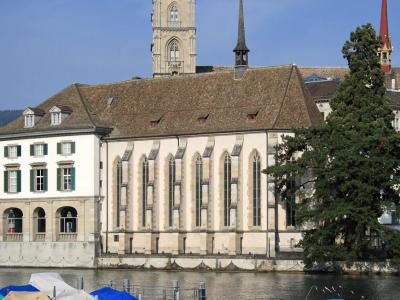
Inside the Water Church, Zurich’s history flows just as steadily as the Limmat River beneath it. First mentioned in 1250, but with roots going all the way back to the 1100s, this church wasn’t just built near the water-it was built on it. Originally perched on a little island in the river, it looked like it was doing the medieval version of island life before it was cool. By 1486, it got a full makeover-think of it as a 15th-century home renovation, but with more stained glass and fewer Instagram reels.
Then came the Reformation, and let’s just say the Water Church’s spiritual career hit a speed bump. Reformers, unimpressed by its "idolatrous" vibe, gave it a secular upgrade-making it Zurich’s very first public library in 1634. So, yes, before the Kindle, there was the Water Church...
During the 1800s, the island it sat on got connected to the mainland (bye-bye, island mystique), and by 1917, the library moved out. The church, now unemployed, found a new gig-grain storage. Holy wheat, indeed...
In the 1940s, archaeologists and restorers gave the building some long-overdue tender loving care. The crypt was dusted off, the walls were reinforced, and by the time the renovations were done, the church was back in the business of being a place of worship-this time serving the Evangelical-Reformed State Church of Zurich.
But history aside, the Water Church stands on solemn ground. Legend has it that Zurich’s patron saints, Felix and Regula, were executed right here after refusing to persecute Christians. Decapitated, yes-but apparently they stood up and walked off with their heads. As saints sometimes do...
Coming here, you'll find a serene, quiet corner of Zurich where you can catch your breath, contemplate eternity, or just admire the stunning Giacometti windows and explore the mysterious crypt below. Divine inspiration not guaranteed-but a moment of peace is highly likely.
Then came the Reformation, and let’s just say the Water Church’s spiritual career hit a speed bump. Reformers, unimpressed by its "idolatrous" vibe, gave it a secular upgrade-making it Zurich’s very first public library in 1634. So, yes, before the Kindle, there was the Water Church...
During the 1800s, the island it sat on got connected to the mainland (bye-bye, island mystique), and by 1917, the library moved out. The church, now unemployed, found a new gig-grain storage. Holy wheat, indeed...
In the 1940s, archaeologists and restorers gave the building some long-overdue tender loving care. The crypt was dusted off, the walls were reinforced, and by the time the renovations were done, the church was back in the business of being a place of worship-this time serving the Evangelical-Reformed State Church of Zurich.
But history aside, the Water Church stands on solemn ground. Legend has it that Zurich’s patron saints, Felix and Regula, were executed right here after refusing to persecute Christians. Decapitated, yes-but apparently they stood up and walked off with their heads. As saints sometimes do...
Coming here, you'll find a serene, quiet corner of Zurich where you can catch your breath, contemplate eternity, or just admire the stunning Giacometti windows and explore the mysterious crypt below. Divine inspiration not guaranteed-but a moment of peace is highly likely.
11) Theater Stadelhofen
Theater Stadelhofen in Zurich is renowned for its innovative and creative contributions to the world of theater, particularly in figure, material, and object theater. Led by Françoise Blancpain and Eveline Eberhard, the theater has become a cornerstone of Zurich's cultural scene, showcasing high-quality guest performances, co-productions, and initiatives aimed at supporting emerging talent.
Known for its contemporary and interdisciplinary approach, Theater Stadelhofen offers a diverse range of performances catering to audiences of all ages. Its programming focuses on addressing contemporary issues and promoting artistic innovation through Swiss and international guest performances, as well as regular in-house productions and collaborative projects. These efforts aim to redefine puppet theater and bring fresh perspectives to the field.
A key aspect of the theater's mission is engaging young audiences through collaborations with the School + Culture team, offering educational and engaging performances tailored to school-aged children. The goal is to inspire a love for theater among the younger generation and provide them with enriching experiences.
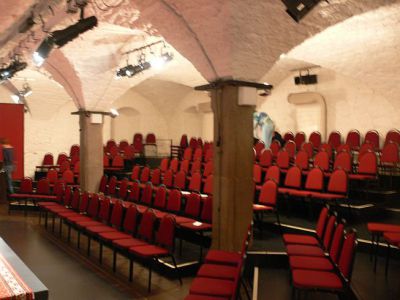
Situated in a cellar, Theater Stadelhofen boasts an intimate and unique ambiance, hosting weekly plays for children and evening shows for teenagers and adults. The theater takes pride in featuring talented performers from Switzerland and beyond who excel at captivating audiences and evoking emotions through their artistry.
Known for its contemporary and interdisciplinary approach, Theater Stadelhofen offers a diverse range of performances catering to audiences of all ages. Its programming focuses on addressing contemporary issues and promoting artistic innovation through Swiss and international guest performances, as well as regular in-house productions and collaborative projects. These efforts aim to redefine puppet theater and bring fresh perspectives to the field.
A key aspect of the theater's mission is engaging young audiences through collaborations with the School + Culture team, offering educational and engaging performances tailored to school-aged children. The goal is to inspire a love for theater among the younger generation and provide them with enriching experiences.
Situated in a cellar, Theater Stadelhofen boasts an intimate and unique ambiance, hosting weekly plays for children and evening shows for teenagers and adults. The theater takes pride in featuring talented performers from Switzerland and beyond who excel at captivating audiences and evoking emotions through their artistry.
