Custom Walk in Ghent, Belgium by nelizevanpommeren_9ae769 created on 2025-12-18
Guide Location: Belgium » Ghent
Guide Type: Custom Walk
# of Sights: 16
Tour Duration: 2 Hour(s)
Travel Distance: 2.4 Km or 1.5 Miles
Share Key: 9PCCE
Guide Type: Custom Walk
# of Sights: 16
Tour Duration: 2 Hour(s)
Travel Distance: 2.4 Km or 1.5 Miles
Share Key: 9PCCE
How It Works
Please retrieve this walk in the GPSmyCity app. Once done, the app will guide you from one tour stop to the next as if you had a personal tour guide. If you created the walk on this website or come to the page via a link, please follow the instructions below to retrieve the walk in the app.
Retrieve This Walk in App
Step 1. Download the app "GPSmyCity: Walks in 1K+ Cities" on Apple App Store or Google Play Store.



Step 2. In the GPSmyCity app, download(or launch) the guide "Ghent Map and Walking Tours".
Step 3. Tap the menu button located at upper right corner of the "Walks" screen and select "Retrieve custom walk". Enter the share key: 9PCCE
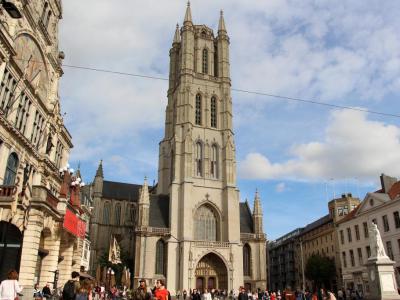
1) Sint-Baafskathedraal (St. Bavo's Cathedral) (must see)
In 1566 the Calvanist iconoclasts were on a rampage in the Netherlands. Raiding churches, they found a target rich environment. Stained glass windows, statues, artwork, everything had to go. Three days before they got to Saint Bavo's, artwork was hidden in the crypt and Saint Bavo's was mostly spared.
Saint Bavo's Cathedral or Saint-Baafskathedraal, is a 292 foot tall Catholic cathedral in Ghent. It is built on the site of the wooden Chapel of Saint John the Baptist, founded in 942 by Transmanus, Bishop of Tournai and Noyon. Construction of a new Romanesque church began there in 1150.
In the 14th through the 16th centuries ambitious Gothic renovations were added. On top of the lower Romanesque church a high Gothic choir and an enormous vault with tall windows was built. Around the choir is an ambulatory and 14 chapels. The 292 foot tower was erected in 1534. The church became a cathedral in 1569. A new nave was added by 1590.
Among the treasures that were saved from the iconoclasts of 1566 is the Famous Ghent Altarpiece, a painted polyptych by the van Eyck brothers Jan and Hubert in 1432.
Other artists represented in the cathedral are Peter Paul Rubens and Lucas de Heere. Frans Pourbus the Elder created 14 panels of The History of Saint Andrew (1572). There are three paintings by Caspar de Crayer, including The Beheading of John the Baptist. Eleven grisailles of the Old and New Testaments adorn the choir above the stalls.
The high choir is an awesome part of the interior. It has stalls for members of the Chapter of Saint-Bavon. The Baroque High Altar, installed from 1702 to 1782, is made with black, white and red flamed marble. In the nave is a rococo pulpit from 1745.
In the crypt are reliquaries and collections of liturgical ornaments and vessels. Virtual tours of the crypt, including the altarpiece, are available. There is a basic tour and an advanced tour of at least ninety minutes. Do not miss the painting of the Mystic Lamb.
Saint Bavo's Cathedral or Saint-Baafskathedraal, is a 292 foot tall Catholic cathedral in Ghent. It is built on the site of the wooden Chapel of Saint John the Baptist, founded in 942 by Transmanus, Bishop of Tournai and Noyon. Construction of a new Romanesque church began there in 1150.
In the 14th through the 16th centuries ambitious Gothic renovations were added. On top of the lower Romanesque church a high Gothic choir and an enormous vault with tall windows was built. Around the choir is an ambulatory and 14 chapels. The 292 foot tower was erected in 1534. The church became a cathedral in 1569. A new nave was added by 1590.
Among the treasures that were saved from the iconoclasts of 1566 is the Famous Ghent Altarpiece, a painted polyptych by the van Eyck brothers Jan and Hubert in 1432.
Other artists represented in the cathedral are Peter Paul Rubens and Lucas de Heere. Frans Pourbus the Elder created 14 panels of The History of Saint Andrew (1572). There are three paintings by Caspar de Crayer, including The Beheading of John the Baptist. Eleven grisailles of the Old and New Testaments adorn the choir above the stalls.
The high choir is an awesome part of the interior. It has stalls for members of the Chapter of Saint-Bavon. The Baroque High Altar, installed from 1702 to 1782, is made with black, white and red flamed marble. In the nave is a rococo pulpit from 1745.
In the crypt are reliquaries and collections of liturgical ornaments and vessels. Virtual tours of the crypt, including the altarpiece, are available. There is a basic tour and an advanced tour of at least ninety minutes. Do not miss the painting of the Mystic Lamb.
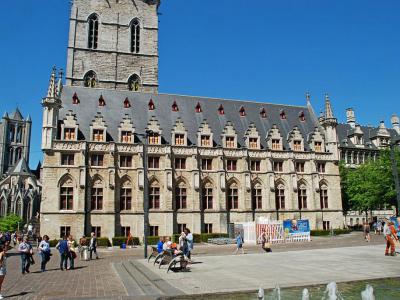
2) Lakenhalle (Cloth Hall) (must see)
The Lakenhalle, or Cloth Hall, is adjunct to the Belfry. Construction started in 1425 but it was still incomplete twenty years later. Only seven of the eleven bays had been completed. In 1903 four more bays were added.
The Cloth Hall was built to harbor the business of the cloth trade of Ghent. Woolens and textiles had made Ghent a boom town of the middle ages. Fortune changes. The textile trades fell off in time and other tenants, including a militia Guild and a fencing school, moved into the Cloth Hall.
There is an annex to the Cloth Hall dating from 1741, called the "Mammelokker." The annex was the guards' quarters and the entrance to the city jail in the Cloth Hall from 1742 until 1902. The name Mammelokker means "breast sucker." It refers to the sculpture of the Roman legend of Pero and Cimon above the front door of the annex.
Cimon was sentenced to death by starvation. His daughter, Pero, who was a wet nurse, visited him in prison and breastfed him. She saved his life. His guards, awed by this show of filial devotion, released him.
Tip:
Visiting the Cloth Hall is free; the belfry, however, is not.
The Cloth Hall was built to harbor the business of the cloth trade of Ghent. Woolens and textiles had made Ghent a boom town of the middle ages. Fortune changes. The textile trades fell off in time and other tenants, including a militia Guild and a fencing school, moved into the Cloth Hall.
There is an annex to the Cloth Hall dating from 1741, called the "Mammelokker." The annex was the guards' quarters and the entrance to the city jail in the Cloth Hall from 1742 until 1902. The name Mammelokker means "breast sucker." It refers to the sculpture of the Roman legend of Pero and Cimon above the front door of the annex.
Cimon was sentenced to death by starvation. His daughter, Pero, who was a wet nurse, visited him in prison and breastfed him. She saved his life. His guards, awed by this show of filial devotion, released him.
Tip:
Visiting the Cloth Hall is free; the belfry, however, is not.
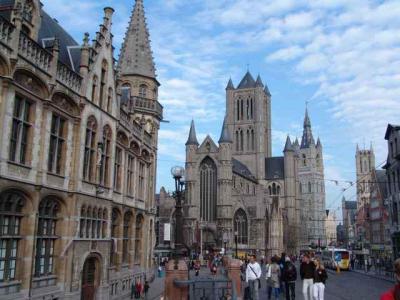
3) Sint-Niklaaskerk (St. Nicholas Church) (must see)
Saint Nicholas Church is one of the celebrated "Three Towers of Ghent." Building was begun in the 13th century to replace an earlier Romanesque structure. The style of construction is Scheldt Gothic. This style called for the use of blue-gray stone taken from the area of Tournai. There is a single tower above the crossing and corner turrets.
The church has had a stormy existence. During the 16th century militant iconoclasts destroyed its religious images and artifacts. Come the French revolution, the church served as a stable for horses. By the 1700s numerous shops and small houses had been built clinging to the church's outer walls.
Extensive restoration carried out in the 19th century has rescued the church from a dilapidated ending. The Scheldt Gothic style tower is above the nave and transepts instead of the main entrance. As a result, light from the tower is permitted to illuminate the transept.
The organ of the church is one of the most impressive in the country. It was built by the famous French organ maker, Aristide Canaille-Coll. The instrument is a three-manual organ with 16 pipes in front. The inauguration concert was given by Louis James Lefebure-Wely in 1856.
The church is open every day. Admission is free.
The church has had a stormy existence. During the 16th century militant iconoclasts destroyed its religious images and artifacts. Come the French revolution, the church served as a stable for horses. By the 1700s numerous shops and small houses had been built clinging to the church's outer walls.
Extensive restoration carried out in the 19th century has rescued the church from a dilapidated ending. The Scheldt Gothic style tower is above the nave and transepts instead of the main entrance. As a result, light from the tower is permitted to illuminate the transept.
The organ of the church is one of the most impressive in the country. It was built by the famous French organ maker, Aristide Canaille-Coll. The instrument is a three-manual organ with 16 pipes in front. The inauguration concert was given by Louis James Lefebure-Wely in 1856.
The church is open every day. Admission is free.
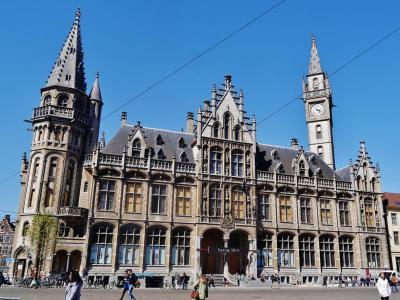
4) Post Plaza
Post Plaza in Ghent is a must-see landmark located in the historic center of the city, on the bustling Korenmarkt. Originally constructed in the early 20th century, this former post office is a striking example of neo-Gothic architecture, complete with an impressive 52-meter clock tower and intricate decorative statues. Despite its relatively recent construction, the building seamlessly blends with Ghent’s medieval surroundings, making it a quintessential part of the city’s architectural landscape.
The exterior of Post Plaza is adorned with around 100 statues that represent Belgium, Flanders, Wallonia, the nine provinces, and 23 historical European leaders. The building’s ornate facade, octagonal towers, and spikes make it one of Ghent’s most recognizable structures. Originally situated at a busy crossroads in 1909, where postilions and horse cars used to stop, the building now serves a new purpose as a dynamic shopping center and luxury hotel.
Inside, Post Plaza maintains its historical charm while offering modern attractions. Visitors can explore shops featuring fashion, interior design, and beauty products, or enjoy a delightful lunch, brunch, or breakfast in one of its eateries. The top floor houses the luxury hotel "1898 The Post," which includes the stylish cocktail bar, The Cobbler. From here, guests can sip on expertly crafted drinks while taking in breathtaking views of the Sint-Michielsbrug bridge and the picturesque Graslei.
Post Plaza is not just a place to shop or stay; it’s a window into Ghent’s rich history and architectural elegance. Whether you're exploring its shops, savoring a meal, or simply admiring the building's grandeur, Post Plaza offers a unique experience that beautifully captures the spirit of Ghent.
The exterior of Post Plaza is adorned with around 100 statues that represent Belgium, Flanders, Wallonia, the nine provinces, and 23 historical European leaders. The building’s ornate facade, octagonal towers, and spikes make it one of Ghent’s most recognizable structures. Originally situated at a busy crossroads in 1909, where postilions and horse cars used to stop, the building now serves a new purpose as a dynamic shopping center and luxury hotel.
Inside, Post Plaza maintains its historical charm while offering modern attractions. Visitors can explore shops featuring fashion, interior design, and beauty products, or enjoy a delightful lunch, brunch, or breakfast in one of its eateries. The top floor houses the luxury hotel "1898 The Post," which includes the stylish cocktail bar, The Cobbler. From here, guests can sip on expertly crafted drinks while taking in breathtaking views of the Sint-Michielsbrug bridge and the picturesque Graslei.
Post Plaza is not just a place to shop or stay; it’s a window into Ghent’s rich history and architectural elegance. Whether you're exploring its shops, savoring a meal, or simply admiring the building's grandeur, Post Plaza offers a unique experience that beautifully captures the spirit of Ghent.
5) Korenmarkt (Wheat Market) (must see)
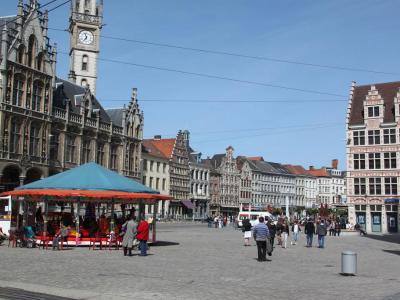
The Korenmarkt, or Wheat Market is a large square in the center of Ghent's historic district. It is called Wheat Market for the prosperous wheat trade beginning in the 10th and 11th centuries. Grain would be brought up the river Leie to Graslei (Grass Quai) and KorenLei (Wheat Quai). It then could be sold in the Wheat Market.
The Wheat Market is connected to two of Ghent's most active commercial streets, Veldstraat and Kortemunt on a north-south line. Saint Michael's Bridge reaches over the river Leie to Saint Nicholas Church on the east side. On the west side is access to the waterfront and the Grass Quai.
The picturesque buildings around the square house bars, restaurants and terraces. Alongside Saint Nicholas church there are the pubs of Klein Turkijie (Little Turky). The square was once the scene of bankruptcy auctions. The term "Little Turky" is actually a corruption of the expression "ter keie gaan", which means "hit rock bottom."
The Wheat Market is connected to two of Ghent's most active commercial streets, Veldstraat and Kortemunt on a north-south line. Saint Michael's Bridge reaches over the river Leie to Saint Nicholas Church on the east side. On the west side is access to the waterfront and the Grass Quai.
The picturesque buildings around the square house bars, restaurants and terraces. Alongside Saint Nicholas church there are the pubs of Klein Turkijie (Little Turky). The square was once the scene of bankruptcy auctions. The term "Little Turky" is actually a corruption of the expression "ter keie gaan", which means "hit rock bottom."
6) St Michael's Bridge
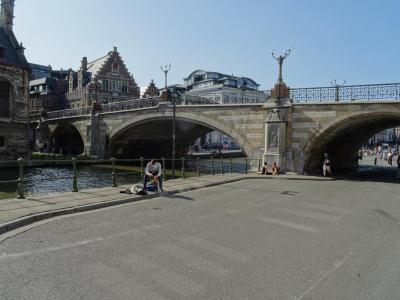
Saint Michael's Bridge (Saint-Michielsbrug) is a stunning stone arch bridge in the heart of Ghent. Completed between 1905 and 1909, the bridge was designed by architect Louis Cloquet, who also designed the Old Post Office nearby. It replaced a former flat swing bridge over the Lys River (Leie) with a more majestic stone structure, enhancing the city’s architectural landscape. The bridge is part of Saint Michael's Street and is directly behind Saint Nicholas' Church.
One of the most captivating features of Saint Michael's Bridge is its central lantern adorned with a bronze statue of Saint Michael the Archangel. The statue, depicting the archangel in full armor with wings, skewering a dragon with a sword, adds a unique and artistic touch to the bridge. The monument stands as a striking focal point, drawing visitors' attention.
Saint Michael's Bridge is renowned for offering some of the best panoramic views in Ghent, making it an ideal spot for romantic strolls and photography. From the bridge, visitors can see the iconic "three towers of Ghent"-Saint Nicholas' Church, the Belfry of Ghent, and Saint Bavo's Cathedral. To the north, views extend to the picturesque Graslei and Korenlei quays, with the historic Gravensteen Castle in the distance. On the southwest side, Saint Michael’s Church stands prominently.
This location is perfect for capturing Ghent’s medieval charm, especially at twilight when the historic sights are illuminated, creating a fairy-tale atmosphere. Whether during the day or at night, Saint Michael's Bridge provides an incomparable vantage point to admire the architectural beauty of Ghent, making it a memorable destination for anyone visiting the city.
One of the most captivating features of Saint Michael's Bridge is its central lantern adorned with a bronze statue of Saint Michael the Archangel. The statue, depicting the archangel in full armor with wings, skewering a dragon with a sword, adds a unique and artistic touch to the bridge. The monument stands as a striking focal point, drawing visitors' attention.
Saint Michael's Bridge is renowned for offering some of the best panoramic views in Ghent, making it an ideal spot for romantic strolls and photography. From the bridge, visitors can see the iconic "three towers of Ghent"-Saint Nicholas' Church, the Belfry of Ghent, and Saint Bavo's Cathedral. To the north, views extend to the picturesque Graslei and Korenlei quays, with the historic Gravensteen Castle in the distance. On the southwest side, Saint Michael’s Church stands prominently.
This location is perfect for capturing Ghent’s medieval charm, especially at twilight when the historic sights are illuminated, creating a fairy-tale atmosphere. Whether during the day or at night, Saint Michael's Bridge provides an incomparable vantage point to admire the architectural beauty of Ghent, making it a memorable destination for anyone visiting the city.
7) Sint-Michielskerk (Saint Michael's Church)
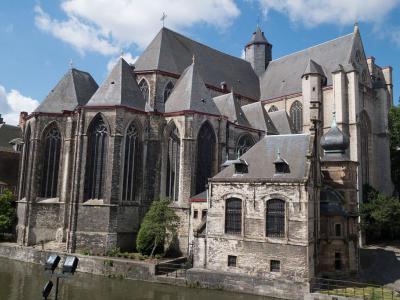
Saint Michael's Church (Sint-Michielskerk) in Ghent is a Roman Catholic church with a rich history dating back to 1105 when a chapel dedicated to Saint Michael was first documented on the site. The original chapel was destroyed by fire twice in the 12th century and rebuilt each time. The current late Gothic church began construction around 1440, unfolding in two major phases with a significant interruption between them.
The first phase of construction took place during the 15th and 16th centuries. By 1528, the western part of the church, including the three-aisled nave and the transept, had been completed. Work continued on the western tower, reaching two levels by 1566 before religious conflicts brought construction to a halt. The church suffered during the Protestant Reformation, with parts destroyed by Calvinists in 1578, and the old choir was demolished in 1579.
Construction resumed in 1623, and the Baroque sacristy in the northeast corner was built between 1650 and 1651. In 1662, local architect Lieven Cruyl designed a plan for the unfinished western tower, which, however, was never realized. The tower remained incomplete and was finally covered with a flat roof in 1828.
The interior of Saint Michael's Church is notable for its rich Neo-Gothic style, featuring a grand altar, an ornate pulpit, and numerous 18th-century statues. The church houses a collection of Baroque paintings, including works by renowned artists such as Anthony van Dyck's "Christ Dying on the Cross" and Otto Venius's "Resurrection of Lazarus." Additionally, the church preserves a collection of valuable silver and gold artifacts, including a relic of Saint Dorothea in silver, a sacred "Doorn" donated by Mary, Queen of Scots, and a piece of the true Cross, a gift from Archduke Albrecht and Isabella in 1619.
Saint Michael's Church stands as a significant historical and architectural landmark in Ghent, reflecting the city's turbulent religious history and its artistic heritage.
The first phase of construction took place during the 15th and 16th centuries. By 1528, the western part of the church, including the three-aisled nave and the transept, had been completed. Work continued on the western tower, reaching two levels by 1566 before religious conflicts brought construction to a halt. The church suffered during the Protestant Reformation, with parts destroyed by Calvinists in 1578, and the old choir was demolished in 1579.
Construction resumed in 1623, and the Baroque sacristy in the northeast corner was built between 1650 and 1651. In 1662, local architect Lieven Cruyl designed a plan for the unfinished western tower, which, however, was never realized. The tower remained incomplete and was finally covered with a flat roof in 1828.
The interior of Saint Michael's Church is notable for its rich Neo-Gothic style, featuring a grand altar, an ornate pulpit, and numerous 18th-century statues. The church houses a collection of Baroque paintings, including works by renowned artists such as Anthony van Dyck's "Christ Dying on the Cross" and Otto Venius's "Resurrection of Lazarus." Additionally, the church preserves a collection of valuable silver and gold artifacts, including a relic of Saint Dorothea in silver, a sacred "Doorn" donated by Mary, Queen of Scots, and a piece of the true Cross, a gift from Archduke Albrecht and Isabella in 1619.
Saint Michael's Church stands as a significant historical and architectural landmark in Ghent, reflecting the city's turbulent religious history and its artistic heritage.
8) Gaslei (Grass Quai) & Korenlei (Wheat Quai) (must see)
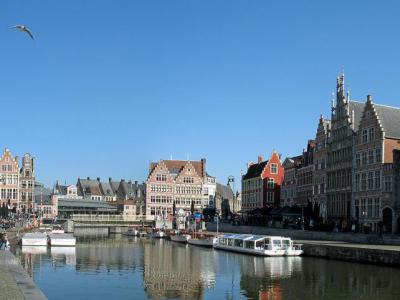
Ghent was a center of the grain and cereal trade as early as the 5th century AD. Laid out along the shores of the river Leie, in the center of Ghent, were the two main quais of Ghent, Grass Quai and Wheat Quai. Grass Quai, on the right bank, was reserved for herbs and vegetables. On the opposite bank Wheat Quai received shipments of wheat and cereals.
Ships have been docking at the quais since the 11th century. Grass Quai and Wheat Quai are lined with medieval buildings restored and rebuilt. Behind many of the restored facades there are shops and offices dedicated to modern purposes but they look as they did in the golden age of Ghent.
The stepped gables of the old guild houses have watched over the city since the 13th century. The Wheat Measure House, where wheat was first weighed in 1527 is today an accessory store.
The banks of the river are lined with terraces and cafes and wonderful places to hang out. On the renovated facade of the Mariot Hotel at Wheat Quai, two gilded swans swim in opposite directions: left for women and right for drinks. One wonders what entertainments were happening in the 16th century.
Boat rides are a popular way to take in the historic sights along the river as they appeared so many years ago.
Tip:
Make sure to climb the steps of Sint-Michielsbrug (Saint Michael's Bridge), where Grass Quai and Wheat Quai can be viewed well with the canal. Another very nice viewpoint and photo spot is directly on Wheat Quai, looking in the direction of Grass Quai. From there you can see the building guild houses as well as some of the famous landmark buildings like the Belfry in the background. Take your time to look around, perhaps with binoculars.
Ships have been docking at the quais since the 11th century. Grass Quai and Wheat Quai are lined with medieval buildings restored and rebuilt. Behind many of the restored facades there are shops and offices dedicated to modern purposes but they look as they did in the golden age of Ghent.
The stepped gables of the old guild houses have watched over the city since the 13th century. The Wheat Measure House, where wheat was first weighed in 1527 is today an accessory store.
The banks of the river are lined with terraces and cafes and wonderful places to hang out. On the renovated facade of the Mariot Hotel at Wheat Quai, two gilded swans swim in opposite directions: left for women and right for drinks. One wonders what entertainments were happening in the 16th century.
Boat rides are a popular way to take in the historic sights along the river as they appeared so many years ago.
Tip:
Make sure to climb the steps of Sint-Michielsbrug (Saint Michael's Bridge), where Grass Quai and Wheat Quai can be viewed well with the canal. Another very nice viewpoint and photo spot is directly on Wheat Quai, looking in the direction of Grass Quai. From there you can see the building guild houses as well as some of the famous landmark buildings like the Belfry in the background. Take your time to look around, perhaps with binoculars.
9) Groot Vleeshuis (Great Butcher's Hall)
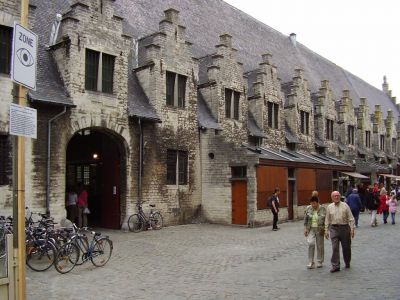
The Great Butcher's Hall (Groot Vleeshuis) is a historic landmark in Ghent, originally serving as a covered market and guildhall for butchers. The first mention of the Hall appears in city documents from 1332-1333, referring to a smaller, wooden structure located on the Vismarkt, now known as the Vegetable Market (Groentenmarkt). By 1407, this older building had fallen into disrepair, prompting the butchers to relocate to a larger and more robust structure.
Between 1446 and 1448, a chapel with a meeting room was added to the southwestern corner of the building. To ensure a steady supply of fish, four canals were constructed beneath the hall, allowing flat fishing boats to access the market directly from the Lys River. The vaulted passages of these canals are still visible along the riverbank today.
In 1543, the Hall expanded to include 16 tripe houses, or shops, where viscera, intestinal fat, and other animal remains, as well as poultry, could be sold-items that were previously not permitted inside the main Hall. However, by the late 19th century, the Great Butcher's Hall became vacant after the butchers moved to a new meat house near the Vismijn on Sint-Veerleplein.
As part of preparations for the 1913 World's Fair, the Great Butcher's Hall and its tripe houses were restored to their pre-1744 condition under the direction of architect Van Hamme. The revamped building took on new roles, including serving as a market for fruits and vegetables, a Post and Telegraph office, a parking garage, and a partial fish trade.
Recognized for its unique architectural and historical value, the Great Butcher's Hall has been a protected monument since 1943. A major renovation in the late 1990s transformed the building into a promotion center for East Flemish regional products. Today, visitors can explore the Hall to find an array of Belgian specialties, such as chocolates and beer, along with various local souvenirs, celebrating the rich culinary and cultural heritage of the region.
Between 1446 and 1448, a chapel with a meeting room was added to the southwestern corner of the building. To ensure a steady supply of fish, four canals were constructed beneath the hall, allowing flat fishing boats to access the market directly from the Lys River. The vaulted passages of these canals are still visible along the riverbank today.
In 1543, the Hall expanded to include 16 tripe houses, or shops, where viscera, intestinal fat, and other animal remains, as well as poultry, could be sold-items that were previously not permitted inside the main Hall. However, by the late 19th century, the Great Butcher's Hall became vacant after the butchers moved to a new meat house near the Vismijn on Sint-Veerleplein.
As part of preparations for the 1913 World's Fair, the Great Butcher's Hall and its tripe houses were restored to their pre-1744 condition under the direction of architect Van Hamme. The revamped building took on new roles, including serving as a market for fruits and vegetables, a Post and Telegraph office, a parking garage, and a partial fish trade.
Recognized for its unique architectural and historical value, the Great Butcher's Hall has been a protected monument since 1943. A major renovation in the late 1990s transformed the building into a promotion center for East Flemish regional products. Today, visitors can explore the Hall to find an array of Belgian specialties, such as chocolates and beer, along with various local souvenirs, celebrating the rich culinary and cultural heritage of the region.
10) Oude Vismijn (Old Fish Market)
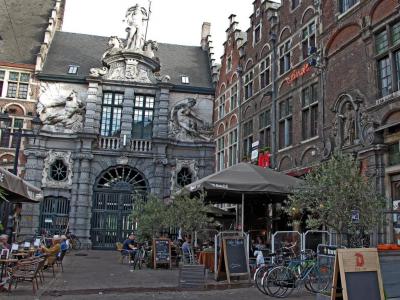
The Old Fish Market (Oude Vismijn) is one of the oldest and most historically significant marketplaces in Ghent. Originally located on the site of today's Vegetable Market Square (Groentenmarkt), the market moved in 1689 to its current location on Sint-Veerleplein, where it was marked by the construction of a distinctive Baroque-style gatehouse and permanent open-air stables.
The gatehouse, also built in 1689, is notable for its charming Baroque architecture and was originally adorned with statues of three sea gods. However, a fire in 1872 damaged these statues, and only the statue of Neptune, which sits atop the gatehouse façade, survived. The other two statues were replaced with figures representing the rivers Scheldt and Leie.
As part of the reconstruction efforts following the fire, a covered market hall was added to accommodate meat and vegetable trading, while the open square outside continued to serve the fish trade. In preparation for the 1913 World's Fair, the building received Neo-Gothic facades, adding to its architectural significance.
Throughout the 20th century, the Old Fish Market underwent various functional changes, serving as a tire center and a bowling hall at different times. Following a period of vacancy, the city administration launched a competition to repurpose the building, leading to its redevelopment as a catering business in 2010. Since March 2012, the Old Fish Market has served as the home of the Ghent Tourism Office, blending its rich historical legacy with modern utility.
The gatehouse, also built in 1689, is notable for its charming Baroque architecture and was originally adorned with statues of three sea gods. However, a fire in 1872 damaged these statues, and only the statue of Neptune, which sits atop the gatehouse façade, survived. The other two statues were replaced with figures representing the rivers Scheldt and Leie.
As part of the reconstruction efforts following the fire, a covered market hall was added to accommodate meat and vegetable trading, while the open square outside continued to serve the fish trade. In preparation for the 1913 World's Fair, the building received Neo-Gothic facades, adding to its architectural significance.
Throughout the 20th century, the Old Fish Market underwent various functional changes, serving as a tire center and a bowling hall at different times. Following a period of vacancy, the city administration launched a competition to repurpose the building, leading to its redevelopment as a catering business in 2010. Since March 2012, the Old Fish Market has served as the home of the Ghent Tourism Office, blending its rich historical legacy with modern utility.
11) Gravensteen Castle (must see)
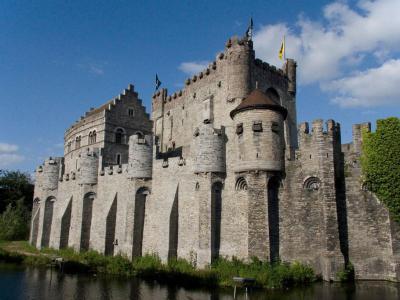
In 1180 Count Philip of Alsace wanted to impress the sassy burghers of Ghent with the idea that he was the big boss. But Gravensteen originated in the reign of Arnulf I in the 9th century. The site was fortified around 1000 AD, first in wood and then in stone. Philip built his castle in 1180 to replace the motte-and-bailey castle destroyed in 1176.
Philip had been on the Second Crusade and he was impressed by the crusader castles he saw. He wanted one like that. The castle has a central donjon, or keep, a residence and other smaller buildings. These are surrounded by a fortified enclosure with 24 small- sized barbicans. A large moat, fed by the river Leie, completes the picture.
The castle was the main residence of the Counts of Flanders until 1353. Louis of Male (1330-1384) was the last tenant in possession of Gravensteen. He moved to nearby Court of Walls as Gravensteen Castle was falling into disrepair.
After the last of the Counts departed, conditions at the castle took a nosedive. It was used as a court and prison-torture house until the 18th century. From 1353 to 1491 it was also a mint. During the industrial revolution it became a cotton mill. How the mighty had fallen!
In 1893 the city of Ghent had bought enough of the castle to begin major restorations. Under the direction of architect Joseph de Waele, a romanticized Gothic style was used to recall the castle's 12th century appearance. The Gravensteen starred in the Ghent World's Fair of 1913. The castle is open to the public.
Why You Should Visit:
To go back in time and enjoy the excellent views of Ghent's medieval skyline from the top (particularly at dusk).
Nowhere else in the world will you find such a massive castle right in the heart of the city!
Tip:
Save time and skip the queue by booking tickets online, but make sure you go early enough. Don't skip the (free) entertaining audio guide – you'll probably never hear another like it!
Philip had been on the Second Crusade and he was impressed by the crusader castles he saw. He wanted one like that. The castle has a central donjon, or keep, a residence and other smaller buildings. These are surrounded by a fortified enclosure with 24 small- sized barbicans. A large moat, fed by the river Leie, completes the picture.
The castle was the main residence of the Counts of Flanders until 1353. Louis of Male (1330-1384) was the last tenant in possession of Gravensteen. He moved to nearby Court of Walls as Gravensteen Castle was falling into disrepair.
After the last of the Counts departed, conditions at the castle took a nosedive. It was used as a court and prison-torture house until the 18th century. From 1353 to 1491 it was also a mint. During the industrial revolution it became a cotton mill. How the mighty had fallen!
In 1893 the city of Ghent had bought enough of the castle to begin major restorations. Under the direction of architect Joseph de Waele, a romanticized Gothic style was used to recall the castle's 12th century appearance. The Gravensteen starred in the Ghent World's Fair of 1913. The castle is open to the public.
Why You Should Visit:
To go back in time and enjoy the excellent views of Ghent's medieval skyline from the top (particularly at dusk).
Nowhere else in the world will you find such a massive castle right in the heart of the city!
Tip:
Save time and skip the queue by booking tickets online, but make sure you go early enough. Don't skip the (free) entertaining audio guide – you'll probably never hear another like it!
12) Kraanlei and Patershol Quarter
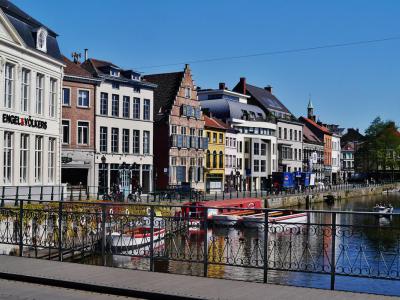
The Kraanlei district, once known as Ajuinlei or "The Onion Place," has a rich history dating back to 1354. It earned its current name, Kraanlei or "Crane Place," when a great crane based on designs by Archimedes was installed to lift cargo from barges arriving at the quay. This crane was not alone; there were multiple cranes, although today only the name survives. Onions continued to be sold at this location until the 1940s, maintaining a link to its original moniker.
Situated along the riverfront, Kraanlei is a charming area lined with small trees. It features 19th-century water fountains with basins designed at varying heights to serve birds, humans, horses, and dogs. These fountains, relics of the Belle Epoque era, are now dry but still add to the district's historic ambiance. Visitors can enjoy leisurely strolls along the bank of Kraanlei or take in the scenic views from a pleasure boat on the river.
Patershol is one of Ghent’s oldest medieval quarters, bordering the River Leie. Its street layout has been preserved since the Middle Ages, offering a glimpse into the city's ancient past. Originally, the area served as a military zone for the Counts of Flanders. However, when the Counts relocated to Gravensteen in the 15th century, Patershol became home to lawyers, tradesmen, and a burgeoning middle class.
By the 19th century, as industry grew, workers moved into the suburbs, and Patershol declined into a ghetto. However, a revitalization began in the 1970s, restoring the neighborhood to its former charm. Today, Patershol is a vibrant area celebrated for its annual event, the Patersholfeesten, or "Little Ghent Feasts," held on August 15th. The festivities include performances on the Kaatsspelplein, children’s activities like singing and painting, and a lively flea market on Sunday, drawing locals and tourists alike to experience the unique cultural atmosphere of this historic quarter.
Situated along the riverfront, Kraanlei is a charming area lined with small trees. It features 19th-century water fountains with basins designed at varying heights to serve birds, humans, horses, and dogs. These fountains, relics of the Belle Epoque era, are now dry but still add to the district's historic ambiance. Visitors can enjoy leisurely strolls along the bank of Kraanlei or take in the scenic views from a pleasure boat on the river.
Patershol is one of Ghent’s oldest medieval quarters, bordering the River Leie. Its street layout has been preserved since the Middle Ages, offering a glimpse into the city's ancient past. Originally, the area served as a military zone for the Counts of Flanders. However, when the Counts relocated to Gravensteen in the 15th century, Patershol became home to lawyers, tradesmen, and a burgeoning middle class.
By the 19th century, as industry grew, workers moved into the suburbs, and Patershol declined into a ghetto. However, a revitalization began in the 1970s, restoring the neighborhood to its former charm. Today, Patershol is a vibrant area celebrated for its annual event, the Patersholfeesten, or "Little Ghent Feasts," held on August 15th. The festivities include performances on the Kaatsspelplein, children’s activities like singing and painting, and a lively flea market on Sunday, drawing locals and tourists alike to experience the unique cultural atmosphere of this historic quarter.
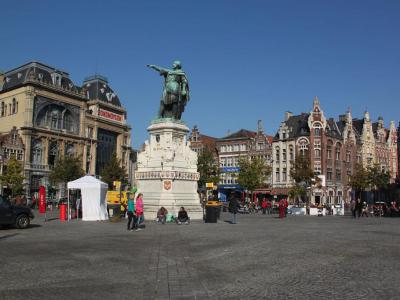
13) Vrijdagmarkt (Friday Market Square)
Every Friday there is a market in Vrijdagmarkt, Friday Market Square. Town markets have been held in the square since 1199. There is a statue of an armed man in the square. It is not the statue of a prince or a King or a mythological hero. It is a statue of a medieval businessman. He was also a politician and a bit of a dictator.
Jacob van Artevelde was a leader of the medieval guilds at a time when textiles were the life blood of Ghent industry. When the Count of Flanders, Louis I, abandoned Flanders in 1332, Van Artevelde became in effect, the ruler of Ghent. His administration was the first real option to feudalism. He was killed in the square by an envious business rival.
The square measures 100 X 100 meters. The buildings around the square are of different periods. The Tanners' Guild has a round tower and step gables. The Toreken Tower was used by the Cloth Guild. The Cloth Measurers House, dating from 1770 is on the north side of the square. The Art Nouveau "Our House" (1902) was home the the Socialist Party of Ghent.
The Friday Market Square has quite a few restaurants and cafes, most with outdoor seating. Markets are held on Fridays and Sundays. There is also a bird market on Monday.
Why You Should Visit:
Always a cool square to check out, with plenty of opportunities to take photos and soak up the atmosphere.
On Friday mornings, you can enjoy fresh produce, seafood, as well as clothes, collectibles and some gift items.
Jacob van Artevelde was a leader of the medieval guilds at a time when textiles were the life blood of Ghent industry. When the Count of Flanders, Louis I, abandoned Flanders in 1332, Van Artevelde became in effect, the ruler of Ghent. His administration was the first real option to feudalism. He was killed in the square by an envious business rival.
The square measures 100 X 100 meters. The buildings around the square are of different periods. The Tanners' Guild has a round tower and step gables. The Toreken Tower was used by the Cloth Guild. The Cloth Measurers House, dating from 1770 is on the north side of the square. The Art Nouveau "Our House" (1902) was home the the Socialist Party of Ghent.
The Friday Market Square has quite a few restaurants and cafes, most with outdoor seating. Markets are held on Fridays and Sundays. There is also a bird market on Monday.
Why You Should Visit:
Always a cool square to check out, with plenty of opportunities to take photos and soak up the atmosphere.
On Friday mornings, you can enjoy fresh produce, seafood, as well as clothes, collectibles and some gift items.
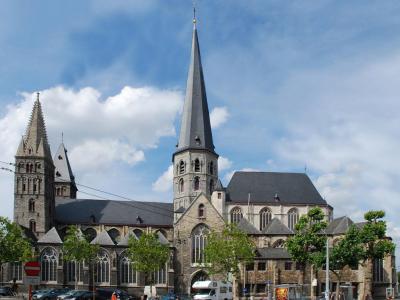
14) St-Jacobskerk (St. James' Church)
In the 11th century a wooden church was dedicated to Saint James. One hundred years later the wooden church was replaced with a Romanesque structure of stone. From the beginning the church was an important meeting place for pilgrims on their way to the shrine of Santiago de Compostella.
A scallop shell embedded into a flagstone at Saint James' is a reminder that the apostle is buried in Santiago de Compostella. Scallop shells were once abundant there. Saint James is a pilgrimage milestone.
The twin towers on either side of the entrance date from 1120. The octagonal transverse tower, built in the 13th century, is in the style called Scheldt Gothic. Side chapels belonging to the guilds were added in the 14th century.
The interior of the church is a blend of Romanesque and Baroque elements. The church is home to a Van Peteghem organ. The church was a meeting place for the guilds. It also houses paintings and art pieces and the tomb of Jan Palfjin, the inventor of the forceps.
Beside religious considerations, the church is also a cultural center. The square around the church is called Saint James' Square. It is the center of the famous Ghent Festivities, the annual mis-July people's festival marking the beginning of summer.
A scallop shell embedded into a flagstone at Saint James' is a reminder that the apostle is buried in Santiago de Compostella. Scallop shells were once abundant there. Saint James is a pilgrimage milestone.
The twin towers on either side of the entrance date from 1120. The octagonal transverse tower, built in the 13th century, is in the style called Scheldt Gothic. Side chapels belonging to the guilds were added in the 14th century.
The interior of the church is a blend of Romanesque and Baroque elements. The church is home to a Van Peteghem organ. The church was a meeting place for the guilds. It also houses paintings and art pieces and the tomb of Jan Palfjin, the inventor of the forceps.
Beside religious considerations, the church is also a cultural center. The square around the church is called Saint James' Square. It is the center of the famous Ghent Festivities, the annual mis-July people's festival marking the beginning of summer.
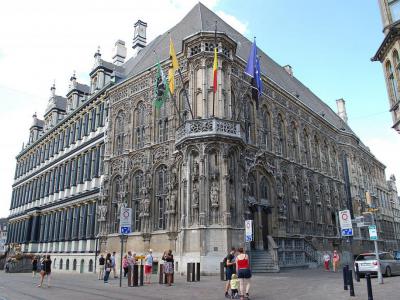
15) Stadhuis (Town Hall) (must see)
The Town Hall of Ghent is a quadrangular group of buildings of different styles. The alderman's house of Keure is in the Flamboyant Gothic style (1519-1539). It was designed by Rombout Keldermans and Dominicus de Waeghenmackere. Niches in the facade hold 19 statues of the Counts of Flanders made in the 19th and 20th centuries.
The Gedele Alderman's house is Renaissance, built between 1595n and 1618. The facades of both Alderman's houses hold Doric, Ionic and Corinthian three-quarter columns and pilasters. The effect is reminiscent of Italian palace. The complex is surrounded by the streets of Patermarkt, Hoogspoort, Stadhuistaaeg and Pooljiemarkt.
Inside the town hall are 51 rooms, including a wedding chapel and a labyrinth. The most important halls in the town hall are the Pacification Hall, the Arsenal hall, the Cabinet of the Mayor (1728), the Throne Room and the Reception lounge, formerly the chamber of the States of Flanders.
The interior rooms vary greatly in style but all are lavishly decorated. Weddings in the Halle are in demand but tourist access is limited.
Tip:
You can get a tour by booking with a guide at the information center. Well worth the money – lots of interesting history. If the weather is nice, have a drink outside one of the bars opposite and take your time to enjoy the facade.
The Gedele Alderman's house is Renaissance, built between 1595n and 1618. The facades of both Alderman's houses hold Doric, Ionic and Corinthian three-quarter columns and pilasters. The effect is reminiscent of Italian palace. The complex is surrounded by the streets of Patermarkt, Hoogspoort, Stadhuistaaeg and Pooljiemarkt.
Inside the town hall are 51 rooms, including a wedding chapel and a labyrinth. The most important halls in the town hall are the Pacification Hall, the Arsenal hall, the Cabinet of the Mayor (1728), the Throne Room and the Reception lounge, formerly the chamber of the States of Flanders.
The interior rooms vary greatly in style but all are lavishly decorated. Weddings in the Halle are in demand but tourist access is limited.
Tip:
You can get a tour by booking with a guide at the information center. Well worth the money – lots of interesting history. If the weather is nice, have a drink outside one of the bars opposite and take your time to enjoy the facade.
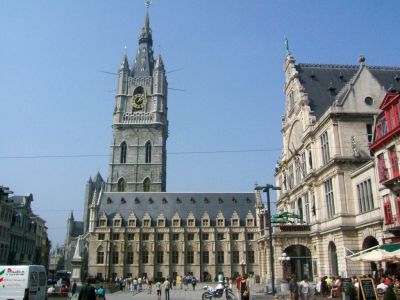
16) Belfort (Belfry of Ghent) (must see)
There are three medieval towers rising over the old city of Ghent: Saint Bavo Cathedral, Saint Nicholas' Church and the 298 foot Belfry of Ghent. The building of the Belfry tower began in 1313, following the designs of master mason Jan van Haelst. Wars, pestilence and politics slowed progress but the tower was completed in 1380.
At the peak of the tower sits the latest version of the gilded Dragon of Ghent. The original dragon, installed in 1382, was acquired by Count Baldwin IX of Flanders and brought to Bruges. It later became a war trophy of Ghent. Meant to protect charters and documents stored in the tower, the Dragon became a symbol of the city's power.
The upper reaches of the tower have been rebuilt occasionally to allow for a growing number of bells. The campanile was finished in 1771 with a spire designed by architect Louis 't Kindt. A neo-Gothic spire was installed in 1851. It was replaced in 1913 by the stone spire of today.
Historically the belfry bells were used to announce the time, sound warnings and announce victories. The great alarm bell called "Roland" was installed in 1325. After he had subdued an uprising in Ghent, Holy Roman Emperor Charles V ordered Roland removed.
Henry Wadsworth Longfellow wrote:
"...I am Roland! I am Roland!
There is victory in the land!"
Why You Should Visit:
Climbing this tower on your visit to Ghent is imperative! Not excessively high, but still allows a very pretty view of the city and of the Cathedral right next to it.
Tip:
Stick around for the chiming of the bells on the hour. You can watch how the bell mechanism works from the inside or stand outside on the corridor and just listen. The admission forms part of the CityCard Gent so if you plan to visit multiple attractions, you might save a few euros by buying a CityCard.
At the peak of the tower sits the latest version of the gilded Dragon of Ghent. The original dragon, installed in 1382, was acquired by Count Baldwin IX of Flanders and brought to Bruges. It later became a war trophy of Ghent. Meant to protect charters and documents stored in the tower, the Dragon became a symbol of the city's power.
The upper reaches of the tower have been rebuilt occasionally to allow for a growing number of bells. The campanile was finished in 1771 with a spire designed by architect Louis 't Kindt. A neo-Gothic spire was installed in 1851. It was replaced in 1913 by the stone spire of today.
Historically the belfry bells were used to announce the time, sound warnings and announce victories. The great alarm bell called "Roland" was installed in 1325. After he had subdued an uprising in Ghent, Holy Roman Emperor Charles V ordered Roland removed.
Henry Wadsworth Longfellow wrote:
"...I am Roland! I am Roland!
There is victory in the land!"
Why You Should Visit:
Climbing this tower on your visit to Ghent is imperative! Not excessively high, but still allows a very pretty view of the city and of the Cathedral right next to it.
Tip:
Stick around for the chiming of the bells on the hour. You can watch how the bell mechanism works from the inside or stand outside on the corridor and just listen. The admission forms part of the CityCard Gent so if you plan to visit multiple attractions, you might save a few euros by buying a CityCard.
