Custom Walk in Frankfurt, Germany by feidelman2012_63c958 created on 2026-02-28
Guide Location: Germany » Frankfurt
Guide Type: Custom Walk
# of Sights: 12
Tour Duration: 3 Hour(s)
Travel Distance: 5.3 Km or 3.3 Miles
Share Key: EJAJG
Guide Type: Custom Walk
# of Sights: 12
Tour Duration: 3 Hour(s)
Travel Distance: 5.3 Km or 3.3 Miles
Share Key: EJAJG
How It Works
Please retrieve this walk in the GPSmyCity app. Once done, the app will guide you from one tour stop to the next as if you had a personal tour guide. If you created the walk on this website or come to the page via a link, please follow the instructions below to retrieve the walk in the app.
Retrieve This Walk in App
Step 1. Download the app "GPSmyCity: Walks in 1K+ Cities" on Apple App Store or Google Play Store.



Step 2. In the GPSmyCity app, download(or launch) the guide "Frankfurt Map and Walking Tours".
Step 3. Tap the menu button located at upper right corner of the "Walks" screen and select "Retrieve custom walk". Enter the share key: EJAJG
1) Hauptwache (Main Guardroom Square) (must see)
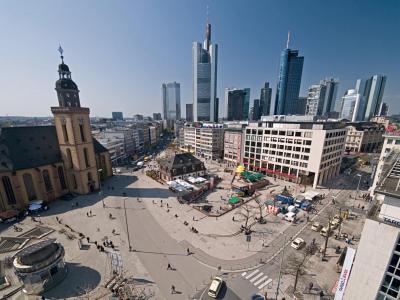
Hauptwache is a central point of Frankfurt and one of the most famous plazas in the city. The original name Schillerplatz was superseded in the early 1900s. The Hauptwache ("Main Guardroom") building, which gave the square its current name, dates back to 1730 and was designed by German master builder Johann Samhammer. It features red sandstone Baroque-style exterior and a hipped Gothic-style triangular roof with three chimneys.
The original purpose of the place was to house the headquarters of the city's Stadtwehr militia and prison when Frankfurt was an independent city-state. The Hauptwache went down in history when it was stormed by student activists in a failed attempt at freeing political prisoners in 1833, called the Frankfurter Wachensturm. The building then served as a police station and, in 1904, became a cafe which it remains to this day. It marks one end of the Zeil and adds a great deal of old-world architectural charm to this busy part of Frankfurt.
On 7 April 1920, the square was the scene of yet another Hauptwache incident when French troops opened fire on students protesting against the French occupation of Frankfurt. Heavily burned in World War II bombing, the building was reopened in a provisional form with an altered roof in 1954. In 1967, amid the construction of the U-Bahn tunnel through the city, the Hauptwache edifice was dismantled, moved, and then rebuilt over the new underground U-Bahn station.
Today, Hauptwache station is one of the most important crosspoints of the Frankfurt public transport system, served by eight S-Bahn and six U-Bahn lines. A key element of the plaza is a sunken terrace leading down to the station and an underground pedestrian area with shops, dubbed by the locals as "das Loch" (the Hole).
Visitors, commuters, and shoppers can enjoy a light refreshing meal at the Hauptwache café with its quaint ambiance reminiscent of a momentous past. Apart from it, the surrounding buildings are mostly modern high risers, except for the imposing Saint Catherine's Church.
Tip:
If the weather permits, sit down and have a glass of beer, glühwein, or Frankfurter apple wine outside the Hauptwache.
If you're lucky, there will be an apple wine festival when you arrive; then you could mingle with the local professionals, wine-lovers, and travelers alike.
The original purpose of the place was to house the headquarters of the city's Stadtwehr militia and prison when Frankfurt was an independent city-state. The Hauptwache went down in history when it was stormed by student activists in a failed attempt at freeing political prisoners in 1833, called the Frankfurter Wachensturm. The building then served as a police station and, in 1904, became a cafe which it remains to this day. It marks one end of the Zeil and adds a great deal of old-world architectural charm to this busy part of Frankfurt.
On 7 April 1920, the square was the scene of yet another Hauptwache incident when French troops opened fire on students protesting against the French occupation of Frankfurt. Heavily burned in World War II bombing, the building was reopened in a provisional form with an altered roof in 1954. In 1967, amid the construction of the U-Bahn tunnel through the city, the Hauptwache edifice was dismantled, moved, and then rebuilt over the new underground U-Bahn station.
Today, Hauptwache station is one of the most important crosspoints of the Frankfurt public transport system, served by eight S-Bahn and six U-Bahn lines. A key element of the plaza is a sunken terrace leading down to the station and an underground pedestrian area with shops, dubbed by the locals as "das Loch" (the Hole).
Visitors, commuters, and shoppers can enjoy a light refreshing meal at the Hauptwache café with its quaint ambiance reminiscent of a momentous past. Apart from it, the surrounding buildings are mostly modern high risers, except for the imposing Saint Catherine's Church.
Tip:
If the weather permits, sit down and have a glass of beer, glühwein, or Frankfurter apple wine outside the Hauptwache.
If you're lucky, there will be an apple wine festival when you arrive; then you could mingle with the local professionals, wine-lovers, and travelers alike.
2) Memorial Wall
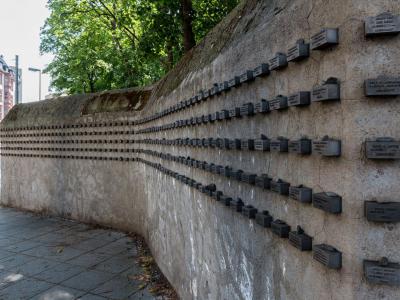
The Neuer Börneplatz Memorial Site, also known as the Börneplatz Memorial Site, is located in Frankfurt am Main and serves as a tribute to the Jewish community of Frankfurt that was tragically decimated during the Holocaust. This somber memorial site was officially opened to the public on June 16, 1996.
The centerpiece of this memorial is the exterior wall of the Old Jewish Cemetery on Battonnstraße, adorned with a frieze comprising 11,908 individual memorial name blocks. This frieze is a poignant tribute to those Jews who lost their lives during the Nazi era or faced persecution, many of whom had ties to Frankfurt through their birth, residency, or deportation. Notable figures such as Anne Frank are among those remembered. The inscriptions on these metal blocks provide visitors with essential biographical information about the victims, including their birth and, if known, death dates and places. It is customary for visitors to place small stones on these blocks as part of Jewish mourning rituals.
At the time of the memorial's inauguration in 1996, it represented 11,134 individuals through name blocks. In 2010, an additional 823 name blocks were added to the southern cemetery wall, bringing the total to 11,908 name blocks as of 2023.
In preparation for the unveiling of the memorial site, a new gate was installed in the cemetery wall. This gate comprises two contemporary metal door wings, with the Hebrew inscription "Beth HaChaim" (House of Life) prominently displayed.
The centerpiece of this memorial is the exterior wall of the Old Jewish Cemetery on Battonnstraße, adorned with a frieze comprising 11,908 individual memorial name blocks. This frieze is a poignant tribute to those Jews who lost their lives during the Nazi era or faced persecution, many of whom had ties to Frankfurt through their birth, residency, or deportation. Notable figures such as Anne Frank are among those remembered. The inscriptions on these metal blocks provide visitors with essential biographical information about the victims, including their birth and, if known, death dates and places. It is customary for visitors to place small stones on these blocks as part of Jewish mourning rituals.
At the time of the memorial's inauguration in 1996, it represented 11,134 individuals through name blocks. In 2010, an additional 823 name blocks were added to the southern cemetery wall, bringing the total to 11,908 name blocks as of 2023.
In preparation for the unveiling of the memorial site, a new gate was installed in the cemetery wall. This gate comprises two contemporary metal door wings, with the Hebrew inscription "Beth HaChaim" (House of Life) prominently displayed.
3) The Old Jewish Cemetery, Battonnstrasse
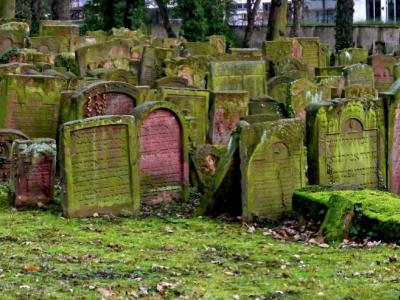
Battonnstrasse cemetery in Frankfurt is the second oldest Jewish burial sight in Germany; the first documented mention of it goes back to 1180. Throughout history, the size of the cemetery hasn't practically changed. The oldest surviving tombstone at Battonnstrasse is dated July 12, 1272, whereas many Frankfurt Jews – victims of the pogrom, known as the “Frankfurter Judenschlacht” – had found their final resting place here as early as 1241. The very last burial at the cemetery took place on September 16, 1828, after which it had to be closed, being overcrowded with nearly 6,500 graves.
Under the Nazi regime, in 1942, 4,666 gravestones were demolished and piled up as rubble for removal. Some of these stone heaps can still be seen today. 175 gravestones were removed, but not crushed, and ended up in the newer Jewish cemetery on Rat-Beil-Strasse. In the 1950s, they were returned, but because there was no information on their original location, they could only be placed along the cemetery wall.
The gravestones of important religious and secular personalities, such as Nathan ben Simeon ha-Kohen Adler, the Frankfurt chief rabbi Jakob Jehoschua Falk, Pinchas Ben Zwi Hirsch Ha-Levi or Meir ben Rabbi Yaakov Schiff, have been grouped together in a place of honor. The grave of Meir Anschel Rothschild, founder of the Rothschild banking house, is one of the most famous grave sites on the grounds.
The Battonnstrasse cemetery is permanently closed; those who wish to visit (except on Jewish holidays, Mondays, and Saturdays), may obtain the key at the neighboring Museum Judengasse. For that, a deposit of a valid ID must be placed. Guided tours are offered every second Sunday, and can be booked by phone at the museum. The entrance to the cemetery is via the gate on Battonnstrasse. Men are requested to wear a head cover (e.g. Kippa, which can be borrowed from the museum).
Under the Nazi regime, in 1942, 4,666 gravestones were demolished and piled up as rubble for removal. Some of these stone heaps can still be seen today. 175 gravestones were removed, but not crushed, and ended up in the newer Jewish cemetery on Rat-Beil-Strasse. In the 1950s, they were returned, but because there was no information on their original location, they could only be placed along the cemetery wall.
The gravestones of important religious and secular personalities, such as Nathan ben Simeon ha-Kohen Adler, the Frankfurt chief rabbi Jakob Jehoschua Falk, Pinchas Ben Zwi Hirsch Ha-Levi or Meir ben Rabbi Yaakov Schiff, have been grouped together in a place of honor. The grave of Meir Anschel Rothschild, founder of the Rothschild banking house, is one of the most famous grave sites on the grounds.
The Battonnstrasse cemetery is permanently closed; those who wish to visit (except on Jewish holidays, Mondays, and Saturdays), may obtain the key at the neighboring Museum Judengasse. For that, a deposit of a valid ID must be placed. Guided tours are offered every second Sunday, and can be booked by phone at the museum. The entrance to the cemetery is via the gate on Battonnstrasse. Men are requested to wear a head cover (e.g. Kippa, which can be borrowed from the museum).
4) Börneplatz Memorial
The Börneplatz Memorial is a tribute to the Jewish community of Frankfurt that suffered immense devastation during the Holocaust. It was opened to the public on June 16, 1996.
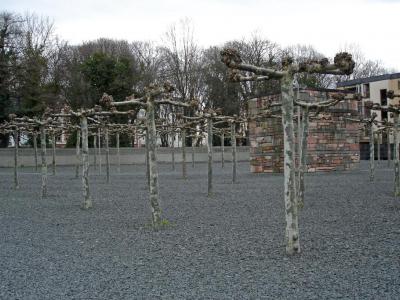
The memorial comprises several significant features. In the heart of the square, along Rechneigrabenstrasse, stands a stone cube constructed from the remains of the foundations of the former ghetto. This cube is encircled by a grove of plane trees, and the square's ground is paved with gray gravel stones. The layout of the Börneplatz synagogue, which was constructed in 1882 and tragically vandalized during the November pogrom of 1938, is outlined by metal rails on the ground. Additionally, a memorial plaque for the destroyed synagogue can be found on the rear wall of the municipal utilities building.
At the core of the memorial is the frieze adorning the outer wall of the old Jewish cemetery. This frieze serves as a remembrance for the Frankfurt Jews who perished during the Nazi regime or succumbed to persecution. At the time of the memorial's dedication, a total of 11,134 victims had been identified, and their biographical information is engraved on metal blocks resembling gravestones. In line with Jewish burial traditions, visitors to the memorial have the opportunity to place small stones there.
The memorial also incorporates other elements, designed by Wandel Lorch Architects, that evoke the complex history of the former Frankfurt Judengasse and Börneplatz, as well as the tragic obliteration of Jewish life in the city.
The memorial comprises several significant features. In the heart of the square, along Rechneigrabenstrasse, stands a stone cube constructed from the remains of the foundations of the former ghetto. This cube is encircled by a grove of plane trees, and the square's ground is paved with gray gravel stones. The layout of the Börneplatz synagogue, which was constructed in 1882 and tragically vandalized during the November pogrom of 1938, is outlined by metal rails on the ground. Additionally, a memorial plaque for the destroyed synagogue can be found on the rear wall of the municipal utilities building.
At the core of the memorial is the frieze adorning the outer wall of the old Jewish cemetery. This frieze serves as a remembrance for the Frankfurt Jews who perished during the Nazi regime or succumbed to persecution. At the time of the memorial's dedication, a total of 11,134 victims had been identified, and their biographical information is engraved on metal blocks resembling gravestones. In line with Jewish burial traditions, visitors to the memorial have the opportunity to place small stones there.
The memorial also incorporates other elements, designed by Wandel Lorch Architects, that evoke the complex history of the former Frankfurt Judengasse and Börneplatz, as well as the tragic obliteration of Jewish life in the city.
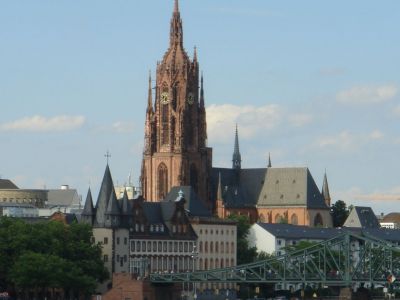
5) Frankfurt Cathedral (Cathedral of St. Bartholomew) (must see)
Frankfurt Cathedral is a Gothic-style Roman Catholic temple dedicated to Saint Bartholomew. This is the main and by far the largest religious site in Frankfurt – the height of its spire reaches 95 meters. Despite the name – Kaiserdom (Imperial Cathedral), or simply the Dom, – it has never been a cathedral in the true sense of the word but is only called so for its importance as a former coronation church of the Holy Roman Empire.
The present building on the site is the third one. The very first church (Merovingian chapel) was built here in the 7th century, which was then replaced, by a grander temple, in 1250. In 1356, Charles IV, Holy Roman Emperor issued the Golden Bull whereby all emperors of the Holy Roman Empire were to be elected in this collegiate church as kings of Germany; from 1562 to 1792, all emperors-elect were crowned here.
In 1867, Saint Bartholomew's was destroyed by fire and rebuilt in its present style. During WWII, between October 1943 and March 1944, the Old Town of Frankfurt was devastated by the Allied Forces' air bombardments. The cathedral also suffered severe damage; its interior burned out completely and was reconstructed only in the 1950s.
Saint Bartholomew's houses many splendid works of art, including a unique high altar and the Maria Schlaf altar found in Saint Mary’s chapel. Also, there is an Anthony Van Dyke painting, ‘The Lamentation’, and a museum with many historic pieces including objects discovered in a grave of a Merovingian girl.
Why You Should Visit:
Admission is free and, if lucky, you may enjoy some impressive organ music, too, or take in panoramic views of Frankfurt from atop the cathedral's tower (for a small fee).
Tip:
Try and go on a weekday to avoid the weekend crowd; make sure to bring a bottle of water if you decide to climb the tower.
The present building on the site is the third one. The very first church (Merovingian chapel) was built here in the 7th century, which was then replaced, by a grander temple, in 1250. In 1356, Charles IV, Holy Roman Emperor issued the Golden Bull whereby all emperors of the Holy Roman Empire were to be elected in this collegiate church as kings of Germany; from 1562 to 1792, all emperors-elect were crowned here.
In 1867, Saint Bartholomew's was destroyed by fire and rebuilt in its present style. During WWII, between October 1943 and March 1944, the Old Town of Frankfurt was devastated by the Allied Forces' air bombardments. The cathedral also suffered severe damage; its interior burned out completely and was reconstructed only in the 1950s.
Saint Bartholomew's houses many splendid works of art, including a unique high altar and the Maria Schlaf altar found in Saint Mary’s chapel. Also, there is an Anthony Van Dyke painting, ‘The Lamentation’, and a museum with many historic pieces including objects discovered in a grave of a Merovingian girl.
Why You Should Visit:
Admission is free and, if lucky, you may enjoy some impressive organ music, too, or take in panoramic views of Frankfurt from atop the cathedral's tower (for a small fee).
Tip:
Try and go on a weekday to avoid the weekend crowd; make sure to bring a bottle of water if you decide to climb the tower.
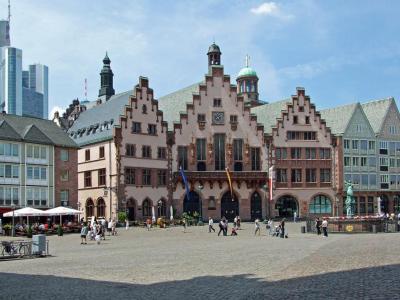
6) Römerberg (Square) (must see)
Römerberg ("Roman Mountain") is the town hall square lying in front of (and subsequently named after) the Römer complex, the seat of the Frankfurt city administration since the 15th century. As the site of numerous imperial coronations, trade fairs, and Christmas markets, this square marks the historic heart of the medieval Altstadt (Old Town) and is a popular tourist destination. In the 20th century, Römerberg was the scene of many major events, both joyful and not so. On May 10, 1933, the infamous book burning organized by the Nazi German Student Union took place here. Between 1932 and 1939, the internationally renowned Römerberg Festival had been held here every summer, with nearly 350 open-air theater shows performed during the period.
Much of Römerberg's historical heritage, consisting of partly Gothic and partly Baroque architecture, was destroyed by Allied air raids in 1944. Today's square is the result of externally true to the original reconstructions and new buildings raised in the 1950s-1980s. The eastern part of Römerberg, also known as Samstagsberg (Saturday Mountain), represents a row of historical half-timbered houses, namely: Großer and Kleiner Engel, Goldener Greif, Wilder Mann, Kleiner Dachsberg, Großer Laubenberg, Kleiner Laubenberg, and Schwarzer Stern, built between 1981 and 1984. The name “Saturday Mountain” possibly comes from an open-air court that was held here every Saturday during the Carolingian era, when the Königspfalz Frankfurt lay east of the square. The Frankfurt Jews were only allowed to enter Römerberg during the fair, otherwise, they had to go to the Saturday market.
To the north, there are four new buildings featuring Neo-Gothic, Neo-Renaissance, and Neo-Baroque styles, replacing the six old houses demolished in 1906. In the south, Römerberg is presided over by the early Gothic Alte Nikolaikirche (Old Saint Nicholas Church). The new building of the Historical Museum, also located on the south side of the square, at the entrance to Saalgasse, was opened in October 2017.
The Fountain of Justice has been in Römerberg since 1543.
Much of Römerberg's historical heritage, consisting of partly Gothic and partly Baroque architecture, was destroyed by Allied air raids in 1944. Today's square is the result of externally true to the original reconstructions and new buildings raised in the 1950s-1980s. The eastern part of Römerberg, also known as Samstagsberg (Saturday Mountain), represents a row of historical half-timbered houses, namely: Großer and Kleiner Engel, Goldener Greif, Wilder Mann, Kleiner Dachsberg, Großer Laubenberg, Kleiner Laubenberg, and Schwarzer Stern, built between 1981 and 1984. The name “Saturday Mountain” possibly comes from an open-air court that was held here every Saturday during the Carolingian era, when the Königspfalz Frankfurt lay east of the square. The Frankfurt Jews were only allowed to enter Römerberg during the fair, otherwise, they had to go to the Saturday market.
To the north, there are four new buildings featuring Neo-Gothic, Neo-Renaissance, and Neo-Baroque styles, replacing the six old houses demolished in 1906. In the south, Römerberg is presided over by the early Gothic Alte Nikolaikirche (Old Saint Nicholas Church). The new building of the Historical Museum, also located on the south side of the square, at the entrance to Saalgasse, was opened in October 2017.
The Fountain of Justice has been in Römerberg since 1543.
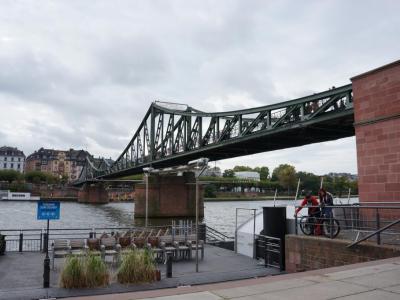
7) Eiserner Steg (Iron footbridge) (must see)
Eiserner Steg (Iron Bridge) is a pedestrian bridge over the river Main connecting the Old Town of Frankfurt with the Sachsenhausen district. It is also known as the “Love Lock Bridge” for being hung with tons of locks interlinked with each other, forming an enormous chain, a symbol of "eternal love".
The bridge has been in place since 1868 and was built initially through public subscription. The original version was replaced in 1912 with a widened, reinforced, and elevated construction. By that time the Main had become navigable upstream, so the low headroom of the Iron Bridge presented a traffic obstacle for large barges. Although its external appearance was retained for historical reasons, structurally – in terms of the load-bearing principle – the bridge was made completely different, switching from a suspension to a cantilever model.
After World War II, the Eiserne Steg was one of the first bridges in Germany to be rebuilt – in 1946 – after it had been blown up by the Wehrmacht in the last days of the war. In 1993, it underwent a complete renovation, prompted by decades-long corrosion gnawing at the steel, following which two elevators and prams were also added to ease access for wheelchairs. The bridge now has a clearance height of 6.50 meters.
The Greek motto, a quote from Homer's Odyssey: ΠΛΕΩΝ ΕΠΙ ΟΙΝΟΠΑ ΠΟΝΤΟΝ ΕΠ ΑΛΛΟΘΡΟΟΥΣ ΑΝΘΡΩΠΟΥΣ (“Sailing on the dark sea to people of another tongue”), spanning the steel construction over the northern pillar, was created by artist Hagen Bonifer in 1999 to celebrate the year of Goethe.
Tip:
If you're into photography, come here at sunset and you'll be able to take some very nice shots of Frankfurt's skyline (but be ready for a crowd).
The bridge has been in place since 1868 and was built initially through public subscription. The original version was replaced in 1912 with a widened, reinforced, and elevated construction. By that time the Main had become navigable upstream, so the low headroom of the Iron Bridge presented a traffic obstacle for large barges. Although its external appearance was retained for historical reasons, structurally – in terms of the load-bearing principle – the bridge was made completely different, switching from a suspension to a cantilever model.
After World War II, the Eiserne Steg was one of the first bridges in Germany to be rebuilt – in 1946 – after it had been blown up by the Wehrmacht in the last days of the war. In 1993, it underwent a complete renovation, prompted by decades-long corrosion gnawing at the steel, following which two elevators and prams were also added to ease access for wheelchairs. The bridge now has a clearance height of 6.50 meters.
The Greek motto, a quote from Homer's Odyssey: ΠΛΕΩΝ ΕΠΙ ΟΙΝΟΠΑ ΠΟΝΤΟΝ ΕΠ ΑΛΛΟΘΡΟΟΥΣ ΑΝΘΡΩΠΟΥΣ (“Sailing on the dark sea to people of another tongue”), spanning the steel construction over the northern pillar, was created by artist Hagen Bonifer in 1999 to celebrate the year of Goethe.
Tip:
If you're into photography, come here at sunset and you'll be able to take some very nice shots of Frankfurt's skyline (but be ready for a crowd).
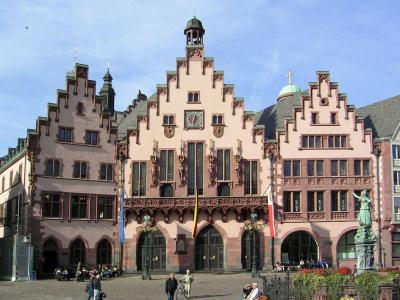
8) Römer (City Hall) (must see)
The Römer ("Roman") is the Rathaus (City Hall) of Frankfurt and one of the main local historic landmarks. This medieval building has been in service for over 600 years and still houses offices of the local government.
In 1405, the Römer family of the wealthy Frankfurt merchants sold their house, along with the adjacent Goldener Schwan (Golden Swan) building, to the city council. Since then the property has continuously accommodated different civic offices until the present. Over the years, the complex has been expanded by the addition and purchase of nearby buildings, so today it represents a labyrinth of several structures connected by streets. A bridge, jokingly referred to as the “Bridge of Sighs” (after its famous counterpart in Venice), connects the Römer to the offices across the street. Two towers were added to the complex in the early 20th century. One of them is dubbed Langer Franz (Tall Franz) in homage to the city's tall mayor, and the other, smaller one, Kleiner Cohen (Small Cohen), after a popular song of the time.
Römerhalle and Schwanenhalle are the oldest rooms within the complex and are virtually unchanged after 600 years. They are found on the ground floor of the Römer and Goldener Schwan houses and can be entered directly from the main entrance in Römerberg.
Still, the main attraction of the Römer, perhaps, is the Kaisersaal (Emperor Hall) where coronation banquets of German Kings and Emperors of the Holy Roman Empire took place. The hall contains 52 portraits by famous artists of all the German Kings and Emperors, starting from Freidrich Barbarossa in 1152 to Franz II who was forced to abdicate by Napoleon in 1806. There is also an ornate balcony from where the rulers used to greet the crowds down below. The annual Christmas fair held in the square outside the City Hall is a regular attraction in its own right, drawing thousands of visitors from all over the world.
Why You Should Visit:
Truly an eye-catcher, even more interesting in the run-up to Christmas than during the rest of the year.
German history and culture are perfectly preserved in this Gingerbread part of town.
Tip:
Make sure you walk to the river to catch the Frankfurt cityscape which is only a few hundred meters away!
In 1405, the Römer family of the wealthy Frankfurt merchants sold their house, along with the adjacent Goldener Schwan (Golden Swan) building, to the city council. Since then the property has continuously accommodated different civic offices until the present. Over the years, the complex has been expanded by the addition and purchase of nearby buildings, so today it represents a labyrinth of several structures connected by streets. A bridge, jokingly referred to as the “Bridge of Sighs” (after its famous counterpart in Venice), connects the Römer to the offices across the street. Two towers were added to the complex in the early 20th century. One of them is dubbed Langer Franz (Tall Franz) in homage to the city's tall mayor, and the other, smaller one, Kleiner Cohen (Small Cohen), after a popular song of the time.
Römerhalle and Schwanenhalle are the oldest rooms within the complex and are virtually unchanged after 600 years. They are found on the ground floor of the Römer and Goldener Schwan houses and can be entered directly from the main entrance in Römerberg.
Still, the main attraction of the Römer, perhaps, is the Kaisersaal (Emperor Hall) where coronation banquets of German Kings and Emperors of the Holy Roman Empire took place. The hall contains 52 portraits by famous artists of all the German Kings and Emperors, starting from Freidrich Barbarossa in 1152 to Franz II who was forced to abdicate by Napoleon in 1806. There is also an ornate balcony from where the rulers used to greet the crowds down below. The annual Christmas fair held in the square outside the City Hall is a regular attraction in its own right, drawing thousands of visitors from all over the world.
Why You Should Visit:
Truly an eye-catcher, even more interesting in the run-up to Christmas than during the rest of the year.
German history and culture are perfectly preserved in this Gingerbread part of town.
Tip:
Make sure you walk to the river to catch the Frankfurt cityscape which is only a few hundred meters away!
9) Goethe-Haus (must see)
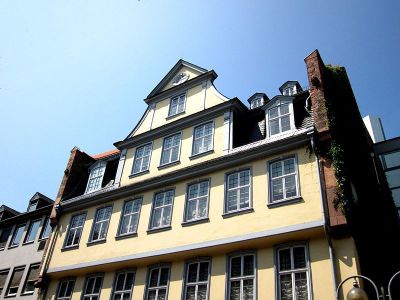
Grosser Hirschgraben 23 in Frankfurt is the place where philosopher-writer Johann Wolfgang Von Goethe was born and raised, and where he wrote his famous works: Götz von Berlichingen, Faust, and The Sorrows of Young Werther. The house was destroyed during World War II but was reconstructed with loving care to its 17th-century splendor, in memory of Frankfurt’s best-known son, by the local citizens.
The museum opened to the public in 1863 and has since remained a shrine for Goethe enthusiasts from all over the world. Decorated with period furniture and paintings, it provides an authentic environment in which Goethe spent his youth, reflecting the lifestyle enjoyed by affluent 17th-century Germans, featuring various Baroque, Neoclassical, and Rococo elements. Among the rooms painstakingly restored after the war are the library where Wolfgang Goethe’s father worked and looked out for the return of his son, and the portrayal of an authentic 17th-century German Kitchen.
The puppet theater that Goethe treasured enough to make the focal point of his novel 'Wilhelm Meister's Apprenticeship' is also on view. One of the treasures within the house is a large classic clock on the 2nd floor that tells the time, date, the lunar and solar year. The building houses Goethe’s father’s vast collection of art, including paintings by well-known Frankfurt artists. The adjacent Frankfurter Goethe Museum contains books, works of art, and manuscripts all related, in some way or other, to Goethe.
Goethe House is open through the week and is free for children under 6. Visitors can request the help of volunteers to understand the significance of every Goethe-related object on display.
Why You Should Visit:
More than you'd normally expect; apart from the house itself (completely nice to see), you can visit a gallery (up the staircase) that is no smaller than some art museums you'd want to pay much to visit. Great value!
Tip:
Good to either take an audio guide or make sure to grab a pamphlet at the entrance in the relevant language.
The museum opened to the public in 1863 and has since remained a shrine for Goethe enthusiasts from all over the world. Decorated with period furniture and paintings, it provides an authentic environment in which Goethe spent his youth, reflecting the lifestyle enjoyed by affluent 17th-century Germans, featuring various Baroque, Neoclassical, and Rococo elements. Among the rooms painstakingly restored after the war are the library where Wolfgang Goethe’s father worked and looked out for the return of his son, and the portrayal of an authentic 17th-century German Kitchen.
The puppet theater that Goethe treasured enough to make the focal point of his novel 'Wilhelm Meister's Apprenticeship' is also on view. One of the treasures within the house is a large classic clock on the 2nd floor that tells the time, date, the lunar and solar year. The building houses Goethe’s father’s vast collection of art, including paintings by well-known Frankfurt artists. The adjacent Frankfurter Goethe Museum contains books, works of art, and manuscripts all related, in some way or other, to Goethe.
Goethe House is open through the week and is free for children under 6. Visitors can request the help of volunteers to understand the significance of every Goethe-related object on display.
Why You Should Visit:
More than you'd normally expect; apart from the house itself (completely nice to see), you can visit a gallery (up the staircase) that is no smaller than some art museums you'd want to pay much to visit. Great value!
Tip:
Good to either take an audio guide or make sure to grab a pamphlet at the entrance in the relevant language.
10) Old Opera House (Alte Oper) (must see)
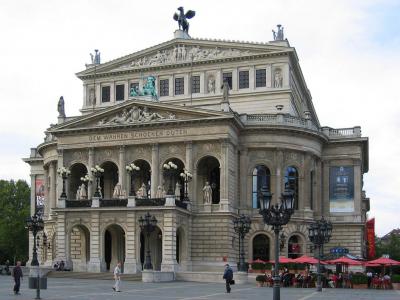
Perched above a picturesque square adorned with a graceful fountain lies the Opera House, sporting a Renaissance-style façade. This historic edifice, known by the moniker "Alte Oper," or "the Old Opera House," stands in place of a predecessor that graced the location from 1880 to 1944.
The inaugural Frankfurt Opera House, conceived by the Berlin-based architect Richard Lucae, made its debut in 1880, with Kaiser Wilhelm I presiding over the grand opening. The architectural design exuded the opulence expected of a venue patronized by royalty, showcasing Renaissance aesthetics. Tragically, during World War II, the structure suffered complete devastation. Following extensive deliberations among Frankfurt's residents, a new building arose, echoing the design of its predecessor. While the lobby and façade maintained their Renaissance architectural charm, the remainder of the structure underwent a transformation into a versatile modern complex, housing banquet halls, concert venues, and a convention center. This Opera House now fulfills the dual role of a cultural hub and a gathering place for Frankfurt's denizens.
At the Alte Oper, visitors can relish classical and popular music concerts. The edifice takes on an enchanting allure in the evening, its exterior adorned with splendid statues of Goethe and Mozart, who preside over the square below.
Why You Should Visit:
Great location to spend time in Frankfurt – beautifully restored theatre in a beautifully designed square.
Tip:
Both the café and the restaurant are generally busy in the evening, so try and reserve a spot in advance.
During a nice warm day, try and grab a seat outside, enjoy a cup of coffee/glass of wine and people watch.
The inaugural Frankfurt Opera House, conceived by the Berlin-based architect Richard Lucae, made its debut in 1880, with Kaiser Wilhelm I presiding over the grand opening. The architectural design exuded the opulence expected of a venue patronized by royalty, showcasing Renaissance aesthetics. Tragically, during World War II, the structure suffered complete devastation. Following extensive deliberations among Frankfurt's residents, a new building arose, echoing the design of its predecessor. While the lobby and façade maintained their Renaissance architectural charm, the remainder of the structure underwent a transformation into a versatile modern complex, housing banquet halls, concert venues, and a convention center. This Opera House now fulfills the dual role of a cultural hub and a gathering place for Frankfurt's denizens.
At the Alte Oper, visitors can relish classical and popular music concerts. The edifice takes on an enchanting allure in the evening, its exterior adorned with splendid statues of Goethe and Mozart, who preside over the square below.
Why You Should Visit:
Great location to spend time in Frankfurt – beautifully restored theatre in a beautifully designed square.
Tip:
Both the café and the restaurant are generally busy in the evening, so try and reserve a spot in advance.
During a nice warm day, try and grab a seat outside, enjoy a cup of coffee/glass of wine and people watch.
11) Main Tower (must see)
Named after the nearby Main River, the Main Tower is a 56-storey, 200 meters (656 feet) skyscraper, the 4th tallest building in Frankfurt and all of Germany. Complete with its antenna spire, the building stands 240 meters (787 feet) high. The tower has five underground floors and two public viewing platforms and is the only skyscraper in Frankfurt with a public viewing observatory.
The building's design features what appears to be two connected towers: the smaller, cuboid one with a glass façade, common to the 1970s architecture; and the second, taller one, of a circular shape clad entirely in blue colored glass, featuring the transmission tower on top.
Construction of the Main Tower began in 1996 and was completed in 1999. The tower has 55 floors with functioning windows making it an eco-friendly modern high-rise structure. The building houses the offices of several German and international banks and is virtually the financial center of Frankfurt. There are also television and radio stations. During TV weather reports, the reporter stands on top of the building.
In the foyer, there are two art pieces accessible to the public: the video installation by Bill Viola "The World of Appearances" and the wall mosaic by Stephan Huber "Frankfurter Treppe / XX. Jahrhundert" ("Frankfurt's Steps/20th century").
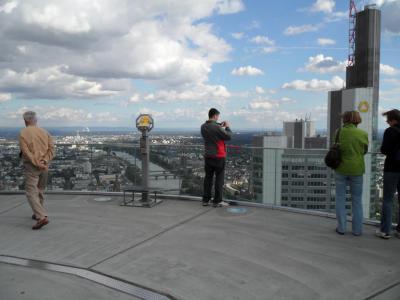
Visitors to the observation deck at the top floor are encouraged to take a map to spot Frankfurt’s numerous landmarks from atop. One floor below is a restaurant and bar with large windows offering a panoramic 360-degree panorama of the city. On clear days you can see as far as the Mainz, Wiesbaden, Hanau, and Taunus Mountains.
Why You Should Visit:
There are a few elevated places in Frankfurt which provide amazing views of the city, but the Main Tower has to be the tallest and the best among them.
Unlike some other observation decks, the top of the Main Tower is completely open other than a low railing. There's no glass between you and the sky.
Tip:
Go before sunset to see Frankfurt in daylight and 20 minutes later in the light of a big city.
Also, make sure to wrap up if going during the colder months.
The building's design features what appears to be two connected towers: the smaller, cuboid one with a glass façade, common to the 1970s architecture; and the second, taller one, of a circular shape clad entirely in blue colored glass, featuring the transmission tower on top.
Construction of the Main Tower began in 1996 and was completed in 1999. The tower has 55 floors with functioning windows making it an eco-friendly modern high-rise structure. The building houses the offices of several German and international banks and is virtually the financial center of Frankfurt. There are also television and radio stations. During TV weather reports, the reporter stands on top of the building.
In the foyer, there are two art pieces accessible to the public: the video installation by Bill Viola "The World of Appearances" and the wall mosaic by Stephan Huber "Frankfurter Treppe / XX. Jahrhundert" ("Frankfurt's Steps/20th century").
Visitors to the observation deck at the top floor are encouraged to take a map to spot Frankfurt’s numerous landmarks from atop. One floor below is a restaurant and bar with large windows offering a panoramic 360-degree panorama of the city. On clear days you can see as far as the Mainz, Wiesbaden, Hanau, and Taunus Mountains.
Why You Should Visit:
There are a few elevated places in Frankfurt which provide amazing views of the city, but the Main Tower has to be the tallest and the best among them.
Unlike some other observation decks, the top of the Main Tower is completely open other than a low railing. There's no glass between you and the sky.
Tip:
Go before sunset to see Frankfurt in daylight and 20 minutes later in the light of a big city.
Also, make sure to wrap up if going during the colder months.
12) Frankfurt (Main) Hauptbahnhof (must see)
Frankfurt (Main) Hauptbahnhof, commonly known as Frankfurt Central Station or Frankfurt Main Station, stands as Germany's busiest and most significant railway hub.
This pivotal transportation hub came into existence on August 18, 1888, with a mere five-year construction period. Over the subsequent years, the surrounding district to the east of the station's entrance building developed and reached full maturity by around 1900. Frankfurt Hauptbahnhof retained its status as Europe's largest railway station until Leipzig Hauptbahnhof was constructed in 1915.
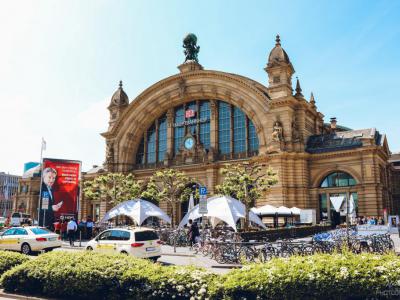
The above-ground portion of Frankfurt Central Station comprises two main sections: the entrance building and the train shed. The entrance building faces eastward, welcoming travelers into the terminal station and connecting to the Bahnhofsviertel (station district). The original building's facade, situated in front of the three central train sheds, boasts a Renaissance Revival design. Meanwhile, the extensions made to the entrance building in 1924, located in front of the two outer halls, adopt a neoclassical architectural style.
The width of the building spans an impressive 270 meters. At the heart of the entrance building lies the primary reception hall, featuring three doorways separated by two grand pillars at its street-side entrance. Above the center of this hall, a meticulously adorned clock showcases allegorical representations of day and night, alongside the Deutsche Bahn logo bearing the word "Hauptbahnhof." This three-part division continues in the roof area, where expansive glass surfaces permit the ingress of natural daylight.
A pair of towers graces each side of the facade, and crowning the roof is a 6.3-meter-high bronze sculpture group created by the Braunschweig sculptor Gustav Herold. This artwork portrays Atlas, who carries the globe on his shoulders, flanked by symbolic figures representing steam and electricity. Additionally, figures symbolizing trade, agriculture, the iron industry, and shipping contribute to the station's decorative and historical significance.
This pivotal transportation hub came into existence on August 18, 1888, with a mere five-year construction period. Over the subsequent years, the surrounding district to the east of the station's entrance building developed and reached full maturity by around 1900. Frankfurt Hauptbahnhof retained its status as Europe's largest railway station until Leipzig Hauptbahnhof was constructed in 1915.
The above-ground portion of Frankfurt Central Station comprises two main sections: the entrance building and the train shed. The entrance building faces eastward, welcoming travelers into the terminal station and connecting to the Bahnhofsviertel (station district). The original building's facade, situated in front of the three central train sheds, boasts a Renaissance Revival design. Meanwhile, the extensions made to the entrance building in 1924, located in front of the two outer halls, adopt a neoclassical architectural style.
The width of the building spans an impressive 270 meters. At the heart of the entrance building lies the primary reception hall, featuring three doorways separated by two grand pillars at its street-side entrance. Above the center of this hall, a meticulously adorned clock showcases allegorical representations of day and night, alongside the Deutsche Bahn logo bearing the word "Hauptbahnhof." This three-part division continues in the roof area, where expansive glass surfaces permit the ingress of natural daylight.
A pair of towers graces each side of the facade, and crowning the roof is a 6.3-meter-high bronze sculpture group created by the Braunschweig sculptor Gustav Herold. This artwork portrays Atlas, who carries the globe on his shoulders, flanked by symbolic figures representing steam and electricity. Additionally, figures symbolizing trade, agriculture, the iron industry, and shipping contribute to the station's decorative and historical significance.
