Custom Walk in Vienna, Austria by hew_annun6567_739977 created on 2026-05-17
Guide Location: Austria » Vienna
Guide Type: Custom Walk
# of Sights: 12
Tour Duration: 4 Hour(s)
Travel Distance: 10.2 Km or 6.3 Miles
Share Key: KL38T
Guide Type: Custom Walk
# of Sights: 12
Tour Duration: 4 Hour(s)
Travel Distance: 10.2 Km or 6.3 Miles
Share Key: KL38T
How It Works
Please retrieve this walk in the GPSmyCity app. Once done, the app will guide you from one tour stop to the next as if you had a personal tour guide. If you created the walk on this website or come to the page via a link, please follow the instructions below to retrieve the walk in the app.
Retrieve This Walk in App
Step 1. Download the app "GPSmyCity: Walks in 1K+ Cities" on Apple App Store or Google Play Store.



Step 2. In the GPSmyCity app, download(or launch) the guide "Vienna Map and Walking Tours".
Step 3. Tap the menu button located at upper right corner of the "Walks" screen and select "Retrieve custom walk". Enter the share key: KL38T
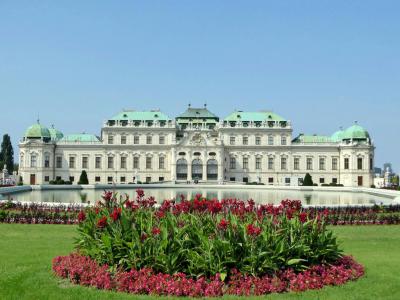
1) Belvedere Palace (must see)
Originally designed as a summer residence for Prince Eugene of Savoy, who apparently felt a standard palace simply wouldn't cut it, this lavish complex was built after Vienna stopped fending off Ottoman invasions and started flexing its imperial muscles in stone, stucco, and cascading fountains.
The Belvedere isn’t just one palace-it’s a full-on ensemble performance: Upper and Lower Belvedere, an Orangery for your fancy citrus needs, and palace stables fit for horses with noble bloodlines. All of it is wrapped in a park so meticulously designed, you’d think every hedge was hand-trimmed by a powdered wig.
Construction kicked off in 1712 with the Lower Belvedere, but things really got dramatic in 1717 when the Upper Belvedere was added-basically a Baroque ballroom with serious diplomatic swagger. Frescoes, gilded ceilings, and artwork by the who’s who of 18th-century painters helped Eugene throw parties that whispered, “empire” with every flute of champagne.
After Prince Eugene passed in 1736, the place got a second act as a Habsburg hangout, hosting royal refugees escaping the French Revolution and later transforming into one of Europe’s earliest public museums, thanks to Maria Theresa and Joseph II.
Fast forward to the 20th century: the Belvedere went national after World War I, becoming the proud home of Austria’s classical and modern art collections. World War II wasn’t kind to it-bombings left their mark-but meticulous restoration from 1945 through the '90s brought the glory back, detail by plastered detail.
Today, the Belvedere is a major world-class museum. Its galleries span centuries, from medieval devotionals to cutting-edge modernism. And yes, Gustav Klimt’s "The Kiss" lives here too, alongside his equally iconic "Judith." You’ll also find a respectable crowd of French Impressionists and Biedermeier charmers holding court on the walls.
It's in equal measure for those who appreciate architecture, arts, or just seek to pretend they’re 18th-century nobility strolling through your summer garden... The Belvedere delivers all of this with a flourish. So go ahead-wander, gaze, and maybe channel your inner prince or princess.
Tip:
If you don’t enjoy queuing in the sun, grab your tickets online. And for the love of Baroque opulence, don’t skip the gardens-those cascading fountains and smug statues have been waiting centuries for your admiration...
The Belvedere isn’t just one palace-it’s a full-on ensemble performance: Upper and Lower Belvedere, an Orangery for your fancy citrus needs, and palace stables fit for horses with noble bloodlines. All of it is wrapped in a park so meticulously designed, you’d think every hedge was hand-trimmed by a powdered wig.
Construction kicked off in 1712 with the Lower Belvedere, but things really got dramatic in 1717 when the Upper Belvedere was added-basically a Baroque ballroom with serious diplomatic swagger. Frescoes, gilded ceilings, and artwork by the who’s who of 18th-century painters helped Eugene throw parties that whispered, “empire” with every flute of champagne.
After Prince Eugene passed in 1736, the place got a second act as a Habsburg hangout, hosting royal refugees escaping the French Revolution and later transforming into one of Europe’s earliest public museums, thanks to Maria Theresa and Joseph II.
Fast forward to the 20th century: the Belvedere went national after World War I, becoming the proud home of Austria’s classical and modern art collections. World War II wasn’t kind to it-bombings left their mark-but meticulous restoration from 1945 through the '90s brought the glory back, detail by plastered detail.
Today, the Belvedere is a major world-class museum. Its galleries span centuries, from medieval devotionals to cutting-edge modernism. And yes, Gustav Klimt’s "The Kiss" lives here too, alongside his equally iconic "Judith." You’ll also find a respectable crowd of French Impressionists and Biedermeier charmers holding court on the walls.
It's in equal measure for those who appreciate architecture, arts, or just seek to pretend they’re 18th-century nobility strolling through your summer garden... The Belvedere delivers all of this with a flourish. So go ahead-wander, gaze, and maybe channel your inner prince or princess.
Tip:
If you don’t enjoy queuing in the sun, grab your tickets online. And for the love of Baroque opulence, don’t skip the gardens-those cascading fountains and smug statues have been waiting centuries for your admiration...
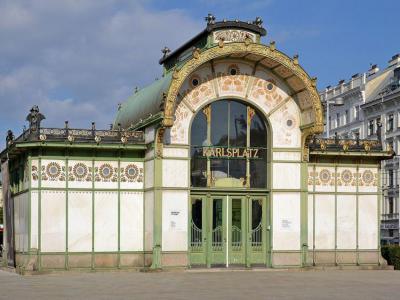
2) Karlsplatz Stadtbahn Station
Otto Wagner-Vienna’s own king of curves and crown prince of steel... When he took charge of the city’s underground system in the 1890s, he didn’t just design train stations-he gave the Viennese public transit a full-blown Art Nouveau glow-up. Enter the twin Karl's Square pavilions, those photogenic little buildings that look like they belong in an opera about trains falling in love...
With their swirling floral motifs, sleek lines, and unapologetically exposed steel framework (because Wagner believed architecture shouldn’t lie), these beauties are equal parts sculpture and structure. They opened to the public in 1899 and promptly became the city’s most stylish way to exit a railway platform.
Fast-forward to the 1980s. The city’s old Stadtbahn line was being updated to the modern U-Bahn, and some genius had the bright idea to demolish Wagner’s pavilions. The Viennese public responded with a collective “absolutely not,” and a full-on preservation revolt followed. As a result, the pavilions were disassembled piece by ornate piece, hoisted up about seven feet, and then reassembled like architectural Lego-Viennese edition.
Today, the twin structures face each other across Karl's Square like two stylish old ladies trading secrets. One is now a delightfully eccentric café (no word on whether the ghost of Wagner sips espresso there); and the other houses a compact exhibit on his life’s work, including a striking model of his magnum opus, the Church at Steinhof.
Local tip:
While you're around Karl's Square, don’t miss Saint Karl's Church, an overachieving Baroque masterpiece with a dome that practically shouts, “Behold me!” You’ll also find the University of Technology, the Vienna City Museum, and the delightfully rebellious Secession Building, famous for its golden cabbage-shaped dome and complete lack of subtlety. And if it's summer, grab a bench under the trees in Resselpark, and let Vienna do the storytelling for you.
With their swirling floral motifs, sleek lines, and unapologetically exposed steel framework (because Wagner believed architecture shouldn’t lie), these beauties are equal parts sculpture and structure. They opened to the public in 1899 and promptly became the city’s most stylish way to exit a railway platform.
Fast-forward to the 1980s. The city’s old Stadtbahn line was being updated to the modern U-Bahn, and some genius had the bright idea to demolish Wagner’s pavilions. The Viennese public responded with a collective “absolutely not,” and a full-on preservation revolt followed. As a result, the pavilions were disassembled piece by ornate piece, hoisted up about seven feet, and then reassembled like architectural Lego-Viennese edition.
Today, the twin structures face each other across Karl's Square like two stylish old ladies trading secrets. One is now a delightfully eccentric café (no word on whether the ghost of Wagner sips espresso there); and the other houses a compact exhibit on his life’s work, including a striking model of his magnum opus, the Church at Steinhof.
Local tip:
While you're around Karl's Square, don’t miss Saint Karl's Church, an overachieving Baroque masterpiece with a dome that practically shouts, “Behold me!” You’ll also find the University of Technology, the Vienna City Museum, and the delightfully rebellious Secession Building, famous for its golden cabbage-shaped dome and complete lack of subtlety. And if it's summer, grab a bench under the trees in Resselpark, and let Vienna do the storytelling for you.
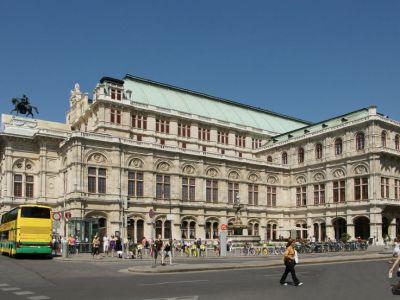
3) State Opera House (must see)
The State Opera House stands as an impressive architectural marvel, complemented by an equally remarkable ensemble of performing artists. Its historical roots trace back to approximately the 1860s when it was initially known as the Vienna Court Opera. However, the name underwent a transformation in 1920, orchestrated by the Habsburgs, during the early stages of the formation of the first Austrian Republic.
Numerous members of the Opera company eventually find themselves on stage with the renowned Vienna Philharmonic, showcasing a vast repertoire of celebrated compositions, including but not limited to, La Traviata, La Clemenza di Tito, and Verdi's Don Carlo. This venue frequently hosts performances by world-famous vocalists, and it has served as the launching pad for the careers of illustrious directors, ranging from Gustav Mahler to Herbert von Karajan and Claudio Abbado.
Beyond the captivating performances of singers and orchestra, the Opera House itself boasts architectural splendor that merits exploration. The State Opera offers guided tours of this remarkable edifice, conducted in 12 different languages. These tours are available daily and typically span approximately 40 minutes, providing visitors with a deeper understanding of this cultural gem.
Tip:
Do not buy opera tickets from the dressed up people outside on the street – they don't sell real tickets!
Numerous members of the Opera company eventually find themselves on stage with the renowned Vienna Philharmonic, showcasing a vast repertoire of celebrated compositions, including but not limited to, La Traviata, La Clemenza di Tito, and Verdi's Don Carlo. This venue frequently hosts performances by world-famous vocalists, and it has served as the launching pad for the careers of illustrious directors, ranging from Gustav Mahler to Herbert von Karajan and Claudio Abbado.
Beyond the captivating performances of singers and orchestra, the Opera House itself boasts architectural splendor that merits exploration. The State Opera offers guided tours of this remarkable edifice, conducted in 12 different languages. These tours are available daily and typically span approximately 40 minutes, providing visitors with a deeper understanding of this cultural gem.
Tip:
Do not buy opera tickets from the dressed up people outside on the street – they don't sell real tickets!
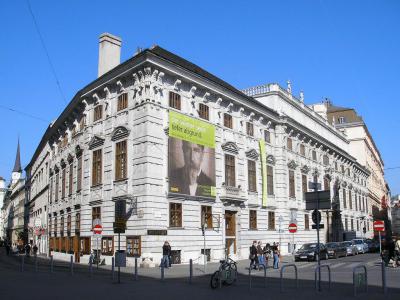
4) Palais Dietrichstein-Lobkowitz
The Palais Lobkowitz, also known as Palais Dietrichstein-Lobkowitz, is a Baroque palace located in the first district of Vienna, which is the inner city. Situated on Lobkowitzplatz, a square named after the palace (formerly known as the "pig market"), it holds historical significance as one of the oldest palace structures in Vienna. This palace signaled a major shift in architectural focus after the Battle of Vienna, being the first prominent Baroque city palace built as the aristocracy shifted resources away from military pursuits.
While the exterior of the palace has largely retained its original design since its construction, the interior has seen various changes over the years. During the era of the Lobkowitz family, the palace went through a series of renovations. In the early 18th century, Johann and Joseph Emanuel Fischer von Erlach were tasked with a significant project that became a highlight in the palace's history.
In the early 19th century, Ludwig van Beethoven was a frequent visitor to a grand palace. This was because the palace's owner at that time, Joseph Franz Maximilian von Lobkowitz, played a significant role in supporting the composer. Beethoven's Third Symphony was actually dedicated to this nobleman, and that's why they named one of the palace rooms the "Eroica Hall." In 1804, Beethoven conducted the premiere of his Third Symphony in this palace hall in Vienna.
Following the conclusion of World War II, the palace served as the headquarters for the Institut Français de Vienne. In 1980, it came under government ownership, and by 1991, following an extensive restoration, it was repurposed as the Theater Museum of the Austrian National Library.
While the exterior of the palace has largely retained its original design since its construction, the interior has seen various changes over the years. During the era of the Lobkowitz family, the palace went through a series of renovations. In the early 18th century, Johann and Joseph Emanuel Fischer von Erlach were tasked with a significant project that became a highlight in the palace's history.
In the early 19th century, Ludwig van Beethoven was a frequent visitor to a grand palace. This was because the palace's owner at that time, Joseph Franz Maximilian von Lobkowitz, played a significant role in supporting the composer. Beethoven's Third Symphony was actually dedicated to this nobleman, and that's why they named one of the palace rooms the "Eroica Hall." In 1804, Beethoven conducted the premiere of his Third Symphony in this palace hall in Vienna.
Following the conclusion of World War II, the palace served as the headquarters for the Institut Français de Vienne. In 1980, it came under government ownership, and by 1991, following an extensive restoration, it was repurposed as the Theater Museum of the Austrian National Library.
5) Stephansdom (St. Stephen's Cathedral) (must see)
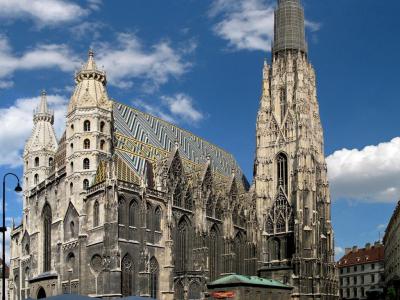
In a city where “stunning architecture” is practically the dress code, Saint Stephen’s Cathedral still manages to steal the spotlight-and possibly your neck muscles too, as you crane to admire that towering spire. Known locally as Stephansdom, this Gothic-Romanesque powerhouse has stood at the heart of Vienna’s skyline and soul since 1147, rising on the bones of two earlier churches like the overachiever it is.
In the 14th century, Duke Rudolf IV decided the cathedral needed a serious makeover. The idea worked. As a result, today we have the building stretching 107 meters long, 40 meters wide, and topped by the South Tower-or “Steffl,” if you're on nickname terms-a 136-meter-high feat of medieval determination that took 65 years to complete. It even moonlighted as a lookout post during Vienna’s sieges, complete with a live-in watchman until 1955. One heck of a long shift...
Meanwhile, the North Tower never quite hit its growth spurt. It stalled at 68 meters and got a Renaissance hat in 1578-basically the architectural equivalent of saying “this is fine” and walking away.
But the real showstopper here is the roof. A kaleidoscope of 230,000 glazed tiles arranged into imperial emblems like the double-headed eagle of the Habsburgs and the crests of Vienna and Austria. After being torched in World War II, it was rebuilt with steel instead of wood-600 metric tons of it-making the new roof not just durable, but also self-cleaning. Because even cathedrals love low-maintenance routines...
Inside, things get just as grand. There’s Pummerin, Europe’s second-largest swinging bell, forged from Turkish cannons in 1711 and recast in 1951-because nothing says peace like a bell made from wartime leftovers. Oh, and she lives in the North Tower, ringing out for special moments and daily rituals.
Musical legends haunt these hallowed halls too: Beethoven figured out he was deaf here (tragic), Haydn sang here as a kid (sweet), Strauss got married here-twice (bold), and Mozart? He got married and buried here. Yes, Saint Stephen's is basically the VIP lounge of Viennese music history.
Inside, you’ll find 18 altars, miraculous icons, bone relics-including those of Saint Valentine-and a maze of crypts holding 11,000 souls, including Habsburg royalty.
Tip:
Do a lap around the outside. Gargoyles, engravings, medieval graffiti-you never know what stories the stones will whisper...
In the 14th century, Duke Rudolf IV decided the cathedral needed a serious makeover. The idea worked. As a result, today we have the building stretching 107 meters long, 40 meters wide, and topped by the South Tower-or “Steffl,” if you're on nickname terms-a 136-meter-high feat of medieval determination that took 65 years to complete. It even moonlighted as a lookout post during Vienna’s sieges, complete with a live-in watchman until 1955. One heck of a long shift...
Meanwhile, the North Tower never quite hit its growth spurt. It stalled at 68 meters and got a Renaissance hat in 1578-basically the architectural equivalent of saying “this is fine” and walking away.
But the real showstopper here is the roof. A kaleidoscope of 230,000 glazed tiles arranged into imperial emblems like the double-headed eagle of the Habsburgs and the crests of Vienna and Austria. After being torched in World War II, it was rebuilt with steel instead of wood-600 metric tons of it-making the new roof not just durable, but also self-cleaning. Because even cathedrals love low-maintenance routines...
Inside, things get just as grand. There’s Pummerin, Europe’s second-largest swinging bell, forged from Turkish cannons in 1711 and recast in 1951-because nothing says peace like a bell made from wartime leftovers. Oh, and she lives in the North Tower, ringing out for special moments and daily rituals.
Musical legends haunt these hallowed halls too: Beethoven figured out he was deaf here (tragic), Haydn sang here as a kid (sweet), Strauss got married here-twice (bold), and Mozart? He got married and buried here. Yes, Saint Stephen's is basically the VIP lounge of Viennese music history.
Inside, you’ll find 18 altars, miraculous icons, bone relics-including those of Saint Valentine-and a maze of crypts holding 11,000 souls, including Habsburg royalty.
Tip:
Do a lap around the outside. Gargoyles, engravings, medieval graffiti-you never know what stories the stones will whisper...
6) Peterskirche (St. Peter's Church) (must see)
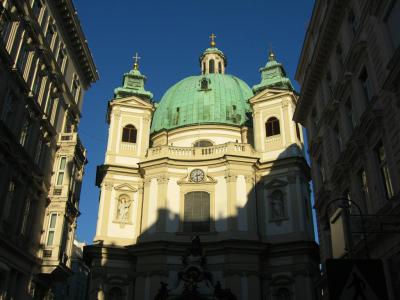
Tucked snugly among Vienna’s Baroque showpieces like a pearl in a pastry, Saint Peter’s Church has a front-row seat to history, and not much else, thanks to the buildings crowding around it. You’ll mostly catch it head-on, which, honestly, is its best angle.
This spot has seen churches come and go like emperors with changing tastes. Some say the very first church here dates back to the early 4th century AD, making it one of the oldest in Vienna-yes, back when sandals were in and Rome was still a big deal. In 792, none other than King Charlemagne is said to have popped by and said, “Let’s build.” There’s even a plaque on the façade bragging about it. Historical records, ever the skeptics, first mention the church in 1137, but who’s counting?
By the late 1100s, the church cozied up to the newly founded Schottenstift monastery. Then came fire, plague, and drama. After the 1661 fire, it got a bit of a patch job… until the plague of 1679 cleared the streets and cleared the way for Emperor Leopold I, who swore a divine vow to rebuild. And he did...
Construction began around 1701, drawing heavy inspiration from Saint Peter’s Basilica in Rome-because if you’re going to imitate, imitate the best. By 1733, Vienna had its first domed Baroque beauty, cleverly built with a compact, oval layout to fit the tight space.
Outside, it sports a neat combo of white and barely-there yellow, flanked by two towers that curve ever so slightly inward-apparently a cheeky nod to Turkish tent poles from the 1683 siege.
Step inside, and there you have it: gold stucco, opulent frescoes, and Johann Michael Rottmayr’s artistic fireworks overhead, including the Coronation of Our Lady. The high altar gets dramatic with a healing scene, starring Saint Peter and Saint John, and around the edges, you'll spot relics of Roman martyrs, reclining in crystal coffins like glittering saints on display.
The church was polished up in a major 1998–2004 renovation, and today it’s still a Baroque gem in Vienna’s crown.
Hot tip:
Drop in any day from 3 to 3:30 pm for a free organ concert-divine music, no ticket required (but donations are saintly). And if you're lucky, catch a choir in the crypts. Now that’s a holy experience...
This spot has seen churches come and go like emperors with changing tastes. Some say the very first church here dates back to the early 4th century AD, making it one of the oldest in Vienna-yes, back when sandals were in and Rome was still a big deal. In 792, none other than King Charlemagne is said to have popped by and said, “Let’s build.” There’s even a plaque on the façade bragging about it. Historical records, ever the skeptics, first mention the church in 1137, but who’s counting?
By the late 1100s, the church cozied up to the newly founded Schottenstift monastery. Then came fire, plague, and drama. After the 1661 fire, it got a bit of a patch job… until the plague of 1679 cleared the streets and cleared the way for Emperor Leopold I, who swore a divine vow to rebuild. And he did...
Construction began around 1701, drawing heavy inspiration from Saint Peter’s Basilica in Rome-because if you’re going to imitate, imitate the best. By 1733, Vienna had its first domed Baroque beauty, cleverly built with a compact, oval layout to fit the tight space.
Outside, it sports a neat combo of white and barely-there yellow, flanked by two towers that curve ever so slightly inward-apparently a cheeky nod to Turkish tent poles from the 1683 siege.
Step inside, and there you have it: gold stucco, opulent frescoes, and Johann Michael Rottmayr’s artistic fireworks overhead, including the Coronation of Our Lady. The high altar gets dramatic with a healing scene, starring Saint Peter and Saint John, and around the edges, you'll spot relics of Roman martyrs, reclining in crystal coffins like glittering saints on display.
The church was polished up in a major 1998–2004 renovation, and today it’s still a Baroque gem in Vienna’s crown.
Hot tip:
Drop in any day from 3 to 3:30 pm for a free organ concert-divine music, no ticket required (but donations are saintly). And if you're lucky, catch a choir in the crypts. Now that’s a holy experience...
7) Hofburg Imperial Palace (must see)
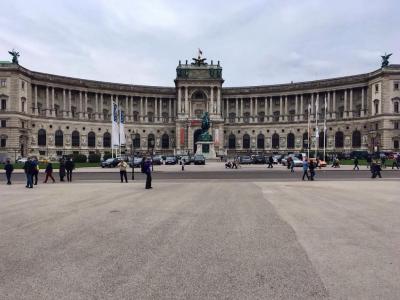
The Hofburg-or as it’s known in more regal circles, the “Castle of the Court”-is a sprawling architectural beast of a palace, a centuries-old flex of Habsburg power, pageantry, and perfectly symmetrical courtyards.
It all began back in 1279, when the Dukes of Austria needed a nice little place to call home. Fast forward a few empires and renovations later, and you've got the winter playground of the Holy Roman Emperors (until 1806) and the Emperors of Austria (until 1918). Today, the palace has swapped imperial intrigue for political paperwork-it’s now the official residence of the Austrian President and hosts the headquarters of the OSCE. Less crown, more conference...
Now, brace yourself: the Hofburg covers more than 240,000 square meters of space, comprising 18 wings, 19 courtyards, and a whopping 2,600 rooms. That’s not really a palace-it’s a small city. It houses everything from the elegant Amalienburg and Albertina museum, to the Imperial Chapel, the Court Library, the Treasure Chamber, and even the Spanish Riding School, where horses have more training than most people’s resumes.
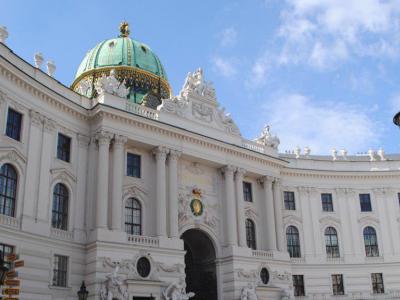
The Swiss Wing is one of the oldest parts of the palace, dating back to the 13th century-yes, it’s older than your great-great-anything. Emperor Ferdinand I added the Swiss Gate in the 1550s, with his personal insignia on full display, just in case anyone forgot who was in charge.
The 17th-century Leopoldine Wing, built and later re-styled in Late Renaissance flair, adds even more imperial swagger, while the Court Library is basically a Baroque fever dream-with its majestic Prunksaal hall, frescoed ceilings, and emperors carved in stone, looking as dramatic as ever.
And it doesn’t stop there: the Winter Riding School, the Imperial Chancellery Wing (once home to Napoleon himself), and the elegant Redoute Wing-a former opera house-round out the complex. Even the Imperial Mews got a glow-up and now host those classy Lipizzaner horses.
Tip:
On Sundays, pop into the Imperial Chapel for Mass and catch the Vienna Boys Choir-angelic voices echoing through centuries of history. Because when in Vienna, you don’t just visit a palace… you enter a whole imperial universe.
It all began back in 1279, when the Dukes of Austria needed a nice little place to call home. Fast forward a few empires and renovations later, and you've got the winter playground of the Holy Roman Emperors (until 1806) and the Emperors of Austria (until 1918). Today, the palace has swapped imperial intrigue for political paperwork-it’s now the official residence of the Austrian President and hosts the headquarters of the OSCE. Less crown, more conference...
Now, brace yourself: the Hofburg covers more than 240,000 square meters of space, comprising 18 wings, 19 courtyards, and a whopping 2,600 rooms. That’s not really a palace-it’s a small city. It houses everything from the elegant Amalienburg and Albertina museum, to the Imperial Chapel, the Court Library, the Treasure Chamber, and even the Spanish Riding School, where horses have more training than most people’s resumes.
The Swiss Wing is one of the oldest parts of the palace, dating back to the 13th century-yes, it’s older than your great-great-anything. Emperor Ferdinand I added the Swiss Gate in the 1550s, with his personal insignia on full display, just in case anyone forgot who was in charge.
The 17th-century Leopoldine Wing, built and later re-styled in Late Renaissance flair, adds even more imperial swagger, while the Court Library is basically a Baroque fever dream-with its majestic Prunksaal hall, frescoed ceilings, and emperors carved in stone, looking as dramatic as ever.
And it doesn’t stop there: the Winter Riding School, the Imperial Chancellery Wing (once home to Napoleon himself), and the elegant Redoute Wing-a former opera house-round out the complex. Even the Imperial Mews got a glow-up and now host those classy Lipizzaner horses.
Tip:
On Sundays, pop into the Imperial Chapel for Mass and catch the Vienna Boys Choir-angelic voices echoing through centuries of history. Because when in Vienna, you don’t just visit a palace… you enter a whole imperial universe.
8) Spanische Reitschule (Spanish Riding School)
A place where grace trots, tradition gallops, and stallions pirouette like it’s the 18th century-welcome to Vienna's Spanish Riding School!
Founded back in 1565-yes, that’s way before Mozart-this is the world’s oldest school for classical dressage. In essence, it'd be fair to describe it as a choreography of hooves, history, and imperial flair. The current hall, a baroque beauty with 46 columns and a royal box fit for an emperor’s ego, was commissioned in 1729 by Emperor Karl VI-who still gets a tip of the hat from every rider, thanks to his portrait hanging proudly above the arena. The school courtyard is adorned with an equestrian statue of another emperor, Josef II.
Now, why "Spanish"? No, it's not because the horses love tapas. The name comes from the noble Spanish breeds that helped create the Lipizzaner-those elegant, snow-white stallions you’ve seen leaping like ballerinas (with better muscle tone). The breed was born by mixing Arab, Berber, and Spanish horses at the Lipizza stud farm near Trieste, Slovenia. Training starts when they're three, and from there, it’s years of disciplined dance moves-no shortcuts, no TikTok trends...
For centuries, only men could join this elite club, but as of 2008, the glass stirrup finally broke-women can ride too, and brilliantly so.
So what can you expect? Public performances run 70 to 90 minutes of precision, music, and magic that hasn't changed in decades-because when perfection works, you don’t fix it. Anyone who's a horse fanatic or just likes chandeliers and symmetry, will find the Spanish Riding School a uniquely Viennese blend of pomp, polish, and prancing. But even if you are not fond of horse shows, a guided tour (in English or German) through the stabling and the riding arena is worth a visit anytime.
Pro tips:
Morning training sessions are cheaper and give you a behind-the-scenes glimpse of the stallions at work.
Want the full airborne extravaganza? Book the official show. Just book early unless you enjoy queuing like it's 1765.
And here's the real scoop: grab a coffee at the on-site café. It's reasonably priced, and the terrace gives you free views of the horses warming up next door. That’s right-free of charge! Elegance on a budget? Yes, Vienna delivers...
Founded back in 1565-yes, that’s way before Mozart-this is the world’s oldest school for classical dressage. In essence, it'd be fair to describe it as a choreography of hooves, history, and imperial flair. The current hall, a baroque beauty with 46 columns and a royal box fit for an emperor’s ego, was commissioned in 1729 by Emperor Karl VI-who still gets a tip of the hat from every rider, thanks to his portrait hanging proudly above the arena. The school courtyard is adorned with an equestrian statue of another emperor, Josef II.
Now, why "Spanish"? No, it's not because the horses love tapas. The name comes from the noble Spanish breeds that helped create the Lipizzaner-those elegant, snow-white stallions you’ve seen leaping like ballerinas (with better muscle tone). The breed was born by mixing Arab, Berber, and Spanish horses at the Lipizza stud farm near Trieste, Slovenia. Training starts when they're three, and from there, it’s years of disciplined dance moves-no shortcuts, no TikTok trends...
For centuries, only men could join this elite club, but as of 2008, the glass stirrup finally broke-women can ride too, and brilliantly so.
So what can you expect? Public performances run 70 to 90 minutes of precision, music, and magic that hasn't changed in decades-because when perfection works, you don’t fix it. Anyone who's a horse fanatic or just likes chandeliers and symmetry, will find the Spanish Riding School a uniquely Viennese blend of pomp, polish, and prancing. But even if you are not fond of horse shows, a guided tour (in English or German) through the stabling and the riding arena is worth a visit anytime.
Pro tips:
Morning training sessions are cheaper and give you a behind-the-scenes glimpse of the stallions at work.
Want the full airborne extravaganza? Book the official show. Just book early unless you enjoy queuing like it's 1765.
And here's the real scoop: grab a coffee at the on-site café. It's reasonably priced, and the terrace gives you free views of the horses warming up next door. That’s right-free of charge! Elegance on a budget? Yes, Vienna delivers...
9) Rathaus (City Hall) (must see)
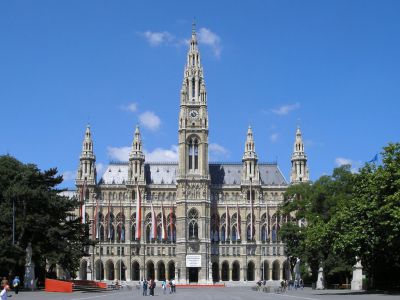
Vienna City Hall-a place where both the municipal government and the legislative assembly get down to business. By no means a dull office block, this neo-Gothic showstopper was built between 1872 and 1883 by architect Friedrich von Schmidt, who, rather humbly, now stands in a statue form just behind the building, keeping an eye on things from his very own square.
Drawing inspiration from the medieval architecture of Flanders and Brabant, the City Hall flaunts five towers like a crown. The tallest of them pierces the skyline at 98 meters, topped with the "City Hall Man"-not a superhero, but close... Clad in armor inspired by Emperor Maximilian I, this statue has been watching over Vienna since 1882 and has become something of a local mascot.
Inside, the building doesn’t just rest on its aesthetic laurels. There's the "City Hall Cellar"-a grand baroque dining hall where you can dig into proper Viennese culinary classics without a hint of modern guilt. “Schnitzel under chandeliers? Yes, please...”
The façade is a sculptural buffet in its own right, brimming with emperors, virtues like Power and Justice, and even good ol’ Vindobona, the Roman forebear of Vienna, lounging surrounded by heraldic flair. Think of it as Vienna’s resume carved in stone.
And on the flanks is a lineup of statues dedicated to trades and professions-because in this city, bakers, builders, and bookbinders all get a standing ovation in stone!
Now, if you're feeling adventurous (and are in good shape), brave the 331 steps up to the central tower that’s worth every groan from your knees. Your reward will be the sweeping views of Vienna in all its baroque-meets-modern glory-plus bragging rights for conquering the city one stair at a time. Trust us-Vienna looks even better from above.
Tip:
For the inside scoop, join the free German-language guided tour on Mondays, Wednesdays, and Fridays at 1 pm. Not fluent in German? No problem-audio guides are available in multiple languages. Just be ready to temporarily part ways with your passport. The view-and the tales-are absolutely worth it.
Drawing inspiration from the medieval architecture of Flanders and Brabant, the City Hall flaunts five towers like a crown. The tallest of them pierces the skyline at 98 meters, topped with the "City Hall Man"-not a superhero, but close... Clad in armor inspired by Emperor Maximilian I, this statue has been watching over Vienna since 1882 and has become something of a local mascot.
Inside, the building doesn’t just rest on its aesthetic laurels. There's the "City Hall Cellar"-a grand baroque dining hall where you can dig into proper Viennese culinary classics without a hint of modern guilt. “Schnitzel under chandeliers? Yes, please...”
The façade is a sculptural buffet in its own right, brimming with emperors, virtues like Power and Justice, and even good ol’ Vindobona, the Roman forebear of Vienna, lounging surrounded by heraldic flair. Think of it as Vienna’s resume carved in stone.
And on the flanks is a lineup of statues dedicated to trades and professions-because in this city, bakers, builders, and bookbinders all get a standing ovation in stone!
Now, if you're feeling adventurous (and are in good shape), brave the 331 steps up to the central tower that’s worth every groan from your knees. Your reward will be the sweeping views of Vienna in all its baroque-meets-modern glory-plus bragging rights for conquering the city one stair at a time. Trust us-Vienna looks even better from above.
Tip:
For the inside scoop, join the free German-language guided tour on Mondays, Wednesdays, and Fridays at 1 pm. Not fluent in German? No problem-audio guides are available in multiple languages. Just be ready to temporarily part ways with your passport. The view-and the tales-are absolutely worth it.
10) Naturhistorisches Museum (must see)
The Naturhistorisches Museum is a prominent component of the extensive collection of exhibitions spread throughout Vienna. The current facility occupies an impressive 90,000 square feet of space. In recent years, they've developed software that allows visitors to explore parts of the museum virtually.
This location enjoys global recognition, as it houses one of the most significant collections of natural history artifacts worldwide. Its inception dates back more than 250 years, resulting in a staggering collection of over 20 million noteworthy specimens.
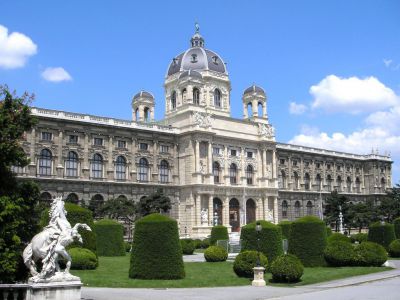
The central edifice of the museum is an ancient palace, originally serving as the inaugural museum structure. It officially opened its doors in 1869, operating under the name "Imperial Natural Museum." Today, many of the initial exhibits have been relocated to various sections within the broader Wien Museum of Vienna.
Visitors can encounter exceedingly rare artifacts here. For instance, the Venus of Willendorf, an object that boasts an age of more than 25,000 years, is on display. Additionally, you can marvel at a dinosaur skeleton, over 250 million years old, showcased on the museum's floors. In total, you can leisurely explore 39 different sections within the museum.
Why You Should Visit:
Incredible because of the upgrading of many exhibits, which brilliantly combine the old (showcases of artifacts from the late 1880s in their original cases) with the new (an amazing exhibit room of meteorites with interactive cases or an exhibit on our planet which is incredibly interesting and educational).
Almost everything is in English as well as in German. The museum has also gone out of its way to cater to kids, so a great place for the family.
Tip:
It is strongly recommended to take an audio guide and learn more about the most important collection items.
If you are a student, make sure to bring your student card to capitalize on the discount they offer.
This location enjoys global recognition, as it houses one of the most significant collections of natural history artifacts worldwide. Its inception dates back more than 250 years, resulting in a staggering collection of over 20 million noteworthy specimens.
The central edifice of the museum is an ancient palace, originally serving as the inaugural museum structure. It officially opened its doors in 1869, operating under the name "Imperial Natural Museum." Today, many of the initial exhibits have been relocated to various sections within the broader Wien Museum of Vienna.
Visitors can encounter exceedingly rare artifacts here. For instance, the Venus of Willendorf, an object that boasts an age of more than 25,000 years, is on display. Additionally, you can marvel at a dinosaur skeleton, over 250 million years old, showcased on the museum's floors. In total, you can leisurely explore 39 different sections within the museum.
Why You Should Visit:
Incredible because of the upgrading of many exhibits, which brilliantly combine the old (showcases of artifacts from the late 1880s in their original cases) with the new (an amazing exhibit room of meteorites with interactive cases or an exhibit on our planet which is incredibly interesting and educational).
Almost everything is in English as well as in German. The museum has also gone out of its way to cater to kids, so a great place for the family.
Tip:
It is strongly recommended to take an audio guide and learn more about the most important collection items.
If you are a student, make sure to bring your student card to capitalize on the discount they offer.
11) Kunsthistorisches Museum (Art History Museum) (must see)
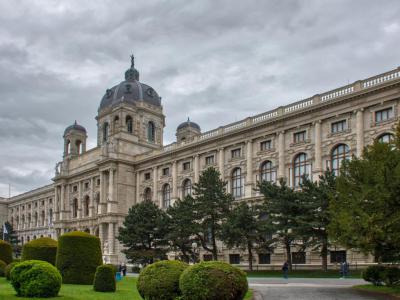
Fuel up with a cup of coffee or tea and head to one of the world-class museums along the Ring. The Kunsthistorisches Museum's galleries house vast collections of fine art and antiquities, based largely on those accumulated over the centuries by generations of Habsburg monarchs. Lavishly decorated interiors, ornate cupolas and sweeping Neo-Classical stairways create a fitting setting for the treasures housed here, with many of the works on display – particularly the Old Masters (Bruegel, Rembrandt, Michelangelo, Caravaggio, Titian, etc.) – being considered among the most spectacular in the world. Not only that, but the museum is among the most visitor-friendly you're likely to visit, with comfortable sofas available in most exhibition rooms and long closing hours on Thursdays.
The galleries occupy the top three floors (although the uppermost is not nearly as extensive), with an entrance hall, shop and cloakroom below. The ground floor contains ancient objects on one side – starting with the age of the Pharaohs in Egypt, then proceeding through ancient Greece and Rome while touching on other cultures along the way – which are joined by rare Renaissance and Baroque treasures collected by and/or made for the Hapsburg monarchs on the other side. The quality and quantity of the material presented is simply astounding, but items are generally labeled simply in German, so you'll want to spring for the audio guide (available in English) to get a more detailed commentary on highlighted objects. The second gallery floor (or "1" level) houses the Picture Gallery, which is again a huge collection of just plain amazing works by every famous artist from the 17th through the 19th centuries. The top floor (or "2" level) only houses a coin and medal gallery along with what are listed as the "Vermeyen Cartoons" – a series of impressive life-sized tapestries that portray Charles V's Tunis campaign of 1535.
The museum's grand central staircase is adorned with murals by the Klimt brothers and others, which depict the history of art from ancient Egypt to Florence. Gustav Klimt's especially ornate gilded frescoes are probably his best works, although they are illustrative, which in the critical art world loses you points (indeed, they were criticized for being "too erotic"). Diagrams point out which mural was painted by which artist, and sometimes a viewing scope is provided for visitors to see them up close.
Tip:
An adult ticket entitles you to a one-time pass to the museum, as well as, the Neue Burg located at Heldenplatz, which has amazing collections of imperial armoury, historic musical instruments, etc. – well worth a visit.
The galleries occupy the top three floors (although the uppermost is not nearly as extensive), with an entrance hall, shop and cloakroom below. The ground floor contains ancient objects on one side – starting with the age of the Pharaohs in Egypt, then proceeding through ancient Greece and Rome while touching on other cultures along the way – which are joined by rare Renaissance and Baroque treasures collected by and/or made for the Hapsburg monarchs on the other side. The quality and quantity of the material presented is simply astounding, but items are generally labeled simply in German, so you'll want to spring for the audio guide (available in English) to get a more detailed commentary on highlighted objects. The second gallery floor (or "1" level) houses the Picture Gallery, which is again a huge collection of just plain amazing works by every famous artist from the 17th through the 19th centuries. The top floor (or "2" level) only houses a coin and medal gallery along with what are listed as the "Vermeyen Cartoons" – a series of impressive life-sized tapestries that portray Charles V's Tunis campaign of 1535.
The museum's grand central staircase is adorned with murals by the Klimt brothers and others, which depict the history of art from ancient Egypt to Florence. Gustav Klimt's especially ornate gilded frescoes are probably his best works, although they are illustrative, which in the critical art world loses you points (indeed, they were criticized for being "too erotic"). Diagrams point out which mural was painted by which artist, and sometimes a viewing scope is provided for visitors to see them up close.
Tip:
An adult ticket entitles you to a one-time pass to the museum, as well as, the Neue Burg located at Heldenplatz, which has amazing collections of imperial armoury, historic musical instruments, etc. – well worth a visit.
12) Schonbrunn Palace (must see)
Schönbrunn Palace, also known as Schloss Schönbrunn in German, used to be the primary summer residence for the Habsburg monarchs. Its name, Schönbrunn, which means "beautiful spring" in English, comes from a well that used to be on the property and provided water to the royal court.
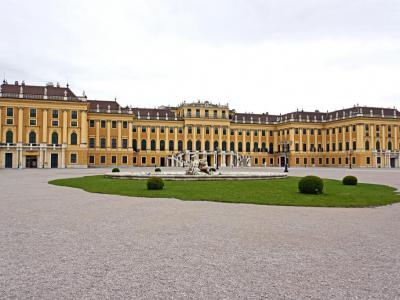
The palace has a rich history spanning over 300 years and reflects the changing tastes and interests of the Habsburg dynasty. It took its present form during the 1740s and 1750s under the rule of Empress Maria Theresa, who received it as a wedding gift. The neoclassical exterior we see today was the result of renovations ordered by Franz I.
Franz Joseph, the longest-reigning emperor of Austria, was born at Schönbrunn and spent most of his life there. He passed away in the palace on November 21, 1916, at the age of 86. After the Habsburg monarchy fell in November 1918, the palace became property of the newly-established Austrian Republic and was preserved as a museum.
During World War II and the Allied Occupation of Austria from 1945 to 1955, Schönbrunn was used as office space for the British Delegation to the Allied Commission for Austria and the headquarters of the British Military Garrison in Vienna. It returned to its museum status when the Austrian republic was re-established in 1955. Occasionally, it's still used for important events, like the meeting between U.S. President John F. Kennedy and Soviet Premier Nikita Khrushchev in 1961.
A significant part of the palace grounds is occupied by gardens, including the French and English gardens in the western section. You can also find the Ruin of Carthage, a Roman-style feature added in 1778, which includes a rectangular pool with a massive arch and stone fragments symbolizing the rivers Vltava and Elbe.
Schönbrunn, with its impressive Baroque architecture and gardens, earned UNESCO World Heritage status in 1996. Along with attractions like the Tiergarten Schönbrunn (Schönbrunn Zoo), Palmenhaus (a greenhouse with exotic plants), Wüstenhaus (a desert botanical exhibit), the Wagenburg (The Imperial Carriage Museum), and the Schoenbrunn Palace Concerts (an annual summer concert series on the grounds), the entire complex is a vital part of Vienna's architectural, cultural, and historical heritage and draws over five million visitors each year.
The palace has a rich history spanning over 300 years and reflects the changing tastes and interests of the Habsburg dynasty. It took its present form during the 1740s and 1750s under the rule of Empress Maria Theresa, who received it as a wedding gift. The neoclassical exterior we see today was the result of renovations ordered by Franz I.
Franz Joseph, the longest-reigning emperor of Austria, was born at Schönbrunn and spent most of his life there. He passed away in the palace on November 21, 1916, at the age of 86. After the Habsburg monarchy fell in November 1918, the palace became property of the newly-established Austrian Republic and was preserved as a museum.
During World War II and the Allied Occupation of Austria from 1945 to 1955, Schönbrunn was used as office space for the British Delegation to the Allied Commission for Austria and the headquarters of the British Military Garrison in Vienna. It returned to its museum status when the Austrian republic was re-established in 1955. Occasionally, it's still used for important events, like the meeting between U.S. President John F. Kennedy and Soviet Premier Nikita Khrushchev in 1961.
A significant part of the palace grounds is occupied by gardens, including the French and English gardens in the western section. You can also find the Ruin of Carthage, a Roman-style feature added in 1778, which includes a rectangular pool with a massive arch and stone fragments symbolizing the rivers Vltava and Elbe.
Schönbrunn, with its impressive Baroque architecture and gardens, earned UNESCO World Heritage status in 1996. Along with attractions like the Tiergarten Schönbrunn (Schönbrunn Zoo), Palmenhaus (a greenhouse with exotic plants), Wüstenhaus (a desert botanical exhibit), the Wagenburg (The Imperial Carriage Museum), and the Schoenbrunn Palace Concerts (an annual summer concert series on the grounds), the entire complex is a vital part of Vienna's architectural, cultural, and historical heritage and draws over five million visitors each year.
