Custom Walk in Sydney, Australia by drummerjo_b6fb5e created on 2026-06-17
Guide Location: Australia » Sydney
Guide Type: Custom Walk
# of Sights: 16
Tour Duration: 4 Hour(s)
Travel Distance: 7.4 Km or 4.6 Miles
Share Key: BF3RD
Guide Type: Custom Walk
# of Sights: 16
Tour Duration: 4 Hour(s)
Travel Distance: 7.4 Km or 4.6 Miles
Share Key: BF3RD
How It Works
Please retrieve this walk in the GPSmyCity app. Once done, the app will guide you from one tour stop to the next as if you had a personal tour guide. If you created the walk on this website or come to the page via a link, please follow the instructions below to retrieve the walk in the app.
Retrieve This Walk in App
Step 1. Download the app "GPSmyCity: Walks in 1K+ Cities" on Apple App Store or Google Play Store.



Step 2. In the GPSmyCity app, download(or launch) the guide "Sydney Map and Walking Tours".
Step 3. Tap the menu button located at upper right corner of the "Walks" screen and select "Retrieve custom walk". Enter the share key: BF3RD
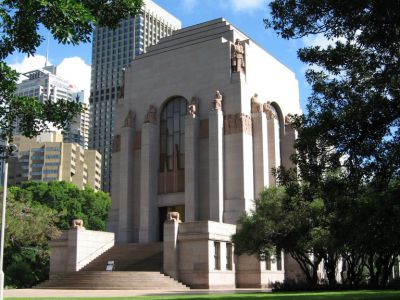
1) ANZAC War Memorial
The ANZAC War Memorial in Hyde Park South is the main monument in New South Wales dedicated to the servicemen and women of the Australian and New Zealand Army Corps. Designed by C. Bruce Dellit and opened in 1934, it combines classical symmetry with Art Deco features. Its pink-granite exterior and stepped pyramid roof make it a prominent structure within the park.
Inside, the Hall of Silence contains Sacrifice, a sculpture by Rayner Hoff showing a fallen soldier supported by three women representing his mother, wife, and sister. A circular skylight above directs natural light onto the sculpture. Around the hall, walls list battlefields where Australians served, creating a straightforward space for reflection.
Outside, the memorial is complemented by the Pool of Reflection, lined with poplars and designed to mirror the building’s façade. The area serves as a quiet place to pause and is also the central location for Sydney’s ANZAC Day ceremonies each April.
Inside, the Hall of Silence contains Sacrifice, a sculpture by Rayner Hoff showing a fallen soldier supported by three women representing his mother, wife, and sister. A circular skylight above directs natural light onto the sculpture. Around the hall, walls list battlefields where Australians served, creating a straightforward space for reflection.
Outside, the memorial is complemented by the Pool of Reflection, lined with poplars and designed to mirror the building’s façade. The area serves as a quiet place to pause and is also the central location for Sydney’s ANZAC Day ceremonies each April.
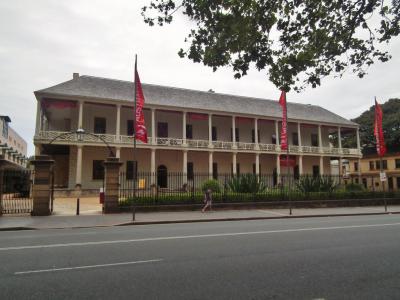
2) Sydney Mint
On a street packed with history, the Sydney Mint confidently claims the spotlight as the place where the story begins. It’s one of the city’s oldest colonial survivors-built between 1811 and 1816 as part of Governor Lachlan Macquarie’s ambitious “Rum Hospital,” a name that already tells you everything about early Sydney’s priorities. This sandstone veteran is the oldest public building still standing in the city centre, and it wears its age with confidence.
In 1855, when Sydney struck gold-quite literally, the building was transformed into the first branch of the Royal Mint outside Britain, turning local gold rush fever into neatly stamped sovereigns. To pull off this industrial makeover, prefabricated cast-iron and copper components were shipped from England and bolted together on site, giving Australia some of its earliest examples of modular design long before flat-pack furniture became a thing.
The Mint evolved into a lively industrial hub, blending Georgian architecture from its hospital days with mid-19th-century machinery rooms, workshops, and offices. At its peak, the place buzzed with engravers, engineers, and a few hundred workers who kept the presses rolling. Coin production stopped in 1926, but much of the machinery and detailing stayed put, leaving behind a time capsule of Sydney’s shift from penal outpost to economic powerhouse.
Today, the Sydney Mint enjoys a second life under Sydney Living Museums. Inside, you’ll find exhibition spaces, offices, and a courtyard café that’s dangerously good for lingering. Displays walk you through the building’s many chapters-convict builders, gold sovereigns, architectural tinkering, and all...
With its sandstone façade and elegant colonnaded verandas, the Mint still anchors Macquarie Street’s heritage lineup, standing shoulder to shoulder with the Hyde Park Barracks and Parliament House. Together, they form a rare trio of early colonial institutions that helped shape the Sydney we see today.
In 1855, when Sydney struck gold-quite literally, the building was transformed into the first branch of the Royal Mint outside Britain, turning local gold rush fever into neatly stamped sovereigns. To pull off this industrial makeover, prefabricated cast-iron and copper components were shipped from England and bolted together on site, giving Australia some of its earliest examples of modular design long before flat-pack furniture became a thing.
The Mint evolved into a lively industrial hub, blending Georgian architecture from its hospital days with mid-19th-century machinery rooms, workshops, and offices. At its peak, the place buzzed with engravers, engineers, and a few hundred workers who kept the presses rolling. Coin production stopped in 1926, but much of the machinery and detailing stayed put, leaving behind a time capsule of Sydney’s shift from penal outpost to economic powerhouse.
Today, the Sydney Mint enjoys a second life under Sydney Living Museums. Inside, you’ll find exhibition spaces, offices, and a courtyard café that’s dangerously good for lingering. Displays walk you through the building’s many chapters-convict builders, gold sovereigns, architectural tinkering, and all...
With its sandstone façade and elegant colonnaded verandas, the Mint still anchors Macquarie Street’s heritage lineup, standing shoulder to shoulder with the Hyde Park Barracks and Parliament House. Together, they form a rare trio of early colonial institutions that helped shape the Sydney we see today.
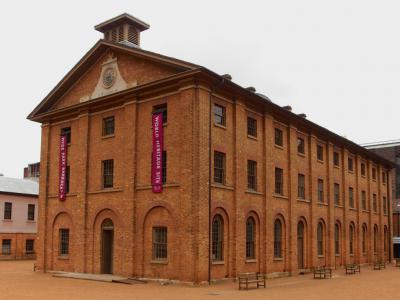
3) Hyde Park Barracks
If you’ve ever wondered what early Sydney looked like when “strict rules” weren’t a metaphor but a lifestyle, Hyde Park Barracks is the answer. Sitting smartly on Macquarie Street, right across from Hyde Park, this Georgian brick giant was the handiwork of Francis Greenway, an architect who arrived as a convict and ended up designing half the colony. By 1819, under Governor Lachlan Macquarie, the barracks opened as a dormitory for the men building Sydney’s roads, wharves, and public works. With its neat symmetry, arched windows, and a clock tower that seemed to say “No excuses,” the building was a physical reminder that the colony prized order above all else.
As Sydney grew out of its penal adolescence, the barracks reinvented itself more often than a modern pop star. Once convict transportation stopped, it became an immigration depot for women, then an asylum, and eventually a set of government offices. Each era left its fingerprints-literally. Graffiti, lost objects, and patched-over alterations still hide in corners, turning the building into a three-dimensional scrapbook of Sydney’s past.
Today, Hyde Park Barracks has settled comfortably into its latest role: museum and UNESCO World Heritage Site. Inside, you’ll find interactive exhibits, archaeological treasures, and reconstructed sleeping quarters that show just how tightly packed life once was. Wander through the dormitories, peek into the original cells, and let the audio stories pull you into the routines, hopes, and frustrations of the people who once lived and worked here.
It’s one of Sydney’s clearest glimpses into its early chapters-proof that the city’s modern shine grew from some very bleak brick-and-mortar beginnings...
As Sydney grew out of its penal adolescence, the barracks reinvented itself more often than a modern pop star. Once convict transportation stopped, it became an immigration depot for women, then an asylum, and eventually a set of government offices. Each era left its fingerprints-literally. Graffiti, lost objects, and patched-over alterations still hide in corners, turning the building into a three-dimensional scrapbook of Sydney’s past.
Today, Hyde Park Barracks has settled comfortably into its latest role: museum and UNESCO World Heritage Site. Inside, you’ll find interactive exhibits, archaeological treasures, and reconstructed sleeping quarters that show just how tightly packed life once was. Wander through the dormitories, peek into the original cells, and let the audio stories pull you into the routines, hopes, and frustrations of the people who once lived and worked here.
It’s one of Sydney’s clearest glimpses into its early chapters-proof that the city’s modern shine grew from some very bleak brick-and-mortar beginnings...
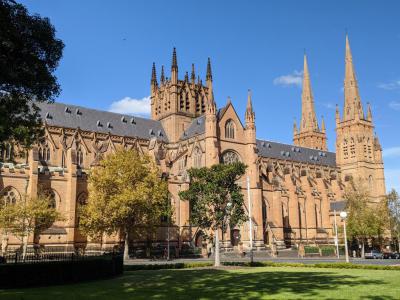
4) Saint Mary's Cathedral (must see)
Follow College Street for a moment, and those sandstone spires, quietly asserting themselves above the treetops, will tip you off-you’ve reached Saint Mary’s Cathedral. This is the Catholic Archdiocese’s main stage, set right beside Hyde Park, on the very ground where the colony’s first Catholic chapel went up back in 1821. The version standing here today owes its existence to architect William Wardell, who began work on it in 1868.
Saint Mary’s is built from Pyrmont sandstone-the architectural equivalent of a warm sepia filter-and shaped in full Gothic Revival style, featuring pointed arches, flying buttresses, and enough vertical ambition to make medieval Europe nod in approval. The twin spires, finished only in the year 2000, give the cathedral its now-iconic silhouette, perfectly positioned for anyone aiming a camera even vaguely upward.
Step inside and the tone changes instantly. Stone columns rise like they’re trying to join the choir, stained-glass windows paint the light in jewel tones, and the vaulted ceiling creates the kind of acoustics that make even a hum feel profound. The rose window above the western entrance steals the show with shifting patterns of colour, while the reredos, carved choir stalls, and marble altar showcase the hands-on craftsmanship of the 19th century.
Beneath all this sits the crypt-a cool, quiet chamber decorated with mosaics of Australian plants and animals, housing the tombs of the city’s early bishops, including Cardinal Norman Gilroy, Australia’s first homegrown cardinal.
Outside, the cathedral opens onto gardens and Cathedral Square, creating a graceful link to Hyde Park and offering space for gatherings, ceremonies, or simply catching your breath. Set between green lawns and city towers, Saint Mary’s Cathedral stands as a long-running conversation between old-world design and modern Sydney life...
Saint Mary’s is built from Pyrmont sandstone-the architectural equivalent of a warm sepia filter-and shaped in full Gothic Revival style, featuring pointed arches, flying buttresses, and enough vertical ambition to make medieval Europe nod in approval. The twin spires, finished only in the year 2000, give the cathedral its now-iconic silhouette, perfectly positioned for anyone aiming a camera even vaguely upward.
Step inside and the tone changes instantly. Stone columns rise like they’re trying to join the choir, stained-glass windows paint the light in jewel tones, and the vaulted ceiling creates the kind of acoustics that make even a hum feel profound. The rose window above the western entrance steals the show with shifting patterns of colour, while the reredos, carved choir stalls, and marble altar showcase the hands-on craftsmanship of the 19th century.
Beneath all this sits the crypt-a cool, quiet chamber decorated with mosaics of Australian plants and animals, housing the tombs of the city’s early bishops, including Cardinal Norman Gilroy, Australia’s first homegrown cardinal.
Outside, the cathedral opens onto gardens and Cathedral Square, creating a graceful link to Hyde Park and offering space for gatherings, ceremonies, or simply catching your breath. Set between green lawns and city towers, Saint Mary’s Cathedral stands as a long-running conversation between old-world design and modern Sydney life...
5) Mrs Macquarie's Chair
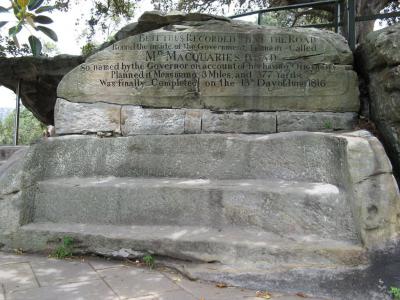
Mrs Macquarie’s Chair is a sandstone bench carved by convicts in 1810 for Elizabeth Macquarie, the wife of Governor Lachlan Macquarie, on the peninsula now known as Mrs Macquarie’s Point. Positioned within the Royal Botanic Garden Sydney, the seat was shaped directly from the rock overlooking Sydney Harbour, where Mrs Macquarie was said to sit and watch the ships arrive from England. The craftsmanship of the bench, hewn from a single sandstone ledge, reflects the early convict era and the personal history of the colonial administration.
The site offers one of the most celebrated viewpoints in Sydney, with sweeping vistas of the Harbour Bridge, Sydney Opera House, and the blue waters of Farm Cove. The peninsula’s elevated position and open lawns make it a popular spot for photography, picnics, and evening walks. The surrounding area retains the feel of early colonial landscaping, framed by native trees and the harbour’s natural contours.
A short walk from the Botanic Garden gates leads visitors along Mrs Macquarie’s Road, originally constructed by convicts as a scenic drive for the governor’s wife. Interpretive signs along the way describe the history of the site and its connection to the early European settlement of Sydney.
The site offers one of the most celebrated viewpoints in Sydney, with sweeping vistas of the Harbour Bridge, Sydney Opera House, and the blue waters of Farm Cove. The peninsula’s elevated position and open lawns make it a popular spot for photography, picnics, and evening walks. The surrounding area retains the feel of early colonial landscaping, framed by native trees and the harbour’s natural contours.
A short walk from the Botanic Garden gates leads visitors along Mrs Macquarie’s Road, originally constructed by convicts as a scenic drive for the governor’s wife. Interpretive signs along the way describe the history of the site and its connection to the early European settlement of Sydney.
6) Sydney Opera House (must see)
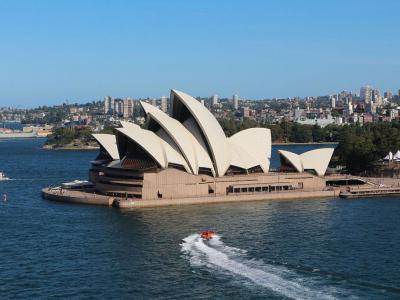
Indeed, if there’s one building in Sydney that refuses to blend quietly into the skyline, it’s the Sydney Opera House. Perched out on Bennelong Point, it looks like a fleet of giant white sails that decided to drop anchor permanently. This global icon began life in 1957, when a young Danish architect named Jørn Utzon submitted a sketch to an international competition-and stunned everyone by winning... Sixteen years, countless design challenges, and a fair amount of political drama later, the Opera House finally opened in 1973.
Its famous shell roofs-those curved concrete forms that seem ready to catch the next harbour breeze-weren’t just artistic flair. Engineers had to invent entirely new methods to make them possible, carving each segment from a shared spherical geometry. The result is a structure that feels part sculpture, part science experiment, and completely unforgettable.
Inside, the Opera House is practically a small cultural city. You’ll find the grand Concert Hall with timber ceilings that soar like the inside of an enormous instrument, along with the Joan Sutherland Theatre, the Drama Theatre, the Playhouse, and the Studio. Each room was crafted with a performance in mind, from opera to orchestral concerts to experimental theatre.
In 2007, UNESCO sealed the building’s legendary status by adding it to the World Heritage list, citing its influence on modern design. Today, millions of visitors stream through every year, and it remains home to the Sydney Symphony Orchestra, Opera Australia, and The Australian Ballet.
But you don’t need a ticket to enjoy it. The promenades wrapped around the building offer some of the best harbour views in the city. And for the curious, tours share stories of creative breakthroughs, fierce debates, and the later return to Utzon’s original design principles-proof that even an architectural superstar can have a long and rather complicated backstory...
Its famous shell roofs-those curved concrete forms that seem ready to catch the next harbour breeze-weren’t just artistic flair. Engineers had to invent entirely new methods to make them possible, carving each segment from a shared spherical geometry. The result is a structure that feels part sculpture, part science experiment, and completely unforgettable.
Inside, the Opera House is practically a small cultural city. You’ll find the grand Concert Hall with timber ceilings that soar like the inside of an enormous instrument, along with the Joan Sutherland Theatre, the Drama Theatre, the Playhouse, and the Studio. Each room was crafted with a performance in mind, from opera to orchestral concerts to experimental theatre.
In 2007, UNESCO sealed the building’s legendary status by adding it to the World Heritage list, citing its influence on modern design. Today, millions of visitors stream through every year, and it remains home to the Sydney Symphony Orchestra, Opera Australia, and The Australian Ballet.
But you don’t need a ticket to enjoy it. The promenades wrapped around the building offer some of the best harbour views in the city. And for the curious, tours share stories of creative breakthroughs, fierce debates, and the later return to Utzon’s original design principles-proof that even an architectural superstar can have a long and rather complicated backstory...
7) Old Government House
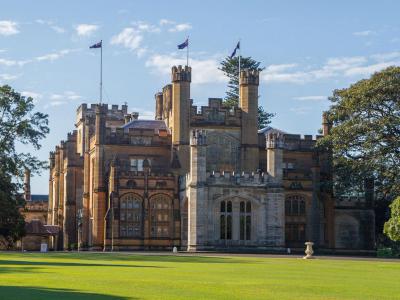
Back in the colonial days, if there was a “quiet retreat” where early governors could escape the chaos of Sydney, the Old Government House in Parramatta Park would definitely be it-a stately reminder that even in the 1800s, people liked a good “weekend place.” Sitting about 25 kilometres west of today’s Central Business District, this is Australia’s oldest surviving public building, constructed between 1799 and 1816 by convict labour armed with chisels, sandstone, and probably very little enthusiasm. The design came from John Watts, a former Royal Marine who doubled as Governor Lachlan Macquarie’s aide-de-camp and part-time architect, proving that multitasking isn’t a modern invention...
From the outside, the house delivers classic Georgian confidence, perched neatly on a ridge above the Parramatta River, as if keeping an eye on the colony’s progress. It blends British neoclassical orderliness with Australian practicality: wide verandas and airy ceilings that seem like whispering, “Yes, it gets hot here.” Inside, you’ll find rooms staged with period furniture that gently transport you into the domestic routines and official duties of the first ten governors-drawing rooms for receiving guests, studies for shaping policy, and bedrooms where history apparently needed its rest...
Originally, this estate spread across farmland and bushland that formed the Governor’s Domain, a testing ground for colonial agriculture long before the area became part of suburban Sydney. Today, the National Trust of Australia cares for the property, which proudly sits among the UNESCO World Heritage–listed Australian Convict Sites. Walking paths, gardens, and interpretive displays help you imagine Parramatta when it was still taking shape.
Keep in mind: this is Darug Country, home to the Aboriginal Burramatta people. Some nearby trees still carry scars where bark was carefully removed to make canoes-a quiet reminder of a much older story in the landscape. And for those who like their history with a side of goosebumps, the Historic Houses Trust even offers a “haunted” tour. Whether it’s ghosts or governors you’re after, Old Government House has both covered.
From the outside, the house delivers classic Georgian confidence, perched neatly on a ridge above the Parramatta River, as if keeping an eye on the colony’s progress. It blends British neoclassical orderliness with Australian practicality: wide verandas and airy ceilings that seem like whispering, “Yes, it gets hot here.” Inside, you’ll find rooms staged with period furniture that gently transport you into the domestic routines and official duties of the first ten governors-drawing rooms for receiving guests, studies for shaping policy, and bedrooms where history apparently needed its rest...
Originally, this estate spread across farmland and bushland that formed the Governor’s Domain, a testing ground for colonial agriculture long before the area became part of suburban Sydney. Today, the National Trust of Australia cares for the property, which proudly sits among the UNESCO World Heritage–listed Australian Convict Sites. Walking paths, gardens, and interpretive displays help you imagine Parramatta when it was still taking shape.
Keep in mind: this is Darug Country, home to the Aboriginal Burramatta people. Some nearby trees still carry scars where bark was carefully removed to make canoes-a quiet reminder of a much older story in the landscape. And for those who like their history with a side of goosebumps, the Historic Houses Trust even offers a “haunted” tour. Whether it’s ghosts or governors you’re after, Old Government House has both covered.
8) Royal Botanic Gardens (must see)
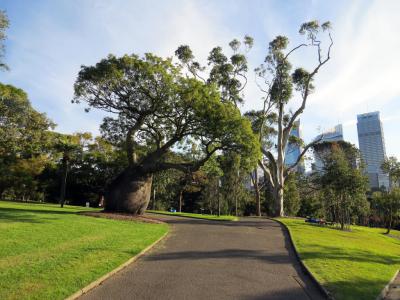
In case you're curious as to where Sydney keeps its giant outdoor living room, just wander over to the Royal Botanic Gardens. Stretching along the eastern edge of Sydney Harbour and practically brushing shoulders with the Opera House, this green expanse has been part of the city’s story since 1816-making it Australia’s oldest scientific institution and still a hardworking hub of research, conservation, and public learning.
Of course, the story begins much earlier. Long before colonisation, the Aboriginal Gadigal tribe used this shoreline as a place to gather food and materials. After the arrival of the First Fleet in 1788, the same ground became the colony’s first farm. Over time, the ploughs gave way to pathways, sandstone walls, and curated plantings, eventually blossoming into the formal gardens we stroll through these days.
Across more than 30 hectares, the gardens unfold like a botanical choose-your-own-adventure. The Palm Grove shows off specimens collected since the 19th century. The Succulent Garden brings together arid-adapted plants that thrive on sunshine and stubbornness. The Australian Rainforest Garden compresses whole ecosystems into a peaceful, leafy corner. Between them run lawns, ponds, and shady pockets perfect for picnics-or for pretending you’re in the middle of a nature documentary. The resident cast includes flying foxes, cockatoos, and waterbirds who treat the gardens as their personal lounge.
Scattered around are historic gates, fountains, and memorials, quiet reminders of two centuries of gardening trends and scientific ambition. Modern features join the mix too, most notably The Calyx-a sleek glasshouse and exhibition space where rotating displays explore everything, from biodiversity to the oddities of the plant world. Behind the scenes, the Herbarium of New South Wales holds vast preserved collections that fuel ongoing research.
Follow the waterfront, and you’ll reach Mrs Macquarie’s Chair, a favourite lookout with postcard views of the Harbour Bridge and Opera House. From here, the Farm Cove Walk slips into the wider network of harbourside paths, making the gardens not just a scenic retreat but a natural connector in Sydney’s waterfront journey...
Of course, the story begins much earlier. Long before colonisation, the Aboriginal Gadigal tribe used this shoreline as a place to gather food and materials. After the arrival of the First Fleet in 1788, the same ground became the colony’s first farm. Over time, the ploughs gave way to pathways, sandstone walls, and curated plantings, eventually blossoming into the formal gardens we stroll through these days.
Across more than 30 hectares, the gardens unfold like a botanical choose-your-own-adventure. The Palm Grove shows off specimens collected since the 19th century. The Succulent Garden brings together arid-adapted plants that thrive on sunshine and stubbornness. The Australian Rainforest Garden compresses whole ecosystems into a peaceful, leafy corner. Between them run lawns, ponds, and shady pockets perfect for picnics-or for pretending you’re in the middle of a nature documentary. The resident cast includes flying foxes, cockatoos, and waterbirds who treat the gardens as their personal lounge.
Scattered around are historic gates, fountains, and memorials, quiet reminders of two centuries of gardening trends and scientific ambition. Modern features join the mix too, most notably The Calyx-a sleek glasshouse and exhibition space where rotating displays explore everything, from biodiversity to the oddities of the plant world. Behind the scenes, the Herbarium of New South Wales holds vast preserved collections that fuel ongoing research.
Follow the waterfront, and you’ll reach Mrs Macquarie’s Chair, a favourite lookout with postcard views of the Harbour Bridge and Opera House. From here, the Farm Cove Walk slips into the wider network of harbourside paths, making the gardens not just a scenic retreat but a natural connector in Sydney’s waterfront journey...
9) Sydney Conservatorium of Music
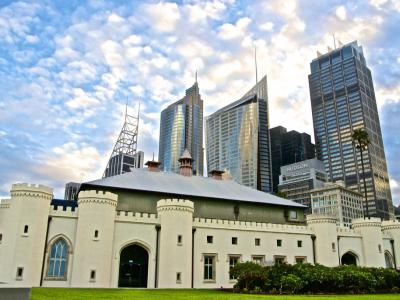
The Sydney Conservatorium of Music is one of Australia’s leading music institutions, located on Macquarie Street at the edge of the Royal Botanic Gardens. Its sandstone structure, with turrets and Gothic detailing, was originally built between 1817 and 1821 as the Government Stables for Governor Lachlan Macquarie, designed by convict architect Francis Greenway. The building’s castellated form and arched windows reflect a romantic adaptation of Tudor architecture, rare for the colonial period. In 1915, it was converted into a conservatorium, marking the beginning of its role as a centre for musical education and performance.
The historic exterior conceals a modern complex of performance halls, rehearsal rooms, and recording studios, created through extensive renovations completed in the early 2000s. The Verbrugghen Hall, named after the Conservatorium’s first director Henri Verbrugghen, serves as the main concert venue and is renowned for its acoustics. Students and faculty present a year-round program of orchestral, chamber, jazz, and contemporary performances, attracting audiences from across the city.
The Conservatorium forms part of the University of Sydney, offering professional training in composition, performance, and musicology. Its location beside the Botanic Gardens and near the Sydney Opera House situates it at the heart of the city’s cultural precinct. Visitors can admire the contrast between the building’s historic architecture and its modern extensions, symbolising more than two centuries of adaptation from colonial heritage to a vibrant centre of musical innovation.
The historic exterior conceals a modern complex of performance halls, rehearsal rooms, and recording studios, created through extensive renovations completed in the early 2000s. The Verbrugghen Hall, named after the Conservatorium’s first director Henri Verbrugghen, serves as the main concert venue and is renowned for its acoustics. Students and faculty present a year-round program of orchestral, chamber, jazz, and contemporary performances, attracting audiences from across the city.
The Conservatorium forms part of the University of Sydney, offering professional training in composition, performance, and musicology. Its location beside the Botanic Gardens and near the Sydney Opera House situates it at the heart of the city’s cultural precinct. Visitors can admire the contrast between the building’s historic architecture and its modern extensions, symbolising more than two centuries of adaptation from colonial heritage to a vibrant centre of musical innovation.
10) Macquarie Street
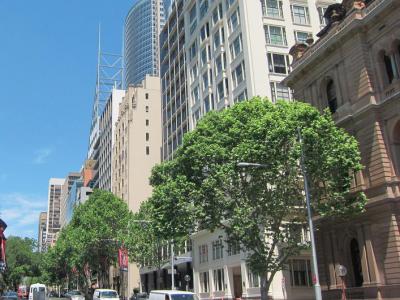
Macquarie Street stands out as Sydney’s go-to boulevard for big moments, bold history, and even bolder architecture. Running from Hyde Park up to the doorstep of the Opera House, this grand avenue was laid out in the early 1800s under Governor Lachlan Macquarie, who clearly decided the young colony needed a street that looked the part. His plan was to build a civic showpiece lined with institutions that would make the place feel less like a distant outpost and more like a capital in the making.
As you move along its eastern edge, the city’s heritage unfolds in sequence. The State Library of New South Wales, Sydney Hospital, and The Mint all stand on what was once the colony’s famous “Rum Hospital,” a building project Governor Macquarie approved when rum, not cash, was the preferred currency. A few steps away are the Hyde Park Barracks, Francis Greenway’s Georgian sandstone masterpiece, and the Parliament of New South Wales, which still uses the surviving wings of that original hospital. Their clean lines and local stone give the street its unmistakable early-colonial look-formal, balanced, and sturdily confident.
Keep drifting north, and the scene widens toward the Domain, the Supreme Court, and the gentle slope leading to the Opera House. Here, old sandstone meets modern glass and steel, creating a visual timeline of more than two centuries in a single stroll.
Macquarie Street doesn’t just link buildings-it links eras, ideas, and the ambitions of a city that grew from a penal colony into a global landmark...
As you move along its eastern edge, the city’s heritage unfolds in sequence. The State Library of New South Wales, Sydney Hospital, and The Mint all stand on what was once the colony’s famous “Rum Hospital,” a building project Governor Macquarie approved when rum, not cash, was the preferred currency. A few steps away are the Hyde Park Barracks, Francis Greenway’s Georgian sandstone masterpiece, and the Parliament of New South Wales, which still uses the surviving wings of that original hospital. Their clean lines and local stone give the street its unmistakable early-colonial look-formal, balanced, and sturdily confident.
Keep drifting north, and the scene widens toward the Domain, the Supreme Court, and the gentle slope leading to the Opera House. Here, old sandstone meets modern glass and steel, creating a visual timeline of more than two centuries in a single stroll.
Macquarie Street doesn’t just link buildings-it links eras, ideas, and the ambitions of a city that grew from a penal colony into a global landmark...
11) Parliament House
Being on Macquarie Street, you can’t help spotting Parliament House holding court-not just figuratively speaking-along Sydney’s most history-soaked civic strip. This is where the Parliament of New South Wales operates, proudly claiming the title of Australia’s oldest continuous legislature.
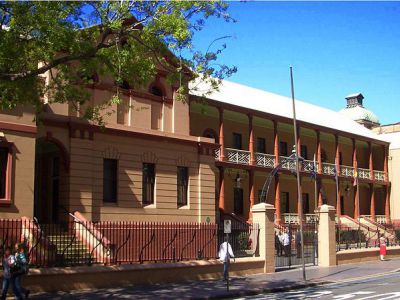
Curiously enough, its oldest wing wasn’t even built for politicians; it began life as part of the Rum Hospital, a Macquarie-era project from 1811 to 1816 that paid contractors in, yes, actual rum. By the 1820s, the building was repurposed for parliamentary duties, trading medical charts for legislation. The sandstone Georgian façade, all clean lines and careful symmetry, still gives off that distinctly colonial “no-nonsense” energy.
Step beyond that dignified frontage and you’ll find the parliament’s modern side. Extensions from the 1970s and '80s rise behind the old hospital wing, adding chambers, offices, and public galleries designed for a government that long ago outgrew its original waiting room. The contrast between the neat Georgian exterior and the contemporary additions reads like a timeline in architectural form-an evolving snapshot of how New South Wales learned to run itself.
Inside, exhibitions and public programs pull back the curtain on the Legislative Assembly and Legislative Council, explaining how laws have been shaped here since colonial days. And the neighbourhood itself is a historian’s dream: the State Library of New South Wales sits just next door, while Hyde Park Barracks waits across the street with its own tales of early Sydney.
So, basically, as you walk through Parliament House, you’re not just touring a government building-you’re moving through two centuries of political improvisation, ambition, and the occasional rum-fuelled origin story...
Curiously enough, its oldest wing wasn’t even built for politicians; it began life as part of the Rum Hospital, a Macquarie-era project from 1811 to 1816 that paid contractors in, yes, actual rum. By the 1820s, the building was repurposed for parliamentary duties, trading medical charts for legislation. The sandstone Georgian façade, all clean lines and careful symmetry, still gives off that distinctly colonial “no-nonsense” energy.
Step beyond that dignified frontage and you’ll find the parliament’s modern side. Extensions from the 1970s and '80s rise behind the old hospital wing, adding chambers, offices, and public galleries designed for a government that long ago outgrew its original waiting room. The contrast between the neat Georgian exterior and the contemporary additions reads like a timeline in architectural form-an evolving snapshot of how New South Wales learned to run itself.
Inside, exhibitions and public programs pull back the curtain on the Legislative Assembly and Legislative Council, explaining how laws have been shaped here since colonial days. And the neighbourhood itself is a historian’s dream: the State Library of New South Wales sits just next door, while Hyde Park Barracks waits across the street with its own tales of early Sydney.
So, basically, as you walk through Parliament House, you’re not just touring a government building-you’re moving through two centuries of political improvisation, ambition, and the occasional rum-fuelled origin story...
12) Martin Place
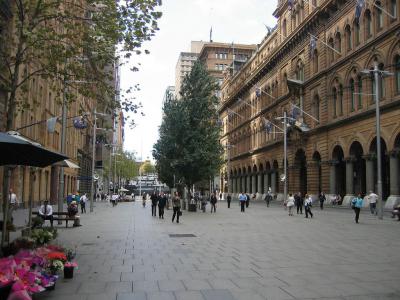
Martin Place is a prominent civic space, running through the central business district between George Street and Macquarie Street. Originally created in 1892 by covering a section of the old General Post Office courtyard, it evolved into a pedestrian mall and public square that serves as the city’s ceremonial and commercial heart. The street’s sandstone architecture and broad, open layout give it a formal grandeur that contrasts with the surrounding towers of glass and steel.
Dominating the western end is the General Post Office (GPO), designed by James Barnet in the late 19th century and long regarded as one of Sydney’s finest public buildings. Around it stand major financial institutions, government offices, and the Reserve Bank of Australia, reinforcing the area’s role as the symbolic centre of national commerce. The Amphitheatre and open forecourts host public events, concerts, and commemorations, including annual ANZAC Day and Remembrance Day ceremonies.
During weekdays, Martin Place hums with office workers, street performers, and outdoor cafés that spill across the granite paving. At night, the area transforms under architectural lighting that highlights the ornate façades of its heritage buildings. The plaza is also known for its large-scale public artworks and seasonal displays, such as the towering Christmas tree that fills the square each December.
Dominating the western end is the General Post Office (GPO), designed by James Barnet in the late 19th century and long regarded as one of Sydney’s finest public buildings. Around it stand major financial institutions, government offices, and the Reserve Bank of Australia, reinforcing the area’s role as the symbolic centre of national commerce. The Amphitheatre and open forecourts host public events, concerts, and commemorations, including annual ANZAC Day and Remembrance Day ceremonies.
During weekdays, Martin Place hums with office workers, street performers, and outdoor cafés that spill across the granite paving. At night, the area transforms under architectural lighting that highlights the ornate façades of its heritage buildings. The plaza is also known for its large-scale public artworks and seasonal displays, such as the towering Christmas tree that fills the square each December.
13) George Street
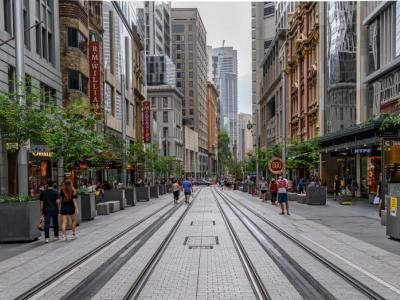
George Street is Sydney’s oldest and most historic thoroughfare, running through the heart of the city from The Rocks at Circular Quay to Central Station. First laid out in 1788, it followed the path between the early settlement’s wharf and government buildings, becoming the main artery of colonial Sydney. Over the centuries, it has evolved from a dirt track lined with shops and inns into a wide, modern boulevard that reflects the city’s growth from penal colony to global metropolis. Its streetscape today mixes restored sandstone landmarks with glass towers, capturing the layers of Sydney’s architectural history.
Many of the city’s major civic and commercial buildings line George Street, including the Queen Victoria Building (QVB), Town Hall, and St Andrew’s Cathedral. Their ornate façades stand beside contemporary office towers and retail centres, creating a visual dialogue between 19th-century grandeur and modern design. The street’s lower section near The Rocks retains much of its early character, with cobbled lanes and heritage pubs leading toward the harbour.
In recent years, George Street has undergone a major transformation with the introduction of the CBD and South East Light Rail, turning it into a predominantly pedestrian-friendly zone. Paved walkways, street trees, and public seating have replaced heavy traffic, restoring the street’s civic role as a place to stroll, shop, and gather. During festivals and parades, the avenue becomes one of Sydney’s main public stages, linking the city’s oldest precincts with its contemporary cultural core.
Many of the city’s major civic and commercial buildings line George Street, including the Queen Victoria Building (QVB), Town Hall, and St Andrew’s Cathedral. Their ornate façades stand beside contemporary office towers and retail centres, creating a visual dialogue between 19th-century grandeur and modern design. The street’s lower section near The Rocks retains much of its early character, with cobbled lanes and heritage pubs leading toward the harbour.
In recent years, George Street has undergone a major transformation with the introduction of the CBD and South East Light Rail, turning it into a predominantly pedestrian-friendly zone. Paved walkways, street trees, and public seating have replaced heavy traffic, restoring the street’s civic role as a place to stroll, shop, and gather. During festivals and parades, the avenue becomes one of Sydney’s main public stages, linking the city’s oldest precincts with its contemporary cultural core.
14) Queen Victoria Building (QVB) (must see)
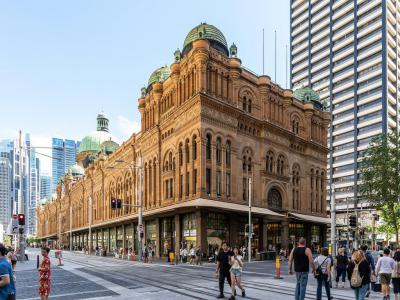
If you need proof that Sydney knows how to make a statement, just look at the Queen Victoria Building (colloquially known as QVB)-an entire city block wrapped in sandstone and crowned with a dome big enough to double as a landmark all on its own. Completed in 1898-during an economic depression, no less-this architectural giant was designed by George McRae as a way to keep skilled workers employed. Naming it after Queen Victoria’s Diamond Jubilee was the city’s way of adding a royal ribbon on top.
The style is Romanesque Revival, which was Sydney’s late-19th-century attempt at saying, “Yes, we, too, can do grand arches and serious stonework.” Rounded arcades, carved details, and that massive copper-clad dome-plus four smaller backup domes-give the whole building the confidence of something that fully expects you to stop and stare.
Inside, the QVB stretches across five levels, starting from a basement that plugs directly into public transport and budget-friendly shops, and rising through a tall atrium that funnels light straight from the dome. It’s a place where mosaic floors meet stained-glass windows, cast-iron balustrades, and restored arches-essentially a greatest-hits album of late-Victorian craftsmanship. Staircases and escalators zigzag between the galleries, giving you uninterrupted views down the atrium as you wander.
The 20th century wasn’t always kind to the building. After a long stint hosting offices and municipal odds and ends, it slipped into decline until the 1980s, when a major restoration rescued it from the brink and revived it as a commercial showpiece.
Today, the QVB is where boutiques, cafés, and specialty shops hold court beneath two enormous mechanical clocks-the Royal Clock and the Great Australian Clock-each one staging little historical dramas as you pass underneath. And if you arrive from Druitt Street, Queen Victoria herself is waiting outside-in the form of a statue sculpted in 1908 and originally placed in Dublin before finding a new royal residence here in Sydney.
The style is Romanesque Revival, which was Sydney’s late-19th-century attempt at saying, “Yes, we, too, can do grand arches and serious stonework.” Rounded arcades, carved details, and that massive copper-clad dome-plus four smaller backup domes-give the whole building the confidence of something that fully expects you to stop and stare.
Inside, the QVB stretches across five levels, starting from a basement that plugs directly into public transport and budget-friendly shops, and rising through a tall atrium that funnels light straight from the dome. It’s a place where mosaic floors meet stained-glass windows, cast-iron balustrades, and restored arches-essentially a greatest-hits album of late-Victorian craftsmanship. Staircases and escalators zigzag between the galleries, giving you uninterrupted views down the atrium as you wander.
The 20th century wasn’t always kind to the building. After a long stint hosting offices and municipal odds and ends, it slipped into decline until the 1980s, when a major restoration rescued it from the brink and revived it as a commercial showpiece.
Today, the QVB is where boutiques, cafés, and specialty shops hold court beneath two enormous mechanical clocks-the Royal Clock and the Great Australian Clock-each one staging little historical dramas as you pass underneath. And if you arrive from Druitt Street, Queen Victoria herself is waiting outside-in the form of a statue sculpted in 1908 and originally placed in Dublin before finding a new royal residence here in Sydney.
15) Sydney Town Hall
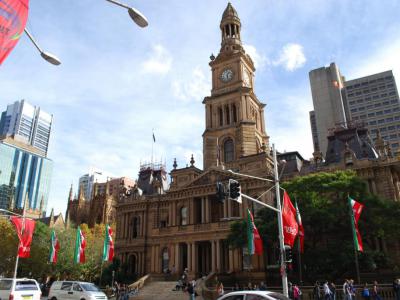
Making your way down George Street, you soon meet Sydney Town Hall-one of the city’s grandest Victorian creations that looks every bit like it refuses to blend in. This sandstone showpiece didn’t appear overnight-it took the city from 1869 to 1889 to finish it, with architects J. H. Willson and later Thomas Sapsford giving it the full High Victorian treatment. Corinthian columns, grand arched windows, domes, carvings, and just enough ornamentation to make a peacock blush-they're all here.
What most passers-by don’t realise is that this civic landmark sits on Sydney’s first official cemetery. Beneath the foundations are traces of the colony’s earliest years-an unexpected reminder that city halls may have stories layered deep under their floorboards...
Once inside, the drama continues. Centennial Hall, unveiled in 1889, is the real star of the building. With its lavish plasterwork, stained-glass windows, and a pipe organ that once held the title of world’s largest, this hall was designed to impress-and it still does. Concerts, ceremonies, grand receptions-you name it, this room makes it sound (and look) spectacular.
Sydney Town Hall also remains a working building, home to the Lord Mayor and City Council. Visitors who join a tour get to wander through its richly decorated rooms, extravagant staircases, and polished hallways that seem determined to prove the 19th century never really left.
And keep an eye on that clock tower. At 55 metres above George Street, it’s been keeping time-and keeping watch-over the city for more than a century.
What most passers-by don’t realise is that this civic landmark sits on Sydney’s first official cemetery. Beneath the foundations are traces of the colony’s earliest years-an unexpected reminder that city halls may have stories layered deep under their floorboards...
Once inside, the drama continues. Centennial Hall, unveiled in 1889, is the real star of the building. With its lavish plasterwork, stained-glass windows, and a pipe organ that once held the title of world’s largest, this hall was designed to impress-and it still does. Concerts, ceremonies, grand receptions-you name it, this room makes it sound (and look) spectacular.
Sydney Town Hall also remains a working building, home to the Lord Mayor and City Council. Visitors who join a tour get to wander through its richly decorated rooms, extravagant staircases, and polished hallways that seem determined to prove the 19th century never really left.
And keep an eye on that clock tower. At 55 metres above George Street, it’s been keeping time-and keeping watch-over the city for more than a century.
16) Hyde Park Obelisk
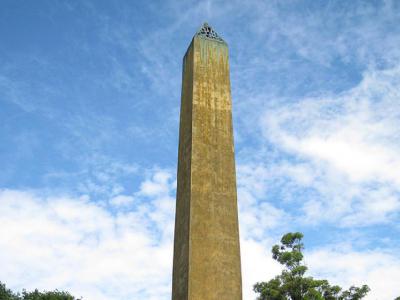
The Hyde Park Obelisk stands at the intersection of Elizabeth and Bathurst Streets, marking one of Sydney’s more curious pieces of 19th-century engineering. Unveiled in 1857, the 22-metre sandstone monument was modelled after the Cleopatra’s Needle obelisk on London’s Embankment. Though its classical design suggests a commemorative monument, the obelisk was in fact built as a ventilation shaft for the city’s newly constructed underground sewer system-the first of its kind in Australia. Its elegant form disguised a vital piece of civic infrastructure that helped modernise Sydney’s sanitation network during a period of rapid urban expansion.
The structure, designed by City Engineer Edward Bell, was carved from local sandstone and capped with a bronze orb. Beneath its ornate surface, internal vents once channelled sewer gases safely away from the streets below. The combination of practical engineering and classical styling reflected Victorian Sydney’s aspiration to merge function with beauty in public works.
Over time, the Hyde Park Obelisk became both a city landmark and a symbol of 19th-century progress. Standing near the southern entrance to Hyde Park, it anchors the surrounding streetscape of historic and modern buildings. The monument’s survival amid constant redevelopment highlights the period’s craftsmanship and the ambition of civic design that sought to elevate even utilitarian structures into works of urban ornamentation.
The structure, designed by City Engineer Edward Bell, was carved from local sandstone and capped with a bronze orb. Beneath its ornate surface, internal vents once channelled sewer gases safely away from the streets below. The combination of practical engineering and classical styling reflected Victorian Sydney’s aspiration to merge function with beauty in public works.
Over time, the Hyde Park Obelisk became both a city landmark and a symbol of 19th-century progress. Standing near the southern entrance to Hyde Park, it anchors the surrounding streetscape of historic and modern buildings. The monument’s survival amid constant redevelopment highlights the period’s craftsmanship and the ambition of civic design that sought to elevate even utilitarian structures into works of urban ornamentation.
