Custom Walk in Edinburgh, Scotland by janddfried_5329b4 created on 2026-06-19
Guide Location: Scotland » Edinburgh
Guide Type: Custom Walk
# of Sights: 13
Tour Duration: 3 Hour(s)
Travel Distance: 6.3 Km or 3.9 Miles
Share Key: LN6L5
Guide Type: Custom Walk
# of Sights: 13
Tour Duration: 3 Hour(s)
Travel Distance: 6.3 Km or 3.9 Miles
Share Key: LN6L5
How It Works
Please retrieve this walk in the GPSmyCity app. Once done, the app will guide you from one tour stop to the next as if you had a personal tour guide. If you created the walk on this website or come to the page via a link, please follow the instructions below to retrieve the walk in the app.
Retrieve This Walk in App
Step 1. Download the app "GPSmyCity: Walks in 1K+ Cities" on Apple App Store or Google Play Store.



Step 2. In the GPSmyCity app, download(or launch) the guide "Edinburgh Map and Walking Tours".
Step 3. Tap the menu button located at upper right corner of the "Walks" screen and select "Retrieve custom walk". Enter the share key: LN6L5
1) Edinburgh Castle (must see)
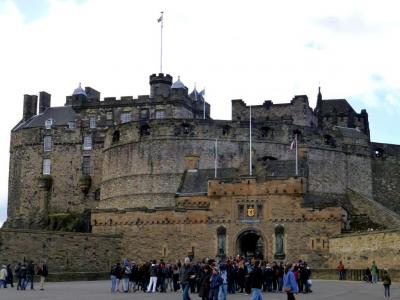
Edinburgh Castle, looming large over the Scottish capital, is the second most visited attraction in the UK (after the Tower of London, which is still number one). The history of Scotland is deeply etched into its ancient stones, making it a timeline in fortress form.
Perched atop Castle Rock (a hardened basaltic plug from an extinct volcano eroded by glaciers), this area has been drawing humans since the 9th millennium BC. The first castle on the site was built in the 12th century by King David I. It remained a royal residence until 1603, when the monarchy packed up and moved to London-presumably for better weather and indoor plumbing...
Indeed, as a fortress, it was virtually impregnable, except for one major-geological-drawback: the basalt rock on which it stands doesn’t hold water (literally). The 28-meter-deep well inside the fortress was about as useful as a chocolate teapot during a siege. So, when the well ran dry, surrender-or dehydration-was the only choice for those inside.
The original castle was mostly destroyed during the Lang Siege of 1573. The only remainder from its early days is St. Margaret’s Chapel. By the 17th century, it had shifted from royal digs to military barracks, housing troops up to the 1920s.
Presently, the castle hosts the Scottish National War Memorial, the National War Museum, and enough regimental museums to keep military buffs busy till closing time. Don't miss the One O’Clock Gun, which is fired daily (except Sundays) at 1 PM with Swiss-watch precision-yes, Edinburgh literally sets its clocks by it...
Also, in the Crown Room, you will see Scotland’s royal bling-crown, scepter, and sword-resting under heavy guard. Period-costumed actors occasionally swoop in to re-enact history with full flair. And if you’re visiting in August, the Military Tattoo takes over the esplanade with kilts, cannons, and bagpipes galore.
Oh, and in the north-east corner of the esplanade, don't miss that rather unassuming little iron fountain. Called Witches' Well, it marks the spot where, back in the day, many women accused of witchcraft were burned at the stake. Spooky, grim, and sadly true...
The panoramic views are postcard-worthy, the historical nooks are endlessly fascinating, and honestly, it just feels epic to stand where centuries of royals, rebels, and rock-solid drama unfolded.
Pro Tips:
The entry is cheaper, and more importantly, faster, if you book online.
Take a free guided tour – running every hour. Otherwise, consider grabbing the £3 audio guide if you like facts with flair.
Being at the mountain's top, it may get breezy, so definitely bring a windproof jacket if visiting in cold weather.
Perched atop Castle Rock (a hardened basaltic plug from an extinct volcano eroded by glaciers), this area has been drawing humans since the 9th millennium BC. The first castle on the site was built in the 12th century by King David I. It remained a royal residence until 1603, when the monarchy packed up and moved to London-presumably for better weather and indoor plumbing...
Indeed, as a fortress, it was virtually impregnable, except for one major-geological-drawback: the basalt rock on which it stands doesn’t hold water (literally). The 28-meter-deep well inside the fortress was about as useful as a chocolate teapot during a siege. So, when the well ran dry, surrender-or dehydration-was the only choice for those inside.
The original castle was mostly destroyed during the Lang Siege of 1573. The only remainder from its early days is St. Margaret’s Chapel. By the 17th century, it had shifted from royal digs to military barracks, housing troops up to the 1920s.
Presently, the castle hosts the Scottish National War Memorial, the National War Museum, and enough regimental museums to keep military buffs busy till closing time. Don't miss the One O’Clock Gun, which is fired daily (except Sundays) at 1 PM with Swiss-watch precision-yes, Edinburgh literally sets its clocks by it...
Also, in the Crown Room, you will see Scotland’s royal bling-crown, scepter, and sword-resting under heavy guard. Period-costumed actors occasionally swoop in to re-enact history with full flair. And if you’re visiting in August, the Military Tattoo takes over the esplanade with kilts, cannons, and bagpipes galore.
Oh, and in the north-east corner of the esplanade, don't miss that rather unassuming little iron fountain. Called Witches' Well, it marks the spot where, back in the day, many women accused of witchcraft were burned at the stake. Spooky, grim, and sadly true...
The panoramic views are postcard-worthy, the historical nooks are endlessly fascinating, and honestly, it just feels epic to stand where centuries of royals, rebels, and rock-solid drama unfolded.
Pro Tips:
The entry is cheaper, and more importantly, faster, if you book online.
Take a free guided tour – running every hour. Otherwise, consider grabbing the £3 audio guide if you like facts with flair.
Being at the mountain's top, it may get breezy, so definitely bring a windproof jacket if visiting in cold weather.
2) Grassmarket
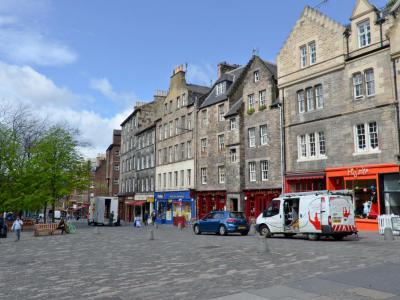
If you're looking to shop, snack, or relax over a pint while in Edinburgh, the Grassmarket is undoubtedly your one-stop cobbled playground. Once the city’s bustling horse-and-cattle bazaar which drew crowds between 1477 and 1911, it also doubled as a top place for executions-because, apparently, back in the day, nothing did for the public entertainment more than hooves and hangings...
Keep an eye out for “The Shadow of the Gibbet”-the dark paving stones laid out in the form of a gallows near the Covenanter’s Monument. It’s a charmingly grim touch, in case you needed a reminder that this scenic square once served as the city’s unofficial “dead-end.” And over to one side of it stands the Bow Well that has been around since 1681.
According to legend, once upon a time, there was a woman named Maggie Dickson, a fishwife who made headlines by dying and... remarkably coming back again. Hanged right here for the alleged murder of her child, she stunned everyone when she unexpectedly woke up en route to the cemetery. Apparently, in those days, the “until dead” provision didn’t quite yet settle in the sentence proceedings (legal loophole of the day...). So, once hanged, her debt was considered paid and Maggie was set free. Today, you can toast her improbable resurrection at Maggie Dickson’s pub, conveniently located on the very spot where she was hanged but miraculously survived the ordeal.
Fast forward a few centuries and the Grassmarket swapped gallows for gastropubs. A formerly scruffy patch of the city, it became a magnet for students in the 1980s-likely lured by cheap beer and late-night kebabs. Nowadays gentrified, it’s all terraces, boutique shops, vintage finds, and indie charm.
Quirky, safe and interesting, this area is a great destination for those who need a regular change of scenery, complete with a variety of retail and dining opportunities to suit every wallet and taste, and enough character to fill a tartan suitcase.
Hot tip:
Check out Carnivàle Vintage for a wonderful selection of fun vintage clothing, Tasty Buns for pastry and coffee, Hula Juice Bar for guilt-free fuel, and Mary’s Milk Bar for glorious indulgence. And when you're done, wind your way up Victoria Street and onto the Royal Mile (further up)-because one eccentric shopping spree always deserves another...
Keep an eye out for “The Shadow of the Gibbet”-the dark paving stones laid out in the form of a gallows near the Covenanter’s Monument. It’s a charmingly grim touch, in case you needed a reminder that this scenic square once served as the city’s unofficial “dead-end.” And over to one side of it stands the Bow Well that has been around since 1681.
According to legend, once upon a time, there was a woman named Maggie Dickson, a fishwife who made headlines by dying and... remarkably coming back again. Hanged right here for the alleged murder of her child, she stunned everyone when she unexpectedly woke up en route to the cemetery. Apparently, in those days, the “until dead” provision didn’t quite yet settle in the sentence proceedings (legal loophole of the day...). So, once hanged, her debt was considered paid and Maggie was set free. Today, you can toast her improbable resurrection at Maggie Dickson’s pub, conveniently located on the very spot where she was hanged but miraculously survived the ordeal.
Fast forward a few centuries and the Grassmarket swapped gallows for gastropubs. A formerly scruffy patch of the city, it became a magnet for students in the 1980s-likely lured by cheap beer and late-night kebabs. Nowadays gentrified, it’s all terraces, boutique shops, vintage finds, and indie charm.
Quirky, safe and interesting, this area is a great destination for those who need a regular change of scenery, complete with a variety of retail and dining opportunities to suit every wallet and taste, and enough character to fill a tartan suitcase.
Hot tip:
Check out Carnivàle Vintage for a wonderful selection of fun vintage clothing, Tasty Buns for pastry and coffee, Hula Juice Bar for guilt-free fuel, and Mary’s Milk Bar for glorious indulgence. And when you're done, wind your way up Victoria Street and onto the Royal Mile (further up)-because one eccentric shopping spree always deserves another...

3) Edinburgh Farmers' Market
What to buy here: Cairn O'Mohr Wine.
Cairn O'Mohr outstanding Scottish fruit wines constitute a great gift for those who enjoy a glass of good wine. Made from berries, flowers and leaves that grow in the region, this award winning drink brings out distinctive flavors and an aromatic juicy taste.
Only the freshest ingredients are used to produce these wines, such as: strawberries, raspberries, gooseberries, oak leaves and brambles. Nothing sumptuous, just the best ingredients they grow, fermented in the traditional way.
This Scottish alcoholic drink attracts curious and discerning wine lovers from all corners of the globe and constitutes a great accompaniment for dinner. Price: $7–$20.
Cairn O'Mohr outstanding Scottish fruit wines constitute a great gift for those who enjoy a glass of good wine. Made from berries, flowers and leaves that grow in the region, this award winning drink brings out distinctive flavors and an aromatic juicy taste.
Only the freshest ingredients are used to produce these wines, such as: strawberries, raspberries, gooseberries, oak leaves and brambles. Nothing sumptuous, just the best ingredients they grow, fermented in the traditional way.
This Scottish alcoholic drink attracts curious and discerning wine lovers from all corners of the globe and constitutes a great accompaniment for dinner. Price: $7–$20.
4) Telfer Wall
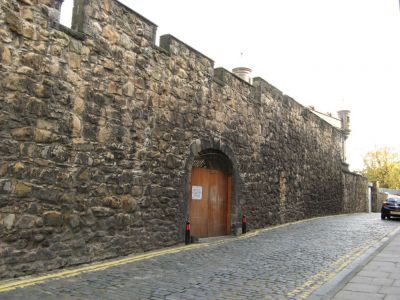
If you would like to see a real part of ancient Edinburgh, head over to Heriot Place where you will find one of the few remaining stretches of the Telfer Wall-a genuine piece of the city’s old fortification system.
Back in the day, Edinburgh’s Old Town had not just one or two, but three defensive walls. The first was a bit half-hearted-more like a polite suggestion than real protection, securing the area just around the High Street. After the Battle of Flodden, the locals realized that other than this part of their town, nothing else was protected, and so, in 1513, they built the Flodden Wall. Unfortunately, as the 1600s rolled around, that wall started showing the signs of ageing, shoddy workmanship, and proved a bit undersized for the rapidly growing town. Thus, in 1630, the Telfer Wall was added, as the last line of defense, running south of the Flodden Wall.
Sadly, not much of those once-mighty walls remain today-either demolished or politely erased by time. The gateways-otherwise called “ports,” (because Edinburgh likes to keep things slightly confusing)-are long gone. But thanks to the Heriot Society, you can still admire a preserved corner tower from the Flodden Wall and a nice long stretch of the Telfer Wall still standing on Heriot Place.
During excavations at the base of the wall in 1850, archaeologists hit the jackpot-a well-preserved Roman bronze coin, dating back to the time of Constantine the Great. Further excavations revealed two coffins fashioned out of oak trunks; the exterior of the coffins was rough wood, but the interiors contained the head and the arms of a man and a woman.
Between the coffins, the skull and antlers of an enormous deer were discovered, along with a spearhead made of horn. The burial site is thought to date back to the 3rd century AD. The remains of the humans disintegrated when they attempted to retrieve them, but the deer’s skull was intact and today is proudly displayed in the Royal Scottish Museum (because, indeed, in Edinburgh, the deer enjoy rather good survival rates...).
Back in the day, Edinburgh’s Old Town had not just one or two, but three defensive walls. The first was a bit half-hearted-more like a polite suggestion than real protection, securing the area just around the High Street. After the Battle of Flodden, the locals realized that other than this part of their town, nothing else was protected, and so, in 1513, they built the Flodden Wall. Unfortunately, as the 1600s rolled around, that wall started showing the signs of ageing, shoddy workmanship, and proved a bit undersized for the rapidly growing town. Thus, in 1630, the Telfer Wall was added, as the last line of defense, running south of the Flodden Wall.
Sadly, not much of those once-mighty walls remain today-either demolished or politely erased by time. The gateways-otherwise called “ports,” (because Edinburgh likes to keep things slightly confusing)-are long gone. But thanks to the Heriot Society, you can still admire a preserved corner tower from the Flodden Wall and a nice long stretch of the Telfer Wall still standing on Heriot Place.
During excavations at the base of the wall in 1850, archaeologists hit the jackpot-a well-preserved Roman bronze coin, dating back to the time of Constantine the Great. Further excavations revealed two coffins fashioned out of oak trunks; the exterior of the coffins was rough wood, but the interiors contained the head and the arms of a man and a woman.
Between the coffins, the skull and antlers of an enormous deer were discovered, along with a spearhead made of horn. The burial site is thought to date back to the 3rd century AD. The remains of the humans disintegrated when they attempted to retrieve them, but the deer’s skull was intact and today is proudly displayed in the Royal Scottish Museum (because, indeed, in Edinburgh, the deer enjoy rather good survival rates...).
5) McEwan Hall
McEwan Hall is a building that’s throughout its history been called by critics (with a flair for snobbery) pretty much everything, from “ostentatious” and “bad taste” to “majestic”. Still, you don’t have to take any of these words for it. Instead, go see it for yourself and decide if it’s, indeed, architectural brilliance or just a brewer’s over-the-top vanity project in stone...
Back in the 1890s, the University of Edinburgh politely asked the City Council for cash to build a proper graduation hall. The Council-ever frugal-declined, insisting the students didn’t need one. At that point, William McEwan, a master brewer and lover of lager, and evidently not one to pass up the chance to slap his name on a landmark, offered to fund the entire project-on one modest condition: it had to be called McEwan Hall. Thus, the deal was sealed.
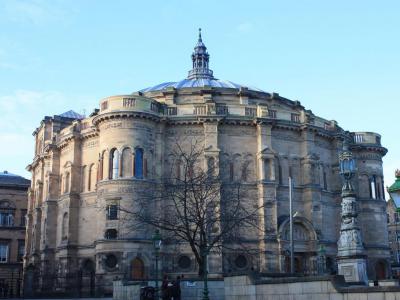
Designed by Sir Robert Rowand Anderson in a grand Italian Renaissance style, the D-shaped structure was completed in 1897. On the outside, it's all restraint and dignity, with a semi-domed roof and a rather sober façade. But step inside, and things get a bit more... expressive.
The most remarkable feature about the interior is the double helix stairway that leads to the semi-circular galleries. One stairway is entered from the inside; the other from the outside-a sort of Scotland’s answer to architectural one-upmanship. It's the kind of design flourish that whispers, “Just because we can....”
Indeed, it is to the interior-or, precisely, the lavishly decorated walls within the tiered auditorium, painted by William Palin-that this building owes its bad taste reputation. Here, alongside the depictions of academic disciplines and grand allegories of Knowledge and Virtue, on one of the walls-in the Grove of Academe-you can see the image of McEwan himself. With his smug, “holier-than-thou” expression, he presents the hall to none other than Minerva, the Roman goddess of wisdom, arts, and strategic warfare.
Furthermore, McEwan got an honorary doctorate in 1898, a year after the building was commissioned. And, of course, some unkind tongues promptly suggested that he built the hall for the sole purpose of “furthering his education without having to get his head out of the ale barrel”. Well, who knows...
Back in the 1890s, the University of Edinburgh politely asked the City Council for cash to build a proper graduation hall. The Council-ever frugal-declined, insisting the students didn’t need one. At that point, William McEwan, a master brewer and lover of lager, and evidently not one to pass up the chance to slap his name on a landmark, offered to fund the entire project-on one modest condition: it had to be called McEwan Hall. Thus, the deal was sealed.
Designed by Sir Robert Rowand Anderson in a grand Italian Renaissance style, the D-shaped structure was completed in 1897. On the outside, it's all restraint and dignity, with a semi-domed roof and a rather sober façade. But step inside, and things get a bit more... expressive.
The most remarkable feature about the interior is the double helix stairway that leads to the semi-circular galleries. One stairway is entered from the inside; the other from the outside-a sort of Scotland’s answer to architectural one-upmanship. It's the kind of design flourish that whispers, “Just because we can....”
Indeed, it is to the interior-or, precisely, the lavishly decorated walls within the tiered auditorium, painted by William Palin-that this building owes its bad taste reputation. Here, alongside the depictions of academic disciplines and grand allegories of Knowledge and Virtue, on one of the walls-in the Grove of Academe-you can see the image of McEwan himself. With his smug, “holier-than-thou” expression, he presents the hall to none other than Minerva, the Roman goddess of wisdom, arts, and strategic warfare.
Furthermore, McEwan got an honorary doctorate in 1898, a year after the building was commissioned. And, of course, some unkind tongues promptly suggested that he built the hall for the sole purpose of “furthering his education without having to get his head out of the ale barrel”. Well, who knows...
6) Greyfriars Church
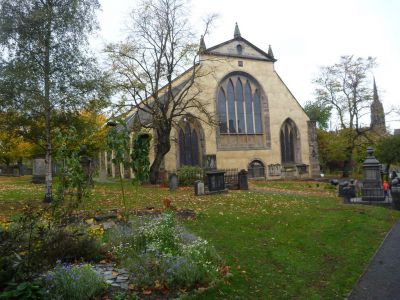
Edinburgh makes things easy for history buffs: just follow the soot-streaked stones of the Old Town and you’ll trip over ancient buildings in no time. One such relic is Greyfriars Church-an architectural overachiever that’s been around since the early 1600s and still manages to steal the show.
Work on the church began in 1602, and by 1630, it was officially consecrated, rising from the ruins of an abandoned Franciscan monastery and becoming one of the oldest buildings in the Old Town. Its name is a fashion nod to the original residents-monks in grey robes, otherwise known as the “Grey Friars.” Simple branding, eternal legacy...
In 1718, someone got the bright idea to divide the church with a wall-Old Greyfriars on one side, New Greyfriars on the other-because heaven forbid the Covenanters and Roman Catholics share pew space. Then, in 1845, the roof caught fire (presumably not from divine wrath), destroying much of the interior.
When the church was restored in the mid-19th century, they added stained-glass windows. Beautiful they were? Yes. Controversial? Also, yes-for it was the first time that such windows appeared in a Presbyterian church, and it caused a bit of a scandal. A little later, an organ was added, and once again the purists “clutched their pearls.” In 1929, they finally took down the dividing wall and made peace… at least architecturally.
Oh, and the adjoining graveyard-it's said to be haunted by the ghost of one “Bloody” George Mackenzie. A Lord Advocate responsible for the persecution of the Covenanters, his reputation is as bruised as his victims. They say that if he touches you, you’ll feel it-physically!-left with cuts and bruises... Sleep tight!
Still, nowadays, Greyfriars also doubles as an event venue and low-key fashion runway. It hosts exhibitions, lectures, and drama productions-all performed under those once-scandalous stained glass windows. The onsite museum showcases artifacts found in the area and recounts a comprehensive history of the Covenanters.
And for the wizarding crowd-just behind the Elephant House Café lies Greyfriars Kirkyard, where literary pilgrims flock to pay homage to tombstones that may-or may not-have inspired J.K. Rowling. Among those are Thomas Riddell (ring a bell, Voldemort fans?), Robert Potter, William McGonagall, and even names like Elizabeth Moodie and Margaret Louisa Scrymgeour Wedderburn, suspiciously close to Mad-Eye Moody and Rufus Scrimgeour (the Minister of Magic in the final Harry Potter book). As of August 2019, you can buy a handy Harry Potter-themed gravestone map; the proceeds from sales go toward graveyard upkeep-and probably a bit of Muggle curiosity management, too.
Also, visible from here is George Heriots School, reportedly the template for fictional Hogwarts...
Work on the church began in 1602, and by 1630, it was officially consecrated, rising from the ruins of an abandoned Franciscan monastery and becoming one of the oldest buildings in the Old Town. Its name is a fashion nod to the original residents-monks in grey robes, otherwise known as the “Grey Friars.” Simple branding, eternal legacy...
In 1718, someone got the bright idea to divide the church with a wall-Old Greyfriars on one side, New Greyfriars on the other-because heaven forbid the Covenanters and Roman Catholics share pew space. Then, in 1845, the roof caught fire (presumably not from divine wrath), destroying much of the interior.
When the church was restored in the mid-19th century, they added stained-glass windows. Beautiful they were? Yes. Controversial? Also, yes-for it was the first time that such windows appeared in a Presbyterian church, and it caused a bit of a scandal. A little later, an organ was added, and once again the purists “clutched their pearls.” In 1929, they finally took down the dividing wall and made peace… at least architecturally.
Oh, and the adjoining graveyard-it's said to be haunted by the ghost of one “Bloody” George Mackenzie. A Lord Advocate responsible for the persecution of the Covenanters, his reputation is as bruised as his victims. They say that if he touches you, you’ll feel it-physically!-left with cuts and bruises... Sleep tight!
Still, nowadays, Greyfriars also doubles as an event venue and low-key fashion runway. It hosts exhibitions, lectures, and drama productions-all performed under those once-scandalous stained glass windows. The onsite museum showcases artifacts found in the area and recounts a comprehensive history of the Covenanters.
And for the wizarding crowd-just behind the Elephant House Café lies Greyfriars Kirkyard, where literary pilgrims flock to pay homage to tombstones that may-or may not-have inspired J.K. Rowling. Among those are Thomas Riddell (ring a bell, Voldemort fans?), Robert Potter, William McGonagall, and even names like Elizabeth Moodie and Margaret Louisa Scrymgeour Wedderburn, suspiciously close to Mad-Eye Moody and Rufus Scrimgeour (the Minister of Magic in the final Harry Potter book). As of August 2019, you can buy a handy Harry Potter-themed gravestone map; the proceeds from sales go toward graveyard upkeep-and probably a bit of Muggle curiosity management, too.
Also, visible from here is George Heriots School, reportedly the template for fictional Hogwarts...
7) Greyfriars Bobby's Statue (must see)
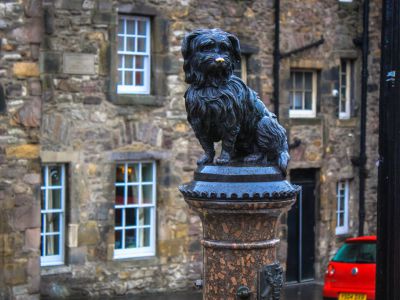
Ah yes-nothing tugs at the heartstrings quite like a tale of undying love and loyalty… especially if it involves a scruffy little dog. Meet Greyfriars Bobby, the Skye Terrier and Edinburgh’s most beloved four-legged legend, immortalized in bronze at the south end of George IV Bridge (just a tail’s wag from the entrance to Greyfriars Kirkyard).
Now, Bobby’s origin story is a bit fuzzy (pun fully intended here). Some say he belonged to a kindly policeman named John Grey; others claim that he was just a clever stray adopted by a “bobby” during his beat (hence the name). Either way, Bobby and John were inseparable for two years… until 1858, when John died of tuberculosis, and Bobby found himself alone in the world.
Whether Grey lived by himself or his widow kicked Bobby out when her husband died remains unclear, but this is where the tear ducts really kick in. Without a home, Bobby made one for himself-on his master’s grave. Indeed, rather than chase squirrels or sniff lampposts like a normal dog, he trotted over to Greyfriars Kirkyard and stayed there-for fourteen years!-until his own death. Through rain, sleet, snow, and the occasional curious visitor, Bobby stood guard with a loyalty that would put most humans to shame.
Usually, dogs weren’t exactly welcomed in church cemeteries, but Bobby had charm. The caretaker took pity on him and fed him, locals left snacks, and even William Chambers, the Lord Provost of Edinburgh, chipped in to pay Bobby’s yearly dog license, without which he would definitely have been destroyed as a stray.
When Bobby passed on in 1872, church rules said “no dogs in holy dirt,” so he was laid to rest just outside the gates. A local philanthropist lady had a statue erected in his honour, complete with two drinking fountains: one for people, and one for thirsty pups.
Over the years, Bobby’s story has had many versions and inspired numerous books, films, and tall tales-you name it. His breed would change depending on who told the tale, but Bobby’s spirit always remained the same-loyal to his master beyond the grave, and always legendary.
Tip:
Wander into Greyfriars Kirkyard right behind the statue for a dose of Edinburgh’s weirder history. Attention, Potterheads!-Rumour has it that Lord Voldemort’s gravestone is in there somewhere, too. Loyalty and dark magic, all in one stop...
Now, Bobby’s origin story is a bit fuzzy (pun fully intended here). Some say he belonged to a kindly policeman named John Grey; others claim that he was just a clever stray adopted by a “bobby” during his beat (hence the name). Either way, Bobby and John were inseparable for two years… until 1858, when John died of tuberculosis, and Bobby found himself alone in the world.
Whether Grey lived by himself or his widow kicked Bobby out when her husband died remains unclear, but this is where the tear ducts really kick in. Without a home, Bobby made one for himself-on his master’s grave. Indeed, rather than chase squirrels or sniff lampposts like a normal dog, he trotted over to Greyfriars Kirkyard and stayed there-for fourteen years!-until his own death. Through rain, sleet, snow, and the occasional curious visitor, Bobby stood guard with a loyalty that would put most humans to shame.
Usually, dogs weren’t exactly welcomed in church cemeteries, but Bobby had charm. The caretaker took pity on him and fed him, locals left snacks, and even William Chambers, the Lord Provost of Edinburgh, chipped in to pay Bobby’s yearly dog license, without which he would definitely have been destroyed as a stray.
When Bobby passed on in 1872, church rules said “no dogs in holy dirt,” so he was laid to rest just outside the gates. A local philanthropist lady had a statue erected in his honour, complete with two drinking fountains: one for people, and one for thirsty pups.
Over the years, Bobby’s story has had many versions and inspired numerous books, films, and tall tales-you name it. His breed would change depending on who told the tale, but Bobby’s spirit always remained the same-loyal to his master beyond the grave, and always legendary.
Tip:
Wander into Greyfriars Kirkyard right behind the statue for a dose of Edinburgh’s weirder history. Attention, Potterheads!-Rumour has it that Lord Voldemort’s gravestone is in there somewhere, too. Loyalty and dark magic, all in one stop...
8) The Elephant House
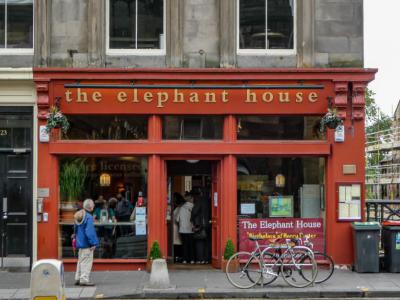
If you’ve ever wanted to sip a cappuccino where magic once brewed-quite literally-then The Elephant House might just be your pilgrimage stop. Open since 1995, this unassuming café earned worldwide fame not just for its tea and coffee (which are excellent, by the way), but for serving as a launchpad for a certain bespectacled boy wizard. Yes, J.K. Rowling once holed up in the back room here, penning early chapters of Harry Potter while eyeing up the brooding silhouette of Edinburgh Castle. Talk about dramatic inspiration...
But Rowling wasn’t the only literary mind to haunt these elephant-adorned halls. Other patrons like Ian Rankin, the mastermind behind the gritty Rebus detective novels, and Alexander McCall Smith, author of The No.1 Ladies' Detective Agency and 44 Scotland Street fame, have also warmed the seats here. Apparently, there’s something about the mix of caffeine, castle views, and atmospheric chatter that gets the creative juices flowing.
So, whether you’re nursing dreams of becoming the next literary sensation or just need a sturdy espresso before wandering into Edinburgh’s medieval maze-drop by The Elephant House. Who knows? That scribble on your napkin might just be the next bestseller...
But Rowling wasn’t the only literary mind to haunt these elephant-adorned halls. Other patrons like Ian Rankin, the mastermind behind the gritty Rebus detective novels, and Alexander McCall Smith, author of The No.1 Ladies' Detective Agency and 44 Scotland Street fame, have also warmed the seats here. Apparently, there’s something about the mix of caffeine, castle views, and atmospheric chatter that gets the creative juices flowing.
So, whether you’re nursing dreams of becoming the next literary sensation or just need a sturdy espresso before wandering into Edinburgh’s medieval maze-drop by The Elephant House. Who knows? That scribble on your napkin might just be the next bestseller...
9) Surgeons' Hall Museums
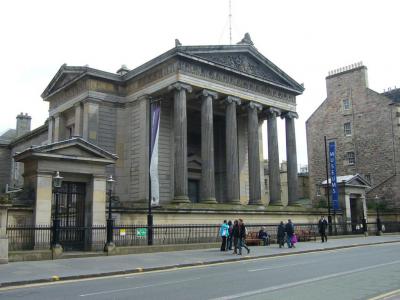
If you're the type who likes museums with a dash of guts-quite literally-then Surgeons’ Hall Museums in Edinburgh will cut right to the chase. Owned by the Royal College of Surgeons of Edinburgh (which has been around since 1505, so they know their way around a scalpel), this institution houses three wonderfully macabre attractions under one historic roof, namely: the Wohl Pathology Museum, the History of Surgery Museum, and the Dental Collection. Yes, even teeth get their time to shine-or clatter...
The whole grisly affair began in 1699 when the College put out a call for “natural and artificial curiosities”-basically the 17th-century equivalent of asking the public for weird stuff. And did they ever deliver! By the 1800s, the collection ballooned thanks to legendary surgeons like Sir Charles Bell and John Barclay, who clearly never left home without something dissectible in their satchels.
Though it started originally as a teaching tool for budding medics, Surgeons’ Hall eventually flung its doors open to the public in 1832, making it one of Scotland’s oldest museums. Inside, you'll find enough bone, tissue, and surgical oddities to make even the toughest stomach do a double-take. The Wohl Pathology Museum, in particular, boasts one of the world’s largest surgical pathology collections-because who doesn’t love a preserved organ with a backstory?
But it’s not all preserved spleens and vintage scalpels. Today’s exhibits come with interactive computer simulations, films, and user-friendly text panels, too, that won’t require a medical degree to understand. So, you can rest assured to leave entertained, enlightened, and possibly reevaluating your next dentist appointment...
The whole grisly affair began in 1699 when the College put out a call for “natural and artificial curiosities”-basically the 17th-century equivalent of asking the public for weird stuff. And did they ever deliver! By the 1800s, the collection ballooned thanks to legendary surgeons like Sir Charles Bell and John Barclay, who clearly never left home without something dissectible in their satchels.
Though it started originally as a teaching tool for budding medics, Surgeons’ Hall eventually flung its doors open to the public in 1832, making it one of Scotland’s oldest museums. Inside, you'll find enough bone, tissue, and surgical oddities to make even the toughest stomach do a double-take. The Wohl Pathology Museum, in particular, boasts one of the world’s largest surgical pathology collections-because who doesn’t love a preserved organ with a backstory?
But it’s not all preserved spleens and vintage scalpels. Today’s exhibits come with interactive computer simulations, films, and user-friendly text panels, too, that won’t require a medical degree to understand. So, you can rest assured to leave entertained, enlightened, and possibly reevaluating your next dentist appointment...
10) Arthur's Seat (must see)
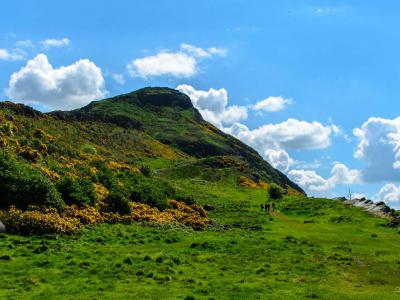
Edinburgh is a busy city, but even here, Scotland doesn’t let you forget its wild origins. To the east of Edinburgh Castle, you will find Arthur’s Seat, a testimony of the ancient land.
About 350 million years ago this main peak of a cluster of hills was an active volcano. During the last Ice Age two million years ago, a huge glacier that moved slowly across the land from west to east eroded the volcano, which was by that time, extinct. Located in Holyrood Park, Arthur’s Seat today is a favourite place for hill walkers as it is relatively easy to climb and you have great views of the city from the top.
The peak’s name comes from a corruption of “Ard-na-Said” which translates roughly as “height of arrows”, although legend likes to claim that this was once the site of Camelot and Arthur’s Round Table. There are remains of old forts on the top of the peak, probably built in the Iron Age by the Votadini, who settled here until after Roman times.
An ancient tradition suggests that if a young girl washes her face in the dew here on May Day, she will become beautiful. The peak today is jealously guarded by the population and no building is allowed here. It is a natural habitat for several wild animals, including foxes, squirrels, weasels and badgers, and for some rather rare species of butterflies.
In 1836, seventeen tiny coffins containing wooden figures were found in a cave on the peak. This led to speculation about the site being used for witch’s rites, but this has never been proved. The coffins and their contents remain a mystery.
Why You Should Visit:
Ruins of an old church, hiking trails, fresh air all around, all on a lovely dormant volcano!
Tip:
Go early in the morning to catch the light over the city and to avoid crowds.
Bring water, snacks, comfortable (closed-toe) shoes, and a light windbreaker too, because it's gusty at the top.
Plan your route carefully, as there are multiple routes up, some more direct and steeper, some more leisurely and meandering.
About 350 million years ago this main peak of a cluster of hills was an active volcano. During the last Ice Age two million years ago, a huge glacier that moved slowly across the land from west to east eroded the volcano, which was by that time, extinct. Located in Holyrood Park, Arthur’s Seat today is a favourite place for hill walkers as it is relatively easy to climb and you have great views of the city from the top.
The peak’s name comes from a corruption of “Ard-na-Said” which translates roughly as “height of arrows”, although legend likes to claim that this was once the site of Camelot and Arthur’s Round Table. There are remains of old forts on the top of the peak, probably built in the Iron Age by the Votadini, who settled here until after Roman times.
An ancient tradition suggests that if a young girl washes her face in the dew here on May Day, she will become beautiful. The peak today is jealously guarded by the population and no building is allowed here. It is a natural habitat for several wild animals, including foxes, squirrels, weasels and badgers, and for some rather rare species of butterflies.
In 1836, seventeen tiny coffins containing wooden figures were found in a cave on the peak. This led to speculation about the site being used for witch’s rites, but this has never been proved. The coffins and their contents remain a mystery.
Why You Should Visit:
Ruins of an old church, hiking trails, fresh air all around, all on a lovely dormant volcano!
Tip:
Go early in the morning to catch the light over the city and to avoid crowds.
Bring water, snacks, comfortable (closed-toe) shoes, and a light windbreaker too, because it's gusty at the top.
Plan your route carefully, as there are multiple routes up, some more direct and steeper, some more leisurely and meandering.
11) Holyroodhouse (must see)
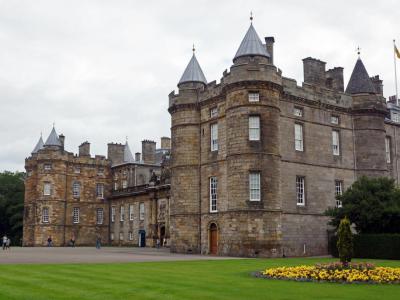
If you're ticking off Edinburgh landmarks, Holyroodhouse is one you can't skip-not unless you're on the run from the crown... Sitting at the royal end of the Royal Mile, this stately pad is the official Scottish residence of the British monarch and once housed none other than Mary, Queen of Scots. That’s right, drama lives here rent-free...
The whole saga begins with King David I, who founded the nearby Holyrood Abbey in 1128 (after a divine deer encounter, according to legend). A few centuries later, precisely by 1501, a palace was built beside the abbey. Now, calling it a “palace”, back then, was maybe a touch ambitious-a grand country house, more like it, rather than Versailles-but it did get bigger in 1532 and 1536. The property was thoroughly renovated in 1633, only to be trashed when Cromwell’s soldiers used it as barracks and then a fire added insult to injury...
Then came the 1670s, when Sir William Bruce, the architectural fixer of the day, rebuilt the place. The abbey chapel became the Chapel Royal, hosting pious activity until 1768, when the roof rather unceremoniously fell in. More restorations followed after that-first in 1822 for a royal visit, and then again in the 20th century when King George V and Queen Mary decided the palace could really use indoor plumbing. Royal flush, anyone?
When the royals are away, the house is open to the public. Inside, you can marvel at ceiling stucco so delicate it practically whispers, and gawk at an entire lineup of Scottish monarchs-some real, some as fictional as their hairlines-painted by the Dutch Golden Age artist Jacob de Wet. Then, dive into the Royal Collection, a five-century mix of armor, jewels, manuscripts, and silverware. Basically, it’s the attic of your dreams-if your attic had Rembrandts and 17th-century clocks.
Oh, and don’t wander off alone unless you're cool with ghosts. Legend has it that Agnes Sampson, accused of witchcraft and executed in 1592, still makes the occasional appearance here. So, if you feel a chill or hear something whispering about herbal remedies... maybe don’t investigate.
Palace, ghosts, ceilings, swords, and sovereign bling-are all here. Holyroodhouse doesn’t just bring the royal drama-it curates it.
The whole saga begins with King David I, who founded the nearby Holyrood Abbey in 1128 (after a divine deer encounter, according to legend). A few centuries later, precisely by 1501, a palace was built beside the abbey. Now, calling it a “palace”, back then, was maybe a touch ambitious-a grand country house, more like it, rather than Versailles-but it did get bigger in 1532 and 1536. The property was thoroughly renovated in 1633, only to be trashed when Cromwell’s soldiers used it as barracks and then a fire added insult to injury...
Then came the 1670s, when Sir William Bruce, the architectural fixer of the day, rebuilt the place. The abbey chapel became the Chapel Royal, hosting pious activity until 1768, when the roof rather unceremoniously fell in. More restorations followed after that-first in 1822 for a royal visit, and then again in the 20th century when King George V and Queen Mary decided the palace could really use indoor plumbing. Royal flush, anyone?
When the royals are away, the house is open to the public. Inside, you can marvel at ceiling stucco so delicate it practically whispers, and gawk at an entire lineup of Scottish monarchs-some real, some as fictional as their hairlines-painted by the Dutch Golden Age artist Jacob de Wet. Then, dive into the Royal Collection, a five-century mix of armor, jewels, manuscripts, and silverware. Basically, it’s the attic of your dreams-if your attic had Rembrandts and 17th-century clocks.
Oh, and don’t wander off alone unless you're cool with ghosts. Legend has it that Agnes Sampson, accused of witchcraft and executed in 1592, still makes the occasional appearance here. So, if you feel a chill or hear something whispering about herbal remedies... maybe don’t investigate.
Palace, ghosts, ceilings, swords, and sovereign bling-are all here. Holyroodhouse doesn’t just bring the royal drama-it curates it.
12) Mary King's Close (must see)
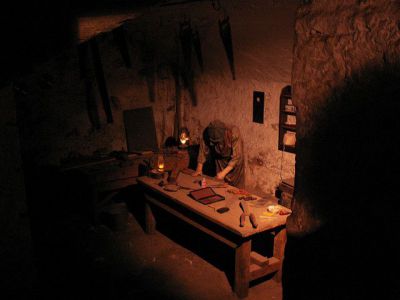
If ghost stories give you chills in a good way, then Real Mary King’s Close might just be your perfect haunt in Edinburgh. Tucked beneath the Royal Exchange, this underground maze of shadowy alleyways and crumbling tenement rooms has a reputation for being one of the most haunted corners of the city-and in Edinburgh, that’s saying something...
Originally a bustling neighborhood, the close was sealed off after the Great Plague of 1645 rolled into town, carried by flea-infested rats from merchant ships. With zero plumbing and not a bar of soap in sight, these cramped quarters became ground zero for infection. In a desperate attempt to contain the spread, entire blocks-predominantly the poorer areas, including Mary King’s Close-were bricked in as urgent quarantine measures. Legend has it, some unlucky souls were trapped inside at the mercy of plague or starvation... and they never left. At least, not in spirit.
One ghost in particular likes to make her presence known: Annie, a small girl, who is said to have lost her doll-and possibly much more-when the plague swept through. Visitors claim to feel her presence, and many bring her gifts: toys, trinkets, or coins, all of which are passed on to children’s hospitals and local charities. So, even the ghostly get a little goodwill...
The area was uncovered during renovations to the Royal Exchange and was opened to the public in 2003 as a tourist attraction. Since then, costumed guides have been leading brave guests through these 17th-century underground time capsules, sharing tales of the little Annie and Mary King-a respected businesswoman and seamstress after whom it is named-as well as the dark chapters etched into every cobbled corner.
So, if you’re in the mood for a little historical horror with a charitable twist, Mary King’s Close is calling. Just... don’t forget Annie’s doll.
Originally a bustling neighborhood, the close was sealed off after the Great Plague of 1645 rolled into town, carried by flea-infested rats from merchant ships. With zero plumbing and not a bar of soap in sight, these cramped quarters became ground zero for infection. In a desperate attempt to contain the spread, entire blocks-predominantly the poorer areas, including Mary King’s Close-were bricked in as urgent quarantine measures. Legend has it, some unlucky souls were trapped inside at the mercy of plague or starvation... and they never left. At least, not in spirit.
One ghost in particular likes to make her presence known: Annie, a small girl, who is said to have lost her doll-and possibly much more-when the plague swept through. Visitors claim to feel her presence, and many bring her gifts: toys, trinkets, or coins, all of which are passed on to children’s hospitals and local charities. So, even the ghostly get a little goodwill...
The area was uncovered during renovations to the Royal Exchange and was opened to the public in 2003 as a tourist attraction. Since then, costumed guides have been leading brave guests through these 17th-century underground time capsules, sharing tales of the little Annie and Mary King-a respected businesswoman and seamstress after whom it is named-as well as the dark chapters etched into every cobbled corner.
So, if you’re in the mood for a little historical horror with a charitable twist, Mary King’s Close is calling. Just... don’t forget Annie’s doll.
13) Victoria Street
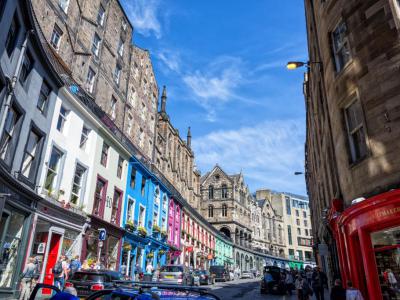
Perhaps the most photographed location in all of Edinburgh, Victoria Street-with its gentle curve, candy-coloured shopfronts, and fairytale charm-is the Old Town icon that throughout the decades has graced everything from tourist postcards to glossy TV ads. Indeed, if streets had agents, this one would have been booked solid.
Built between 1829 and 1834, Victoria Street wasn’t always the whimsical rainbow we know today, though. Credit-or creative blame for it, rather-goes to Thomas Hamilton, a mastermind behind Edinburgh’s numerous architectural wonders, better known for his love affair with all things neoclassical. On this occasion, however, he deviated from his habitual neoclassical stamp, being told to create something mimicking the Old Flemish style. For this purpose, many of the area's old buildings were torn down. The result of such a dramatic medieval makeover was the appearance of arches, lining the new terrace, which now house some of the city’s most charming little shops.
And then came the magic. In recent years, Victoria Street-along with its downhill cousin, the West Bow-has gained notoriety as possible real-world prototypes for none other than Diagon Alley, featured in the Harry Potter books (you know, wizards, magic wands, and all that...).
Given that Edinburgh was home turf for JK Rowling while she penned her famous boy-wizard saga, it’s not a stretch to imagine Victoria Street as an inspiration for the ever-so fabulous wizard market after all. Packed with the cobbled stones, higgledy-piggledy medley of vibrant buildings, quirky boutiques, and a general air of eccentricity, it practically shouts Diagon Alley. So, whether you're here for the architecture, the shopping, or the spellcasting vibes, just know-this street has layers, arches, and more than a dash of enchantment...
Built between 1829 and 1834, Victoria Street wasn’t always the whimsical rainbow we know today, though. Credit-or creative blame for it, rather-goes to Thomas Hamilton, a mastermind behind Edinburgh’s numerous architectural wonders, better known for his love affair with all things neoclassical. On this occasion, however, he deviated from his habitual neoclassical stamp, being told to create something mimicking the Old Flemish style. For this purpose, many of the area's old buildings were torn down. The result of such a dramatic medieval makeover was the appearance of arches, lining the new terrace, which now house some of the city’s most charming little shops.
And then came the magic. In recent years, Victoria Street-along with its downhill cousin, the West Bow-has gained notoriety as possible real-world prototypes for none other than Diagon Alley, featured in the Harry Potter books (you know, wizards, magic wands, and all that...).
Given that Edinburgh was home turf for JK Rowling while she penned her famous boy-wizard saga, it’s not a stretch to imagine Victoria Street as an inspiration for the ever-so fabulous wizard market after all. Packed with the cobbled stones, higgledy-piggledy medley of vibrant buildings, quirky boutiques, and a general air of eccentricity, it practically shouts Diagon Alley. So, whether you're here for the architecture, the shopping, or the spellcasting vibes, just know-this street has layers, arches, and more than a dash of enchantment...
