Custom Walk in Edinburgh, Scotland by karindavis64_e3e4b8 created on 2026-07-09
Guide Location: Scotland » Edinburgh
Guide Type: Custom Walk
# of Sights: 15
Tour Duration: 4 Hour(s)
Travel Distance: 8.1 Km or 5 Miles
Share Key: GGS67
Guide Type: Custom Walk
# of Sights: 15
Tour Duration: 4 Hour(s)
Travel Distance: 8.1 Km or 5 Miles
Share Key: GGS67
How It Works
Please retrieve this walk in the GPSmyCity app. Once done, the app will guide you from one tour stop to the next as if you had a personal tour guide. If you created the walk on this website or come to the page via a link, please follow the instructions below to retrieve the walk in the app.
Retrieve This Walk in App
Step 1. Download the app "GPSmyCity: Walks in 1K+ Cities" on Apple App Store or Google Play Store.



Step 2. In the GPSmyCity app, download(or launch) the guide "Edinburgh Map and Walking Tours".
Step 3. Tap the menu button located at upper right corner of the "Walks" screen and select "Retrieve custom walk". Enter the share key: GGS67
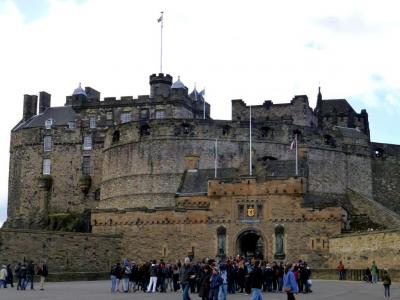
1) Edinburgh Castle (must see)
Edinburgh Castle, looming large over the Scottish capital, is the second most visited attraction in the UK (after the Tower of London, which is still number one). The history of Scotland is deeply etched into its ancient stones, making it a timeline in fortress form.
Perched atop Castle Rock (a hardened basaltic plug from an extinct volcano eroded by glaciers), this area has been drawing humans since the 9th millennium BC. The first castle on the site was built in the 12th century by King David I. It remained a royal residence until 1603, when the monarchy packed up and moved to London-presumably for better weather and indoor plumbing...
Indeed, as a fortress, it was virtually impregnable, except for one major-geological-drawback: the basalt rock on which it stands doesn’t hold water (literally). The 28-meter-deep well inside the fortress was about as useful as a chocolate teapot during a siege. So, when the well ran dry, surrender-or dehydration-was the only choice for those inside.
The original castle was mostly destroyed during the Lang Siege of 1573. The only remainder from its early days is St. Margaret’s Chapel. By the 17th century, it had shifted from royal digs to military barracks, housing troops up to the 1920s.
Presently, the castle hosts the Scottish National War Memorial, the National War Museum, and enough regimental museums to keep military buffs busy till closing time. Don't miss the One O’Clock Gun, which is fired daily (except Sundays) at 1 PM with Swiss-watch precision-yes, Edinburgh literally sets its clocks by it...
Also, in the Crown Room, you will see Scotland’s royal bling-crown, scepter, and sword-resting under heavy guard. Period-costumed actors occasionally swoop in to re-enact history with full flair. And if you’re visiting in August, the Military Tattoo takes over the esplanade with kilts, cannons, and bagpipes galore.
Oh, and in the north-east corner of the esplanade, don't miss that rather unassuming little iron fountain. Called Witches' Well, it marks the spot where, back in the day, many women accused of witchcraft were burned at the stake. Spooky, grim, and sadly true...
The panoramic views are postcard-worthy, the historical nooks are endlessly fascinating, and honestly, it just feels epic to stand where centuries of royals, rebels, and rock-solid drama unfolded.
Pro Tips:
The entry is cheaper, and more importantly, faster, if you book online.
Take a free guided tour – running every hour. Otherwise, consider grabbing the £3 audio guide if you like facts with flair.
Being at the mountain's top, it may get breezy, so definitely bring a windproof jacket if visiting in cold weather.
Perched atop Castle Rock (a hardened basaltic plug from an extinct volcano eroded by glaciers), this area has been drawing humans since the 9th millennium BC. The first castle on the site was built in the 12th century by King David I. It remained a royal residence until 1603, when the monarchy packed up and moved to London-presumably for better weather and indoor plumbing...
Indeed, as a fortress, it was virtually impregnable, except for one major-geological-drawback: the basalt rock on which it stands doesn’t hold water (literally). The 28-meter-deep well inside the fortress was about as useful as a chocolate teapot during a siege. So, when the well ran dry, surrender-or dehydration-was the only choice for those inside.
The original castle was mostly destroyed during the Lang Siege of 1573. The only remainder from its early days is St. Margaret’s Chapel. By the 17th century, it had shifted from royal digs to military barracks, housing troops up to the 1920s.
Presently, the castle hosts the Scottish National War Memorial, the National War Museum, and enough regimental museums to keep military buffs busy till closing time. Don't miss the One O’Clock Gun, which is fired daily (except Sundays) at 1 PM with Swiss-watch precision-yes, Edinburgh literally sets its clocks by it...
Also, in the Crown Room, you will see Scotland’s royal bling-crown, scepter, and sword-resting under heavy guard. Period-costumed actors occasionally swoop in to re-enact history with full flair. And if you’re visiting in August, the Military Tattoo takes over the esplanade with kilts, cannons, and bagpipes galore.
Oh, and in the north-east corner of the esplanade, don't miss that rather unassuming little iron fountain. Called Witches' Well, it marks the spot where, back in the day, many women accused of witchcraft were burned at the stake. Spooky, grim, and sadly true...
The panoramic views are postcard-worthy, the historical nooks are endlessly fascinating, and honestly, it just feels epic to stand where centuries of royals, rebels, and rock-solid drama unfolded.
Pro Tips:
The entry is cheaper, and more importantly, faster, if you book online.
Take a free guided tour – running every hour. Otherwise, consider grabbing the £3 audio guide if you like facts with flair.
Being at the mountain's top, it may get breezy, so definitely bring a windproof jacket if visiting in cold weather.
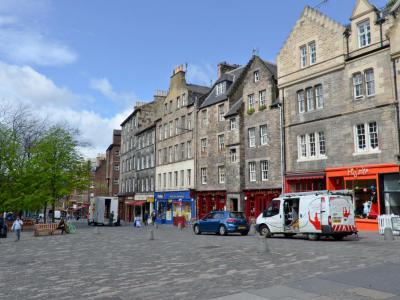
2) Grassmarket
If you're looking to shop, snack, or relax over a pint while in Edinburgh, the Grassmarket is undoubtedly your one-stop cobbled playground. Once the city’s bustling horse-and-cattle bazaar which drew crowds between 1477 and 1911, it also doubled as a top place for executions-because, apparently, back in the day, nothing did for the public entertainment more than hooves and hangings...
Keep an eye out for “The Shadow of the Gibbet”-the dark paving stones laid out in the form of a gallows near the Covenanter’s Monument. It’s a charmingly grim touch, in case you needed a reminder that this scenic square once served as the city’s unofficial “dead-end.” And over to one side of it stands the Bow Well that has been around since 1681.
According to legend, once upon a time, there was a woman named Maggie Dickson, a fishwife who made headlines by dying and... remarkably coming back again. Hanged right here for the alleged murder of her child, she stunned everyone when she unexpectedly woke up en route to the cemetery. Apparently, in those days, the “until dead” provision didn’t quite yet settle in the sentence proceedings (legal loophole of the day...). So, once hanged, her debt was considered paid and Maggie was set free. Today, you can toast her improbable resurrection at Maggie Dickson’s pub, conveniently located on the very spot where she was hanged but miraculously survived the ordeal.
Fast forward a few centuries and the Grassmarket swapped gallows for gastropubs. A formerly scruffy patch of the city, it became a magnet for students in the 1980s-likely lured by cheap beer and late-night kebabs. Nowadays gentrified, it’s all terraces, boutique shops, vintage finds, and indie charm.
Quirky, safe and interesting, this area is a great destination for those who need a regular change of scenery, complete with a variety of retail and dining opportunities to suit every wallet and taste, and enough character to fill a tartan suitcase.
Hot tip:
Check out Carnivàle Vintage for a wonderful selection of fun vintage clothing, Tasty Buns for pastry and coffee, Hula Juice Bar for guilt-free fuel, and Mary’s Milk Bar for glorious indulgence. And when you're done, wind your way up Victoria Street and onto the Royal Mile (further up)-because one eccentric shopping spree always deserves another...
Keep an eye out for “The Shadow of the Gibbet”-the dark paving stones laid out in the form of a gallows near the Covenanter’s Monument. It’s a charmingly grim touch, in case you needed a reminder that this scenic square once served as the city’s unofficial “dead-end.” And over to one side of it stands the Bow Well that has been around since 1681.
According to legend, once upon a time, there was a woman named Maggie Dickson, a fishwife who made headlines by dying and... remarkably coming back again. Hanged right here for the alleged murder of her child, she stunned everyone when she unexpectedly woke up en route to the cemetery. Apparently, in those days, the “until dead” provision didn’t quite yet settle in the sentence proceedings (legal loophole of the day...). So, once hanged, her debt was considered paid and Maggie was set free. Today, you can toast her improbable resurrection at Maggie Dickson’s pub, conveniently located on the very spot where she was hanged but miraculously survived the ordeal.
Fast forward a few centuries and the Grassmarket swapped gallows for gastropubs. A formerly scruffy patch of the city, it became a magnet for students in the 1980s-likely lured by cheap beer and late-night kebabs. Nowadays gentrified, it’s all terraces, boutique shops, vintage finds, and indie charm.
Quirky, safe and interesting, this area is a great destination for those who need a regular change of scenery, complete with a variety of retail and dining opportunities to suit every wallet and taste, and enough character to fill a tartan suitcase.
Hot tip:
Check out Carnivàle Vintage for a wonderful selection of fun vintage clothing, Tasty Buns for pastry and coffee, Hula Juice Bar for guilt-free fuel, and Mary’s Milk Bar for glorious indulgence. And when you're done, wind your way up Victoria Street and onto the Royal Mile (further up)-because one eccentric shopping spree always deserves another...
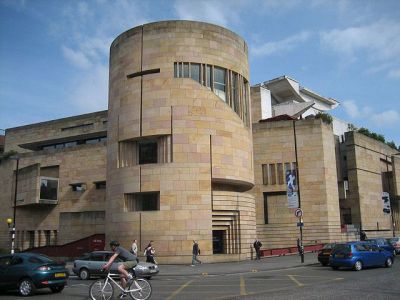
3) National Museum of Scotland (must see)
Right off Chambers Street and sidling up to George IV Bridge, the National Museum of Scotland seems like an entire universe cleverly disguised as one building. As the country’s crown jewel of curiosity, it houses everything from ancient artefacts, science and technology to Elton John’s finest feathered fashion. Indeed, sequins and sarcophagi under one roof...
The museum, in its current all-in-one glory, came to life in 2006 when the Royal Museum and the Museum of Scotland decided to merge (believing they’d work better as roommates). Having linked internally by utilizing some repurposed storage space, they created the stunning Grand Gallery-a light-drenched cathedral of wonder, stretching from basement to rooftop. The vaulted Entrance Hall alone is a whopping 1,400 square metres of pure “whoa.”
Wandering into the Grand Gallery, you’re bound to find some big stuff-literally! Oversized treasures too large for the regular exhibits-like the 20-metre-tall Window on the World, a vertical buffet of 800+ oddities-camp out here in joyful disarray. On its sides, Scotland shows off its brainpower in the form of “Discoveries” made by local inventors.
It’s a feast for all ages and attention spans. One moment you’re peering at ancient Egyptian mummies (CT scans included, like historical X-ray vision, revealing everything that is hidden under their wrappings), and the next you’re staring at something extravagant that once belonged to a glam rock legend. The Natural History floor, meanwhile, is a dino-lover’s paradise, complete with extinct beasts and bones the size of furniture.
In 2011, they added 16 shiny new galleries, just to keep things fresh-resulting in over 8,000 original objects awaiting your awe. Bonus points is that the entry is completely free. So, you can marvel at the mysteries of the universe and still afford a snack from the on-site café & bistro, if you are feeling peckish or just want to take a break from exploring.
By far not a typical museum-but rather an “everythingium”-it’s a real treat both inside and out, especially following its hefty £47-million refurbishment and extension. Definitely more than just a place to learn-but a place to linger...
Top Tips:
Get there early. Start on the top floor and descend like an archaeologist of modern wonder. There are some great 'hands-on' exhibits, so take your time if you are with kids. And if you're feeling fancy, book a private guided tour. Just check ahead for any exhibits that may cost extra-they’re rare, and usually a bargain.
The museum, in its current all-in-one glory, came to life in 2006 when the Royal Museum and the Museum of Scotland decided to merge (believing they’d work better as roommates). Having linked internally by utilizing some repurposed storage space, they created the stunning Grand Gallery-a light-drenched cathedral of wonder, stretching from basement to rooftop. The vaulted Entrance Hall alone is a whopping 1,400 square metres of pure “whoa.”
Wandering into the Grand Gallery, you’re bound to find some big stuff-literally! Oversized treasures too large for the regular exhibits-like the 20-metre-tall Window on the World, a vertical buffet of 800+ oddities-camp out here in joyful disarray. On its sides, Scotland shows off its brainpower in the form of “Discoveries” made by local inventors.
It’s a feast for all ages and attention spans. One moment you’re peering at ancient Egyptian mummies (CT scans included, like historical X-ray vision, revealing everything that is hidden under their wrappings), and the next you’re staring at something extravagant that once belonged to a glam rock legend. The Natural History floor, meanwhile, is a dino-lover’s paradise, complete with extinct beasts and bones the size of furniture.
In 2011, they added 16 shiny new galleries, just to keep things fresh-resulting in over 8,000 original objects awaiting your awe. Bonus points is that the entry is completely free. So, you can marvel at the mysteries of the universe and still afford a snack from the on-site café & bistro, if you are feeling peckish or just want to take a break from exploring.
By far not a typical museum-but rather an “everythingium”-it’s a real treat both inside and out, especially following its hefty £47-million refurbishment and extension. Definitely more than just a place to learn-but a place to linger...
Top Tips:
Get there early. Start on the top floor and descend like an archaeologist of modern wonder. There are some great 'hands-on' exhibits, so take your time if you are with kids. And if you're feeling fancy, book a private guided tour. Just check ahead for any exhibits that may cost extra-they’re rare, and usually a bargain.
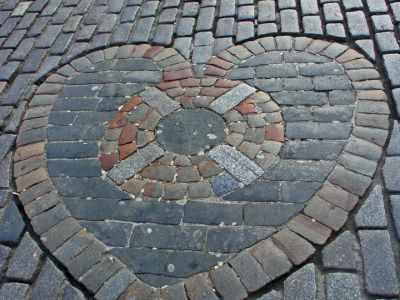
4) Heart of Midlothian
Walking the Royal Mile, you might stumble upon one of Edinburgh’s strange traditions-strange, if not say bizarre, and frankly, a little unhygienic... Just outside the west door of St. Giles’ Cathedral, locals casually spit on a heart-shaped mosaic set into the cobblestones. Don’t worry, they’re not insulting romance-it’s the Heart of Midlothian, and the spit is meant to bring good luck. Just be careful to keep out of range, as you draw closer...
This mosaic marks the site of the Old Tolbooth, a building that once served as the city’s customs house, a meeting hall (briefly used by the Estates of Scotland), and, most infamously, a prison. Yes, back in 1640, it housed the Court of Session, the principal jail of the burgh. And this was no cozy jail at all: the Tolbooth gained a fearsome reputation for torture, trials, and public executions carried out right at its front door. Not exactly the kind of spot you’d put on a postcard...
Legend has it that Edinburgh’s less-than-law-abiding citizens started the spitting custom themselves. Passing through the Tolbooth doors on their way to trial or worse, the petty thieves and not-so-petty criminals spat for luck-though in truth, it probably didn’t help much.
The Tolbooth was demolished in 1817, but the Heart remains, just as yet another stop for tourists dodging loogies. It now serves as a reminder that beneath the charm of the Royal Mile lie centuries of grit, misery, and gallows humor. So, if you see the heart, step wide-and maybe think twice before following tradition.
This mosaic marks the site of the Old Tolbooth, a building that once served as the city’s customs house, a meeting hall (briefly used by the Estates of Scotland), and, most infamously, a prison. Yes, back in 1640, it housed the Court of Session, the principal jail of the burgh. And this was no cozy jail at all: the Tolbooth gained a fearsome reputation for torture, trials, and public executions carried out right at its front door. Not exactly the kind of spot you’d put on a postcard...
Legend has it that Edinburgh’s less-than-law-abiding citizens started the spitting custom themselves. Passing through the Tolbooth doors on their way to trial or worse, the petty thieves and not-so-petty criminals spat for luck-though in truth, it probably didn’t help much.
The Tolbooth was demolished in 1817, but the Heart remains, just as yet another stop for tourists dodging loogies. It now serves as a reminder that beneath the charm of the Royal Mile lie centuries of grit, misery, and gallows humor. So, if you see the heart, step wide-and maybe think twice before following tradition.
5) Mary King's Close (must see)
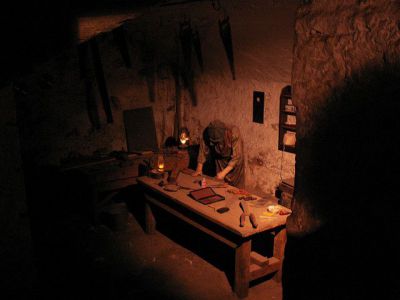
If ghost stories give you chills in a good way, then Real Mary King’s Close might just be your perfect haunt in Edinburgh. Tucked beneath the Royal Exchange, this underground maze of shadowy alleyways and crumbling tenement rooms has a reputation for being one of the most haunted corners of the city-and in Edinburgh, that’s saying something...
Originally a bustling neighborhood, the close was sealed off after the Great Plague of 1645 rolled into town, carried by flea-infested rats from merchant ships. With zero plumbing and not a bar of soap in sight, these cramped quarters became ground zero for infection. In a desperate attempt to contain the spread, entire blocks-predominantly the poorer areas, including Mary King’s Close-were bricked in as urgent quarantine measures. Legend has it, some unlucky souls were trapped inside at the mercy of plague or starvation... and they never left. At least, not in spirit.
One ghost in particular likes to make her presence known: Annie, a small girl, who is said to have lost her doll-and possibly much more-when the plague swept through. Visitors claim to feel her presence, and many bring her gifts: toys, trinkets, or coins, all of which are passed on to children’s hospitals and local charities. So, even the ghostly get a little goodwill...
The area was uncovered during renovations to the Royal Exchange and was opened to the public in 2003 as a tourist attraction. Since then, costumed guides have been leading brave guests through these 17th-century underground time capsules, sharing tales of the little Annie and Mary King-a respected businesswoman and seamstress after whom it is named-as well as the dark chapters etched into every cobbled corner.
So, if you’re in the mood for a little historical horror with a charitable twist, Mary King’s Close is calling. Just... don’t forget Annie’s doll.
Originally a bustling neighborhood, the close was sealed off after the Great Plague of 1645 rolled into town, carried by flea-infested rats from merchant ships. With zero plumbing and not a bar of soap in sight, these cramped quarters became ground zero for infection. In a desperate attempt to contain the spread, entire blocks-predominantly the poorer areas, including Mary King’s Close-were bricked in as urgent quarantine measures. Legend has it, some unlucky souls were trapped inside at the mercy of plague or starvation... and they never left. At least, not in spirit.
One ghost in particular likes to make her presence known: Annie, a small girl, who is said to have lost her doll-and possibly much more-when the plague swept through. Visitors claim to feel her presence, and many bring her gifts: toys, trinkets, or coins, all of which are passed on to children’s hospitals and local charities. So, even the ghostly get a little goodwill...
The area was uncovered during renovations to the Royal Exchange and was opened to the public in 2003 as a tourist attraction. Since then, costumed guides have been leading brave guests through these 17th-century underground time capsules, sharing tales of the little Annie and Mary King-a respected businesswoman and seamstress after whom it is named-as well as the dark chapters etched into every cobbled corner.
So, if you’re in the mood for a little historical horror with a charitable twist, Mary King’s Close is calling. Just... don’t forget Annie’s doll.
6) Museum of Childhood
Tired of dragging the kids through yet another castle or gallery where the only thing they can touch is the “Exit” sign? Then it’s time to swap stone walls for teddy bears at the Museum of Childhood on the Royal Mile.
This place owes its existence to Patrick Murray, a forward-thinking Edinburgh councillor in the 1950s who noticed children weren’t exactly thrilled to be hauled into draughty museums on rainy days. His solution was to build a museum entirely about childhood-school, play, health, and above all, toys. By 1955, his dream opened its doors, offering something that could entertain both fidgety kids and their weary parents.
Inside, five floors of nostalgia and discovery are waiting. There’s an Education section where kids can peer into classrooms from the 1950s onwards, complete with old uniforms and the infamous birch rod-yes, the one used for “discipline.” But don’t worry, this museum has swapped punishment for play. Around the corner, there’s a dressing-up room, a puppet theatre, and, naturally, toys galore.
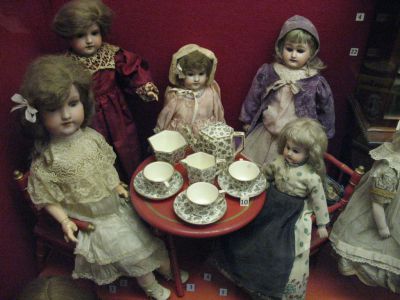
From dolls and teddy bears to tin soldiers with matchstick cannons, train sets, and board games, the displays stretch across centuries and continents. Children can see what kept their parents and grandparents happy before the age of screens, while adults are quietly hit with a wave of nostalgia they themselves find hard to admit to.
And when you think the fun is over, the toy shop on the ground floor will remind you otherwise. Kids can pick out a new favourite, and grown-ups might even find a stand-in for that long-lost teddy they still think about.
Why visit, if you're all by yourself? Because this isn’t just a family stop-it’s a time machine filled with joy. Entry is free, though donation boxes and quirky souvenirs await near the exit. Consider it pocket money well spent...
This place owes its existence to Patrick Murray, a forward-thinking Edinburgh councillor in the 1950s who noticed children weren’t exactly thrilled to be hauled into draughty museums on rainy days. His solution was to build a museum entirely about childhood-school, play, health, and above all, toys. By 1955, his dream opened its doors, offering something that could entertain both fidgety kids and their weary parents.
Inside, five floors of nostalgia and discovery are waiting. There’s an Education section where kids can peer into classrooms from the 1950s onwards, complete with old uniforms and the infamous birch rod-yes, the one used for “discipline.” But don’t worry, this museum has swapped punishment for play. Around the corner, there’s a dressing-up room, a puppet theatre, and, naturally, toys galore.
From dolls and teddy bears to tin soldiers with matchstick cannons, train sets, and board games, the displays stretch across centuries and continents. Children can see what kept their parents and grandparents happy before the age of screens, while adults are quietly hit with a wave of nostalgia they themselves find hard to admit to.
And when you think the fun is over, the toy shop on the ground floor will remind you otherwise. Kids can pick out a new favourite, and grown-ups might even find a stand-in for that long-lost teddy they still think about.
Why visit, if you're all by yourself? Because this isn’t just a family stop-it’s a time machine filled with joy. Entry is free, though donation boxes and quirky souvenirs await near the exit. Consider it pocket money well spent...
7) Museum of Edinburgh
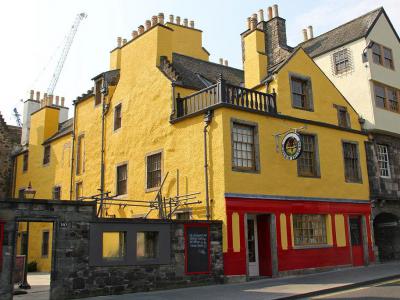
If you're meandering down the Royal Mile and wondering where to get your history fix with a side of scandal, the Museum of Edinburgh is your spot. Housed in the delightfully crooked 16th-century Huntly House-once the home of the city’s hammer-wielding Guild of Hammermen-this place is Edinburgh’s memory palace, packed with everything from Roman relics to rogue biographies.
Inside, you’ll find numerous silverware that practically glows with civic pride, glassware engraved just down the road in Canongate, some pottery that’s almost too pretty to have survived Scottish winters, and a Sedan chair that reminds us how people once got carried away-literally. There are also clocks so stately they make your smartwatch feel wildly inadequate. And don’t miss the costume corner, where you're invited to play dress-up through the ages. Georgian elegance? Victorian gloom? Just pick your century.
Among the many treasures, you’ll stumble across fragments from a 1st-century Roman settlement dug up in Cramond-yes, the Romans beat the tourists to this small village north-west of Edinburgh by about 2,000 years. You’ll also lay eyes on the original National Covenant (that’s serious ink), James Craig’s neatly sketched vision for the New Town, and even Greyfriars Bobby’s food bowl and collar-proof that loyalty earns you legend status in this city.
There is also a “rogues’ gallery” of sorts, where Edinburgh’s darker side grins back at you. Meet Deacon Brodie, respectable tradesman by day, burglar by night-basically Jekyll and Hyde, with better tailoring. And don’t forget Burke and Hare, the notorious body snatchers who supplied fresh corpses to Dr. Knox of the Medicine University, no questions asked...
So, yes, the Museum of Edinburgh has all the drama, dignity, and delightful weirdness this city’s history has to offer-and then some...
Inside, you’ll find numerous silverware that practically glows with civic pride, glassware engraved just down the road in Canongate, some pottery that’s almost too pretty to have survived Scottish winters, and a Sedan chair that reminds us how people once got carried away-literally. There are also clocks so stately they make your smartwatch feel wildly inadequate. And don’t miss the costume corner, where you're invited to play dress-up through the ages. Georgian elegance? Victorian gloom? Just pick your century.
Among the many treasures, you’ll stumble across fragments from a 1st-century Roman settlement dug up in Cramond-yes, the Romans beat the tourists to this small village north-west of Edinburgh by about 2,000 years. You’ll also lay eyes on the original National Covenant (that’s serious ink), James Craig’s neatly sketched vision for the New Town, and even Greyfriars Bobby’s food bowl and collar-proof that loyalty earns you legend status in this city.
There is also a “rogues’ gallery” of sorts, where Edinburgh’s darker side grins back at you. Meet Deacon Brodie, respectable tradesman by day, burglar by night-basically Jekyll and Hyde, with better tailoring. And don’t forget Burke and Hare, the notorious body snatchers who supplied fresh corpses to Dr. Knox of the Medicine University, no questions asked...
So, yes, the Museum of Edinburgh has all the drama, dignity, and delightful weirdness this city’s history has to offer-and then some...
8) Dunbar's Close Garden
Shopping and sightseeing in the Royal Mile can be tiring, so if you don’t feel like having lunch in a crowded pub or restaurant, grab a packed lunch or pick up a sandwich, and sneak off to Dunbar’s Close Garden. Tucked near the Canongate Kirkyard, this hidden gem is one of those places that makes you feel like you’ve just fallen through a medieval trapdoor.
Dunbar’s Close is one of about 80 medieval alleys still threading their way through the Old Town. At the end of it lies a garden that feels like it was designed for time travel. Truly a secret garden, many locals don’t even know it exists, which means you can enjoy your lunch here in peace.
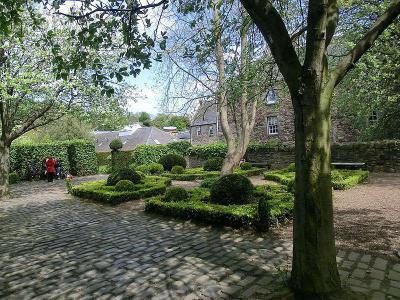
The garden is surrounded by high, ancient stone walls shutting out the noise. The plot is long and rather narrow, with three-quarters of an acre laid out in a proper 17th-century style, featuring gravel paths and beds of herbs, shrubs, and flowers neatly bordered by ting hedges. Conical topiary points the way, while mature fig and sycamore trees lean in to offer a bit of shade over stone benches-perfect for a quiet pause or some light sandwich meditation.
The garden’s story adds another layer. It was created by Sir Patrick Geddes, a visionary biologist who dreamed of filling Edinburgh with pocket gardens like this. Sadly, he passed away shortly after Dunbar’s Close Garden was completed. By the 1970s, the place had gone wild from neglect.
Luckily, around that time, the Mushroom Trust-a charity promoting the creation of urban green spaces-took over the garden and asked landscape architect Seamus Filor to bring it back to life. In 1977, the Trust gifted the restored garden to the city, and by 1978, it was open to the public. So now, whenever you need a break from tartan overload while in Edinburgh, you’ve got your own secret garden waiting...
Dunbar’s Close is one of about 80 medieval alleys still threading their way through the Old Town. At the end of it lies a garden that feels like it was designed for time travel. Truly a secret garden, many locals don’t even know it exists, which means you can enjoy your lunch here in peace.
The garden is surrounded by high, ancient stone walls shutting out the noise. The plot is long and rather narrow, with three-quarters of an acre laid out in a proper 17th-century style, featuring gravel paths and beds of herbs, shrubs, and flowers neatly bordered by ting hedges. Conical topiary points the way, while mature fig and sycamore trees lean in to offer a bit of shade over stone benches-perfect for a quiet pause or some light sandwich meditation.
The garden’s story adds another layer. It was created by Sir Patrick Geddes, a visionary biologist who dreamed of filling Edinburgh with pocket gardens like this. Sadly, he passed away shortly after Dunbar’s Close Garden was completed. By the 1970s, the place had gone wild from neglect.
Luckily, around that time, the Mushroom Trust-a charity promoting the creation of urban green spaces-took over the garden and asked landscape architect Seamus Filor to bring it back to life. In 1977, the Trust gifted the restored garden to the city, and by 1978, it was open to the public. So now, whenever you need a break from tartan overload while in Edinburgh, you’ve got your own secret garden waiting...
9) Holyroodhouse (must see)
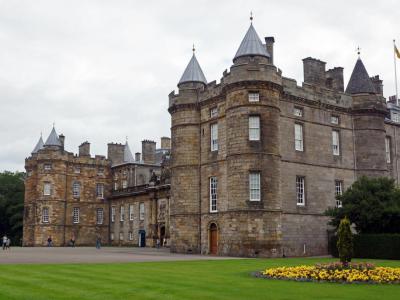
If you're ticking off Edinburgh landmarks, Holyroodhouse is one you can't skip-not unless you're on the run from the crown... Sitting at the royal end of the Royal Mile, this stately pad is the official Scottish residence of the British monarch and once housed none other than Mary, Queen of Scots. That’s right, drama lives here rent-free...
The whole saga begins with King David I, who founded the nearby Holyrood Abbey in 1128 (after a divine deer encounter, according to legend). A few centuries later, precisely by 1501, a palace was built beside the abbey. Now, calling it a “palace”, back then, was maybe a touch ambitious-a grand country house, more like it, rather than Versailles-but it did get bigger in 1532 and 1536. The property was thoroughly renovated in 1633, only to be trashed when Cromwell’s soldiers used it as barracks and then a fire added insult to injury...
Then came the 1670s, when Sir William Bruce, the architectural fixer of the day, rebuilt the place. The abbey chapel became the Chapel Royal, hosting pious activity until 1768, when the roof rather unceremoniously fell in. More restorations followed after that-first in 1822 for a royal visit, and then again in the 20th century when King George V and Queen Mary decided the palace could really use indoor plumbing. Royal flush, anyone?
When the royals are away, the house is open to the public. Inside, you can marvel at ceiling stucco so delicate it practically whispers, and gawk at an entire lineup of Scottish monarchs-some real, some as fictional as their hairlines-painted by the Dutch Golden Age artist Jacob de Wet. Then, dive into the Royal Collection, a five-century mix of armor, jewels, manuscripts, and silverware. Basically, it’s the attic of your dreams-if your attic had Rembrandts and 17th-century clocks.
Oh, and don’t wander off alone unless you're cool with ghosts. Legend has it that Agnes Sampson, accused of witchcraft and executed in 1592, still makes the occasional appearance here. So, if you feel a chill or hear something whispering about herbal remedies... maybe don’t investigate.
Palace, ghosts, ceilings, swords, and sovereign bling-are all here. Holyroodhouse doesn’t just bring the royal drama-it curates it.
The whole saga begins with King David I, who founded the nearby Holyrood Abbey in 1128 (after a divine deer encounter, according to legend). A few centuries later, precisely by 1501, a palace was built beside the abbey. Now, calling it a “palace”, back then, was maybe a touch ambitious-a grand country house, more like it, rather than Versailles-but it did get bigger in 1532 and 1536. The property was thoroughly renovated in 1633, only to be trashed when Cromwell’s soldiers used it as barracks and then a fire added insult to injury...
Then came the 1670s, when Sir William Bruce, the architectural fixer of the day, rebuilt the place. The abbey chapel became the Chapel Royal, hosting pious activity until 1768, when the roof rather unceremoniously fell in. More restorations followed after that-first in 1822 for a royal visit, and then again in the 20th century when King George V and Queen Mary decided the palace could really use indoor plumbing. Royal flush, anyone?
When the royals are away, the house is open to the public. Inside, you can marvel at ceiling stucco so delicate it practically whispers, and gawk at an entire lineup of Scottish monarchs-some real, some as fictional as their hairlines-painted by the Dutch Golden Age artist Jacob de Wet. Then, dive into the Royal Collection, a five-century mix of armor, jewels, manuscripts, and silverware. Basically, it’s the attic of your dreams-if your attic had Rembrandts and 17th-century clocks.
Oh, and don’t wander off alone unless you're cool with ghosts. Legend has it that Agnes Sampson, accused of witchcraft and executed in 1592, still makes the occasional appearance here. So, if you feel a chill or hear something whispering about herbal remedies... maybe don’t investigate.
Palace, ghosts, ceilings, swords, and sovereign bling-are all here. Holyroodhouse doesn’t just bring the royal drama-it curates it.
10) Calton Hill (must see)
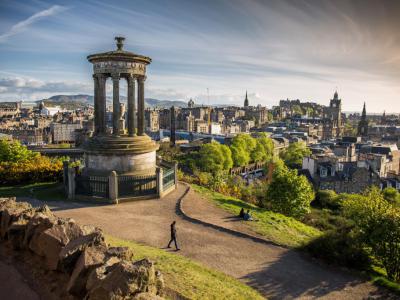
Calton Hill, located in the heart of Edinburgh, extends beyond the eastern terminus of Princes Street and is part of the city's UNESCO World Heritage Site. It is a popular subject for photography and art, both offering scenic vistas of the city and being featured in various depictions of it.
The Scottish Government has its headquarters on Calton Hill, specifically at Saint Andrew's House, situated on the steep southern slope of the hill. Nearby, at the base of the hill, you'll find significant landmarks like the Scottish Parliament Building and Holyrood Palace. Additionally, Calton Hill boasts several iconic monuments and structures, including the National Monument, the Nelson Monument, the Dugald Stewart Monument, the old Royal High School, the Robert Burns Monument, the Political Martyrs' Monument, and the City Observatory.
Calton Hill hosts various events throughout the year, with the most significant being the Beltane Fire Festival occurring annually on April 30th, drawing a crowd of over 12,000 attendees. Additionally, the Dussehra Hindu Festival is celebrated on Calton Hill at the beginning of October, and the Samhuinn Fire Festival takes place there at the end of October. Notably, Calton Hill has served as a filming location for movies like "Sunshine on Leith," where Davy and Yvonne perform "Misty Blue," "Death Defying Acts" featuring Houdini, and "Greyfriars Bobby," offering scenic views of the city.
The Scottish Government has its headquarters on Calton Hill, specifically at Saint Andrew's House, situated on the steep southern slope of the hill. Nearby, at the base of the hill, you'll find significant landmarks like the Scottish Parliament Building and Holyrood Palace. Additionally, Calton Hill boasts several iconic monuments and structures, including the National Monument, the Nelson Monument, the Dugald Stewart Monument, the old Royal High School, the Robert Burns Monument, the Political Martyrs' Monument, and the City Observatory.
Calton Hill hosts various events throughout the year, with the most significant being the Beltane Fire Festival occurring annually on April 30th, drawing a crowd of over 12,000 attendees. Additionally, the Dussehra Hindu Festival is celebrated on Calton Hill at the beginning of October, and the Samhuinn Fire Festival takes place there at the end of October. Notably, Calton Hill has served as a filming location for movies like "Sunshine on Leith," where Davy and Yvonne perform "Misty Blue," "Death Defying Acts" featuring Houdini, and "Greyfriars Bobby," offering scenic views of the city.
11) Scottish National Gallery (must see)
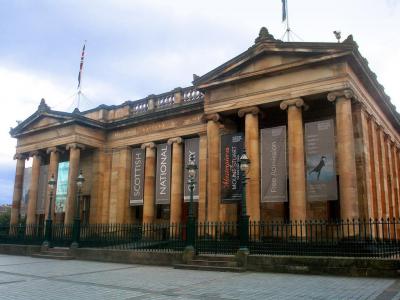
For all art lovers-yes, even the ones who can’t tell a Botticelli from a biscotti (an Italian almond biscuit for those unaware)-the Scottish National Gallery is a must-do cultural pitstop. Perched elegantly on the Mound right next to the Royal Scottish Academy, this temple of fine art has been dazzling eyeballs since 1859. Back then, it was a bit of a packed house: the gallery, the academy, and even the Portrait Gallery all cozied up under one neoclassical roof. Eventually, the Portrait Gallery moved to its new location, and by 1906, the academy shuffled next door too-because elbow room really matters when you’re hanging a Titian...
The gallery was entirely renovated in 1912. Today it boasts a collection of over 30,000 artworks, featuring both Scottish and European art-from Renaissance to Romanticism, with a few moody Impressionists thrown in for flair. Among them are Bassano, Botticelli, Bernini, Cézanne, Degas, da Vinci, and... deep breath... El Greco, Titian, and Tiepolo, too. Want something bolder? Don’t miss Gauguin’s “Vision of the Sermon.” And if you fancy some sculptural marble drama, Canova’s “Three Graces” has you covered.
The gallery also houses the Research Library-one of the world's finest reference libraries-which is a treasure trove of over 50,000 books, journals, and oddities spanning seven centuries from the 1300s. Meanwhile, the Western Link connects the gallery to the academy via a sleek underground space with a lecture theatre, a classy café, and a shop full of irresistible arty bits. Plus, there's an interactive IT Gallery, where, using touch-screens, you can swipe your way through the gallery’s entire collection like a very refined dating app.
So, whenever you feel like getting up close with a da Vinci sketch and still having time for tea, check out this place. It’s free to enter the permanent exhibits, and the cozy layout makes for a perfect rainy-day escape.
Insider tip:
Make sure you visit both the main Gallery and the Academy behind it.
Note the grand Turner watercolor exhibition that goes on show every January-some truly wonderful insights into his travels around Europe. It’s like Europe through the eyes of a genius-with less fog and more flair...
The gallery was entirely renovated in 1912. Today it boasts a collection of over 30,000 artworks, featuring both Scottish and European art-from Renaissance to Romanticism, with a few moody Impressionists thrown in for flair. Among them are Bassano, Botticelli, Bernini, Cézanne, Degas, da Vinci, and... deep breath... El Greco, Titian, and Tiepolo, too. Want something bolder? Don’t miss Gauguin’s “Vision of the Sermon.” And if you fancy some sculptural marble drama, Canova’s “Three Graces” has you covered.
The gallery also houses the Research Library-one of the world's finest reference libraries-which is a treasure trove of over 50,000 books, journals, and oddities spanning seven centuries from the 1300s. Meanwhile, the Western Link connects the gallery to the academy via a sleek underground space with a lecture theatre, a classy café, and a shop full of irresistible arty bits. Plus, there's an interactive IT Gallery, where, using touch-screens, you can swipe your way through the gallery’s entire collection like a very refined dating app.
So, whenever you feel like getting up close with a da Vinci sketch and still having time for tea, check out this place. It’s free to enter the permanent exhibits, and the cozy layout makes for a perfect rainy-day escape.
Insider tip:
Make sure you visit both the main Gallery and the Academy behind it.
Note the grand Turner watercolor exhibition that goes on show every January-some truly wonderful insights into his travels around Europe. It’s like Europe through the eyes of a genius-with less fog and more flair...
12) Princes Street Gardens (must see)
Between the volcanic drama of Edinburgh Castle and the shopping temptation of Princes Street, you'll stumble across a surprisingly serene stretch of green: Princes Street Gardens. Yes, in a city built on myth, mist, and medieval grit, here's your central patch of peace-complete with ducks, monuments, and the occasional bagpiper soundtrack.
Some 110,000 years ago, the area that is now the quiet garden was a glacial accident waiting to happen. As an ancient glacier oozed its way around the hulking basalt of Castle Rock, it carved out a natural dip-basically scooping out what would later become, and for thousands of years remained, a marshy, defensive moat at the foot of Castle Rock. Humans started settling here by the 9th century BC, presumably appreciating the defensive perks and the view.
Then, in 1460, King James III ordered the marsh to be flooded, turning it into Nor Loch-a grim, murky moat that made invading Edinburgh Castle even less appealing. Further ahead, in 1759, the loch was drained to make way for the New Town. Even today, this area still occasionally gets flooded.
When construction on the New Town kicked off, a handy solution for all that leftover dirt (some millions of tons of earth) was to dump it into the former loch. And thus the Mound, upon which many prestigious buildings stand today, was born. By 1820, the area was transformed into Princes Street Gardens: 8.5 acres to the east and 29 acres to the west, flanking The Mound like leafy bookends.
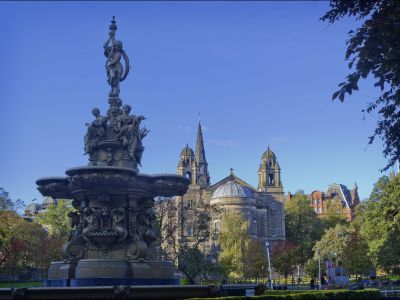
The gardens now come with a side of Scottish fame. The towering Scott Monument takes center stage, joined by statues of local legends like author John Wilson, Christian missionary David Livingstone, and poet Allan Ramsay. There’s a playground for kids, shade under grand trees, countless benches for people-watching, and even a café if you need caffeine with your contemplation.
In December, this peaceful patch gets seriously festive, with carnival rides, mulled wine, twinkling lights, Edinburgh’s main Christmas Market, and even an ice rink-because few things can contribute to a “holiday spirit” as greatly as skating under a Gothic spire!
Some 110,000 years ago, the area that is now the quiet garden was a glacial accident waiting to happen. As an ancient glacier oozed its way around the hulking basalt of Castle Rock, it carved out a natural dip-basically scooping out what would later become, and for thousands of years remained, a marshy, defensive moat at the foot of Castle Rock. Humans started settling here by the 9th century BC, presumably appreciating the defensive perks and the view.
Then, in 1460, King James III ordered the marsh to be flooded, turning it into Nor Loch-a grim, murky moat that made invading Edinburgh Castle even less appealing. Further ahead, in 1759, the loch was drained to make way for the New Town. Even today, this area still occasionally gets flooded.
When construction on the New Town kicked off, a handy solution for all that leftover dirt (some millions of tons of earth) was to dump it into the former loch. And thus the Mound, upon which many prestigious buildings stand today, was born. By 1820, the area was transformed into Princes Street Gardens: 8.5 acres to the east and 29 acres to the west, flanking The Mound like leafy bookends.
The gardens now come with a side of Scottish fame. The towering Scott Monument takes center stage, joined by statues of local legends like author John Wilson, Christian missionary David Livingstone, and poet Allan Ramsay. There’s a playground for kids, shade under grand trees, countless benches for people-watching, and even a café if you need caffeine with your contemplation.
In December, this peaceful patch gets seriously festive, with carnival rides, mulled wine, twinkling lights, Edinburgh’s main Christmas Market, and even an ice rink-because few things can contribute to a “holiday spirit” as greatly as skating under a Gothic spire!
13) Princes Street
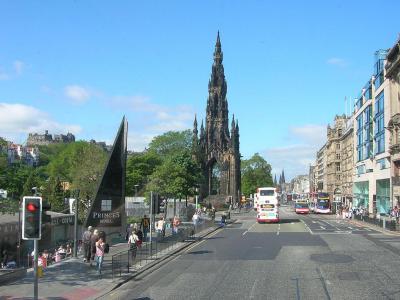
Stretching from Leith Street to Lothian Road like Edinburgh’s own stylish catwalk, Princes Street is an over-a-mile-long stretch of shopping temptation-the city’s main artery, buzzing with cafés, pubs, department stores, and selfie opportunities galore.
The street was named after two of King George III’s sons-Prince George (who later became King George IV) and Prince Frederick. While the early 18th-century buildings once stood prim and proper, the 19th century and later the 1960s had other plans. Cue the “Princes Street Plan,” a bold makeover that saw some old façades pulled down in favor of boxy modern storefronts, all in the name of progress and window-shopping efficiency.
The resulting new layout appears as follows: shops and commercial buzz line the north side, while the south side takes the scenic route, offering unbeatable views of the Old Town and the ever-dramatic Edinburgh Castle. Between them lies what was once a murky loch-or Nor Loch to be exact-drained in 1820 and transformed into the much more appealing Princes Street Gardens.
The gardens span 38 acres of greenery, split neatly by the Mound and sprinkled with statues like an outdoor sculpture gallery. One especially moving highlight is the War Memorial to Scottish-American soldiers, a spot for reflection amid the buskers and picnic blankets.
In the summer, the Ross Bandstand kicks into gear with concerts and open-air theatre. And don’t miss the city’s prettiest timekeeper-a floral clock that blooms right on cue.
The street was named after two of King George III’s sons-Prince George (who later became King George IV) and Prince Frederick. While the early 18th-century buildings once stood prim and proper, the 19th century and later the 1960s had other plans. Cue the “Princes Street Plan,” a bold makeover that saw some old façades pulled down in favor of boxy modern storefronts, all in the name of progress and window-shopping efficiency.
The resulting new layout appears as follows: shops and commercial buzz line the north side, while the south side takes the scenic route, offering unbeatable views of the Old Town and the ever-dramatic Edinburgh Castle. Between them lies what was once a murky loch-or Nor Loch to be exact-drained in 1820 and transformed into the much more appealing Princes Street Gardens.
The gardens span 38 acres of greenery, split neatly by the Mound and sprinkled with statues like an outdoor sculpture gallery. One especially moving highlight is the War Memorial to Scottish-American soldiers, a spot for reflection amid the buskers and picnic blankets.
In the summer, the Ross Bandstand kicks into gear with concerts and open-air theatre. And don’t miss the city’s prettiest timekeeper-a floral clock that blooms right on cue.
14) Dean Village
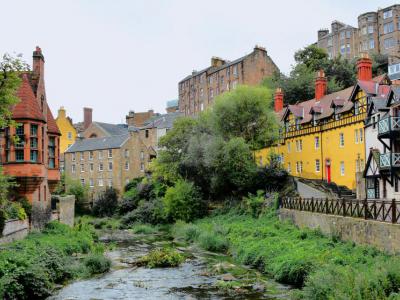
Dean Village, once a deep valley near Edinburgh's city center, thrived for over 800 years as a grain milling hub. It boasted up to eleven mills powered by the Water of Leith. This area was initially mentioned in a 1145 charter by King David I of Scotland, who granted a mill here to Holyrood Abbey.
Remaining distinct until the 1800s, Dean Village changed hands in 1826 when John Learmonth, future Edinburgh Lord Provost, bought it. The Dean Bridge, crucial for crossing the valley, was built in 1831-33 without a toll, as insisted by the Cramond Road Trustees and designed by Thomas Telford. This four-arch bridge, over 400 feet wide and 106 feet above the water, significantly improved access from the city.
In 1847, Dean House was demolished to create Dean Cemetery. This mansion, central to the Dean Estate since 1609, left its mark through sculptured stones in the cemetery's southern wall and ceiling panels in Scotland's National Museum. The cemetery is notable for housing prominent figures like Sir Thomas Bouch.
With the emergence of larger mills in Leith, Dean Village's prosperity declined, leading to decay and poverty until the 1960s. However, since the mid-1970s, it has been revitalized into a peaceful area near the city center, with renovated residential spaces and the Water of Leith Walkway established in 1983.
Dean Bridge also appears in Ian Rankin's "Strip Jack" and Peter May's "The Lewis Man," highlighting its cultural significance.
Remaining distinct until the 1800s, Dean Village changed hands in 1826 when John Learmonth, future Edinburgh Lord Provost, bought it. The Dean Bridge, crucial for crossing the valley, was built in 1831-33 without a toll, as insisted by the Cramond Road Trustees and designed by Thomas Telford. This four-arch bridge, over 400 feet wide and 106 feet above the water, significantly improved access from the city.
In 1847, Dean House was demolished to create Dean Cemetery. This mansion, central to the Dean Estate since 1609, left its mark through sculptured stones in the cemetery's southern wall and ceiling panels in Scotland's National Museum. The cemetery is notable for housing prominent figures like Sir Thomas Bouch.
With the emergence of larger mills in Leith, Dean Village's prosperity declined, leading to decay and poverty until the 1960s. However, since the mid-1970s, it has been revitalized into a peaceful area near the city center, with renovated residential spaces and the Water of Leith Walkway established in 1983.
Dean Bridge also appears in Ian Rankin's "Strip Jack" and Peter May's "The Lewis Man," highlighting its cultural significance.
15) Royal Botanic Garden (must see)
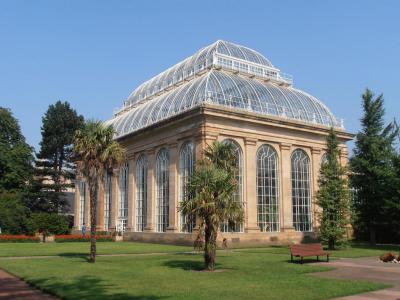
The Royal Botanic Garden Edinburgh (RBGE) has a dual role as a scientific hub and a popular tourist spot. Established in 1670 with the purpose of cultivating medicinal plants, it has expanded to encompass four locations in Scotland: Edinburgh, Dawyck, Logan, and Benmore, each specializing in its unique plant collection. RBGE boasts an impressive living collection comprising more than 13,302 plant species (equivalent to 34,422 individual plants), while its herbarium houses over 3 million preserved plant specimens.
Functioning as an executive non-departmental public entity under the Scottish Government, RBGE's primary site in Edinburgh serves as its main garden and administrative center, led by Regius Keeper Simon Milne.
The institution actively engages in and coordinates various conservation projects, both within the United Kingdom and internationally. The core scientific areas of focus at RBGE revolve around Scottish Biodiversity, Plants & Climate Change, and Conservation.
In addition to its scientific endeavors, RBGE remains a beloved destination for tourists and locals alike, affectionately known as "The Botanics" by locals. It's a popular spot for leisurely walks, especially among families with children. Admission to the botanic garden is generally free, though a small fee may be required to access the glasshouses. Throughout the year, the garden hosts numerous events, including live performances, guided tours, and exhibitions. Furthermore, RBGE plays a significant role in education, offering courses at various levels.
The Botanics in Edinburgh, along with its three smaller satellite gardens (referred to as Regional Gardens) in other parts of Scotland, collectively cultivate nearly 273,000 individual plants. This impressive collection represents approximately 13,300 plant species from various regions around the world, accounting for roughly 4% of all known plant species.
Functioning as an executive non-departmental public entity under the Scottish Government, RBGE's primary site in Edinburgh serves as its main garden and administrative center, led by Regius Keeper Simon Milne.
The institution actively engages in and coordinates various conservation projects, both within the United Kingdom and internationally. The core scientific areas of focus at RBGE revolve around Scottish Biodiversity, Plants & Climate Change, and Conservation.
In addition to its scientific endeavors, RBGE remains a beloved destination for tourists and locals alike, affectionately known as "The Botanics" by locals. It's a popular spot for leisurely walks, especially among families with children. Admission to the botanic garden is generally free, though a small fee may be required to access the glasshouses. Throughout the year, the garden hosts numerous events, including live performances, guided tours, and exhibitions. Furthermore, RBGE plays a significant role in education, offering courses at various levels.
The Botanics in Edinburgh, along with its three smaller satellite gardens (referred to as Regional Gardens) in other parts of Scotland, collectively cultivate nearly 273,000 individual plants. This impressive collection represents approximately 13,300 plant species from various regions around the world, accounting for roughly 4% of all known plant species.
