Custom Walk in Munich, Germany by berry_monica_7ea739 created on 2026-07-10
Guide Location: Germany » Munich
Guide Type: Custom Walk
# of Sights: 10
Tour Duration: 2 Hour(s)
Travel Distance: 2.4 Km or 1.5 Miles
Share Key: 27JUD
Guide Type: Custom Walk
# of Sights: 10
Tour Duration: 2 Hour(s)
Travel Distance: 2.4 Km or 1.5 Miles
Share Key: 27JUD
How It Works
Please retrieve this walk in the GPSmyCity app. Once done, the app will guide you from one tour stop to the next as if you had a personal tour guide. If you created the walk on this website or come to the page via a link, please follow the instructions below to retrieve the walk in the app.
Retrieve This Walk in App
Step 1. Download the app "GPSmyCity: Walks in 1K+ Cities" on Apple App Store or Google Play Store.



Step 2. In the GPSmyCity app, download(or launch) the guide "Munich Map and Walking Tours".
Step 3. Tap the menu button located at upper right corner of the "Walks" screen and select "Retrieve custom walk". Enter the share key: 27JUD
1) Odeonsplatz
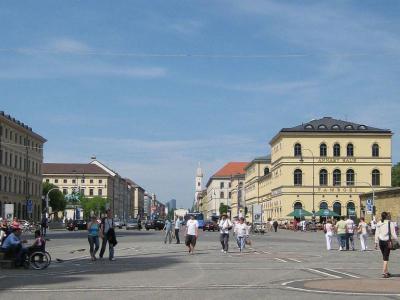
The Odeonsplatz is a significant square in Munich's heart, created in the early 19th century by architect Leo von Klenze. It marks the end of Ludwigstraße, a grand street designed concurrently. The square gets its name from a concert hall called the Odeon situated on its northwest side. Over time, the term "Odeonsplatz" has also come to describe the open area in front of the Residenz palace, bounded by the Theatine Church and the Feldherrnhalle, a monumental loggia to the south.
Situated to the north of Munich's historic center, Odeonsplatz borders two districts: Altstadt-Lehel to the east and Maxvorstadt to the west. Along the west side, set back from Ludwigstraße, stand the Odeon building and the Palais Leuchtenberg, both inspired by Rome's Palazzo Farnese. To the east is Klenze's commercial arcade with Café Tambosi included. A street runs between the western buildings toward the Palais Ludwig Ferdinand, leading also to Wittelsbacherplatz, another square Klenze designed.
The Feldherrnhalle at the square's edge is modeled on Florence's Loggia dei Lanzi. Odeonsplatz is accessible by its U-Bahn station and a bus line that connects to various museums. In 1972, it became part of Munich's pedestrian-only zone.
Historically, Odeonsplatz has been central to various public ceremonies, from funeral marches to victory parades, moving along Ludwigstraße to the Feldherrnhalle, with a special viewing stand by Ludwig I's statue. The path from Odeonsplatz to the annual Oktoberfest parade has remained unchanged for years.
Situated to the north of Munich's historic center, Odeonsplatz borders two districts: Altstadt-Lehel to the east and Maxvorstadt to the west. Along the west side, set back from Ludwigstraße, stand the Odeon building and the Palais Leuchtenberg, both inspired by Rome's Palazzo Farnese. To the east is Klenze's commercial arcade with Café Tambosi included. A street runs between the western buildings toward the Palais Ludwig Ferdinand, leading also to Wittelsbacherplatz, another square Klenze designed.
The Feldherrnhalle at the square's edge is modeled on Florence's Loggia dei Lanzi. Odeonsplatz is accessible by its U-Bahn station and a bus line that connects to various museums. In 1972, it became part of Munich's pedestrian-only zone.
Historically, Odeonsplatz has been central to various public ceremonies, from funeral marches to victory parades, moving along Ludwigstraße to the Feldherrnhalle, with a special viewing stand by Ludwig I's statue. The path from Odeonsplatz to the annual Oktoberfest parade has remained unchanged for years.
2) Feldherrnhalle (Field Marshall’s Hall)
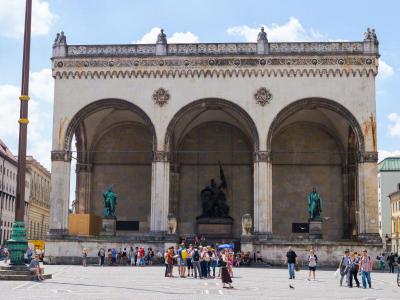
The Field Marshal's Hall is a grand open-air loggia built to honor Bavaria’s military leaders and the soldiers who died in the Franco-Prussian War. Commissioned by King Ludwig I in the 1840s, it was constructed on the site of a former city gate. The design was inspired by Florence’s famous Loggia dei Lanzi, bringing a touch of Italian grandeur to Munich’s historic center.
Standing at the front are two imposing bronze statues commemorating key figures in Bavarian military history: Count Tilly, who played a major role during the Thirty Years’ War, and Count von Wrede, a marshal from the Napoleonic era. In 1882, a third sculpture was added at the center-this one celebrating the Bavarian army’s role in the Franco-Prussian War. As you approach, you’ll also spot two lion statues at the steps, crafted in 1906. One, mouth open, faces the Residenz Royal Palace; the other, with mouth closed, looks toward the nearby church.
Yet for many, the site is remembered most for the dramatic events of 1923. That year, during the failed Beer Hall Putsch, Adolf Hitler led around 2,000 followers in an attempted coup, marching toward the center of Munich in what he called a “people’s revolution.” They were met by the Bavarian police in front of this very loggia. A deadly confrontation followed-four officers and sixteen insurgents were killed. Hitler was arrested shortly after and imprisoned. A decade later, after coming to power, he elevated the failed revolt into a cornerstone of the Nazi cult.
Standing at the front are two imposing bronze statues commemorating key figures in Bavarian military history: Count Tilly, who played a major role during the Thirty Years’ War, and Count von Wrede, a marshal from the Napoleonic era. In 1882, a third sculpture was added at the center-this one celebrating the Bavarian army’s role in the Franco-Prussian War. As you approach, you’ll also spot two lion statues at the steps, crafted in 1906. One, mouth open, faces the Residenz Royal Palace; the other, with mouth closed, looks toward the nearby church.
Yet for many, the site is remembered most for the dramatic events of 1923. That year, during the failed Beer Hall Putsch, Adolf Hitler led around 2,000 followers in an attempted coup, marching toward the center of Munich in what he called a “people’s revolution.” They were met by the Bavarian police in front of this very loggia. A deadly confrontation followed-four officers and sixteen insurgents were killed. Hitler was arrested shortly after and imprisoned. A decade later, after coming to power, he elevated the failed revolt into a cornerstone of the Nazi cult.
3) Residenz Royal Palace (must see)
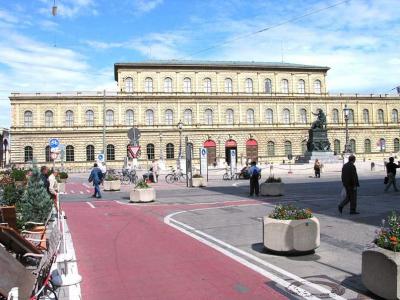
The Residenz was the home of Bavaria’s Wittelsbach dynasty all the way up until 1918. With its gilded grandeur and Versailles-like scale, this royal palace complex ranks among Europe’s most impressive, and a throrough exploration could easily take a few days. It’s massive to begin with, and even larger now that more rooms and passageways have been restored and opened to the public.
A good place to start is outside, with the three imposing facades and a series of stunning courtyards, many of which are freely accessible. From there, you can step into the Residenz Museum itself, as well as the Cuvilliés-arguably the finest Rococo theater in Europe, and the Treasure Chamber, where you’ll find a glittering display of jewels, gold, silver, crystal, and enamelwork-collected over a thousand years.
There’s a huge amount to see in the 10 courtyards and nearly 130 rooms, halls and galleries. Among the standout highlights is the Gallery of the Ancestors, where you’ll meet 121 members of the Wittelsbach family; the Antiquarium-the largest Renaissance hall north of the Alps; the extensive porcelain collections, including an array of pieces from France, England, Germany, Japan, and China; and the lavish State Rooms, where German Rococo reaches its decorative peak, especially in the Green Gallery and the Cabinet of Mirrors. Oh, and don’t miss the Grottenhof courtyard, known for its elegant arcade and bronze fountain of Perseus.
For the full experience, consider a combined ticket that includes the Museum, the Theatre and the Treasury. And if you want to tailor your visit, the audio guide lets you jump straight to the rooms, artworks, or stories that interest you most.
A good place to start is outside, with the three imposing facades and a series of stunning courtyards, many of which are freely accessible. From there, you can step into the Residenz Museum itself, as well as the Cuvilliés-arguably the finest Rococo theater in Europe, and the Treasure Chamber, where you’ll find a glittering display of jewels, gold, silver, crystal, and enamelwork-collected over a thousand years.
There’s a huge amount to see in the 10 courtyards and nearly 130 rooms, halls and galleries. Among the standout highlights is the Gallery of the Ancestors, where you’ll meet 121 members of the Wittelsbach family; the Antiquarium-the largest Renaissance hall north of the Alps; the extensive porcelain collections, including an array of pieces from France, England, Germany, Japan, and China; and the lavish State Rooms, where German Rococo reaches its decorative peak, especially in the Green Gallery and the Cabinet of Mirrors. Oh, and don’t miss the Grottenhof courtyard, known for its elegant arcade and bronze fountain of Perseus.
For the full experience, consider a combined ticket that includes the Museum, the Theatre and the Treasury. And if you want to tailor your visit, the audio guide lets you jump straight to the rooms, artworks, or stories that interest you most.
4) Bayerische Staatsoper
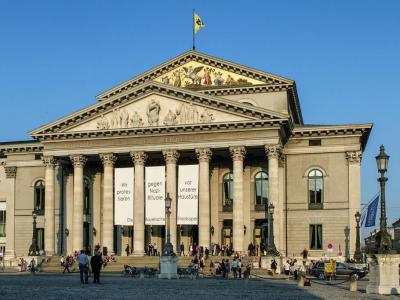
The Bayerische Staatsoper, also known as the Bavarian National Theater, stands as the largest theater in Munich, prominently situated at Max Joseph Platz in the heart of the city.
This architectural gem was conceived by the renowned architect Karl von Fischer, drawing inspiration from the Odeon in Paris. Its construction was commissioned by Maximilian I, the Bavarian King. In 1818, the theater made its grand debut with a performance of Ferdinand Fränzl's 'Die Weihe.' However, unfortunate events marred its history, as a fire ravaged the structure in 1823, and a subsequent reconstruction in 1825 met a similar fate during World War II bombings. It wasn't until 1963 that the current incarnation of the theater opened its doors with the performance of Richard Wagner's 'Die Meistersinger von Nürnberg.'
The present Bayerische Staatsoper boasts an impressive capacity of 21,000 seats, with five rows of seats and a Royal box overlooking a circular stage. It hosts a diverse array of performances, including ballets, operas, and operettas on a daily basis. Additionally, the annual Munich Opera Festival graces this venue every summer. The theater is home to its own orchestra, known as the Bayerisches Staatsorchester, and serves as the headquarters for both the Bavarian State Opera and the Bavarian State Ballet. For those eager to explore its inner workings, guided tours lasting about an hour are available, typically scheduled at 2 pm on most afternoons. Tour dates can be found on the Bayerische Staatsoper's website.
Why You Should Visit:
The 'Staatsoper' always has the top notch stars. Tickets are quite expensive but the overall experience is worth it.
There's a sense of occasion here that you don't always get at the opera or ballet. It's a perfect chocolate box theatre with helpful staff and comfortable seats. The interval refreshments are served quickly and are tasty.
Tip:
Opera or show at this place is a proper affair, so you should aim to make this a proper night out. People will be dressed up in suits and dresses.
Book your tickets early. If you also want a seat that has a view of the whole theatre setup, consider getting one near the front on the side and balcony, rather than front facing but at the back.
This architectural gem was conceived by the renowned architect Karl von Fischer, drawing inspiration from the Odeon in Paris. Its construction was commissioned by Maximilian I, the Bavarian King. In 1818, the theater made its grand debut with a performance of Ferdinand Fränzl's 'Die Weihe.' However, unfortunate events marred its history, as a fire ravaged the structure in 1823, and a subsequent reconstruction in 1825 met a similar fate during World War II bombings. It wasn't until 1963 that the current incarnation of the theater opened its doors with the performance of Richard Wagner's 'Die Meistersinger von Nürnberg.'
The present Bayerische Staatsoper boasts an impressive capacity of 21,000 seats, with five rows of seats and a Royal box overlooking a circular stage. It hosts a diverse array of performances, including ballets, operas, and operettas on a daily basis. Additionally, the annual Munich Opera Festival graces this venue every summer. The theater is home to its own orchestra, known as the Bayerisches Staatsorchester, and serves as the headquarters for both the Bavarian State Opera and the Bavarian State Ballet. For those eager to explore its inner workings, guided tours lasting about an hour are available, typically scheduled at 2 pm on most afternoons. Tour dates can be found on the Bayerische Staatsoper's website.
Why You Should Visit:
The 'Staatsoper' always has the top notch stars. Tickets are quite expensive but the overall experience is worth it.
There's a sense of occasion here that you don't always get at the opera or ballet. It's a perfect chocolate box theatre with helpful staff and comfortable seats. The interval refreshments are served quickly and are tasty.
Tip:
Opera or show at this place is a proper affair, so you should aim to make this a proper night out. People will be dressed up in suits and dresses.
Book your tickets early. If you also want a seat that has a view of the whole theatre setup, consider getting one near the front on the side and balcony, rather than front facing but at the back.
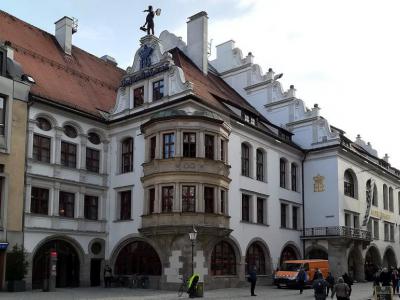
5) Hofbrauhaus Beer Hall (must see)
Arguably the most famous ‘watering hole’ in Munich, this spot is the embodiment of Bavarian tradition and spirit. Its story began in 1589, founded as part of the Royal Brewery by Wilhelm V. Back then, it wasn’t even open to the public-reserved instead for royal use. That changed in 1828, when the doors were finally thrown open to everyone. Today, it's among the city’s most beloved gathering places, steeped in old-world charm.
On the ground floor, long tables fill the hall that can hold 1,000 drinkers while bands belt out folk tunes. The menu is full of Bavarian classics, and the atmosphere is pure celebration. Upstairs, a vaulted ceremonial hall can seat another 1,300 people, with additional side rooms for smaller gatherings. And when the weather’s warm, the beer garden becomes a favorite hangout-with its shady chestnut trees, bubbling fountain, and relaxed outdoor vibe. On a typical day, around 10,000 liters of beer are served here-that’s over 17,000 pints.
True to tradition, the beer follows the Bavarian Beer Purity Law of 1516, which allows only natural ingredients. That standard is still upheld across the city, and the brews here are no exception-crafted with care and full of flavor.
But not all of the building’s history is festive. On February 24, 1920, Adolf Hitler stood here to announce the official program of the then-fledgling Nazi Party. Just over a year later, on July 29, 1921, he was elected as the Party’s leader-right in this very hall. So while the beer house is rightly remembered for joy, music, and beer, it also witnessed one of the more sobering moments of 20th-century history.
On the ground floor, long tables fill the hall that can hold 1,000 drinkers while bands belt out folk tunes. The menu is full of Bavarian classics, and the atmosphere is pure celebration. Upstairs, a vaulted ceremonial hall can seat another 1,300 people, with additional side rooms for smaller gatherings. And when the weather’s warm, the beer garden becomes a favorite hangout-with its shady chestnut trees, bubbling fountain, and relaxed outdoor vibe. On a typical day, around 10,000 liters of beer are served here-that’s over 17,000 pints.
True to tradition, the beer follows the Bavarian Beer Purity Law of 1516, which allows only natural ingredients. That standard is still upheld across the city, and the brews here are no exception-crafted with care and full of flavor.
But not all of the building’s history is festive. On February 24, 1920, Adolf Hitler stood here to announce the official program of the then-fledgling Nazi Party. Just over a year later, on July 29, 1921, he was elected as the Party’s leader-right in this very hall. So while the beer house is rightly remembered for joy, music, and beer, it also witnessed one of the more sobering moments of 20th-century history.
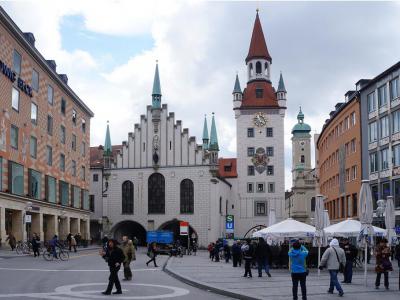
6) Altes Rathaus (Old Town Hall)
Before the New Town Hall took over in 1874, the Old Town Hall was where Munich’s city government did its business. Unlike many buildings that were torn down to make way for the new structure, this one remained-preserved as a testament to the city’s commitment to restoration over replacement.
With its dove-grey façade, amber-tiled steeple, and delicate Gothic spires, the Hall captures the essence of its 15th-century origins-though what stands today isn’t an exact replica. Over time, additions like a baroque onion dome and later, an overly enthusiastic attempt at “regothification,” took the structure further from its medieval roots than what the current version reflects. Ironically, the faithful postwar reconstruction you see today may be closer to the spirit of the original than what existed before the Allied bombing.
The oldest surviving element is the 12th-century tower, once part of the city’s medieval fortifications. Today, it houses the Toy Museum, where you’ll find a charming collection of vintage toys-from antique train sets to miniature zoos-spread across four narrow floors connected by a spiral staircase. There's also a gift shop with hand-picked items that make for great souvenirs.
The ceremonial hall still retains its Gothic grandeur, with broad wooden barrel vaults and a frieze of 96 coats of arms lining one wall. Meanwhile, on the building’s side, there's a whimsical surprise: a bronze statue of Shakespeare’s Juliet, a gift from the city of Verona in the 1970s.
But the building also carries a darker legacy. In 1938, Nazi propaganda minister Joseph Goebbels delivered a speech here that triggered the “Night of Broken Glass.” That night of terror saw synagogues burned, Jewish businesses destroyed, and thousands arrested. It’s widely seen as the moment when Nazi anti-Semitic violence escalated into what became the Holocaust.
With its dove-grey façade, amber-tiled steeple, and delicate Gothic spires, the Hall captures the essence of its 15th-century origins-though what stands today isn’t an exact replica. Over time, additions like a baroque onion dome and later, an overly enthusiastic attempt at “regothification,” took the structure further from its medieval roots than what the current version reflects. Ironically, the faithful postwar reconstruction you see today may be closer to the spirit of the original than what existed before the Allied bombing.
The oldest surviving element is the 12th-century tower, once part of the city’s medieval fortifications. Today, it houses the Toy Museum, where you’ll find a charming collection of vintage toys-from antique train sets to miniature zoos-spread across four narrow floors connected by a spiral staircase. There's also a gift shop with hand-picked items that make for great souvenirs.
The ceremonial hall still retains its Gothic grandeur, with broad wooden barrel vaults and a frieze of 96 coats of arms lining one wall. Meanwhile, on the building’s side, there's a whimsical surprise: a bronze statue of Shakespeare’s Juliet, a gift from the city of Verona in the 1970s.
But the building also carries a darker legacy. In 1938, Nazi propaganda minister Joseph Goebbels delivered a speech here that triggered the “Night of Broken Glass.” That night of terror saw synagogues burned, Jewish businesses destroyed, and thousands arrested. It’s widely seen as the moment when Nazi anti-Semitic violence escalated into what became the Holocaust.
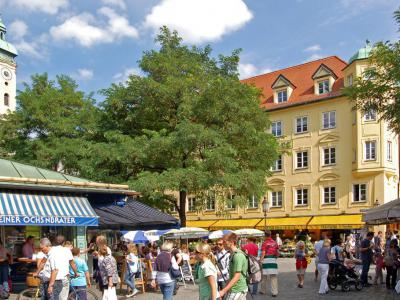
7) Viktualienmarkt (Farmer's Market) (must see)
Welcome to Munich’s oldest and most charming market. Since the early 1800s, it’s been the go-to spot for just about anything edible-fresh produce, dairy, meats, fine French wines, seafood, and rare delicacies from around the globe. Prices tend to be on the higher side, but the variety and quality are hard to beat. Of course, you’ll also find classic Bavarian favorites like pretzels, sausages, and local cheeses, all offering a true taste of the region.
People from all walks of life gather here-locals picking up ingredients for dinner, tourists exploring with wide eyes, and regulars who’ve made it part of their daily routine. Local customs involve eating white sausage, sipping hot soup, and enjoying a cold beer in one of the city’s most beloved beer gardens, set around a decorated maypole. Under the shade of chestnut trees, folks gather to sip cold brews and enjoy a break from the buzz.
But this market is more than a place to shop, drink or snack-it’s actually woven into Munich’s cultural identity. Throughout the year, it plays host to everything from folk dances and live music to seasonal festivals, and an especially lively Mardi Gras parade. The fountain erected to commemorate German cabaret artists emphasizes the spirit that has always animated this place.
In every sense, it’s a feast-for the senses, for the culture, and most definitely for the appetite.
People from all walks of life gather here-locals picking up ingredients for dinner, tourists exploring with wide eyes, and regulars who’ve made it part of their daily routine. Local customs involve eating white sausage, sipping hot soup, and enjoying a cold beer in one of the city’s most beloved beer gardens, set around a decorated maypole. Under the shade of chestnut trees, folks gather to sip cold brews and enjoy a break from the buzz.
But this market is more than a place to shop, drink or snack-it’s actually woven into Munich’s cultural identity. Throughout the year, it plays host to everything from folk dances and live music to seasonal festivals, and an especially lively Mardi Gras parade. The fountain erected to commemorate German cabaret artists emphasizes the spirit that has always animated this place.
In every sense, it’s a feast-for the senses, for the culture, and most definitely for the appetite.
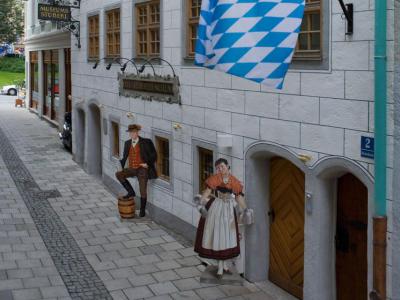
8) Beer and Oktoberfest Museum
The Beer and Oktoberfest Museum is focused on celebrating Bavaria's rich beer culture and the historical significance of Munich's Oktoberfest. This museum is privately owned and managed by the Edith-Haberland-Wagner Foundation, which also owns the Augustiner Bräu beer brand, once brewed exclusively by Augustinian monks.
Situated within Munich's oldest residence, a six-story building dating back to 1340, constructed shortly after a major fire in 1327 that devastated significant portions of the city. The building's facade paintings have been painstakingly restored, and the original wooden beams have been preserved. It comprises 12 apartments and features a distinctive medieval architectural element known as 'Heaven's Stairs,' which provides access to the upper floors for visitors.
Inside the museum, visitors can explore the global history of beer brewing, spanning from ancient Egypt to the Bavarian monks who adhered to purity laws in their brewing practices. The exhibition also highlights the history of Munich's six breweries, with a notable artifact being the wooden box known as the brewer's ark, used in Munich Brewer's initiation ceremonies. The upper floor is dedicated to recounting the evolution of Oktoberfest, which initially began as the wedding celebration of King Ludwig I in 1810 and eventually grew to become the world's largest beer festival.
Situated within Munich's oldest residence, a six-story building dating back to 1340, constructed shortly after a major fire in 1327 that devastated significant portions of the city. The building's facade paintings have been painstakingly restored, and the original wooden beams have been preserved. It comprises 12 apartments and features a distinctive medieval architectural element known as 'Heaven's Stairs,' which provides access to the upper floors for visitors.
Inside the museum, visitors can explore the global history of beer brewing, spanning from ancient Egypt to the Bavarian monks who adhered to purity laws in their brewing practices. The exhibition also highlights the history of Munich's six breweries, with a notable artifact being the wooden box known as the brewer's ark, used in Munich Brewer's initiation ceremonies. The upper floor is dedicated to recounting the evolution of Oktoberfest, which initially began as the wedding celebration of King Ludwig I in 1810 and eventually grew to become the world's largest beer festival.
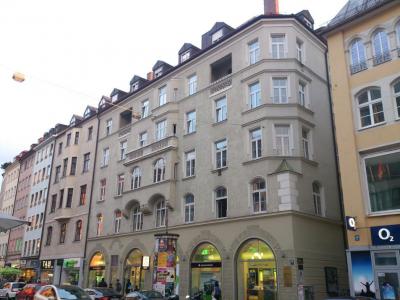
9) Sterneckerbräu (Sternecker Brewery)
The Sternecker building may look like just another spot in Munich’s old town, but it quietly holds one of the darker turning points in 20th-century history. Originally part of the city’s long-standing beer hall tradition, it gained far more notoriety for its role in the early formation of the Nazi Party.
Back in September 1919, a young Adolf Hitler, working as an army intelligence agent, showed up at a meeting of the German Workers’ Party-a small, fringe political group holding court in the beer hall. He challenged a speaker mid-session, and his intense rhetoric left an impression on the party’s founders, including Anton Drexler. Before long, they invited him to join. He accepted-and the Sternecker became ground zero in the origin story of his political ascent.
Years later, in 1933, after seizing power, the Nazis turned a room above the beer hall into a small museum, packed with artifacts from the party’s early days-photos, furniture, and documents curated to feed the myth. Somehow, the building survived the Allied bombings that flattened much of Munich. The museum, however, was shut down after the war, and the beer hall faded out of existence in the decades that followed.
Today, the structure still stands, now home to a retail shop. There’s no plaque, no sign, no marker of its historical weight. Unlike other Nazi-era sites that have been formally preserved or publicly contextualized, the Sternecker remains quietly anonymous-its past buried beneath the rhythms of modern commerce. Yet for those who know the story, this building was a silent witness to a moment when history took a dark turn.
Back in September 1919, a young Adolf Hitler, working as an army intelligence agent, showed up at a meeting of the German Workers’ Party-a small, fringe political group holding court in the beer hall. He challenged a speaker mid-session, and his intense rhetoric left an impression on the party’s founders, including Anton Drexler. Before long, they invited him to join. He accepted-and the Sternecker became ground zero in the origin story of his political ascent.
Years later, in 1933, after seizing power, the Nazis turned a room above the beer hall into a small museum, packed with artifacts from the party’s early days-photos, furniture, and documents curated to feed the myth. Somehow, the building survived the Allied bombings that flattened much of Munich. The museum, however, was shut down after the war, and the beer hall faded out of existence in the decades that followed.
Today, the structure still stands, now home to a retail shop. There’s no plaque, no sign, no marker of its historical weight. Unlike other Nazi-era sites that have been formally preserved or publicly contextualized, the Sternecker remains quietly anonymous-its past buried beneath the rhythms of modern commerce. Yet for those who know the story, this building was a silent witness to a moment when history took a dark turn.
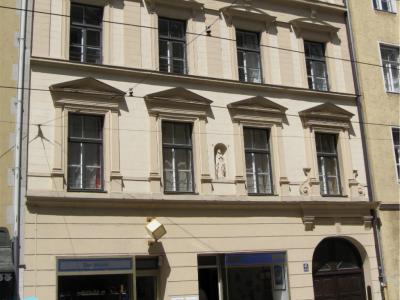
10) Hitler's Early Residence in Munich
Adolf Hitler’s early residence in Munich played a significant role during the years when his political influence was taking shape. From May 1920 to October 1929, he lived in this third-floor flat-a period that saw him rise from fringe agitator to leader of the Nazi Party.
The building itself was well-situated: close enough to major meeting halls, yet far enough removed to offer a degree of privacy. During this time, Hitler wasn’t just living-he was strategizing. He worked on his autobiography, “My Struggle”, hosted party loyalists, and slowly built the organizational backbone of National Socialism from this very spot.
In the late 1920s, his half-niece, Geli Raubal, moved in. Their close and controversial relationship became the subject of intense speculation, ending in tragedy when Geli took her own life in 1931, after moving out. Her death left a lasting mark on Hitler.
After he relocated in 1929, the apartment faded into anonymity. Today, the building still stands, serving as a regular residential address with no plaque, no signage, no public trace of what once took place behind its doors. A quiet relic of a deeply consequential chapter.
The building itself was well-situated: close enough to major meeting halls, yet far enough removed to offer a degree of privacy. During this time, Hitler wasn’t just living-he was strategizing. He worked on his autobiography, “My Struggle”, hosted party loyalists, and slowly built the organizational backbone of National Socialism from this very spot.
In the late 1920s, his half-niece, Geli Raubal, moved in. Their close and controversial relationship became the subject of intense speculation, ending in tragedy when Geli took her own life in 1931, after moving out. Her death left a lasting mark on Hitler.
After he relocated in 1929, the apartment faded into anonymity. Today, the building still stands, serving as a regular residential address with no plaque, no signage, no public trace of what once took place behind its doors. A quiet relic of a deeply consequential chapter.
