

Fort-de-France Introduction Walking Tour, Fort-de-France

Audio Guide: Fort-de-France Introduction Walking Tour (Self Guided), Fort-de-France

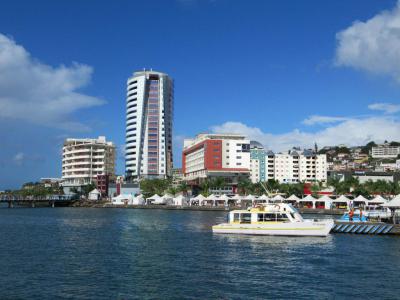
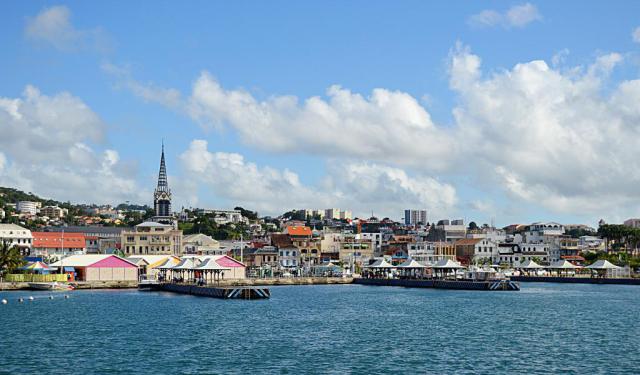
“The Bay of Fort-de-France is one of the most beautiful in the world — an immense sheet of blue framed by mountains of green.” These are the vivid words of Greek and Irish writer Lafcadio Hearn who intended to visit Fort-de-France for a few weeks in the summer 1887 but ended staying there for two years.

Fort-de-France — the capital of the French overseas department of Martinique — lies on the island’s western coast, curving around a deep, sheltered bay that opens onto the Caribbean Sea. Originally called Fort-Royal, the town was renamed Fort-de-France in the early 19th century, literally meaning “Fort of France.” The new name, bestowed by Napoleon’s administration, affirmed the city’s loyalty to the French crown.

Long before European colonisation, the area was home to the indigenous Arawak and later the Carib peoples, who relied on the fertile volcanic soil and abundant fisheries. French settlers arrived in 1635, establishing a colony on Martinique and founding Fort-Royal soon after. Its deep harbour and naturally defensible position made it an ideal site for a colonial port, quickly becoming a key node in France’s Atlantic trade network.

Throughout the 17th and 18th centuries, Fort-Royal expanded around its central fortress, Fort Saint-Louis which was completed in the 1650s to guard against English and Dutch attacks. The settlement became both a commercial and military hub, exporting sugar, rum, and cocoa from plantations worked by enslaved Africans.

The 19th century marked transformation. After the abolition of slavery in 1848, freed communities reshaped the island’s culture, while Fort-de-France grew as an administrative and trading hub. A devastating fire in 1890 and several hurricanes tested its resilience. Then in 1902, the eruption of nearby Mount Pelée destroyed the former capital Saint-Pierre, shifting the island’s political and economic heart permanently to Fort-de-France.

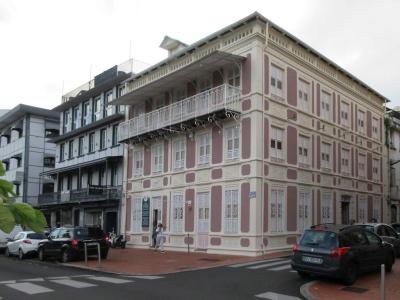
Walking through the city centre of Fort-de-France reveals elegant nineteenth-century iron-balcony façades, the fortress of Fort Saint-Louis guarding the harbor, and the lush green expanse of Savannah Park. At the heart of downtown you’ll pass by the Schoelcher Library and market stalls filled with spices and rum. Street cafés hum with Creole chatter while palm-lined boulevards lead you past monuments, tropical blooms, and glimpses of French colonial grandeur.

By the time you circle back to the water, you might see exactly what Lafcadio Hearn meant. The bay still shimmers blue, the hills still rise green — and Fort-de-France still has a way of turning a short visit into a longer stay.
How it works: Download the app "GPSmyCity: Walks in 1K+ Cities" from Apple App Store or Google Play Store to your mobile phone or tablet. The app turns your mobile device into a personal tour guide and its built-in GPS navigation functions guide you from one tour stop to next. The app works offline, so no data plan is needed when traveling abroad.

Download The GPSmyCity App

Fort-de-France Introduction Walking Tour Map

Guide Name: Fort-de-France Introduction Walking Tour
Guide Location: Martinique » Fort-de-France (See other walking tours in Fort-de-France)
Guide Type: Self-guided Walking Tour (Sightseeing)
# of Attractions: 11
Tour Duration: 2 Hour(s)
Travel Distance: 2.8 Km or 1.7 Miles
Author: DanaOffice
Sight(s) Featured in This Guide:
  • Cruise Terminal
  • Departmental Museum of Archaeology and Prehistory
  • La Savane (Savannah Park)
  • Bibliotheque Schœlcher (Schoelcher Library)
  • Ancien Palais de Justice (Old Courthouse)
  • Saint Louis Cathedral
  • Grand Marche (Grand Market)
  • Theatre Aime Cesaire
  • Regional Museum of History and Ethnography
  • Fort Saint Louis
  • Plage La Francaise (French Beach)
1
Cruise Terminal

1) Cruise Terminal

The Cruise Terminal in Fort-de-France offers travelers a welcoming introduction to Martinique, an island known for its natural landscapes, vibrant culture, and rich history. Located in the heart of downtown, the Pointe Simon terminal provides convenient access to nearby attractions, making it an ideal starting point for exploring the capital and its surroundings. From the terminal, visitors can walk directly into Fort-de-France to experience its busy streets, waterfront views, and local shops.

The terminal includes essential amenities such as restrooms, seating areas, and free Wi-Fi. An information desk operated by the Martinique Tourism Authority offers maps, guides, and advice on local attractions and transportation options. Outside the terminal, travelers can find taxis, car rentals, and shuttle services for exploring Fort-de-France and the surrounding areas. The terminal area also features a variety of shops and kiosks offering local crafts, souvenirs, and duty-free items, providing opportunities to browse and shop before venturing into the city.

Martinique appeals to visitors with a combination of outdoor scenery, historical sites, and cultural experiences. The Pitons du Carbet mountain range rises above the city, forming a dramatic backdrop to Fort-de-France Bay. For nature enthusiasts, the mountains and island rainforests offer rewarding hikes with views of the coastline and inland valleys.

With its accessible cruise terminal, diverse landscapes, and lively community, Martinique provides visitors with a convenient and engaging introduction to the island.
2
Departmental Museum of Archaeology and Prehistory

2) Departmental Museum of Archaeology and Prehistory

The Departmental Museum of Archaeology and Prehistory offers a fascinating glimpse into the history and culture of the island's earliest inhabitants. Housed within the confines of a former military administration building, this museum may appear unassuming from the outside, but inside lies a treasure trove of artifacts that shed light on the lives of the first Amerindian populations to inhabit Martinique, dating back to the 5th century BC.

The museum's archaeological collection stands as the richest in the Lesser Antilles, boasting several thousand ritual objects, figurines, and tools unearthed during excavations on the island. These artifacts, exhibited on the first floor of the building, offer invaluable insights into the ingenuity and craftsmanship of the indigenous peoples. Visitors can marvel at beautifully decorated polished terracotta vases and tools crafted from materials found on-site, such as stones, shells, and animal bones. These artifacts serve as a testament to the resourcefulness and skill of the Native Americans in adapting to their environment.

The second floor of the museum is dedicated to providing a comprehensive overview of the daily life of these ancient populations. Exhibits showcase various aspects of their lifestyle, including agriculture, fishing, and gathering. Visitors can explore displays featuring traditional clothing, tools, weapons, musical instruments, and ritual objects used by the indigenous peoples. Loincloths, feather headdresses, and necklaces made of teeth or shells offer glimpses into their attire, while paddles, bows and arrows, and wicker baskets illustrate their tools and weapons. Musical instruments such as flutes, rattles, and maracas highlight the importance of music and ritual in their culture.
3
La Savane (Savannah Park)

3) La Savane (Savannah Park)

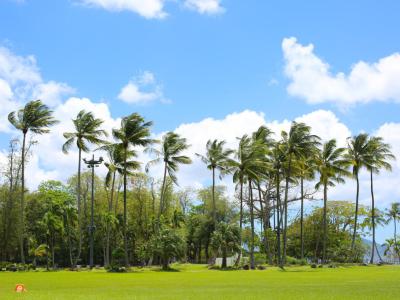
Savannah Park holds a storied history dating back to the 18th century. Originally reclaimed from the sea and mangroves, the Place de la Savane initially served as a vast military training ground where soldiers from the nearby Fort Saint-Louis garrison honed their skills. Over time, however, the space gradually transformed into a beloved public park, cherished by locals for its serene ambiance and lush greenery.

As the population of the city expanded, La Savane emerged as a popular destination for leisurely strolls and social gatherings. Tall tropical trees, including royal palms, bakouas, cheese trees, and fig trees, were planted over the years, providing ample shade and adding to the park's natural beauty.

In addition to its historical significance, La Savane is also a vibrant hub of activity. The park is home to a charming market offering an array of exotic items, souvenirs, and snacks, adding to the lively atmosphere. Throughout the year, La Savane serves as a gathering place for various events and celebrations, including Fort-de-France's carnival, which takes place annually in February or March.
4
Bibliotheque Schœlcher (Schoelcher Library)

4) Bibliotheque Schœlcher (Schoelcher Library) (must see)

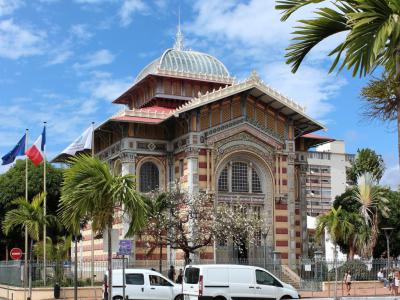
The Schoelcher Library is renowned for its elaborate architecture and rich historical significance. This magnificent building, characterized by its vibrant colors and distinctive Byzantine dome, holds a special place in the cultural heritage of Martinique.

Constructed in Paris and originally showcased at the 1889 World Exposition, the Schoelcher Library was later dismantled, shipped piece by piece to Fort-de-France, and reassembled at its current location. The architectural masterpiece is the creation of Pierre-Henri Picq (1833–1911), the renowned architect responsible for designing several iconic structures in Fort-de-France, including the cathedral and covered market.

Beyond its impressive exterior, the Schoelcher Library boasts an ornate interior, reflecting the grandeur of its original design. However, visitors should note that photography is not permitted inside the building, as it serves as a working library where students frequently gather to study and write essays.

The library owes its name and founding purpose to Victor Schœlcher, a prominent abolitionist and former deputy for Martinique and Guadeloupe from 1848 to 1850. Single and childless, Schœlcher bequeathed his extensive collection of 10,000 books and 250 musical scores to the general council of Martinique, stipulating that the library be open to all, particularly for the education of former black slaves. He also appointed Victor Cochinat, a Parisian journalist and secretary to Alexandre Dumas, as the library's first assigned librarian.

Despite facing challenges, such as the great fire of Fort-de-France in 1890, which destroyed a significant portion of the library's collection, including a copy of Victor Hugo's "Quatrevingt-treize" autographed by the author, the Schoelcher Library persevered. Today, it houses a diverse array of literary treasures, including rare manuscripts, historical documents such as the Code Noir, and navigation treatises dating back to the 17th century.
5
Ancien Palais de Justice (Old Courthouse)

5) Ancien Palais de Justice (Old Courthouse)

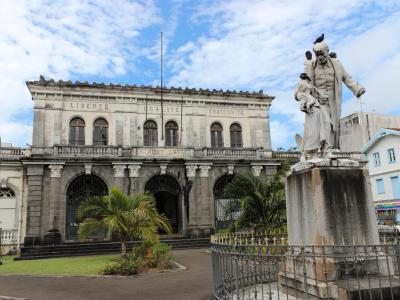
The Old Courthouse is a notable historical building and a center for cultural activity in the city. The current structure, built in 1906 and designed by Gustave de Laguarigue, reflects the neo-classical style, featuring a rectangular stone layout surrounding an interior courtyard. The site itself was previously occupied by a convent before being repurposed as a courthouse, linking the location to a longer history of public and institutional use.

The square in front of the courthouse has also been a focus of historical and social discussion. It formerly featured a statue of Victor Schœlcher, a figure associated with the abolition of slavery in French colonies. The statue was vandalized in recent years, sparking debates in the city about public memory and the role of historical monuments.

Today, the building houses the Camille Darsières Space, a cultural center dedicated to the arts. It hosts exhibitions, performances, and events that showcase Martinique’s creative heritage, serving as a venue for both locals and visitors.
6
Saint Louis Cathedral

6) Saint Louis Cathedral (must see)

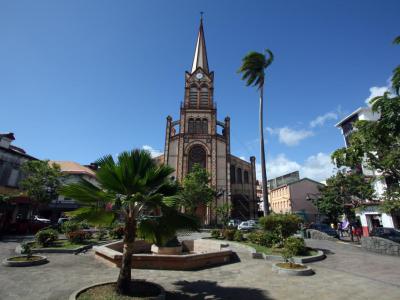
The Saint Louis Cathedral stands as a significant religious and architectural landmark on the island. This Roman Catholic cathedral, inspired by neogothic design, boasts a soaring spire reaching approximately 59 meters into the sky.

Dedicated to the patron saint of France, King Louis IX, the cathedral serves as the seat of the Archbishop of Saint Pierre and Fort-de-France since 1967. Its construction was initiated in 1895, following the devastating cyclone that destroyed the previous cathedral in 1891. Designed by Pierre-Henri Picq, the cathedral's architectural elegance and structural integrity reflect the resilience of its community.

The cathedral's framework, entirely constructed of metal, is engineered to withstand various natural disasters, including fire, earthquakes, and cyclones. Its interior features intricate stained glass windows that narrate the history of the city and depict the life of Saint Louis, embodying elements of Roman-Byzantine architecture.

As a testament to the devout Catholic faith of the Martinican people, the Saint Louis Cathedral remains a focal point for religious observance. Weekly masses and Saturday night services draw congregations that fill the church to capacity, underscoring its importance as a spiritual center within the community.

Beyond its religious significance, the Saint Louis Cathedral stands as a symbol of Martinique's resilience and cultural heritage. Its majestic spire punctuates the skyline of Fort-de-France, serving as a beacon of faith and a testament to the enduring strength of the island's people.
7
Grand Marche (Grand Market)

7) Grand Marche (Grand Market)

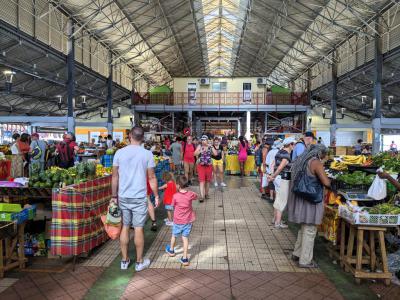
The Grand Market or Spice Market, stands as a vibrant epicenter of activity in Fort-de-France. Renowned as the largest market on the island, it beckons visitors with promises of authenticity and the vivacious spirit of the Caribbean.

Constructed in 1886 under the architectural guidance of Pierre-Henri Picq, renowned for his work on iconic structures like the Saint-Louis Cathedral and the Schoelcher Library, the Grand Market exudes a timeless charm. Housed within a spacious hall in the heart of the city center, it embodies the essence of Martinique's rich heritage and cultural heritage.

Stepping into the Grand Market is a sensory adventure, where one is enveloped by a kaleidoscope of sights, sounds, and smells. The bustling atmosphere pulsates with the warmth and energy of Martinique, inviting exploration and discovery. Countless stalls brim with an array of exotic fruits, some of which may be unfamiliar yet enticing to the adventurous palate.

The Grand Market is a treasure trove of delights, offering an eclectic assortment of goods and souvenirs. Creole dolls, handmade crafts, aromatic spices, and fragrant flowers captivate the senses, while samples of flavored rums tempt the palate with their intoxicating aromas of vanilla or coffee.

As hunger sets in, visitors can follow the inviting aromas to the market’s eateries, where local culinary specialties await. From quick bites to leisurely meals, the Grand Market offers a memorable food experience that leaves an impression on both the palate and the heart.
8
Theatre Aime Cesaire

8) Theatre Aime Cesaire

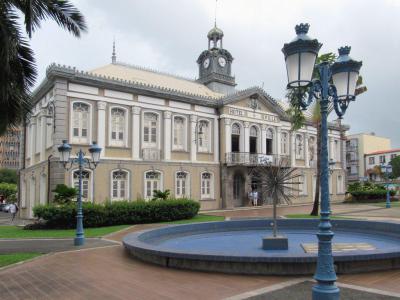
Housed within the elegant confines of the Old Town Hall, Theatre Aime Cesaire exudes architectural grandeur, characterized by its campanile adorned with a four-sided clock and ornate wooden details.

Constructed in the distinctive style of West Indian architecture, the Old Town Hall boasts intricate dentiled frieze decorations, showcasing the region's rich cultural heritage. Inside, visitors are greeted by a poignant statue crafted by Albert-Ernest Carrier-Belleuse in 1879. Depicting a liberated slave, the statue symbolizes the abolition of slavery and bears the names of all members of the provisional government of 1848.

In 1912, an annex was added to the building, giving rise to a municipal theater renowned for its Italian-style hall boasting 800 seats. The theater's impeccable acoustics provide an ideal setting for a diverse array of performances, ranging from classical plays to traditional Martinican music and dance.

Today, the Theatre Aime Cesaire serves as a vibrant cultural hub, hosting a myriad of exhibitions and shows that celebrate the artistic heritage of Martinique. In honor of the native poet Aimé Césaire, who passed away in April 2008, the venue was renamed on September 30, 2009, paying homage to his enduring legacy.
9
Regional Museum of History and Ethnography

9) Regional Museum of History and Ethnography

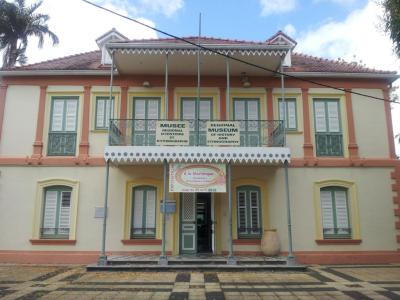
The Regional Museum of History and Ethnography is housed in a refined bourgeois residence built in 1887, offering visitors a window into the Creole culture of the late 19th century. The ground floor features a flexible space used for temporary exhibitions and video presentations, creating an engaging introduction to the museum. A small shop is also available, allowing visitors to purchase souvenirs and keepsakes.

The first floor presents the museum’s permanent collections, which recreate the atmosphere of a 19th-century Creole household. Visitors can explore period furniture, household objects, costumes, and jewelry, providing insight into daily life at the time. Among the exhibits are West Indian dresses made from madras and brocade satin, known as douillettes, alongside intricately crafted Creole jewelry that reflects the region’s cultural identity.

Throughout the museum, paintings and engravings trace Martinique’s historical events, including the development of Saint-Pierre and Fort-de-France. These artworks help visitors understand the island’s past and its social and cultural evolution over the centuries.

In the attic, the museum houses a specialized library focused on the study of slavery, with over a thousand works dating from the 17th to the 19th centuries. This collection provides a valuable resource for researchers and scholars, offering detailed insights into a critical period of Martinique’s history.
10
Fort Saint Louis

10) Fort Saint Louis (must see)

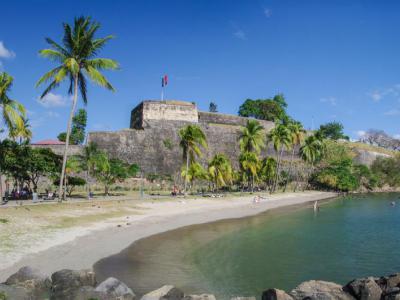
Perched on a strategic hill overlooking both the city and the Baie des Flamands, Fort Saint Louis is home to well-preserved military architecture from the 17th and 18th centuries. Visits are available only through guided tours, which can be booked at the tourist counter in La Savane.

Inside the fortress, visitors are immediately met with wide views of the Caribbean Sea, creating a strong sense of place and connection to the fort’s maritime role. The terraces and pathways also tend to attract local iguanas, which have become part of the site’s atmosphere and often welcome visitors with quiet curiosity.

Fort Saint Louis is composed of multiple bastions and defensive structures that reveal how the fort once operated. The Carenage Bastion, the Royal Bastion, the Low Battery of the Point, and the Sainte-Marthe Bastion form the core of the complex. Each area highlights a different element of fortification design, from narrow passageways and vaulted rooms to lookout points shaped by centuries of use. Exploring these spaces offers insight into the strategic thinking that guided French naval defense during this period.

Throughout the tour, guides explain the purpose of the fort’s half-moon outworks, casemates, and watchtowers, helping visitors understand how the site functioned as a protective stronghold. The presence of original cannons reinforces the military character of the fort, offering a tangible link to the island’s past.

Walking through Fort Saint Louis gradually reveals a layered history shaped by both conflict and daily life. The contrast between the fort’s solid stone walls and the surrounding sea, along with the occasional iguana crossing a path, creates an experience that feels grounded and authentic.
11
Plage La Francaise (French Beach)

11) Plage La Francaise (French Beach)

The French Beach, situated just a stone's throw away from the bustling shopping streets of Fort-de-France, offers a convenient and lively seaside retreat. Nestled at the foot of Fort Saint Louis, this beach serves as an extension of the Malecon, the city's waterfront promenade, making it a focal point for daytime and evening entertainment.

The beach's proximity to the town center ensures that it remains abuzz with activity throughout the day. Early risers often flock to the French Beach for morning sports sessions, while families frequent the area on weekends and holidays, bringing their children along to enjoy the sun and sea. Additionally, it's a popular meeting spot for young people, adding to its vibrant atmosphere.

While the French Beach may not boast the picturesque charm of some of Martinique's more secluded beaches, it still offers a pleasant environment for visitors to relax and unwind. The soft, golden sands provide a comfortable setting for sunbathing and leisurely walks along the shore.

However, it's important to note that, particularly on weekends and during certain evening hours, the French Beach may experience increased crowds and activity levels. While this can add to the lively atmosphere, visitors should exercise caution and be mindful of their surroundings. The area is monitored by video surveillance and regularly patrolled by municipal police to ensure the safety and security of beachgoers and visitors to the pier alike.