

Fort William Introduction Walking Tour (Self Guided), Fort William
Fort William is the largest town in the southwestern Scottish Highlands that attracts a number of tourists each year. Originally founded as a settlement near the fort, the town contains a number of prominent landmarks, including old churches, monuments, memorials, and the fort. Follow this self-guided tour to see the town's most popular sights.
How it works: Download the app "GPSmyCity: Walks in 1K+ Cities" from Apple App Store or Google Play Store to your mobile phone or tablet. The app turns your mobile device into a personal tour guide and its built-in GPS navigation functions guide you from one tour stop to next. The app works offline, so no data plan is needed when traveling abroad.
Fort William Introduction Walking Tour Map
Guide Name: Fort William Introduction Walking Tour
Guide Location: Scotland » Fort William (See other walking tours in Fort William)
Guide Type: Self-guided Walking Tour (Sightseeing)
# of Attractions: 8
Tour Duration: 1 Hour(s)
Travel Distance: 1.2 Km or 0.7 Miles
Author: leticia
Sight(s) Featured in This Guide:
Guide Location: Scotland » Fort William (See other walking tours in Fort William)
Guide Type: Self-guided Walking Tour (Sightseeing)
# of Attractions: 8
Tour Duration: 1 Hour(s)
Travel Distance: 1.2 Km or 0.7 Miles
Author: leticia
Sight(s) Featured in This Guide:
- High Street
- West Highland Museum
- St. Andrew's Church
- Duncansburgh Church
- Fort William War Memorial
- Donald Cameron of Lochiel Memorial
- Fort William Library
- Old Fort
1) High Street
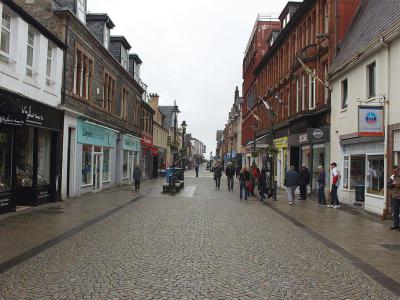
This main street brings together daily life and local activity. It developed mainly in the late 18th and 19th centuries, when the area grew as a market town and port for the western Highlands. Many buildings date from this time and are built of stone, with narrow fronts and simple, practical designs. The gentle curve of the street allows brief views toward the water and the surrounding hills.
Today, the street has a mix of shops and places to eat, including outdoor clothing stores, bookshops, bakeries, cafés, pharmacies, and small souvenir shops. This reflects its close link to walking, climbing, and travel. Long-established businesses sit alongside newer ones, and during the day people stop to buy supplies, have coffee, or pass through on their way elsewhere.
The street also serves as a meeting place, with benches and small open areas where people stop rather than hurry through. In the evening, pubs and restaurants create a calmer mood, especially outside the busy summer season. The pace changes with the time of year, from steady summer crowds to quieter, more local winter days.
Today, the street has a mix of shops and places to eat, including outdoor clothing stores, bookshops, bakeries, cafés, pharmacies, and small souvenir shops. This reflects its close link to walking, climbing, and travel. Long-established businesses sit alongside newer ones, and during the day people stop to buy supplies, have coffee, or pass through on their way elsewhere.
The street also serves as a meeting place, with benches and small open areas where people stop rather than hurry through. In the evening, pubs and restaurants create a calmer mood, especially outside the busy summer season. The pace changes with the time of year, from steady summer crowds to quieter, more local winter days.
2) West Highland Museum (must see)
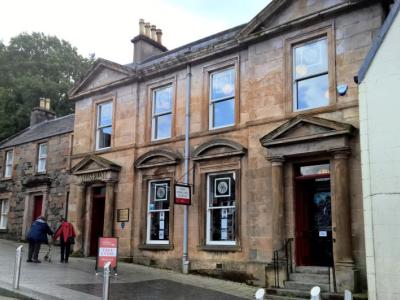
The West Highland Museum tells the story of life in the western Highlands through everyday objects, photographs, and written records. It is run by a local charity with help from volunteers, which gives it a clear local focus. The displays are spread over several floors and are easy to follow, allowing visitors to move around at their own pace and dip into topics that interest them.
A key part of the museum looks at the Jacobite uprisings of the 18th century. Original objects from this period include weapons, clothing, and personal items linked to the events of 1745 – 1746. Some exhibits are connected to Bonnie Prince Charlie and people who supported the Jacobite cause. Short texts explain what happened and why these events had a lasting effect on Highland communities, without using complex language.
Other sections focus on daily life and work in the Highlands. Exhibits cover fishing, farming, travel, and local industries, showing how people earned a living and moved around the region. Old tools, household items, and photographs help show how routines changed over time. There is also material on education and the growth of tourism in the 19th century, which brought new visitors and new sources of income.
The museum includes a small shop selling books and items linked to Highland history and culture. Entry is free, making it easy to visit even for a short stop. For visitors who want to better understand the people behind the landscape, the museum offers clear and practical insight into local history.
A key part of the museum looks at the Jacobite uprisings of the 18th century. Original objects from this period include weapons, clothing, and personal items linked to the events of 1745 – 1746. Some exhibits are connected to Bonnie Prince Charlie and people who supported the Jacobite cause. Short texts explain what happened and why these events had a lasting effect on Highland communities, without using complex language.
Other sections focus on daily life and work in the Highlands. Exhibits cover fishing, farming, travel, and local industries, showing how people earned a living and moved around the region. Old tools, household items, and photographs help show how routines changed over time. There is also material on education and the growth of tourism in the 19th century, which brought new visitors and new sources of income.
The museum includes a small shop selling books and items linked to Highland history and culture. Entry is free, making it easy to visit even for a short stop. For visitors who want to better understand the people behind the landscape, the museum offers clear and practical insight into local history.
3) St. Andrew's Church (must see)
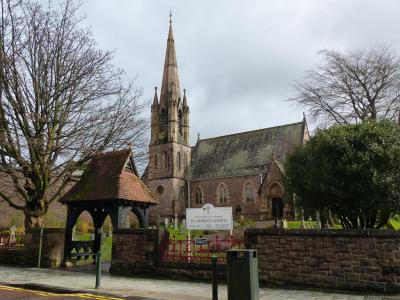
St. Andrew’s Church was consecrated in 1880 and belongs to the Scottish Episcopal Church, part of the Anglican tradition. It was funded by a wealthy local parishioner, George Baynton Davey, who wanted to replace an earlier Episcopal chapel built in 1817 with a lasting and well-designed church. The building stands near Loch Linnhe and is set slightly back from the road, which gives it a quieter, more sheltered setting.
The church was designed by Alexander Ross, a well-known Highland architect who also designed Inverness Cathedral. It follows the Decorated Gothic Revival style, which was popular in the late 19th century. The tall spire and pointed windows shape the outside, making the building easy to recognize from a distance. The overall form is traditional, but carefully planned, showing the confidence and ambition behind the project.
Inside, the church is richer in detail than the exterior suggests. This is why it is sometimes known as the “Queen of Highland Churches.” Materials such as Caen stone and Connemara marble are used throughout the interior, giving the space a warm but solid appearance. The stained glass windows are of high quality and fill the church with colored light. One of the most striking features is the mosaic floor in the baptistery, which reflects the care and expense invested in the building.
Today, the church remains active and is often open to visitors. Even a brief visit offers a clear look at Episcopal church design in the Highlands and the personal story behind its creation.
The church was designed by Alexander Ross, a well-known Highland architect who also designed Inverness Cathedral. It follows the Decorated Gothic Revival style, which was popular in the late 19th century. The tall spire and pointed windows shape the outside, making the building easy to recognize from a distance. The overall form is traditional, but carefully planned, showing the confidence and ambition behind the project.
Inside, the church is richer in detail than the exterior suggests. This is why it is sometimes known as the “Queen of Highland Churches.” Materials such as Caen stone and Connemara marble are used throughout the interior, giving the space a warm but solid appearance. The stained glass windows are of high quality and fill the church with colored light. One of the most striking features is the mosaic floor in the baptistery, which reflects the care and expense invested in the building.
Today, the church remains active and is often open to visitors. Even a brief visit offers a clear look at Episcopal church design in the Highlands and the personal story behind its creation.
4) Duncansburgh Church
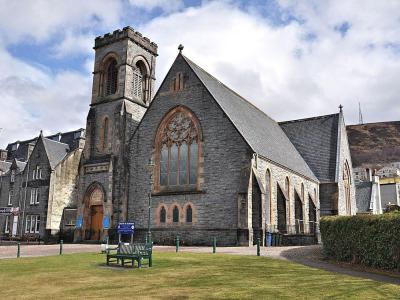
Duncansburgh MacIntosh Parish Church was built in 1881 and opened in August 1882, replacing an earlier church from 1792. Construction cost about £5,000 and reflects a time of growth linked to trade, rail travel, and tourism. The name “Duncansburgh” comes from Duncan Cameron of Fassfern, who renamed the settlement in 1834; it became the Burgh of Fort William in 1874. The current church name dates from a 2007 union with the MacIntosh Memorial congregation.
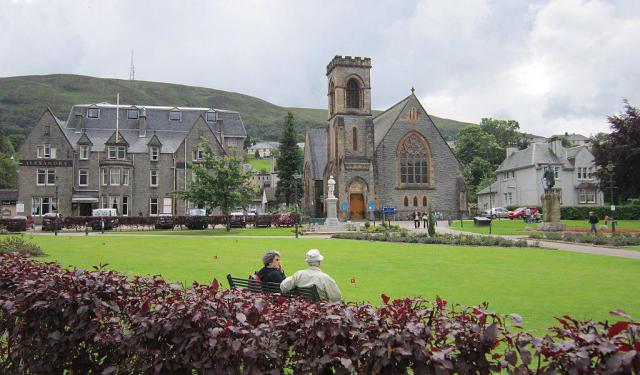
The church is a stone-built Victorian Gothic kirk. A tall buttressed tower and large pointed windows give the exterior a strong, vertical shape. Traceried windows and solid masonry reflect common church design of the late 19th century. The use of local stone helps the building sit naturally within its setting, while the scale and height make it easy to recognise from nearby viewpoints.
Inside, the church has a calm and well-lit atmosphere. Stained glass windows from the 1880s to the 1970s show biblical scenes and symbols. Historic features still in use include an Austrian oak pulpit from 1905 and an organ from 1906. The church continues to host services as well as choirs, dance classes, and social events, showing how the building remains part of everyday community life.
The church is a stone-built Victorian Gothic kirk. A tall buttressed tower and large pointed windows give the exterior a strong, vertical shape. Traceried windows and solid masonry reflect common church design of the late 19th century. The use of local stone helps the building sit naturally within its setting, while the scale and height make it easy to recognise from nearby viewpoints.
Inside, the church has a calm and well-lit atmosphere. Stained glass windows from the 1880s to the 1970s show biblical scenes and symbols. Historic features still in use include an Austrian oak pulpit from 1905 and an organ from 1906. The church continues to host services as well as choirs, dance classes, and social events, showing how the building remains part of everyday community life.
5) Fort William War Memorial
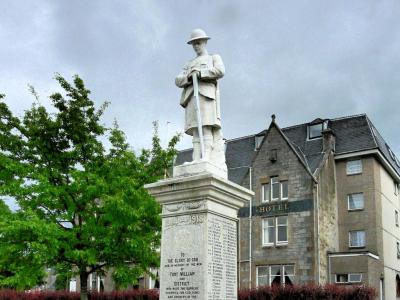
The Fort William War Memorial was built to remember local people who died while serving in the armed forces. It was unveiled on July 5, 1922, by Lochiel after the First World War and later expanded to include names from the Second World War and the Gulf War of 1990–1991. From the start, it was meant as a public place of remembrance, and its elevated position makes it clearly visible within the surrounding landscape.
The memorial is made of stone and follows a traditional design. A marble figure of a kilted Highland soldier stands at the top, resting on his rifle with arms reversed, a pose linked to mourning. The statue rises from a stepped base with panels listing the names of the dead, and the simple design keeps the focus on remembrance rather than decoration.
Open views over water and hills shape the setting and create a quiet, open atmosphere. The memorial is still used for services on Remembrance Day, but many people visit at other times of the year as well. It shows how large conflicts affected a small Highland community and how those losses are remembered in a shared public space.
The memorial is made of stone and follows a traditional design. A marble figure of a kilted Highland soldier stands at the top, resting on his rifle with arms reversed, a pose linked to mourning. The statue rises from a stepped base with panels listing the names of the dead, and the simple design keeps the focus on remembrance rather than decoration.
Open views over water and hills shape the setting and create a quiet, open atmosphere. The memorial is still used for services on Remembrance Day, but many people visit at other times of the year as well. It shows how large conflicts affected a small Highland community and how those losses are remembered in a shared public space.
6) Donald Cameron of Lochiel Memorial
Just across the path from the War Memorial stands a bronze statue on a stone base dedicated to Donald Cameron of Lochiel. Created by W. Birnie Rhind and unveiled in 1909, it commemorates the 24th Chief of Clan Cameron, a Victorian-era leader. The memorial was erected shortly after his death to recognize his long public service, rather than any role in military conflict.
Donald Cameron of Lochiel lived from 1835 to 1905 and served for 37 years as a Member of Parliament. He was also Lord Lieutenant of Inverness-shire, representing the Crown at a local level. Known as a landowner and community leader, he worked within the political system of his time. The monument was commissioned by local residents to acknowledge his steady civic and regional service.
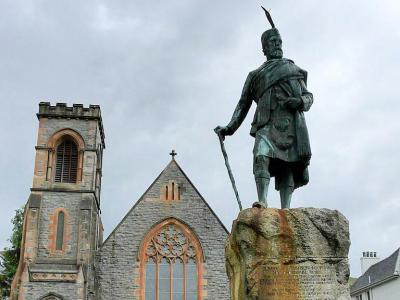
The statue shows Lochiel in Highland dress, wearing a kilt and plaid, without weapons. His calm stance reflects how Highland chiefs were viewed around 1900, as civic leaders rather than warriors. The memorial belongs to a period when clan history was increasingly marked through public monuments that focused on service, tradition, and local responsibility.
Donald Cameron of Lochiel lived from 1835 to 1905 and served for 37 years as a Member of Parliament. He was also Lord Lieutenant of Inverness-shire, representing the Crown at a local level. Known as a landowner and community leader, he worked within the political system of his time. The monument was commissioned by local residents to acknowledge his steady civic and regional service.
The statue shows Lochiel in Highland dress, wearing a kilt and plaid, without weapons. His calm stance reflects how Highland chiefs were viewed around 1900, as civic leaders rather than warriors. The memorial belongs to a period when clan history was increasingly marked through public monuments that focused on service, tradition, and local responsibility.
7) Fort William Library
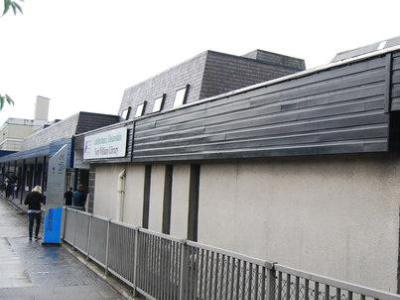
Fort William Library is a public library provided by High Life Highland, an arms-length organisation of Highland Council. It is part of the Highland library network, allowing registered users to access libraries across the council area. The library mainly serves as a quiet community space but is also open to visitors looking for a place to read, plan, or take a short break.
Inside, the library is easy to navigate, with all services on one level and automatic doors. The collection covers fiction, non-fiction, children’s books, and large-print editions, along with a local interest section on Highland history and Scottish culture. Users can also access digital newspapers, magazines, and online reference resources. Seating areas are available for individual or small group study.
Free internet and public computers are available, with Microsoft Office installed. Printing is offered for a small fee, including a WiFi printing option for personal devices. Staff at the enquiry desk can help visitors find materials and use services. The library hosts regular activities such as Bookbug sessions, including Gaelic ones, Lego Club, Craft & Chat groups, and monthly reading groups. It also supports the NHS Near Me service by providing private spaces for remote health appointments.
Inside, the library is easy to navigate, with all services on one level and automatic doors. The collection covers fiction, non-fiction, children’s books, and large-print editions, along with a local interest section on Highland history and Scottish culture. Users can also access digital newspapers, magazines, and online reference resources. Seating areas are available for individual or small group study.
Free internet and public computers are available, with Microsoft Office installed. Printing is offered for a small fee, including a WiFi printing option for personal devices. Staff at the enquiry desk can help visitors find materials and use services. The library hosts regular activities such as Bookbug sessions, including Gaelic ones, Lego Club, Craft & Chat groups, and monthly reading groups. It also supports the NHS Near Me service by providing private spaces for remote health appointments.
8) Old Fort
The Old Fort lies beside the water where two sea lochs meet. It was first built in 1654 during the Wars of the Three Kingdoms, in the time of Oliver Cromwell. General George Monck ordered the construction of the original fort, then called Inverlochy Fort. It was used by the government army to control movement through the Great Glen and to weaken the power of local clans, especially Clan Cameron.
The first fort was a simple wooden structure with turf and wattle ramparts, built quickly for military use. In 1690, it was rebuilt in stone under General Hugh MacKay and renamed Fort William after King William III. This version became a key military base and withstood a two-week Jacobite siege in March and April 1746, staying under government control.
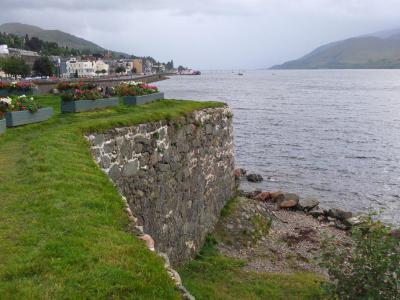
The fort remained in military use until 1854. Most of the visible damage dates from 1889, when the site was sold to the West Highland Railway Company and much of it was removed. Today, visitors can see low stone walls, parts of the ramparts, a sea gate, and several cannons, with information boards explaining the site’s history.
The first fort was a simple wooden structure with turf and wattle ramparts, built quickly for military use. In 1690, it was rebuilt in stone under General Hugh MacKay and renamed Fort William after King William III. This version became a key military base and withstood a two-week Jacobite siege in March and April 1746, staying under government control.
The fort remained in military use until 1854. Most of the visible damage dates from 1889, when the site was sold to the West Highland Railway Company and much of it was removed. Today, visitors can see low stone walls, parts of the ramparts, a sea gate, and several cannons, with information boards explaining the site’s history.
Walking Tours in Fort William, Scotland

Create Your Own Walk in Fort William
Creating your own self-guided walk in Fort William is easy and fun. Choose the city attractions that you want to see and a walk route map will be created just for you. You can even set your hotel as the start point of the walk.
Fort William Shopping Tour
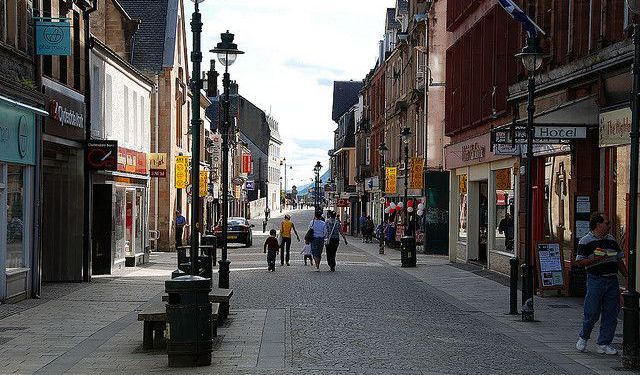
Fort William's town centre provides a good shopping experience. The town’s main street - High Street – is the major shopping spot. Here you will find a number of local shops, specialty stores, gift and souvenir shopping venues. This walking tour will guide you to the most prominent and popular shopping places in Fort William.
Tour Duration: 1 Hour(s)
Travel Distance: 0.1 Km or 0.1 Miles
Tour Duration: 1 Hour(s)
Travel Distance: 0.1 Km or 0.1 Miles
The Most Popular Cities
/ view all