

Frederiksted Introduction Walking Tour, Frederiksted

Frederiksted Introduction Walking Tour (Self Guided), Frederiksted

What kind of town greets the Caribbean sunset with red forts, pastel streets, and the slow rhythm of waves against the pier? Frederiksted does. This small waterfront town on St. Croix may look relaxed today, but its harbor once connected the island to trading routes that stretched across the Atlantic.

Located on the western coast of St. Croix in the U.S. Virgin Islands, Frederiksted was established in 1751 by the Danish colonial government as a planned port supporting the island’s growing sugar industry. Its deep harbor and orderly street grid helped it develop into an important shipping point for sugar, rum, and molasses produced on plantations across St. Croix.

The name Frederiksted comes from Danish and translates roughly as “Frederik’s Place” or “Frederik’s Town.” It honors King Frederick V of Denmark, who ruled from 1746 to 1766 during a period when Denmark strengthened its Caribbean presence.

During the 18th and 19th centuries, Frederiksted grew into one of the island’s main commercial centers. Warehouses, customs offices, and merchant houses lined the waterfront, supporting the export economy of the Danish West Indies. Fort Frederik, built in the mid-18th century to defend the harbor, stood at the center of the town’s administration and protection.

After emancipation in 1848, the plantation economy weakened. Tensions resurfaced during the 1878 Fireburn uprising, when laborers protested harsh plantation conditions. A new political chapter began in 1917, when Denmark sold the Virgin Islands to the United States.

Today, Frederiksted is known for its historic waterfront, colonial architecture, and relaxed atmosphere. Walking through the city centre, visitors encounter pastel-colored buildings, broad streets laid out during the Danish era, and views of the Caribbean Sea. Landmarks such as Fort Frederik, the historic Customs House, and the Eliza James-McBean Clock Tower reflect the town’s layered past, while shops, cafés, beaches, and parks add everyday life to the scene.

Frederiksted is best understood slowly. A short walk through its streets reveals a surprising mix of Caribbean color, Danish colonial planning, seaside views, and everyday island life.
How it works: Download the app "GPSmyCity: Walks in 1K+ Cities" from Apple App Store or Google Play Store to your mobile phone or tablet. The app turns your mobile device into a personal tour guide and its built-in GPS navigation functions guide you from one tour stop to next. The app works offline, so no data plan is needed when traveling abroad.

Download The GPSmyCity App

Frederiksted Introduction Walking Tour Map

Guide Name: Frederiksted Introduction Walking Tour
Guide Location: US Virgin Island » Frederiksted (See other walking tours in Frederiksted)
Guide Type: Self-guided Walking Tour (Sightseeing)
# of Attractions: 10
Tour Duration: 1 Hour(s)
Travel Distance: 1.8 Km or 1.1 Miles
Author: DanaOffice
Sight(s) Featured in This Guide:
  • Frederiksted Pier
  • Oscar E Henry Customs House
  • Caribbean Museum Center for the Arts
  • Verne I. Richards Veteran Memorial Park
  • Holy Trinity Lutheran Church
  • St. Patrick Catholic Church
  • Cruise Pier Shops
  • Eliza James-McBean Clock Tower
  • Fort Frederik
  • Fort Frederik Beach
1
Frederiksted Pier

1) Frederiksted Pier (must see)

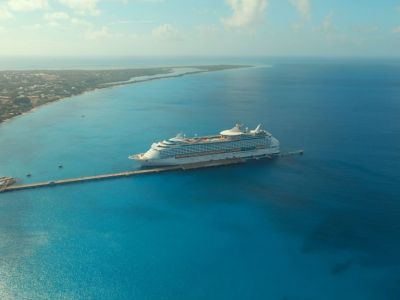
Frederiksted Pier, officially known as the Ann E. Abramson Marine Facility, stretches prominently into the Caribbean Sea at the western edge of St. Croix and serves as the island’s only cruise ship port. At over 1,500 feet long, the deep-water pier was designed to accommodate some of the world’s largest cruise vessels, while also allowing anchorage in the outer harbor for even larger ships. Its sturdy, modern construction reflects both its commercial importance and the challenges posed by Caribbean weather, as earlier versions of the pier were destroyed by Hurricanes Hugo in 1989 and Marilyn in 1995.

Beyond its role as a cruise terminal, the pier has become closely tied to Frederiksted’s waterfront life. Just steps away, visitors will find a public beach, restaurants, bars, shops, and access to taxis and tour buses connecting to Christiansted and other parts of the island. The surrounding area is relaxed and walkable, making it easy to explore the town on foot or simply enjoy views of the sea. Public facilities, including restrooms and transportation services, are conveniently located near the pier entrance.

One of the pier’s most distinctive features is its reputation as a marine recreation site, especially when no cruise ship is docked. The shallow waters beneath and around the pier support coral growth, sponges, and a surprising variety of marine life. Scuba divers and snorkelers are drawn to the area for its calm conditions and excellent visibility, particularly for night dives and underwater photography, where creatures such as seahorses, frogfish, and batfish can often be seen. Remnants of the old pier, now covered in coral, have further enhanced the underwater environment.

When cruise ships are in port, access to the pier itself is restricted for safety and security reasons, but the surrounding waterfront remains lively. Whether arriving by ship or visiting from elsewhere on the island, Frederiksted Pier functions as both a transportation gateway and a focal point for leisure, offering a blend of maritime infrastructure, local culture, and close connection to the sea.
2
Oscar E Henry Customs House

2) Oscar E Henry Customs House

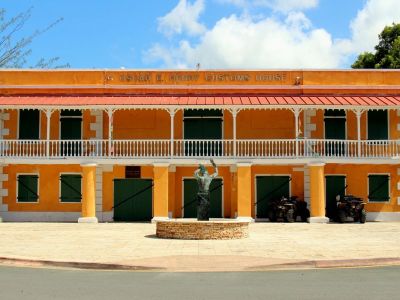
The Oscar E. Henry Customs House is one of Frederiksted’s most prominent historic buildings, standing along the waterfront near the town’s central square and pier. Constructed in the mid-19th century during Danish colonial rule, it originally served as the port’s customs house—the official gateway for trade. Every barrel of sugar, rum, and molasses leaving Frederiksted, and every luxury good arriving from Europe, had to be inspected and cleared here, underscoring the town’s importance as a maritime and commercial center.

Architecturally, the building is a classic example of Danish Colonial Neoclassical design, characterized by its symmetry, solid masonry construction, and restrained decorative elements meant to convey authority and order. Its most recognizable feature is the grand double staircase leading to a second-floor balcony, a deliberate design choice intended to impress merchants and officials arriving by sea. Oriented toward the harbor, the building visually reinforced its role as an overseer of port activity and colonial administration.

The structure was later named in honor of Oscar E. Henry, a respected Virgin Islands leader and public servant whose contributions to local governance left a lasting impact. Though its function has changed over time, the building has retained its identity as a symbol of public authority and civic administration. Its distinctive “Danish yellow” façade with white trim reflects traditional coloring used for government buildings during the Danish period.

Today, the Oscar E. Henry Customs House no longer operates as a customs facility and instead serves as administrative offices for the National Park Service, supporting nearby historic sites on St. Croix.
3
Caribbean Museum Center for the Arts

3) Caribbean Museum Center for the Arts

The Caribbean Museum Center for the Arts (CMCArts) is a central part of Frederiksted’s cultural life, offering insight into the artistic traditions and contemporary creativity of St. Croix and the wider Caribbean. The museum occupies two restored historic buildings on Strand Street: an 18th-century Danish merchant’s estate and a former bakery, connected by a welcoming open-air courtyard. This setting ties the museum closely to Frederiksted’s architectural heritage while placing it directly along the waterfront.

Inside, CMCArts presents rotating exhibitions that highlight Caribbean artists, themes, and techniques, with particular emphasis on work connected to the Virgin Islands. Paintings, sculpture, photography, and mixed-media works explore subjects such as history, identity, landscape, and daily life. The exhibitions balance traditional influences with contemporary approaches, showing how Caribbean art continues to develop while remaining grounded in local experience.

The museum is especially known for its open courtyard, which functions as a social and cultural gathering space rather than a quiet gallery alone. Regular programs such as Sunset Jazz concerts, artist talks, and community events bring the space to life and make CMCArts an active meeting point for residents and visitors alike. Educational workshops and lectures further support creative practice and arts education across age groups.

Its position along Strand Street offers clear views of Frederiksted Pier, a scene frequently used as inspiration for plein-air painting workshops and outdoor programs.
4
Verne I. Richards Veteran Memorial Park

4) Verne I. Richards Veteran Memorial Park

Verne I. Richards Veteran Memorial Park is a small but meaningful public space along Frederiksted’s waterfront. The park is named after Verne I. Richards, a respected local figure and U.S. military veteran whose service and civic commitment are remembered through this memorial space.

At the center of Verne I. Richards Veteran Memorial Park stands a group of memorial monuments and plaques honoring men and women from the U.S. Virgin Islands who served in the U.S. Army, Navy, Air Force, Marine Corps, and Coast Guard. After entering the park from Strand Street, walk toward the open paved area near the middle of the park. Here you will find the memorial displays arranged along the pathways and landscaped sections. Visitors can move from one monument to another while reading the inscriptions that recognize the island’s long tradition of military service.

Beyond its commemorative role, the park functions as an open waterfront space with views of the Caribbean Sea. Benches beneath mature mahogany and sea grape trees provide shade and invite visitors to pause, socialize, or watch the sunset. Locals often gather here, giving the park a lived-in atmosphere that reflects Frederiksted’s long-standing reputation as “Freedom City.”
5
Holy Trinity Lutheran Church

5) Holy Trinity Lutheran Church

Holy Trinity Lutheran Church is one of Frederiksted’s most historically significant religious landmarks, reflecting the town’s Danish colonial past and its long-standing Lutheran tradition. Founded in the 18th century during Danish rule, the congregation was originally associated with the Church of Denmark and served both European settlers and the local population. The church stands within Frederiksted’s historic district, close to the waterfront, and forms part of the town’s early civic and spiritual landscape.

The present church building is notable for its restrained, functional design, consistent with Lutheran architectural traditions of the period. Whitewashed walls, simple lines, and a modest interior emphasize clarity and reflection rather than elaborate decoration. Inside, the atmosphere is calm and dignified, with traditional pews, an altar, and period details that convey a sense of continuity across generations of worshippers.

Holy Trinity Lutheran Church also holds historical importance through its connection to key moments in Virgin Islands history. Following the emancipation of enslaved people in 1848, the church played a role in the social and spiritual life of the newly freed population, offering religious instruction and community support during a time of major transition. Its continued presence reflects the shifting cultural and social fabric of Frederiksted over centuries.

Today, the church remains an active place of worship while welcoming visitors interested in the island’s religious heritage.
6
St. Patrick Catholic Church

6) St. Patrick Catholic Church

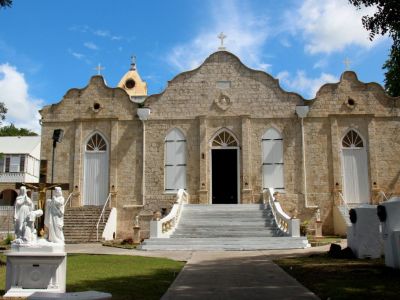
Saint Patrick Catholic Church stands near the heart of Frederiksted and represents one of the town’s most enduring religious landmarks. Established in the mid-19th century, the parish reflects the growth of the Catholic community on St. Croix during a period of social change and expanding cultural life. Its presence close to the waterfront and historic district places the church naturally within the everyday rhythm of the town.

The current church building is modest in scale and straightforward in design, emphasizing function and community rather than elaborate ornamentation. Inside, the atmosphere is calm and welcoming, with simple furnishings, stained glass, and religious artwork that reflect local craftsmanship and long-standing Catholic traditions. The interior invites quiet reflection, offering a contrast to the lively streets and beaches nearby.

Saint Patrick Catholic Church holds particular historical importance because of its connection to key moments in Virgin Islands history. After the proclamation of emancipation in 1848 at nearby Fort Frederik, Catholic clergy played a role in supporting the newly freed population, and the church became a place of spiritual guidance and stability. Over generations, it has served as a gathering place for worship, celebrations, and community milestones such as baptisms, weddings, and feast days.

Today, Saint Patrick Catholic Church continues to function as an active parish while also welcoming visitors interested in Frederiksted’s cultural and historical layers. For travelers exploring the town, a brief visit offers insight into the religious life that helped shape the community and provides a quiet pause amid the broader experience of St. Croix’s west end.
7
Cruise Pier Shops

7) Cruise Pier Shops

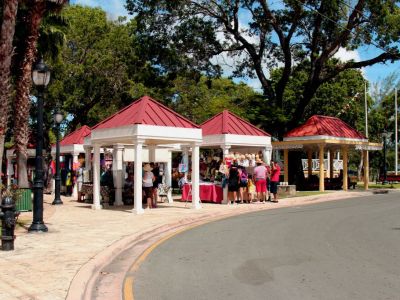
The Cruise Pier Shops in Frederiksted are the first stop for many visitors arriving by ship, located just beyond the end of the Frederiksted Pier along the waterfront. This compact shopping area is designed for easy access, allowing travelers to step directly from the pier into a relaxed commercial zone that reflects the character of the town rather than a large, enclosed cruise terminal. Its open layout and proximity to the sea make it a natural starting point for exploring Frederiksted on foot.

The shops offer a mix of locally owned businesses and familiar island retailers, selling souvenirs, jewelry, clothing, artwork, rum, and Virgin Islands–made products. Handmade crafts, locally inspired gifts, and duty-free items are common, giving visitors the chance to pick up mementos that connect to St. Croix’s culture and history. Many shop owners are local, and browsing often comes with conversation and recommendations for nearby beaches, restaurants, or landmarks.

Beyond shopping, the area serves as a practical hub. Taxi stands, tour operators, and transportation services are located nearby, making it easy to arrange island excursions or travel to Christiansted and other parts of St. Croix. Public restrooms and shaded areas are also available close to the pier entrance, adding to the convenience for cruise passengers.

With the town’s historic streets, waterfront parks, and beaches just steps away, the shops function as a gateway that blends commerce with local life, inviting travelers to continue beyond the pier and explore the west end of the island.
8
Eliza James-McBean Clock Tower

8) Eliza James-McBean Clock Tower

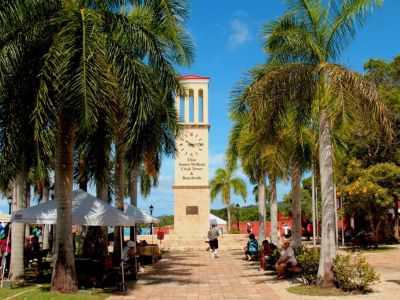
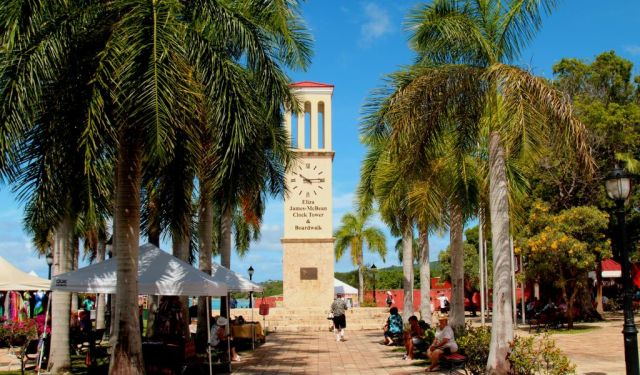
The Eliza James–McBean Clock Tower stands along the boardwalk at the entrance to Frederiksted’s Historic District, just beyond the end of Frederiksted Pier. Modest in size but rich in meaning, the clock tower marks the transition from the waterfront into the town’s historic core. Its location makes it a natural point of orientation for visitors beginning a walk through Frederiksted’s streets and nearby landmarks.

The tower is named in honor of Eliza James McBean, a lifelong resident of Frederiksted who was born and raised on nearby Queen Street. Known locally for her generosity and deep sense of community, Eliza was a mother to four children and a caregiver to many others. She was remembered for everyday acts of kindness—sharing homemade maubi (a traditional Caribbean drink), helping neighbors in need, and offering guidance to young people—quiet contributions that shaped daily life in the town.

Education formed the heart of Eliza James McBean’s legacy. She firmly believed that access to learning was essential for improving lives and expanding opportunities for Virgin Islanders. Through her advocacy, she supported scholarships, schools, and youth programs that helped generations move toward leadership and independence. She was also active in the Bright Hour Circle, a community organization that combined service with cultural expression through dances, celebrations, and outreach.

Mrs. McBean lived to the age of 105, and her influence extended well beyond education. She was deeply committed to preserving Virgin Islands culture, supporting local music, food traditions, and folklore so future generations could remain connected to their heritage. The clock tower that bears her name stands as a reminder of her long life of service, vision, and care for the Frederiksted community.
9
Fort Frederik

9) Fort Frederik (must see)

Fort Frederik is one of the most important historic landmarks on St. Croix. Recognizable by its deep red walls overlooking the harbor, the stone fortress was built by the Danish colonial administration between 1752 and 1760 to defend Frederiksted’s port during the height of the island’s sugar trade. Its thick masonry walls and corner bastions reflect practical military design. The fort is most famous as the site of emancipation in 1848, when thousands of enslaved people gathered outside its walls and Governor Peter von Scholten proclaimed the end of slavery in the Danish West Indies from the fort’s ramparts.

During the 1878 Fireburn labor revolt, the fort again became a focal point as workers protested harsh labor conditions in the post-emancipation era. Over time, the structure served many roles beyond military defense. Fort Frederik functioned as a prison, courthouse, police station, and administrative center, reflecting its importance in maintaining colonial authority.

Today, Fort Frederik is a National Historic Landmark within the Frederiksted Historic District. Once you pass through the main entrance gate of Fort Frederik from the waterfront side, you immediately step into the Historic Courtyard, an open square surrounded by arcaded buildings that once housed soldiers’ quarters and administrative rooms. From the courtyard, look for the doorways leading into the rooms along the inner perimeter of the fort. Several of these spaces contain the Museum Exhibits, which explain the history of Danish colonial rule, the sugar plantation economy, and the events surrounding the emancipation of enslaved people in 1848.

To see the Cannons and Defensive Features, follow the stairways that lead up from the courtyard to the ramparts along the outer walls of the fort. Once on the upper level, walk along the perimeter where the thick masonry walls and corner bastions overlook the harbor. Several historic cannons remain positioned along these defensive platforms, pointing toward the sea as they once did when guarding the port.

From the ramparts and surrounding area, one can enjoy clear views of the Frederiksted Pier, the harbor, and the Caribbean Sea.
10
Fort Frederik Beach

10) Fort Frederik Beach

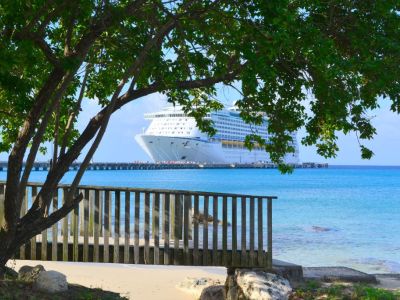
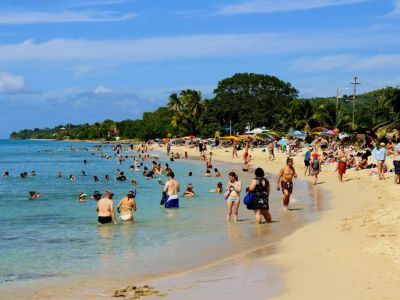
Fort Frederik Beach sits directly beside the historic Fort Frederik, offering one of the most accessible and relaxed seaside settings on St. Croix. This small, crescent-shaped beach lies along the island’s west coast, where calm waters and gentle waves make it especially inviting for swimming and wading. Its central location places visitors within easy walking distance of the town’s waterfront, restaurants, and the Frederiksted Pier, making it a natural stop while exploring the area.

The beach is best known for its clear, shallow water and sandy entry, which suits swimmers of all experience levels. Conditions here are usually calm, particularly in the morning, and the sandy bottom transitions gradually, allowing for comfortable snorkeling close to shore. Marine life can often be spotted near the rocks and sea grass patches, adding interest without requiring long swims offshore. Because of its west-facing orientation, the beach also offers warm afternoon light and memorable sunset views.

Fort Frederik Beach has long been a gathering place for both locals and visitors. Shaded areas near the fort walls provide relief from the sun, while the open shoreline allows plenty of space to spread out a towel or simply enjoy the view. The beach’s proximity to the fort adds historical context, linking leisure time with one of the most important landmarks in Virgin Islands history, where the emancipation of enslaved people was proclaimed in 1848.