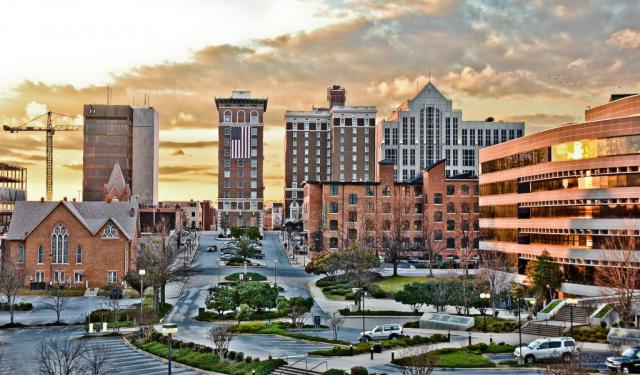


Greenville Introduction Walking Tour (Self Guided), Greenville
Greenville, South Carolina, nestled in the foothills of the Blue Ridge Mountains, seamlessly combines rich historical heritage with vibrant modern attractions: unique architectural landmarks, monumental buildings, parks, and picturesque places with waterfalls.
Greenville has roots in Cherokee hunting grounds, which became settler territory after Richard Pearis, a pioneer who had ties with the Cherokee people, established a plantation on this land around 1770. Greenville County was established in 1786, possibly named after General Nathanael Greene, an American military officer and planter who served in the Continental Army during the Revolutionary War. The town evolved from a village called Pleasantburg and was renamed Greenville in 1821, growing significantly through donations from Vardry McBee, a key figure in its development, who also promoted education and infrastructure like railroads.
During the Civil War, Greenville contributed significantly to the Confederate war effort, supplying over 2,000 soldiers, as well as essential supplies like food, clothing, and firearms. After the war, in 1869, Greenville transitioned from a town to a city, sparking a construction boom that included bridges, mills, and railroads. The establishment of cotton mills marked Greenville's transformation into a key textile hub, eventually earning it the title "Textile Center of the South" by 1915.
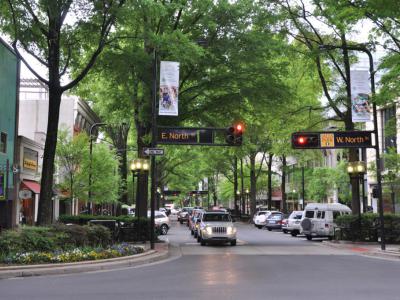
Throughout the 20th century, Greenville experienced significant growth and transformation. World War I marked its emergence as a military training hub, followed by commercial expansion in the 1920s, including the construction of the Poinsett Hotel. The Great Depression and the 1934 Textile Workers Strike severely impacted the local economy, prompting recovery efforts like the New Deal, which introduced key infrastructure projects. Post-World War II, Greenville saw further development with the rise of educational institutions and new businesses. Economic revitalization in the late 20th century included Main Street being converted into a two-lane road lined with trees and sidewalks, the opening of the Peace Center, and major corporate investments from companies like Michelin and BMW, fostering a vibrant urban and cultural landscape in Greenville.
During the 2000s, Greenville's key developments included the completion of Liberty Bridge at Falls Park in 2004 and the opening of the Swamp Rabbit Trail in 2010, boosting tourism and enhancing the popularity of nearby cities.
Today, Greenville invites guests to discover its hidden treasures. Come and see for yourself why the city continues to be a beloved destination in the heart of South Carolina. Join us on this self-guided tour to walk its charming streets, admire its historical districts, and enjoy the vibrant life of Greenville manifested in its remarkable attractions.
Greenville has roots in Cherokee hunting grounds, which became settler territory after Richard Pearis, a pioneer who had ties with the Cherokee people, established a plantation on this land around 1770. Greenville County was established in 1786, possibly named after General Nathanael Greene, an American military officer and planter who served in the Continental Army during the Revolutionary War. The town evolved from a village called Pleasantburg and was renamed Greenville in 1821, growing significantly through donations from Vardry McBee, a key figure in its development, who also promoted education and infrastructure like railroads.
During the Civil War, Greenville contributed significantly to the Confederate war effort, supplying over 2,000 soldiers, as well as essential supplies like food, clothing, and firearms. After the war, in 1869, Greenville transitioned from a town to a city, sparking a construction boom that included bridges, mills, and railroads. The establishment of cotton mills marked Greenville's transformation into a key textile hub, eventually earning it the title "Textile Center of the South" by 1915.
Throughout the 20th century, Greenville experienced significant growth and transformation. World War I marked its emergence as a military training hub, followed by commercial expansion in the 1920s, including the construction of the Poinsett Hotel. The Great Depression and the 1934 Textile Workers Strike severely impacted the local economy, prompting recovery efforts like the New Deal, which introduced key infrastructure projects. Post-World War II, Greenville saw further development with the rise of educational institutions and new businesses. Economic revitalization in the late 20th century included Main Street being converted into a two-lane road lined with trees and sidewalks, the opening of the Peace Center, and major corporate investments from companies like Michelin and BMW, fostering a vibrant urban and cultural landscape in Greenville.
During the 2000s, Greenville's key developments included the completion of Liberty Bridge at Falls Park in 2004 and the opening of the Swamp Rabbit Trail in 2010, boosting tourism and enhancing the popularity of nearby cities.
Today, Greenville invites guests to discover its hidden treasures. Come and see for yourself why the city continues to be a beloved destination in the heart of South Carolina. Join us on this self-guided tour to walk its charming streets, admire its historical districts, and enjoy the vibrant life of Greenville manifested in its remarkable attractions.
How it works: Download the app "GPSmyCity: Walks in 1K+ Cities" from Apple App Store or Google Play Store to your mobile phone or tablet. The app turns your mobile device into a personal tour guide and its built-in GPS navigation functions guide you from one tour stop to next. The app works offline, so no data plan is needed when traveling abroad.
Download The GPSmyCity App



Greenville Introduction Walking Tour Map
Guide Name: Greenville Introduction Walking Tour
Guide Location: USA » Greenville (See other walking tours in Greenville)
Guide Type: Self-guided Walking Tour (Sightseeing)
Tour Duration: 2 Hour(s)
Travel Distance: 3.9 Km or 2.4 Miles
Guide Location: USA » Greenville (See other walking tours in Greenville)
Guide Type: Self-guided Walking Tour (Sightseeing)
Tour Duration: 2 Hour(s)
Travel Distance: 3.9 Km or 2.4 Miles
Sights Featured in This Walk
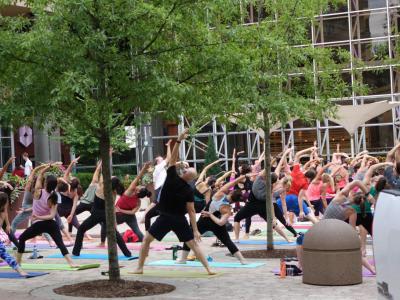

9) Falls Park (must see)

10) Liberty Bridge (must see)
Walking Tours in Greenville, South Carolina

Create Your Own Walk in Greenville
Creating your own self-guided walk in Greenville is easy and fun. Choose the city attractions that you want to see and a walk route map will be created just for you. You can even set your hotel as the start point of the walk.

Historical Greenville Walking Tour
Greenville, South Carolina, is steeped in history. Having evolved throughout the centuries into a prosperous and appealing destination, the city boasts a rich tapestry of historical sites that paint a vivid picture of its past.
Starting with the Museum & Library of Confederate History, visitors are transported to the Civil War era through a collection of artifacts and documents that... view more
Tour Duration: 2 Hour(s)
Travel Distance: 4.1 Km or 2.5 Miles
Starting with the Museum & Library of Confederate History, visitors are transported to the Civil War era through a collection of artifacts and documents that... view more
Tour Duration: 2 Hour(s)
Travel Distance: 4.1 Km or 2.5 Miles
The Most Popular Cities
/ view all