

Hamilton Introduction Walking Tour, Hamilton

Hamilton Introduction Walking Tour (Self Guided), Hamilton

Hamilton, a port city on the western tip of Lake Ontario in Canada, is dominated by the Niagara Escarpment, a massive, forested ridge commonly referred to as "the mountain". Aside from this, there are other, man-made, attractions in the city, including HMCS Haida, a naval warship moored at the city's lakefront, and the Hamilton Military Museum, showcasing Canada's military history. To explore these and other notable sights of Hamilton, take this orientation walk.
How it works: Download the app "GPSmyCity: Walks in 1K+ Cities" from Apple App Store or Google Play Store to your mobile phone or tablet. The app turns your mobile device into a personal tour guide and its built-in GPS navigation functions guide you from one tour stop to next. The app works offline, so no data plan is needed when traveling abroad.

Download The GPSmyCity App

Hamilton Introduction Walking Tour Map

Guide Name: Hamilton Introduction Walking Tour
Guide Location: Canada » Hamilton (See other walking tours in Hamilton)
Guide Type: Self-guided Walking Tour (Sightseeing)
# of Attractions: 8
Tour Duration: 2 Hour(s)
Travel Distance: 5.1 Km or 3.2 Miles
Author: Linda
Sight(s) Featured in This Guide:
  • Cathedral of Christ the King
  • The Staircase Cafe Theatre
  • Hamilton Military Museum
  • Dundurn Castle
  • Doune Castle
  • Workers Arts and Heritage Centre
  • Bayfront Park
  • HMCS Haida
1
Cathedral of Christ the King

1) Cathedral of Christ the King (must see)

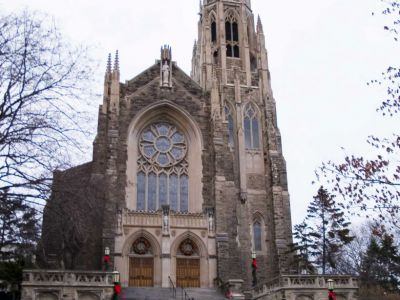
The Cathedral Basilica of Christ the King is the seat of the Roman Catholic Diocese and one of Canada’s largest churches. Built from 1930 to 1933 during the Great Depression under Bishop John Thomas McNally, it provided jobs for local workers despite criticism at the time. In February 2013, Pope Benedict XVI granted it Minor Basilica status, an honour held by fewer than 30 churches in Canada.

Designed by William Russell Souter of Hutton and Souter, the cathedral follows the 13th century English Gothic style. Pointed arches, tall windows, and strong vertical lines define the structure. Its most prominent feature is the 165 foot bell tower, which houses a carillon of 23 bells. The pale limestone used here also appears in other major projects by the Pigott company, contributing to a shared stone character in the surrounding area.

Inside, the nave rises beneath a high vaulted ceiling inspired by Norwich Cathedral in England. Indiana limestone columns support the space, and 82 stained glass windows by Mayer of Munich bring shifting colour, with lower panels showing the life of Christ and upper clerestory windows depicting the spread of the Church. Above the altar stands an 88 ton marble ciborium, a free standing canopy that adds a Roman element to the Gothic design.

In 1981, on the first Friday of Lent, an arson fire caused serious damage to the interior, including parts of the sanctuary. Restoration was able to closely match the original work because the architectural drawings from Hutton and Souter had been preserved. Craftsmen used the original plans to carefully rebuild the damaged stone and woodwork. A Casavant Frères pipe organ with nearly 5,000 pipes supports both liturgies and concerts.
2
The Staircase Cafe Theatre

2) The Staircase Cafe Theatre

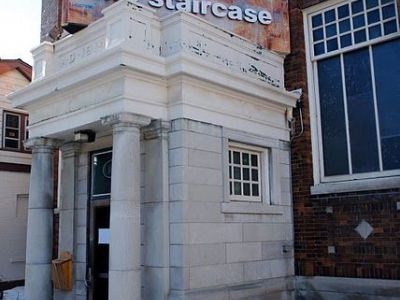
The name comes from the cast-iron spiral staircase inside the 1914 former power substation built for the Hamilton Street Railway. Founded around 1998 by Hugh MacLeod and Kathy Garneau, it was created as an un-institutionalized space where local artists could experiment and perform. From the start, it focused on fringe theatre, improv, music, and community art.

Now known simply as The Staircase, the venue includes the Elaine May Theatre, the Studio Theatre, and the Bright Room. These flexible spaces host plays, comedy shows, film screenings, concerts, workshops, and yoga, sometimes all in the same evening. Art is regularly displayed on the walls, reinforcing its role as a multi-use cultural hub.

The Staircase closed more than once during the pandemic and faced possible closure. A community group called “People Under the Stairs” helped keep it going before the 2022 transition to HubUp under Colette Kendall and Israel “Izzy” Mancebo. Today, it hosts Lit Live, Smooth Comedy, improv workshops, Coder Camp, and live music, while the licensed café-lounge also serves as a daytime social and co-working space.
3
Hamilton Military Museum

3) Hamilton Military Museum

The Hamilton Military Museum presents the region’s military history, focusing on the War of 1812 and local regiments that influenced Canada’s early development. It stands on land once used as a British military reserve and later part of Sir Allan Napier MacNab’s estate. Opened in 1976, the museum was created to preserve and share this part of the area’s past.

Inside, the exhibits explain the War of 1812, showing how British troops, Canadian militia, and American forces fought in the region. Uniforms, weapons, maps, and personal objects help visitors understand daily life during the conflict. The museum also highlights the 13th Battalion, later called the Royal Hamilton Light Infantry, following local soldiers from the 1800s through the World Wars and later peacekeeping missions.

The museum’s scale allows for close viewing of artifacts and clear explanations without overwhelming detail. Interactive elements and rotating exhibits add variety to repeat visits. Set within parkland near historic Dundurn Castle, the site offers a quiet setting where military history connects directly to the surrounding landscape.
4
Dundurn Castle

4) Dundurn Castle (must see)

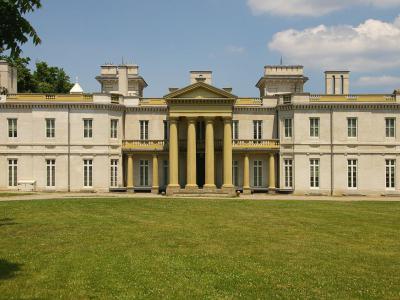
Dundurn Castle carries the title of a “castle,” yet it is in fact a neoclassical mansion completed in 1835 for Sir Allan Napier MacNab. The name, drawn from Gaelic, means “Stronghold on the Hill,” reflecting MacNab’s wish to project stability and rank in a period when public image carried political weight.

In reality, his finances were often strained, and the grand house functioned partly as a 19th-century “folly,” an architectural statement meant to suggest aristocratic security at a time when his debts made that image uncertain. Designed by Robert Charles Wetherell in a Grecian style shaped by MacNab himself, the residence appears to be built of stone, though it is brick covered with scored and painted stucco.

Set on what was once an estate of nearly 1,000 acres, the mansion occupied land linked to earlier military reserves. Its columned portico and balanced façade follow classical principles associated with authority in colonial society. MacNab used the house to host political allies and military figures, strengthening his public image.

Inside, more than forty restored rooms present daily life in the 1850s. Formal areas upstairs contrast with the service spaces below, revealing the structure of a Victorian household. The basement kitchen and workrooms highlight the labour of the 10 to 15 servants who maintained the estate, with interpreters preparing food over an open hearth.

Outside, the half-acre kitchen garden is planted according to an 1854 plan. Heirloom vegetables and herbs grown there are still used in cooking demonstrations, linking the present-day museum directly to its mid-19th-century routines.
5
Doune Castle

5) Doune Castle

At this site, the name “Doune Castle” is sometimes mentioned in connection with the Dundurn estate. However, the historic building that visitors come to see is Dundurn Castle. The smaller structure associated with that name was simply one part of Sir Allan MacNab’s property, not a separate attraction. Dundurn Castle remains the main and historically recognized landmark of the estate.

Sir Allan MacNab built the house in 1835, during a period when he was rising to political prominence. He later became Premier of the Province of Canada. The estate buildings were made of brick and covered with stucco in a classical style that reflected MacNab’s status. Today, the restoration highlights the years 1855–1856, showing the house as it looked at the peak of his political career.

The site is managed by the City of Hamilton and is recognized as a National Historic Site of Canada. Inside, guided tours take visitors through both the formal rooms upstairs and the working spaces below. The “below-stairs” areas, including the large kitchen and servant quarters, are especially well known for showing the clear social divide between the MacNab family and the staff who supported daily life in the household.
6
Workers Arts and Heritage Centre

6) Workers Arts and Heritage Centre

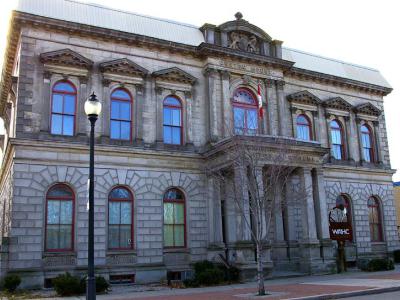
Workers Arts and Heritage Centre opened in 1996 to present the history of working people and their role in shaping Canadian society. Founded with a mandate to explore labour, immigration, and social change through art and community programmes, it is housed in the mid-19th-century Custom House. The limestone building once managed goods entering the region and now serves as gallery and event space.

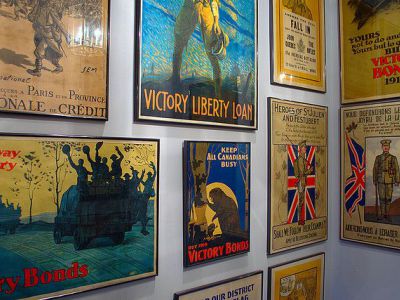
The gallery’s exhibitions address industrial development, labour movements, craft traditions, and daily life. Contemporary works are shown alongside archival photographs, tools, posters, and personal documents, linking art with lived experience. The programme highlights diverse voices, including migrant workers, factory employees, and grassroots organizers.

In addition to its rotating exhibitions, the centre hosts talks, film screenings, workshops, and community events that encourage discussion about social history and cultural identity. Local lore adds another dimension to the building’s past. The former Custom House is often described as “haunted,” associated with the “Dark Lady,” a figure said to appear in the attic, blending recorded history with local legend.
7
Bayfront Park

7) Bayfront Park

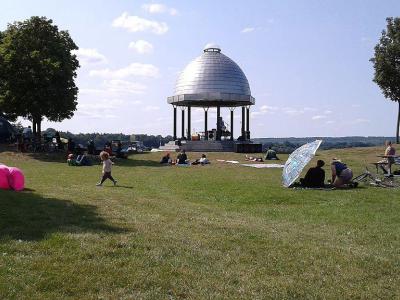
Bayfront Park runs along the western edge of the harbour on land that was once industrial. In the 1990s, over nine million dollars transformed this vacant shoreline into a public park, creating 1,800 metres of accessible waterfront with lawns and paths replacing former rail lines.

A six-metre-wide trail circles the park and connects to nearby pedestrian and bicycle routes, including the path toward Pier 4 Park. Walkers, runners, and cyclists use it year-round. The park also includes a marina, public boat launch, fishing areas, benches, sheltered inlets with birdlife, and a protected sandy beach.

The park is also a gathering place. During summer, it hosts festivals and outdoor concerts. Families use the open fields for picnics and kite flying, and children play at the playground near the entrance. A 250-space parking lot makes access easy. In the evening, light reflects across the harbour, showing how former industrial land has been turned into a shared green space for everyone.
8
HMCS Haida

8) HMCS Haida (must see)

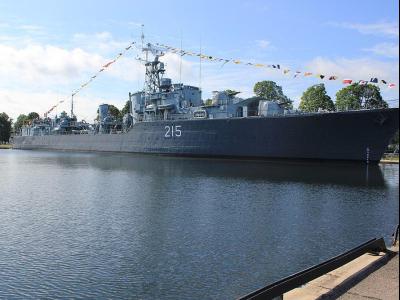
HMCS Haida is a Tribal-class destroyer that served in the Royal Canadian Navy from 1943 to 1963. Built during the Second World War, she earned a reputation for her combat record, sinking more enemy surface tonnage than any other Canadian warship. Of the 27 Tribal-class destroyers constructed between 1937 and 1945 for the Royal Navy, Royal Australian Navy, and Royal Canadian Navy, she is the only one that still survives.

During wartime operations in the North Atlantic and European waters, Haida escorted convoys and took part in actions against German surface vessels. After 1945, she continued to serve during the Korean War and later in training and patrol duties. Her long service life reflects both the demands placed on naval ships in the mid-20th century and the adaptability of the Tribal-class design.

In 1984, Haida was designated a National Historic Site of Canada. Nearly two decades later, in 2002, Parks Canada purchased the vessel and arranged for her transfer and restoration. After a complex tow and a 5-million-dollar refit to strengthen the hull, she was moved to her present berth. On 30 August 2003, the 60th anniversary of her commissioning, she arrived to an 11-gun salute.

Today, visitors can walk her decks, step inside the bridge, and explore the engine and crew spaces. Exhibits explain daily life on board, naval technology of the 1940s and 1950s, and the ship’s wartime missions. Standing on deck, with views across the harbour, it becomes easier to imagine the conditions faced by the sailors who once served aboard her.

Walking Tours in Hamilton, Canada

Create Your Own Walk in Hamilton

Create Your Own Walk in Hamilton

Creating your own self-guided walk in Hamilton is easy and fun. Choose the city attractions that you want to see and a walk route map will be created just for you. You can even set your hotel as the start point of the walk.
Westdale Tour

Westdale Tour

Westdale Village is a neighbourhood in Hamilton, bustling with specialty shops and interesting places. Locals and visitors are delighted by the plethora of boutiques, bakeries, pubs and stores with unique items. Be ready to devote some of your time to visiting the worthwhile places in Westdale, presented in this self-guided tour.

Tour Duration: 1 Hour(s)
Travel Distance: 0.7 Km or 0.4 Miles
Top Religious Buildings

Top Religious Buildings

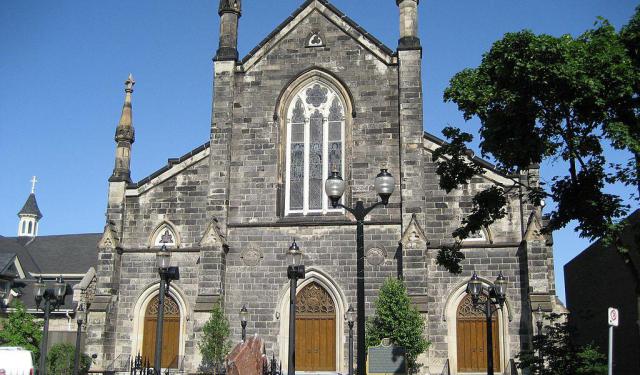
Religious life in Hamilton is channelled into many congregations, which are spreading different religions and providing space for worship for everybody. Take this tour and discover the oldest and most attractive churches with very impressive architecture and rich history.

Tour Duration: 2 Hour(s)
Travel Distance: 3.4 Km or 2.1 Miles