

Historical Religious Buildings Tour (Self Guided), Yekaterinburg
Yekaterinburg is a beautiful city with a rich religious history. Many churches managed to survive the wrath of the Soviet Union's anti-religious campaigns, and some have been renovated so they are more splendid than ever before. Take this tour to discover the striking architectural beauty of Yekaterinburg's churches and cathedrals.
How it works: Download the app "GPSmyCity: Walks in 1K+ Cities" from Apple App Store or Google Play Store to your mobile phone or tablet. The app turns your mobile device into a personal tour guide and its built-in GPS navigation functions guide you from one tour stop to next. The app works offline, so no data plan is needed when traveling abroad.
Historical Religious Buildings Tour Map
Guide Name: Historical Religious Buildings Tour
Guide Location: Russia » Yekaterinburg (See other walking tours in Yekaterinburg)
Guide Type: Self-guided Walking Tour (Sightseeing)
# of Attractions: 6
Tour Duration: 2 Hour(s)
Travel Distance: 4.2 Km or 2.6 Miles
Author: damon
Sight(s) Featured in This Guide:
Guide Location: Russia » Yekaterinburg (See other walking tours in Yekaterinburg)
Guide Type: Self-guided Walking Tour (Sightseeing)
# of Attractions: 6
Tour Duration: 2 Hour(s)
Travel Distance: 4.2 Km or 2.6 Miles
Author: damon
Sight(s) Featured in This Guide:
- Church of Ascension
- Church of All Saints
- Church of St. Anne
- Holy Trinity Cathedral
- Jewish Community Center and Synagogue
- Alexander Nevsky Cathedral
1) Church of Ascension (must see)
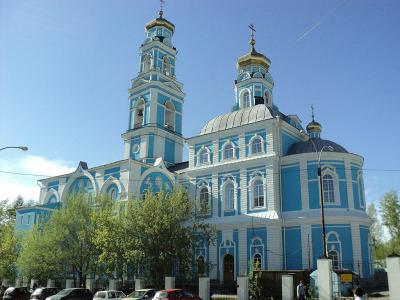
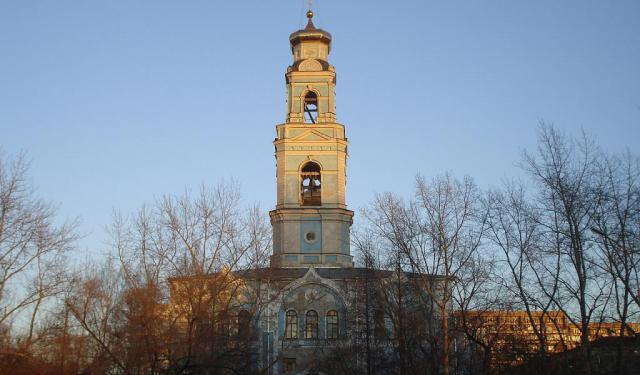
The Church of Ascension began in May 1770 as a small wooden parish church. It served an Orthodox community that was still forming at the time. As the number of parishioners grew and life became more settled, the wooden building was no longer enough. This followed a common path in Russian church history, where early wooden churches were later replaced with stone ones meant to last much longer.
Work on the present stone church started in 1792 and finished in 1818. The building has two levels, each with its own dedication. The lower church is devoted to the Nativity of the Blessed Virgin Mary, while the upper church is dedicated to the Ascension of the Lord. This layout made it possible to use different spaces at different times of the year. Architecturally, the church stands between late Baroque and early Classical styles, with clear shapes and balanced proportions instead of heavy decoration.
Inside, the space feels calm and orderly. Both levels have their own iconostasis, arranged in the traditional Orthodox way and drawing attention toward the altar. Many icons and church furnishings date back to the 19th century, reflecting local religious art and long-standing worship practices. Tall windows let in soft light, and the restrained colours support a quiet, reflective mood.
The church was closed in 1926 during the Soviet period. Over the following decades, it was used first as a school and later as a Museum of Local History. In 1991, the building was returned to the parish, and services resumed. Since then, it has continued to function as an active church, shaped by more than two centuries of religious, social, and architectural change.
Work on the present stone church started in 1792 and finished in 1818. The building has two levels, each with its own dedication. The lower church is devoted to the Nativity of the Blessed Virgin Mary, while the upper church is dedicated to the Ascension of the Lord. This layout made it possible to use different spaces at different times of the year. Architecturally, the church stands between late Baroque and early Classical styles, with clear shapes and balanced proportions instead of heavy decoration.
Inside, the space feels calm and orderly. Both levels have their own iconostasis, arranged in the traditional Orthodox way and drawing attention toward the altar. Many icons and church furnishings date back to the 19th century, reflecting local religious art and long-standing worship practices. Tall windows let in soft light, and the restrained colours support a quiet, reflective mood.
The church was closed in 1926 during the Soviet period. Over the following decades, it was used first as a school and later as a Museum of Local History. In 1991, the building was returned to the parish, and services resumed. Since then, it has continued to function as an active church, shaped by more than two centuries of religious, social, and architectural change.
2) Church of All Saints (must see)
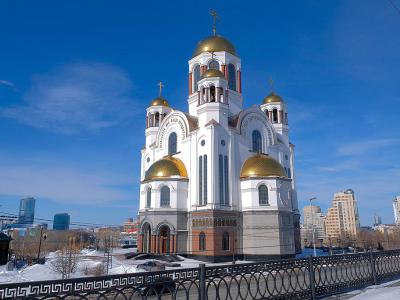
The Church of All Saints was built as a memorial on the site of the former Ipatiev House, where Emperor Nicholas II and his family were executed in July 1918. During the Soviet period, the house was demolished, and the topic was not openly discussed for many years. The church was consecrated in 2003, after the Romanov family was canonized. Today it works both as a functioning Orthodox church and as a place connected to this key moment in Russian history.
The building is designed in the Russian Revival style. It has white walls, gilded domes, and a tall structure built in clear vertical levels. A staircase of 23 steps links the lower and upper churches. The number refers to the 23 years of Nicholas II’s reign, from 1894 to 1917, and also recalls the steps the imperial family walked down to the basement of the Ipatiev House. The main altar stands directly above the place identified as the execution site.
Inside, the church is filled with icons and memorial objects. Among the most important are relics connected to the imperial family, including a tooth attributed to Tsarevich Alexei, as well as relics of Saint Seraphim of Sarov. The interior also contains the “Three-Handed” Mother of God icon, believed to have belonged to the Romanovs and to have been with them during their last days.
The church plays an active role in public remembrance. Every year, during the night of July 16–17, it serves as the starting point for a large cross procession to the Ganina Yama Monastery. The surrounding grounds continue to change, and in 2025 a new monument was added that introduces modern military themes, showing how ideas of memory and commemoration around the site continue to evolve.
The building is designed in the Russian Revival style. It has white walls, gilded domes, and a tall structure built in clear vertical levels. A staircase of 23 steps links the lower and upper churches. The number refers to the 23 years of Nicholas II’s reign, from 1894 to 1917, and also recalls the steps the imperial family walked down to the basement of the Ipatiev House. The main altar stands directly above the place identified as the execution site.
Inside, the church is filled with icons and memorial objects. Among the most important are relics connected to the imperial family, including a tooth attributed to Tsarevich Alexei, as well as relics of Saint Seraphim of Sarov. The interior also contains the “Three-Handed” Mother of God icon, believed to have belonged to the Romanovs and to have been with them during their last days.
The church plays an active role in public remembrance. Every year, during the night of July 16–17, it serves as the starting point for a large cross procession to the Ganina Yama Monastery. The surrounding grounds continue to change, and in 2025 a new monument was added that introduces modern military themes, showing how ideas of memory and commemoration around the site continue to evolve.
3) Church of St. Anne
The Church of St. Anne is closely linked to the history of Catholic communities in the Urals. From the 18th and 19th centuries, Catholics of Polish, German, and Baltic origin came to the region as settlers, soldiers, or exiles. The parish was not only used for worship. It also played a role in education, charity, and everyday community life.
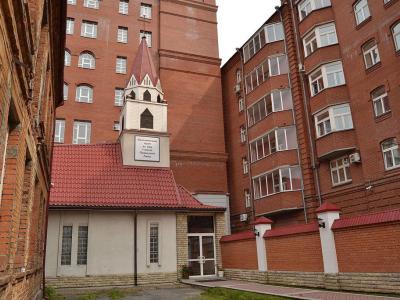
The first stone church was completed around 1884. The building was not large, but its pointed arches and vertical lines gave it a clear, recognizable form. Decoration was simple and restrained. During the Soviet period, religious activity was stopped. The church was closed and used for non-religious purposes, including cultural and municipal functions. In the early 1960s, the original building was demolished, and no part of it survived.
The church standing today is a reconstruction built in the 1990s and consecrated in 2000, on nearly the same site. It is a modern structure but deliberately echoes the earlier Neo-Gothic design through vertical elements, simple shapes, and a clear interior layout. The space is calm and functional, suited to regular worship. Its return to active use shows how Catholic religious life continued despite migration, repression, and long interruption, and how it was gradually restored at the end of the 20th century.
The first stone church was completed around 1884. The building was not large, but its pointed arches and vertical lines gave it a clear, recognizable form. Decoration was simple and restrained. During the Soviet period, religious activity was stopped. The church was closed and used for non-religious purposes, including cultural and municipal functions. In the early 1960s, the original building was demolished, and no part of it survived.
The church standing today is a reconstruction built in the 1990s and consecrated in 2000, on nearly the same site. It is a modern structure but deliberately echoes the earlier Neo-Gothic design through vertical elements, simple shapes, and a clear interior layout. The space is calm and functional, suited to regular worship. Its return to active use shows how Catholic religious life continued despite migration, repression, and long interruption, and how it was gradually restored at the end of the 20th century.
4) Holy Trinity Cathedral (must see)
Holy Trinity Cathedral is an Orthodox church whose history reflects major religious and political changes in the Urals. Construction lasted from 1818 to 1839 and was paid for by the Ryazanov merchant family. The Ryazanovs were Old Believers who agreed to join the official Orthodox Church so they could receive permission to build a large stone cathedral. Because of this, the building is closely linked to both Old Believer traditions and state-recognized Orthodoxy.
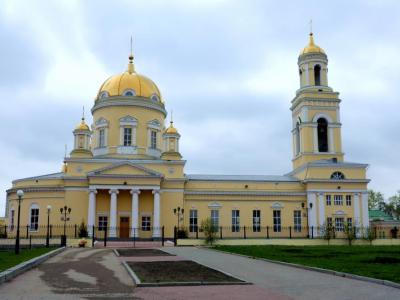
The cathedral was designed by architect M. P. Malakhov in a Classical style. It has a balanced, symmetrical plan, a tall central structure, and modest decoration. The exterior is painted in ochre, with white columns and details that emphasize the building’s clear lines. Unlike many Russian churches, it originally had three domes instead of the more common five.
During the Soviet period, the cathedral was badly damaged. In 1930, the bell tower and domes were dismantled, and religious decoration inside was removed. The building was later used as a cinema, a textile factory, and a cultural centre for automobile workers. After the Revolution, church valuables were confiscated, including silver items and an icon frame donated by Alexander I. The cathedral was returned to the church in 1996 and reconsecrated in 2000 by Patriarch Alexei II.
Today, the interior shows the results of major restoration work from the late 1990s. Visitors can see frescoes on the walls, a multi-level iconostasis, and restored liturgical furnishings made according to Orthodox tradition. The cathedral functions as the main church of the local eparchy and continues to be used for regular services.
The cathedral was designed by architect M. P. Malakhov in a Classical style. It has a balanced, symmetrical plan, a tall central structure, and modest decoration. The exterior is painted in ochre, with white columns and details that emphasize the building’s clear lines. Unlike many Russian churches, it originally had three domes instead of the more common five.
During the Soviet period, the cathedral was badly damaged. In 1930, the bell tower and domes were dismantled, and religious decoration inside was removed. The building was later used as a cinema, a textile factory, and a cultural centre for automobile workers. After the Revolution, church valuables were confiscated, including silver items and an icon frame donated by Alexander I. The cathedral was returned to the church in 1996 and reconsecrated in 2000 by Patriarch Alexei II.
Today, the interior shows the results of major restoration work from the late 1990s. Visitors can see frescoes on the walls, a multi-level iconostasis, and restored liturgical furnishings made according to Orthodox tradition. The cathedral functions as the main church of the local eparchy and continues to be used for regular services.
5) Jewish Community Center and Synagogue
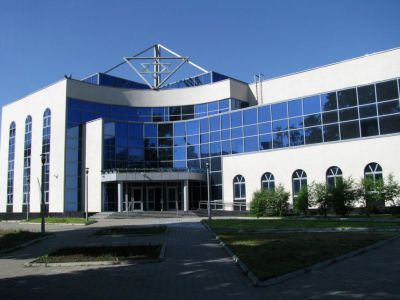
The Jewish Community Center and Synagogue stands on the site of the main synagogue that was destroyed in the 1960s during the Soviet period. Its construction returned Jewish religious life to its original location after several decades of absence. The four-storey building brings many functions together under one roof, combining prayer spaces with classrooms, offices, and community rooms. It also includes two ritual baths (mikvaot), which were not available in the region before and are essential for traditional Jewish religious practice.
The synagogue is the main religious space in the complex. The prayer hall has a traditional layout, with a bimah in the centre and a Torah ark on the eastern wall. The interior is simple and made for regular use, not decoration. Services are held on Shabbat and Jewish holidays. Visitors may attend if they behave respectfully and dress appropriately.
Beyond worship, the center plays an active social role. Since 2005, it has hosted an ORT vocational training centre, which today focuses on digital skills for seniors and professional courses for teachers. Medical rooms offer free basic healthcare, and a large kosher kitchen prepares up to 1,000 meals each day for people in need. The center is also involved in public history projects, including digital guides and walking routes that explore Jewish life and heritage in the Urals.
The synagogue is the main religious space in the complex. The prayer hall has a traditional layout, with a bimah in the centre and a Torah ark on the eastern wall. The interior is simple and made for regular use, not decoration. Services are held on Shabbat and Jewish holidays. Visitors may attend if they behave respectfully and dress appropriately.
Beyond worship, the center plays an active social role. Since 2005, it has hosted an ORT vocational training centre, which today focuses on digital skills for seniors and professional courses for teachers. Medical rooms offer free basic healthcare, and a large kosher kitchen prepares up to 1,000 meals each day for people in need. The center is also involved in public history projects, including digital guides and walking routes that explore Jewish life and heritage in the Urals.
6) Alexander Nevsky Cathedral
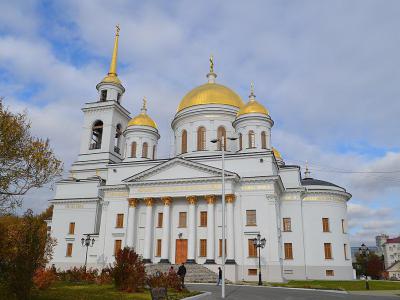
Alexander Nevsky Cathedral was founded in 1814 after Russia’s victory in the War of 1812. It was dedicated to Saint Alexander Nevsky, a medieval prince and military leader, and planned as the largest church in the city, able to hold about 6,000 people. The stone building seen today was completed in stages. Its final design was finished in 1848 by architect M. P. Malakhov, and the main altar was consecrated in 1852.
Inside, the cathedral feels open and easy to follow. Three wide aisles run through the space, separated by thick columns that support the domes above. The central dome is high and brings in daylight, which brightens the main area. Smaller domes and curved ceilings cover the side spaces. Stone floors, lamps, and candle stands show how the interior is used during services.
The most striking feature inside is the tall iconostasis at the front. It is covered with gilded frames and painted icons arranged in traditional Orthodox rows. In the Soviet period, the church was closed and turned into a military warehouse, and the interior was divided into three floors. After it was returned to the Church in 1989, these changes were removed and the interior restored. The cathedral was reconsecrated in 2013 and is now active again, open to both worshippers and visitors.
Inside, the cathedral feels open and easy to follow. Three wide aisles run through the space, separated by thick columns that support the domes above. The central dome is high and brings in daylight, which brightens the main area. Smaller domes and curved ceilings cover the side spaces. Stone floors, lamps, and candle stands show how the interior is used during services.
The most striking feature inside is the tall iconostasis at the front. It is covered with gilded frames and painted icons arranged in traditional Orthodox rows. In the Soviet period, the church was closed and turned into a military warehouse, and the interior was divided into three floors. After it was returned to the Church in 1989, these changes were removed and the interior restored. The cathedral was reconsecrated in 2013 and is now active again, open to both worshippers and visitors.
Walking Tours in Yekaterinburg, Russia

Create Your Own Walk in Yekaterinburg
Creating your own self-guided walk in Yekaterinburg is easy and fun. Choose the city attractions that you want to see and a walk route map will be created just for you. You can even set your hotel as the start point of the walk.
Yekaterinburg Introduction Walking Tour
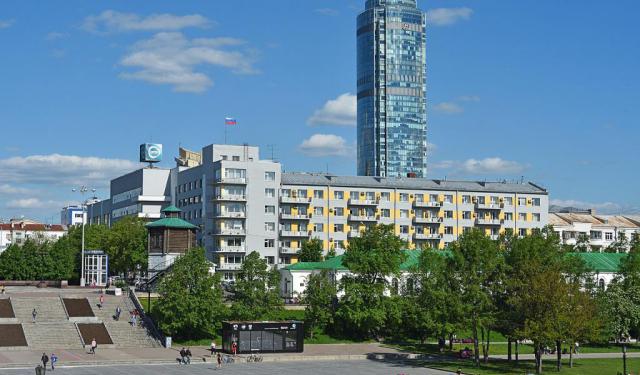
Yekaterinburg is the fourth largest city in the Russian Federation based on population and is a major center of industrial and cultural life in the Urals. Situated near the center of the Eurasian continent, on the border between Europe and Asia, the city is home to many spectacular sights, which you will see on this tour. Don't miss the chance to visit Yekaterinburg and enjoy an unforgettable... view more
Tour Duration: 3 Hour(s)
Travel Distance: 4.7 Km or 2.9 Miles
Tour Duration: 3 Hour(s)
Travel Distance: 4.7 Km or 2.9 Miles
The Most Popular Cities
/ view all