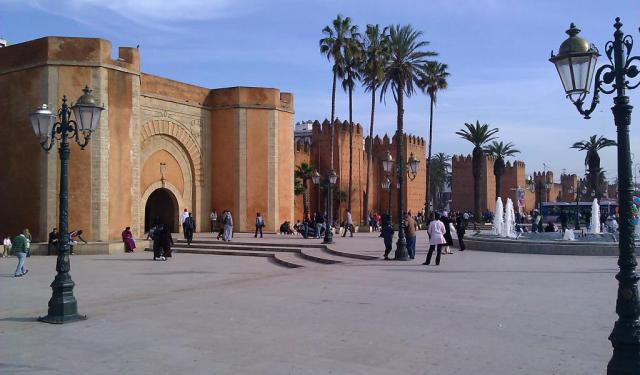


Rabat Introduction Walking Tour (Self Guided), Rabat
Resting on the shores of the Bouregreg River and Atlantic Ocean, the capital city of Morocco, Rabat, is known for its picturesque natural surroundings, much as for its man-made beauty manifested in a mix of old and new architecture (featuring Islamic and French-colonial styles), abundance of mosques and historic monuments. The Medina (Old City) of Rabat is a World Heritage Site.
Rabat was founded in 1170, as a naval base, by the Almohad Caliphate, a Berber Muslim empire which at the height of its might controlled much of the Iberian Peninsula and North Africa. The name Rabat comes from the Arabic word (er-Ribât) which means citadel. This name is short for (Ribâtu l-Feth) meaning the stronghold of victory, a title given by the Almohads when they established the city.
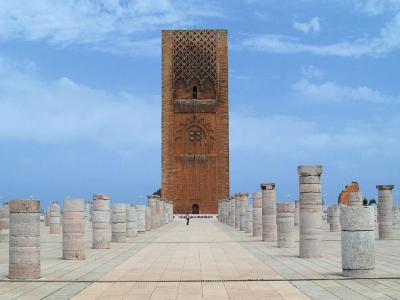
The Kasbah of the Oudaias, the oldest part of present-day Rabat, dates back to the city's early period. The Almohad caliph Abu Yusuf Ya'qub al-Mansur (reigned from 1184-1199) set out to construct a new fortified imperial capital, called Ribat al-Fath, on the site of what is now the Medina. This project also implied the construction of an enormous mosque, the remains of which include the Hassan Tower, an iconic minaret and one of the city's most prominent sights.
Following the collapse of the Almohad empire, the city went into an extended period of decline. In the 17th century Rabat became a haven for Barbary pirates (corsairs), who preyed on merchant ships around the shores of Western Europe. Corsair activities were based in the area below the Kasbah, on the south bank, which was more heavily populated, thanks to the Morisco and Andalusi refugees expelled from Spain by King Philip III in 1609. What is now known as Rue des Consuls (Street of the Consuls) became an important road artery back then.
The corsairs and then the 'Alawi dynasty refortified and expanded the citadel in the 17th and 18th centuries. Under Sultan Moulay Slimane (r. 1792-1822) a Jewish quarter, the Mellah, was created. In 1912, the French established a protectorate over Morocco and made Rabat its administrative center. After Morocco achieved independence in 1955, the city became the country's capital.
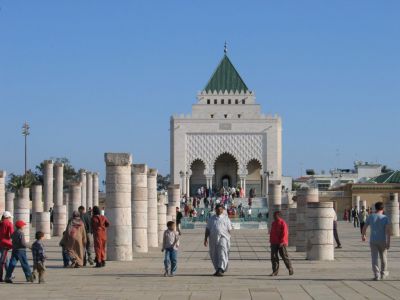
Rabat is also one of the four Imperial cities of Morocco. Adjacent to the Hassan Tower is the Mausoleum of King Mohammed V, completed in 1971 to a design by Vietnamese architect Cong Vo Toan.
For a more detailed acquaintance with the most famous attractions of the Moroccan capital, take this introductory walk.
Rabat was founded in 1170, as a naval base, by the Almohad Caliphate, a Berber Muslim empire which at the height of its might controlled much of the Iberian Peninsula and North Africa. The name Rabat comes from the Arabic word (er-Ribât) which means citadel. This name is short for (Ribâtu l-Feth) meaning the stronghold of victory, a title given by the Almohads when they established the city.
The Kasbah of the Oudaias, the oldest part of present-day Rabat, dates back to the city's early period. The Almohad caliph Abu Yusuf Ya'qub al-Mansur (reigned from 1184-1199) set out to construct a new fortified imperial capital, called Ribat al-Fath, on the site of what is now the Medina. This project also implied the construction of an enormous mosque, the remains of which include the Hassan Tower, an iconic minaret and one of the city's most prominent sights.
Following the collapse of the Almohad empire, the city went into an extended period of decline. In the 17th century Rabat became a haven for Barbary pirates (corsairs), who preyed on merchant ships around the shores of Western Europe. Corsair activities were based in the area below the Kasbah, on the south bank, which was more heavily populated, thanks to the Morisco and Andalusi refugees expelled from Spain by King Philip III in 1609. What is now known as Rue des Consuls (Street of the Consuls) became an important road artery back then.
The corsairs and then the 'Alawi dynasty refortified and expanded the citadel in the 17th and 18th centuries. Under Sultan Moulay Slimane (r. 1792-1822) a Jewish quarter, the Mellah, was created. In 1912, the French established a protectorate over Morocco and made Rabat its administrative center. After Morocco achieved independence in 1955, the city became the country's capital.
Rabat is also one of the four Imperial cities of Morocco. Adjacent to the Hassan Tower is the Mausoleum of King Mohammed V, completed in 1971 to a design by Vietnamese architect Cong Vo Toan.
For a more detailed acquaintance with the most famous attractions of the Moroccan capital, take this introductory walk.
How it works: Download the app "GPSmyCity: Walks in 1K+ Cities" from Apple App Store or Google Play Store to your mobile phone or tablet. The app turns your mobile device into a personal tour guide and its built-in GPS navigation functions guide you from one tour stop to next. The app works offline, so no data plan is needed when traveling abroad.
Download The GPSmyCity App



Rabat Introduction Walking Tour Map
Guide Name: Rabat Introduction Walking Tour
Guide Location: Morocco » Rabat (See other walking tours in Rabat)
Guide Type: Self-guided Walking Tour (Sightseeing)
Tour Duration: 1 Hour
Travel Distance: 2 Km or 1.2 Miles
Tour Best Suited For: First-time visit
Guide Location: Morocco » Rabat (See other walking tours in Rabat)
Guide Type: Self-guided Walking Tour (Sightseeing)
Tour Duration: 1 Hour
Travel Distance: 2 Km or 1.2 Miles
Tour Best Suited For: First-time visit
Sights Featured in This Walk
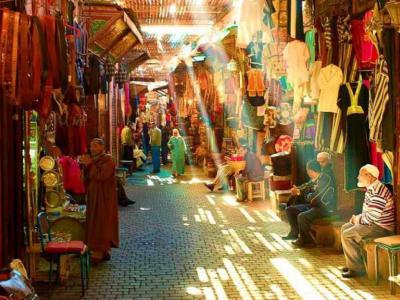
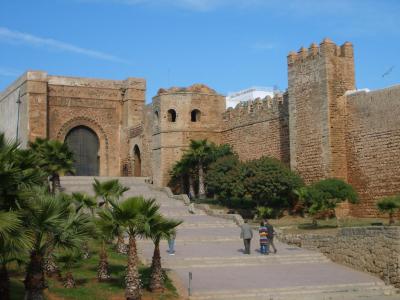
Walking Tours in Rabat, Morocco

Create Your Own Walk in Rabat
Creating your own self-guided walk in Rabat is easy and fun. Choose the city attractions that you want to see and a walk route map will be created just for you. You can even set your hotel as the start point of the walk.
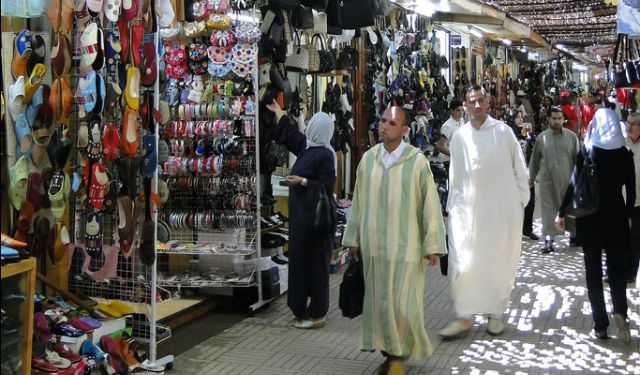
Rabat Shopping Walk
Rabat is heaven for those who love shopping. Indeed, the abundance of shopping opportunities - traditional markets and shopping streets - in this city gives no reason to doubt that. There you can find all kinds of oriental delights you can possibly think of.
One of Rabat's top shopping destinations is Consuls Street (rue des Consuls). Steeped in a 500-year history, this street houses a... view more
Tour Duration: 1 Hour
Travel Distance: 1 Km or 0.6 Miles
One of Rabat's top shopping destinations is Consuls Street (rue des Consuls). Steeped in a 500-year history, this street houses a... view more
Tour Duration: 1 Hour
Travel Distance: 1 Km or 0.6 Miles
City Walks Overview
