

Audio Guide: Tbilisi Introduction Walking Tour (Self Guided), Tbilisi
American writer John Steinbeck was highly inspired by a full moon, as he loved the mystery it brought to any streetscape. After visiting Tbilisi, he did not hold back, calling the city „ghost-ridden”. He loved its cryptic atmosphere, shaped by centuries of change.
Tbilisi, the capital of Georgia, sits gracefully on both banks of the Kura River, framed by the rolling foothills of the Caucasus. It was founded in the 5th century AD by King Vakhtang I Gorgasali, ruler of ancient Iberia, Georgia’s early precursor. Legend has it that while hunting, the king’s falcon fell into a hot spring, prompting him to build a city at the site. From the Georgian word “tbili” meaning “warm,” Tbilisi takes its name from these very sulfur springs, still bubbling today in the Abanotubani district.
Archaeological traces suggest human presence here since the 4th millennium BC, a testament to its natural advantages—fertile terrain, warm climate, and strategic position on east–west trade routes connecting Europe and Asia. Over the centuries, Tbilisi’s value made it a prize coveted by empires: Persians, Arabs, Mongols, Byzantines, Turks, and Russians each conquered, burned, and rebuilt it. Local lore counts 29 destructions and resurrections, yet the city’s spirit endured.
In 1122, King David IV the Builder captured Tbilisi, declaring it the capital of a unified Georgia and ushering in a cultural “Golden Age”, marked by churches and cathedrals. Centuries later, the Russian annexation of the 19th century brought modernization and railway links, while the Soviet period turned Tbilisi into the administrative and intellectual heart of the Caucasus. After Georgia regained independence in 1991, the city transformed once more—embracing a vibrant mix of tradition and innovation.
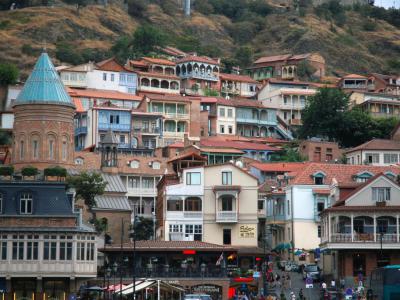
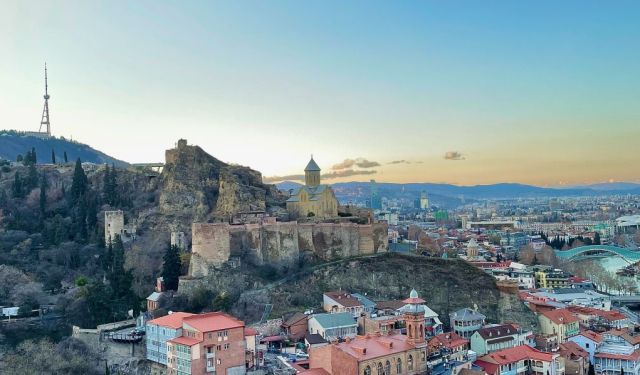
Wander through Tbilisi’s Old Town and the cobbled lanes still fare well with centuries-old charm. Wooden balconies drape above narrow alleys, while the ornate russet façade of Narikala Fortress oversees the curving Kura River. Nearby, the sulfur-steam rises from the historic bath district of Abanotubani. Last but not least, you’ll pass the futuristic glass sweep of the Bridge of Peace, lively café-filled squares and hidden courtyards alive with vine-covered walls and Georgian wine bars.
As you walk the storied streets of the city, you will observe the quiet mix of West and East influences. Bonus points if the full moon is staring from above.
Tbilisi, the capital of Georgia, sits gracefully on both banks of the Kura River, framed by the rolling foothills of the Caucasus. It was founded in the 5th century AD by King Vakhtang I Gorgasali, ruler of ancient Iberia, Georgia’s early precursor. Legend has it that while hunting, the king’s falcon fell into a hot spring, prompting him to build a city at the site. From the Georgian word “tbili” meaning “warm,” Tbilisi takes its name from these very sulfur springs, still bubbling today in the Abanotubani district.
Archaeological traces suggest human presence here since the 4th millennium BC, a testament to its natural advantages—fertile terrain, warm climate, and strategic position on east–west trade routes connecting Europe and Asia. Over the centuries, Tbilisi’s value made it a prize coveted by empires: Persians, Arabs, Mongols, Byzantines, Turks, and Russians each conquered, burned, and rebuilt it. Local lore counts 29 destructions and resurrections, yet the city’s spirit endured.
In 1122, King David IV the Builder captured Tbilisi, declaring it the capital of a unified Georgia and ushering in a cultural “Golden Age”, marked by churches and cathedrals. Centuries later, the Russian annexation of the 19th century brought modernization and railway links, while the Soviet period turned Tbilisi into the administrative and intellectual heart of the Caucasus. After Georgia regained independence in 1991, the city transformed once more—embracing a vibrant mix of tradition and innovation.
Wander through Tbilisi’s Old Town and the cobbled lanes still fare well with centuries-old charm. Wooden balconies drape above narrow alleys, while the ornate russet façade of Narikala Fortress oversees the curving Kura River. Nearby, the sulfur-steam rises from the historic bath district of Abanotubani. Last but not least, you’ll pass the futuristic glass sweep of the Bridge of Peace, lively café-filled squares and hidden courtyards alive with vine-covered walls and Georgian wine bars.
As you walk the storied streets of the city, you will observe the quiet mix of West and East influences. Bonus points if the full moon is staring from above.
How it works: Download the app "GPSmyCity: Walks in 1K+ Cities" from Apple App Store or Google Play Store to your mobile phone or tablet. The app turns your mobile device into a personal tour guide and its built-in GPS navigation functions guide you from one tour stop to next. The app works offline, so no data plan is needed when traveling abroad.
Tbilisi Introduction Walking Tour Map
Guide Name: Tbilisi Introduction Walking Tour
Guide Location: Georgia » Tbilisi (See other walking tours in Tbilisi)
Guide Type: Self-guided Walking Tour (Sightseeing)
# of Attractions: 8
Tour Duration: 1 Hour(s)
Travel Distance: 2.3 Km or 1.4 Miles
Author: DanaOffice
Sight(s) Featured in This Guide:
Guide Location: Georgia » Tbilisi (See other walking tours in Tbilisi)
Guide Type: Self-guided Walking Tour (Sightseeing)
# of Attractions: 8
Tour Duration: 1 Hour(s)
Travel Distance: 2.3 Km or 1.4 Miles
Author: DanaOffice
Sight(s) Featured in This Guide:
- Freedom Square
- Bridge of Peace
- Metekhi Church
- Monument of King Vakhtang Gorgasali
- Metekhi Bridge
- Meidan Square
- Narikala Fortress
- Abanotubani
1) Freedom Square
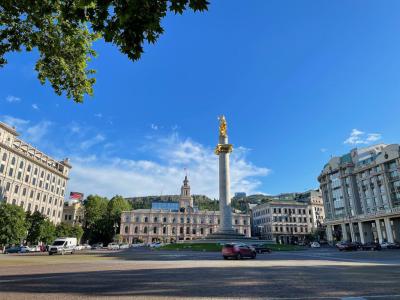
Freedom Square is one of the most prominent landmarks in Tbilisi, Georgia, symbolizing the country’s independence and unity. Located at the eastern end of Rustaveli Avenue, it serves as a central hub connecting Tbilisi’s historic Old Town with its modern business and cultural districts. The square has witnessed many pivotal events in Georgian history, from 19th-century demonstrations to the 2003 Rose Revolution.
At the heart of Freedom Square stands the Statue of Saint George, a gleaming golden monument created by sculptor Zurab Tsereteli in 2006. Depicting Georgia’s patron saint slaying a dragon, the statue represents triumph and freedom. Surrounding the square are several notable buildings, including the Tbilisi City Hall, a striking neo-Moorish structure, and the Courtyard by Marriott Hotel, housed in a historic building with elegant architecture.
Nearby attractions include the entrance to Rustaveli Avenue, lined with theaters, museums, and cafés, and the charming Old Town, filled with winding streets, traditional balconies, and historic churches. Freedom Square is also a popular site for national celebrations, public gatherings, and concerts, making it not only a geographic center but also a symbol of Georgian identity and resilience.
At the heart of Freedom Square stands the Statue of Saint George, a gleaming golden monument created by sculptor Zurab Tsereteli in 2006. Depicting Georgia’s patron saint slaying a dragon, the statue represents triumph and freedom. Surrounding the square are several notable buildings, including the Tbilisi City Hall, a striking neo-Moorish structure, and the Courtyard by Marriott Hotel, housed in a historic building with elegant architecture.
Nearby attractions include the entrance to Rustaveli Avenue, lined with theaters, museums, and cafés, and the charming Old Town, filled with winding streets, traditional balconies, and historic churches. Freedom Square is also a popular site for national celebrations, public gatherings, and concerts, making it not only a geographic center but also a symbol of Georgian identity and resilience.
2) Bridge of Peace (must see)
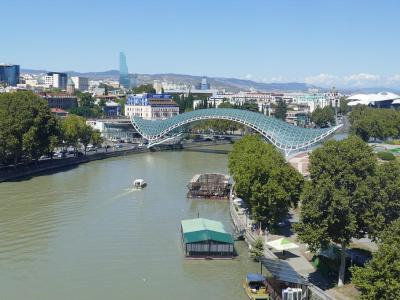
The Bridge of Peace is one of the city’s most modern landmarks, symbolizing the connection between Georgia’s ancient past and its dynamic present. Opened in 2010, the pedestrian bridge spans the Kura River, linking the historic Old Town on one side with the modern districts on the other. The bridge was envisioned as a gesture of unity — a literal and symbolic link between generations, cultures, and eras.
The structure itself is an architectural marvel. Its curved steel and glass canopy resembles a graceful wave or a giant marine creature floating over the water. What makes it particularly captivating is its illuminated LED lighting system. Each night, thousands of sensors and lights sparkle across the bridge in mesmerizing patterns. Remarkably, the light patterns are not random. The bridge's name gets honored thanks to the sequences that spell out messages in Morse code celebrating life and peace.
Photography enthusiasts will also appreciate how the bridge’s futuristic silhouette contrasts beautifully with the centuries-old stone buildings of the Old Town. It serves not only as a functional crossing but also as a bold architectural statement that enhances the cityscape.
Crossing the Bridge of Peace offers a unique vantage point to take in panoramic views of the Rike Park, Metekhi Church, and Narikala Fortress — especially at sunset, when the reflections of the city shimmer on the water. The bridge has also become a popular gathering place for locals, street musicians, and visitors alike, embodying the vibrancy and openness of modern Tbilisi.
The structure itself is an architectural marvel. Its curved steel and glass canopy resembles a graceful wave or a giant marine creature floating over the water. What makes it particularly captivating is its illuminated LED lighting system. Each night, thousands of sensors and lights sparkle across the bridge in mesmerizing patterns. Remarkably, the light patterns are not random. The bridge's name gets honored thanks to the sequences that spell out messages in Morse code celebrating life and peace.
Photography enthusiasts will also appreciate how the bridge’s futuristic silhouette contrasts beautifully with the centuries-old stone buildings of the Old Town. It serves not only as a functional crossing but also as a bold architectural statement that enhances the cityscape.
Crossing the Bridge of Peace offers a unique vantage point to take in panoramic views of the Rike Park, Metekhi Church, and Narikala Fortress — especially at sunset, when the reflections of the city shimmer on the water. The bridge has also become a popular gathering place for locals, street musicians, and visitors alike, embodying the vibrancy and openness of modern Tbilisi.
3) Metekhi Church
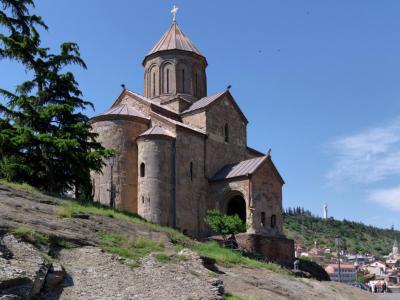
The Metekhi Church of the Assumption is one of Tbilisi’s most historically significant and visually captivating landmarks. Its commanding position atop a cliff overlooking the Kura River makes it a symbol of the city’s deep Christian roots. According to tradition, the original church was founded in the 5th century by King Vakhtang I Gorgasali, the legendary founder of Tbilisi, who also established his royal residence nearby. The current structure, however, dates back to the 13th century, during the reign of King Demetrius II of Georgia, after earlier versions were destroyed by invasions and fires.
Throughout the centuries, Metekhi Church has witnessed much of Georgia’s turbulent history. It served not only as a place of worship but also as a fortress due to its strategic position above the river. During the Russian imperial period, the church compound was repurposed — at one point even turned into a prison — and suffered significant damage. Restoration efforts in the 20th century helped return it to its original religious function.
Architecturally, Metekhi is a classic example of Georgian medieval design, featuring a cross-in-square layout built from reddish-brown tuff stone, with a dome rising above a rectangular base. Its simplicity and harmony reflect the spiritual austerity characteristic of Georgian ecclesiastical art.
The church’s clifftop terrace provides one of the best panoramic views of Tbilisi’s Old Town, the Bridge of Peace, and Rike Park below. Nearby stands the equestrian statue of King Vakhtang Gorgasali, who gazes toward the city he founded. Together, the church and statue form a timeless tableau that beautifully captures the soul of Tbilisi.
Throughout the centuries, Metekhi Church has witnessed much of Georgia’s turbulent history. It served not only as a place of worship but also as a fortress due to its strategic position above the river. During the Russian imperial period, the church compound was repurposed — at one point even turned into a prison — and suffered significant damage. Restoration efforts in the 20th century helped return it to its original religious function.
Architecturally, Metekhi is a classic example of Georgian medieval design, featuring a cross-in-square layout built from reddish-brown tuff stone, with a dome rising above a rectangular base. Its simplicity and harmony reflect the spiritual austerity characteristic of Georgian ecclesiastical art.
The church’s clifftop terrace provides one of the best panoramic views of Tbilisi’s Old Town, the Bridge of Peace, and Rike Park below. Nearby stands the equestrian statue of King Vakhtang Gorgasali, who gazes toward the city he founded. Together, the church and statue form a timeless tableau that beautifully captures the soul of Tbilisi.
4) Monument of King Vakhtang Gorgasali
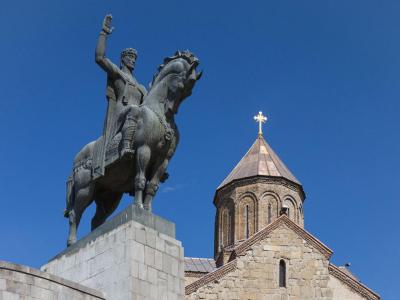
The Monument of King Vakhtang Gorgasali stands proudly beside the Metekhi Church. Erected in 1967, the statue honors King Vakhtang I Gorgasali, the legendary 5th-century monarch credited with founding Tbilisi. According to Georgian tradition, it was Gorgasali who chose the city’s location after his falcon, during a hunting trip, caught a pheasant that fell into a hot spring and was cooked — inspiring the name Tbilisi, meaning “warm place.”
The equestrian statue depicts the king mounted on horseback, gazing resolutely over the city he established. His raised hand, extended forward, symbolizes both protection and leadership—embodying the courage and vision of a ruler who fortified Georgia during an era marked by regional rivalries. In Gorgasali’s time, the Caucasus was a crossroads of empires—Byzantine, Persian, and later Arab—all competing for control. The king navigated these pressures with diplomacy and strength, defending Georgia’s independence and Christian faith while transforming Tbilisi into a thriving political and cultural center.
The monument is also a prime vantage point for photography and city views. From this spot, one can admire the sweeping panorama of the Old Town, all framed by the rolling hills beyond. The site’s proximity to the Metekhi Church of the Assumption adds to its historical resonance.
Surrounding the monument, there is a small park area with benches, providing a tranquil space for locals and visitors to relax. Having the statue at your side, one cannot help but put themselves in the king's shoes, imagining the founding day of the city full of cheering and applause.
The equestrian statue depicts the king mounted on horseback, gazing resolutely over the city he established. His raised hand, extended forward, symbolizes both protection and leadership—embodying the courage and vision of a ruler who fortified Georgia during an era marked by regional rivalries. In Gorgasali’s time, the Caucasus was a crossroads of empires—Byzantine, Persian, and later Arab—all competing for control. The king navigated these pressures with diplomacy and strength, defending Georgia’s independence and Christian faith while transforming Tbilisi into a thriving political and cultural center.
The monument is also a prime vantage point for photography and city views. From this spot, one can admire the sweeping panorama of the Old Town, all framed by the rolling hills beyond. The site’s proximity to the Metekhi Church of the Assumption adds to its historical resonance.
Surrounding the monument, there is a small park area with benches, providing a tranquil space for locals and visitors to relax. Having the statue at your side, one cannot help but put themselves in the king's shoes, imagining the founding day of the city full of cheering and applause.
5) Metekhi Bridge
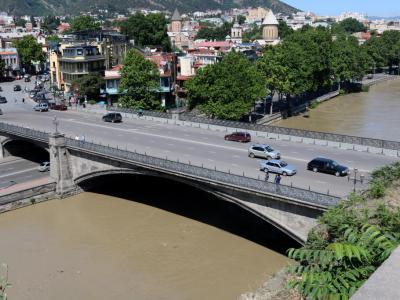
Metekhi Bridge, located in the old part of Tbilisi, is a historic bridge named after one hundred thousand Georgian martyrs. Its location, beneath the cliffs of Metekhi, is deeply symbolic — marking the very heart of Tbilisi’s origin story.
The first bridge at this site is believed to have been built in ancient or early medieval times, as the river crossing near the royal citadel was vital for trade, travel, and defense. Over the centuries, the structure has been destroyed and rebuilt multiple times, often as a result of wars, floods, and invasions. The current version, constructed during the 20th century, replaced an older wooden bridge that had long served the area.
The tragic story that gave the bridge its name dates back to 1226, when the Central Asian ruler Jalal ad-Din captured Tbilisi. He ordered the city’s Christians to trample on their sacred icons; those who refused were executed on the bridge. This event is commemorated by the Georgian Orthodox Church each year, and the victims are known as the "Hundred Thousand Martyrs."
For visitors, the Metekhi Bridge offers more than just a crossing — it provides some of the most scenic views in the city. Standing on the bridge, one can admire the colorful rooftops of the Old Town unfolding along the riverbanks. The area around the bridge is bustling with various cafes, restaurants, and hotels, providing opportunities to savor the delicious flavors of Georgian cuisine and enjoy a pleasant time.
The first bridge at this site is believed to have been built in ancient or early medieval times, as the river crossing near the royal citadel was vital for trade, travel, and defense. Over the centuries, the structure has been destroyed and rebuilt multiple times, often as a result of wars, floods, and invasions. The current version, constructed during the 20th century, replaced an older wooden bridge that had long served the area.
The tragic story that gave the bridge its name dates back to 1226, when the Central Asian ruler Jalal ad-Din captured Tbilisi. He ordered the city’s Christians to trample on their sacred icons; those who refused were executed on the bridge. This event is commemorated by the Georgian Orthodox Church each year, and the victims are known as the "Hundred Thousand Martyrs."
For visitors, the Metekhi Bridge offers more than just a crossing — it provides some of the most scenic views in the city. Standing on the bridge, one can admire the colorful rooftops of the Old Town unfolding along the riverbanks. The area around the bridge is bustling with various cafes, restaurants, and hotels, providing opportunities to savor the delicious flavors of Georgian cuisine and enjoy a pleasant time.
6) Meidan Square
Meidan Square's significance can be inferred straight out its name. The word “meidan” comes from Persian, meaning “square” or “open place,” reflecting the influence of Persian culture during different periods of Georgia’s history. For centuries, this square served as the commercial and social hub of Tbilisi. Traders from Europe, Asia, and the Middle East gathered to exchange goods such as silk, spices, carpets, and wine along the ancient Silk Road routes that passed through the city.
During the 18th and 19th centuries, Meidan became known as a bustling district, filled with inns, stables, and markets catering to travelers and merchants. The area was alive with the sound of negotiations, the scent of foreign spices, and the chatter of different languages. Under Russian rule in the 19th century, the square evolved further, as brick-built shops, taverns, and merchant houses replaced older wooden structures, giving the area a new architectural character that reshaped the face of Tbilisi.
Today, Meidan Square remains a lively gathering point, though its role has shifted from trade to tourism and leisure. Lined with cafés, restaurants, souvenir shops, and art galleries, it’s a favorite spot for both locals and visitors to relax and soak in the city’s atmosphere.
Beneath the square lies a fascinating secret — the Meidan Underground Museum, which showcases the archaeological remains of old Tbilisi, including sections of the city’s ancient streets and bathhouse systems. Do not be disappointed though, as present day Sulfur Baths can be found around the square. Bring a towel and enjoy.
During the 18th and 19th centuries, Meidan became known as a bustling district, filled with inns, stables, and markets catering to travelers and merchants. The area was alive with the sound of negotiations, the scent of foreign spices, and the chatter of different languages. Under Russian rule in the 19th century, the square evolved further, as brick-built shops, taverns, and merchant houses replaced older wooden structures, giving the area a new architectural character that reshaped the face of Tbilisi.
Today, Meidan Square remains a lively gathering point, though its role has shifted from trade to tourism and leisure. Lined with cafés, restaurants, souvenir shops, and art galleries, it’s a favorite spot for both locals and visitors to relax and soak in the city’s atmosphere.
Beneath the square lies a fascinating secret — the Meidan Underground Museum, which showcases the archaeological remains of old Tbilisi, including sections of the city’s ancient streets and bathhouse systems. Do not be disappointed though, as present day Sulfur Baths can be found around the square. Bring a towel and enjoy.
7) Narikala Fortress (must see)
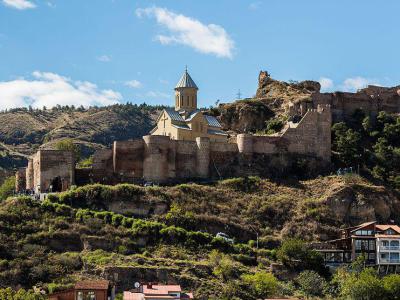
The Narikala Fortress is often referred to as the “heart of Tbilisi.” Narikala dates back to the 4th century, when it was originally built as a Persian citadel to protect the developing settlement below. Over the centuries, it has been expanded, destroyed, and rebuilt by a succession of powers — Arabs, Mongols, Persians, and Georgians — each leaving traces of their influence on its ancient walls.
The fortress gained particular importance in the 7th and 8th centuries, when it served as a stronghold for the Arab emirs who ruled Tbilisi, and again during the medieval Georgian Kingdom, when it became the city’s main defensive structure. The name “Narikala” itself is believed to come from the Persian words “Narin Qala,” meaning “Little Fortress.”
In the 17th century, under Persian occupation, the fortress underwent major reconstruction, giving it much of its present-day form. Unfortunately, a massive explosion in 1827 — caused by the detonation of a gunpowder storage depot inside the fortress — destroyed large sections of it. What remains today are impressive stone ramparts, towers, and fragments of defensive walls that still evoke the power and strategic importance Narikala once held.
Like any other self-respecting medieval fort, Narikala oversees the entire riverside from above. The fortress's dominating position can be reached on foot through the winding alleys of the Old Town or by taking the cable car from Rike Park, which glides over the Kura River and provides a spectacular aerial perspective of the city.
That is not all the fortress has to offer. Within its grounds stands the reconstructed St. Nicholas Church, built in the 1990s on the site of an older medieval church that had been destroyed by fire. The interior is decorated with vivid frescoes depicting both biblical scenes and moments from Georgia’s national history.
The fortress gained particular importance in the 7th and 8th centuries, when it served as a stronghold for the Arab emirs who ruled Tbilisi, and again during the medieval Georgian Kingdom, when it became the city’s main defensive structure. The name “Narikala” itself is believed to come from the Persian words “Narin Qala,” meaning “Little Fortress.”
In the 17th century, under Persian occupation, the fortress underwent major reconstruction, giving it much of its present-day form. Unfortunately, a massive explosion in 1827 — caused by the detonation of a gunpowder storage depot inside the fortress — destroyed large sections of it. What remains today are impressive stone ramparts, towers, and fragments of defensive walls that still evoke the power and strategic importance Narikala once held.
Like any other self-respecting medieval fort, Narikala oversees the entire riverside from above. The fortress's dominating position can be reached on foot through the winding alleys of the Old Town or by taking the cable car from Rike Park, which glides over the Kura River and provides a spectacular aerial perspective of the city.
That is not all the fortress has to offer. Within its grounds stands the reconstructed St. Nicholas Church, built in the 1990s on the site of an older medieval church that had been destroyed by fire. The interior is decorated with vivid frescoes depicting both biblical scenes and moments from Georgia’s national history.
8) Abanotubani
The Abanotubani district is famous for its sulfur baths, which have been an essential part of Tbilisi’s identity for centuries. In fact, this area is the very reason the city exists as it does today — after all, “tbili” means “warm.”
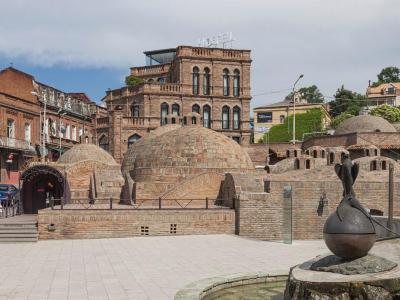
The thermal springs beneath Abanotubani have been flowing for more than a thousand years, and the bathhouses that channel them date back to at least the 17th century, with some structures built even earlier. During the Persian and later Russian periods, the baths were frequented by nobles, merchants, and travelers from all over the region, becoming not only places of hygiene but also centers of relaxation, conversation, and diplomacy. The area’s most distinctive architectural feature is its domed brick roofs, which rise like small mounds from the earth, allowing steam from the sulfur-rich waters to escape into the air.
Today, Abanotubani remains one of the most beloved attractions in Tbilisi. Visitors can still enjoy a soak in one of the many historic bathhouses, some of which, like the Orbeliani Bathhouse, are beautifully decorated with blue-tiled facades reminiscent of Persian design. The neighborhood surrounding the baths is also a delight to explore, filled with narrow streets, colorful balconies, art shops, and cafés.
Beyond its charm, Abanotubani is a microcosm of Tbilisi’s multicultural spirit. Within its compact area stand Georgian Orthodox, Armenian, and Catholic churches, as well as a mosque — a reflection of centuries of coexistence. The district may be small, but it gathers all walks of life in a steamy, warm atmosphere.
The thermal springs beneath Abanotubani have been flowing for more than a thousand years, and the bathhouses that channel them date back to at least the 17th century, with some structures built even earlier. During the Persian and later Russian periods, the baths were frequented by nobles, merchants, and travelers from all over the region, becoming not only places of hygiene but also centers of relaxation, conversation, and diplomacy. The area’s most distinctive architectural feature is its domed brick roofs, which rise like small mounds from the earth, allowing steam from the sulfur-rich waters to escape into the air.
Today, Abanotubani remains one of the most beloved attractions in Tbilisi. Visitors can still enjoy a soak in one of the many historic bathhouses, some of which, like the Orbeliani Bathhouse, are beautifully decorated with blue-tiled facades reminiscent of Persian design. The neighborhood surrounding the baths is also a delight to explore, filled with narrow streets, colorful balconies, art shops, and cafés.
Beyond its charm, Abanotubani is a microcosm of Tbilisi’s multicultural spirit. Within its compact area stand Georgian Orthodox, Armenian, and Catholic churches, as well as a mosque — a reflection of centuries of coexistence. The district may be small, but it gathers all walks of life in a steamy, warm atmosphere.
Walking Tours in Tbilisi, Georgia

Create Your Own Walk in Tbilisi
Creating your own self-guided walk in Tbilisi is easy and fun. Choose the city attractions that you want to see and a walk route map will be created just for you. You can even set your hotel as the start point of the walk.
Rustaveli Avenue Walking Tour
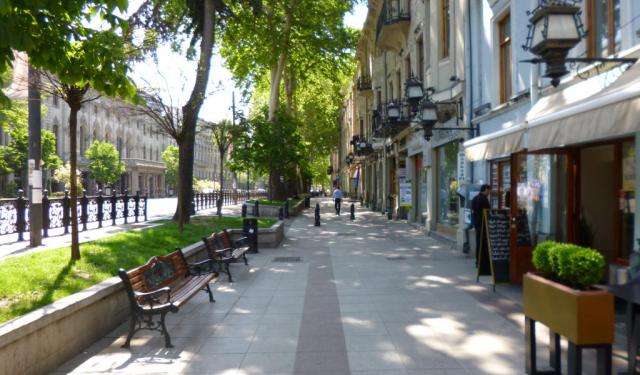
If Tbilisi is the heart of Georgia, then Rustaveli Avenue is its pulse. As the capital's main artery, the importance – historical, cultural, or architectural – of this vibrant and bustling thoroughfare is hard to overestimate.
Named after the renowned medieval Georgian poet Shota Rustaveli, the avenue starts from Freedom Square – a key downtown landmark, home to the iconic statue of... view more
Tour Duration: 2 Hour(s)
Travel Distance: 2.5 Km or 1.6 Miles
Named after the renowned medieval Georgian poet Shota Rustaveli, the avenue starts from Freedom Square – a key downtown landmark, home to the iconic statue of... view more
Tour Duration: 2 Hour(s)
Travel Distance: 2.5 Km or 1.6 Miles
The Most Popular Cities
/ view all