

Johannisfriedhof (St. John's Cemetery), Nuremberg
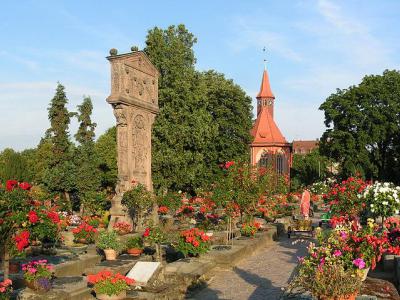
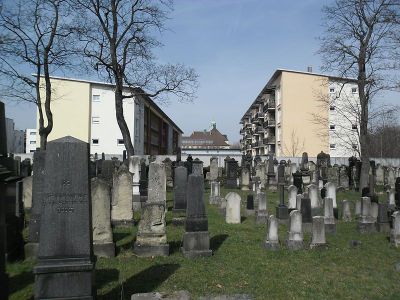
Saint John's Cemetery (Johannisfriedhof) is a historically significant site in Nuremberg. Renowned for its distinctive beauty and rich history, it serves as the final resting place for many of Nuremberg's most distinguished citizens. The cemetery's affectionate nickname "Rose Cemetery" (Rosenfriedhof), stems from its abundant decorative rosebushes, adding a unique charm to the serene landscape.
Established outside the Old Town walls in the early 16th century due to a progressive decree by the Town Council prohibiting further burials within the city's confines, Saint John's Cemetery has been a key burial site since then. Originally, it extended the grounds of the old leprosy infirmary for the parish of Saint Sebaldus. From its inception in 1518 until the mid-19th century, all citizens of Nuremberg were interred here or at Saint Roch's Cemetery.
The cemetery is notably the burial site of prominent historical figures such as the painter Albrecht Dürer, the sculptor Veit Stoß, the humanist Willibald Pirckheimer, and other key figures like Hans Sachs and Adam Kraft. These graves are marked by uniform headstones adorned with bronze tablets that bear epitaphs and coats of arms, reflecting the professions and legacies of those buried beneath them.
Central to Saint John's Cemetery is a small, picturesque 14th-century church built of red brick. Remarkably, this church survived the devastating air raids of World War II, preserving its original structure including a splendid 16th-century altar crafted by a pupil of Dürer. This church not only adds a spiritual dimension to the cemetery but also stands as a historical monument in its own right.
Today, Saint John's Cemetery remains one of the most notable burial grounds in Europe, appreciated not only for its historical significance and the fame of its denizens but also for its aesthetic beauty and tranquil atmosphere, enhanced by the well-tended roses that give the cemetery its nickname.
Established outside the Old Town walls in the early 16th century due to a progressive decree by the Town Council prohibiting further burials within the city's confines, Saint John's Cemetery has been a key burial site since then. Originally, it extended the grounds of the old leprosy infirmary for the parish of Saint Sebaldus. From its inception in 1518 until the mid-19th century, all citizens of Nuremberg were interred here or at Saint Roch's Cemetery.
The cemetery is notably the burial site of prominent historical figures such as the painter Albrecht Dürer, the sculptor Veit Stoß, the humanist Willibald Pirckheimer, and other key figures like Hans Sachs and Adam Kraft. These graves are marked by uniform headstones adorned with bronze tablets that bear epitaphs and coats of arms, reflecting the professions and legacies of those buried beneath them.
Central to Saint John's Cemetery is a small, picturesque 14th-century church built of red brick. Remarkably, this church survived the devastating air raids of World War II, preserving its original structure including a splendid 16th-century altar crafted by a pupil of Dürer. This church not only adds a spiritual dimension to the cemetery but also stands as a historical monument in its own right.
Today, Saint John's Cemetery remains one of the most notable burial grounds in Europe, appreciated not only for its historical significance and the fame of its denizens but also for its aesthetic beauty and tranquil atmosphere, enhanced by the well-tended roses that give the cemetery its nickname.
Want to visit this sight? Check out these Self-Guided Walking Tours in Nuremberg. Alternatively, you can download the mobile app "GPSmyCity: Walks in 1K+ Cities" from Apple App Store or Google Play Store. The app turns your mobile device to a personal tour guide and it works offline, so no data plan is needed when traveling abroad.
Download The GPSmyCity App



Johannisfriedhof (St. John's Cemetery) on Map
Sight Name: Johannisfriedhof (St. John's Cemetery)
Sight Location: Nuremberg, Germany (See walking tours in Nuremberg)
Sight Type: Attraction/Landmark
Sight Location: Nuremberg, Germany (See walking tours in Nuremberg)
Sight Type: Attraction/Landmark
Nearby Sights
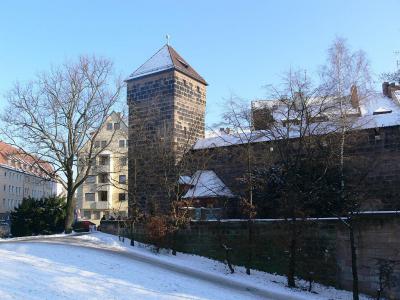
Walking Tours in Nuremberg, Germany

Create Your Own Walk in Nuremberg
Creating your own self-guided walk in Nuremberg is easy and fun. Choose the city attractions that you want to see and a walk route map will be created just for you. You can even set your hotel as the start point of the walk.
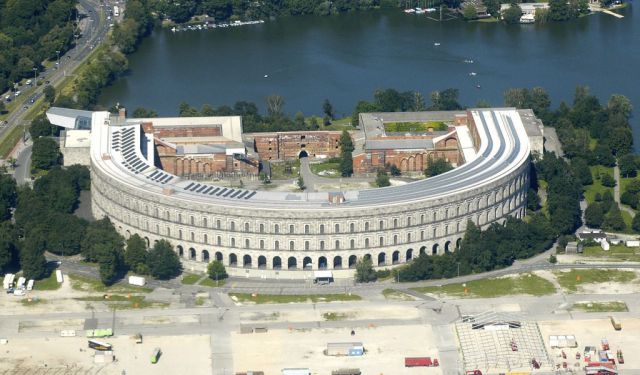
Hitler's Nuremberg Tour
Nuremberg’s association with Adolf Hitler and National Socialism is one of the darkest chapters in the city’s history. Although Nuremberg is known for its medieval architecture and storybook appearance, few German cities are as closely intertwined with the Nazi legacy. Hitler referred to it as the “City of the Party Rallies” and regarded it as a model for the ideal German city.
The... view more
Tour Duration: 2 Hour(s)
Travel Distance: 4.9 Km or 3 Miles
The... view more
Tour Duration: 2 Hour(s)
Travel Distance: 4.9 Km or 3 Miles
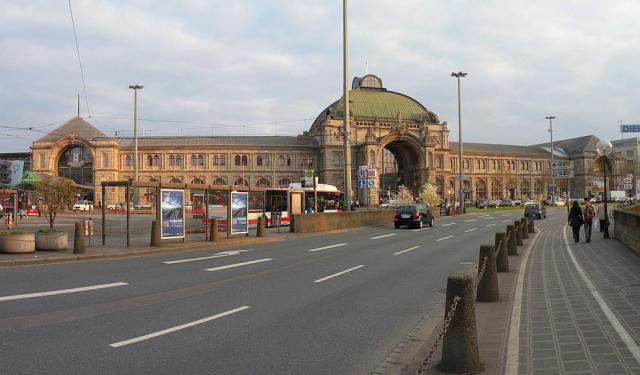
A Walk Through Nuremberg's Historical Old Town
American poet Henry Wadsworth Longfellow described Nuremberg as a “quaint old town of toil and traffic, quaint old town of art and song.”
Nuremberg has witnessed some of the most significant events in German history. For many people, the city is first associated with the rise of the Third Reich, the Nazi Party rallies, and the postwar trials of Nazi leaders. Indeed, Hitler regarded... view more
Tour Duration: 3 Hour(s)
Travel Distance: 3.8 Km or 2.4 Miles
Nuremberg has witnessed some of the most significant events in German history. For many people, the city is first associated with the rise of the Third Reich, the Nazi Party rallies, and the postwar trials of Nazi leaders. Indeed, Hitler regarded... view more
Tour Duration: 3 Hour(s)
Travel Distance: 3.8 Km or 2.4 Miles