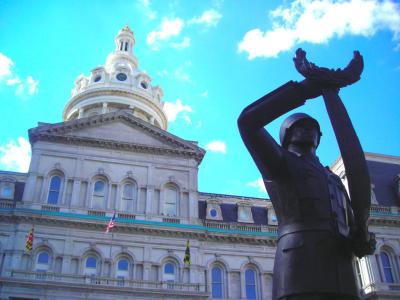


War Memorial Plaza and Negro Heroes of the U.S. Monument, Baltimore
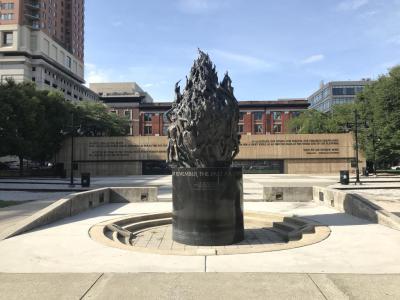
War Memorial Plaza and Negro Heroes of the U.S. Monument are two significant landmarks in Baltimore that commemorate the contributions and sacrifices of the city's residents in times of war. Built in 1927, War Memorial Plaza stands as a reminder of the 1,769 Marylanders who lost their lives in World War I.
Over the years, the plaza has become a cherished civic space in Baltimore, hosting various political events, concerts, and a popular spot for relaxation. Its central location, in front of Baltimore City Hall, makes it a prominent landmark in the city.
One of the most notable monuments on War Memorial Plaza is the Negro Heroes of the U.S. Monument, also known as the Black Soldier Memorial Statue. The statue was commissioned and dedicated by the City of Baltimore with the financial support of an anonymous donor. It was designed by sculptor James E. Lewis and unveiled on May 30th, 1972.
The statue depicts a soldier holding a wreath and sash. The sash bears a chronology of the wars in which African American soldiers served in the United States military. The monument honors the sacrifices and contributions of African American soldiers throughout the history of the United States.
Initially located on the north side of Battle Monument Park, the Negro Heroes of the U.S. Monument was relocated to War Memorial Plaza, in front of Baltimore City Hall, in 2007, where it stands as a reminder of the city's commitment to honoring its past and recognizing the contributions of all its residents.
Over the years, the plaza has become a cherished civic space in Baltimore, hosting various political events, concerts, and a popular spot for relaxation. Its central location, in front of Baltimore City Hall, makes it a prominent landmark in the city.
One of the most notable monuments on War Memorial Plaza is the Negro Heroes of the U.S. Monument, also known as the Black Soldier Memorial Statue. The statue was commissioned and dedicated by the City of Baltimore with the financial support of an anonymous donor. It was designed by sculptor James E. Lewis and unveiled on May 30th, 1972.
The statue depicts a soldier holding a wreath and sash. The sash bears a chronology of the wars in which African American soldiers served in the United States military. The monument honors the sacrifices and contributions of African American soldiers throughout the history of the United States.
Initially located on the north side of Battle Monument Park, the Negro Heroes of the U.S. Monument was relocated to War Memorial Plaza, in front of Baltimore City Hall, in 2007, where it stands as a reminder of the city's commitment to honoring its past and recognizing the contributions of all its residents.
Want to visit this sight? Check out these Self-Guided Walking Tours in Baltimore. Alternatively, you can download the mobile app "GPSmyCity: Walks in 1K+ Cities" from Apple App Store or Google Play Store. The app turns your mobile device to a personal tour guide and it works offline, so no data plan is needed when traveling abroad.
Download The GPSmyCity App



War Memorial Plaza and Negro Heroes of the U.S. Monument on Map
Sight Name: War Memorial Plaza and Negro Heroes of the U.S. Monument
Sight Location: Baltimore, USA (See walking tours in Baltimore)
Sight Type: Attraction/Landmark
Sight Location: Baltimore, USA (See walking tours in Baltimore)
Sight Type: Attraction/Landmark
Nearby Sights

Walking Tours in Baltimore, Maryland

Create Your Own Walk in Baltimore
Creating your own self-guided walk in Baltimore is easy and fun. Choose the city attractions that you want to see and a walk route map will be created just for you. You can even set your hotel as the start point of the walk.
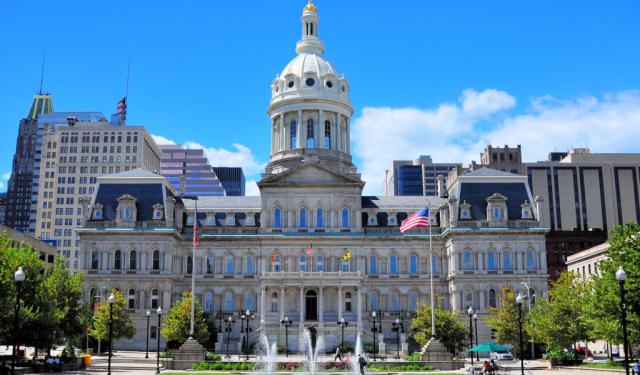
Baltimore Downtown Walking Tour
Before the city fully wakes, picture a harbor under fire, the night sky lit by explosions, and a single question hanging in the smoke: can the flag still be seen at dawn? In 1814, as the bombardment of Fort McHenry came to an end, Francis Scott Key, an American lawyer and poet, looked out and found his answer: “O say can you see, by the dawn’s early light…” From that moment, Baltimore... view more
Tour Duration: 2 Hour(s)
Travel Distance: 3.6 Km or 2.2 Miles
Tour Duration: 2 Hour(s)
Travel Distance: 3.6 Km or 2.2 Miles
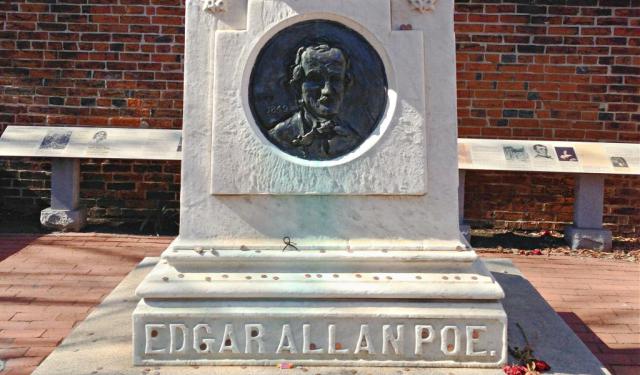
Edgar Allan Poe’s Baltimore
“Deep into that darkness peering, long I stood there wondering, fearing…” wrote Edgar Allan Poe, a line that could just as easily describe his final, mysterious days in Baltimore, the city most closely tied to his life and death.
Edgar Allan Poe was an American writer and poet best known for his tales of mystery, horror, and psychological depth. Although his family had roots in Baltimore,... view more
Tour Duration: 2 Hour(s)
Travel Distance: 5.5 Km or 3.4 Miles
Edgar Allan Poe was an American writer and poet best known for his tales of mystery, horror, and psychological depth. Although his family had roots in Baltimore,... view more
Tour Duration: 2 Hour(s)
Travel Distance: 5.5 Km or 3.4 Miles
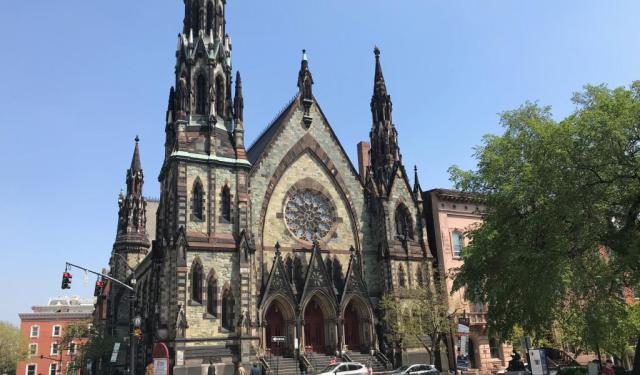
Baltimore's Architectural Jewels
Overall, Baltimore's architecture is a testament to the city's rich and varied history, showcasing a wide range of styles and cultural influences that have shaped the local built environment over the centuries. Outside Federal-style row houses and grand Beaux-Arts museums, Baltimore is also known for a multitude of Art Deco buildings and temples of various styles, constructed between the... view more
Tour Duration: 2 Hour(s)
Travel Distance: 3.9 Km or 2.4 Miles
Tour Duration: 2 Hour(s)
Travel Distance: 3.9 Km or 2.4 Miles