Custom Walk in George Town, Malaysia by sabila2903904974 created on 2020-01-12
Guide Location: Malaysia » George Town
Guide Type: Custom Walk
# of Sights: 15
Tour Duration: 3 Hour(s)
Travel Distance: 4.3 Km or 2.7 Miles
Share Key: KWPFU
Guide Type: Custom Walk
# of Sights: 15
Tour Duration: 3 Hour(s)
Travel Distance: 4.3 Km or 2.7 Miles
Share Key: KWPFU
How It Works
Please retrieve this walk in the GPSmyCity app. Once done, the app will guide you from one tour stop to the next as if you had a personal tour guide. If you created the walk on this website or come to the page via a link, please follow the instructions below to retrieve the walk in the app.
Retrieve This Walk in App
Step 1. Download the app "GPSmyCity: Walks in 1K+ Cities" on Apple App Store or Google Play Store.



Step 2. In the GPSmyCity app, download(or launch) the guide "George Town Map and Walking Tours".
Step 3. Tap the menu button located at upper right corner of the "Walks" screen and select "Retrieve custom walk". Enter the share key: KWPFU
1) Chowrasta Market
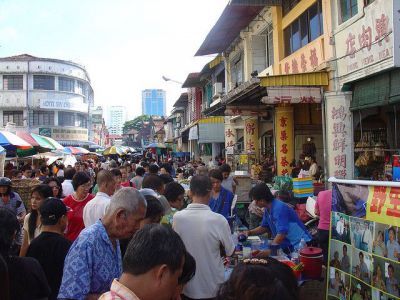
Chowrasta proudly stands as one of Malaysia's oldest markets and one of two makets in the city center, the other being Campbell Street Market. Here, you'll encounter a treasure trove of the finest produce, from tangy pickled nutmegs to the beloved "tau sar pneah", Penang's signature bean paste pastry.
The site where the market now thrives was once a bustling Indian enclave in George Town, with Tamil settlers from southern India making their mark in the mid-19th century. It was in this vicinity that these industrious folks peddled their wares, including fresh produce and livestock.
In 1890, the George Town Municipal Council erected the original single-storey Chowrasta Market, which later made way for the present-day structure in the 1960s. More recently, between 2013 and 2017, extensive renovations expanded and rejuvenated its facilities.
As you step through the Penang Road entrance, prepare to be dazzled by an array of local delights, including nutmegs, durian treats, and traditional balms. Downstairs, the wet market buzzes with activity, while upstairs, time seems to stand still amidst rows of shoe shops, clothing stores, and book emporiums brimming with second-hand publications.
Venture outside, and you'll discover a bustling scene where vendors hawk everything from electronic gadgets to apparel at bargain prices.
The site where the market now thrives was once a bustling Indian enclave in George Town, with Tamil settlers from southern India making their mark in the mid-19th century. It was in this vicinity that these industrious folks peddled their wares, including fresh produce and livestock.
In 1890, the George Town Municipal Council erected the original single-storey Chowrasta Market, which later made way for the present-day structure in the 1960s. More recently, between 2013 and 2017, extensive renovations expanded and rejuvenated its facilities.
As you step through the Penang Road entrance, prepare to be dazzled by an array of local delights, including nutmegs, durian treats, and traditional balms. Downstairs, the wet market buzzes with activity, while upstairs, time seems to stand still amidst rows of shoe shops, clothing stores, and book emporiums brimming with second-hand publications.
Venture outside, and you'll discover a bustling scene where vendors hawk everything from electronic gadgets to apparel at bargain prices.
2) Hainan Temple
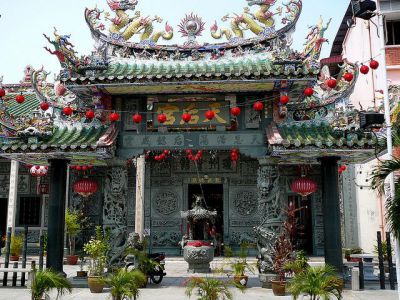
Founded in the late 19th century, this Hainanese-style temple pays homage to Mar Chor Poh, also known as Mazu, revered as the patron saint of seafarers. Dubbed the "Temple of Heavenly Queen", it underwent extensive remodeling for its centenary celebration in 1995, rejuvenating its distinctive swirling dragon pillars and enhancing the ornamental stone carvings, each detail a masterpiece of artistry.
Venturing inside, visitors are enveloped in a serene ambiance, with verdant trees gracing the central courtyard, alongside a central pavilion where worshippers can pay their respects and offer prayers. Upon entering, one's gaze is drawn upward to an altar dedicated to Guan Gong, while below, an incense burner exudes fragrant offerings, further enriching the spiritual atmosphere.
The temple's annual celebrations, including the birthday of Mazu and other traditional Chinese festivals, are marked by colorful processions, elaborate rituals, and cultural performances that showcase the vibrant traditions of the Hainanese community.
Venturing inside, visitors are enveloped in a serene ambiance, with verdant trees gracing the central courtyard, alongside a central pavilion where worshippers can pay their respects and offer prayers. Upon entering, one's gaze is drawn upward to an altar dedicated to Guan Gong, while below, an incense burner exudes fragrant offerings, further enriching the spiritual atmosphere.
The temple's annual celebrations, including the birthday of Mazu and other traditional Chinese festivals, are marked by colorful processions, elaborate rituals, and cultural performances that showcase the vibrant traditions of the Hainanese community.
3) Cheong Fatt Tze - The Blue Mansion (must see)
The "Rockefeller of the East", Cheong Fatt Tze, was a poor youth who fled the Second Opium War in Guandong, China. He found his destiny in Southeast Asia. He prospered as an industrialist, politician and philanthropist. His home in George Town was for himself, his eight wives, and six sons.
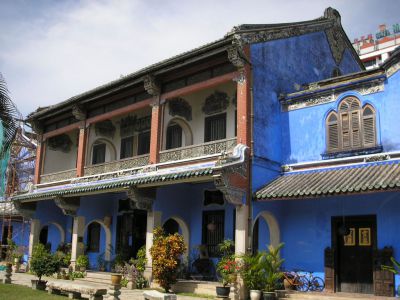
Cheog Fatt Tze's dream home mansion at 43 Leith Street in George Town is colored indigo blue. The color was chosen for serenity. The house is commonly called the "Blue Mansion." Construction was started in 1897 and completed in 1904. It has two floors, 38 rooms, five granite courtyards, seven staircases, and 220 Gothic louvered windows.
Cheong liked to work from home. The architectural style is eclectic, combining the Chinese concept of bilateral symmetry with western Gothic elements. Features include Chinese porcelains, Stoke-on-Trent floor tiles, Glasgow cast iron, and Art Nouveau stained glass. The building follows the principals of Chinese Feng Shui.
The mansion was bought from Cheong Fatt Tze's descendants in 1989. It was renovated in 1995 and it now operates as a museum and boutique hotel. Tours in English are offered three times daily. A restaurant named "Indigo" is on the first floor. The mansion has been featured in many films and on CNN, BCC, and the History and Discovery channels.
Cheog Fatt Tze's dream home mansion at 43 Leith Street in George Town is colored indigo blue. The color was chosen for serenity. The house is commonly called the "Blue Mansion." Construction was started in 1897 and completed in 1904. It has two floors, 38 rooms, five granite courtyards, seven staircases, and 220 Gothic louvered windows.
Cheong liked to work from home. The architectural style is eclectic, combining the Chinese concept of bilateral symmetry with western Gothic elements. Features include Chinese porcelains, Stoke-on-Trent floor tiles, Glasgow cast iron, and Art Nouveau stained glass. The building follows the principals of Chinese Feng Shui.
The mansion was bought from Cheong Fatt Tze's descendants in 1989. It was renovated in 1995 and it now operates as a museum and boutique hotel. Tours in English are offered three times daily. A restaurant named "Indigo" is on the first floor. The mansion has been featured in many films and on CNN, BCC, and the History and Discovery channels.
4) Church of the Assumption
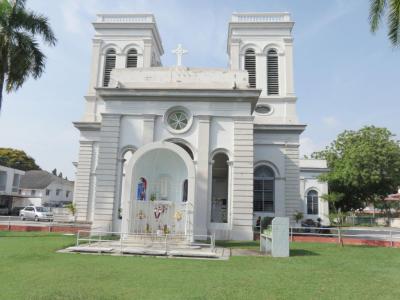
As you enter this church, a plaque on the left wall commemorates the priests who have served it since its inception. The church's history dates back to 1786 when the first Catholic community in northern Malaya, accompanied by Bishop Arnold Garnault, arrived in Penang and constructed a humble wooden structure on Church Street, naming it the Church of the Assumption. In 1802, the wooden structure was replaced by a brick building with a tower, which served the Catholic community until its relocation to Farquhar Street 1858. Two years later, the current structure was erected by Father Claude Manissol, and the first mass was celebrated there in 1861.
The edifice underwent significant renovations in 1928, including the addition of two wings. In 1955, it was designated the Cathedral of the Diocese of Penang by a Decree of the Vatican, albeit in 2003, the cathedral status was transferred to the Cathedral of the Holy Spirit.
In 2016, the church closed for 14 months for an extensive restoration, reopening on January 1, 2018. Inside, visitors can admire beautiful stained glass panels, life-size statues of saints and the Blessed Virgin Mary, stations of the cross wall hangings, and a grand pipe organ erected in 1916, one of the oldest surviving instruments of its kind still in working condition. With constant maintenance and restoration efforts, this oak, pine, and mahogany instrument with 640 lead and zinc pipes continues to enrich the church's musical tradition.
The church grounds also house the Roman Catholic Penang Diocesan Museum, showcasing the Church's missionary history with artifacts and memorabilia. There is also an art gallery displaying paintings by Father Joseph Reutens.
The edifice underwent significant renovations in 1928, including the addition of two wings. In 1955, it was designated the Cathedral of the Diocese of Penang by a Decree of the Vatican, albeit in 2003, the cathedral status was transferred to the Cathedral of the Holy Spirit.
In 2016, the church closed for 14 months for an extensive restoration, reopening on January 1, 2018. Inside, visitors can admire beautiful stained glass panels, life-size statues of saints and the Blessed Virgin Mary, stations of the cross wall hangings, and a grand pipe organ erected in 1916, one of the oldest surviving instruments of its kind still in working condition. With constant maintenance and restoration efforts, this oak, pine, and mahogany instrument with 640 lead and zinc pipes continues to enrich the church's musical tradition.
The church grounds also house the Roman Catholic Penang Diocesan Museum, showcasing the Church's missionary history with artifacts and memorabilia. There is also an art gallery displaying paintings by Father Joseph Reutens.
5) Penang State Museum and Art Gallery
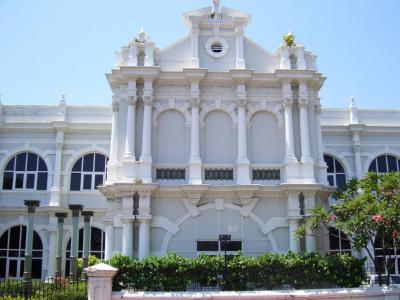
Established during the late 19th and early 20th centuries, Penang's state-run museum is housed within a Colonial-style building that once served as the premises for the Penang Free School, the first English language public school in the East, dating back to the 1810s. The museum offers a comprehensive exploration of the island's rich history, customs, and traditions, showcasing a diverse array of quality exhibits (including mock-ups of traditional houses) representing its various ethnic groups.
Visitors can immerse themselves in the island's cultural tapestry through an extensive collection of artifacts, including photographs, videos, documents, costumes, furniture, porcelains, and other nicely labeled displays. The museum's upper floor hosts the history gallery, which offers a glimpse into the past with early 19th-century watercolors by Captain Robert Smith, an engineer with the East India Company, and prints depicting landscapes of old Penang – a captivating journey through time.
Tip:
Prior to your visit, please verify if the museum is open to the public.
Visitors can immerse themselves in the island's cultural tapestry through an extensive collection of artifacts, including photographs, videos, documents, costumes, furniture, porcelains, and other nicely labeled displays. The museum's upper floor hosts the history gallery, which offers a glimpse into the past with early 19th-century watercolors by Captain Robert Smith, an engineer with the East India Company, and prints depicting landscapes of old Penang – a captivating journey through time.
Tip:
Prior to your visit, please verify if the museum is open to the public.
6) St. George's Anglican Church
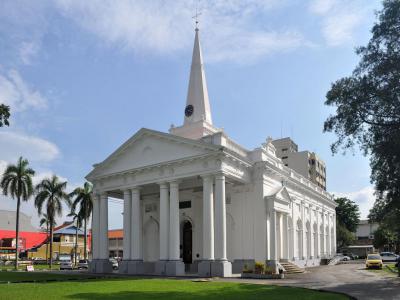
Named after England's patron saint, Saint George's Anglican Church holds the distinction of being the oldest purpose-built Anglican church in Southeast Asia. Constructed in 1818 using convict labor, the edifice was designed by Captain Robert Smith, incorporating elements of Neo-Classical, Georgian, and English Palladian architectural styles. Its exterior presents a simple yet elegant façade, with Doric columns and a triangular pediment, while the interior features a spacious nave, stained glass windows, and a finely crafted wooden ceiling. Recognized as one of Malaysia's 50 National Treasures by the federal government in 2007, the church underwent significant restoration work in 2009 and was elevated to the status of pro-cathedral in 2023.
Beyond its religious and historical significance, Saint George's is celebrated for its picturesque surroundings, nestled amidst verdant greenery and historic edifices. The serene ambiance and scenic locale attract visitors eager to delve into Penang's rich cultural heritage.
Beyond its religious and historical significance, Saint George's is celebrated for its picturesque surroundings, nestled amidst verdant greenery and historic edifices. The serene ambiance and scenic locale attract visitors eager to delve into Penang's rich cultural heritage.
7) Campbell Street Market
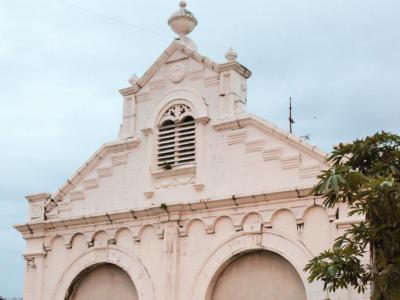
In the heart of George Town, Campbell Street Market is one of the city's two marketplaces, the other being Chowrasta Market. Dating back to the 1900s, this place springs to life every morning, with vendors spilling onto the northern stretch of Carnavon Street. From fresh produce to dry goods, seafood, and even live poultry, you'll find a bit of everything here.
What sets this market apart is its preserved Victorian architecture, featuring two elegant arches topped by a pediment with an arched window. While Chowrasta Market, slightly older, dates back to 1890, it underwent reconstruction in the 1960s, losing some of its historical allure in the process.
Legend has it that the land upon which Campbell Street Market stands was once a Malay cemetery, known as Hutan Mayat, or the "forest of dead bodies" in Malay. To this day, whispers of hauntings linger, with tales of paranormal sightings during the early hours of the morning adding a layer of intrigue.
What sets this market apart is its preserved Victorian architecture, featuring two elegant arches topped by a pediment with an arched window. While Chowrasta Market, slightly older, dates back to 1890, it underwent reconstruction in the 1960s, losing some of its historical allure in the process.
Legend has it that the land upon which Campbell Street Market stands was once a Malay cemetery, known as Hutan Mayat, or the "forest of dead bodies" in Malay. To this day, whispers of hauntings linger, with tales of paranormal sightings during the early hours of the morning adding a layer of intrigue.
8) Kapitan Keling Mosque
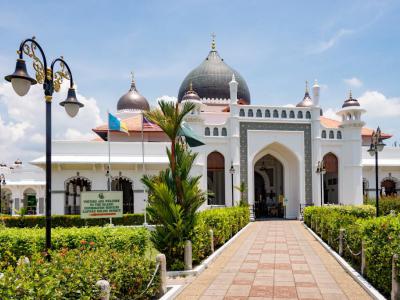
Masjid Kapitan Keling is the most famous mosque in Penang. Its architecture combines the Indian-Mughal style with Gothic, Moorish, Romanesque and Renaissance elements. The mosque is named for Cauder Mohudeen Merican. Commonly called Kapitan Keling, he was the leader of the Muslim community in Penang in the early 19th century.
Sir George Leigh, Lieutenant-Governor of Penang, granted 18 acres of land for the mosque in 1801. The mosque was designed by German architect Henry Alfred Neubronner. It is located on Kapitan Keiling Street, also called "the Street Of Harmony." The mosque shares the Street with the Goddess of Mercy Temple and Saint George's Church.
The mosque is part of the World Heritage Site of George Town. It is at the center of the Tamil Muslim Chulias Neighborhood. Cauder Mohudeen was a ship tandoor from Porto Novo, south of Pondicherry, India.
The original design met with disapproval and the mosque was remodeled and enlarged. The prayer hall doubled in height. The ventilation system was overhauled and more natural light was admitted. The outside is colored ochre. The interior has white marble floors. The aisles are framed by horseshoe arches. All decoration is of geometrical designs.
Sir George Leigh, Lieutenant-Governor of Penang, granted 18 acres of land for the mosque in 1801. The mosque was designed by German architect Henry Alfred Neubronner. It is located on Kapitan Keiling Street, also called "the Street Of Harmony." The mosque shares the Street with the Goddess of Mercy Temple and Saint George's Church.
The mosque is part of the World Heritage Site of George Town. It is at the center of the Tamil Muslim Chulias Neighborhood. Cauder Mohudeen was a ship tandoor from Porto Novo, south of Pondicherry, India.
The original design met with disapproval and the mosque was remodeled and enlarged. The prayer hall doubled in height. The ventilation system was overhauled and more natural light was admitted. The outside is colored ochre. The interior has white marble floors. The aisles are framed by horseshoe arches. All decoration is of geometrical designs.
9) Little India
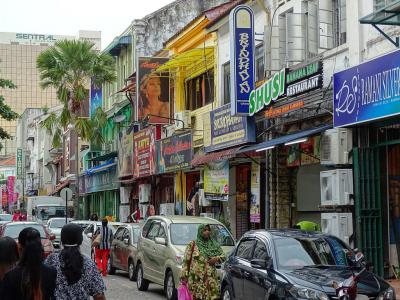
Little India Street has a clutch of exotic market stalls where you can find an exciting range of Indian products. There is a huge variety of Indian spicy foods here, such as roti canai, plus lots of traditional Indian goods, including sculptures and Punjabi suits. Make sure to have a look through the extensive displays of cheap DVDs and CDs while you are here.
10) Pinang Peranakan Mansion (must see)
Chung Keng Quee was appointed "Kapitan China" by the British government of Malaysia in 1877. Mr. Quee was a multimillionaire philanthropist and industrialist and a member of the Advisory State Council set up by the British colonizers. He was also reputed to be a leader of the Hai San Chinese secret society.
The Pinang Peranakan Mansion was commissioned by Chung Keng Quee in 1893 to be his private residence. He originally called it Hai Kee Chan, which means "Sea Remembrance Hall." Mr. Quee died in 1901. The mansion passed to his descendants. The property gradually declined until it was bought in the 1990s by a real estate developer.
The Sea Remembrance Hall of Mr Quee was built on the site of the former headquarters of the Ghee Hin, a rival secret society which is said to have executed their enemies by throwing them down a well now hidden in back of Quee's mansion. The Ghee Hin are not missed in George Town.
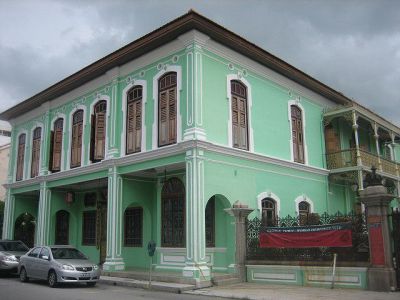
After the mansion was acquired from the Quee family it was painted green and carefully restored to its glory days. It is the leading Peranakan museum on Penang Island. It has more than 1,000 Peranakan antiques and furnishings. The Peranakan or "Straits Chinese" are the descendants of Chinese entrepreneurs who settled in Malaysia centuries ago.
The mansion has several interior courtyards like many Chinese townhouses of the era. There are also European furnishings including Stoke-on-Trent floor tiles and Scottish cast iron gratings and railings. The European elements are combined with Chinese features like carved wooden panels and screens on the walls.
A temple dedicated to Chung Keng Quee was installed next to the mansion. Inside the temple is a full-sized statue of patriarch Chung and portraits of Chung family members.
The mansion has served as a location for film and media, e.g., "Crazy Rich Asians" in 2018. There is an admission charge but children are admitted free.
The Pinang Peranakan Mansion was commissioned by Chung Keng Quee in 1893 to be his private residence. He originally called it Hai Kee Chan, which means "Sea Remembrance Hall." Mr. Quee died in 1901. The mansion passed to his descendants. The property gradually declined until it was bought in the 1990s by a real estate developer.
The Sea Remembrance Hall of Mr Quee was built on the site of the former headquarters of the Ghee Hin, a rival secret society which is said to have executed their enemies by throwing them down a well now hidden in back of Quee's mansion. The Ghee Hin are not missed in George Town.
After the mansion was acquired from the Quee family it was painted green and carefully restored to its glory days. It is the leading Peranakan museum on Penang Island. It has more than 1,000 Peranakan antiques and furnishings. The Peranakan or "Straits Chinese" are the descendants of Chinese entrepreneurs who settled in Malaysia centuries ago.
The mansion has several interior courtyards like many Chinese townhouses of the era. There are also European furnishings including Stoke-on-Trent floor tiles and Scottish cast iron gratings and railings. The European elements are combined with Chinese features like carved wooden panels and screens on the walls.
A temple dedicated to Chung Keng Quee was installed next to the mansion. Inside the temple is a full-sized statue of patriarch Chung and portraits of Chung family members.
The mansion has served as a location for film and media, e.g., "Crazy Rich Asians" in 2018. There is an admission charge but children are admitted free.

11) Queen Victoria Memorial Clock Tower
The Jubilee Clock Tower, also known as the Queen Victoria Memorial Clock Tower, is the most prominent clock tower on Penang Island. Positioned at the western end of King Edward's Place, adjacent to the Light Street Roundabout housing the Pinang Fountain, it was erected in honor of Queen Victoria's Diamond Jubilee in 1897. Financed by Penang's Chinese tycoon Cheah Chen Eok, the tower also served as a demonstration of his affluence to the British colonial authorities.
The tower rises 60 feet from its base to the center of the clock, symbolizing each year of Queen Victoria's reign, while its total height, including the cupola, reaches 97 feet. Imported from Europe, the clock features opal glass windows, and its belfry once housed five bells that chimed the Westminster quarters.
Although intended as a tribute to Queen Victoria, she never beheld the completed tower, having never visited Penang Island. By the time construction finished in 1902, she had passed away.
During the Second World War, the tower sustained slight damage from Japanese and Allied aerial bombardments of George Town, resulting in a noticeable tilt; however, post-war repairs restored the clock and chimes to their former functionality.
The tower rises 60 feet from its base to the center of the clock, symbolizing each year of Queen Victoria's reign, while its total height, including the cupola, reaches 97 feet. Imported from Europe, the clock features opal glass windows, and its belfry once housed five bells that chimed the Westminster quarters.
Although intended as a tribute to Queen Victoria, she never beheld the completed tower, having never visited Penang Island. By the time construction finished in 1902, she had passed away.
During the Second World War, the tower sustained slight damage from Japanese and Allied aerial bombardments of George Town, resulting in a noticeable tilt; however, post-war repairs restored the clock and chimes to their former functionality.
12) Penang State Assembly Building
Back in the 1820s, the State Assembly Building sprang up with a little help from Indian convicts, was revamped in 1874, and got an extra wing in 1890 for the Straits Settlements Police Force administrative offices. These days, that extra bit houses the Immigration Department.
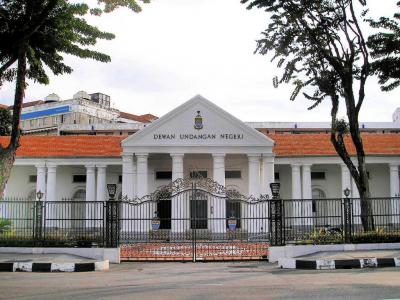
You can't miss it with its striking orange roof and neat appearance. This Anglo-Indian style beauty used to do double duty as the Recorder's and Magistrates' Court and even hosted part of the Central Police Station. Plus, the Police Court was right in there for easy access to all criminal cases.
During the Second World War, the Japanese took over, using it as their HQ for Penang. Fast forward to the '60s, and it became the Penang state government's spot for making laws, with the old courtrooms now serving as the Penang State Assembly chambers. But with more assemblymen in the mix, there's talk about building a new legislative spot somewhere else in George Town. Got to keep up with the times, right?
You can't miss it with its striking orange roof and neat appearance. This Anglo-Indian style beauty used to do double duty as the Recorder's and Magistrates' Court and even hosted part of the Central Police Station. Plus, the Police Court was right in there for easy access to all criminal cases.
During the Second World War, the Japanese took over, using it as their HQ for Penang. Fast forward to the '60s, and it became the Penang state government's spot for making laws, with the old courtrooms now serving as the Penang State Assembly chambers. But with more assemblymen in the mix, there's talk about building a new legislative spot somewhere else in George Town. Got to keep up with the times, right?
13) Fort Cornwallis
Charles Edward Cornwallis V did not end his military career at Yorktown, Virginia in 1781. He went on to happier times. He became Governor-General of India in 1786. In that same year, Captain Francis Light, captured Penang Island from the Sultan of Kedah. Captain Light immediately built Fort Cornwallis, a stockade of palm trunks.
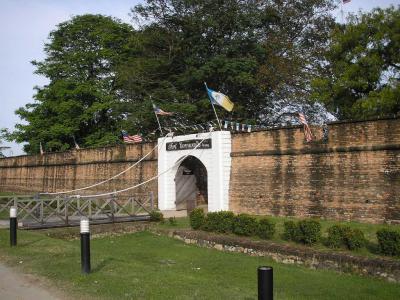
Captain Light died in Penang in 1794. The fort was completed in 1810. It was rebuilt using Indian convict laborers. Brick and stone replaced the palm trunks. A moat, thirty feet wide and seven feet deep surrounded the fort but it was filled in the 1920s. The fort has never seen combat. It served administrative, rather than defensive duties.
A chapel was built at the fort in 1799. John Trimmers married Martina Rozells, Captain Light's widow, in the chapel that same year. An ammunition magazine building survives in the southwest corner of the fort. The fort has a collection of cannons. The largest is called Seri Rambai, cast in 1603 by the Dutch who gave it to the Sultan of Johor in return for trading concessions. The British seized it in a raid in 1871.
A steel skeleton lighthouse, 69 feet high, was built in the fort in 1882. It is the second oldest lighthouse in Malaysia. It is the only lighthouse in Malaysia that serves a navigational function. The fort is bounded by Light Street in the south, the Jalan Barakbah Road in the east and north and by the esplanade's promenade.
Captain Light died in Penang in 1794. The fort was completed in 1810. It was rebuilt using Indian convict laborers. Brick and stone replaced the palm trunks. A moat, thirty feet wide and seven feet deep surrounded the fort but it was filled in the 1920s. The fort has never seen combat. It served administrative, rather than defensive duties.
A chapel was built at the fort in 1799. John Trimmers married Martina Rozells, Captain Light's widow, in the chapel that same year. An ammunition magazine building survives in the southwest corner of the fort. The fort has a collection of cannons. The largest is called Seri Rambai, cast in 1603 by the Dutch who gave it to the Sultan of Johor in return for trading concessions. The British seized it in a raid in 1871.
A steel skeleton lighthouse, 69 feet high, was built in the fort in 1882. It is the second oldest lighthouse in Malaysia. It is the only lighthouse in Malaysia that serves a navigational function. The fort is bounded by Light Street in the south, the Jalan Barakbah Road in the east and north and by the esplanade's promenade.
14) City Hall
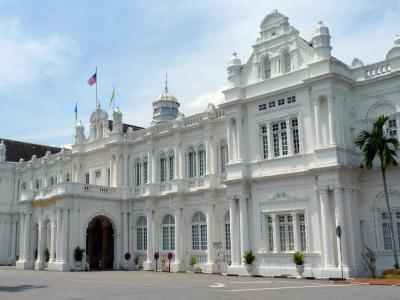
The two-storey Edwardian Baroque Palladian City Hall of George Town has been a national monument of Malaysia since 1982. The building style is very similar to the Old Town Hall next door. The City Hall was last renovated in 2005. It looks the same as it did when it was built in 1903, except the original arcades on street level have been glazed.
The City Hall was built to replace the Town Hall as the new home of the Municipal Commission. Construction tenders were accepted in 1900. Lee Ah Chang, a Malaysian architect, won the contract. The new digs of the Municipal Offices was one of the first buildings in Penang to be equipped with electric lights and more importantly, fans.
Both Town hall and City Hall are on the shore and facing the main field ("Padang"). The City Hall is a masonry building, made with lime mortar, plaster and wash. It has granite columns at the entrance, and gratings of cast iron. Minton Geometric tiles in the interior match those of the Governor's house.
In 1957 George Town was declared to be a city by Queen Elizabeth II. The Municipal Offices building then officially became City Hall. In 1976 the George Town City Council was merged with the Penang Island Rural District Council. The result is the Penang Island Municipal Council, so the building is also called "Penang City Hall".
The City Hall was built to replace the Town Hall as the new home of the Municipal Commission. Construction tenders were accepted in 1900. Lee Ah Chang, a Malaysian architect, won the contract. The new digs of the Municipal Offices was one of the first buildings in Penang to be equipped with electric lights and more importantly, fans.
Both Town hall and City Hall are on the shore and facing the main field ("Padang"). The City Hall is a masonry building, made with lime mortar, plaster and wash. It has granite columns at the entrance, and gratings of cast iron. Minton Geometric tiles in the interior match those of the Governor's house.
In 1957 George Town was declared to be a city by Queen Elizabeth II. The Municipal Offices building then officially became City Hall. In 1976 the George Town City Council was merged with the Penang Island Rural District Council. The result is the Penang Island Municipal Council, so the building is also called "Penang City Hall".
15) Old Town Hall
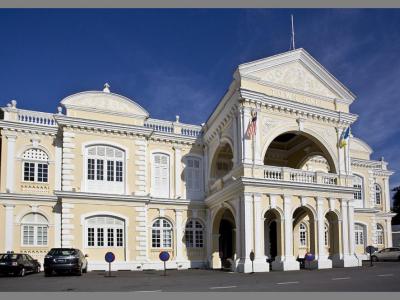
The Town Hall is located at Padang Kota Lama, the waterfront esplanade surrounded by historical landmarks. George Town, named for King George III, was founded by Captain Francis Light in 1786. The Town Hall main building was completed in 1883. There was an assembly hall, a library, and a grand ballroom.
An annex was built in 1890. A porch and another upper floor added in 1903. The left wing of the hall was added in 1930. The hall is the city's oldest civic building and the former home of the Municipal Commission of George Town. It was also a watering hole for the European elites in the happy days of Empire, no natives allowed.
The Municipal Commission found the hall space to be insufficient. Another building was constructed next to the Town Hall in 1903. It became the new Municipal Offices. It was officially renamed City Hall in 1957, when the town was granted city status. The Town Hall continued as a venue for social and music events.
In 1993 the Municipal Council moved for demolition of the building. The Malaysian National Museum intervened however, and identified the Hall as an historical monument. The Town Hall is currently used for public celebrations, concerts and art exhibitions. It is part of the George Town Festival in August.
An annex was built in 1890. A porch and another upper floor added in 1903. The left wing of the hall was added in 1930. The hall is the city's oldest civic building and the former home of the Municipal Commission of George Town. It was also a watering hole for the European elites in the happy days of Empire, no natives allowed.
The Municipal Commission found the hall space to be insufficient. Another building was constructed next to the Town Hall in 1903. It became the new Municipal Offices. It was officially renamed City Hall in 1957, when the town was granted city status. The Town Hall continued as a venue for social and music events.
In 1993 the Municipal Council moved for demolition of the building. The Malaysian National Museum intervened however, and identified the Hall as an historical monument. The Town Hall is currently used for public celebrations, concerts and art exhibitions. It is part of the George Town Festival in August.
