Custom Walk in New Orleans, Louisiana by anagne_39437 created on 2025-05-01
Guide Location: USA » New Orleans
Guide Type: Custom Walk
# of Sights: 15
Tour Duration: 3 Hour(s)
Travel Distance: 6.5 Km or 4 Miles
Share Key: FDA25
Guide Type: Custom Walk
# of Sights: 15
Tour Duration: 3 Hour(s)
Travel Distance: 6.5 Km or 4 Miles
Share Key: FDA25
How It Works
Please retrieve this walk in the GPSmyCity app. Once done, the app will guide you from one tour stop to the next as if you had a personal tour guide. If you created the walk on this website or come to the page via a link, please follow the instructions below to retrieve the walk in the app.
Retrieve This Walk in App
Step 1. Download the app "GPSmyCity: Walks in 1K+ Cities" on Apple App Store or Google Play Store.



Step 2. In the GPSmyCity app, download(or launch) the guide "New Orleans Map and Walking Tours".
Step 3. Tap the menu button located at upper right corner of the "Walks" screen and select "Retrieve custom walk". Enter the share key: FDA25
1) Jackson Square (must see)
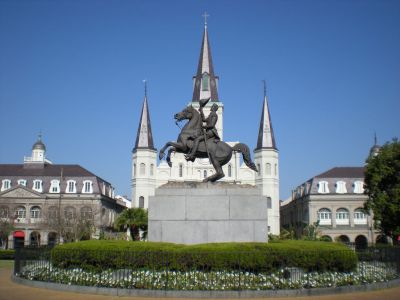
Due to its close proximity to the Mississippi River, the Saint Louis Cathedral, and the Cabildo, Jackson Square has always been and remains a well-liked gathering place at the heart of the French Quarter. Named after Andrew Jackson, hero of the Battle of New Orleans (who went on to become the 7th US president), it has been a hubbub of activity since colonial times, when the militia conducted drills, vendors peddled their goods at the open-air market, and public executions were carried out.
Modeled after the famous 17th-century Place des Vosges in Paris, the square has been transformed into a beautifully landscaped park with neat lawns and flowerbeds. Despite the constant flow of tourists taking photos, school groups, and waitstaff on their breaks, it somehow maintains a sense of tranquility. During the day, numerous artists display their paintings on the park's fence and set up outdoor studios where they create artworks or offer to sketch portraits of passersby. Musicians, mimes, tarot card readers, and magicians entertain on the paved pedestrian mall, many of them performing both day and night.
The view of the square is quite iconic, with an equestrian statue of Andrew Jackson at its center and the beautifully designed Saint Louis Cathedral as a backdrop, while the Cabildo and Presbytère, two Spanish colonial structures, flank the church. The elegant brick buildings on either side of the square are known as the Pontalba Buildings. All in all, an excellent spot for capturing memorable photos, enjoying a respite on the benches, and taking it all in. It's amazing how much of New Orleans can be experienced from just this small location.
Modeled after the famous 17th-century Place des Vosges in Paris, the square has been transformed into a beautifully landscaped park with neat lawns and flowerbeds. Despite the constant flow of tourists taking photos, school groups, and waitstaff on their breaks, it somehow maintains a sense of tranquility. During the day, numerous artists display their paintings on the park's fence and set up outdoor studios where they create artworks or offer to sketch portraits of passersby. Musicians, mimes, tarot card readers, and magicians entertain on the paved pedestrian mall, many of them performing both day and night.
The view of the square is quite iconic, with an equestrian statue of Andrew Jackson at its center and the beautifully designed Saint Louis Cathedral as a backdrop, while the Cabildo and Presbytère, two Spanish colonial structures, flank the church. The elegant brick buildings on either side of the square are known as the Pontalba Buildings. All in all, an excellent spot for capturing memorable photos, enjoying a respite on the benches, and taking it all in. It's amazing how much of New Orleans can be experienced from just this small location.
2) The Cabildo
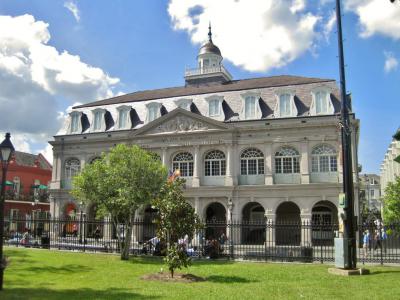
Erected in 1795 by the Spanish colonial government, The Cabildo witnessed some of the most pivotal events in American history, including the ceremonies for the Louisiana Purchase transfer, a momentous transaction that nearly doubled the size of the United States in 1803. Sitting on the opposite side of the Saint Louis Cathedral from The Presbytère, this landmark once functioned as the colonial government's headquarters and later housed the Louisiana Supreme Court.
The building's architecture is a testament to the Spanish influence on New Orleans, with its intricate ironwork balconies and distinctive Spanish flair, which contrast with the French colonial styles prevalent in the city.
Today, The Cabildo is a museum housing a premier collection of artifacts related to New Orleans and Louisiana history – spanning from the earliest explorers to encompass themes such as slavery, post-Civil War reconstruction, and statehood. The detailed narrative is presented from a multicultural perspective and touches on intriguing subjects like immigration, assimilation, antebellum music, mourning and burial customs, and the role of Southern women.
Throughout the museum, one can find portraits of historical figures and pivotal events. A standout exhibit is Napoleon's death mask made by Napoleon's personal physician shortly after the French leader's death in 1821 on the island of Saint Helena, where he was in exile.
Overall, an ideal place to explore the history of New Orleans and Louisiana. As an extra, the upstairs offers great views of Jackson Square.
Tip:
Consider buying a combo ticket that offers a 20% discount when visiting along with The Presbytère on the Cathedral's other side (or any other Louisiana State Museum site).
The building's architecture is a testament to the Spanish influence on New Orleans, with its intricate ironwork balconies and distinctive Spanish flair, which contrast with the French colonial styles prevalent in the city.
Today, The Cabildo is a museum housing a premier collection of artifacts related to New Orleans and Louisiana history – spanning from the earliest explorers to encompass themes such as slavery, post-Civil War reconstruction, and statehood. The detailed narrative is presented from a multicultural perspective and touches on intriguing subjects like immigration, assimilation, antebellum music, mourning and burial customs, and the role of Southern women.
Throughout the museum, one can find portraits of historical figures and pivotal events. A standout exhibit is Napoleon's death mask made by Napoleon's personal physician shortly after the French leader's death in 1821 on the island of Saint Helena, where he was in exile.
Overall, an ideal place to explore the history of New Orleans and Louisiana. As an extra, the upstairs offers great views of Jackson Square.
Tip:
Consider buying a combo ticket that offers a 20% discount when visiting along with The Presbytère on the Cathedral's other side (or any other Louisiana State Museum site).
3) St. Louis Cathedral (must see)
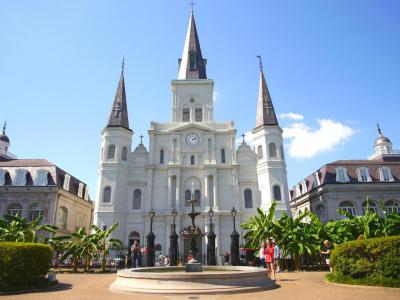
Saint Louis Cathedral's triple spires are instantly recognizable to most tourists as the main symbol of the French Quarter. Many have taken photos of the gleaming white facade set against a clear blue sky from across the picturesque Jackson Square; however, relatively few have ventured inside to witness the glorious mural and statuary, transporting visitors nearly 300 years back in time to the cathedral's founding. Along the first floor, stained glass windows depict the life of King Louis IX, the French monarch who led two crusades.
Saint Louis proudly holds the title of the oldest continuously active Roman Catholic Cathedral in the United States. The existing structure, which replaced two previous buildings destroyed by fires, dates back to 1794, though it underwent remodeling and expansion in 1851. The influences of both Spanish and French cultures are readily apparent in both the artwork and the flags displayed near the chandeliers in the main aisle of the sanctuary.
Notably, Pope John Paul II conducted a prayer service for clergy here during his visit to New Orleans in 1987; in commemoration of the event, the nearby pedestrian mall was renamed in his honor. Of particular interest is his portrait in a Jackson Square setting, displayed on the cathedral's inner sidewall.
Visitors can often enjoy free tours conducted by docents, or they can opt for a self-guided tour using brochures when there are no church events taking place. A fine pipe organ is frequently played for the delight of guests, and there is also a small gift shop to explore.
Tip:
Take note of the sloping floor, a clever architectural design that somehow manages to keep the building upright even as the ground beneath it continues to sink.
Saint Louis proudly holds the title of the oldest continuously active Roman Catholic Cathedral in the United States. The existing structure, which replaced two previous buildings destroyed by fires, dates back to 1794, though it underwent remodeling and expansion in 1851. The influences of both Spanish and French cultures are readily apparent in both the artwork and the flags displayed near the chandeliers in the main aisle of the sanctuary.
Notably, Pope John Paul II conducted a prayer service for clergy here during his visit to New Orleans in 1987; in commemoration of the event, the nearby pedestrian mall was renamed in his honor. Of particular interest is his portrait in a Jackson Square setting, displayed on the cathedral's inner sidewall.
Visitors can often enjoy free tours conducted by docents, or they can opt for a self-guided tour using brochures when there are no church events taking place. A fine pipe organ is frequently played for the delight of guests, and there is also a small gift shop to explore.
Tip:
Take note of the sloping floor, a clever architectural design that somehow manages to keep the building upright even as the ground beneath it continues to sink.
4) Louis Armstrong Park
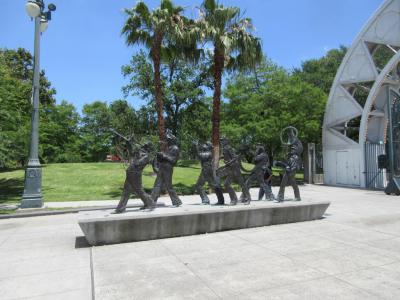
Located on the outskirts of the French Quarter, Armstrong Park not only honors one of its most celebrated native sons but also pays tribute to the numerous jazz musicians who have contributed to the rich musical traditions and cultural diversity that define New Orleans.
The park sits on the historic site once designated by Spanish-controlled city leaders in the late 18th century as the allowed gathering place for slaves on Sundays. Known as Congo Square, this area, along with the 31 enclosed park acres, holds a significant African heritage and borders the Tremé district, one of the earliest neighborhoods established by and for African Americans.
After the Civil War, white city leaders made efforts to suppress gatherings of freed slaves in the park and officially renamed it "Beauregard Square" in honor of Confederate General P. G. T. Beauregard. Despite these efforts, the park continued to be used for social gatherings and events, with the local community persistently referring to it as Congo Square. This enduring popularity eventually led to the creation of the New Orleans Jazz and Heritage Festival, initially drawing a modest audience but quickly expanding (after two years, it relocated to the larger New Orleans Fair Grounds racetrack). In 2001, the festival attracted approximately 650,000 attendees, and though attendance dipped following Hurricane Katrina, it rebounded to over 450,000 by 2014. In 2011, the New Orleans City Council officially restored the name Congo Square, and to honor its heritage, a "Congo Square Stage" remains a prominent feature at Jazz Fest.
Apart from hosting annual Martin Luther King Jr. Day celebrations, weddings, and various festivals, the park is often chosen as the location for movie premieres of films shot in New Orleans, as well as operas and Broadway productions like 'Lion King', 'Wicked', and 'Jersey Boys'. It is also home to the Mahalia Jackson Theater of the Performing Arts, which was extensively renovated after Hurricane Katrina and has become a vibrant hub for cultural events in the city. Surrounded by serene lagoons and graceful weeping willow trees, it provides a picturesque setting for patrons to enjoy intermissions by strolling and appreciating the park's natural beauty.
Plan a leisurely afternoon to explore Louis Armstrong Park and the surrounding neighborhood, , indulging in walks, dining, sunbathing, and soaking in the historical significance that permeates every corner. It's a reminder that New Orleans is much more than just Bourbon Street and beignets, offering a rich cultural tapestry waiting to be discovered.
The park sits on the historic site once designated by Spanish-controlled city leaders in the late 18th century as the allowed gathering place for slaves on Sundays. Known as Congo Square, this area, along with the 31 enclosed park acres, holds a significant African heritage and borders the Tremé district, one of the earliest neighborhoods established by and for African Americans.
After the Civil War, white city leaders made efforts to suppress gatherings of freed slaves in the park and officially renamed it "Beauregard Square" in honor of Confederate General P. G. T. Beauregard. Despite these efforts, the park continued to be used for social gatherings and events, with the local community persistently referring to it as Congo Square. This enduring popularity eventually led to the creation of the New Orleans Jazz and Heritage Festival, initially drawing a modest audience but quickly expanding (after two years, it relocated to the larger New Orleans Fair Grounds racetrack). In 2001, the festival attracted approximately 650,000 attendees, and though attendance dipped following Hurricane Katrina, it rebounded to over 450,000 by 2014. In 2011, the New Orleans City Council officially restored the name Congo Square, and to honor its heritage, a "Congo Square Stage" remains a prominent feature at Jazz Fest.
Apart from hosting annual Martin Luther King Jr. Day celebrations, weddings, and various festivals, the park is often chosen as the location for movie premieres of films shot in New Orleans, as well as operas and Broadway productions like 'Lion King', 'Wicked', and 'Jersey Boys'. It is also home to the Mahalia Jackson Theater of the Performing Arts, which was extensively renovated after Hurricane Katrina and has become a vibrant hub for cultural events in the city. Surrounded by serene lagoons and graceful weeping willow trees, it provides a picturesque setting for patrons to enjoy intermissions by strolling and appreciating the park's natural beauty.
Plan a leisurely afternoon to explore Louis Armstrong Park and the surrounding neighborhood, , indulging in walks, dining, sunbathing, and soaking in the historical significance that permeates every corner. It's a reminder that New Orleans is much more than just Bourbon Street and beignets, offering a rich cultural tapestry waiting to be discovered.
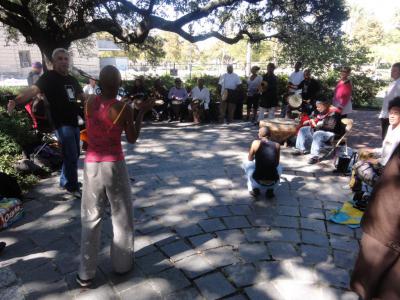
5) Congo Square
The earliest Africans to arrive in Louisiana were brought as slaves in 1719 from the Senegambia region. Slavery was widely accepted in New Orleans, and over time, some Africans managed to obtain their freedom, becoming known as "free people of color". Many of these "freemen" were well-educated and were the descendants of black mothers and French or Spanish settlers.
In addition to culinary knowledge, African settlers brought their native music and spiritism in the form of the Voodoo religion. Congo Square, now part of Louis Armstrong Park near the French Quarter, served as a gathering place for both slaves and free people of color. This was particularly true on weekends when the Square transformed into a site for exotic tribal dances and celebrations.
The slave dances at Congo Square were a unique attraction for visitors to New Orleans. Herbert Asbury, in his book "The French Quarter", describes one such gathering: "The favorite dances of the slaves were the Calinda, a variation of which was also used in the Voodoo ceremonies, and the Dance of the Bamboula, both of which were primarily based on the primitive dances of the African jungle, but with copious borrowings from the contra-danses of the French . . . The male dancers attached tin or other metal to ribbons tied about their ankles. Thus accoutered, they pranced back and forth, leaping into the air and stamping in unison, occasionally shouting "Dansez Bomboula! Badoum! Badoum!", while the women, scarcely lifting their feet from the ground, swayed their bodies from side to side and chanted ancient song . . . The entire square was an almost solid mass of black bodies stamping and swaying to the rhythmic beat of the bones upon the cask, the frenzied, chanting of the women, and the clanging of the pieces of metal which dangled from the men's ankles."
The African instruments, such as drums and banjos, as well as the songs, eventually gave rise to street bands and, later, the development of jazz music. However, as the gatherings at Congo Square raised concerns among New Orleans citizens, who feared slave uprisings, they were restricted to Sunday daylight hours only in 1817.
Marie Laveau, often referred to as the first and most powerful "Voodoo Queen" of New Orleans, is one of the most well-known practitioners of Voodoo associated with Congo Square. In the 1830s, she not only led Voodoo dances but also organized more secretive rituals along the shores of Lake Pontchartrain and Saint John's Bayou.
In addition to culinary knowledge, African settlers brought their native music and spiritism in the form of the Voodoo religion. Congo Square, now part of Louis Armstrong Park near the French Quarter, served as a gathering place for both slaves and free people of color. This was particularly true on weekends when the Square transformed into a site for exotic tribal dances and celebrations.
The slave dances at Congo Square were a unique attraction for visitors to New Orleans. Herbert Asbury, in his book "The French Quarter", describes one such gathering: "The favorite dances of the slaves were the Calinda, a variation of which was also used in the Voodoo ceremonies, and the Dance of the Bamboula, both of which were primarily based on the primitive dances of the African jungle, but with copious borrowings from the contra-danses of the French . . . The male dancers attached tin or other metal to ribbons tied about their ankles. Thus accoutered, they pranced back and forth, leaping into the air and stamping in unison, occasionally shouting "Dansez Bomboula! Badoum! Badoum!", while the women, scarcely lifting their feet from the ground, swayed their bodies from side to side and chanted ancient song . . . The entire square was an almost solid mass of black bodies stamping and swaying to the rhythmic beat of the bones upon the cask, the frenzied, chanting of the women, and the clanging of the pieces of metal which dangled from the men's ankles."
The African instruments, such as drums and banjos, as well as the songs, eventually gave rise to street bands and, later, the development of jazz music. However, as the gatherings at Congo Square raised concerns among New Orleans citizens, who feared slave uprisings, they were restricted to Sunday daylight hours only in 1817.
Marie Laveau, often referred to as the first and most powerful "Voodoo Queen" of New Orleans, is one of the most well-known practitioners of Voodoo associated with Congo Square. In the 1830s, she not only led Voodoo dances but also organized more secretive rituals along the shores of Lake Pontchartrain and Saint John's Bayou.
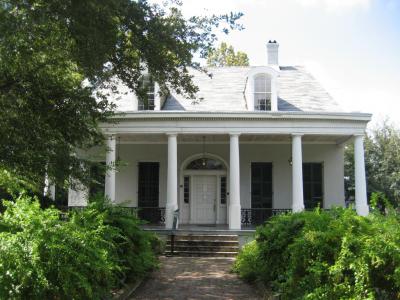
6) African American Museum
Located in Tremé, the oldest African-American community in the United States, this museum finds its home within an exquisite Creole villa dating back to 1828. The architectural style reflects influences from the West Indies and French colonial traditions, featuring three courtyards and a central gazebo that provide an enjoyable experience for all visitors.
Within the museum, ever-changing exhibits offer a comprehensive exploration of African American art, history, and culture in New Orleans and the broader diaspora. Engaging videos, captivating artifacts, and informative text panels converge to create a compelling, thought-provoking, and uplifting portrayal of this resilient community. A notable highlight, the Betrand Collection, showcases an array of jewelry, clothing, masks, artifacts, and musical instruments from the Democratic Republic of Congo. This exhibit illuminates fascinating parallels between African and African American cultures, offering a unique perspective.
Overall, the museum provides an ambitious and refreshing perspective, offering valuable insights that complement the often overlooked discussions of slavery and its enduring impact. If you find yourself with some spare time, be sure to pay a visit!
Within the museum, ever-changing exhibits offer a comprehensive exploration of African American art, history, and culture in New Orleans and the broader diaspora. Engaging videos, captivating artifacts, and informative text panels converge to create a compelling, thought-provoking, and uplifting portrayal of this resilient community. A notable highlight, the Betrand Collection, showcases an array of jewelry, clothing, masks, artifacts, and musical instruments from the Democratic Republic of Congo. This exhibit illuminates fascinating parallels between African and African American cultures, offering a unique perspective.
Overall, the museum provides an ambitious and refreshing perspective, offering valuable insights that complement the often overlooked discussions of slavery and its enduring impact. If you find yourself with some spare time, be sure to pay a visit!
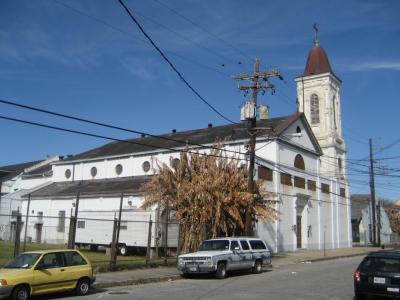
7) St. Augustine Catholic Church
Saint Augustine, the oldest African-American Catholic parish in the United States, stands on Saint Claude Avenue near the French Quarter, occupying the former Claude Tremé plantation site. Established in 1841, its history is closely intertwined with the community, including immigrants, slaves, and free people of color who played a pivotal role in its construction.
The church's architectural significance includes its design by J. N. B. de Pouilly, the same French architect renowned for his work on the nearby Saint Louis Cathedral. Notably, the pew arrangements reveal a fascinating history. In the past, pew fees were charged to parishioners seeking designated seating privileges, generating income for church operations. Free people of color purchased pews for their families and extended their generosity to less fortunate faithful, including slaves who couldn't afford seating. This led to the "War of the Pews", ultimately won by free people of color, resulting in the most integrated congregational church seating in the country.
Renowned for its inspirational music, Saint Augustine welcomes visitors of all faiths to its services, and also hosts the annual Jazz Mass as part of the Satchmo Summer Jazz Festival, paying tribute to Louis Armstrong. Exploring independently or joining a guided tour allows you to delve into its history, including the Tomb of the Unknown Slave, a poignant shrine honoring all enslaved individuals buried in Tremé.
Despite the threat of closure post-Hurricane Katrina, the determination of Saint Augustine Church's parishioners, along with grants and community support, ensured the preservation of this invaluable piece of living history.
The church's architectural significance includes its design by J. N. B. de Pouilly, the same French architect renowned for his work on the nearby Saint Louis Cathedral. Notably, the pew arrangements reveal a fascinating history. In the past, pew fees were charged to parishioners seeking designated seating privileges, generating income for church operations. Free people of color purchased pews for their families and extended their generosity to less fortunate faithful, including slaves who couldn't afford seating. This led to the "War of the Pews", ultimately won by free people of color, resulting in the most integrated congregational church seating in the country.
Renowned for its inspirational music, Saint Augustine welcomes visitors of all faiths to its services, and also hosts the annual Jazz Mass as part of the Satchmo Summer Jazz Festival, paying tribute to Louis Armstrong. Exploring independently or joining a guided tour allows you to delve into its history, including the Tomb of the Unknown Slave, a poignant shrine honoring all enslaved individuals buried in Tremé.
Despite the threat of closure post-Hurricane Katrina, the determination of Saint Augustine Church's parishioners, along with grants and community support, ensured the preservation of this invaluable piece of living history.
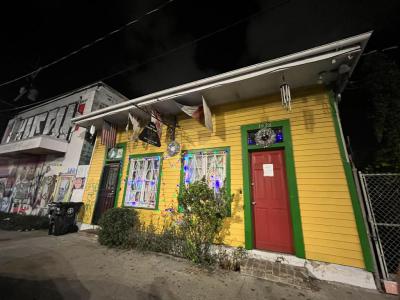
8) Voodoo Spiritual Temple
You can find the Voodoo Spiritual Temple on North Rampart Street, just a short distance from Historic Congo Square Park, where African slaves conducted their rituals every Sunday evening in the 1700s and 1800s. This temple serves as a center for Voodoo worship and healing, offering Voodoo consultations, rituals, and educational workshops.
Founded by Priest Oswan Chamani and Priestess Miriam Chamani in 1990, the Voodoo Spiritual Temple has continually expanded its understanding of Voodoo in the context of global religions, and currently serves people from all across America and beyond. The temple follows a distinctive form of Voodoo that incorporates elements from various spiritual traditions while maintaining its traditional practices. Its reputation has expanded through appearances in television and film productions, and it often attracts scholars from universities, anthropologists, and researchers studying African-based religions.
The temple even has a troupe of sacred drummers known as the Krewe of Nutria, who often perform at the New Orleans Voodoo Museum and various local events. Besides the numerous altars, there's also a gift shop offering handcrafted Voodoo dolls, gris-gris and mojo bags, aromatic oils, as well as books and CDs related to Voodoo. Priestess Miriam, the owner, warmly welcomes curious visitors.
Founded by Priest Oswan Chamani and Priestess Miriam Chamani in 1990, the Voodoo Spiritual Temple has continually expanded its understanding of Voodoo in the context of global religions, and currently serves people from all across America and beyond. The temple follows a distinctive form of Voodoo that incorporates elements from various spiritual traditions while maintaining its traditional practices. Its reputation has expanded through appearances in television and film productions, and it often attracts scholars from universities, anthropologists, and researchers studying African-based religions.
The temple even has a troupe of sacred drummers known as the Krewe of Nutria, who often perform at the New Orleans Voodoo Museum and various local events. Besides the numerous altars, there's also a gift shop offering handcrafted Voodoo dolls, gris-gris and mojo bags, aromatic oils, as well as books and CDs related to Voodoo. Priestess Miriam, the owner, warmly welcomes curious visitors.
9) Lafitte's Blacksmith Shop Bar (must see)
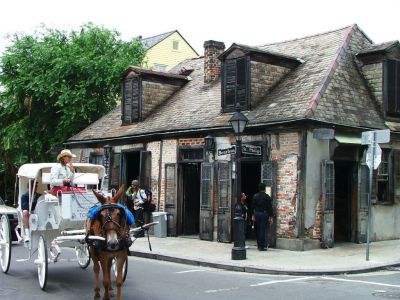
Lafitte's Blacksmith Shop Bar on Bourbon Street is one of the city's most storied landmarks, a tangible piece of history that doubles as a popular watering hole. Touted as one of the oldest surviving structures in New Orleans and reputed to be the oldest continuously operating bar in the United States, this building harks back to the early 18th century. The bar's namesake, Jean Lafitte, was a pirate and privateer who, along with his brother Pierre, purportedly used the location as a cover for their smuggling operations.
Constructed sometime between 1722 and 1732, the building is a rare example of French Colonial "briquette-entre-poteaux" architecture (brick between posts), surviving fires and battles that have reshaped the city over centuries. Its thick-walled, weather-beaten façade and dimly lit interior, with a fireplace and candlelight providing much of the illumination, offer an ambiance that seemingly transports patrons back to the era of pirates and privateers.
Frequented by locals and tourists alike, Lafitte's combines the allure of historical legend with the charm of Old New Orleans. The bar, aside from its drinks and unique atmosphere, is an informal museum of sorts, with its architecture and mystique speaking volumes of the past. It is this blending of lore and architecture, the promise of ghosts, and the glow of flickering lights that make Lafitte's a must-visit destination for anyone looking to experience the essence of the Crescent City's storied past.
Constructed sometime between 1722 and 1732, the building is a rare example of French Colonial "briquette-entre-poteaux" architecture (brick between posts), surviving fires and battles that have reshaped the city over centuries. Its thick-walled, weather-beaten façade and dimly lit interior, with a fireplace and candlelight providing much of the illumination, offer an ambiance that seemingly transports patrons back to the era of pirates and privateers.
Frequented by locals and tourists alike, Lafitte's combines the allure of historical legend with the charm of Old New Orleans. The bar, aside from its drinks and unique atmosphere, is an informal museum of sorts, with its architecture and mystique speaking volumes of the past. It is this blending of lore and architecture, the promise of ghosts, and the glow of flickering lights that make Lafitte's a must-visit destination for anyone looking to experience the essence of the Crescent City's storied past.
10) Old Absinthe House
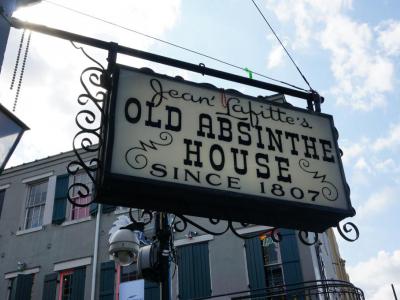
The Old Absinthe House, whose façade bears the grandeur of history, is a legendary bar on the corner of Bourbon and Bienville Streets in the French Quarter of New Orleans. Erected in 1807, the building originally housed a family-owned importing firm but transformed over the years into one of the city's most iconic drinking establishments.
Famed for introducing absinthe to America, the bar became a haven where the enchanting, anise-flavored spirit was served in the traditional Parisian style. It was Oscar Wilde who famously remarked about the effects of absinthe: "After the first glass [of absinthe], you see things as you wish they were. After the second, you see things as they are not. Finally, you see things as they are, and that is the most horrible thing in the world." Once banned in the United States, absinthe is now legal, and you can enjoy this infamous libation without any restrictions.
The Old Absinthe House has withstood the test of time, enduring events such as Prohibition, when it was forced to reinvent itself to maintain operations. Today, its storied walls are lined with memorabilia, photographs, and mementos that echo the countless conversations, deals, and debates that have transpired over its storied counters.
Visitors are immediately swept up in the ambiance of the past, surrounded by the original copper-topped bar, wooden fixtures, and marble fountains once used to drip water over sugar cubes into glasses of absinthe. The House's history as a rendezvous for politicians, pirates, artists, and celebrities throughout the centuries adds a rich, eclectic layer to the patron's experience.
Famed for introducing absinthe to America, the bar became a haven where the enchanting, anise-flavored spirit was served in the traditional Parisian style. It was Oscar Wilde who famously remarked about the effects of absinthe: "After the first glass [of absinthe], you see things as you wish they were. After the second, you see things as they are not. Finally, you see things as they are, and that is the most horrible thing in the world." Once banned in the United States, absinthe is now legal, and you can enjoy this infamous libation without any restrictions.
The Old Absinthe House has withstood the test of time, enduring events such as Prohibition, when it was forced to reinvent itself to maintain operations. Today, its storied walls are lined with memorabilia, photographs, and mementos that echo the countless conversations, deals, and debates that have transpired over its storied counters.
Visitors are immediately swept up in the ambiance of the past, surrounded by the original copper-topped bar, wooden fixtures, and marble fountains once used to drip water over sugar cubes into glasses of absinthe. The House's history as a rendezvous for politicians, pirates, artists, and celebrities throughout the centuries adds a rich, eclectic layer to the patron's experience.
11) Old Ursuline Convent
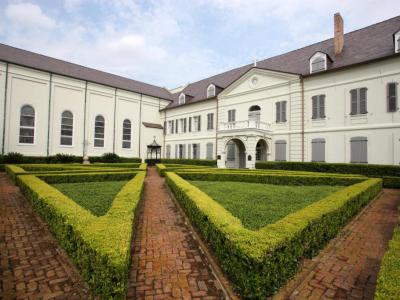
King Louis XV of France founded the Old Ursuline Convent in 1745 to provide accommodation for the Ursuline nuns who arrived in New Orleans in the late 1720s, making them the first nuns to establish a lasting presence in what is now the United States. The convent, their second home, was completed in 1753 and is believed to be the oldest French-colonial building in the Mississippi River Valley, having survived the devastating 18th-century fires that consumed much of the French Quarter.
During its early years, the convent provided shelter to a diverse array of individuals, including French orphans, injured British soldiers, exiled Acadians, and the city's impoverished population. The entire complex on Chartres Street, which encompasses the gardens, Saint Mary's Church, and various related outbuildings, is named in honor of Antoine Blanc, the first archbishop of New Orleans.
The Old Ursuline Convent is now open to the public, featuring well-designed exhibits that provide insight into the city's history as well as the convent's own historical significance. Visitors also have the opportunity to view the former bishop's chapel within the adjacent church (not typically accessible to the public) with its exquisite stained glass windows, Stations of the Cross, and statuary. Another beautiful feature is the intricately hand-carved cypress staircase.
During its early years, the convent provided shelter to a diverse array of individuals, including French orphans, injured British soldiers, exiled Acadians, and the city's impoverished population. The entire complex on Chartres Street, which encompasses the gardens, Saint Mary's Church, and various related outbuildings, is named in honor of Antoine Blanc, the first archbishop of New Orleans.
The Old Ursuline Convent is now open to the public, featuring well-designed exhibits that provide insight into the city's history as well as the convent's own historical significance. Visitors also have the opportunity to view the former bishop's chapel within the adjacent church (not typically accessible to the public) with its exquisite stained glass windows, Stations of the Cross, and statuary. Another beautiful feature is the intricately hand-carved cypress staircase.
12) French Market (must see)
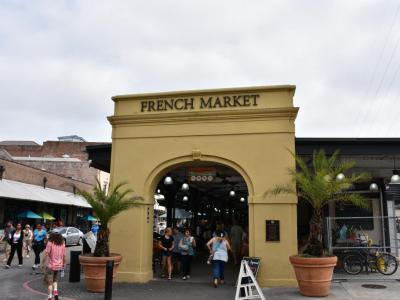
Spanning six blocks along the Mississippi River, the French Market dates back to 1791, making it the oldest public market in the United States. This open-air emporium has evolved from a Native American trading post into a lively multi-purpose venue encompassing food stalls, flea markets, and artisanal boutiques.
The French Market draws visitors with its blend of aromas from Creole eateries, the sounds of street musicians, and the sight of an eclectic mix of local artwork, crafts, and souvenirs. With a history that reflects the city's French and Spanish colonial past and its diverse cultural influences, this place has played a pivotal role in New Orleans' commercial and social life for over two centuries.
Today, it continues to be a place where the local community and tourists alike come to sample New Orleans' unique culinary delights, find a unique gift, and soak in an atmosphere that's as lively as it is historic. From chicory coffee and beignets to fresh produce and seafood, the French Market is a gastronomic paradise reflecting the city's culinary fusion.
The French Market draws visitors with its blend of aromas from Creole eateries, the sounds of street musicians, and the sight of an eclectic mix of local artwork, crafts, and souvenirs. With a history that reflects the city's French and Spanish colonial past and its diverse cultural influences, this place has played a pivotal role in New Orleans' commercial and social life for over two centuries.
Today, it continues to be a place where the local community and tourists alike come to sample New Orleans' unique culinary delights, find a unique gift, and soak in an atmosphere that's as lively as it is historic. From chicory coffee and beignets to fresh produce and seafood, the French Market is a gastronomic paradise reflecting the city's culinary fusion.
13) Cigar Factory and Museum
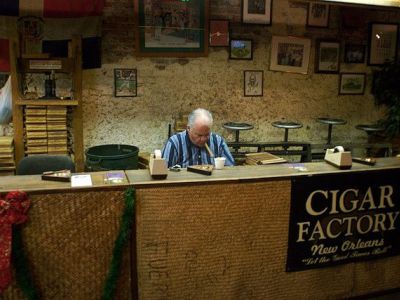
The art of cigar making has been highly regarded for many years, and there is a particular appreciation for cigars made in Cuba among aficionados. In the heart of the French Quarter, the Cigar Factory and Museum offers a unique experience where you can have specialty cigars made just for you, right before your eyes, evoking a sense of nostalgia for the good old days.
This family-owned business has been crafting cigars since 1999 and is owned by two families with a combined 25 years of experience in the industry. Their skilled staff has received extensive training and brings a wealth of experience to their craft.
At the Factory, you can enjoy hand-rolled cigars such as the Plantation Reserve, Vieux Carre, Tres Hermanos, Big Easy, and Flavored Panatelas, all made by a team of eight expert workers using Cuban Seed and Long Leaf Tobacco sourced from Honduras and Nicaragua. In addition to cigars, they offer a range of merchandise including t-shirts and accessories.
Apart from witnessing the creation of custom cigars, visitors can explore the main factory museum, which showcases remnants of the cigar-making process from a bygone era. The company has two stores, one on Decatur Street and another on Bourbon Street, where visitors are welcome to enjoy a cup of coffee or bring in a drink from a nearby tavern.
This family-owned business has been crafting cigars since 1999 and is owned by two families with a combined 25 years of experience in the industry. Their skilled staff has received extensive training and brings a wealth of experience to their craft.
At the Factory, you can enjoy hand-rolled cigars such as the Plantation Reserve, Vieux Carre, Tres Hermanos, Big Easy, and Flavored Panatelas, all made by a team of eight expert workers using Cuban Seed and Long Leaf Tobacco sourced from Honduras and Nicaragua. In addition to cigars, they offer a range of merchandise including t-shirts and accessories.
Apart from witnessing the creation of custom cigars, visitors can explore the main factory museum, which showcases remnants of the cigar-making process from a bygone era. The company has two stores, one on Decatur Street and another on Bourbon Street, where visitors are welcome to enjoy a cup of coffee or bring in a drink from a nearby tavern.
14) Bourbon Street (must see)
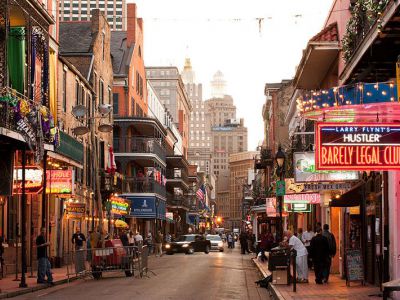
If you're feeling adventurous, set aside your reservations and take a leisurely stroll down the infamous Bourbon Street, known for its vibrant mix of bars, restaurants, music clubs, adult stores, and novelty shops, earning its reputation as the playground of the South. In the aftermath of Hurricane Katrina, the bars of Bourbon Street were among the first businesses in the city to reopen, and they played a crucial role in revitalizing the area. Today, the spirit of unbridled revelry thrives here, with raucous crowds and a lively jazz scene.
However, this street is not just about partying; it also boasts historic sights and iconic venues. Here you will find some of the city's most luxurious spots, including the timeless Royal Sonesta Hotel and the Galatoire's fine-dining institution, where you can savor the best of French Creole cuisine in a festive yet elegant atmosphere (note that jackets are required).
Among the iconic bars on Bourbon Street, Lafitte's Blacksmith Shop on the corner of Saint Philip Street stands out, as does the Old Absinthe House – the birthplace of the famous Absinthe House Frappe. You'll also find the Lafitte in Exile, the oldest gay bar in the United States, where famed American playwrights Tennessee Williams and Truman Capote were regular patrons. For those with a penchant for jazz, head to Fritzel's European Jazz Pub, an almost 200-year-old building that hosts live jazz performances every night of the week.
Why You Should Visit:
During the day, the street offers a pleasant experience with its art shops and food options; however, when night falls, it transforms into a wild and vibrant place. Be prepared for sensory overload, with the bright lights, loud music, and various scents permeating the air. This street has a knack for surprising even the most unflappable visitors.
Tip:
Don't miss the famous hand grenade drink! Also, be mindful not to take pictures of street performers if you don't intend to tip them.
However, this street is not just about partying; it also boasts historic sights and iconic venues. Here you will find some of the city's most luxurious spots, including the timeless Royal Sonesta Hotel and the Galatoire's fine-dining institution, where you can savor the best of French Creole cuisine in a festive yet elegant atmosphere (note that jackets are required).
Among the iconic bars on Bourbon Street, Lafitte's Blacksmith Shop on the corner of Saint Philip Street stands out, as does the Old Absinthe House – the birthplace of the famous Absinthe House Frappe. You'll also find the Lafitte in Exile, the oldest gay bar in the United States, where famed American playwrights Tennessee Williams and Truman Capote were regular patrons. For those with a penchant for jazz, head to Fritzel's European Jazz Pub, an almost 200-year-old building that hosts live jazz performances every night of the week.
Why You Should Visit:
During the day, the street offers a pleasant experience with its art shops and food options; however, when night falls, it transforms into a wild and vibrant place. Be prepared for sensory overload, with the bright lights, loud music, and various scents permeating the air. This street has a knack for surprising even the most unflappable visitors.
Tip:
Don't miss the famous hand grenade drink! Also, be mindful not to take pictures of street performers if you don't intend to tip them.
15) St. Louis Cemetery No. 2
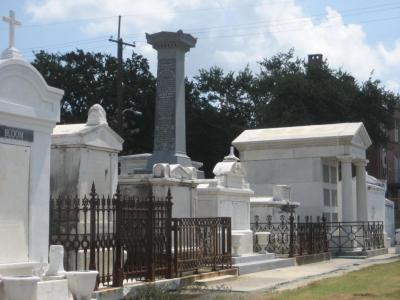
Established in 1823, located just three blocks from St. Louis Cemetery No. 1, this cemetery holds the remains of over 100,000 individuals. While it experienced minor flooding after Hurricane Katrina, the tombs remained largely untouched by the storm, save for the brownish waterline visible on structures that were submerged.
Cemetery No. 2 is a significant part of the African American Heritage Trail and serves as the final resting place for numerous noteworthy citizens from the 19th and 20th centuries. Among the notable figures interred here are prominent politicians and dignitaries such as Jean Baptiste Dupeire, Jacques Villeré (the second Governor of Louisiana after statehood), Charles Genois (Mayor of New Orleans from 1838-1840), and Paul Capdevielle (Mayor of New Orleans from 1900-1904).
Also buried in this cemetery is the Venerable Mother Henriette DeLille, a Louisiana Creole of color from New Orleans who is currently, being considered for canonization as a Roman Catholic saint. She founded the Roman Catholic order of the Sisters of the Holy Family, which consisted of free women of color providing nursing care and education to enslaved children at a time when such education was prohibited by law.
Additionally, several notable jazz and rhythm & blues musicians find their eternal rest here, including Danny Barker, Ernie K. Doe (known for "Mother-in-Law"), Andre Cailloux (1825-1863), an African-American Union hero and martyr of the American Civil War, and Oscar Dunn (1826-1871), who was emancipated from slavery as a child and went on to become the first elected black lieutenant governor of a U.S. state.
Cemetery No. 2 is a significant part of the African American Heritage Trail and serves as the final resting place for numerous noteworthy citizens from the 19th and 20th centuries. Among the notable figures interred here are prominent politicians and dignitaries such as Jean Baptiste Dupeire, Jacques Villeré (the second Governor of Louisiana after statehood), Charles Genois (Mayor of New Orleans from 1838-1840), and Paul Capdevielle (Mayor of New Orleans from 1900-1904).
Also buried in this cemetery is the Venerable Mother Henriette DeLille, a Louisiana Creole of color from New Orleans who is currently, being considered for canonization as a Roman Catholic saint. She founded the Roman Catholic order of the Sisters of the Holy Family, which consisted of free women of color providing nursing care and education to enslaved children at a time when such education was prohibited by law.
Additionally, several notable jazz and rhythm & blues musicians find their eternal rest here, including Danny Barker, Ernie K. Doe (known for "Mother-in-Law"), Andre Cailloux (1825-1863), an African-American Union hero and martyr of the American Civil War, and Oscar Dunn (1826-1871), who was emancipated from slavery as a child and went on to become the first elected black lieutenant governor of a U.S. state.
